Marketing budgets are not growing. Headcounts are flat. But the volume of content brands need to produce in 2026 has tripled compared to three years ago. The teams winning right now are not bigger, they are smarter about which AI tools they use and how they deploy them.

This is not a list of tools that promise to do everything. These are the 7 specific AI tools that real marketing teams are integrating into their workflows in 2027 to write better copy, create visuals at scale, produce professional audio, and make sharper strategic decisions, without expanding their headcount.
What AI Actually Changes for Marketing in 2026
The shift is not just speed. That was 2024. In 2026, the difference is quality at volume. Teams that used AI for quick drafts two years ago are now using it to produce polished, on-brand campaigns that would have required a full agency just a few years back.
Why Most Teams Are Behind
The problem is not access to AI. Every marketer has access to some AI tool. The problem is using the wrong tool for the job. A language model is not a design tool. A text-to-image generator is not a video editor. Teams that treat AI as one monolithic solution spend more time fixing outputs than shipping work.
What Makes a Marketing AI Tool Worth Using
Three things matter when evaluating any AI tool for a marketing team:
- Output quality: Does it produce work you would actually use without heavy editing?
- Speed to output: How many steps between your input and a usable result?
- Cost per asset: What does it cost to produce 100 pieces of content, not just one?
| Factor | What to Measure |
|---|
| Output quality | Can it match your brand tone without fine-tuning? |
| Speed | Time from prompt to publish-ready asset |
| Cost per asset | Total spend divided by publishable outputs |
| Reliability | Consistency across different users on the team |
💡 The best AI tools are the ones your team actually uses every day, not the ones with the longest feature list.
1. AI Copywriting with Large Language Models
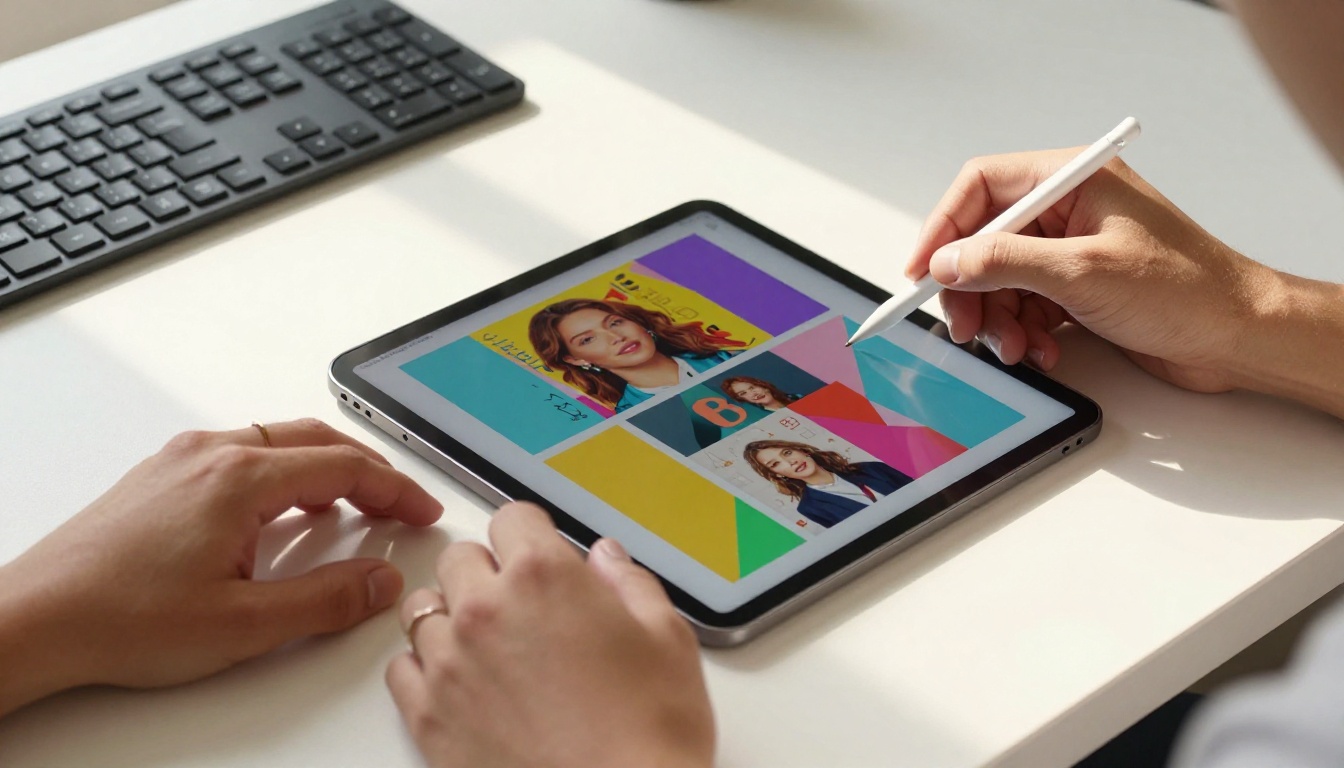
The single biggest productivity gain for any marketing team in 2026 is using large language models for copy. Not just for the finished article. For the entire content pipeline: ideation, first drafts, repurposing, A/B test variants, subject lines, CTAs, and localization.
GPT-5 for Ad Copy and Email Sequences
GPT-5 is the workhorse for performance-oriented copy. Its strength is in producing conversion-focused output: ad headlines, email subject lines, product descriptions, and push notification copy. The model understands marketing intent natively, which means you spend less time explaining what you want and more time refining why it matters.
For paid social campaigns, GPT-5 Pro adds built-in reasoning, letting you run multi-step prompts that account for audience segmentation, funnel stage, and brand guidelines in a single pass. Both models are available directly on PicassoIA without API setup or separate billing.
Claude Opus 4.7 for Long-Form Brand Content
Where Claude Opus 4.7 pulls ahead is tone consistency over long documents. Blog posts, white papers, case studies, and brand narratives written with Claude maintain a coherent voice across thousands of words. For B2B teams that need content sounding like a real expert wrote it, this is the tool.
The model also handles structured formats well: frameworks, bullet-pointed reports, numbered playbooks. If your content calendar involves anything beyond 500-word posts, Claude Opus 4.7 is worth testing.
Gemini 3 Pro for Multimodal Campaigns
Gemini 3 Pro is the standout for teams doing multimodal work. It reads images, PDFs, charts, and screenshots and produces copy directly tied to the visual input. Brief it with a competitor's ad, a product photo, or a campaign brief, and it drafts copy aligned with what it sees.
For creative teams working across image and text simultaneously, this closes a gap that used to require handoff between tools.
💡 For most marketing teams, one LLM is not enough. Use a fast model for drafts, a reasoning model for strategy, and a multimodal model when your content involves visuals.
2. AI Image Generation for Visual Campaigns
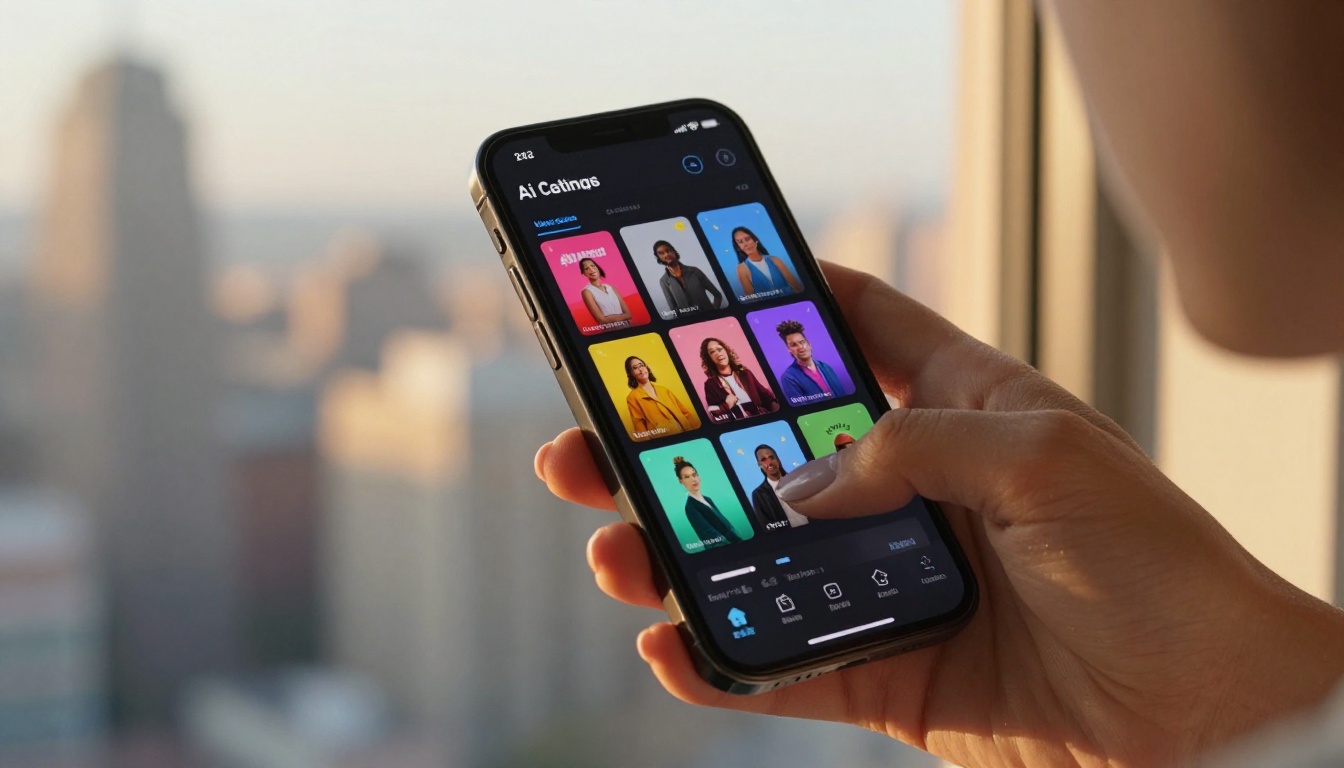
Visual production is where AI delivers the most obvious ROI for marketing teams. In 2026, a team of two can produce 50 on-brand visual assets per week using text-to-image models, work that would have required a designer, photographer, and retoucher in 2022.
How Marketers Use Text-to-Image Daily
The use cases fall into three buckets:
- Social media assets: Scroll-stopping visuals for Instagram, LinkedIn, TikTok thumbnails, and Facebook ads
- Product mockups: Placing products in lifestyle scenes without a photo shoot
- Campaign hero images: High-resolution visuals for landing pages, email headers, and display ads
The quality ceiling on these models has risen dramatically. Photorealistic outputs that once required heavy post-processing now come out of the generation pipeline publish-ready.
Picking the Right Model for the Job
PicassoIA's text-to-image collection gives marketing teams access to over 90 models in one place. The variety matters because different models have different strengths: some produce better faces, some handle product photography better, and some are optimized for stylized editorial shots.
For teams doing volume work, having access to multiple models through a single platform eliminates the friction of managing different subscriptions and APIs.
| Use Case | Best Approach |
|---|
| Social media graphics | High-detail photorealistic models |
| Product mockups | Models with strong object consistency |
| Campaign heroes | High-resolution models with cinematic output |
| A/B test variants | Fast generation models for volume |
💡 Generate 5-10 variations of each visual and run them as A/B tests. The difference in click-through rate between the best and worst variant is often 40% or more.
3. AI Background Removal at Scale

Product photos with cluttered or inconsistent backgrounds are one of the most common bottlenecks in e-commerce and retail marketing. Whether you are processing 10 images or 10,000, manual background removal is a time sink that AI has made completely unnecessary.
Why Clean Backgrounds Matter for Ad Performance
Ads with clean, white or transparent backgrounds consistently outperform busy backgrounds in click-through rate tests. On Amazon, product listings with white backgrounds see higher conversion rates. On social media, clean product shots stand out in feeds filled with noise.
The problem for most teams is that product photography often arrives with inconsistent backgrounds, studio imperfections, or shadows that do not work across multiple ad formats.
Remove Background by Bria
Remove Background handles edge cases that used to trip up automated tools: hair, transparent objects, fine fabrics, and reflective surfaces. For an e-commerce team processing product catalogs or a brand team standardizing creative assets, the output is clean enough to use without manual touch-up.
The workflow is straightforward: upload the image, get back a clean cutout. No Photoshop. No manual selections. No per-image time investment. For a team processing hundreds of SKUs per week, this alone saves dozens of hours per month.
4. AI Image Upscaling for High-Resolution Assets
Low-resolution images cost marketing teams every time they appear in the wrong format. A social media image repurposed for a billboard, a thumbnail blown up to a hero banner, or a stock photo used at the wrong dimensions, these all lead to blurry, unprofessional outputs that erode brand perception.
When Low-Res Kills Your Ad Performance
Meta and Google both penalize blurry creatives in their ad quality scores. Display networks reject images below certain DPI thresholds. Print agencies will refuse files that do not meet resolution requirements. For marketing teams working across channels, upscaling is not optional, it is infrastructure.
Clarity Pro Upscaler vs Real ESRGAN
Clarity Pro Upscaler is built for photorealistic outputs, adding texture and fine detail as it scales images up. It works particularly well with faces, skin textures, and product photography, making it the go-to for teams working on people-centric campaigns.
Real ESRGAN is faster and better suited for volume processing. If you have 200 images that need to go from 512px to 2048px, Real ESRGAN processes them consistently at scale without the slower inference time of more detailed models.
For the highest-quality output on individual hero images, Image Upscale by Topaz Labs supports up to 6x scaling with exceptional detail retention. It is the choice when a single image needs to look perfect across a billboard, a website hero, and a print ad simultaneously.
5. AI Voiceover for Video and Podcast Content

Video without voiceover is incomplete. In 2026, most marketing teams producing video content, whether YouTube ads, product explainers, or social reels, are using AI voiceovers to cut production time by 80% or more compared to traditional voice talent workflows.
ElevenLabs V3 for Brand Voice
V3 by ElevenLabs is the industry benchmark for naturalness. The voice quality is close enough to a professional voice actor that most listeners cannot distinguish it in a first listen. For marketing teams that need consistent brand voice across hundreds of video assets, having a designed voice that performs reliably is a major operational advantage.
The model supports emotional range, pacing control, and multilingual output, which means a single voice asset can be adapted across markets without re-recording.
Minimax Speech 2.8 HD for Multilingual Reach
For teams marketing across multiple languages, Speech 2.8 HD by Minimax produces studio-quality audio across languages without the quality drop that plagues most multilingual text-to-speech systems.
The HD model handles pronunciation, intonation, and rhythm across languages with accuracy that standard text-to-speech cannot match. For global campaigns where professional voiceover in every target language would cost tens of thousands of dollars, this closes the gap completely.
💡 Record a 30-second sample from your best human voice actor and use it as a reference for AI voice cloning. The output will match your existing brand audio far more accurately than starting from a preset.
6. AI Music Generation for Brand Soundscapes
Stock music libraries have two problems: everything sounds familiar because everyone uses the same tracks, and licensing is complicated. AI-generated music solves both by producing original, royalty-free tracks tailored to the specific mood, pace, and duration of each piece of content.
Lyria 3 Pro for Original Tracks
Lyria 3 Pro by Google produces full-length, high-fidelity tracks from text prompts. You describe the mood, tempo, instrumentation, and duration, and the model generates a track that is both original and royalty-free. For video ads, brand anthems, or podcast intros, the output quality is high enough to publish without additional mixing.
For fast iteration, Music 2.6 by Minimax generates full songs complete with vocals, which opens up the possibility of creating jingle-style content at a fraction of traditional production costs.
Why Custom Music Wins Over Stock Libraries
Three reasons custom AI music outperforms stock every time:
- Brand uniqueness: No one else is using the exact same track
- Duration control: Generate exactly 15, 30, or 60 seconds, no awkward fade-outs required
- Licensing: AI-generated music on PicassoIA is royalty-free by default
For campaigns running paid media, the risk of a copyright claim or a licensing dispute is not worth the perceived savings of a free stock track. Stable Audio 2.5 by Stability AI is another strong option, offering precise control over genre, mood, and tempo with production-ready output.
7. AI Reasoning Models for Marketing Strategy

The most underused category of AI in marketing is reasoning models. While most teams use LLMs for content production, the teams pulling ahead are using reasoning-capable models for strategy, competitive intelligence, and data interpretation, not just writing.
Grok 4 for Competitive Intelligence
Grok 4 by xAI is built for complex multi-step reasoning. Feed it a competitor's ad copy, their landing page, their pricing structure, and their job listings, and ask it to construct a picture of their positioning strategy. The model synthesizes across multiple inputs and produces structured breakdowns that would take a junior analyst hours to compile manually.
For brand teams that need to react fast to competitive moves, this cuts the intelligence cycle from days to minutes.
DeepSeek R1 for Data-Driven Decisions
DeepSeek R1 is a reasoning model that shows its work. You can paste in campaign performance data, ask it to identify what is underperforming and why, and get back a chain-of-thought reasoning breakdown that explains each step.
For marketing managers who present to stakeholders, the ability to show how the AI reached its conclusions adds credibility to data-backed recommendations. It is the difference between saying "AI told me to do this" and showing a logical, auditable reasoning chain.
💡 Do not use reasoning models for quick drafts. They are slower than standard LLMs. Reserve them for tasks that require multi-step thinking: market sizing, attribution work, and positioning decisions.
| Tool Category | Top Models on PicassoIA | Best For |
|---|
| Copywriting | GPT-5, Claude Opus 4.7, Gemini 3 Pro | Ad copy, emails, long-form content |
| Image Generation | 90+ text-to-image models | Social assets, product mockups, campaign heroes |
| Background Removal | Remove Background by Bria | Product photos, e-commerce catalogs |
| Image Upscaling | Clarity Pro, Real ESRGAN, Topaz Upscale | High-res creatives, multi-format campaigns |
| Voiceover | ElevenLabs V3, Speech 2.8 HD | Video ads, explainers, multilingual content |
| Music Generation | Lyria 3 Pro, Music 2.6, Stable Audio 2.5 | Brand audio, video soundtracks, jingles |
| Strategy and Reasoning | Grok 4, DeepSeek R1 | Competitive research, campaign planning |
Start Producing with PicassoIA

Every tool on this list is accessible from a single platform. PicassoIA brings together the LLMs, image generators, upscalers, voiceover models, and music generators covered in this article, without the overhead of managing multiple subscriptions or switching between seven different interfaces.
The fastest way to see the difference in your own workflow is to pick one category and run your current process through the AI version. Take your next email sequence and draft it with GPT-5. Generate the hero image for your next ad campaign. Upscale your next product photo with Clarity Pro Upscaler. Add a custom voiceover to your next video using ElevenLabs V3.
The results will make the case for you. AI marketing tools in 2027 are not about replacing your creative team. They are about removing the bottlenecks that slow great ideas down. Every hour spent on manual resizing, background removal, or voiceover coordination is an hour not spent on strategy, messaging, or creative direction.
Your next campaign is waiting. The tools are ready on PicassoIA.


