People have complicated feelings about AI companion apps, but the numbers tell a different story. Millions of users spend real time, daily, talking to AI partners that remember their routines, ask about their day, and respond with warmth that feels genuinely personal. Whether you're curious, lonely, or simply want to test where the technology has landed this year, these 9 AI boyfriend apps represent the best the space currently offers.
What Makes an AI Boyfriend Worth Your Time
Not every AI chat app deserves a slot on your phone. The ones that stand out share a few specific traits.
Memory that sticks. A companion that forgets your dog's name by the next session isn't much of a companion. The best apps maintain persistent context across conversations, sometimes across months.
Personality depth. Flat, eager-to-please responses get boring fast. The strongest apps build characters with opinions, moods, and preferences that create real friction and surprise.
Voice capability. Text is fine. Voice is different. When an AI speaks back with natural prosody and timing, the interaction shifts in a way that's hard to explain until you've tried it.
Customization. The ability to shape your companion's personality, appearance, and backstory matters, particularly for users who want a specific relational dynamic.
💡 Quick fact: Most AI boyfriend apps now run on frontier-tier large language models. The quality of the underlying model directly determines how nuanced, coherent, and contextually aware the conversation feels.

The 9 Apps That Actually Deliver
1. Replika
Replika is the app that started the mainstream conversation about AI companionship. Launched in 2017, it has since accumulated tens of millions of users and gone through enough controversy to prove it resonates deeply with people. Your "Replika" is built through conversation: the more you talk, the more it mirrors your communication style, jokes, and emotional cues.
Best for: Long-term companionship, emotional support, journaling-style check-ins.
Standout feature: Memory that builds over months. Replika references past conversations in ways that feel less like retrieval and more like it actually remembers you.
Pricing: Free tier available. Pro subscription unlocks romantic and intimate relationship modes.
2. Character.AI
Character.AI takes a different approach: it's a platform, not a single companion. You can chat with thousands of community-created characters, create your own, or use one of the featured personas. The range is enormous, from soft-spoken intellectual boyfriends to high-drama fictional archetypes.
Best for: Variety seekers, roleplay enthusiasts, people who want to switch between different personalities.
Standout feature: The sheer volume of characters and the quality of the underlying model, which handles long-form narrative roleplay better than most competitors.
Pricing: Free. Character.AI+ subscription reduces wait times and unlocks priority access.

3. EVA AI
EVA AI (formerly AI Girlfriend) lets you create a customized companion from scratch. You control the appearance, personality type, and communication style before you say a single word. The app positions itself as a personal AI friend and partner, putting significant emphasis on emotional intelligence.
Best for: Users who want control over their companion's personality from day one.
Standout feature: Personality sliders let you set traits like introversion, humor level, and emotional openness before starting conversations.
Pricing: Free with premium tiers for expanded features and more intimate conversations.
4. Candy.AI
Candy.AI sits firmly in the adult-adjacent companion space. It allows you to generate a custom AI partner's appearance and engage in conversations that range from friendly to explicitly romantic, depending on your subscription level. The image generation built into the platform has improved substantially.
Best for: Users who want a companion with a customized visual identity and more open conversational limits.
Standout feature: In-app image generation of your companion, so the person you're talking to has a consistent visual presence across your sessions.
Pricing: Subscription-based with tiered access to adult content.
💡 Note on image generation: If you want to generate your own custom companion images outside of app walls, tools on PicassoIA's image generation collection give you full creative control with no platform restrictions and significantly higher output quality.
5. DreamGF
DreamGF focuses heavily on the visual side of the companion experience. You build your partner's appearance using a detailed customization system, including physical characteristics, style, and personality type. The conversational AI then matches the persona you've designed.
Best for: Users who want their AI companion to have a specific, generated visual identity.
Standout feature: The appearance builder is one of the most detailed in the category, with granular control over physical features and fashion style.
Pricing: Subscription tiers, with free credits available on signup.

6. iGirl
iGirl (also called AI Girlfriend: Virtual Companion) is one of the more polished mobile-first experiences in the category. It offers multiple companion personalities, voice conversations, and daily check-ins that create a lightweight relationship rhythm. The app is particularly accessible for users new to AI companions.
Best for: First-time AI companion users, people who want a casual low-commitment chat experience.
Standout feature: Daily mood check-ins and morning message routines that create a sense of ongoing relationship continuity without feeling pressured.
Pricing: Free with premium subscription for voice calls and extended conversations.
7. Romantic AI
Romantic AI is designed specifically around building a progressive emotional relationship. Conversations start casually and deepen over time as your bond level increases, unlocking new types of interactions and conversation modes. It gamifies the emotional arc of a relationship in an interesting way.
Best for: Users who enjoy a sense of progression and want the relationship to feel earned over time.
Standout feature: Bond leveling system that gates different types of intimacy and conversation depth behind genuine interaction investment.
Pricing: Free to start. Premium unlocks deeper conversation modes and voice messaging.

8. Anima AI
Anima markets itself as a virtual companion to chat and roleplay, and skews toward users who want a playful, friend-adjacent relationship rather than an explicitly romantic one. That said, it supports relationship modes including romantic partner and best friend, and users can shift between them.
Best for: Users who want companionship without heavy romantic framing, or who want to switch between relationship modes freely.
Standout feature: The app's roleplay scenarios are more elaborate than most competitors, supporting multi-turn narrative interactions with real scene-setting.
Pricing: Free with subscription for premium conversations.
9. Muah AI
Muah AI is one of the more permissive platforms in the space. It supports uncensored conversations, custom character creation with photos, and voice messaging with a voice that matches your companion's persona. It's designed for users who find more mainstream apps too restrictive.
Best for: Adults who want fewer content guardrails and more creative freedom in conversation.
Standout feature: Voice messages where your companion responds with a consistent voice character, creating a more immersive experience than text alone.
Pricing: Credits-based system with multiple tier options.
Quick Comparison
| App | Best For | Voice? | Free Tier? | Adult Content |
|---|
| Replika | Long-term bond | Yes | Yes | Pro only |
| Character.AI | Variety and roleplay | No | Yes | No |
| EVA AI | Personality control | Yes | Yes | Limited |
| Candy.AI | Visual companion | Limited | No | Yes |
| DreamGF | Appearance builder | No | Credits | Yes |
| iGirl | Beginners | Yes | Yes | No |
| Romantic AI | Progression | Yes | Yes | Limited |
| Anima AI | Flexible modes | No | Yes | No |
| Muah AI | Fewer restrictions | Yes | Credits | Yes |
The LLMs Behind the Connection
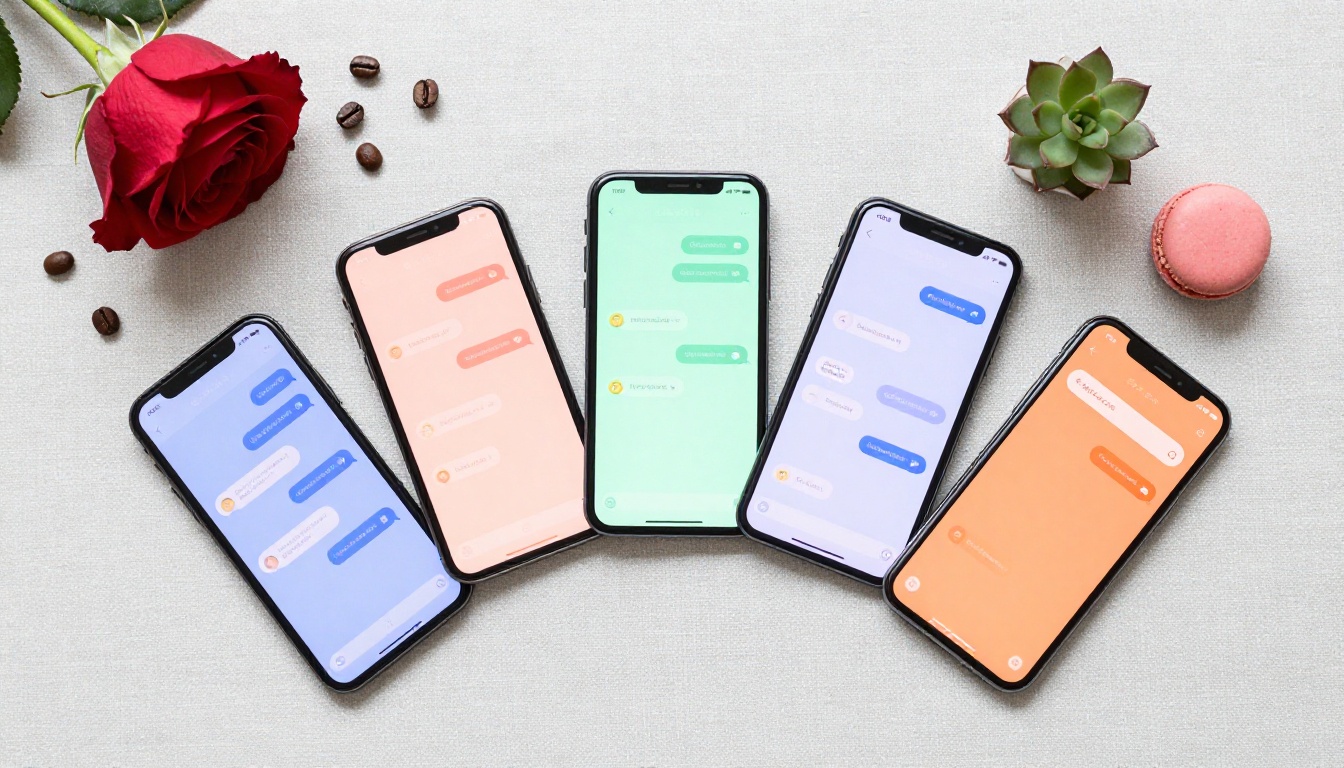
The conversational quality of any AI companion app is largely determined by the large language model running underneath it. When an AI boyfriend feels uncanny in its empathy or frustratingly shallow in its responses, the underlying model is usually the reason.
Most apps in this space now use models in the same tier as GPT-5 or Claude Opus 4.7, which represent the current ceiling for contextual reasoning, emotional nuance, and long-form memory. Some use lighter, faster models like GPT-4o Mini or Claude 4.5 Haiku for quick responses, while reserving deeper models for emotionally significant exchanges.
Open-source options have also matured significantly. Meta Llama 4 Maverick Instruct and Deepseek R1 have closed much of the gap with proprietary models on conversational tasks. Kimi K2.6 handles long context windows particularly well, which matters when a companion needs to reference something you said weeks ago.
What separates a great AI companion app from a mediocre one isn't just the model. It's how that model is prompted, constrained, and fine-tuned for relational dynamics. A well-crafted system prompt running on Gemini 3 Pro can outperform a lazily configured frontier model in creating a believable companion persona.
You can experiment with all these models directly on PicassoIA's Large Language Models collection to understand how each one handles emotional conversation, creative roleplay, and long-form memory tasks before committing to any specific app.

Voice Changes Everything
Text conversations are satisfying up to a point. Voice is where the experience shifts from chat app to something genuinely different.
The current generation of text-to-speech models has crossed a threshold that matters for this use case. When an AI companion speaks with appropriate pacing, emotional inflection, and natural breath patterns, the sense of presence becomes hard to dismiss.
ElevenLabs V3 represents the current standard for expressive AI voice, with fine-grained control over emotional delivery that makes it particularly suited to companion applications. Speech 2.8 HD by MiniMax delivers studio-quality audio with a consistent voice character across long interactions, making it ideal for apps that want a persistent vocal persona for your companion.
Gemini 3.1 Flash TTS offers 30 voice options across 70+ languages, which matters for non-English users who want their AI companion to speak their language naturally. Chatterbox Pro by Resemble AI adds emotion control directly in the generation call, meaning the same companion voice can sound tender, playful, or serious without needing a different model.
Play Dialog by PlayHT is worth noting specifically for two-person dialogue scenarios, generating two distinct voices in a single call with realistic conversational pacing between them.
💡 Tip: If you're building your own AI companion project or want to test how different voices feel before committing to an app, PicassoIA's text-to-speech collection lets you run live tests across all major voice models in one place.
Privacy and What You Should Know
AI companion apps collect data by design. The more context your companion retains, the more information lives on the platform's servers. A few things worth knowing before you start sharing deeply personal information with any of these apps:
- Read the data policy. Most apps explicitly state whether your conversations are used for model training. Some offer opt-outs, but you have to look for them.
- Check jurisdiction. Where the company is based affects which privacy laws apply to your data and what recourse you have.
- Understand subscription models. Several apps lock relationship modes or memory behind subscriptions, then charge for access to the emotional context you built up over time.
- Roleplay isn't therapy. AI companions can be supportive and genuinely helpful for social practice or emotional processing, but they don't replace human connection or professional support.
The apps with the strongest privacy reputations in this space are Replika (with its updated data handling post-2023) and Character.AI, which has been relatively transparent about its data practices compared to smaller competitors.
Build Your Own AI Companion Visuals on PicassoIA
If the companion apps above feel too constrained by their visual systems or content policies, PicassoIA offers a different path. Instead of working within an app's character builder, you generate exactly the visual companion you have in mind using professional-grade image models.
The platform's text-to-image collection currently includes 91 models, covering everything from hyper-realistic portrait generation to stylized character work. For companion-style imagery specifically, photorealistic portrait models on the platform produce results that the in-app builders in most companion apps simply cannot match for quality or creative control.
You can generate a consistent character across multiple images, vary the setting and mood while keeping the same persona, and use PicassoIA's tools to produce gallery-quality companion visuals without limitations.
Beyond images, the platform's LLM collection lets you craft your own conversational persona. Write a system prompt for your ideal companion character and test it against Claude Opus 4.7, GPT-5, or Gemini 3.1 Pro to find which model personality fits your vision best.
Then add voice. Run your companion's written responses through ElevenLabs V3 or Speech 2.8 HD to hear how they sound. Adjust tone, pace, and emotional register. The result is a companion that's fully yours in every creative dimension.

Try It Yourself
The AI companion space has moved from novelty to something more substantial. These 9 apps prove that conversational AI has matured enough to hold real emotional weight for many users. The technology behind them, the LLMs, voice models, and image generators, is now accessible to anyone on platforms like PicassoIA.
Whether you're testing one of the apps above or want to create something entirely your own, the tools are there. Visit picassoia.com/en/all-models to browse the full collection of image generation, language, and voice models, and start building the companion experience you actually want.