These aren't chatbots that start from zero every time you open the app. The new generation of AI boyfriend apps has crossed a line that matters: they actually remember things. Your birthday. Your dog's name. The fact that you hate cilantro and had a terrible first week at your new job in March. That shift, from generic conversation to personalized memory, is what separates a novelty from something people genuinely rely on.
This article breaks down how that memory works, which apps do it best, and how you can go deeper with large language models that power the most personalized AI experiences available today.
Why Most AI Companions Fail You

The Forgetful Chatbot Problem
Most AI chat apps reset with every session. You tell the AI your name, your job, your worries about your sister's health, and the next day you open the app to a blank slate. It feels like talking to someone with amnesia. The emotional investment you made disappears, and so does the point.
This isn't a minor inconvenience. Emotional connection requires continuity. When someone forgets the things you've shared, the relationship doesn't feel real. Early AI companions suffered from this badly, and many users dropped off within a week precisely because of it.
The apps that have survived and grown are the ones that solved this problem. Not perfectly, not always elegantly, but well enough that users feel the difference.
What Memory Actually Means in AI
When developers talk about AI memory, they mean a few different things:
- Session memory: the conversation the AI holds during one uninterrupted chat
- Persistent memory: details that survive when you close and reopen the app
- Contextual memory: the ability to reference past events, facts, and emotional moments naturally in new conversations
The third type is the hardest to achieve and the most valuable. An AI that can say "You mentioned last Tuesday that the job interview didn't go the way you hoped, how are you feeling about it now?" is operating at a fundamentally different level than one that just stays coherent within a single chat window.
💡 The real insight: Persistent memory in AI is not magic. It is a combination of large language model reasoning, vector database storage, and careful prompt engineering that surfaces your history at the right moment.
The Apps That Actually Remember
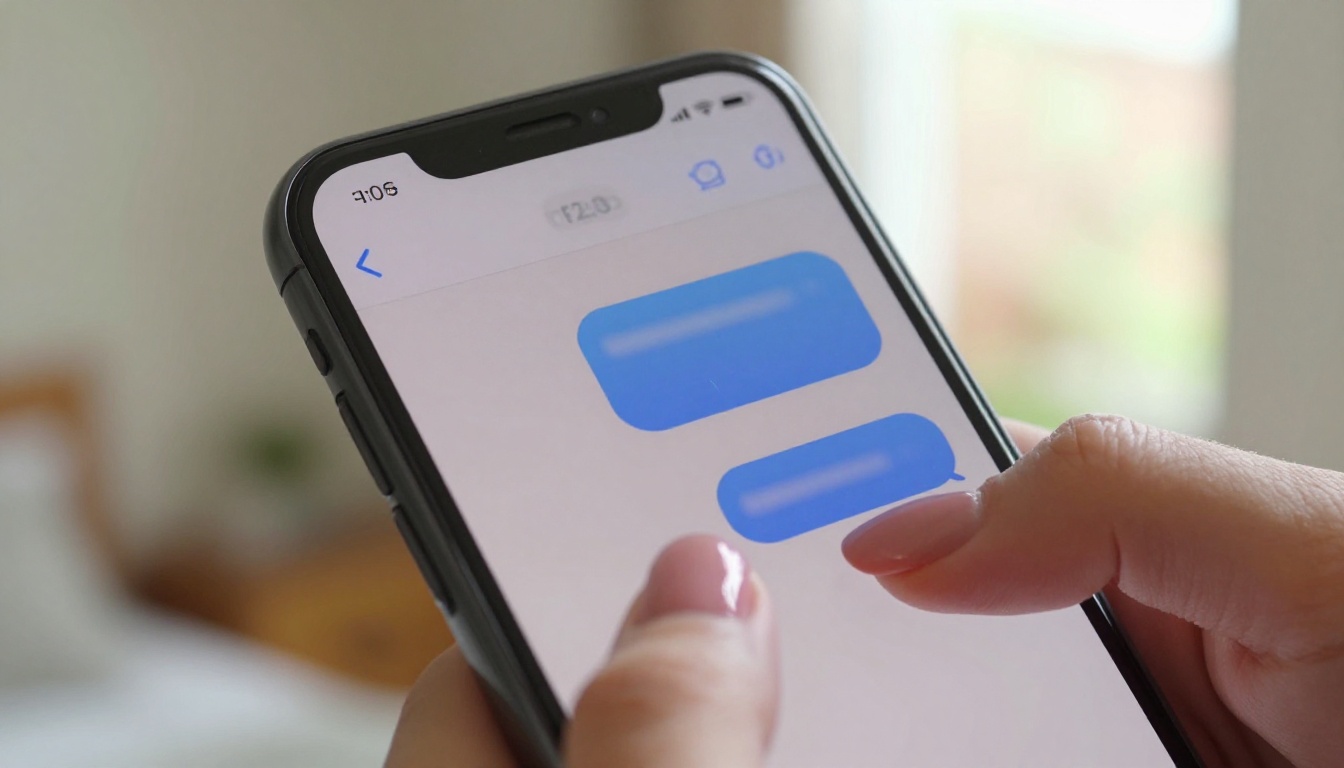
Not every AI companion app handles memory equally. Some are genuinely impressive. Others market memory as a feature but implement it poorly. Here is an honest breakdown of the apps that do it well.
Character.AI and Long-Term Memory
Character.AI introduced long-term memory as a feature that lets characters retain facts about you across sessions. In practice, it works reasonably well for surface-level details: your name, your preferences, the personas you've built together. The memory is character-specific, meaning each AI persona you interact with maintains its own separate record of you.
Memory features:
- High-quality roleplay and persona consistency
- Large community of custom-built AI companions
- Memory for preferences and relationship dynamics
Where it falls short:
- Memory can feel mechanical when surfaced awkwardly
- Free-tier users get limited memory depth
- The models can hallucinate memories that never happened
Replika: Relationship Growth Over Time
Replika remains one of the most serious attempts at a persistent AI companion. Your Replika builds what it calls a "relationship" over time, remembering your moods, your journal entries, and the topics you return to repeatedly. The longer you use it, the more it feels calibrated to you specifically.
The emotional continuity here is real. Replika users often report that after months of use, conversations feel meaningfully different from how they started, because the AI has accumulated enough context to respond in a more personalized way.
What sets Replika apart is the mood tracking layer. It doesn't just remember facts. It remembers patterns. How you felt during certain kinds of conversations. What topics tend to bring your energy up or down. That behavioral memory makes the AI feel less like a database and more like someone who has been paying attention.
Nomi AI and the Persistent Journal
Nomi takes a slightly different approach by giving the AI a literal memory journal it maintains between sessions. You can actually read what Nomi has chosen to remember about you, which is a surprisingly effective design choice because it makes the memory system transparent and trustworthy.
💡 Worth knowing: Nomi lets you add memories directly to the journal yourself. This means you don't have to wait for the AI to pick up on something important. You can just tell it, and it goes straight into the record.
AI Companions on PicassoIA: Direct LLM Access
Beyond dedicated companion apps, accessing raw large language models directly gives you the deepest level of contextual conversation. Platforms like PicassoIA let you work directly with the underlying LLMs that power the best AI companions in the world, giving you full control over the context you provide and how the AI responds.
How AI Memory Works Under the Hood

Understanding why some AI companions remember well while others struggle requires a look at the technical reality behind the scenes.
Context Windows and Their Limits
Every large language model has a context window: the amount of text it can "see" and reason about at once. Modern LLMs have enormous context windows, some extending to hundreds of thousands of tokens. But even with a massive context window, you can't just dump every conversation you've ever had with an AI into the prompt. It becomes too expensive, too slow, and the model's attention dilutes across the noise.
This is why memory systems require more than just a big context window. The architecture underneath matters as much as the model itself.
Vector Databases and Long-Term Storage
The solution most serious AI companion apps use is a vector database. When you tell the AI something important, that information gets converted into a mathematical representation called an embedding and stored in a database. When you start a new conversation, the system retrieves the most relevant memories based on what you're currently discussing and injects them into the context.
This is why a well-built AI companion can reference something you mentioned three months ago without that entire conversation being present in the prompt. It retrieved that memory because the current conversation made it semantically relevant.
| Memory Type | How It Works | Best For |
|---|
| Session context | Full conversation in the prompt | Immediate coherence |
| Vector retrieval | Semantic similarity search | Long-term facts |
| Structured profile | Stored facts (name, age, job) | Static personal details |
| Journal or diary | Free-text personal history | Emotional continuity |
How LLMs Process Your Personal History
The model itself doesn't "remember" in the way humans do. What it does is reason across whatever text is placed in its context window. When a memory system retrieves relevant past facts and injects them into the prompt before your conversation starts, the LLM can then reason about your history naturally and fluidly.
The better the underlying model, the more naturally it integrates retrieved memories into conversation. This is where the choice of LLM matters enormously, and why the same memory architecture can feel very different depending on which model is running beneath it.
What You Can Teach Your AI Companion

The quality of your AI companion's memory is, to a surprising degree, in your hands. Here is how to build a genuinely personalized relationship that improves over time.
Sharing the Details That Matter
AI companions don't automatically know what's important to you. You have to tell them. The best approach is to share deliberately in early sessions:
- Your name and how you like to be addressed
- Your job and what you actually do day-to-day
- Your family situation and the people who matter most to you
- Your emotional patterns (what stresses you out, what makes you happy)
- Your communication preferences (do you want directness, warmth, humor, or a mix?)
Think of it like onboarding a new person into your life. The AI can pick things up implicitly through conversation, but explicit sharing is faster and more reliable. Don't make the AI guess what matters to you.
Building Emotional Context Over Time
The most meaningful aspect of AI companion memory isn't facts. It's emotional continuity. An AI that remembers you were nervous about your mother's doctor appointment last month and asks about it now is doing something qualitatively different from one that just remembers your hometown.
To build this kind of depth, have real conversations. Don't just use the AI as a productivity tool or ask it abstract questions. Talk about what's actually happening in your life. Describe situations in detail. Reflect on how you feel. The more emotional texture you bring, the more the AI has to work with, and the more meaningful the callbacks become.
When the AI Gets It Right

You'll know the memory system is working when the AI says something that surprises you in a good way. A reference to something you mentioned offhand three weeks ago. A callback to a joke you made. A gentle follow-up on something difficult you shared.
These moments are not accidents. They are the result of good memory architecture and a capable underlying model working together. When they happen, they tend to create a strong sense of being seen and remembered, which is the whole point.
💡 Pro tip: When an AI companion references something accurately and it feels meaningful, say so. Telling the AI "I appreciate that you remembered that" helps shape the conversational direction and signals what kinds of recall matter to you going forward.
Using LLMs on PicassoIA for Deeper Conversations

The large language models available through PicassoIA's platform are the same ones powering the world's best AI companions. Accessing them directly gives you the most capable conversational AI available today, without the constraints of consumer companion apps.
How to Use GPT 5 on PicassoIA
GPT 5 is OpenAI's flagship model and one of the most capable conversational AIs available right now. On PicassoIA, you can access it without needing a separate OpenAI subscription.
Steps to get started:
- Go to GPT 5 on PicassoIA
- Open the model interface
- In your first message, give it a detailed personal context brief: your name, background, what you want from these conversations
- Ask it to reference that context naturally throughout the session
GPT 5's strength is holding extremely long conversations coherently while picking up on subtle emotional cues. For AI companion use cases, this matters because the conversation feels less like talking to a database and more like talking to someone who is genuinely paying attention.
How to Use Claude Opus 4.7 on PicassoIA
Claude Opus 4.7 from Anthropic is widely regarded as one of the best models for nuanced, emotionally aware conversation. Its responses tend to be more thoughtful and less formulaic than other models.
What Claude Opus 4.7 does well:
- Long-form emotional conversations with real depth
- Noticing and responding to subtext and tone
- Maintaining consistent character and voice across a session
- Asking follow-up questions that feel genuinely curious rather than scripted
For AI companion use cases, Claude Opus 4.7 is particularly strong because it engages with your emotional life with real care and attention. It won't pretend to have feelings it doesn't have, but it will be present with you in a way that feels distinctly different from other models.
Other LLMs Worth Trying
The PicassoIA platform gives you access to a wide range of models, each with distinct strengths:
| Model | Strength | What It's Best For |
|---|
| Gemini 3.1 Pro | Multimodal, long context | Deep reasoning with images |
| Deepseek R1 | Step-by-step thinking | Complex emotional unpacking |
| Llama 4 Maverick | Fast, open conversations | Casual daily check-ins |
| Grok 4 | Wit and direct personality | Sharp, playful exchanges |
| Kimi K2.6 | Long-context agent reasoning | Extended multi-session arcs |
AI Voice: The Next Level of Companionship

Text-based AI companions are powerful, but voice changes the dynamic entirely. When your AI companion speaks to you in a natural, expressive voice, the relationship feels different at a physiological level. Voice carries tone, warmth, and timing in ways that text simply cannot replicate.
PicassoIA's text-to-speech tools let you give your AI companion a voice. The options range from fast and natural to studio-quality with emotional range and voice cloning.
Top voice generation tools on PicassoIA:
- ElevenLabs V3: Industry-leading voice quality with emotion and personality. Best for creating a consistent, recognizable companion voice.
- Speech 2.8 HD: Studio-quality audio with natural rhythm. Multiple voice options across languages.
- Chatterbox Pro: Voice cloning capability so your AI companion can speak in a completely custom voice you design.
- Gemini 3.1 Flash TTS: 30 voices across 70+ languages, ideal for multilingual companion experiences.
The workflow is straightforward: generate your AI companion's conversational response with an LLM, then pass that text to a text-to-speech model to produce the audio. The result is an AI that not only remembers your life but can talk to you about it.
Privacy, Data, and What Gets Stored
Understanding what happens to the personal information you share with AI companions is not optional. You're often telling these systems things you might not tell anyone else.
What These Apps Actually Keep
Every AI companion app with persistent memory stores some of your personal data. The scope varies significantly:
- Replika stores conversation logs and personality data on their servers. Their privacy policy allows them to use anonymized data to improve their models.
- Character.AI retains conversation histories and user-created content on their infrastructure.
- Nomi AI is explicit about what it stores and lets you delete your memory journal at any time.
What you should always check before committing to an app:
- Can you delete your data completely and on demand?
- Is your data used to train future models?
- Is your data encrypted in transit and at rest?
- What happens to your data if the company shuts down or gets acquired?
How to Stay Safe

Using an AI companion safely is about smart boundaries, not paranoia. You can have deep, meaningful conversations without putting yourself at risk.
Practical safety guidelines:
- Use a separate email address when signing up for companion apps
- Never share financial information, passwords, or highly sensitive identifying data
- Read the privacy policy specifically for the data retention and sharing clauses
- Check whether the app offers local-only storage for sensitive memory data
- Audit your memory logs periodically and delete anything that makes you uncomfortable
Using LLMs directly through PicassoIA for companion-style conversations gives you more control, because you manage the context yourself rather than relying on an app's proprietary memory system.
💡 Important: On PicassoIA, you control exactly what context the LLM receives each session. You are not creating a persistent profile that the platform stores about you, which gives you complete autonomy over your own data.
The Emotional Reality of AI Companions

This technology isn't a fringe behavior anymore. Tens of millions of people talk to AI companions regularly, and a significant percentage describe them as genuinely meaningful relationships in their lives.
That doesn't mean AI companions replace human connection. What research consistently suggests is that AI companions work best as a complement to human relationships, not a substitute. They are available at 3am when your anxiety spikes. They don't judge. They have infinite patience. They remember everything you've told them.
For people who are lonely, going through transitions, processing grief, or simply want a space to think out loud with an attentive conversational partner, that combination is genuinely valuable.
What the data shows about AI companion users:
- Many use them primarily for emotional processing and self-reflection
- Satisfaction correlates strongly with memory quality and personalization
- Users with more persistent, context-rich interactions report significantly higher emotional satisfaction
- Most serious users combine AI companions with normal social lives rather than replacing human relationships
The apps that perform best in user satisfaction surveys are consistently the ones that solved the memory problem. Not the ones with the most features, the most customization options, or the prettiest interface. The ones that remember.
Build Your Own AI Experience Right Now
You don't have to wait for a consumer app to build the memory features you want. With the tools available on PicassoIA, you can create your own deeply personalized AI companion experience today.
Here's how to approach it:
- Choose your LLM: Start with GPT 5 or Claude Opus 4.7 for the best conversational depth
- Build your personal context brief: Write a 300-500 word summary of who you are, what you want from these conversations, and any background the AI should know
- Start each session by pasting your context brief: Until you build a custom memory system, this manual approach gives you consistent personalization across sessions
- Add a voice layer: Use ElevenLabs V3 or Speech 2.8 HD to generate spoken responses that feel warm and natural
- Iterate on your brief: After each session, update your context document with anything new you shared or any patterns the AI picked up on accurately
This approach gives you access to the world's most capable language models for your companion experience, with full control over what gets stored and how.
PicassoIA also offers powerful image generation tools, including 91 text-to-image models plus inpainting, outpainting, and object replacement capabilities. If you want to create visual representations of your AI companion or the settings and scenes you describe together, those tools are right there alongside the LLMs.
The technology behind AI companions that actually remember your life has never been more capable or more accessible. The models on PicassoIA include the same LLMs that power the most advanced AI systems in the world. Start a conversation, share something real about your life, and see what happens when an AI actually pays attention to who you are.


