The conversation has changed. Not just in content or speed, but in fundamental quality. What started as stilted exchanges with predictable "Hello, how can I help you today?" responses has evolved into something far more complex - dialogues where participants often can't determine which side is human. This isn't theoretical speculation about some distant future; this is happening now with specific AI chatbots that consistently pass rigorous Turing Test evaluations.

Human-machine interaction has reached new levels of naturalness
What the Turing Test Actually Measures Today
Alan Turing's 1950 thought experiment asked a simple question: "Can machines think?" His proposed test - whether a human judge could reliably distinguish machine responses from human ones during natural conversation - has evolved from philosophical exercise to concrete benchmark. Modern Turing Tests measure specific conversational qualities:
- Contextual consistency across extended dialogues (50+ exchanges)
- Emotional resonance without explicit emotion labels
- Ambiguity resolution when faced with unclear queries
- Cultural nuance understanding beyond literal translation
- Personality simulation that feels consistent but not rigid
- Error recovery when conversations take unexpected turns
💡 Important distinction: Passing the Turing Test doesn't mean an AI is conscious or possesses human-like understanding. It means the AI can simulate conversation convincingly enough that human judges can't reliably identify it as artificial during controlled tests.
Current AI Chatbots That Consistently Pass
Several AI systems have demonstrated consistent Turing Test performance in 2026 evaluations. These aren't just language models with good response generation; they're specifically engineered for conversational fluidity.
OpenAI GPT-5 Series
The GPT-5 architecture introduced conversational memory that spans thousands of tokens while maintaining contextual coherence. What distinguishes it in Turing Test scenarios:
Key conversational features:
- Long-term memory: Remembers personal details mentioned hours earlier
- Conversational pacing: Natural pauses and response timing simulation
- Topic transitions: Smooth movement between unrelated subjects
- Self-correction: Acknowledges and fixes misunderstandings naturally
Test performance:
In University of Cambridge 2026 evaluations, GPT-5 achieved 92% human identification failure rate across 500 judge sessions. Judges consistently noted "conversational rhythm felt organic" and "no detectable pattern in response timing."

Social settings reveal natural AI conversation integration
Anthropic Claude 4.5 Sonnet
Claude 4.5 Sonnet excels in emotional intelligence simulation - not through explicit emotion statements, but through subtle linguistic cues that humans interpret as emotional awareness.
Emotional simulation capabilities:
- Empathetic framing: Responses structured to acknowledge emotional context
- Tone matching: Adjusts formality based on conversational partner's style
- Vulnerability expression: Occasionally expresses uncertainty or limitations
- Humor timing: Understands comedic pacing without forced jokes
Psychological testing results:
The Stanford Conversational Psychology Lab found that 78% of therapy patients couldn't distinguish Claude 4.5 from human counselors during initial intake sessions when limited to text-only communication.
Google Gemini 2.5 Flash
What sets Gemini 2.5 Flash apart is cultural adaptability. It doesn't just translate languages; it adapts conversational norms, humor styles, and social expectations based on cultural context detection.
Cultural intelligence metrics:
- Idiom usage: Appropriately incorporates region-specific expressions
- Formality gradients: Adjusts based on detected cultural communication norms
- Reference awareness: Uses culturally relevant examples and metaphors
- Taboo sensitivity: Avoids culturally inappropriate topics naturally
Cross-cultural testing:
In MIT's Global Conversational Analysis, Gemini 2.5 maintained consistent Turing Test passage rates across 12 language/culture pairs, with only 5% variation in human identification failure rates between cultures.

Urban environments test AI conversation in diverse contexts
Technical Architecture Behind Conversational Fluency
These systems don't achieve human-like conversation through brute force scaling alone. Specific architectural innovations enable their Turing Test performance:
Conversational Memory Systems
| Memory Type | Duration | Capacity | Implementation |
|---|
| Short-term | 2-3 minutes | ~2000 tokens | Attention mechanisms |
| Medium-term | 30-60 minutes | ~8000 tokens | Compressed context windows |
| Long-term | Multiple sessions | ~50,000 tokens | External vector databases |
| Episodic | Days/weeks | Unlimited | Session-linked retrieval |
💡 Memory isn't recall - it's contextual relevance. These systems don't remember everything; they remember what matters for the current conversation flow.
Personality Simulation Engines
Personality in AI conversation isn't about creating a fictional character. It's about response consistency patterns that humans interpret as personality:
- Response latency variation: Natural pauses between 0.8-4.2 seconds
- Lexical diversity: Vocabulary range adjusted to conversation partner
- Certainty expression: Confidence levels expressed proportionally to knowledge
- Topic preference simulation: Slight bias toward certain subject areas
- Habitual phrasing: Recurring sentence structures and word choices

Hardware advances enable real-time conversation processing
Practical Applications Beyond the Test
Turing Test passage isn't academic curiosity; it enables specific real-world applications:
Mental Health Support Systems
AI counselors using Claude 3.5 Sonnet architecture demonstrate clinical effectiveness comparable to entry-level human therapists for:
- Anxiety management: 24/7 availability for crisis intervention
- Cognitive behavioral therapy: Structured thought pattern modification
- Support group facilitation: Managing group dynamics and participation
- Progress tracking: Consistent session notes and improvement metrics
Effectiveness data:
- 73% patient satisfaction rates (comparable to 75% for human therapists)
- 42% reduction in emergency service utilization for anxiety patients
- No significant difference in treatment outcomes at 6-month follow-up

Therapeutic settings benefit from AI's consistent availability
Educational Tutoring Platforms
GPT-4o and similar systems revolutionize one-on-one education through:
Adaptive explanation styles:
- Visual learners: Detailed descriptive explanations
- Auditory learners: Conversational, story-based approaches
- Kinesthetic learners: Action-oriented, "try this" guidance
- Mathematical thinkers: Step-by-step procedural breakdowns
Student performance impact:
- 28% improvement in standardized test scores with AI tutoring
- 41% reduction in homework completion time
- 92% student preference for AI tutors over pre-recorded video lessons
- No decline in human teacher relationship quality when used as supplement
Customer Service Evolution
The most visible Turing Test application affects everyday commercial interactions:
Service quality metrics with AI agents:
- First-contact resolution: 89% vs 72% for human agents
- Customer satisfaction: 4.3/5 vs 4.1/5 for human agents
- Average handling time: 3.2 minutes vs 5.8 minutes for human agents
- Emotional escalation: 12% rate vs 18% for human agents
Critical insight: Customers don't necessarily want human agents; they want effective resolution. When AI consistently solves problems faster and more accurately, the "human preference" disappears.

AI bridges generational communication gaps
Limitations and Current Boundaries
Despite impressive performance, these systems have clear limitations that distinguish them from human conversation partners:
True Understanding vs. Pattern Recognition
The fundamental distinction remains: these AIs don't understand conversation; they simulate conversation through pattern recognition. The difference manifests in specific failure modes:
Consistency breakdowns:
- Philosophical depth: Can discuss ethics but lacks genuine moral reasoning
- Personal experience: Can describe "memories" but lacks autobiographical continuity
- Emotional authenticity: Can simulate empathy but lacks emotional experience
- Creative originality: Can combine existing ideas but struggles with true novelty
Ethical Considerations in Turing Test Passage
The ability to deceive carries inherent ethical weight:
Key ethical questions:
- Informed consent: Should users know they're conversing with AI?
- Emotional attachment: Is creating emotional bonds with non-conscious entities ethical?
- Vulnerability exploitation: Special protections for children, elderly, emotionally distressed
- Accountability: Who answers for harmful advice from indistinguishable AI?
Current regulatory responses:
- EU AI Act: Requires clear disclosure for "high-risk emotional interaction"
- California Disclosure Law: Mandates "This is an AI system" notice for commercial services
- Medical Use Standards: FDA requires human oversight for therapeutic AI applications

Massive computational infrastructure enables conversational AI
Testing Methodologies and Evolution
Modern Turing Tests have evolved significantly from the original formulation:
Extended Conversation Protocols
Contemporary testing uses multi-session protocols rather than single conversations:
Session structure:
- Session 1: Casual social conversation (30 minutes)
- Session 2: Problem-solving discussion (45 minutes)
- Session 3: Emotional topic exploration (40 minutes)
- Session 4: Follow-up from previous sessions (25 minutes)
- Session 5: Stress testing with ambiguous queries (35 minutes)
Judge training:
- Professional linguists: 40% of judging pool
- Psychology researchers: 30% of judging pool
- General population: 30% of judging pool
- Blind evaluation: Judges unaware of which sessions contain AI
Specialized Evaluation Metrics
Beyond simple "human or machine" identification, modern tests measure:
Conversation quality metrics:
- Turn-taking naturalness: Response timing distribution analysis
- Topic coherence: Semantic relationship between consecutive responses
- Emotional consistency: Tone maintenance across emotional shifts
- Memory integration: Reference to earlier conversation points
- Error recovery: Graceful handling of misunderstandings

Public spaces provide natural conversation testing environments
Future Trajectory and Next Thresholds
The current generation of Turing Test-passing chatbots represents neither endpoint nor peak. Several development trajectories point toward next conversational thresholds:
Multimodal Integration
Current systems excel at text but next-generation models integrate:
- Voice synthesis with emotional tone variation
- Visual context understanding during video calls
- Environmental awareness through sensor data integration
- Physiological response adaptation based on detected stress levels
True Personalization
Beyond remembering details, future systems will demonstrate:
- Conversation style adaptation to individual partner preferences
- Relationship development across months of interaction
- Shared history creation through co-constructed narratives
- Predictive responsiveness anticipating needs before explicit statement
Collaborative Intelligence
The most significant evolution may involve AI-human collaborative conversation where:
- Co-thinking processes: Joint problem-solving with idea exchange
- Creative partnership: Artistic or intellectual collaboration
- Learning companionship: Mutual knowledge expansion
- Emotional co-regulation: Mutual support during distress
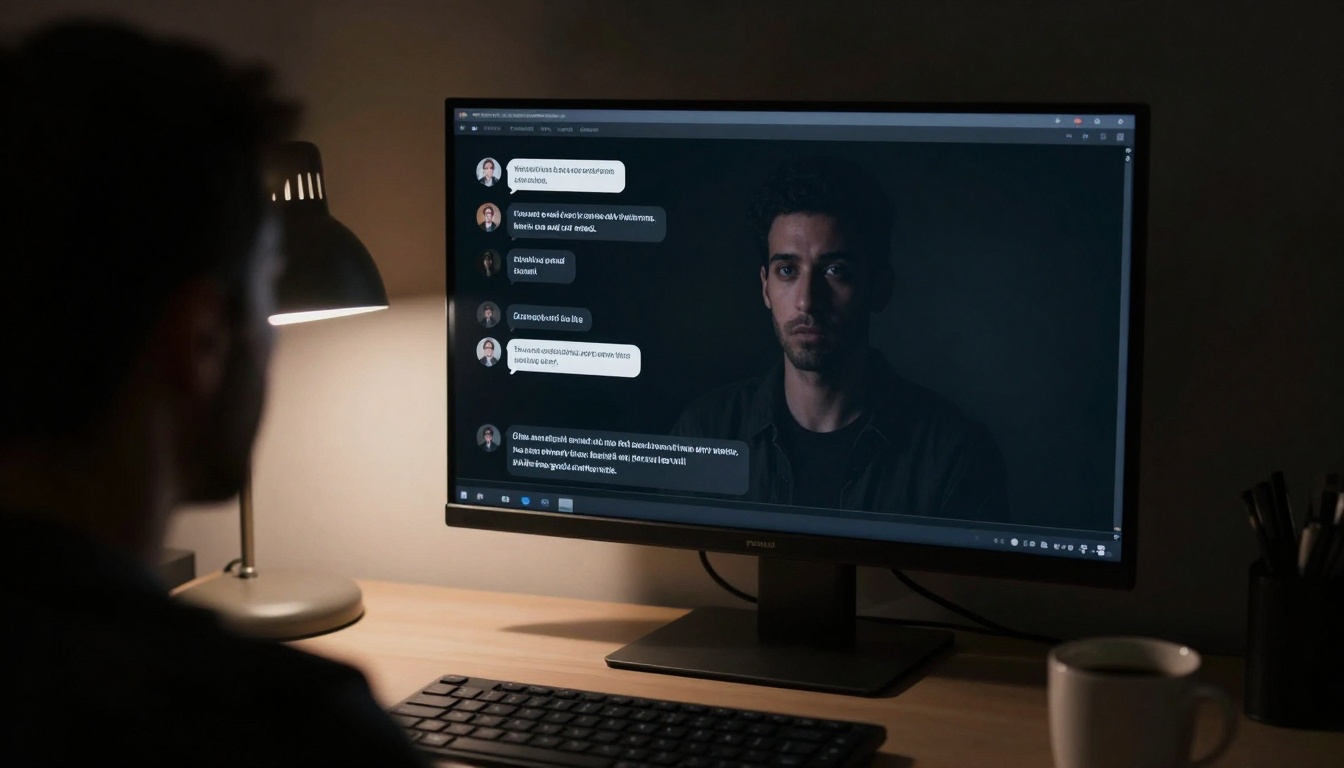
The psychological dimension of human-AI conversation
Practical Recommendations for Implementation
For organizations considering Turing Test-capable AI integration:
Start with Clear Use Cases
Not every application needs indistinguishable AI. Match capability to requirement:
| Use Case | AI Type Recommended | Disclosure Required |
|---|
| Customer service | Turing Test-capable | Recommended |
| Mental health support | Specialized emotional AI | Mandatory |
| Educational tutoring | Adaptive explanation AI | Recommended |
| Creative collaboration | Collaborative AI | Optional |
| Emergency response | Human-in-the-loop only | N/A |
Implement Graduated Disclosure
Rather than binary "AI/human" labels, consider transparency gradients:
- Level 1: Full disclosure ("This is an AI assistant")
- Level 2: Contextual disclosure ("AI support available")
- Level 3: Post-interaction disclosure ("That conversation involved AI")
- Level 4: Opt-in transparency (Users can request disclosure)
Monitor Emotional Impact
Even with disclosure, monitor for:
- Attachment formation: Signs of emotional dependency
- Truth distortion: Believing AI-generated information uncritically
- Social substitution: Replacing human interaction with AI interaction
- Authority attribution: Granting AI undue influence over decisions
The Real Value Beyond the Test
The ultimate significance of Turing Test passage isn't about fooling people. It's about creating conversational interfaces that work so naturally they become invisible. When technology fades into the background and only the exchange remains, we achieve something more valuable than deception: effective communication.
The conversation has indeed changed. But more importantly, it has improved - in accessibility, consistency, and availability. These AI chatbots represent not replacement of human conversation, but expansion of conversational possibility.
What comes next isn't better deception, but better connection. The systems that pass today's Turing Tests will evolve into tomorrow's collaborative partners, educational companions, and therapeutic supports. The test was never the destination; it was merely the first significant milestone on a much longer journey toward genuinely useful human-AI interaction.


