The quiet revolution isn't happening on public stages or in corporate boardrooms. It's occurring in home offices, small studios, and creative spaces where the click of mechanical keyboards syncs with the hum of AI processors. Adult entertainment is being rewritten, not by corporate giants, but by individual creators armed with sophisticated tools that were science fiction just three years ago.
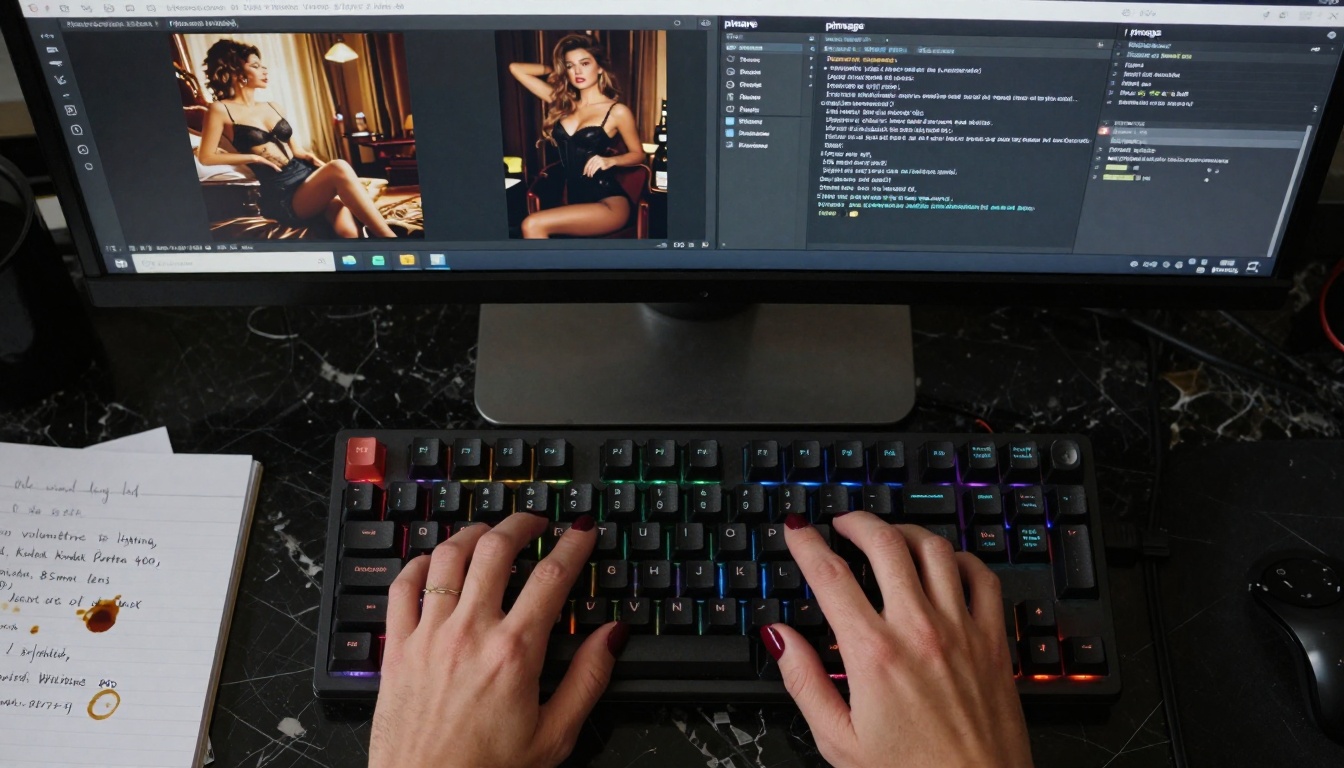
Caption: The modern creator's workspace blends traditional tools with AI interfaces. Mechanical keyboards for prompt writing sit alongside monitors displaying flux-2-klein-4b and p-image generated content.
The New Creative Workspace: Where AI Meets Human Vision
Walk into any modern adult content studio today, and you'll find something unexpected: less traditional camera equipment, more computing power. The transformation is fundamental. Where once stood lighting rigs and camera crews now sit multi-monitor workstations running simultaneous AI generation processes.
From Mechanical Keyboards to Machine Learning
The tactile satisfaction of a mechanical keyboard has found new purpose. Each keystroke now crafts prompts that guide AI models toward specific aesthetic goals. "Volumetric lighting, Kodak Portra 400, 85mm lens"—these aren't camera settings anymore, they're prompt parameters that shape AI output with photographic precision.
The workflow has inverted. Instead of capturing reality, creators now design reality through language. A well-crafted prompt can generate content that would require hours of traditional photography: perfect lighting, ideal angles, consistent quality. The bottleneck has shifted from technical execution to creative direction.
Studio Environments Transformed by Real-Time Generation
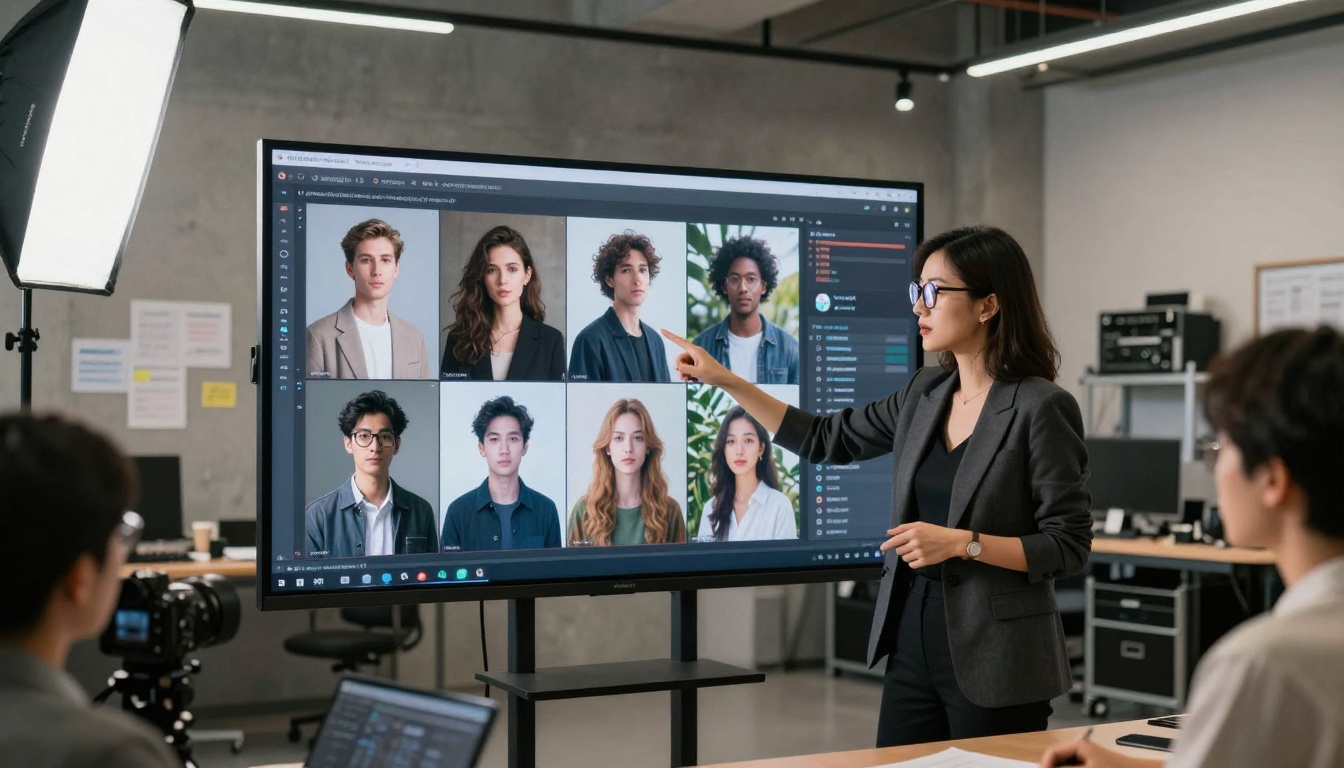
Caption: Modern studios feature large displays showing mosaics of AI-generated content. Creators evaluate outputs from models like gpt-image-1.5 and qwen-image-2512 side-by-side.
Industrial concrete walls now host not film equipment, but server racks and display arrays. The creative director's role has evolved from managing shoots to curating AI outputs. Quality control happens in real time, with creators comparing multiple model outputs simultaneously to select the best iterations.
The physical space reflects this digital shift. Inspiration walls feature printed AI-generated images alongside traditional mood boards. Collaboration areas have charging stations for tablets running generation apps. The entire studio environment has been reorganized around iterative creation rather than linear production.
💡 Key Insight: The most successful creators treat AI not as replacement, but as collaborator. They maintain human creative direction while leveraging machine speed for execution.
The Toolbox: AI Models Redefining Adult Content Quality
Not all AI models are created equal, especially for adult content. The market has segmented into specialized tools, each with strengths for different aspects of content creation.
Flux Models: Setting the Standard for Photorealistic Output
The flux-2-klein-4b and flux-2-max models represent the current gold standard for photorealistic adult imagery. Their architecture excels at:
- Skin texture rendering that captures natural pores, fine hairs, and subtle imperfections
- Lighting consistency across complex scenes with multiple light sources
- Anatomical accuracy that maintains proportional realism
- Material differentiation between fabrics, skin, and environmental elements
What makes Flux models different? They process images at higher latent resolutions, allowing for finer detail retention. This matters for adult content where subtle details—the way light catches hair, skin texture under specific lighting conditions—define quality.
GPT Image and Qwen: When Speed Meets Sophistication
gpt-image-1.5 brings a different approach: faster iteration with slightly different aesthetic priorities. Where Flux focuses on photographic realism, GPT Image offers:
- Rapid iteration cycles (seconds instead of minutes)
- Strong compositional understanding from its language model heritage
- Consistent character generation across multiple images
- Atmospheric rendering that excels at mood and emotion
qwen-image-2512 occupies the middle ground: nearly Flux-level quality with GPT-like speed. Its particular strength is color grading consistency—maintaining the same visual tone across an entire series of images.
P-Image and Z-Image Turbo: Specialized Tools for Specific Needs
For creators needing ultra-fast generation or specific editing capabilities:
- p-image: Optimized for real-time editing workflows. Perfect for creators who need to make quick adjustments during live sessions or collaborative reviews.
- z-image-turbo: The speed specialist. When you need hundreds of variations quickly for A/B testing or rapid prototyping.
| Model | Best For | Speed | Quality | Cost Efficiency |
|---|
| Flux-2-Klein-4b | Final production images | Medium | Excellent | High |
| GPT Image 1.5 | Rapid prototyping | Fast | Very Good | Medium |
| Qwen Image 2512 | Series consistency | Medium | Excellent | High |
| P-Image | Real-time editing | Very Fast | Good | Very High |
| Z-Image Turbo | Volume generation | Extreme | Good | Extreme |
The Mobile Revolution: Adult Entertainment in Your Pocket

Caption: Smartphone interfaces now host sophisticated AI platforms. A single thumb tap can generate custom adult content using models like z-image-turbo.
The most profound shift might be the simplest: adult entertainment has moved from desktop to mobile. Platform interfaces designed for thumb navigation have replaced complex desktop software. This democratizes creation—anyone with a smartphone can now generate professional-quality content.
Smartphone Interfaces for On-Demand AI Content
Mobile apps have evolved beyond simple viewers. They're now full creation suites with:
- One-tap generation based on saved prompt templates
- Live preview of AI outputs during prompt editing
- Gallery management with automatic tagging and organization
- Social sharing directly to platforms without intermediate steps
The interface design matters. Unlike desktop software with complex menus, mobile interfaces use gesture-based controls: swipe to browse, tap to generate, pinch to adjust parameters. This reduces the cognitive load of creation, making sophisticated AI tools accessible to non-technical users.
Thumb-Tap Generation: Instant Access to Custom Imagery
The intimacy of creation has changed. Where once content required scheduled shoots with multiple people, now a single creator can generate custom imagery during a coffee break. The barrier isn't technical skill anymore—it's creative vision.
This shift affects consumption too. Audiences expect personalized content that reflects their specific preferences. AI enables this at scale: platforms can offer thousands of variations on a theme, each slightly different based on user interaction patterns.
💡 Mobile Strategy: Successful platforms integrate AI generation directly into the consumption experience. Users don't just view content—they participate in its creation through preference selections that feed back into generation algorithms.
Data-Driven Decisions: Analytics Shape Content Strategy
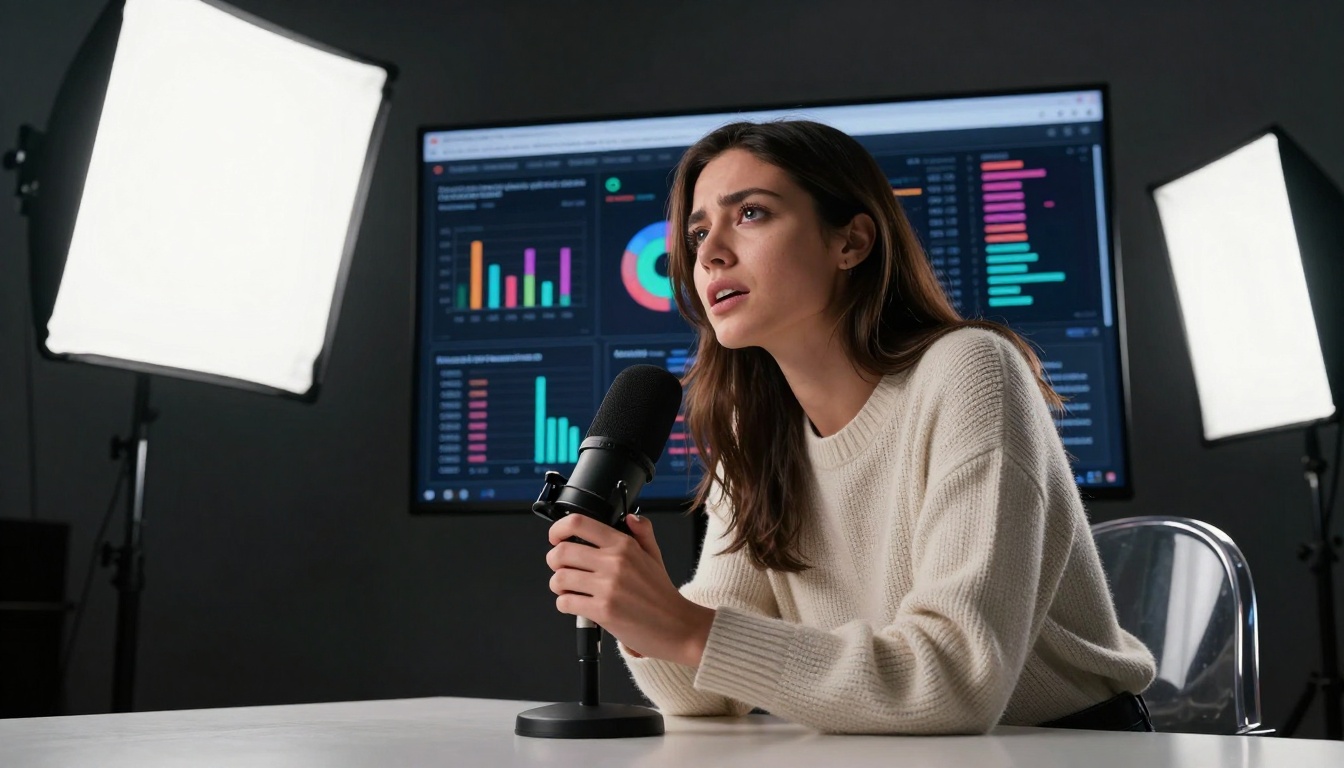
Caption: Creators now use sophisticated analytics tools like gemini-2.5-flash to understand audience patterns and optimize content strategies.
The creative process has become scientific. Every generation, every view, every interaction produces data that informs future creation. This isn't guesswork anymore—it's precision targeting based on empirical evidence.
Gemini 2.5 Flash for Audience Pattern Analysis
gemini-2.5-flash has emerged as the go-to tool for content strategy analysis. Its multimodal capabilities allow creators to:
- Analyze image preferences across demographic segments
- Identify trending aesthetic patterns before they become mainstream
- Predict content performance based on historical data
- Generate prompt optimization suggestions based on engagement metrics
The analysis goes beyond simple view counts. Modern tools examine:
- Dwell time on specific image types
- Conversion rates from browsing to subscription
- Patterns in user-generated prompts
- Seasonal variations in content preferences
Metrics That Matter: What the Numbers Really Say
Traditional metrics like "views" or "likes" have been supplemented with more nuanced measurements:
| Metric | What It Measures | Why It Matters |
|---|
| Prompt Effectiveness Score | How well specific prompt elements generate engagement | Direct feedback loop for improving generation quality |
| Aesthetic Consistency Index | How consistent AI outputs are across a series | Critical for building recognizable brand/style |
| User Preference Clustering | Groups of users with similar taste patterns | Enables hyper-personalized content targeting |
| Generation Efficiency Ratio | Quality output per compute cost | Determines sustainable business models |
The most successful creators have become data scientists of desire. They don't just create what they think audiences want—they create what the data tells them audiences respond to, then iterate based on performance.
Collaborative Creation: Humans Working with Machines
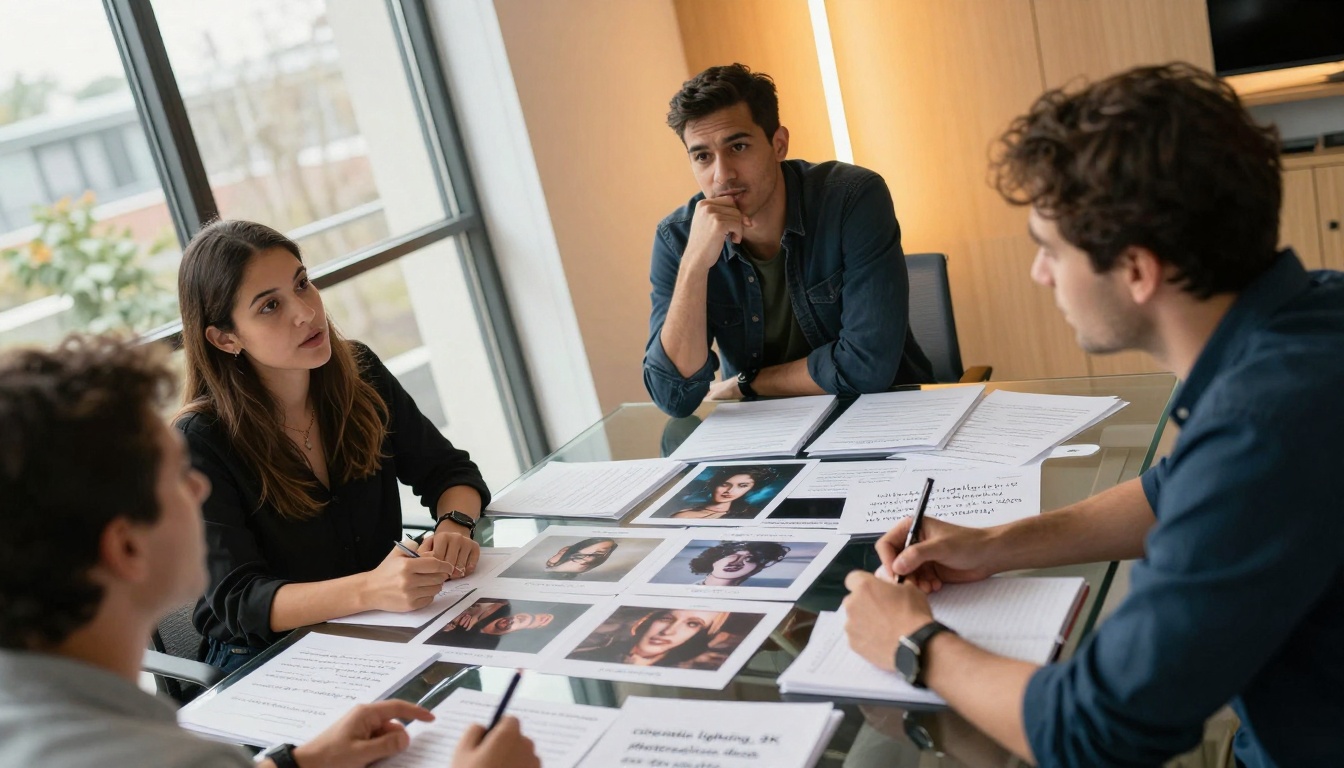
Caption: Collaborative sessions blend human creativity with AI capabilities. Teams review outputs from models like flux-2-max while discussing creative direction.
The romantic image of the solitary creator has been replaced by collaborative teams where AI is a participating member. Brainstorming sessions now include not just human team members, but also AI-generated references and suggestions.
Brainstorming Sessions with AI as Creative Partner
Modern creative meetings follow a specific pattern:
- Initial human ideation—core concepts, emotional tone, narrative elements
- AI rapid prototyping—generating multiple visual interpretations
- Human curation and selection—choosing the most effective outputs
- AI refinement—iterating on selected directions with parameter adjustments
- Final human approval—quality control and artistic judgment
The AI doesn't replace human creativity—it amplifies it. A single creative director can now explore dozens of visual directions in the time previously required for one. This expands creative possibilities rather than limiting them.
Ethical Considerations in AI-Generated Adult Content
With great power comes great responsibility. The industry has developed emerging ethical frameworks:
- Consent simulation—creating guidelines for when AI-generated characters should "appear" to give consent
- Diversity representation—ensuring AI doesn't reinforce harmful stereotypes
- Age verification systems—preventing generation of underage-appearing characters
- Copyright clarity—establishing ownership of AI-generated content
The most forward-thinking platforms implement ethical AI parameters directly into their generation systems. These aren't afterthoughts—they're foundational constraints that shape what can and cannot be created.
💡 Collaboration Tip: Treat AI like a junior creative team member. Give clear direction, provide specific feedback, and recognize its limitations while leveraging its strengths.
The Production Pipeline: From Prompt to Final Render
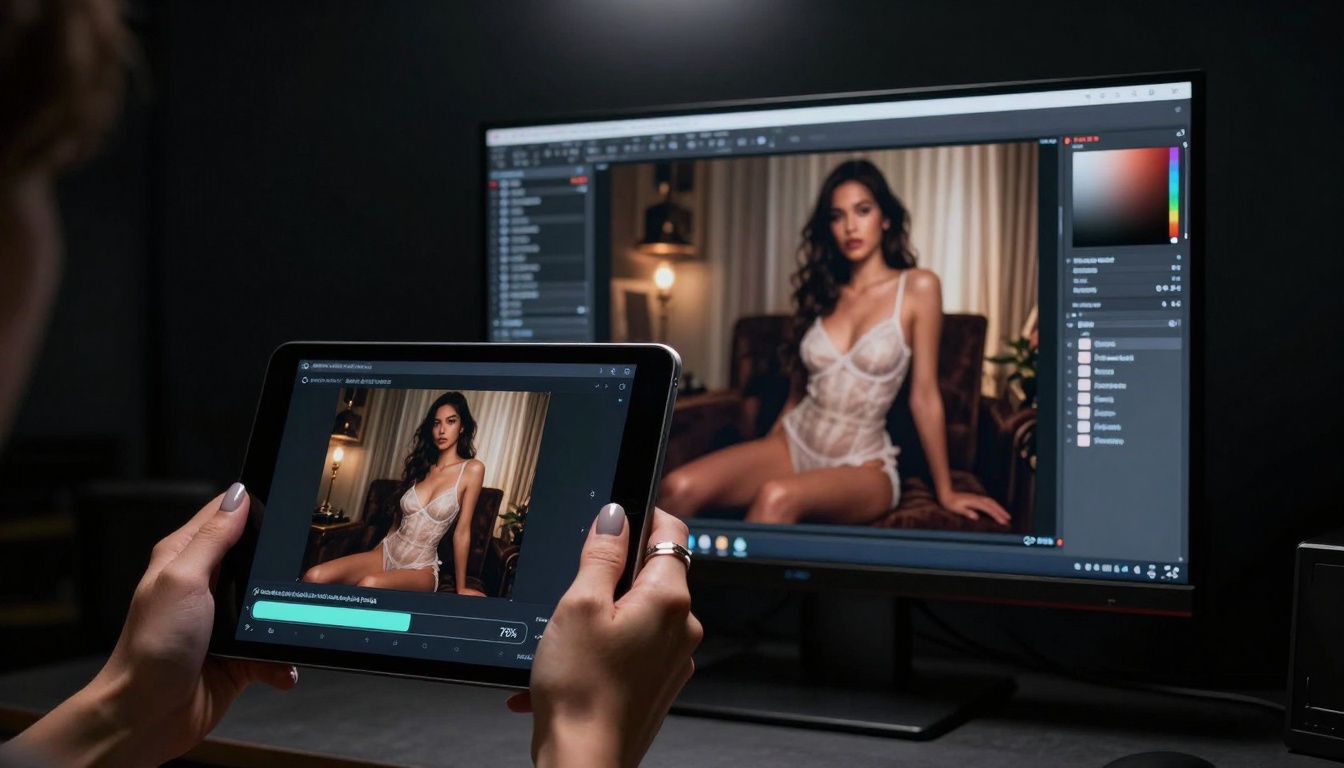
Caption: Real-time generation progress monitoring allows creators to watch as AI builds images layer by layer. Tools like p-image provide live progress feedback.
The production pipeline has been compressed from weeks to minutes, but it hasn't disappeared. Instead, it's been re-engineered around AI capabilities while maintaining quality control checkpoints.
Real-Time Generation Progress and Quality Control
Modern interfaces show generation progress in real time. Creators don't wait blindly for outputs—they watch images form, allowing for mid-generation adjustments if something looks wrong. This interactive process includes:
- Layer-by-layer previews showing how the AI builds the image
- Parameter adjustment during generation for course correction
- A/B testing of different prompt versions simultaneously
- Quality scoring during generation to flag potential issues early
The quality control process has shifted from post-production fixing to during-generation steering. This is more efficient and produces better results, as issues are caught and corrected while the AI is still working.
Split-Focus Workflows: Managing Multiple AI Models
Sophisticated creators don't rely on a single AI model. They run multiple models in parallel, comparing outputs to select the best result for each specific need. This split-focus approach requires:
- Dedicated hardware for simultaneous generation
- Comparison interfaces that show outputs side-by-side
- Model-specific prompt optimization for each AI's strengths
- Result aggregation systems that compile the best pieces from different models
The workflow looks like an orchestral conductor managing multiple instruments. Each AI model plays its part, with human direction ensuring they work in harmony toward the final creative vision.
Looking Through the Window: Private Creation, Public Perception
Caption: The blurred boundary between private creative work and public life. Creators work with tools like qwen-image-2512 while maintaining normal exterior appearances.
There's a profound disconnect happening. Inside creative spaces, a technological revolution is transforming adult entertainment. Outside, life continues normally—neighbors walk dogs, cars pass by, the world remains largely unaware of the seismic shifts occurring behind closed doors (or more accurately, behind dark windows reflecting computer screens).
The Reflection Effect: Balancing Creative Work and Normal Life
Creators navigate this duality daily. By day, they might appear as normal professionals, parents, or community members. By night (or in private workspaces), they're pioneering new forms of digital expression. This separation creates both challenges and opportunities:
- Professional isolation—limited ability to discuss work openly
- Creative freedom—reduced social judgment enabling experimentation
- Work-life integration challenges—blurred boundaries between personal and professional
- Innovation advantage—freedom from traditional industry constraints
The reflection in the window symbolizes this duality: the interior world of AI creation reflected against the exterior world of normal life. Both are real, both are valid, but they exist in parallel rather than integrated spaces.
Fisheye Views: Seeing the Complete Production Ecosystem
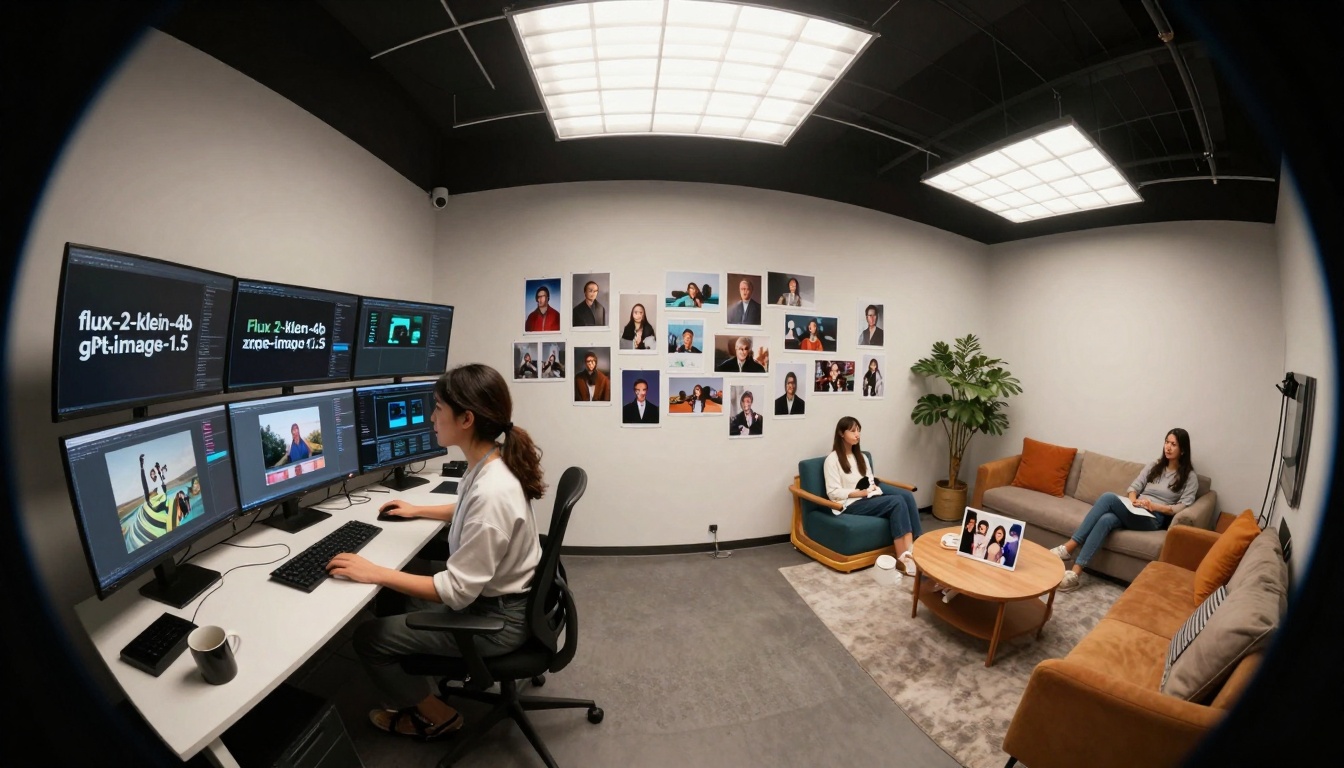
Caption: The entire creative ecosystem captured in one view—from standing desks running flux-2-klein-4b to inspiration walls and relaxation zones.
To understand what's happening, you need to see the complete picture. Not just the AI tools, but the human context in which they operate. The fisheye lens view reveals:
- The creative workspace—optimized for both focus and comfort
- The technological infrastructure—multiple monitors, specialized hardware
- The human elements—personal touches that maintain creative sanity
- The workflow integration—how everything connects into a cohesive system
This holistic view matters because AI doesn't exist in isolation. Its effectiveness depends entirely on how it's integrated into human creative processes, workspaces, and lifestyles.
What Comes Next: The Evolving Landscape
Caption: Creators gather to discuss the future of AI adult entertainment. Tools like gpt-image-1.5 provide the foundation for conversations about what comes next.
The current revolution is just the beginning. As AI models continue improving, several trends are emerging:
Hyper-Personalization at Scale
Platforms will move beyond basic preference matching to deep personalization that understands individual aesthetic preferences at a granular level. Your favorite lighting style, composition preferences, even emotional tone—all will be encoded into generation parameters.
Real-Time Interactive Generation
The next frontier: generation during consumption. Instead of pre-creating content, platforms will generate it in real time based on your immediate reactions and interactions. The line between creator and audience will blur further.
Ethical AI Becoming Standard
As the technology matures, ethical constraints will become baked into models rather than added as afterthoughts. This will shift responsibility from individual creators to platform developers, potentially raising quality standards industry-wide.
Monetization Models Evolving
Current subscription models will give way to more sophisticated approaches: pay-per-generation, creator royalties for popular prompt templates, or even AI-as-a-service for other industries wanting to leverage adult content expertise.
Your Turn: Experiment with AI Creation
The tools discussed here aren't theoretical—they're available right now on platforms like PicassoIA. Whether you're a professional creator, curious enthusiast, or industry observer, there's never been a better time to experiment.
Start with simple prompts using p-image for its balance of speed and quality. Explore different lighting descriptions ("volumetric morning light," "dramatic sunset glow," "soft window illumination"). Notice how small changes in prompt wording produce dramatically different results.
Try comparing outputs from flux-2-klein-4b and gpt-image-1.5 using the same prompt. You'll develop an intuitive sense for each model's strengths and when to use which.
Most importantly, remember that AI is a tool, not a replacement. The most compelling content comes from human creative vision amplified by machine capability, not machine generation without human direction.
The revolution is happening. The question isn't whether AI will transform adult entertainment—it already has. The question is whether you'll be a spectator or a participant in shaping what comes next.


