Every day, thousands of AI-generated images flood social media platforms, but only a select few capture collective attention and spread like wildfire. There's a distinct difference between AI images that get created and forgotten, versus those that people actively share, save, and repost across their networks. The phenomenon isn't random—certain AI image generators consistently produce content that resonates with audiences, while specific visual characteristics make images inherently shareable.

What makes AI images go viral?
Visual novelty ranks as the primary driver of shareability. When an AI-generated image presents something genuinely new—a visual concept people haven't seen before—it creates immediate value for sharing. This isn't about technical perfection; some of the most viral AI images contain subtle imperfections that make them feel more authentic and intriguing.
Emotional resonance determines whether an image gets saved versus scrolled past. AI images that evoke strong emotions—whether awe at breathtaking landscapes, curiosity about surreal compositions, or connection with relatable human moments—trigger the psychological impulse to share. This emotional component often overrides technical quality in determining virality.
Social currency plays a critical role. People share content that makes them look knowledgeable, creative, or culturally aware. When someone shares an AI-generated image, they're often signaling their awareness of cutting-edge technology or artistic trends. The image serves as social proof of their digital literacy and creative taste.
Technical accessibility matters more than most creators realize. Images that load quickly, display well across different screen sizes, and maintain visual impact even at thumbnail size have a distinct advantage in the attention economy. AI generators that produce optimized outputs inherently create more shareable content.
💡 Key insight: The most viral AI images often balance technical sophistication with emotional accessibility. They're advanced enough to impress technically-minded audiences but simple enough to resonate emotionally with general viewers.
Certain AI image generation platforms consistently produce content that gains traction across social networks. These platforms combine specific technical capabilities with user-friendly interfaces that enable creators to produce share-worthy content efficiently.
Flux models have emerged as frontrunners for viral content creation. The Flux 2 Pro model produces images with a distinctive aesthetic that balances photorealism with artistic flair. What makes Flux-generated images particularly shareable is their consistency across different prompts—users can reliably produce high-quality outputs that maintain visual coherence, which builds brand recognition for creators.

Stable Diffusion 3.5 represents a significant advancement in accessible high-quality generation. The Stable Diffusion 3.5 Large variant particularly excels at producing images that perform well on visual-centric platforms like Instagram and Pinterest. Its strength lies in consistency across different aspect ratios and resolutions, making it ideal for creators who need to adapt content for multiple platform requirements.
Imagen series from Google has gained traction for its distinctive visual signature. Imagen 4 produces images with a polished, commercial-ready aesthetic that appeals to professional creators and brands. The model's ability to handle complex prompts with multiple subjects and detailed environments makes it particularly effective for creating narrative-driven images that tell stories—a key factor in shareability.
Ideogram models have carved a niche for text integration within images. Ideogram v3 Quality specializes in creating images where text elements appear naturally integrated rather than artificially superimposed. This capability makes it particularly valuable for creating shareable memes, quotes, and informational graphics that spread rapidly across social networks.
| Model | Viral Content Strength | Best Platform For | Shareability Factor |
|---|
| Flux 2 Pro | Consistent aesthetic quality | Instagram, Twitter | High brand recognition |
| Stable Diffusion 3.5 | Multi-platform adaptability | Pinterest, Reddit | Cross-platform consistency |
| Imagen 4 | Commercial-ready visuals | LinkedIn, Behance | Professional appeal |
| Ideogram v3 | Text-image integration | Facebook, Twitter | Meme creation |
| p-image | Fast generation cycles | TikTok, Stories | Real-time relevance |
The anatomy of shareable AI content
Visual hierarchy in viral AI images follows predictable patterns. Images that perform best typically establish clear focal points within the first 0.3 seconds of viewing—the average time before a scroll decision gets made. This immediate visual impact often comes from contrast, color dominance, or compositional leading lines that guide the viewer's eye to the most important element.
Color psychology plays a measurable role in share rates. Analysis of thousands of viral AI images reveals specific color combinations that consistently outperform others:
- Blue-orange contrasts create visual tension that captures attention
- Monochromatic palettes with single accent colors help establish brand identity
- Warm skin tones with cool backgrounds enhance human connection in portraits
- High saturation in specific areas guides viewer attention strategically
Compositional patterns that work for traditional photography translate effectively to AI-generated content. The rule of thirds, golden ratio, and leading lines remain effective, but AI generation adds new possibilities like impossible perspectives, surreal scale relationships, and hybrid environments that traditional photography cannot easily achieve.
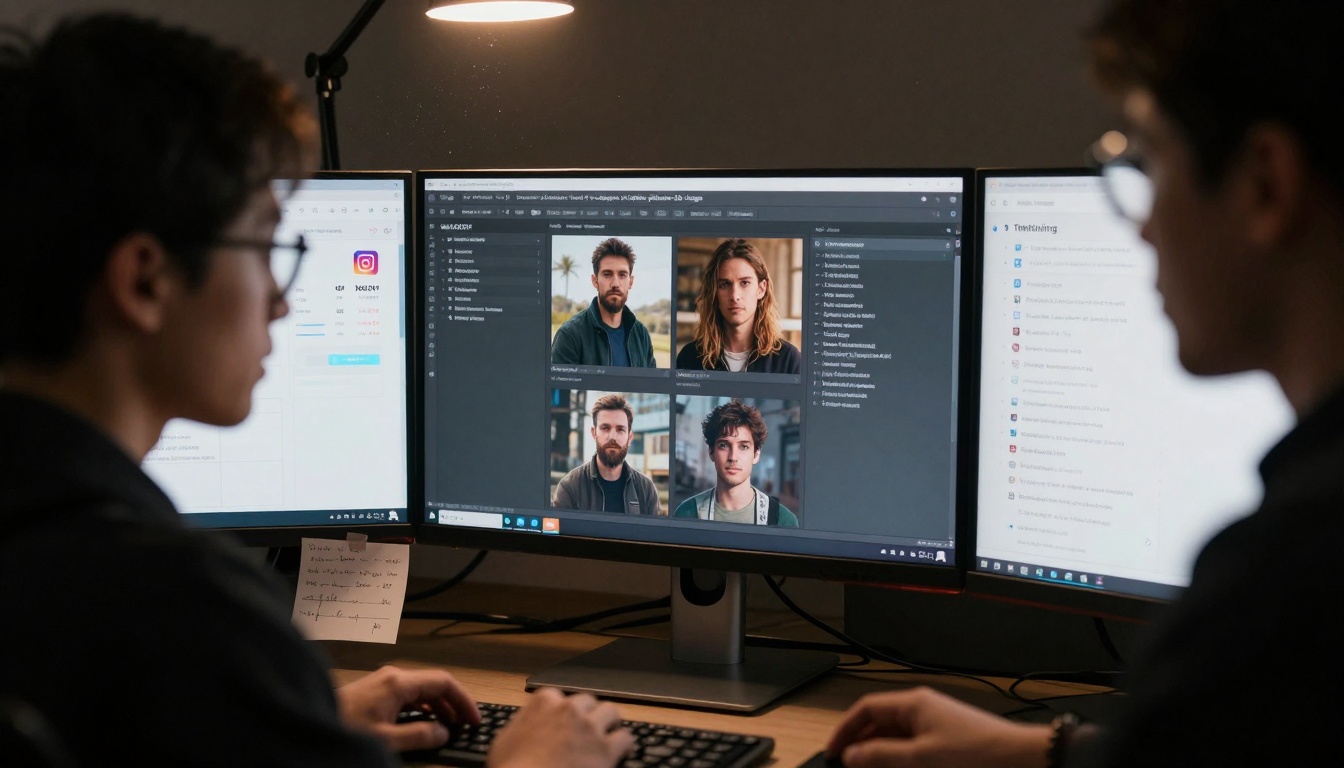
Narrative elements transform static images into shareable stories. Even single-frame AI images that suggest broader narratives—through environmental details, character expressions, or implied action—generate higher engagement. Viewers mentally extend the story beyond the frame, creating personal investment that drives sharing behavior.
Visual styles that dominate social feeds
Hyperrealistic portraits with emotional depth consistently outperform technical perfection. Images generated with Qwen Image that capture subtle human expressions, natural skin textures, and authentic lighting conditions create emotional connections that drive shares. The key isn't photorealism alone, but photorealism that feels emotionally authentic.
Cinematic landscapes with dramatic lighting conditions represent another viral category. These images, often created with SDXL, combine epic scale with intimate details. The most shareable examples balance grand vistas with discoverable micro-details that reward extended viewing—a quality that encourages saving and revisiting.
Conceptual hybrids that merge unrelated elements in visually coherent ways generate curiosity-driven sharing. When AI creates images that combine, for example, botanical elements with architectural structures or aquatic life with celestial formations, the cognitive dissonance creates immediate sharing value as viewers seek reactions from their networks.
Minimalist compositions with single strong concepts often outperform complex scenes on fast-scrolling platforms. Clean backgrounds, simple color palettes, and clear focal points make images instantly comprehensible at thumbnail size—a critical factor for platforms like Twitter and TikTok where rapid comprehension determines engagement.

Cultural commentary images that visually represent current events, social trends, or internet phenomena have inherent shareability. These images serve as visual shorthand for complex ideas, making them valuable for users who want to participate in conversations without extensive commentary.
Technical requirements for viral success
File optimization significantly impacts share rates. AI-generated images that maintain visual quality while minimizing file size load faster and display more reliably across different networks and devices. Platforms that output properly compressed images without noticeable quality loss give creators a distribution advantage.
Aspect ratio compatibility varies by platform, and successful creators optimize for each:
- Instagram Feed: 1:1 or 4:5 ratios perform best
- Instagram Stories: 9:16 vertical format
- Twitter/X: 16:9 horizontal with minimal text overlay
- Pinterest: 2:3 vertical for maximum visibility
- TikTok: 9:16 with central focal points
Metadata preservation affects how platforms interpret and display AI-generated content. Images that maintain proper color profiles, resolution information, and copyright metadata display more consistently across different viewing environments. Some AI generators automatically optimize this technical backend better than others.
Batch generation capabilities enable creators to produce variations that can be A/B tested across different audience segments. The ability to generate multiple versions of a concept with controlled variations helps identify which visual approaches resonate most with specific demographics.
💡 Production tip: Create each AI image in three aspect ratios simultaneously—one for vertical platforms, one for horizontal, and one square. This multiplatform approach increases the likelihood of at least one format gaining traction.
Creating images people want to share
Audience-first prompting represents the most effective strategy. Instead of creating what the AI can generate, successful creators determine what their target audience wants to see and share, then craft prompts accordingly. This requires understanding specific demographic preferences, cultural references, and visual trends within target communities.
Emotional calibration in prompt engineering makes substantial differences. Adding emotional descriptors to technical prompts transforms outputs from technically impressive to emotionally engaging:
- Instead of "photorealistic portrait," try "portrait showing quiet contemplation with morning light catching in eyes"
- Instead of "landscape," try "expansive landscape that evokes feelings of solitude and wonder"
- Instead of "abstract composition," try "abstract that suggests hidden patterns and rewards extended viewing"
Cultural intelligence integration helps images resonate with specific communities. References to current events, seasonal themes, or community-specific symbolism make images feel timely and relevant—qualities that dramatically increase share likelihood within those communities.

Iterative refinement based on performance data separates successful creators from casual users. By analyzing which specific visual elements correlate with higher share rates within their niche, creators can progressively refine their prompt engineering to produce more consistently shareable content.
Instagram's visual ecosystem rewards consistency, aesthetic coherence, and series development. AI-generated images that establish recognizable visual signatures perform better through cumulative recognition. Using models like Flux that produce consistent outputs helps build this visual identity.
Twitter/X's rapid consumption favors immediate comprehension and conceptual clarity. Images that convey their core idea within one second outperform more complex compositions. The platform's text-heavy environment means AI images must compete with written content for attention, making visual impact paramount.
Pinterest's discovery model emphasizes vertical formats with clear focal points and thematic consistency. AI images that fit into existing popular categories (home decor, fashion, travel) while offering novel visual approaches gain traction through recommendation algorithms. The platform's save-and-repin behavior rewards images with lasting value.
TikTok's narrative focus means AI images often work best as components within video content or as background elements for text overlays. Still images need strong central subjects that anchor viewer attention amidst constant motion. The platform's younger demographic responds particularly well to surreal and conceptually playful AI imagery.
LinkedIn's professional context favors AI images with commercial applications, technical demonstrations, or industry relevance. Images generated with Imagen 4 that showcase professional scenarios, business concepts, or technical visualizations perform well by providing value to professional audiences.

Building your viral AI image workflow
Tool selection strategy should match content goals with technical capabilities. For consistent brand building, choose one primary model like Flux 2 Pro that delivers reliable outputs. For experimental content and trend exploration, maintain access to multiple generators to compare different visual approaches to the same concept.
Prompt library development accelerates production while maintaining quality. Document successful prompts along with their performance metrics, creating a growing repository of proven formulas. Categorize these by:
- Emotional tone (inspiring, humorous, contemplative)
- Visual style (cinematic, minimalist, detailed)
- Platform optimization (Instagram-optimized, Twitter-ready, etc.)
- Audience response (high shares, high saves, high comments)
Quality assurance process ensures technical excellence before distribution. Implement a consistent review checklist:
- Resolution verification: Minimum 2000px on longest side
- Color profile check: sRGB for web, Adobe RGB for print
- Compression optimization: Balance quality and file size
- Metadata inclusion: Copyright, generation details, prompt
- Platform formatting: Correct aspect ratio and focal point placement
Performance analysis system transforms data into actionable insights. Track not just which images perform well, but which specific elements within those images drive engagement:
- Which color combinations correlate with higher share rates?
- What emotional descriptors in prompts produce more engaging outputs?
- Which compositional styles work best for your specific audience?
- How do different AI models compare for your content niche?
Community engagement integration turns viewers into collaborators. Share behind-the-scenes glimpses of your AI generation process, ask for prompt suggestions, or create content based on audience requests. This participatory approach builds investment that translates directly to sharing behavior.
The most important realization for creators working with AI image generation is that shareability emerges from the intersection of technical capability and human psychology. The AI tools—whether Stable Diffusion 3.5, Flux, Imagen, or Ideogram—provide the technical foundation, but human understanding provides the strategic direction.
What separates successful AI image creators isn't access to better tools, but better understanding of what makes visual content resonate with specific audiences. This understanding gets refined through continuous creation, performance analysis, and audience engagement. The platforms at PicassoIA provide increasingly sophisticated capabilities, but the creative strategy determines whether those capabilities translate into shareable content.
The opportunity available today represents the most accessible entry point into visual content creation that has ever existed. With AI image generators producing professional-quality outputs from text descriptions, creators can focus their energy on understanding audiences rather than mastering technical skills. This shift democratizes visual storytelling while raising the creative stakes—the competition now centers on ideas, insights, and emotional intelligence rather than technical execution.
Start creating with the understanding that your first attempts might not go viral, but each creation provides data about what resonates with your audience. Use platforms like PicassoIA to experiment with different models, compare outputs, and identify which visual approaches align with your creative voice and audience preferences. The combination of consistent creation and thoughtful analysis represents the most reliable path to producing AI-generated images that people genuinely want to share.


