When you scroll through social media feeds, browse news websites, or explore digital galleries, you're likely encountering more AI-generated images than you realize. The line between authentic photography and synthetic visuals has blurred dramatically in recent years, creating a landscape where discerning reality requires new skills and awareness.

The challenge of distinguishing authentic from synthetic visuals requires careful observation of texture, lighting, and natural imperfections.
The Rise of Text-to-Image AI
The technology behind these images has evolved at breathtaking speed. What began as experimental neural networks producing abstract patterns has matured into systems capable of generating photorealistic visuals that often fool human observers. The core technology involves diffusion models that start with random noise and progressively refine it into coherent images based on text descriptions.
💡 Key insight: Current AI image generators don't "understand" images in human terms. They recognize patterns from training data and reproduce statistical correlations, which creates both their strength and their weakness.
Major AI image models you're likely encountering online include:
| Model | Creator | Primary Use | Common Online Presence |
|---|
| Flux | Black Forest Labs | General purpose images | Social media, marketing |
| Stable Diffusion | Stability AI | Creative & commercial | Art communities, ads |
| DALL-E 3 | OpenAI | Detailed scenes | News illustrations |
| Midjourney | Midjourney Inc. | Artistic renders | Digital art platforms |
Each model has distinct characteristics that leave subtle signatures in their output. Understanding these helps identify their origin.
Common AI Image Artifacts
AI-generated images contain specific visual artifacts that serve as telltale signs of synthetic origin. While newer models reduce these flaws, they rarely eliminate them completely.
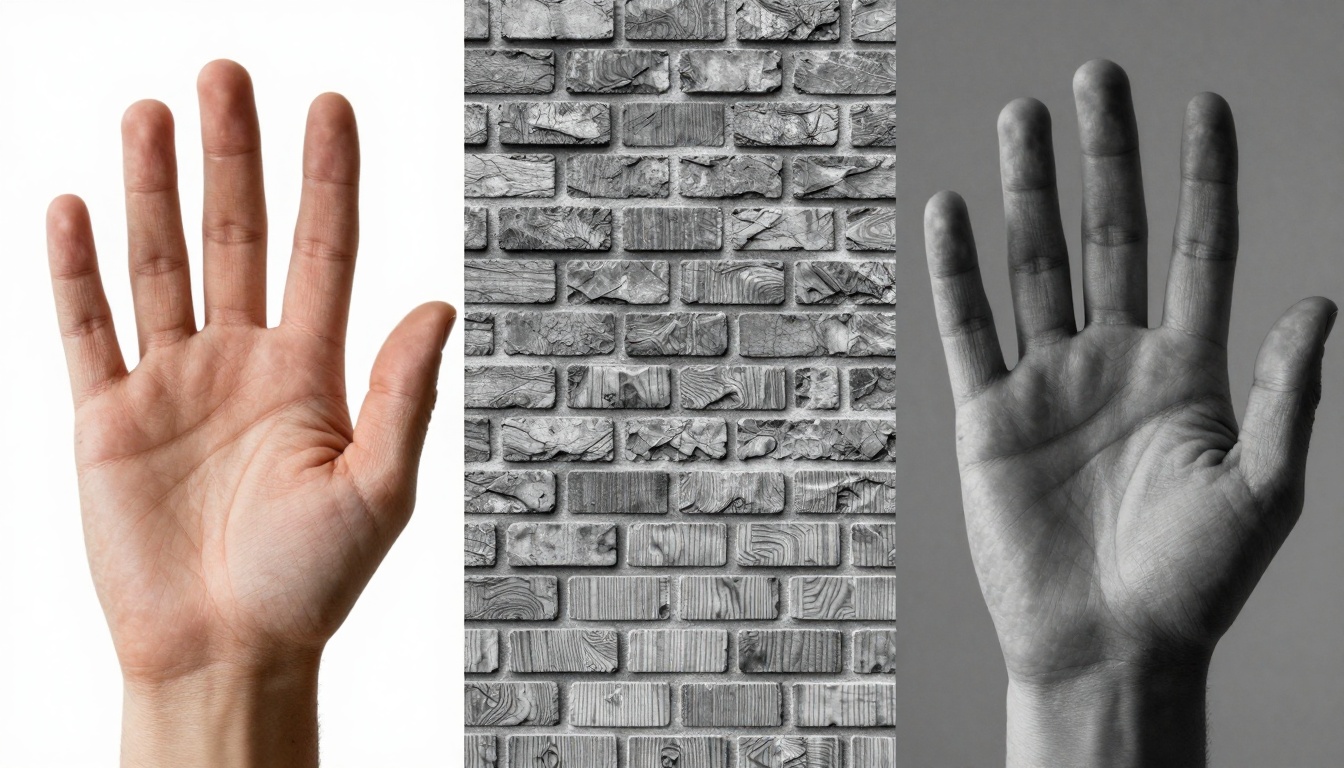
Technical documentation of common AI generation flaws including finger anomalies, texture repetition, and lighting inconsistencies.
Texture Repetition Patterns
One of the most reliable indicators is unnatural texture repetition. Real-world materials show organic variation, while AI often creates patterns that repeat in symmetrical or mathematically regular sequences.
Look for these texture clues:
- Building materials: Brick walls where individual bricks appear nearly identical
- Fabric weaves: Textile patterns that repeat without natural irregularity
- Natural surfaces: Wood grain with algorithmic regularity rather than organic variation
- Skin textures: Pore distribution in near-perfect grids rather than random biological patterns

Comparison showing how AI struggles to replicate the natural imperfections of authentic building materials like brick weathering and mortar variation.
Lighting and Shadow Inconsistencies
Physical lighting coherence remains challenging for AI systems. Real scenes have single, consistent light sources that create shadows pointing in uniform directions with proper intensity falloff.
Common lighting flaws include:
- Multiple shadow directions: Objects casting shadows that don't align with a single light source
- Intensity mismatches: Shadows that are too dark or too light for the scene's illumination
- Reflection errors: Surfaces reflecting elements that don't exist in the environment
- Global illumination artifacts: Lighting that appears "painted on" rather than physically simulated
Biological Imperfection Absence
Human bodies and natural organisms contain microscopic imperfections that AI often misses or oversimplifies.
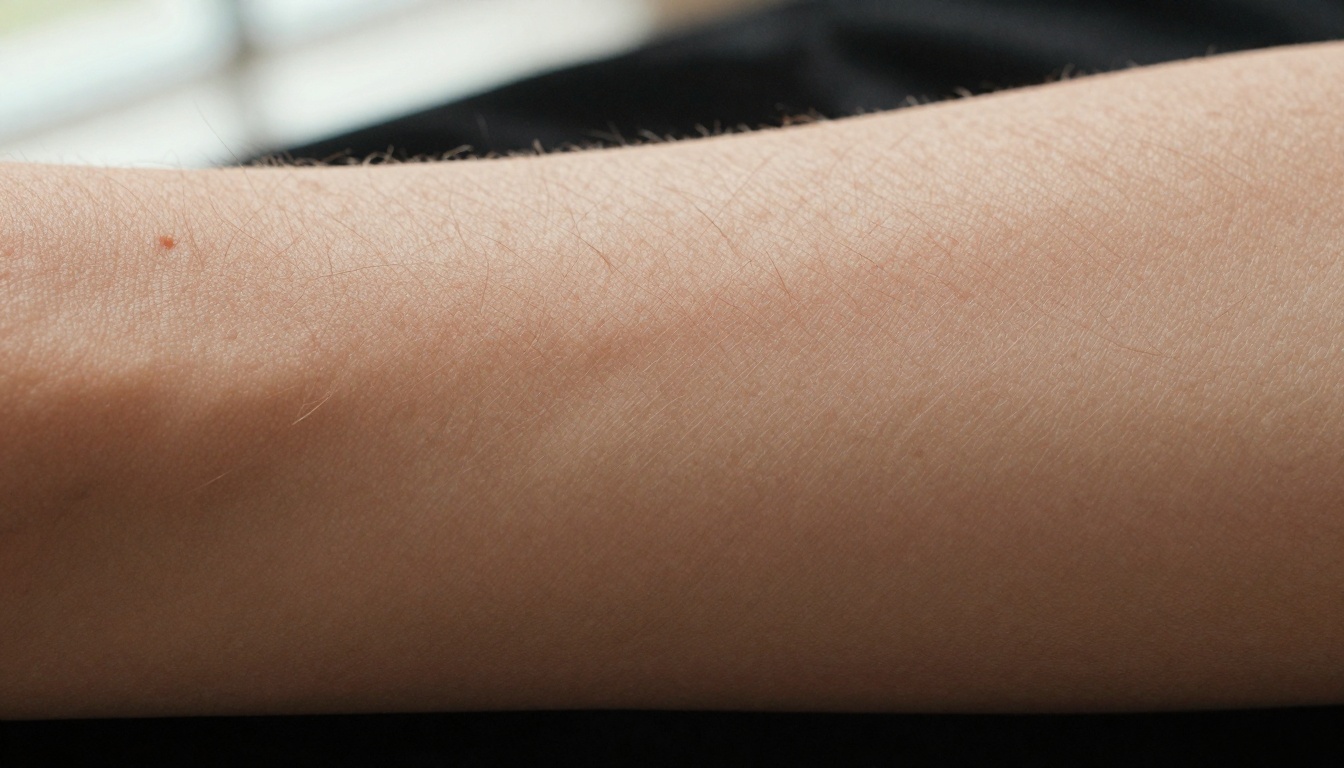
Macro comparison revealing how AI-generated skin lacks the organic complexity of real human epidermis including natural pore distribution and subtle pigmentation variations.
Biological indicators to examine:
- Skin texture: Natural pores, fine hairs, and subtle pigmentation variations
- Eye details: Iris patterns with authentic radial fibers and crypts
- Hair complexity: Individual strands with natural thickness variation
- Vein patterns: Organic branching rather than painted appearances
How Different AI Models Leave Distinct Signatures
Not all AI image generators produce identical artifacts. Understanding model-specific characteristics helps pinpoint the technology behind suspicious images.
Flux Model Characteristics
The Flux architecture tends to produce images with:
- Strong texture coherence but occasional repetition
- Excellent color reproduction with natural saturation
- Sometimes unnatural sharpness at micro-detail level
- Consistent lighting with minor shadow direction issues
Stable Diffusion Quirks
Stable Diffusion variants often show:
- Distinctive "painterly" quality in certain outputs
- Occasional surreal elements mixed with realism
- Texture blending artifacts at object boundaries
- Characteristic color palette preferences
DALL-E 3 Patterns
DALL-E 3 images frequently exhibit:
- High compositional coherence with logical scene arrangement
- Text rendering capability (though often imperfect)
- Contextual understanding of object relationships
- Occasional "too perfect" appearance lacking natural chaos
Despite remarkable advances, human anatomy remains one of the most challenging domains for AI image generation. The complexity of biological structures combined with human familiarity creates a high bar for authenticity.
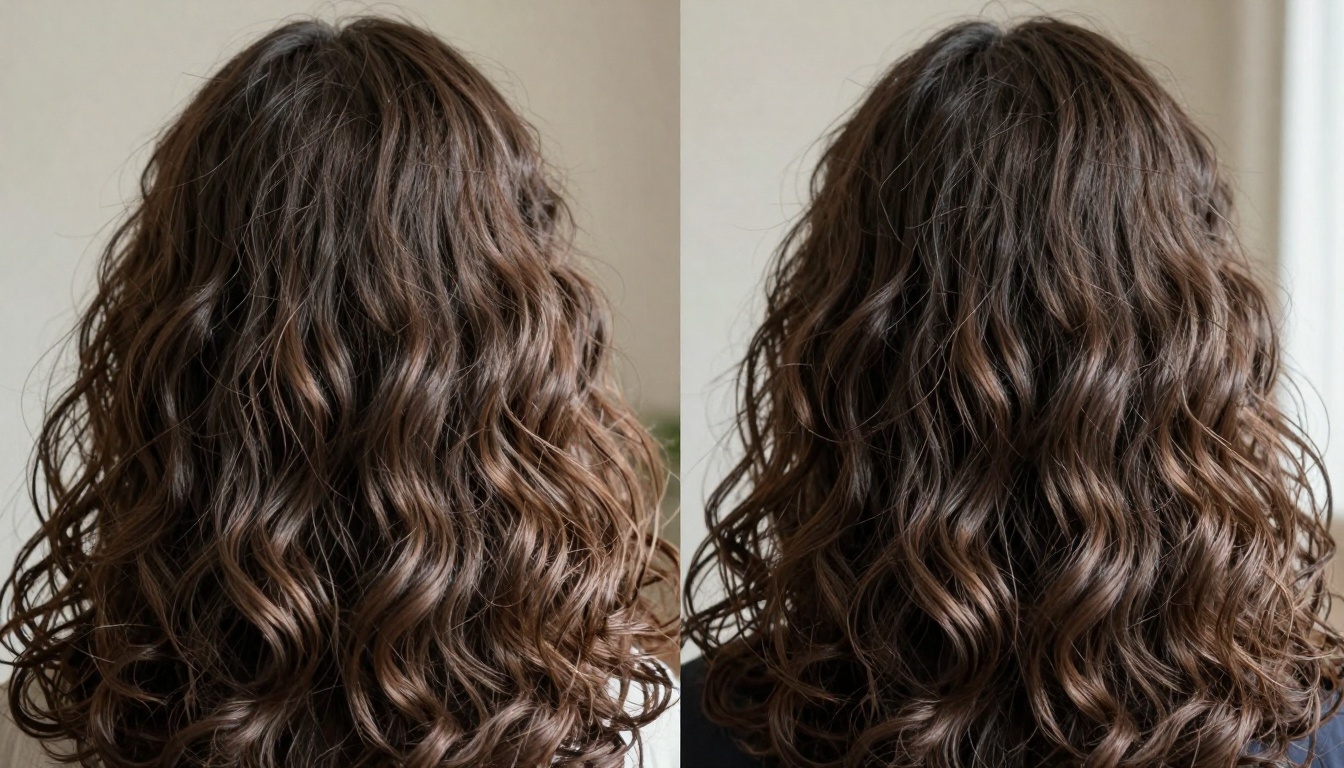
Comparative analysis showing how AI hair rendering often lacks the organic complexity of real human hair including natural strand variation and authentic light interaction.
Hand and Finger Anomalies
Digital appendages present particular difficulty:
- Finger counting errors: Extra or missing digits
- Joint placement issues: Awkward finger angles and proportions
- Palm line artifacts: Lines that look painted rather than biological
- Nail inconsistencies: Unnatural shape, texture, or lighting
Eye and Facial Structure
Facial features reveal synthetic origins through:
- Iris pattern repetition: Near-identical eyes in group shots
- Pupil perfection: Too-perfect circular shape without microscopic flaws
- Eyelash regularity: Mathematically even spacing rather than organic distribution
- Facial symmetry: Near-perfect mirroring that exceeds natural human variation
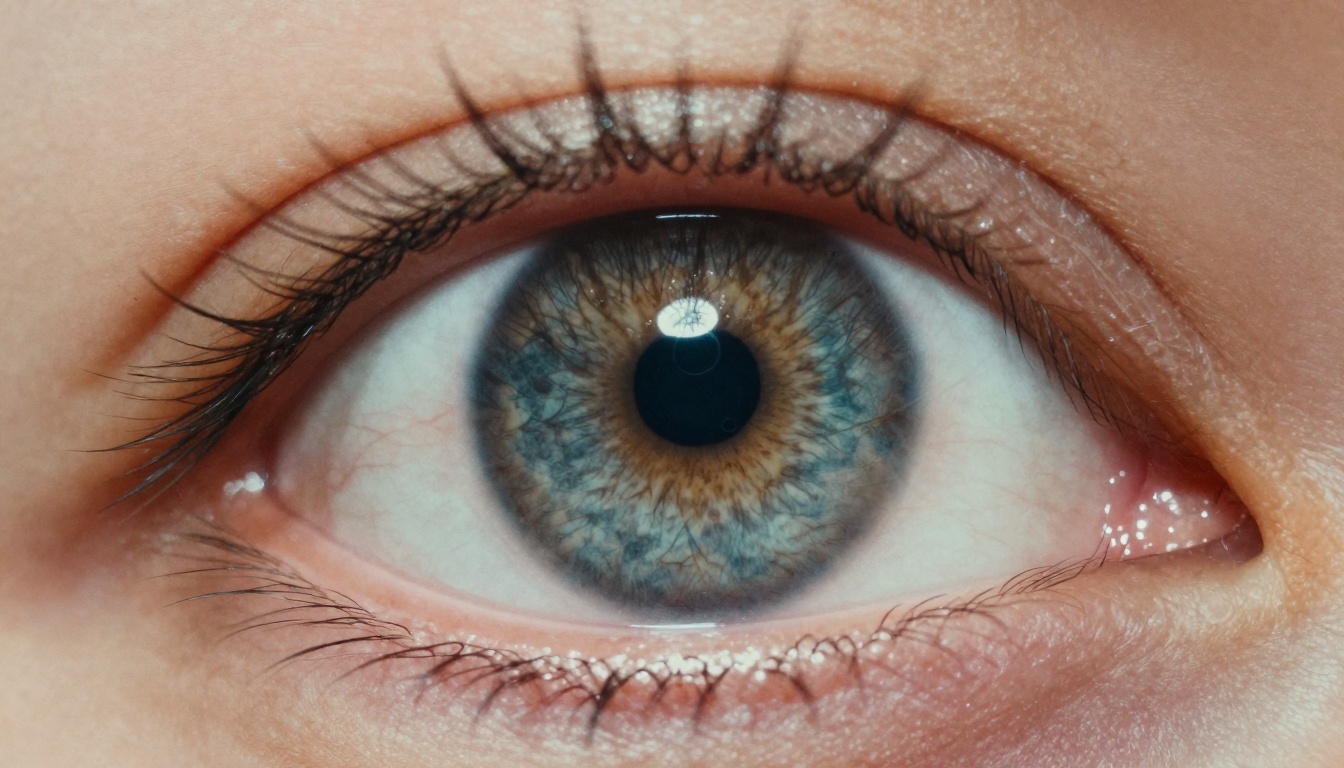
Extreme close-up comparison demonstrating how AI-generated eyes often lack the complex biological authenticity of real human iris patterns and natural eyelash distribution.
Environmental and Physics Flaws
Beyond biological elements, environmental physics and material properties often betray AI generation through subtle inconsistencies.
Water and Fluid Simulation
Liquid physics remains exceptionally challenging:
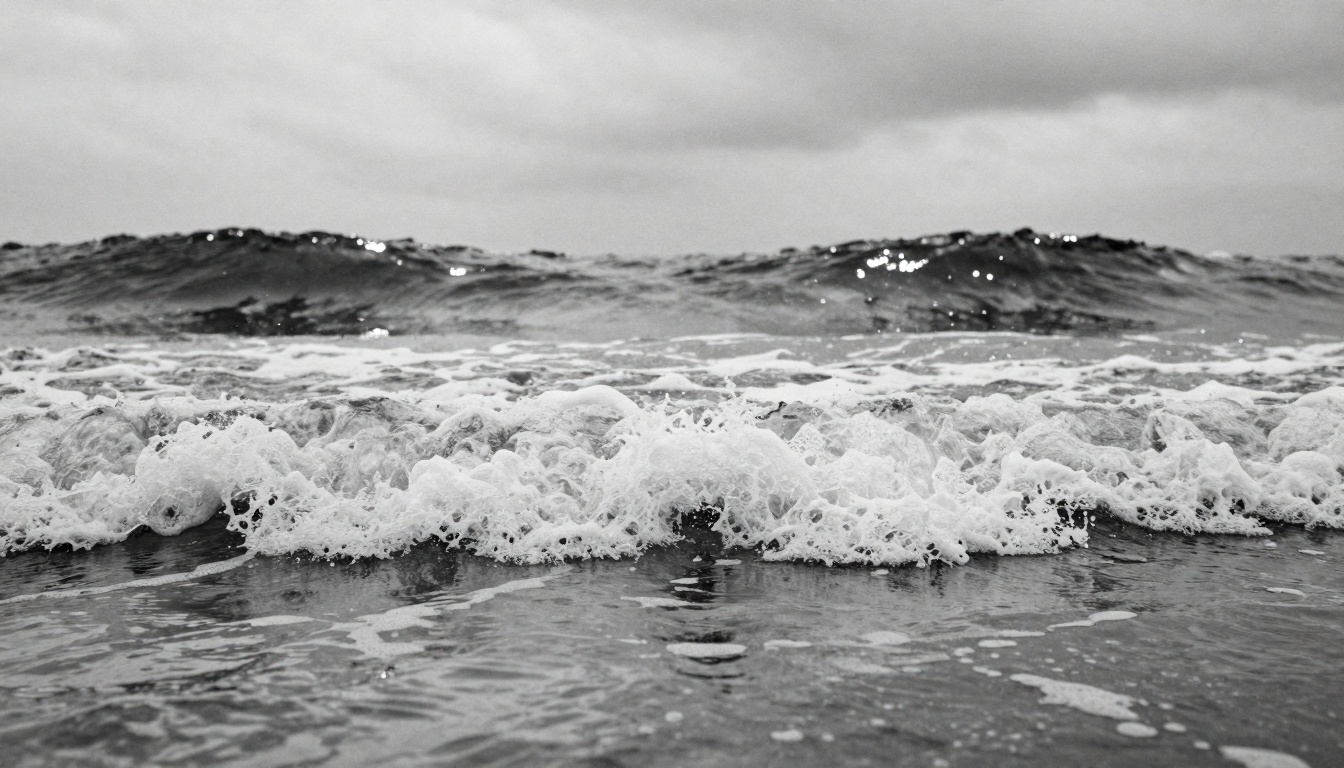
Comparison illustrating how AI often struggles with natural fluid dynamics, producing wave patterns with symmetrical repetition rather than organic frequency distribution.
Water-related artifacts include:
- Wave pattern repetition: Symmetrical sequences rather than organic frequency distribution
- Foam appearance: Painted-looking foam rather than physical turbulence simulation
- Refraction errors: Unrealistic bending of background elements
- Surface tension: Too-perfect edges without natural meniscus effects
Urban and Architectural Geometry
Built environments reveal algorithmic thinking:

Aerial comparison showing how AI-generated cityscapes often display algorithmic order rather than organic urban chaos, with building patterns that repeat in symmetrical grids.
Architectural indicators:
- Window pattern repetition: Symmetrical grid arrangements
- Vehicle distribution: Mathematically spaced rather than organic traffic patterns
- Shadow coherence: Multiple conflicting shadow directions
- Atmospheric perspective: Painted-looking haze rather than natural accumulation
Fabric and Material Textures
Complex material properties challenge AI's ability to replicate natural variation:

Side-by-side comparison revealing how AI-generated fabrics often show weave pattern repetition and color uniformity lacking the organic irregularities of real textiles.
Textile and material clues:
- Weave pattern regularity: Symmetrical grids rather than organic thread irregularity
- Dye variation absence: Too-uniform color without natural gradient
- Wear pattern artifacts: Painted-looking fraying rather than physical wear
- Shadow formation: Inconsistent with fabric drape physics
Technical Detection Methods
Beyond visual inspection, several technical approaches can help identify AI-generated images.
Metadata Analysis
Digital file metadata sometimes contains clues:
- Software signatures: Generation tools may leave identifiable metadata
- Creation date anomalies: Timestamps that don't match claimed origin
- Color profile inconsistencies: Unusual color space or profile data
- Compression artifacts: Characteristic patterns from specific generators
Forensic Analysis Tools
Specialized software can detect statistical patterns:
| Tool | Method | Effectiveness |
|---|
| AI or Not | Statistical pattern analysis | Good for obvious cases |
| Hive Moderation | Multi-model detection | High accuracy |
| Sensity AI | Deepfake detection | Specialized for faces |
| Forensically | Metadata & error level analysis | Technical user required |
Error Level Analysis
ELA (Error Level Analysis) examines compression inconsistencies:
- Uniform error levels suggest AI generation
- Inconsistent compression indicates potential manipulation
- Edge artifacts reveal generation boundaries
- Texture pattern analysis shows algorithmic regularity
The Evolution of Detection Challenges
As AI image generation improves, detection methods must evolve correspondingly.
Current Detection Limitations
Present challenges in AI image identification:
- Rapid model evolution: New versions reduce previous artifacts
- Hybrid images: AI generation combined with real elements
- Post-processing: Editing tools mask generation artifacts
- Adversarial training: Models specifically trained to evade detection
Future Detection Approaches
Emerging strategies for future detection:
- Temporal analysis: Video consistency over time
- Physics simulation: Testing physical plausibility
- Multi-modal analysis: Combining visual, metadata, and contextual clues
- Blockchain verification: Authenticity tracking through distributed ledgers
Practical Verification Steps
When you encounter a suspicious image online, follow this systematic verification process:
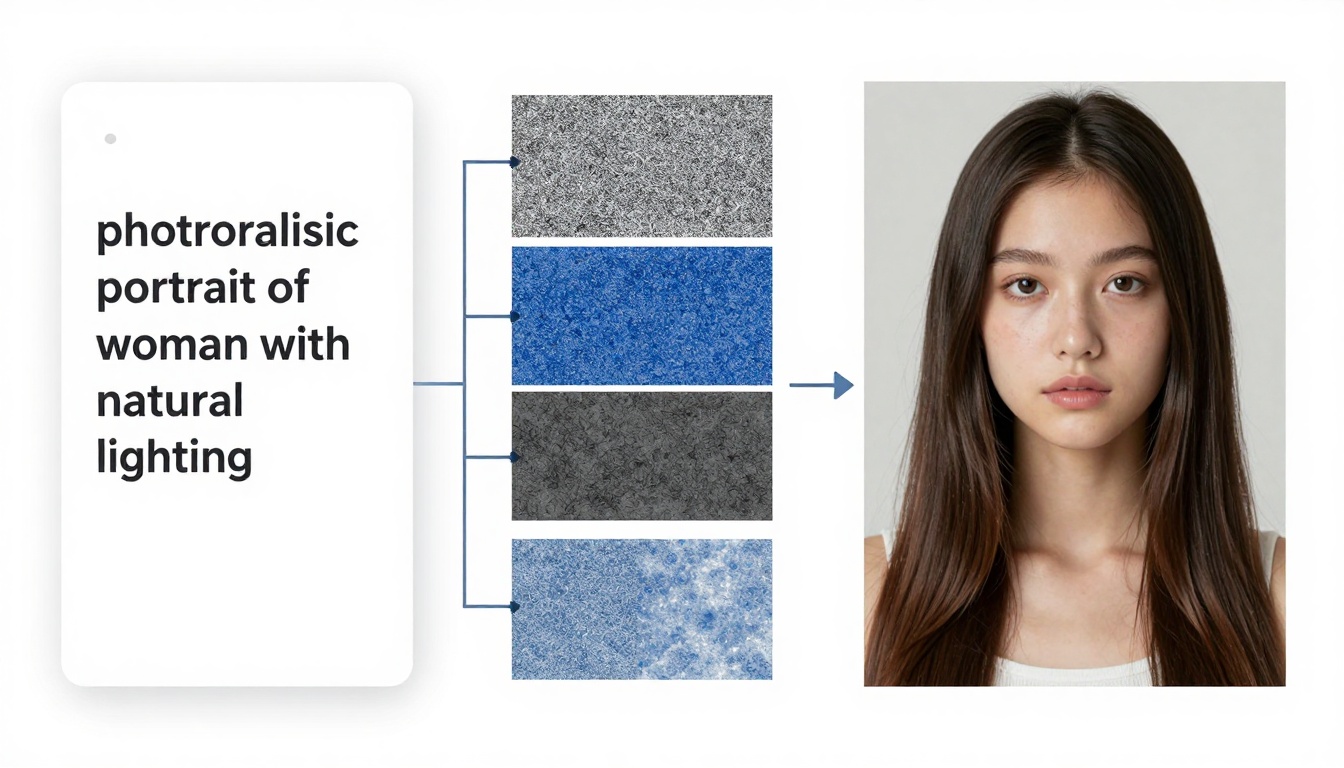
Visualization of the technical process behind AI image generation, from text prompt through neural network processing to final output with characteristic artifacts.
Step-by-step examination:
- Initial impression: Does anything feel "off" about lighting, texture, or anatomy?
- Detail magnification: Zoom in on textures, edges, and fine details
- Shadow analysis: Check for consistent lighting direction and intensity
- Biological examination: Inspect skin, eyes, hair, and hands
- Pattern search: Look for texture repetition or mathematical regularity
- Context evaluation: Does the image make logical sense in its setting?
- Technical check: Examine metadata and compression patterns
- Reverse image search: Check for duplicates or earlier versions
Why This Matters Beyond Curiosity
Understanding AI image detection has practical implications beyond mere technical interest.
Digital Literacy Requirements
In today's online environment, visual media literacy becomes essential for:
- News consumption: Identifying authentic versus synthetic news imagery
- Social media navigation: Recognizing manipulated or generated content
- Commercial evaluation: Discerning real product photos from AI renders
- Educational integrity: Verifying authentic educational materials
Ethical and Legal Considerations
The proliferation of AI images raises important questions:
- Copyright issues: Ownership of AI-generated content
- Authenticity standards: Disclosure requirements for synthetic media
- Manipulation ethics: Boundaries for acceptable digital alteration
- Historical record: Preservation of authentic versus synthetic visual history
Creating Your Own AI Images Responsibly
If you experiment with creating AI images yourself, consider these responsible practices:
Disclosure and Transparency
Clear labeling helps maintain digital trust:
- Watermark indication: Mark AI-generated content clearly
- Metadata inclusion: Add generation details to file metadata
- Contextual disclosure: Explain synthetic nature where shared
- Purpose clarity: Be transparent about why AI generation was used
Quality and Authenticity Balance
Strive for both technical quality and ethical consideration:
- Artistic expression: Use AI as creative tool, not deception device
- Improvement focus: Work to reduce obvious artifacts
- Hybrid approaches: Combine AI with authentic elements appropriately
- Continuous learning: Stay updated on evolving capabilities and limitations
The Continuing Evolution
The relationship between human perception and AI generation will continue evolving. As detection methods improve, so will generation techniques, creating an ongoing cycle of technological advancement.
Key trends to watch:
- Reduced artifact generation: New models minimizing current flaws
- Specialized generators: Domain-specific AI for particular image types
- Real-time generation: Instant creation during browsing or interaction
- Integration with capture: AI enhancement of authentic photography
The images you see online will increasingly exist on a spectrum between authentic and synthetic, with many occupying hybrid positions combining elements of both. Developing the skills to navigate this landscape represents one of the essential digital competencies for contemporary online interaction.
What comes next depends on both technological advancement and social adaptation. As AI image generation becomes more sophisticated, our collective ability to discern, evaluate, and contextualize visual information must correspondingly develop. This represents not just a technical challenge, but a cultural and educational imperative for maintaining shared reality in digital spaces.
The most effective approach combines technical tools with human observation, recognizing that while AI can generate convincing images, human judgment remains essential for evaluating meaning, context, and authenticity. By understanding both the capabilities and limitations of current AI image technology, we can engage with online visuals more critically and constructively.
Your role in this evolving landscape involves both skepticism and creativity—questioning what you see while appreciating new forms of visual expression. The AI images you encounter online represent both technological achievement and artistic potential, existing within a complex ecosystem of creation, distribution, and interpretation that continues to reshape our visual world.


