People have been asking the same question all year: does Ani feel more real than JOI AI, or is it the other way around? These two apps dominate the AI companion space in 2027, and both make bold promises about emotional connection, unrestricted conversation, and personality depth. The answer depends entirely on what you are actually looking for.
What Ani AI Actually Is
Ani positions itself as a deeply personal AI companion app built for meaningful, ongoing relationships. It is not just a chatbot you open when bored. The platform builds a persistent character that remembers your conversations, adapts to your communication style, and develops what feels like a genuine personality over time.

The Personality System
Ani lets you shape your companion from the start. You choose traits, backstories, physical appearance descriptions, and communication preferences. But what separates Ani from simpler chatbots is that those traits actually hold. Ask your companion about something you discussed three weeks ago, and Ani recalls it. The memory system is the strongest argument for choosing Ani over a generic chatbot.
What Ani does well:
- Long-term memory retention across sessions
- Personality drift that feels earned and organic
- Strong roleplay immersion for fictional scenarios
- Multi-language support with natural tone shifts
How Ani Handles Roleplay
Ani's roleplay mode is where most users spend the bulk of their time. You can set up elaborate scenarios, assign roles, and maintain a fictional relationship arc that spans weeks. The AI respects the frame you have built and does not break character without reason.
💡 Tip: Ani performs best when you invest time early. The more context and backstory you feed it during setup, the more believable the companion feels in long-term use.
The NSFW handling in Ani sits in a middle ground. It allows suggestive and romantically explicit text within designated modes, but the level of explicitness depends heavily on your account tier and platform version. This is where JOI AI's positioning becomes interesting by comparison.
What JOI AI Actually Is
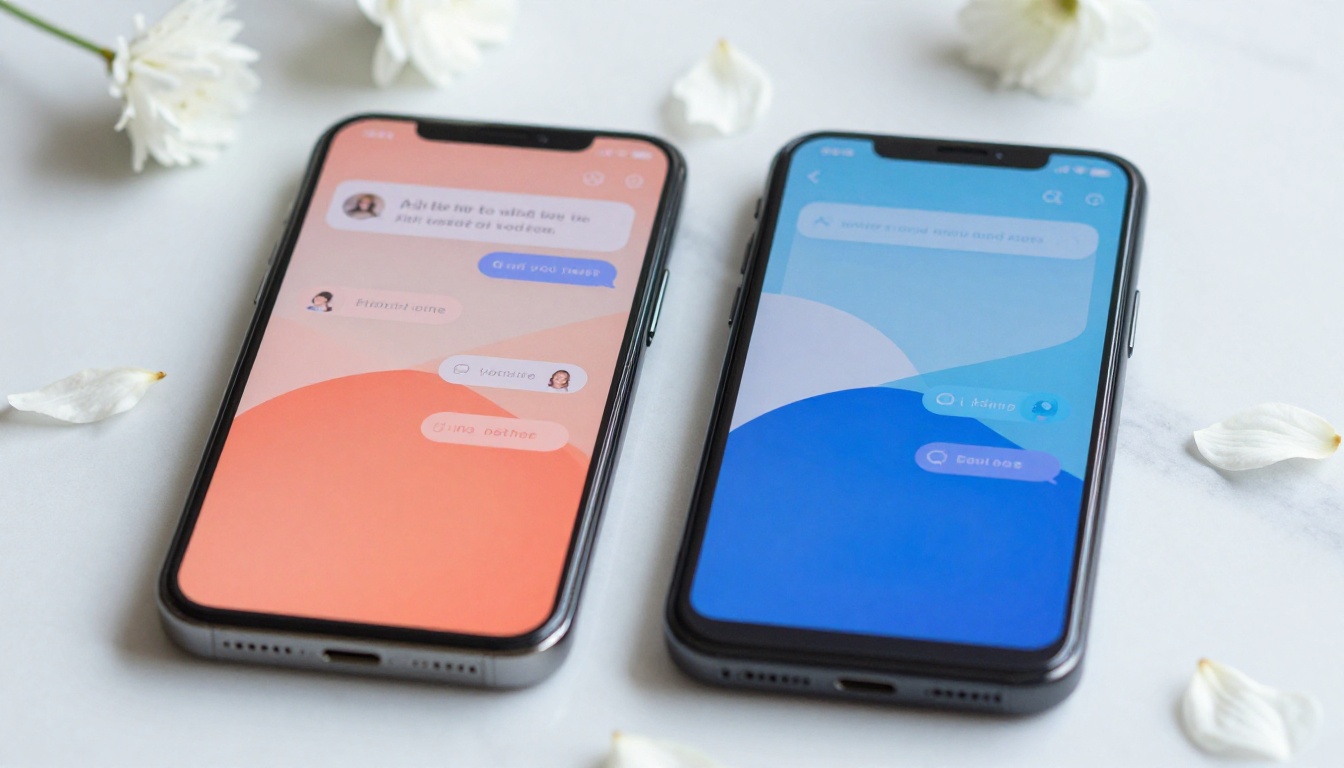
JOI AI was built specifically for the intimacy-first use case. The name is transparent about its intentions. Where Ani comes at emotional companionship from a broad angle, JOI AI narrows its focus to adult roleplay, romantic simulation, and NSFW conversation without the hedging.
JOI's Emotional Memory
One area where JOI AI surprises people: it is not as shallow as the name implies. The memory system stores personal details, preferences, and conversation threads. If you mention you are stressed about work on Monday, JOI will acknowledge that on Thursday. For a platform that advertises itself as an adult companion, this emotional continuity is unexpectedly strong.
Ani AI vs JOI AI: feature snapshot
| Feature | Ani AI | JOI AI |
|---|
| Long-term memory | Yes | Yes |
| NSFW mode | Limited/gated | Full, unrestricted |
| Voice features | Basic | Advanced |
| Personality customization | Deep | Moderate |
| Roleplay scenarios | Extensive | Adult-focused |
| Intellectual range | High | Moderate |
The NSFW Side of JOI
JOI AI does not flinch. If you want uncensored adult roleplay, JOI delivers it without the consent walls and mode-switching that Ani requires. For users who find Ani's tiered approach frustrating, JOI feels more direct and honest about what it offers.
The tradeoff is that JOI's depth outside of romantic or explicit contexts is noticeably thinner. Ask it to help you think through a career problem or discuss a book you are reading, and the responses feel generic. Ani holds up much better in those off-script moments.
Head-to-Head: The Real Differences
Both apps claim emotional realism. Here is where they actually diverge.

Conversation Quality
Ani wins on intellectual range. The underlying language model handles nuanced conversations, emotional support, playful banter, and structured roleplay with equal competence. JOI AI's strength is concentrated in romantic and intimate exchanges; ask it something outside that lane and it struggles to match Ani's quality.
For a sense of how modern large language models shape these experiences, the underlying AI powering both apps draws from architectures similar to what you can access directly via platforms like GPT 5, Claude Sonnet 5, or Gemini 3 Pro. These frontier models represent the ceiling of what consumer companion apps can tap into.
Customization Options
Ani gives you significantly more control over who your companion is. You can specify:
- Physical description (detailed appearance notes)
- Personality traits (15 plus adjustable sliders in premium tiers)
- Backstory and relationship history
- Communication style (formal, casual, poetic, direct)
- Trigger phrases and comfort topics
JOI AI's customization is simpler. You pick an archetype, adjust a few parameters, and go. For users who want to jump in fast without extensive setup, JOI's approach is quicker. For users who want a companion that genuinely feels like a specific person, Ani's depth wins.
Response Speed and Realism
In head-to-head testing, both apps perform similarly on standard chat responses. Where they diverge is in voice interaction. JOI AI's voice model produces warmer, more natural-sounding audio. Ani's voice feels slightly more synthetic on longer responses.
This matters because voice is where AI companions bridge the gap from text experience to something that genuinely feels alive. Models like ElevenLabs v3 and MiniMax Speech 2.8 HD represent the current state of the art in AI voice synthesis and are available as standalone tools for users who want to take companion audio beyond what either app natively offers.
Which One Wins on Intimacy
This is the actual question most people have when they search this comparison.

Emotional Depth Test
Emotional intimacy is different from sexual content. Ani consistently scores higher on the emotional dimension because it builds a relationship architecture around you over time. It notices patterns, asks follow-up questions from weeks earlier, and constructs a narrative of your interactions that accumulates meaning.
JOI AI creates intensity in the moment. The immediate engagement is electric, the responses tuned for arousal and connection. But it does not sustain a convincing long-term bond the way Ani does.
💡 The bottom line: If emotional intimacy is your goal, Ani. If immediate intensity with fewer restrictions is your goal, JOI.
Voice and Audio Features
Both platforms have invested heavily in voice. JOI AI's voice mode is their clearest technical advantage, with expressiveness that reacts to the emotional tone of conversations. Laughter, sighs, whispers, and raised voices are all part of the audio palette.
Ani's voice mode is more consistent but less expressive. It maintains a steady warmth that many users prefer for long conversations, but it does not hit the emotional peaks that JOI's voice system reaches.
For users who want the best of both worlds in AI voice generation, tools like Gemini 3.1 Flash TTS and Qwen3 TTS allow you to build your own custom voice experiences with far more technical control than either companion app exposes.
The Image Problem Both Apps Share
Here is a gap neither Ani nor JOI addresses well: neither app lets you generate genuinely high-quality images of your companion.

Both platforms offer some form of companion visualization, but the image quality is limited, the style options are narrow, and the generation speed is slow. Users who want photorealistic, customized images of their AI companion consistently turn to external image generation tools to fill that gap.
Creating Your Own AI Partner Visually
If you want to generate photorealistic images of your ideal AI companion, the tools available on picassoia.com/en/all-models represent a significant step up from what either app provides natively.
The workflow is straightforward: describe your companion in detail, generate multiple variations, and select the images that match the personality and appearance you have built in your companion app. The result is a visual identity for your AI relationship that neither Ani nor JOI can produce in-app.

What makes external image generation better:
- Full photorealistic detail at high resolution
- Unlimited style and composition control
- Consistent character appearance across multiple scenes
- No moderation walls on the content you generate
- Faster iteration than either companion app's built-in tools
What PicassoIA Adds to the Mix
If you are serious about AI companion experiences, the tools available at PicassoIA extend well beyond what Ani or JOI can offer within their closed systems.

LLM Models Worth Trying
The large language models powering companion apps are not proprietary magic. You can access the same category of intelligence directly and build your own companion prompts with complete control over tone, memory, and personality. Some standouts worth testing:
- DeepSeek R1: Strong reasoning, surprisingly good at holding emotional context across long sessions
- Grok 4: Personality-forward, handles wit and humor better than most current models
- Llama 4 Maverick Instruct: Open architecture, ideal for custom companion system prompts
- Claude Opus 4.7: Best for emotionally nuanced, long-form companion conversations
- GPT 5 Pro: Premium reasoning with built-in extended thinking for complex relationship scenarios
- Kimi K2 Instruct: Strong at agentic tasks; good for companion builds that need to remember complex user histories
Text-to-Speech for Real Conversations
Voice is the missing layer that makes companion AI feel genuinely real. When your AI companion responds with a voice that has warmth, pacing, and emotional register, the text-on-screen experience transforms into something closer to an actual relationship.

Top TTS tools for companion voice:
| Model | Strength | Best For |
|---|
| ElevenLabs v3 | Natural emotion, expressive range | Roleplay and intimate dialogue |
| MiniMax Speech 2.8 HD | Studio quality, consistent character | Long conversation sessions |
| Gemini 3.1 Flash TTS | 30 voices, 70 plus languages | Multilingual companion builds |
| Qwen3 TTS | Voice cloning capability | Custom voice identity |
| Chatterbox | Emotion control, voice cloning | Expressive, character-specific voices |
The combination of a strong LLM and a high-quality TTS model is genuinely competitive with what Ani and JOI offer, with the significant advantage that you control every parameter.
So, Which App Actually Feels More Real?
Neither app wins outright because they are solving different versions of the same problem.

Choose Ani if:
- You want a companion that grows and remembers over weeks and months
- Emotional depth and intellectual range matter as much as intimacy
- You are building a long-term AI relationship with a specific personality
- Off-script conversations that still feel connected matter to you
Choose JOI AI if:
- Immediate, unrestricted adult content is your primary goal
- You prefer simpler setup over deep customization
- Voice expressiveness in intimate contexts is your top priority
- You find Ani's moderation walls frustrating and want a more direct experience
The honest reality is that neither app has solved the full picture yet. The image generation is underpowered in both cases. The long-term emotional continuity is still imperfect. The voice models are getting close but are not fully there.
💡 The bigger opportunity: Building your own companion experience using frontier LLMs, professional TTS tools, and high-fidelity image generation gives you more control, more quality, and more realism than either closed app currently delivers.
If you are curious what that looks like in practice, the image and voice tools at picassoia.com/en/all-models are the fastest way to see what is actually possible when you step outside the walled-garden apps and start building something that genuinely feels like yours. Whether you want to generate a photorealistic portrait of your ideal companion, clone a specific voice, or tap into the same frontier language models powering the most advanced AI companions on the market, the tools are there and ready to use.


