The anime husbando is not just a fictional crush. He is a precisely engineered emotional archetype: a personality blueprint so specific, so intentional, that millions of fans around the world recognize him instantly the moment he appears on screen. Whether you grew up with the cold genius who secretly cares or the sunshine boy who warms every room he enters, each husbando type carries its own distinct emotional signature. And now, for the first time, you can build that exact personality into a photorealistic image using AI tools that understand visual storytelling as deeply as any character designer.
The Anime Husbando Spectrum
The word "husbando" describes a fictional male character from anime, manga, or visual novels that fans form deep emotional attachments to. Unlike a generic "favorite character," a husbando represents something more personal: a specific personality that resonates, a combination of traits that fills an emotional need. What makes the concept so durable across decades of anime culture is the precision of its archetypes. These are not vague personality sketches. They are richly defined behavioral systems with names, visual signatures, and predictable emotional logic.
Why These Types Resonate
Each husbando archetype maps to a specific emotional fantasy. The tsundere satisfies the desire to be the one person who can reach someone cold. The dandere rewards patience with quiet, profound devotion. The deredere offers unconditional warmth without performance. These are not accidental. They are the product of decades of character writing refined by audience feedback across thousands of series. Understanding the archetypes is the first step toward building the one that speaks to you most.
How AI Changes the Game
What AI image generation adds to this space is the ability to visualize these archetypes in photorealistic detail, outside the stylized world of anime art. When you describe a tsundere personality through clothing, lighting, expression, and posture to an AI model, what comes back is not a cartoon. It is a photograph-quality image of a real-seeming person who carries that personality in every pixel. Tools like GPT 5 can help you write the backstory. Tools like ElevenLabs V3 can give him a voice. And the image generation engine on PicassoIA turns the written concept into something you can actually see.
The Tsundere Type
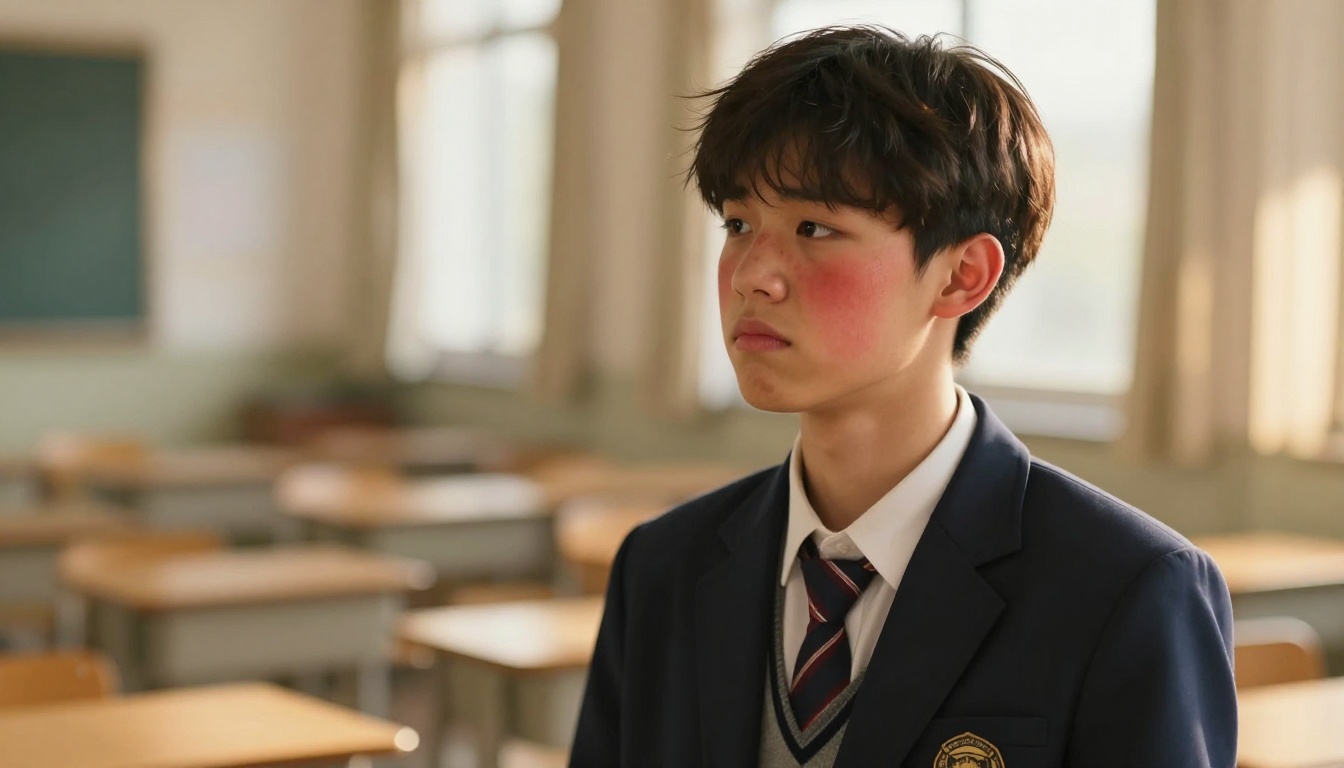
The tsundere is the most iconic and widely recognized anime husbando archetype in existence. The word combines tsun (aloof, cold, prickly) with dere (affectionate, loving). The result is a character who starts at maximum emotional distance and, through the story, reveals a deeply caring interior beneath the armor. What makes the tsundere so compelling is the contrast: the same person who snaps "I'm not doing this for you" in episode one is gently placing a bandage on your hand in episode twelve.
Hot, Cold, and Irresistible
The tsundere personality type operates in cycles. He deflects affection with sharp words or cold dismissal, then immediately contradicts himself with an action that reveals exactly how much he cares. He would never say "I was worried about you" but he will absolutely sprint across a rainy city to find you. This emotional gap between what he says and what he does is the core of his appeal. It creates dramatic tension while simultaneously rewarding the audience's emotional investment.
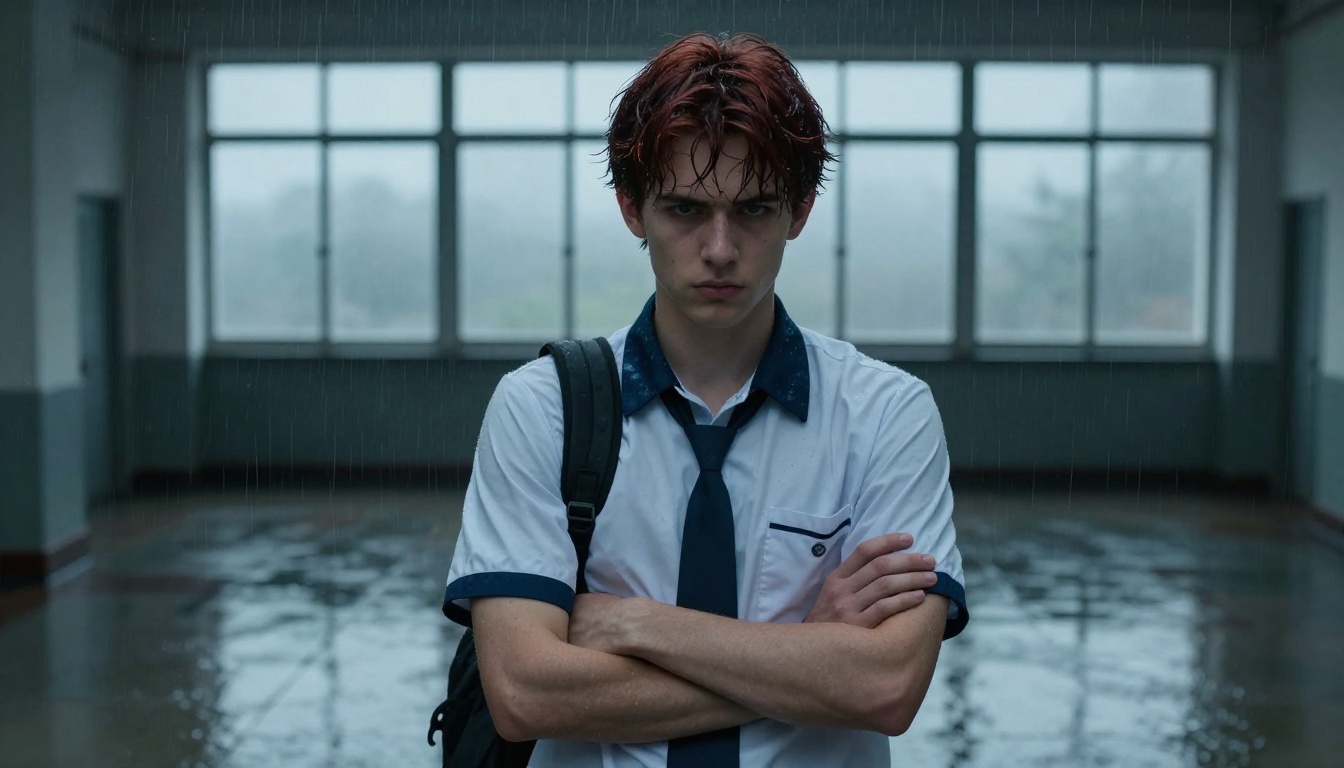
💡 Visual Signature: Dark or auburn hair, furrowed brow, arms crossed, slight flush on the cheeks, school uniform with loosened tie. Lighting tends to be dramatic, either warm golden in vulnerable moments or cool blue when the defenses are up.
Visual Cues That Define Him
When building a tsundere with AI, the details that carry the personality are the slight tension in the jaw, the averted gaze, and the contradiction between his defensive posture (arms crossed, shoulders back) and the warmth sneaking into his expression. Clothes are often slightly disheveled as if he dresses for function rather than impression. The lighting that works best for this type is either split lighting (one half warm, one cold) or a deliberate contrast between scenes: warm golden hour for his soft moments, overcast blue for the walls he puts up. Specify these lighting conditions explicitly in your prompts and the personality will follow.
The Kuudere and Dandere
These two personality types are often grouped together because they share one surface trait: quiet. But their inner worlds are entirely different, and that difference matters enormously when building them visually.
The Stoic Quiet Type
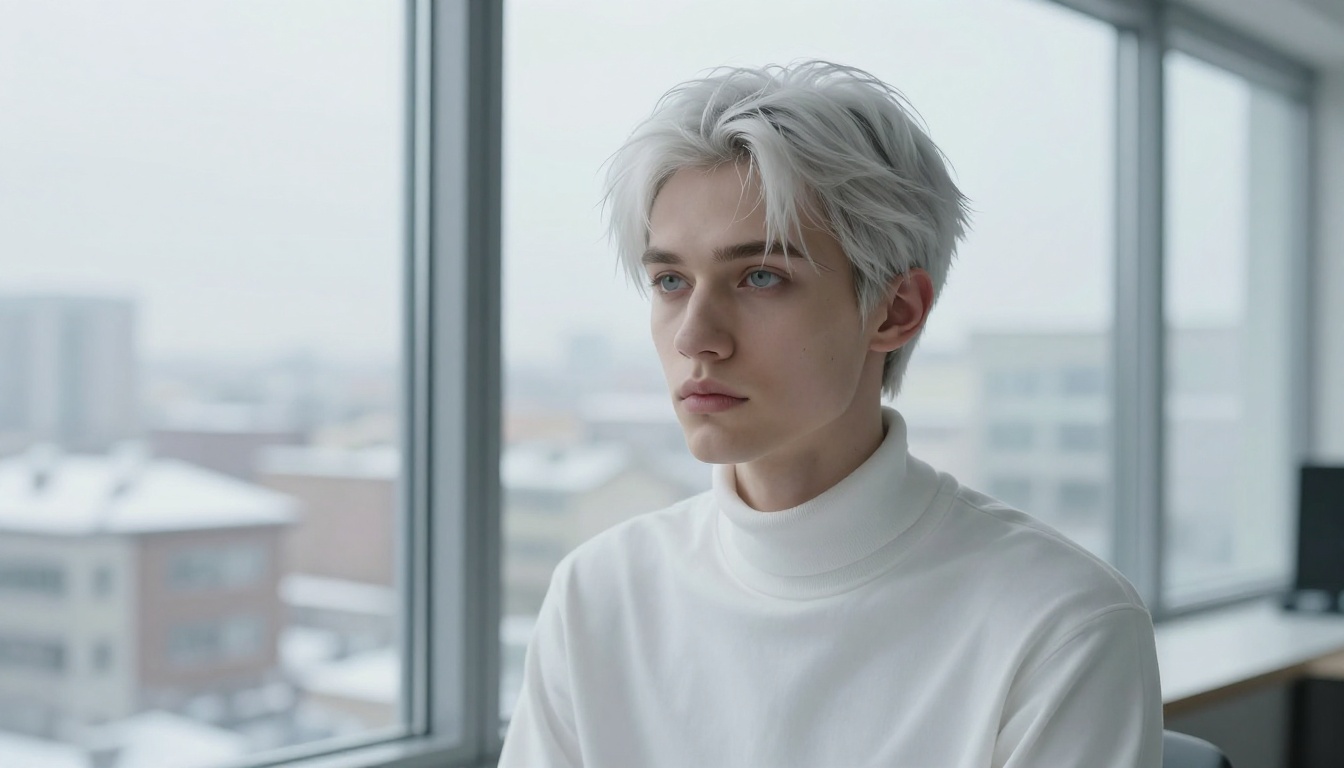
The kuudere is quiet because emotion has never felt useful to him. He is not cold from defensiveness like the tsundere. He is cool from a fundamental orientation toward logic and analysis over feeling. He does care, deeply in most cases, but he expresses it through action and precision rather than warmth. He will calculate exactly how long it takes you to walk home alone and appear on the route "coincidentally." He will leave your favorite food on your desk with no note. His devotion is real; it just arrives without ceremony.
| Feature | Tsundere | Kuudere |
|---|
| Surface behavior | Sharp, dismissive | Flat, emotionless |
| Internal state | Raging emotion barely contained | Genuine calm with deep undercurrent |
| How they show care | Contradictory actions | Precise, wordless gestures |
| Typical color palette | Warm reds and blues | Cool whites, grays, silvers |
| Common setting | School corridors, rooftops | Libraries, empty rooms, winter |
Building a kuudere visually means stripping away almost everything. Minimal clothing, spare environments, flat even lighting that gives nothing away emotionally. The face is the only place where you hide the information: a barely-there softening around the eyes when he looks at the right person. That 2% of warmth in an otherwise neutral face is the entire character. Specify "neutral expression with a subtle softening around the eyes" in your prompt and let the AI do the rest.
Shy but Unshakeably Loyal
The dandere is the emotional opposite of the kuudere despite the surface similarity. Where the kuudere is internally calm, the dandere is internally flooded: anxious, overwhelmed, acutely aware of everything, desperate to connect but paralyzed by shyness. He does not speak much in public. Around the right person, he cannot stop. The dandere's defining moment is always the first time he is genuinely at ease, because you see the full personality that was always there, just waiting for a safe space to emerge.
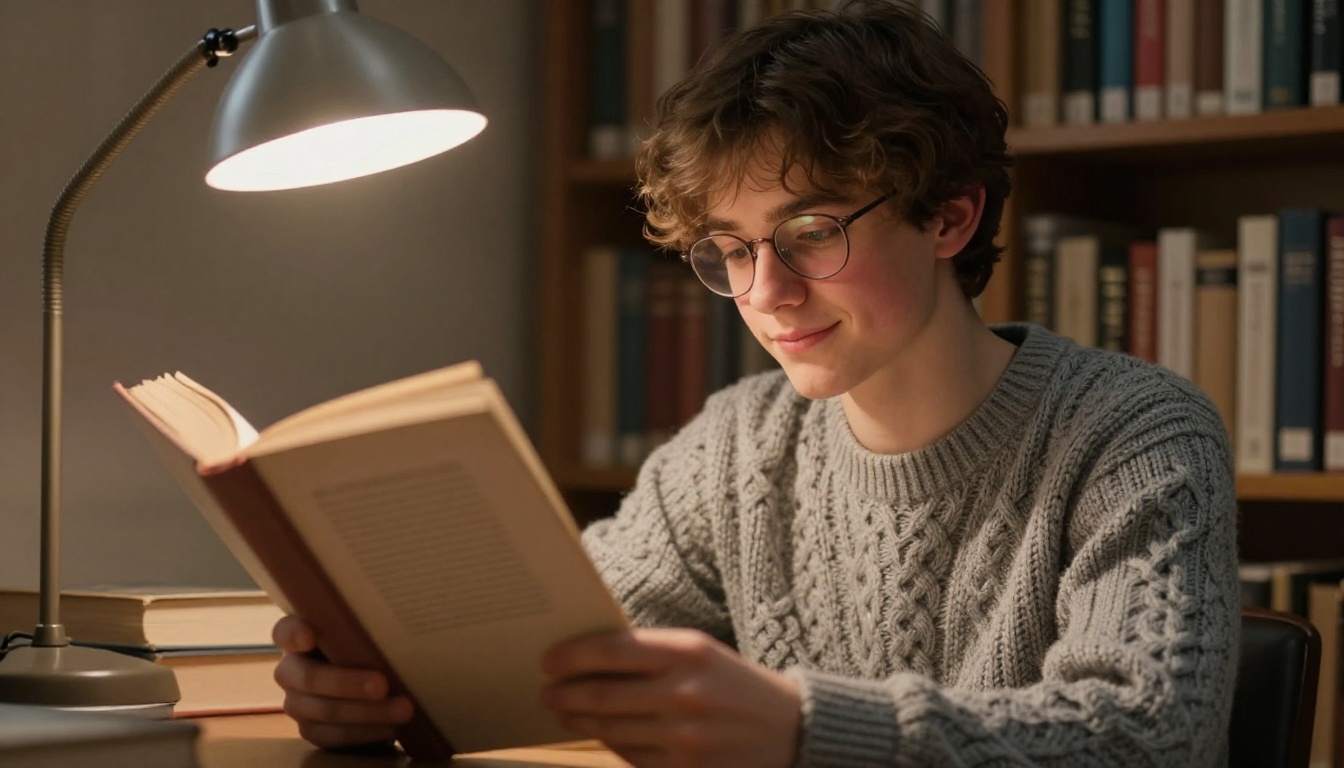
💡 Building the dandere: Oversized clothing (he does not want to take up space), soft warm lighting, always slightly averted gaze unless the moment is specifically intimate. Glasses are a frequent visual shorthand. The hands are always doing something: holding a book, clutching a bag strap, pressed together. He has nowhere to put the nervous energy.
The Yandere and Deredere
From the obsessive to the purely joyful, these two types anchor opposite ends of the emotional intensity spectrum.
Obsessive Devotion Explained
The yandere is the most dramatically charged husbando archetype. He loves without limit, without boundary, and without concern for whether that love is appropriate. The yandere started as a horror archetype but evolved into something more nuanced: a character whose total devotion is simultaneously the most terrifying and the most flattering thing you can imagine. He will protect you from anything, including if the story permits it, yourself. His appeal lies in the fantasy of being someone's entire world.
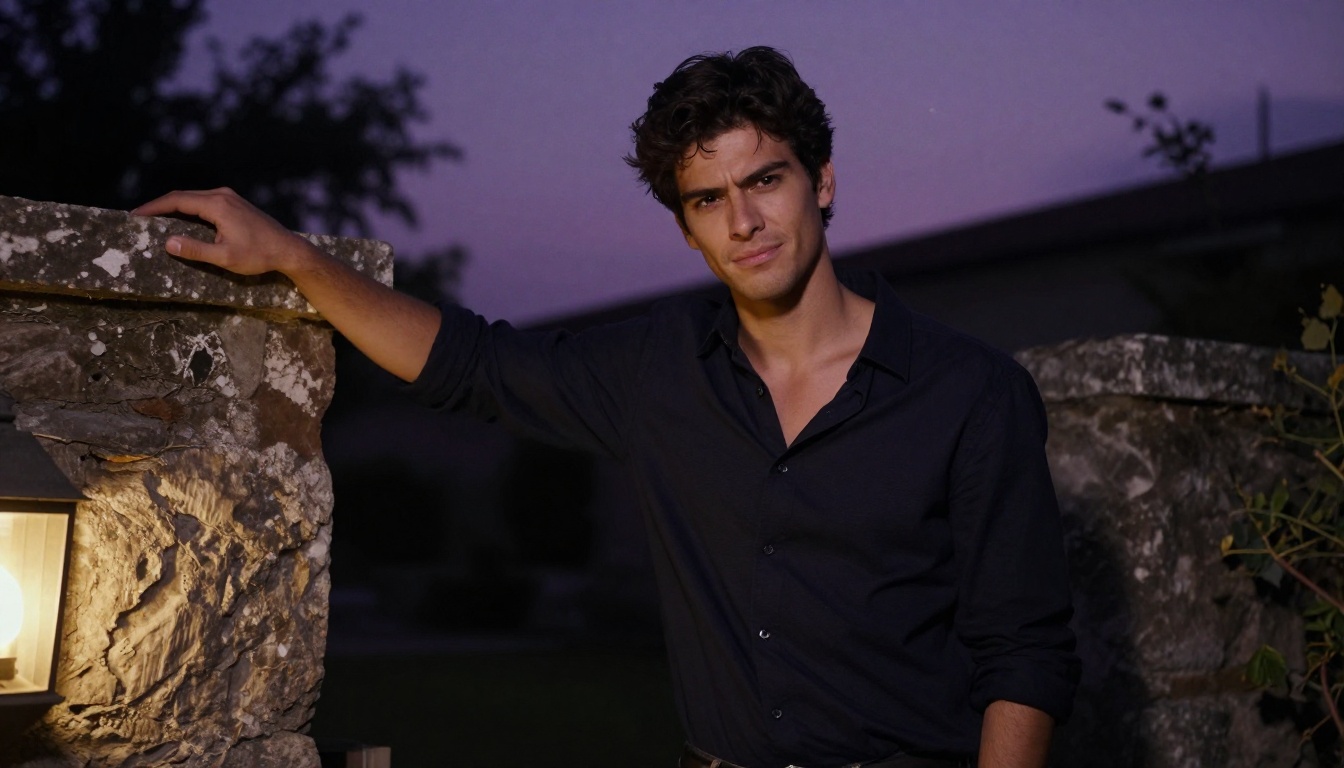
Visually, the yandere lives in shadow and contrast. He is almost always photographed at an angle that gives him slight visual dominance over the viewer. The smile is the most important feature: it is almost right, just slightly too fixed, too knowing. Low-angle shots work particularly well because they make him feel present in a way that crowds the frame. The environment tends toward dusk or night, with point light sources (lanterns, streetlights) rather than natural diffused light. Twilight purple tones and a single warm lantern source are the fastest path to this personality in a prompt.
Pure Sunshine in Human Form
The deredere is the simplest archetype and the hardest to write badly. He loves you, he says so, he shows it constantly, and there is no dramatic obstacle or internal conflict between what he feels and what he expresses. In a medium built on emotional tension, the deredere is radical because he simply does not have any. His challenge as a character is being compelling without conflict, and the best deredere husbandos achieve this through sheer specificity of affection: he does not generically love you, he loves the way you laugh at his jokes even when they are terrible.
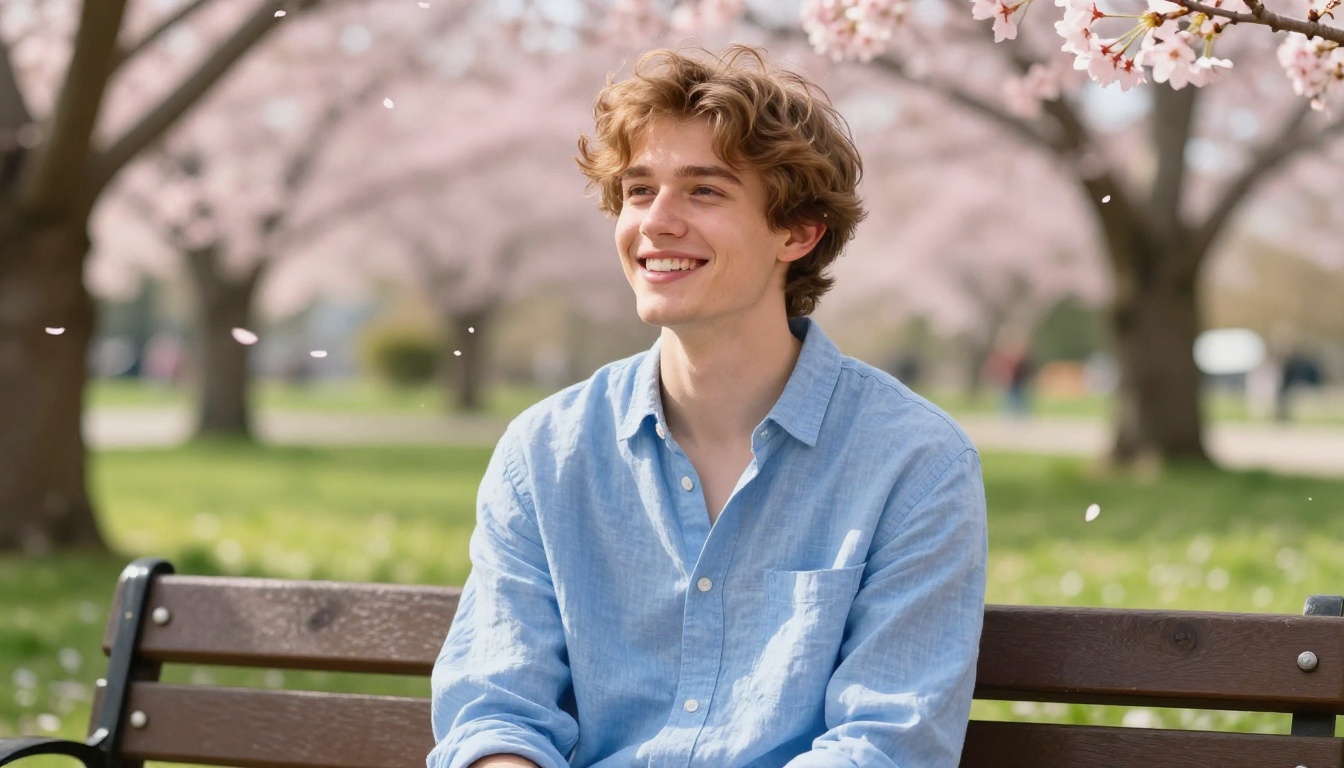
Building the deredere visually means warm light, open body language, and an expression that registers as genuinely pleased rather than performed. Cherry blossoms and spring settings are cliché for a reason: they work. The trick is keeping the lighting natural rather than stylized. An 85mm lens at moderate aperture, warm afternoon light, and a face that is just genuinely happy to be here.
The Himedere and Gentle Giant
Two more archetypes round out the full personality spectrum, each a study in contrast between surface presentation and interior truth.
Royal Demands, Hidden Warmth
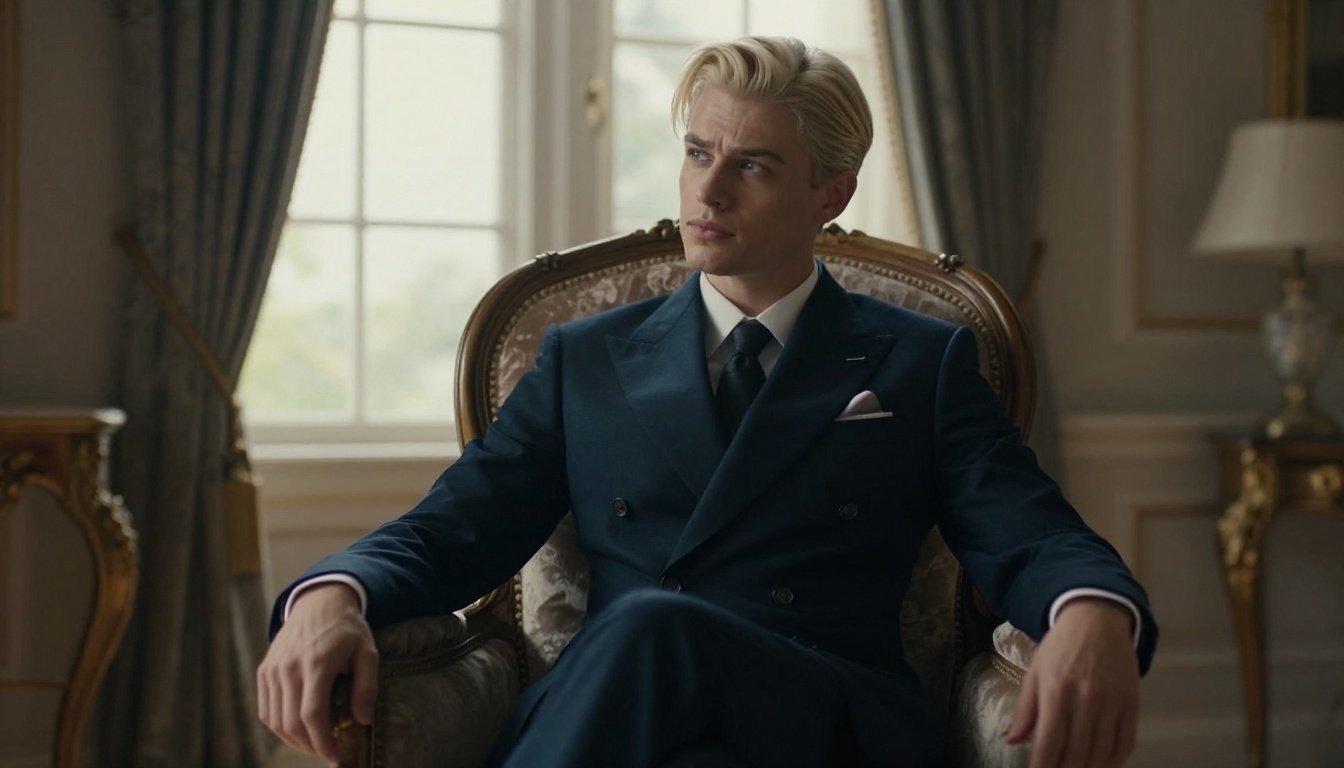
The himedere (from hime, princess) is the archetype for characters who believe they deserve to be treated as royalty, and behave accordingly. In male form, this archetype presents as aristocratic, slightly imperious, accustomed to deference. He expects to be the most impressive person in any room. What makes him a husbando rather than just an antagonist is the crack in the facade: the moment when something you do or say genuinely surprises him, and the royal bearing slips just enough to show that he actually wants to be seen as a person rather than a position.
💡 Styling note: The himedere almost always wears formal or semi-formal clothing even in casual settings. His posture is impeccable. Lighting that flatters rather than challenges (window light from the side, directional and clean) suits him best. The environment should feel expensive: hardwood, velvet, tall ceilings. His expression is controlled except for one thing, the eyebrow. One slightly raised eyebrow is his entire emotional range, and it contains multitudes.
Big, Protective, Surprisingly Soft
The gentle giant is not a named archetype in the same tradition as tsundere or kuudere, but it is one of the most consistently beloved patterns in anime character design. He is physically imposing, usually the largest person in the cast, and his size creates an expectation of intimidation that the personality then systematically dismantles. He is patient, careful, and genuinely soft-hearted. The physical contrast between his presence and his gentleness is the entire appeal.
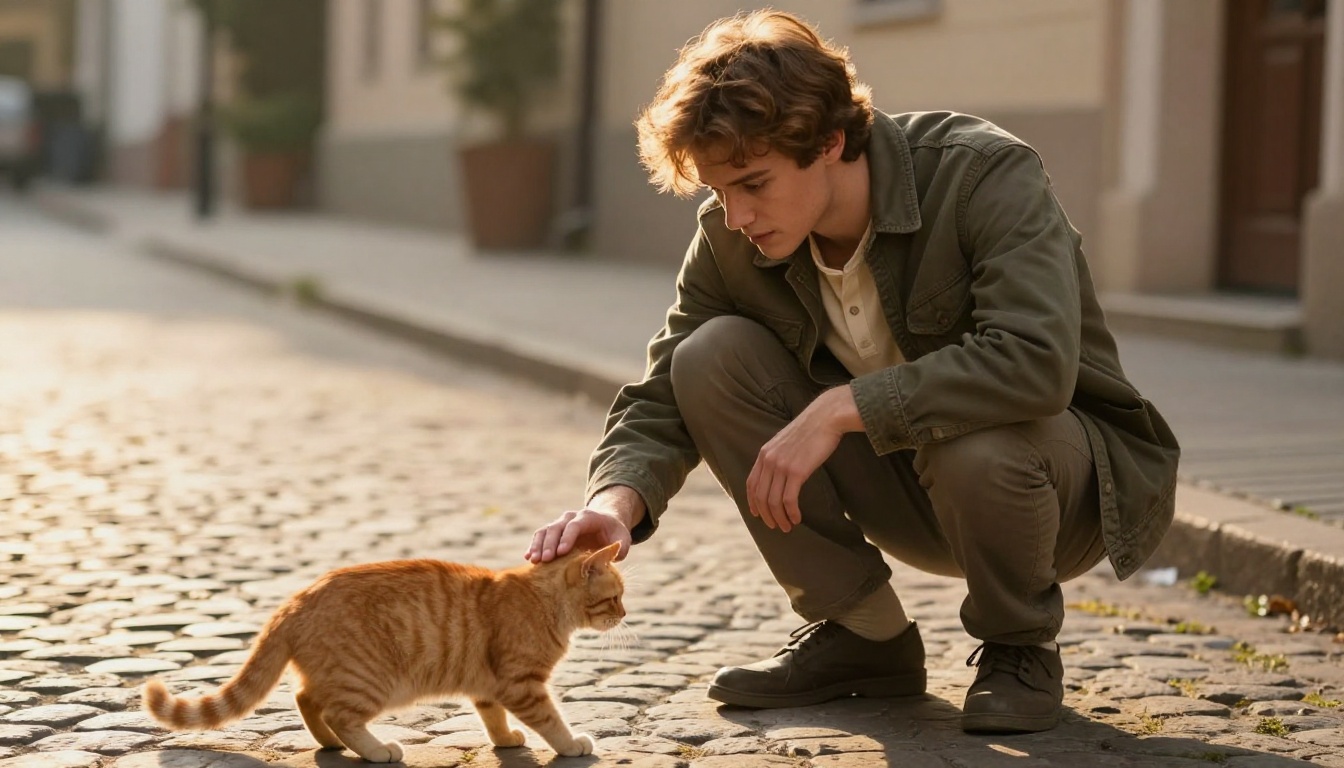
When building this type visually, the environment does the work of scale. A broad-shouldered man crouching gently beside something small (a child, a cat, a plant) is the fastest visual shorthand for this personality. Warm earth tones in the clothing, golden rim lighting from behind to create a sense of protective presence, and an expression that is unhurried and completely at ease.
Building Each Type with AI
Understanding the archetypes is the first half of the process. The second half is translating personality into the specific language that AI image generation actually responds to.

Prompting Personality Into Images
The biggest mistake when generating character images is describing what you want to see without describing what you want to feel. A prompt that says "silver-haired man in school uniform" will generate a technically correct image with no emotional signature. A prompt that says "silver-haired man in a loosened school uniform tie, arms crossed, faint tension in his jaw, eyes averted, afternoon golden light catching the slight flush on his cheek" generates a tsundere. Personality lives in the details: posture, micro-expression tensions, lighting temperature, and the relationship between the character and the space he occupies.
Prompt triggers to try, matched to archetype:
- "slight tension in jaw, arms crossed, gaze averted" (tsundere walls)
- "neutral expression, eyes tracking with precision, flat even light" (kuudere control)
- "averted gaze, shoulders slightly in, hands occupied" (dandere shyness)
- "low angle, slight smile too fixed, point light source" (yandere intensity)
- "open posture, weight forward, genuine attention, warm soft light" (deredere warmth)
- "one raised eyebrow, impeccable posture, directional formal light" (himedere command)
- "broad silhouette, crouching low, golden rim light, unhurried expression" (gentle giant)
LLMs That Write the Perfect Backstory
Once you have a visual, the next step is writing the character: his history, his speech patterns, his contradictions. This is where large language models become genuinely useful creative tools. Claude Sonnet 5 handles nuanced character voice exceptionally well, particularly for complex archetypes like the yandere where tone matters enormously. Gemini 3.5 Flash is faster for rapid iteration across multiple personality drafts. Deepseek R1 excels at reasoning through character motivation in a systematic way, useful for making the kuudere's internal logic consistent. Grok 4 handles creative writing with a distinct voice that works well for the more dramatic archetypes. GPT 5 remains the most versatile for long-form character documents with consistent personality across many scenes.
All of these are available directly on PicassoIA's large language models collection, no API setup required.
Give Your Husbando a Voice
Text-to-speech technology has reached the point where giving your character a fully realized vocal personality is straightforward. Minimax Speech 2.8 HD delivers studio-quality output with precise emotional shading, making it well-suited for characters who need subtle vocal texture: the kuudere's flat delivery with an undercurrent of warmth, or the tsundere's sharp tone that occasionally cracks. ElevenLabs V3 offers the widest range of natural-sounding voices with fine-grained control over pacing and emotion. Qwen3 TTS supports voice cloning, which means you can define the exact vocal timbre and then apply it consistently across every piece of dialogue you generate.
How to Use PicassoIA to Build Your Husbando
PicassoIA brings all of these tools into one place. Here is the workflow that produces the best results:
Step 1: Define the archetype. Before generating anything, decide which personality type you are working with. Write three sentences describing how he acts when he is happy, three for when he is stressed, and three for how he shows affection. This creates the emotional anchor that every subsequent decision should reference.
Step 2: Build the visual with the image generator. Navigate to the text-to-image collection on PicassoIA. Use the p-image model as your baseline. It handles photorealistic portraits with precision and responds well to personality-specific prompt language. Write your prompt using the archetype-first framework above: start with the emotional state, then specify physical details, then add lighting and camera information.
Step 3: Upscale and refine. Use Clarity Pro Upscaler to bring portrait details into full resolution, or Real ESRGAN for a fast 4x upscale that sharpens skin texture and fabric detail. This step is particularly important for the kuudere, where the character lives in subtle facial micro-expressions that a higher resolution makes readable.
Step 4: Write the backstory and voice. Use Claude Sonnet 5 or GPT 5 to write a character document: backstory, speech patterns, core relationships, internal contradictions. Then use Minimax Speech 2.8 HD or ElevenLabs V3 to generate voice samples from that character's dialogue.
The One You Want Already Exists in Your Imagination
The anime husbando archetypes have proven their staying power across decades of storytelling because they are not arbitrary. They map to real emotional needs, real relationship fantasies, real patterns of attachment that resonate across cultures. The tsundere rewards persistence. The kuudere rewards presence. The dandere rewards patience. The deredere rewards openness. The yandere rewards significance. The himedere rewards confidence. The gentle giant rewards gentleness given back.
What AI makes possible is not the replacement of that emotional resonance. It is the ability to take the character that already exists in your imagination and make him visible, give him a voice, and build him into something you can actually see, describe to others, or develop into a full story. PicassoIA puts every tool that process requires in one place: from image generation to language models to speech synthesis.
Start building at picassoia.com/en/all-models. Every archetype described here has already been successfully visualized by the AI models available on the platform. The only variable is the specific combination of traits that makes your particular husbando his own person. That part only you know.


