AuraFlow arrived quietly on Hugging Face in mid-2024, but the reaction from the AI image community was anything but quiet. Cloneofsimo and collaborators released a new open-source text-to-image model built on flow matching, and within days, researchers and creators were running benchmarks, comparing outputs, and posting sample images that rivaled models three times the size. This is not another incremental update to existing architectures. AuraFlow is a from-scratch attempt to rethink how open-source image generation models should be built, and the results are worth paying close attention to.
What AuraFlow Actually Is
AuraFlow is a text-to-image model that generates photorealistic and artistic images from natural language prompts. It is built on a transformer-based architecture and trained using flow matching, a fundamentally different training objective than the denoising diffusion process used in most popular models today.
The model was released with open weights under a permissive license, meaning anyone can download, run, fine-tune, or build on top of it. That openness is significant: it places AuraFlow in the same category as FLUX and early Stable Diffusion releases, rather than closed commercial APIs where you pay per image and never see the underlying architecture.

Flow Matching, Not Diffusion
Most AI image models you have used, from Stable Diffusion to SDXL, are built on denoising diffusion probabilistic models (DDPMs). The process works by learning to reverse a noise-adding process: given an image full of random noise, the model progressively removes it until a coherent image appears.
Flow matching takes a different approach. Instead of learning to denoise step by step, flow matching trains the model to learn a continuous vector field that maps pure noise directly to data. Think of it as drawing a straight path from chaos to order, rather than taking hundreds of small denoising steps with no clear direction.
This has practical consequences:
- Fewer inference steps required to generate high-quality images
- Smoother interpolation between image concepts and styles
- Better training stability at large parameter scales
- Stronger prompt coherence across complex, multi-element descriptions
The Architecture Behind It
AuraFlow uses a transformer-based backbone rather than the U-Net architecture that dominated first and second-generation diffusion models. This puts it in the same architectural family as FLUX and Google's Imagen 3.
The model processes text and image tokens together in a single unified attention mechanism, which allows it to maintain stronger coherence across complex descriptions. When you tell it to generate a woman standing in a wheat field at sunset wearing a cream silk dress, it does not forget the cream silk dress halfway through rendering the sunset. That kind of long-range consistency has been a persistent weakness in older U-Net diffusion models.
Why Open Source Changes Things
The release of AuraFlow's weights matters for reasons beyond just another free model to try. It represents a continued commitment from the research community to keeping frontier image generation accessible to anyone with a capable GPU and a willingness to experiment.
Access to Model Weights
When a model releases open weights, the real value is not just free inference. It is the ability to:
- Run the model locally without API rate limits or per-image costs
- Fine-tune on custom datasets to match a specific photographic or artistic style
- Integrate into production workflows without vendor lock-in
- Build derivative models and share improvements back with the community
AuraFlow's weights are available directly through Hugging Face, compatible with the diffusers library. This means anyone with a consumer-grade GPU can run it without cloud compute costs or account restrictions.
Community-Driven Iteration
Open source models improve faster than closed ones, once they cross a critical quality threshold. The FLUX family proved this: within weeks of its Dev release, the community had created LoRA fine-tunes, ControlNet adapters, and merged variants that pushed the quality ceiling significantly higher than the base model achieved on its own.
AuraFlow is positioned to benefit from the same dynamic. Researchers can audit the training methodology, identify failure modes, and propose targeted improvements. That kind of collaborative iteration does not happen with API-only models where the weights stay private.
💡 The open weights advantage: A model you can fine-tune is worth ten times a model you can only prompt. Fine-tuning collapses the gap between generic AI output and output that matches your specific visual style, brand identity, or production requirements.
AuraFlow vs. The Competition
AuraFlow does not exist in a vacuum. It lands in an ecosystem where FLUX.1 Dev, SDXL, and Stable Diffusion 3 are all competing for the same user base. Here is an honest comparison based on documented outputs and community benchmarks.

How It Stacks Up Against FLUX
| Feature | AuraFlow | FLUX.1 Dev |
|---|
| Architecture | Transformer (flow matching) | Transformer (flow matching) |
| Open Weights | Yes, permissive | Yes, non-commercial |
| Inference Steps | 20 to 30 | 20 to 50 |
| VRAM Requirement | ~12GB fp16 | ~16 to 24GB |
| Prompt Adherence | Strong | Very Strong |
| Community Ecosystem | Growing | Large and active |
| Portrait Quality | Excellent | Very Good |
| Hardware Accessibility | Mid-range GPU | High-end GPU |
FLUX.1 Dev, which you can use through the Flux Redux Dev model on PicassoIA, currently has a larger community ecosystem and slightly stronger prompt adherence on highly complex multi-subject prompts. But AuraFlow closes that gap significantly on portrait and human subject generation, which has historically been a weak point for transformer-based image models at this parameter scale.
AuraFlow also runs on less VRAM, which is a meaningful practical advantage. A 12GB GPU can run AuraFlow at full precision where FLUX.1 Dev requires 16 to 24GB for similar quality.
Where SDXL Still Holds Ground
SDXL's main advantage is its massive ecosystem of LoRA fine-tunes and community checkpoints. If you need a very specific visual style that has been trained into an existing LoRA (a particular artist aesthetic, a brand style, a specific lighting setup), SDXL likely has it. AuraFlow does not have that library yet.
However, for base model quality without any fine-tuning, AuraFlow outperforms SDXL on most photorealistic use cases: human subjects, natural lighting accuracy, and prompt coherence on descriptive prompts.
💡 When to use AuraFlow: Strong out-of-the-box photorealism without fine-tuning. When to stay with SDXL: you need a specific LoRA or checkpoint from the established community library that does not exist for AuraFlow yet.
The Output Quality in Practice
Benchmarks and architecture explanations only tell part of the story. What matters most is whether the model actually produces images that look good without heavy post-processing or cherry-picking from dozens of rejected outputs.
Portraits and Human Subjects
This is where AuraFlow genuinely impresses. Human portrait generation has been one of the most persistent challenges in open-source image models, particularly around hands, facial symmetry, and natural skin texture.
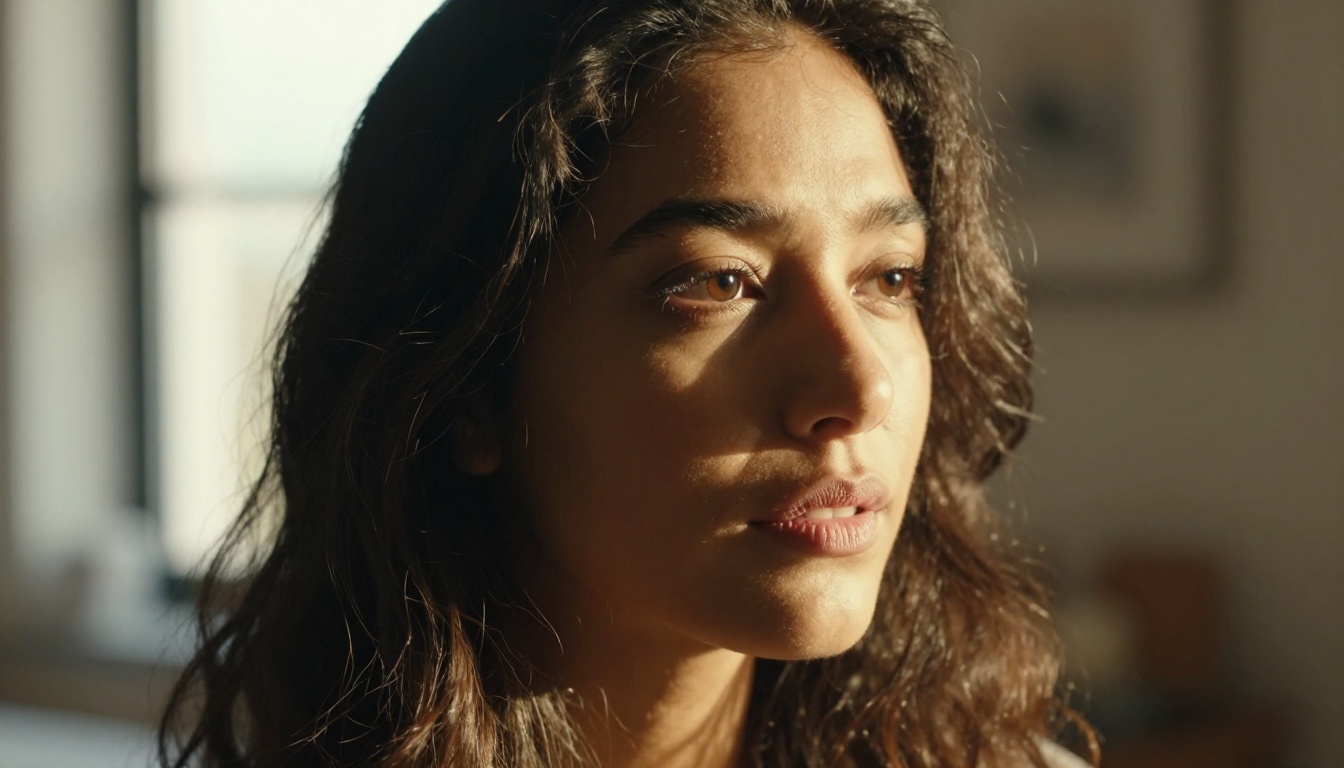
AuraFlow produces portraits with:
- Natural skin texture including visible pores and fine lines without the plastic smoothness common in earlier diffusion models
- Accurate eye rendering with proper catchlights, iris detail, and lash depth
- Consistent face geometry across different lighting conditions and prompt descriptions
- Realistic hair with individual strand variation rather than painted-looking masses or artificial symmetry
For anyone generating character portraits, photography-style headshots, or editorial images, this is a meaningful improvement over what previous open-source options offered at comparable inference costs.
Landscapes and Architecture
Landscape generation benefits from AuraFlow's flow matching training approach. The model handles atmospheric perspective, lighting transitions across large scenes, and complex organic textures like foliage, water, and rock with strong internal consistency.
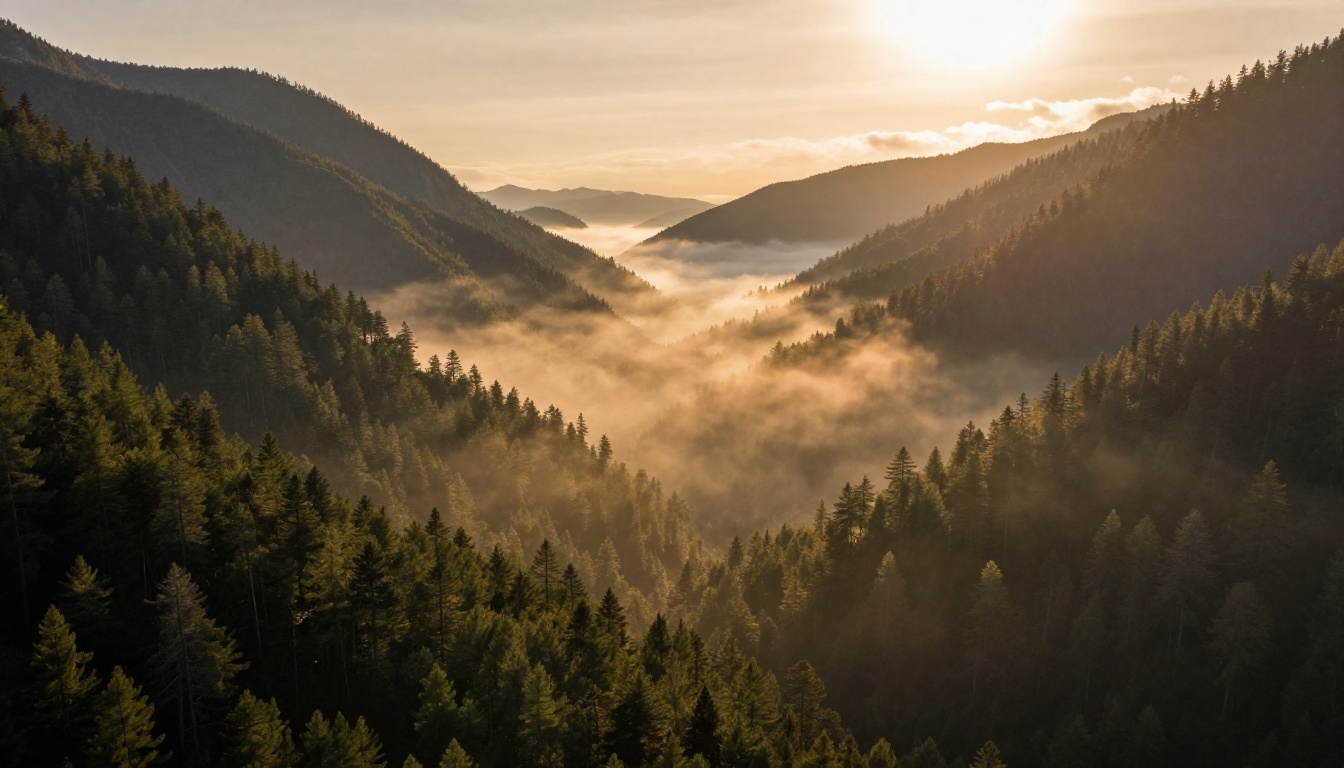
The training process allows for smoother handling of large compositional elements. The sky, midground, and foreground of a landscape maintain proper tonal relationships without the "pasted-together" look that earlier models sometimes produced when trying to render complex multi-plane scenes with varied lighting.
Fashion and Editorial Shots
For fashion and commercial photography-style images, AuraFlow holds up well against purpose-built fine-tuned models. Fabric texture, clothing drape, and the interaction of light with different materials (silk, linen, denim, leather) are rendered with photographic accuracy that reads as real rather than simulated.
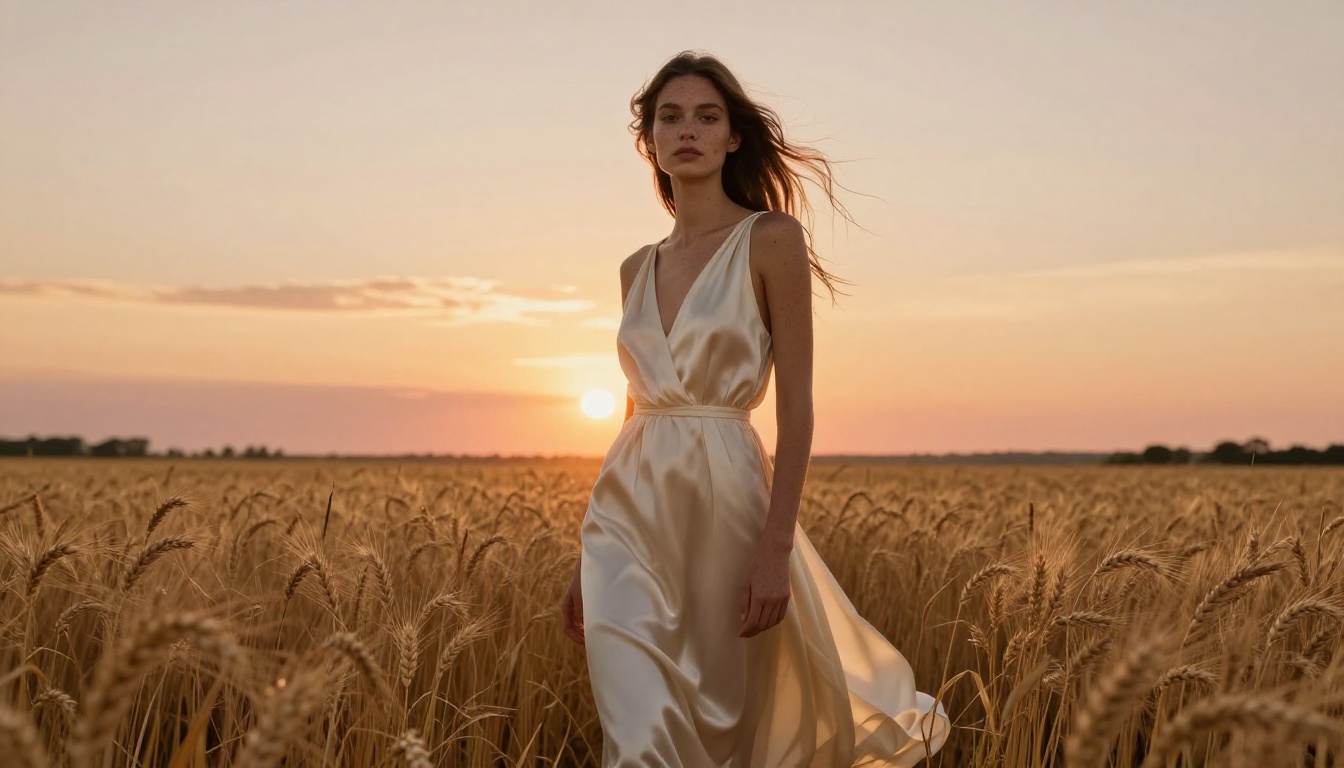
The model also handles complex lighting scenarios with confidence. Backlighting that creates rim-light halos, dappled light through foliage creating uneven illumination, and studio-style directional lighting setups all produce results that read as photographic rather than computationally rendered.
Candid and Lifestyle Imagery
Candid-style images with multiple subjects, natural expressions, and environmental context are notoriously difficult for AI image models. Interactions between people often look posed, physically awkward, or emotionally blank.

AuraFlow's strong prompt coherence helps here. Specifying emotional context in the prompt (genuine laughter, relaxed conversation, focused concentration) translates into images where the expressions and body language actually read as natural. The model does not default to blank faces or forced smiles when given descriptive emotional direction in the prompt.
Running AuraFlow on Your Own Hardware
AuraFlow is available through Hugging Face's model hub and compatible with the standard diffusers pipeline. Getting it running locally is straightforward for anyone who has set up a similar model before.

Hardware Requirements
| Setup | Minimum VRAM | Generation Speed (approx.) |
|---|
| fp16 full precision | 12GB | ~45 seconds per image |
| fp8 quantized | 8GB | ~90 seconds per image |
| CPU offload mode | 8GB VRAM | 3 to 5 minutes per image |
A mid-range GPU like the RTX 3080 or RTX 4070 can run AuraFlow at fp16 comfortably. This is a meaningful accessibility advantage over FLUX.1 Dev, which often requires higher-end hardware for equivalent quality output.
Setup and Requirements
The diffusers library handles AuraFlow natively through its standard pipeline interface. A basic local setup requires:
- Python 3.10 or newer as the runtime environment
- PyTorch 2.x with CUDA for GPU acceleration
- diffusers, transformers, and accelerate Python libraries
- The model checkpoint from Hugging Face, approximately 12GB download
The sampling pipeline accepts standard parameters. Guidance scale between 3.5 and 7.0 produces the best results for photorealistic outputs. Step count of 20 to 30 handles most use cases, with higher step counts (up to 50) offering marginal quality improvements for extremely detailed scenes at the cost of generation time.
💡 Prompt tip: AuraFlow responds strongly to detailed scene descriptions. Adding lighting direction ("soft morning light from the left"), lens parameters ("85mm f/1.8 shallow depth of field"), and material specifics ("silk fabric with visible drape and texture") pushes photorealism significantly higher than short generic prompts.
What This Means for AI Image Creators
The release of AuraFlow is part of a pattern that has been accelerating: the gap between closed commercial models and open-source alternatives is shrinking faster than most expected. Three years ago, the best image generation required access to DALL-E 2's restricted API. Today, the open-source ecosystem includes transformer-based flow matching models that match commercial quality for most practical use cases.
The Shift in the Open Source Image Landscape
For creators, this translates into concrete advantages:
- More control: Fine-tune on your own data, keep the weights, own the style
- Lower costs: No per-image fees when running locally at scale
- No vendor dependency: Your workflow does not break when an API changes pricing
- Community improvements: The model will get better as researchers build on it publicly
AuraFlow joins FLUX as evidence that open-source image generation has reached a point where the question is no longer "is this good enough?" but "which specific strengths fit my use case?" Both models produce commercially viable images from a base model without fine-tuning, which was not true of open-source options even 18 months ago.
The combination of flow matching architecture, strong photorealism on human subjects, lower hardware requirements than comparable models, and fully open weights makes AuraFlow one of the most interesting releases in AI image synthesis in 2024. Whether you run it locally or access it through a platform, it belongs in your awareness of where the field currently sits.
Start Generating With AI Image Models Today
If you want to put the capabilities of the latest AI image models to work without configuring a local environment, Picasso IA gives you access to a wide library of professional text-to-image models, including Flux Redux Dev and dozens of other models across different styles and output types.

The platform lets you generate photorealistic portraits, editorial fashion shots, dramatic landscapes, and candid lifestyle images directly from text prompts, with no local GPU setup or Python environment required. You can experiment with different prompt styles, compare outputs across models, and see firsthand what flow matching-based architectures produce compared to traditional diffusion pipelines.
Whether you are a photographer prototyping shot concepts before an expensive production day, a designer building visual content at scale, or a developer evaluating which model fits your product, the fastest way to form an informed opinion is to start generating. Pick a specific scene, write a detailed prompt, and see what the current generation of open image models is actually capable of producing.


