Best AI Image Generator for Fun Creations: Your Guide to Playful Digital Art
From fantasy landscapes to whimsical character designs, AI image generators transform creative ideas into stunning visual art. This comprehensive guide explores top platforms for fun creations, compares features and pricing, and provides practical tips for generating imaginative artwork. Whether you're creating for personal enjoyment, social media, or collaborative projects, learn how to harness AI technology for playful digital artistry.
The world of digital art has transformed dramatically with AI image generators. What started as complex tools for professionals has evolved into accessible platforms where anyone can create stunning, imaginative artwork with simple text prompts. For those looking to create fun, playful digital art—from fantasy landscapes to whimsical character designs—the right AI image generator makes all the difference.
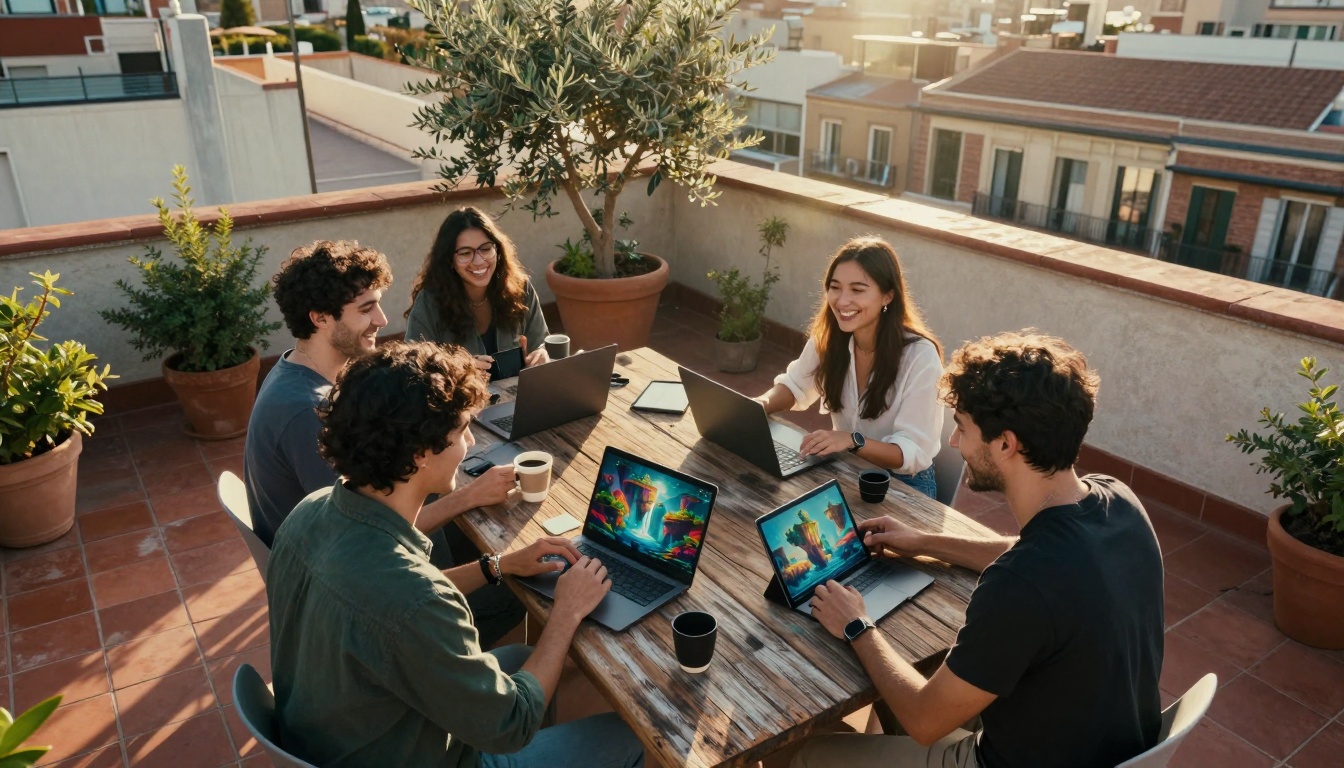
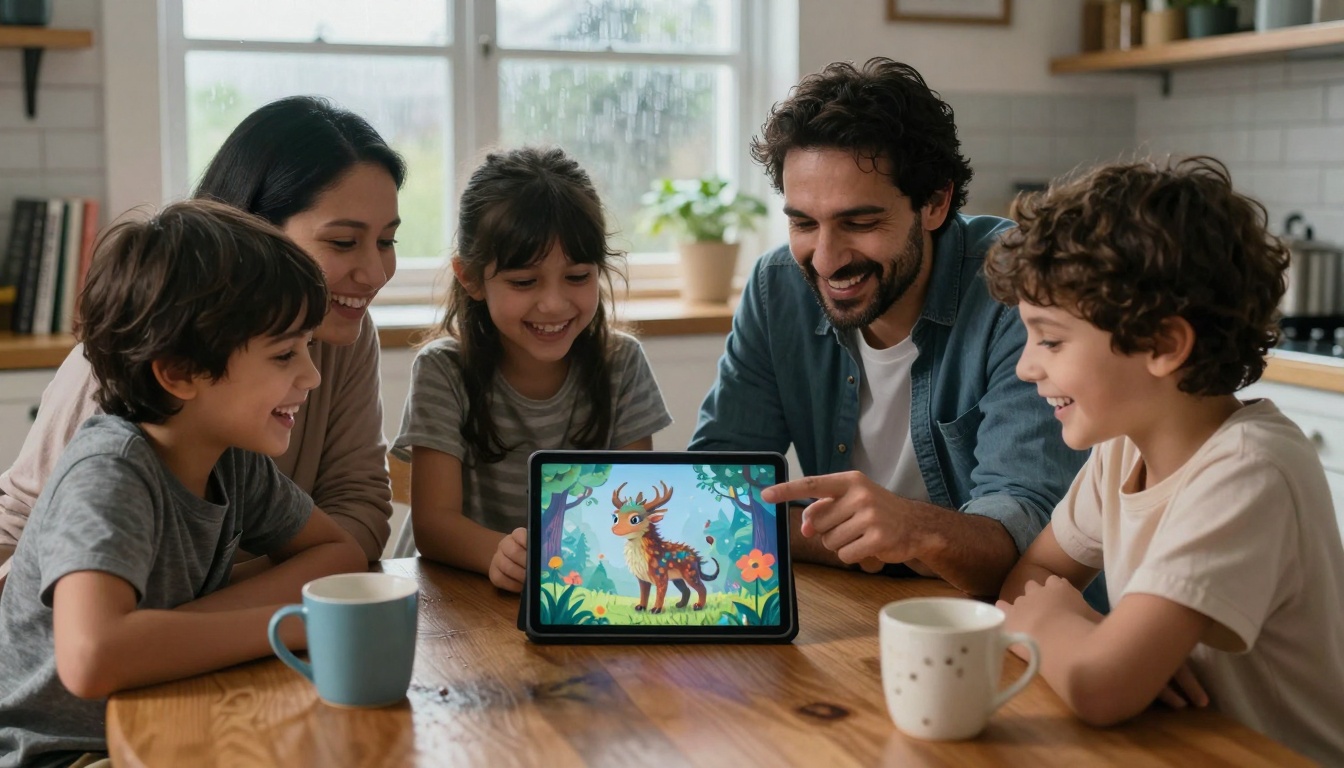
Group creativity sessions demonstrate how AI art brings people together for fun projects
Why AI Image Generators Excel at Fun Creations
AI image generators have a unique advantage when it comes to creating playful, imaginative artwork. Unlike traditional digital art tools that require years of skill development, these platforms allow immediate expression of creative ideas. The technology excels at several key aspects of fun creation:
Instant visualization of abstract concepts means you can see your fantasy worlds materialize in seconds rather than spending hours sketching. Style flexibility lets you switch between cartoonish whimsy, photorealistic fantasy, or surreal dreamscapes with a simple prompt adjustment. Iterative exploration enables rapid experimentation—generate ten variations of a concept, pick the best, and refine further.
💡 The most successful fun creations often start with specific, vivid descriptions rather than generic terms. Instead of "a dragon," try "a friendly purple dragon with glittering scales, wearing a tiny crown, sitting on a mushroom throne in an enchanted forest at golden hour."
Top AI Platforms for Playful Digital Art
Several platforms stand out for creating fun AI art, each with unique strengths for different types of playful creations.
Flux Models: Speed and Quality for Fantasy Scenes
The Flux series has revolutionized AI image generation with exceptional speed and quality. For fun creations, Flux excels at fantasy landscapes, imaginative creatures, and detailed scenes with complex lighting.
The tactile process of typing creative prompts transforms ideas into visual art
Why Flux works for fun art:
Rapid iteration: Generate multiple variations quickly to explore different creative directions
Consistent character generation: Create recognizable characters across different scenes and poses
Complex scene understanding: Handles detailed environments with multiple elements interacting naturally
Art style flexibility: Switch between cartoon, realistic, painterly, or stylized outputs
Best for: Fantasy RPG characters, enchanted environments, mythical creatures, and storybook illustrations.
GPT Image: Conversational Creativity
GPT Image 1.5 offers a different approach with more conversational prompt interaction. The model engages in back-and-forth refinement, making it ideal for collaborative, evolving creative projects.
GPT Image advantages:
Interactive refinement: Ask for changes and modifications in natural language
Contextual understanding: Maintains character and scene consistency across conversations
Creative suggestions: Can propose artistic directions based on your initial ideas
Multiple output variations: Generates several interpretations of the same prompt
Best for: Collaborative storytelling, character development, evolving scene creation, and educational creative projects.
P-Image: Photorealistic Whimsy
P-Image specializes in photorealistic outputs that maintain a sense of playfulness and imagination. This creates a unique contrast between realistic rendering and fantastical subjects.
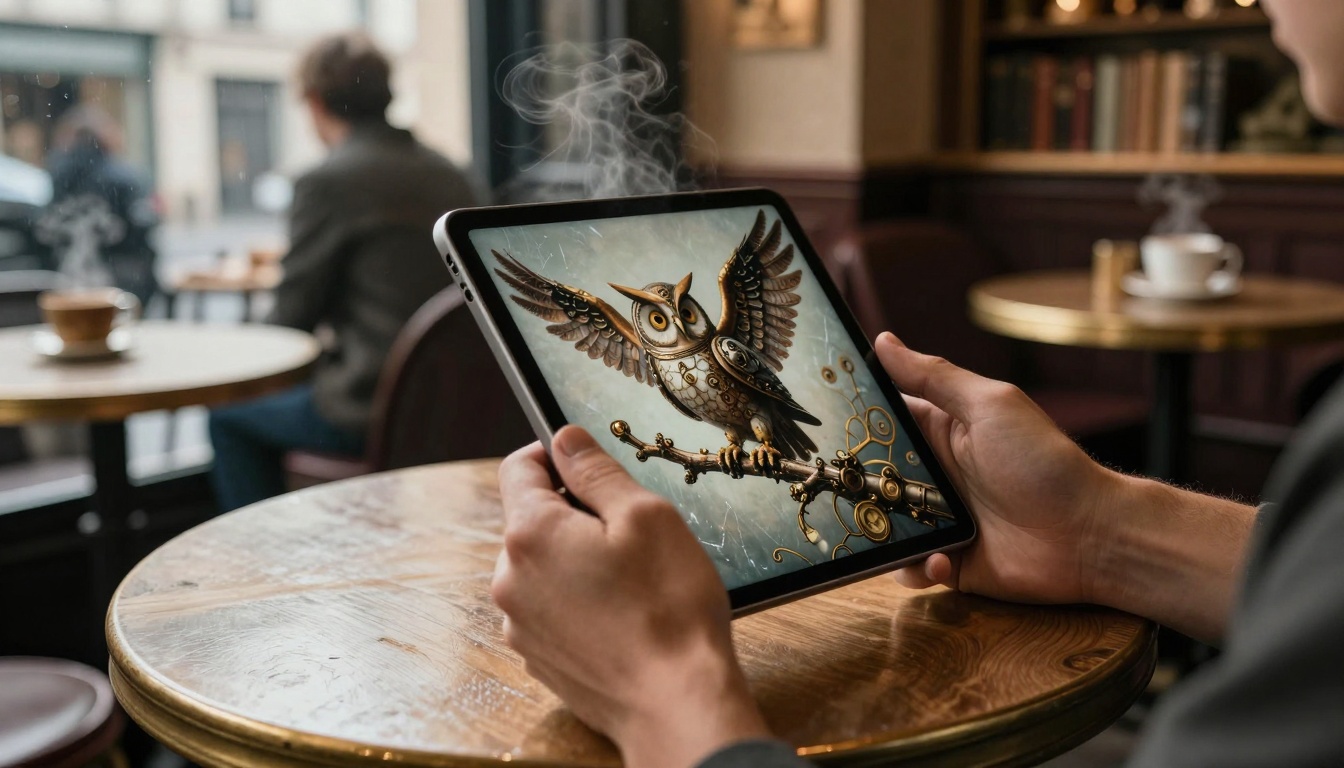
Casual creativity sessions show how AI art integrates into everyday creative spaces
P-Image strengths:
Photorealistic fantasy: Creates believable yet impossible scenes and creatures
Detailed textures: Excellent at rendering scales, fur, fabric, and environmental details
Natural lighting: Simulates realistic light behavior in imaginative settings
Consistent proportions: Maintains believable anatomy even for fictional beings
Best for: Believable fantasy photography, creature design with realistic textures, and imaginative scenes with photographic quality.
Creative Techniques for Maximum Fun
Creating truly engaging, fun AI art requires specific techniques beyond basic prompting. These approaches transform generic outputs into memorable creations.
Character Consistency Across Scenes
One of the most rewarding aspects of fun AI art is developing recurring characters. Achieving consistency requires strategic prompting:
**Character Template Approach:**
1. Generate a detailed character sheet with multiple angles and expressions
2. Save the most successful outputs as reference images
3. Use image-to-image generation for new scenes
4. Maintain descriptive consistency in prompts
Scale relationships: Maintain consistent size relative to environment
Environmental Storytelling
Fun creations gain depth when the environment tells a story. Rather than generic backgrounds, create scenes with narrative elements:
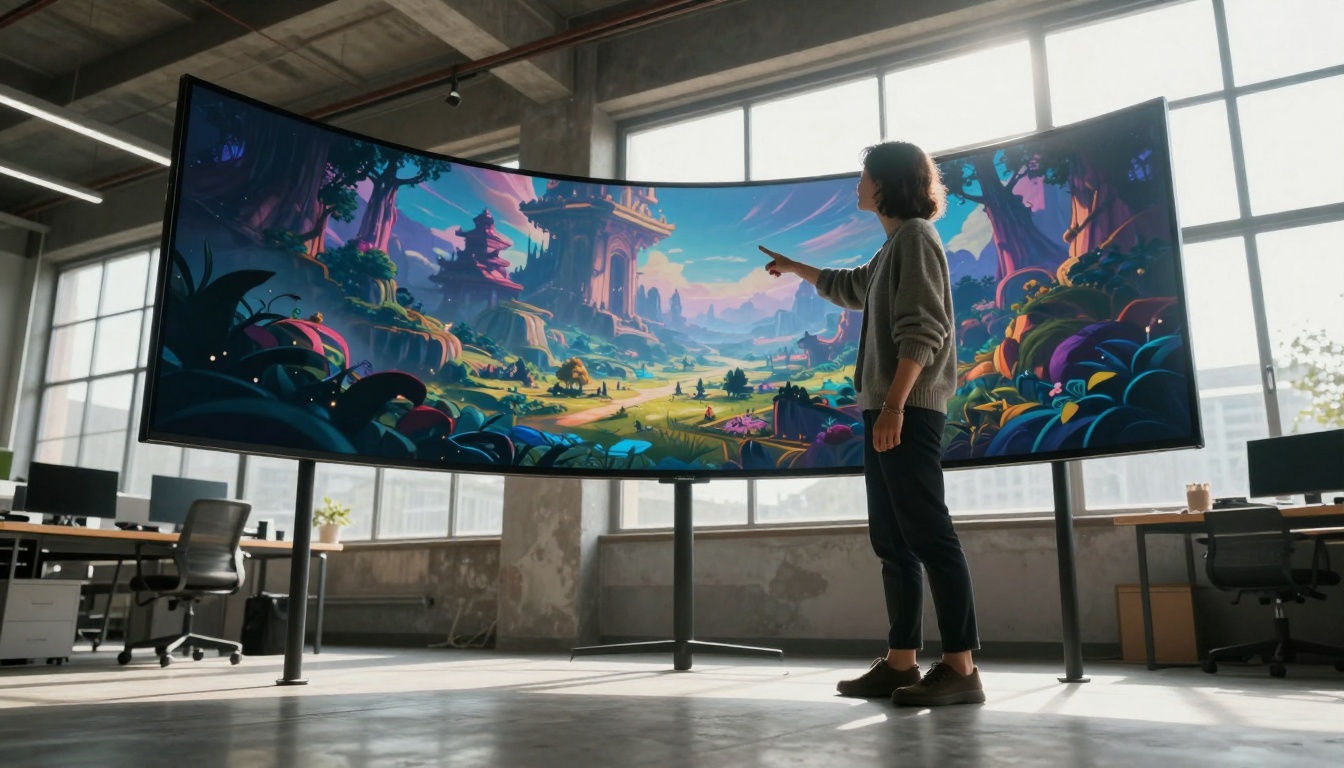
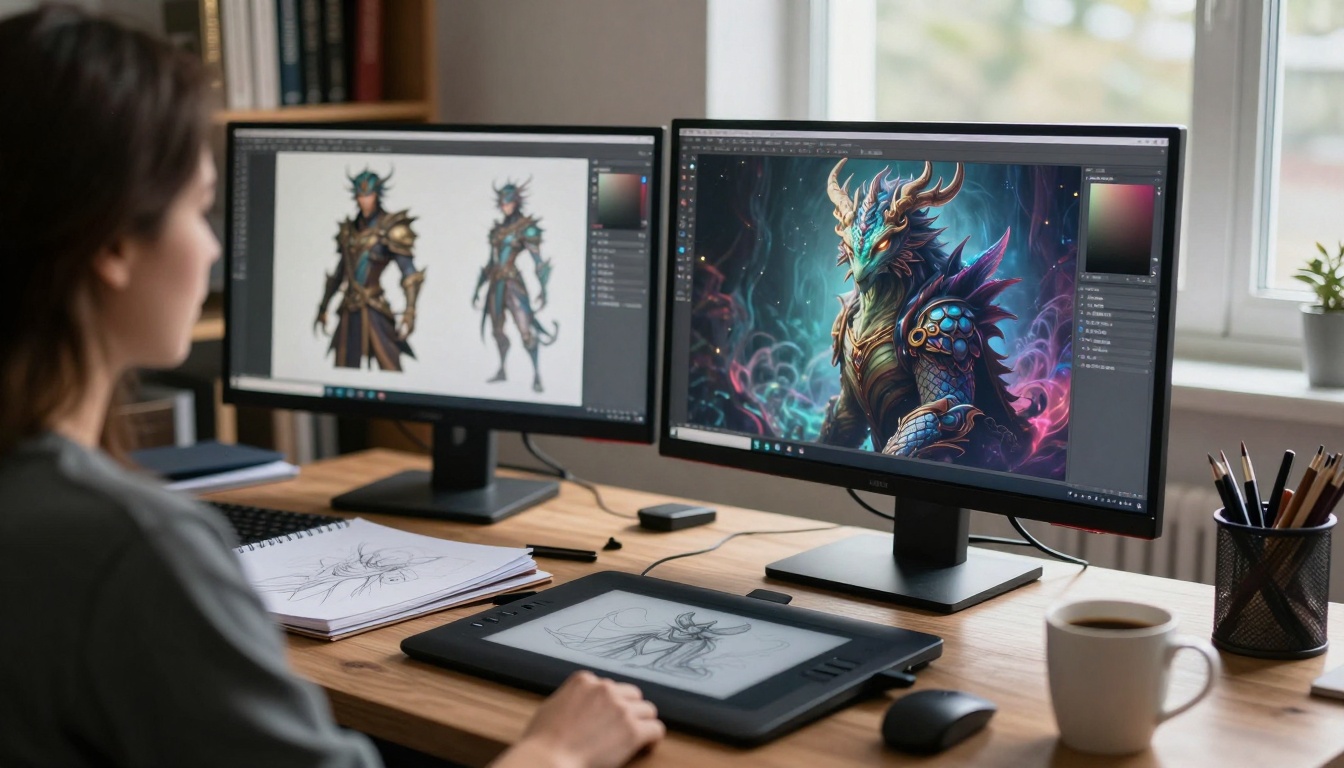
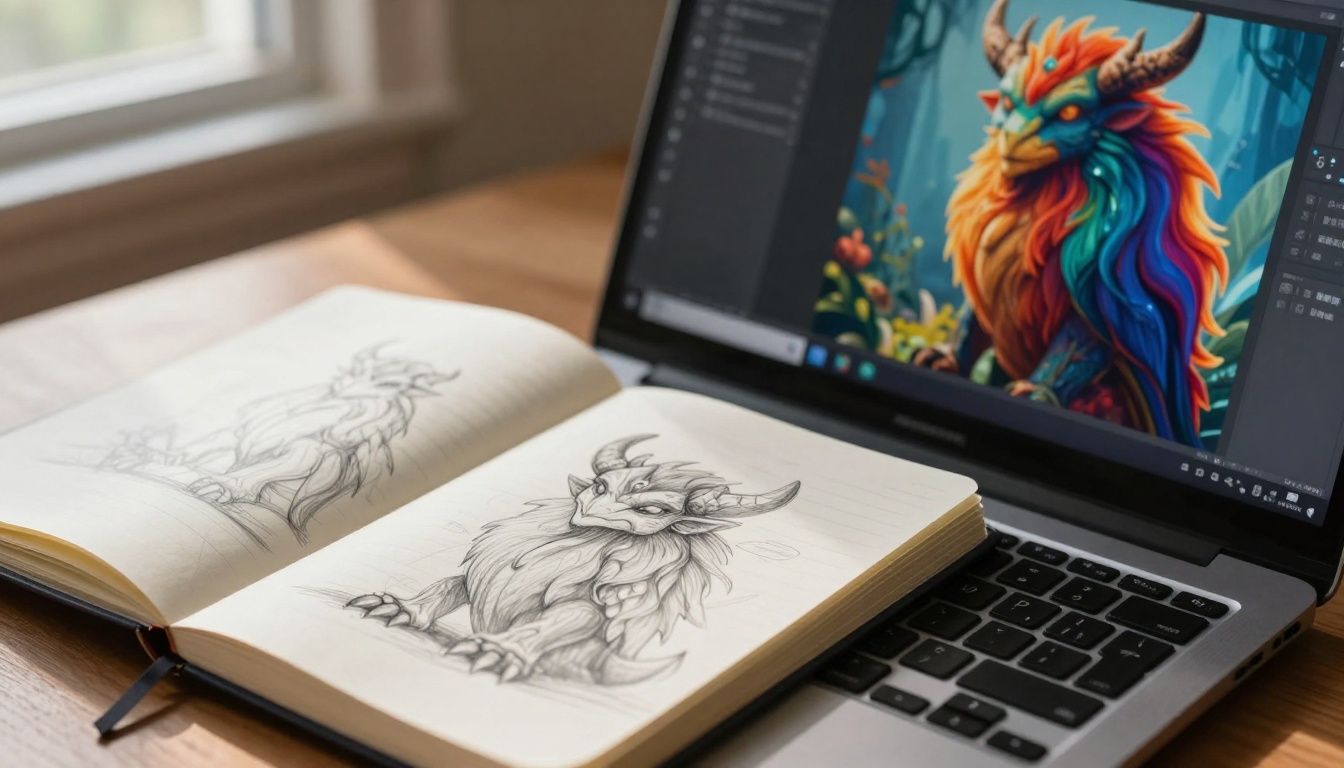
Professional creative spaces demonstrate the serious potential of playful AI art
Environmental details that enhance fun:
Interactive elements: Characters interacting with objects in the scene
Dynamic lighting: Time of day, weather conditions, magical light sources
Hidden details: Small easter eggs or subtle background elements
Scale contrast: Tiny characters in vast environments or vice versa
Movement suggestions: Wind effects, flowing water, falling leaves
Style Fusion and Genre Blending
Some of the most fun creations come from mixing unexpected styles and genres:
Style Combination
Example Creation
Prompt Strategy
Steampunk + Fantasy
Mechanical dragons in Victorian cities
"A brass and copper dragon with clockwork wings, perched on a gaslamp in a foggy Victorian London street, intricate gear details, glowing amber eyes"
Sci-Fi + Whimsical
Alien creatures with cartoon proportions
"A friendly three-eyed alien with pastel purple skin, floating in zero gravity, surrounded by glowing space orbs, cartoon animation style"
Historical + Magical
Renaissance paintings with fantasy elements
"A renaissance oil painting style portrait of a wizard in elaborate robes, holding a glowing crystal, detailed brushwork, chiaroscuro lighting"
Minimalist + Mythical
Simple shapes representing complex creatures
"Minimalist geometric fox spirit made of glowing triangles and circles, floating in negative space, clean lines, subtle gradient background"
Practical Applications for Fun AI Art
Beyond personal enjoyment, fun AI creations have practical applications across various domains.
Social Media and Content Creation
AI-generated fun art has become incredibly popular on social platforms. The visual appeal combined with imaginative concepts drives engagement and sharing.
Social media success patterns:
Series consistency: Regular characters or themes that followers anticipate
Interactive content: Art that invites audience participation or story suggestions
Trend integration: Seasonal, holiday, or viral trend adaptations
Behind-the-scenes: Showing the prompt-to-art process builds community
Professional design workflows incorporate AI character creation for various projects
Educational and Developmental Use
Fun AI art serves educational purposes by making abstract concepts visual and engaging:
Classroom applications:
History visualization: Historical figures or events in imaginative settings
Science illustration: Scientific concepts personified as friendly characters
Language learning: Vocabulary words represented as visual scenes
Creative writing prompts: Generating story inspiration images
Developmental benefits:
Encourages descriptive language development through precise prompting
Builds visual thinking and spatial reasoning skills
Provides immediate creative gratification that motivates continued exploration
Teaches iteration and refinement as creative processes
Collaborative Projects and Games
AI art generation facilitates unique collaborative experiences:
Family creativity sessions show how AI art bridges generations and skill levels
Collaborative game formats:
Story chain: Each person adds a prompt element, building a cumulative scene
Character exchange: Create characters then swap to create scenes with others' characters
Theme challenges: Weekly or monthly creative prompts with shared results
World building: Collective creation of consistent fantasy settings
Technical Considerations for Optimal Results
Achieving consistent, high-quality fun creations requires understanding some technical aspects of AI image generation.
Prompt Engineering for Playful Art
Effective prompting for fun art differs from other AI image applications:
Structural elements of successful fun prompts:
Subject: The main character or focal point with specific details
Action/Expression: What they're doing and their emotional state
Environment: Detailed setting with mood and time indicators
Style directives: Artistic style, rendering quality, specific visual treatments
"A cheerful garden gnome with a pointy red hat and leather apron
[Subject with details]
happily polishing a giant glowing crystal
[Action with emotion]
in a sun-drenched fairy garden at golden hour with bioluminescent flowers
[Environment with mood]
digital painting style with vibrant colors, detailed textures, volumetric lighting
[Style directives]
--ar 16:9 --style raw --detail high"
[Technical parameters]
Iterative Refinement Process
The most successful fun creations rarely emerge from a single prompt. An iterative approach yields better results:
The creative process often involves solitary refinement sessions at optimal times
Four-phase refinement cycle:
Concept generation: Multiple quick variations to explore direction
Element isolation: Focused generations on specific aspects (character, environment, details)
Composition assembly: Combining successful elements into cohesive scenes
Final polishing: Refining lighting, details, and consistency
Platform-Specific Optimization
Different AI image generators respond best to different prompting styles:
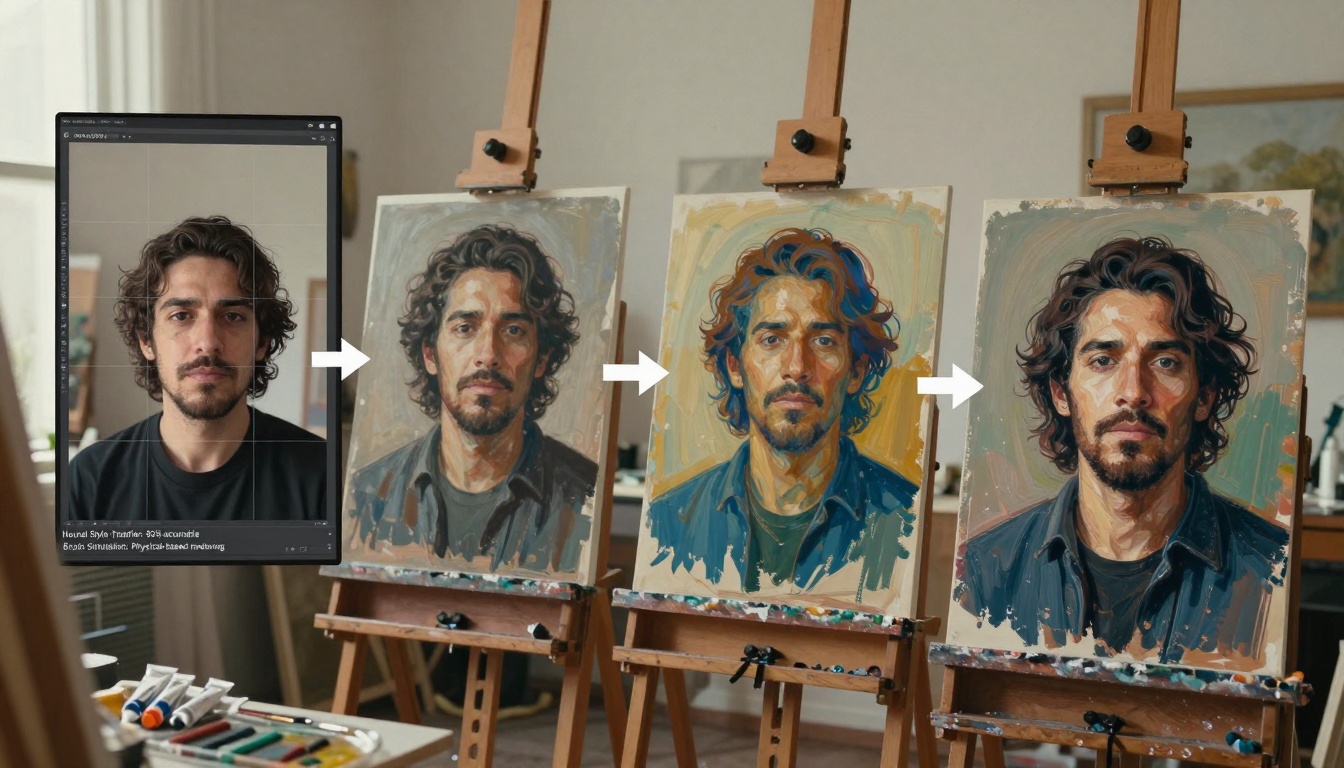
Collaborative AI systems facilitating group creative processes
Balancing Technology and Human Creativity
The most satisfying fun creations emerge from the intersection of AI capability and human imagination:
Human elements that AI enhances:
Concept origination: Unique ideas and creative directions
Emotional resonance: Personal connections and meaningful themes
Cultural context: Understanding references, humor, and shared experiences
Creative judgment: Selecting, refining, and curating outputs
AI contributions to the creative process:
Visual realization: Transforming abstract ideas into concrete images
Technical execution: Handling complex rendering and composition
Rapid exploration: Generating multiple variations for comparison
Skill democratization: Making visual creation accessible to all
The journey into fun AI image creation begins with experimentation. Start with simple concepts, observe what resonates, and gradually develop more complex creations. The platforms and techniques exist—your imagination provides the direction. Whether creating for personal enjoyment, social sharing, or collaborative projects, AI image generators offer unprecedented access to visual creativity. The combination of human imagination and AI capability creates possibilities limited only by the prompts you provide and the fun you seek to create.