The audiobook market crossed $7 billion in global revenue recently, and a big chunk of that growth is being driven by something few people expected: AI narrators that actually sound good. Not robot-good. Human good. The kind of voice that reads three chapters and you forget it is not a person.
Picking the wrong voice for an audiobook is expensive. You record it, you publish it, and then the reviews come in: "The narrator sounds flat." "I couldn't finish it." "Too monotone after the first chapter." With AI text-to-speech hitting a new level of realism in 2027, that mistake is now avoidable. But not every model is built for long-form narration, and the differences between them matter more than the marketing copy suggests.
This article breaks down which AI voice models hold up across tens of thousands of words, which ones nail emotional range, and exactly how to try them yourself.
Why Voice Quality Breaks an Audiobook
What listeners actually notice
Most listeners cannot tell you why a voice feels off. They just stop listening. The technical culprits are usually the same three things: unnatural prosody (the rhythm and stress of speech), inconsistent pacing across long passages, and robotic handling of punctuation. A comma should create a natural breath. A question mark should carry rising intonation. These details seem small until you notice one model doing it wrong for 8 hours.
Prosody is the single most important quality signal. It is the difference between reading words aloud and actually narrating a story. The best models in 2027 have begun to feel less like synthesizers and more like actors.
The problem with robotic cadence
Cadence is where most TTS models fail at audiobook scale. A model that sounds fine reading three sentences often falls apart at paragraph 50. Pitch variation narrows. Pauses become mechanical. The emotional coloring that makes a thriller feel tense or a romance feel warm starts to flatten. This is why audiobook-specific testing matters. Short demos lie.
💡 Pro tip: Always test a voice model with a 500-word passage, not a 50-word one. The difference only shows up at length.

The Top AI Models for Audiobook Narration
Not every model available today was built with long-form narration in mind. These are the ones worth your time.
ElevenLabs V3
ElevenLabs V3 is currently the benchmark for natural narration quality. It handles emotional subtext well, meaning a sentence written to feel tense will usually sound tense without manual engineering. The voice library is extensive, and the model tolerates long input lengths without degrading.
Best for: Literary fiction, thrillers, narrative nonfiction.
ElevenLabs V2 Multilingual
ElevenLabs V2 Multilingual brings the same natural prosody to 30+ languages. If you are producing audiobooks for non-English markets, this is the most capable option that does not sacrifice voice quality for language breadth.
Best for: International audiobook releases, dual-language editions.
Minimax Speech 2.8 HD
Minimax Speech 2.8 HD is a studio-quality model that prioritizes fidelity over speed. The audio output is notably clean, with a warmth in the midrange that works especially well for character-driven fiction. It requires more processing time than turbo variants, but the quality gap is audible.
Best for: Premium audiobooks, author narration replacements.
Resemble AI Chatterbox Pro
Chatterbox Pro from Resemble AI is one of the few models with real-time emotion control. You can dial in the emotional weight of a passage, which is a significant advantage for dramatic material. The voice cloning capability is also strong, making it useful when you want a consistent character voice across a series.
Best for: Dramatic fiction, series with distinct character voices.
Gemini 3.1 Flash TTS
Gemini 3.1 Flash TTS offers 30 voices across 70+ languages at impressive speed. It is not the most emotionally nuanced model on this list, but for informational audiobooks, business nonfiction, or educational content, the clarity and speed make it hard to beat.
Best for: Business books, self-help, educational content.
Grok Text To Speech
Grok Text To Speech from xAI brings a conversational register that works naturally for memoir-style narration and first-person accounts. The delivery is relaxed without feeling casual, which is exactly the tone many personal story audiobooks need.
Best for: Memoir, personal essays, conversational nonfiction.
Speed vs. Quality: A Real Comparison
Not every project needs studio-grade output. A podcast tie-in audiobook has different demands than a premium literary release. This table cuts through the marketing:
💡 Note: Speed ratings reflect relative generation time per 1,000 words. "Slow" is still far faster than a human narration recording session.

Voice Cloning for Audiobooks
Why authors clone their own voice
Self-published authors have discovered something interesting: readers respond strongly to hearing the author's actual voice. It creates intimacy. It signals authenticity. The problem is that most authors cannot record 80,000 words of clean audio in a home environment.
Voice cloning solves this. You provide a clean voice sample, the model learns your vocal characteristics, and you generate the full narration in your own voice without a recording marathon.
The tools that actually work
Minimax Voice Cloning is one of the most accurate cloning models available. It captures not just the pitch and tone of a voice but its characteristic rhythm and breath patterns. For an author who wants their audiobook to sound like them, this is a serious option.
Resemble AI Chatterbox also offers voice cloning with the added benefit of emotion control. Clone the base voice, then adjust the emotional register per scene. That combination is particularly useful for fiction authors who want a single consistent narrator voice that can still shift tonally across chapters.
Qwen3 TTS offers clone-any-voice and design-your-own functionality, making it another strong option for custom voice creation pipelines.
What you need for a quality clone:
- At least 30 seconds of clean audio (no background noise)
- Consistent recording conditions (same room, same microphone)
- Natural pacing in the sample recording (do not perform differently for the sample)
Multilingual Audiobook Production
The global audiobook market is not English-first anymore. Spanish, Portuguese, German, and Mandarin audiobook consumption is growing fast, and publishers who move early have a significant advantage.
ElevenLabs V2 Multilingual
ElevenLabs V2 Multilingual handles 30+ languages with voice quality that holds up across all of them. The model does not just translate the text. It adjusts prosody to match the natural cadence of each language, which is the detail that separates believable multilingual output from obvious machine translation audio.
PlayHT Play Dialog
Play Dialog from PlayHT is purpose-built for dialogue. If your audiobook has heavy dialogue content across multiple characters, this model handles character voice differentiation better than single-voice models. The natural dialogue audio generation makes conversational exchanges feel real rather than performed.
ElevenLabs Turbo v2.5
Turbo v2.5 handles 32 languages at high speed, which makes it practical for rapid localization workflows. If you are releasing in multiple markets simultaneously, Turbo v2.5 lets you generate all language versions without an extended production window.
How to Use ElevenLabs V3 on PicassoIA
PicassoIA has ElevenLabs V3 available directly in its text-to-speech collection. Here is exactly how to use it for audiobook narration:
Step 1: Go to the model page
Navigate to the ElevenLabs V3 model on PicassoIA. You will see the text input field and voice selection options on the left panel.
Step 2: Choose your voice
Browse the voice library. For audiobook narration, prioritize voices labeled as "narrative" or "story." Test at least 3 voices with the same passage before committing.
Step 3: Paste your text
Paste your chapter text into the input field. For best results, keep each generation under 2,500 words. Longer inputs can be split at natural chapter breaks.
Step 4: Adjust speaking style
V3 supports style parameters. For fiction: set style to "narrative" or "dramatic" depending on the chapter. For nonfiction: "calm" or "informative" tends to produce cleaner, more consistent output.
Step 5: Generate and review
Generate the audio and listen to the full output before saving. Pay attention to how the model handles proper nouns, foreign words, and any unusual punctuation in your manuscript.
Step 6: Iterate on problem passages
If a specific sentence sounds off, isolate it, rephrase the punctuation (commas do more than periods for shaping breath), and regenerate just that segment.
💡 Tip: Use ElevenLabs Flash v2.5 for rapid draft previews and ElevenLabs V3 for your final production pass. The speed difference saves hours on long projects.

Matching Voice to Genre
The right voice style varies significantly by genre. A literary fiction narrator needs range and warmth. A thriller needs controlled urgency. A business book needs authority without stiffness.
Character voices in fiction
Multi-character fiction is where AI voice production gets genuinely interesting. Rather than one narrator voice for the entire book, you can assign different voice profiles to different characters. Chatterbox handles this particularly well, allowing you to define voice characteristics per character and maintain consistency across chapters.
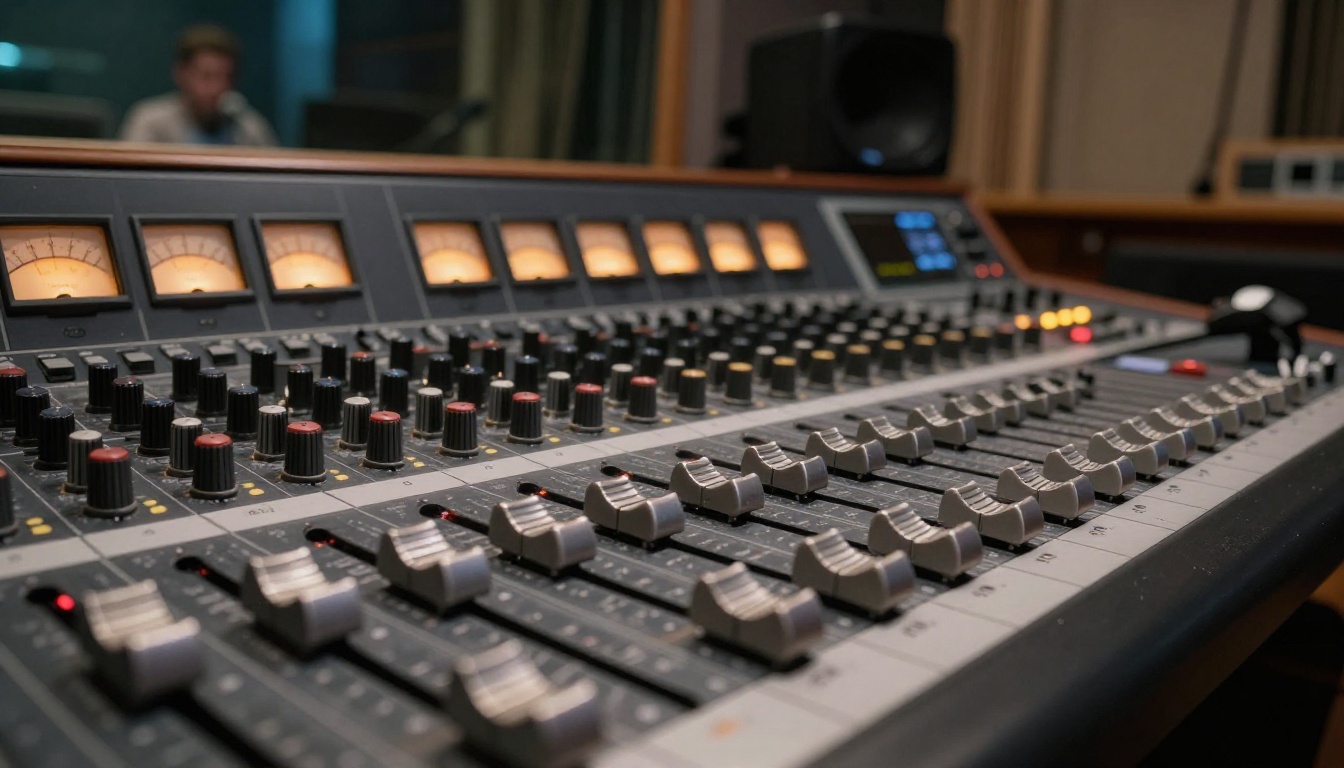
What Audiobook Production Looks Like Now
The production workflow for AI-narrated audiobooks has changed completely in the last two years. What used to require a studio booking, a voice actor, a sound engineer, and weeks of scheduling now fits into a single afternoon.
A realistic current workflow:
- Manuscript prep: Clean up unusual spellings, add pronunciation guides in brackets for proper nouns
- Voice selection: Test 3-5 models with representative passages from different chapters
- Batch generation: Process chapters in segments, saving each audio file per chapter
- Quality review: Listen to each chapter at 1.25x speed to catch anomalies faster
- Light editing: Fix individual sentences using the source model for seamless patches
- Mastering: Apply consistent EQ and compression across all chapter files
The whole process for a 60,000-word book can run under 8 hours of active time. Compare that to the standard 3-6 month timeline for a traditionally recorded audiobook.
💡 Production note: Minimax Speech 2.8 Turbo and ElevenLabs Flash v2.5 are the right choices for the draft and review pass. Save Minimax Speech 2.8 HD or ElevenLabs V3 for the final output.

Your Audiobook Does Not Need a Studio Anymore
AI voice technology in 2027 has removed the last real barrier between a manuscript and a finished audiobook. The models in this article, from ElevenLabs V3 to Minimax Speech 2.8 HD and Resemble AI Chatterbox Pro, are not demo-quality experiments. They are production-ready tools used by publishers and independent authors right now.
The question is no longer whether AI can narrate an audiobook convincingly. It is which model fits your genre, your timeline, and your budget.
All of the models in this article are available directly on PicassoIA's text-to-speech collection. You do not need API keys, local installs, or technical setup. Pick a model, paste your text, and generate your first chapter in minutes. Try ElevenLabs V3 for fiction, Gemini 3.1 Flash TTS for informational content, or Minimax Voice Cloning if you want the audiobook in your own voice.
The first chapter takes about ten minutes. Start there.


