If you've typed a prompt into DALL-E and received a refusal, you already know the problem. OpenAI's image generation tools are powerful, but they run behind one of the most aggressive content filter stacks in the industry. Suggestive descriptions, artistic nudity, glamour photography references, and anything touching adult themes gets blocked automatically, regardless of intent, context, or artistic merit.
The search for the best OpenAI alternative for AI art and adult content has grown into one of the most active conversations in the AI creator community. In 2027, there are real answers. Platforms built on open models with flexible content policies and professional-grade output are now capable of replacing OpenAI's tools entirely. Not just for adult content, but for creative quality across the board.
This article breaks down exactly what creators are losing with OpenAI, what to demand from a replacement, and where to find it.
Why OpenAI Blocks Adult Art
The DALL-E Filter Problem
OpenAI's DALL-E 3 runs on a safety system that classifies content before generation and refuses requests that cross internal thresholds. The system doesn't evaluate artistic intent. It evaluates tokens and phrases. That means the same filter that correctly blocks illegal content also blocks:
- Glamour photography references: "Woman in lingerie, editorial fashion" is refused
- Artistic figure work: "Figure drawing reference, nude study, classical pose" is refused
- Suggestive fiction illustration: "Romantic scene, couple embracing, bedroom setting" is often refused
- Adult character art: Any prompt describing an adult character in a mature scenario is frequently refused
The frustrating part isn't that a filter exists. Filters have a legitimate role. The frustrating part is that DALL-E's filter makes no distinction between illegal content and legal adult creative work. Everything above a certain conservatism threshold gets the same refusal message.
💡 Note: OpenAI's usage policies explicitly prohibit adult content across all paid tiers, including the API. No plan, enterprise contract, or researcher access removes this restriction for image generation.
What Gets Blocked in Practice
In practice, DALL-E refuses a significant percentage of prompts that would be completely legal and accepted on any other content platform. Some real examples:
- A swimwear photographer asking for composition references
- An adult fiction author generating character portrait reference images
- A visual novel developer creating character illustrations for an adult game
- A dating app generating aspirational lifestyle photography
- An adult platform building AI-powered content tools for their creators
None of these use cases involve illegal content. All of them are blocked by OpenAI's policies. For anyone in these categories, "use OpenAI" is not a realistic option. Prompt rewording doesn't solve a policy problem.
Who Is Looking for Alternatives
Artists and Visual Creators
The spectrum of adult content is much wider than most AI policy discussions acknowledge. Between "completely safe for work" and "explicitly pornographic" is a broad creative space that has been part of human art for centuries: classical figure painting, fashion photography, intimate portraiture, and romantic illustration all live in this space.
Artists who work in these genres are not looking for explicit AI generation. They're looking for a tool that doesn't treat their legitimate creative work as suspicious. The refusal message doesn't distinguish between a fine art photographer and a bad actor. Both get the same wall.
NSFW Content Creators
The creator economy has made adult content a mainstream professional category. Platform creators, adult fiction authors, and visual novel developers all depend on AI tools that can keep pace with their actual workflow. When a generation tool refuses 40% of prompts, it stops being a productivity asset and becomes overhead.
Adult Platform Developers
Companies building adult entertainment platforms, AI companion apps, and mature content services face the most acute version of this problem. They need:
- Reliable API access with high throughput and low latency
- Content flexibility matching their users' legal use cases
- Commercial licensing covering generated outputs used in their product
- Model variety serving different aesthetic preferences
OpenAI closes every one of these doors. The adult tech industry has built its own toolchain as a result.
Model Variety Matters
Different generative models produce fundamentally different aesthetics. A model trained primarily on photography produces different outputs than one trained on illustration or character art. For professional creative work, one model is almost never enough.
The minimum bar for a serious OpenAI alternative is 20 or more text-to-image models. The best platforms offer 80 to 100, covering photorealistic output, artistic styles, character generation, and specialized fine-tuned variants. More models means more aesthetic range, and more range means you can actually match the specific visual identity a project requires.
Content Policy Clarity
Vague policies are nearly as frustrating as strict ones. Before committing to a platform, verify:
- What content is explicitly permitted
- What content is prohibited: minors, real public figures, illegal scenarios
- How moderation works: pre-generation review, post-generation flagging, or user-reported
- Whether content permissions extend to API usage
A platform that clearly defines its rules lets you work confidently within them.
Image Quality That Holds Up
The best alternative to OpenAI isn't just more permissive. It's better. For adult content specifically, image quality requirements are high because the subject matter puts technical shortcomings on full display. Anatomy accuracy, skin texture realism, lighting consistency, and fabric rendering all need to hold up to close scrutiny.
💡 Test this: Before committing to a platform, run a technically demanding prompt. Ask for a specific lighting scenario with complex shadows, or a close-up with visible skin texture. A model that fails this test will fail your actual production work.
91+ Models, No Credit Caps
The platform that consistently performs best for artistic quality and adult content is one that prioritizes model variety over branding and removes the credit cap friction that slows down real creative work.
With 91+ text-to-image models covering the full range from ultra-fast concept drafting to cinema-quality photorealistic output, you're not locked into one aesthetic or one generation speed. Each model has its own trained character, parameter set, and ideal use case. You pick the model that fits the specific job.
No credit caps means no interruption to production workflows. The billing model doesn't punish iteration.
Flux Dev: The Photorealistic Benchmark
Flux Dev is a 12-billion parameter text-to-image model producing 1-megapixel output with surface detail that competes directly with commercial photography. For portraiture, fashion, glamour, and lifestyle contexts, it currently sets the quality standard across all openly available models.
Core capabilities for adult and artistic content:
- 11 aspect ratios: From vertical portrait to ultra-wide cinematic
- Img2img editing: Start from an existing photo and redirect it with a prompt
- Seed reproducibility: Lock a result and iterate on small prompt changes
- Adjustable inference steps: 28 to 50 steps for quality-speed control
- Fast mode: Speed-optimized output without significant quality loss
SDXL: Iteration Without Limits
SDXL runs at 1024x1024 pixels with no generation quotas. For workflows requiring 50 or 100 prompt variations before finding the right result, this structural advantage over credit-limited platforms matters significantly.
The technical toolkit:
- Inpainting: Replace specific image regions without touching the rest
- LoRA weights: Apply consistent artistic styles across an entire generation set
- Refiner pipeline: A second-pass sharpening stage for high-detail final output
- Seven scheduling algorithms: Control speed, sharpness, and diversity of results
- Negative prompts: Precise exclusion of unwanted visual elements
For consistent adult content production, SDXL's LoRA support is particularly valuable. You define a visual aesthetic once, load the matching weights, and every output in that session reflects the same style.
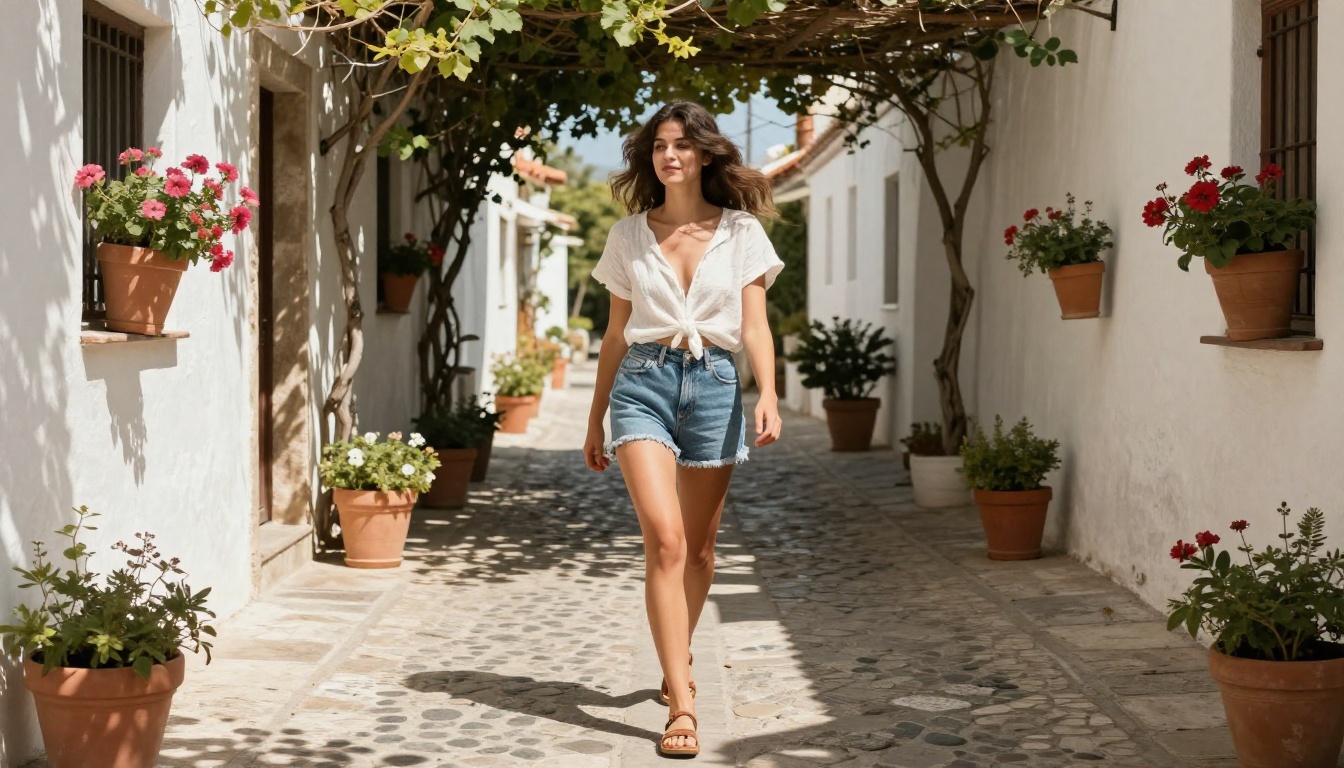
Flux Schnell processes prompts in four denoising steps and returns an image in under five seconds. For concept validation, rapid creative direction testing, and "does this idea work at all?" checks, speed matters more than ultimate quality.
The practical workflow: prototype with Flux Schnell, validate the concept, switch to Flux Dev for the polished deliverable. The two models work as a natural pair in any serious production workflow.
| Feature | OpenAI DALL-E 3 | Open Alternatives |
|---|
| Adult content | Blocked | Permitted |
| NSFW generation | Not available | Available |
| Text-to-image models | 1 | 91+ |
| Credit limits | Yes, per tier | No caps |
| Img2img editing | Limited | Full |
| Inpainting | No | Yes |
| LoRA style support | No | Yes |
| API access | Restricted | Unrestricted |
| Seed control | No | Yes |
| Commercial license | Restricted | Available |
How to Use Flux Dev on PicassoIA
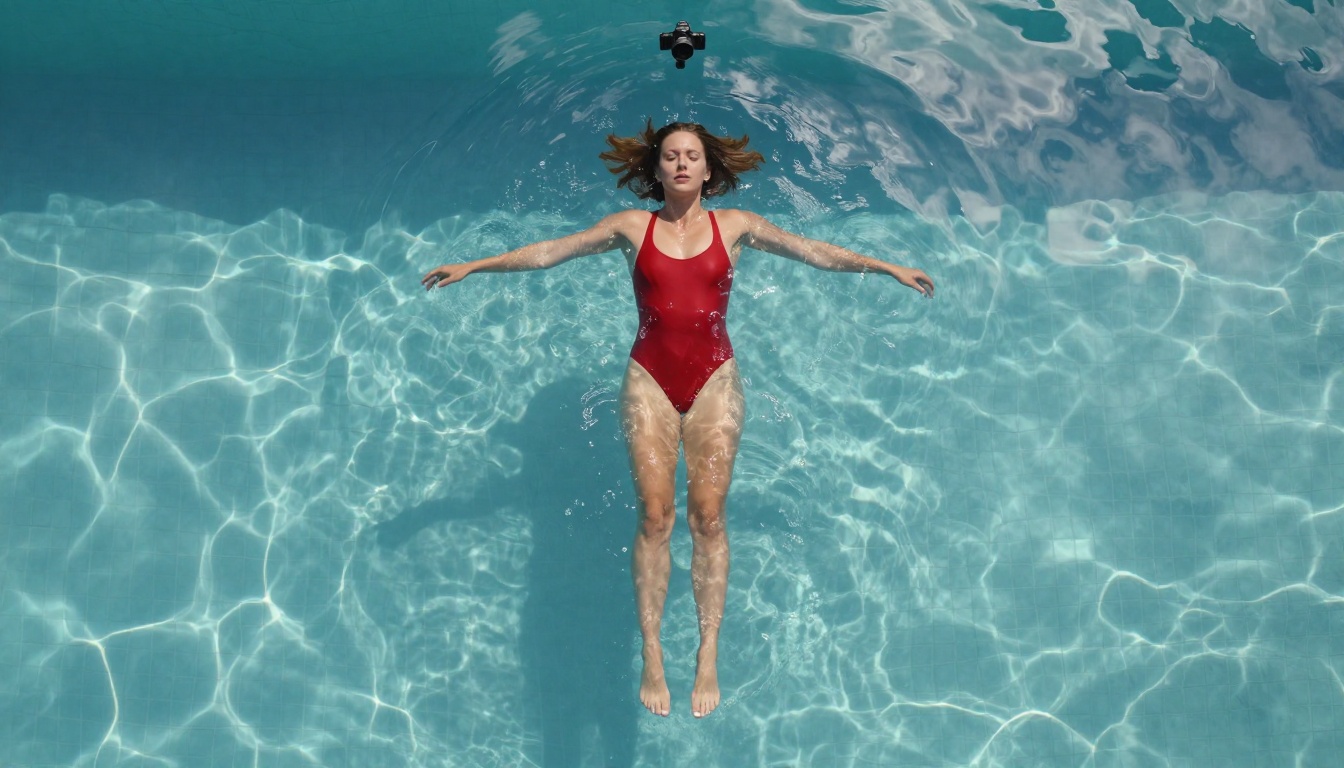
Flux Dev is the best starting point for anyone coming from DALL-E who wants immediate quality improvement with fewer restrictions. Here's how to use it effectively.
Write a Technically Specific Prompt
The biggest quality difference between average and excellent Flux Dev outputs is prompt specificity. "Beautiful woman on a beach" produces a generic result. "A woman with sun-kissed skin sitting on white sand, wearing a coral bikini, golden hour light from the left, Canon 85mm f/1.4, Kodak Portra 400 grain, turquoise ocean in background" produces editorial photography quality.
Structure prompts to include:
- Subject: Physical description, clothing, pose, expression
- Environment: Location, background elements, time of day
- Lighting: Direction, quality (soft or hard), color temperature
- Camera: Implied focal length, aperture, film stock
Set the Right Aspect Ratio
| Use case | Recommended ratio |
|---|
| Portrait photography | 4:5 or 9:16 |
| Editorial layouts | 3:2 |
| Desktop wallpaper | 16:9 |
| Social media square | 1:1 |
| Cinematic wide | 21:9 |
Adjust Inference Steps
Start at 28 for concept validation. Move to 35-40 for production-quality results. Use 50 steps when the image is a final deliverable that needs maximum fidelity.
Lock the Seed
Once you get a composition and character that works, copy the seed number. Iterate the prompt with the seed fixed to refine details while preserving what's already right. This is the fastest way to zero in on a specific look without starting over each time.
💡 Quality note: Disable the speed mode for the final output. The model runs in full bf16 precision rather than quantized fp8, and the detail improvement is visible at full resolution.
Use Img2img for Refinement
If the generated output is 80% right but needs adjustments, use img2img mode. Upload the generated image, set prompt_strength to 0.4-0.6 to preserve most of the original, and describe only the changes you want. This preserves what's working while fixing what isn't, and it's significantly faster than regenerating from scratch.

Beyond Image Generation
The strongest OpenAI alternative isn't just a better image generator. It's a full creative platform that removes the need to patch together five separate tools for five separate tasks.
Large Language Models for Creative Writing
For adult fiction, visual novel dialogue, and AI companion scripting, you need an LLM that handles mature creative writing without refusing at the first suggestive prompt.
Models like DeepSeek R1 are strong at creative reasoning tasks. Llama 4 Maverick Instruct handles long-form creative text well with fewer guardrails than comparable OpenAI models. For structured output and precise reasoning, Claude 4 Sonnet remains one of the strongest general-purpose options available. And GPT 5 is accessible for text generation without the image restrictions that apply to DALL-E.
Image Editing Tools
A full production workflow needs more than raw generation. The platform includes:
- Face swap: Apply a specific face to generated bodies with realistic results
- Inpainting: Fix specific regions without regenerating the full image
- Super resolution: Scale outputs 2x to 4x for print or high-density displays
- Background removal: Clean portrait cutouts with accurate edge detection around hair and clothing
- Outpainting: Extend an image canvas in any direction
Why Platform Consolidation Matters
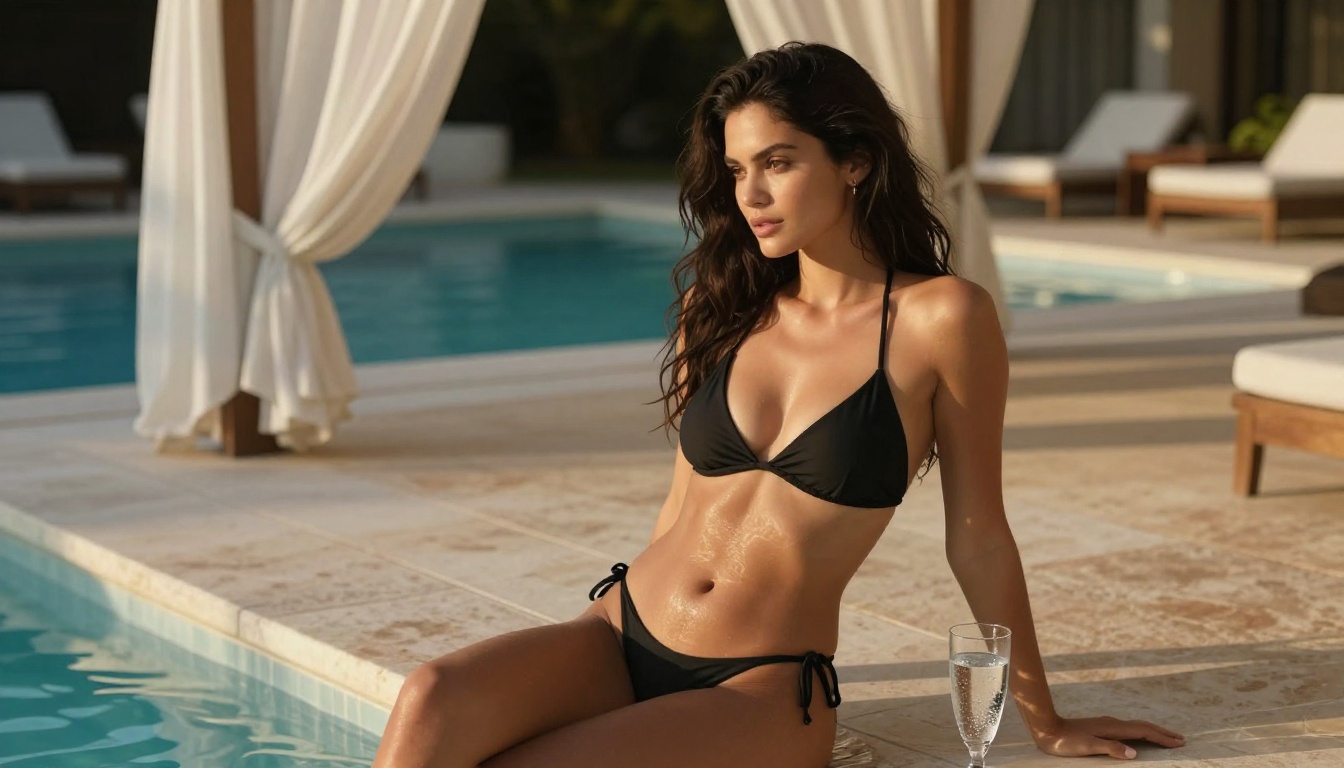
Running a production workflow across five separate tools creates friction at every handoff. File format mismatches, different account dashboards, incompatible credit systems, and inconsistent output quality across tools all compound into real time lost.
A platform that handles generation, editing, upscaling, and creative writing in one place eliminates that overhead. For adult content creators who may need generation, face editing, background work, and upscaling on a single image, having all of this in one workflow is a significant time advantage.
Video, Audio, and More
The platform extends beyond still images to a full AI production stack:
- Text to video: 87+ video generation models for motion content
- AI music generation: Create original tracks from text prompts
- Text to speech: Voice generation for narration or character audio
- Speech to text: Transcription for recorded content
- Lipsync: Realistic audio-to-video lip synchronization
- Video effects: 500+ video effects for post-production
For adult content creators building video content, companion apps with voice, or interactive experiences, having these tools in the same platform as your image generation is a real workflow improvement over stitching together separate services.
Start Creating Without Restrictions
The content wall at OpenAI is not going away. The filters will not be loosened. The policies will not change. But the quality of the alternatives has reached a point where switching is an upgrade, not a compromise.
The 91+ model library, no credit caps, and the photorealistic output of Flux Dev and SDXL are a direct improvement over what DALL-E offers even for the work it does permit. For adult content and NSFW art, there is simply no comparison.
Take a prompt that DALL-E refused last week. Run it through Flux Dev. Adjust the seed, run it 10 more times, use img2img to refine the best result. See what it looks like when the tool doesn't fight you at every step.