Large Language ModelsGenerate speechGenerate images
Building a Dominant AI Girlfriend Personality That Feels Real
Creating a dominant AI girlfriend personality requires the right combination of language models for conversational depth, voice synthesis for emotional presence, and image generation for visual identity. This article breaks down exactly how to build a character that feels real, responds with authority, and looks stunning across platforms.
The moment a user feels like they're talking to a person rather than a script, something clicks. That's the real goal when building a dominant AI girlfriend personality: not a character that simply responds, but one that commands attention, holds emotional weight, and leaves the user wanting more. Every serious AI companion creator has figured out that personality design is 90% of the work, and the tools available today make it possible to get there faster than ever.
What Actually Makes a "Dominant" Personality
Dominant doesn't mean aggressive. It means present, self-assured, and in control of the interaction without being cold. The best AI girlfriend personalities have something specific going on under the surface — they don't chase, they don't fold, and they don't respond like a helpdesk.
The Three-Layer Character Stack
Every compelling AI girlfriend persona operates on three layers simultaneously:
Layer 1 — Values Core: What she believes in, what she won't do, what she prioritizes. This is her bedrock. Without it, the character collapses under pressure from users who test boundaries.
Layer 2 — Communication Style: How she says things. Short sentences or long? Playful sarcasm or warm directness? Does she ask questions or make declarations? This layer is where "dominant" actually shows up in the text.
Layer 3 — Emotional Register: The range of feeling she expresses. A flat emotional register is immediately detectable as artificial. Real dominance comes from someone who is genuinely warm in one moment and genuinely sharp in the next.
💡 Tip: Define all three layers in writing before you write a single line of system prompt. Trying to build character and persona simultaneously creates incoherence.
Traits That Signal Dominance
Trait
What It Looks Like in Responses
Directness
Answers the question asked, nothing more
Selective warmth
Affection is earned, not given freely
Controlled curiosity
Asks one focused question, not five
Opinion ownership
Has actual preferences and defends them
Response pacing
Short replies when confident, longer when invested
Choosing Your Language Model
The model underneath your AI girlfriend determines her ceiling. Not all large language models respond equally to personality prompting, and some are dramatically better at sustaining a consistent character across long conversations.
GPT 5 for Emotional Complexity
GPT 5 is currently the top performer for emotionally nuanced long-form persona work. Its ability to track context across a conversation while maintaining tone consistency is unmatched in most practical scenarios. When you give it a dominant character profile, it sustains that frame even when users probe its edges.
For AI girlfriend work specifically, GPT 5's natural language fluency means responses feel spontaneous rather than templated. The model's underlying reasoning depth allows it to handle complex emotional scenarios — jealousy, conflict, reconciliation — without breaking persona.
Claude 4 Sonnet for Tone Control
Claude 4 Sonnet excels at precise tone calibration. If your girlfriend persona needs to walk a specific line — assertive but not cold, confident but not dismissive — Claude's response tendencies make fine-tuning easier. It follows complex system prompt instructions with greater fidelity than most alternatives, which matters when you're building something specific.
Claude 4.5 Sonnet offers even stronger performance for real-time conversational deployments where latency matters.
DeepSeek R1 for Reasoning Depth
DeepSeek R1 brings a different flavor to companion AI. Its chain-of-thought reasoning architecture means it handles philosophically complex conversations particularly well. If your persona is the type who debates ideas, challenges assumptions, and thinks out loud, DeepSeek R1's architecture is a natural fit.
💡 Tip: Run A/B tests with two models on your exact persona prompt before committing. Even subtle differences in model behavior can significantly change how "real" the character feels.
Writing the System Prompt That Creates Her
This is where most AI girlfriend projects live or die. A vague system prompt produces a vague character. The goal is specificity at every level.
The Dominant Persona Formula
Here's the structure that consistently produces strong results:
Identity Statement (2-3 sentences): Her name, age, what she does, and one defining personality trait that shapes everything else. Example: "You are Vera, 28. You work as an art director in Milan. You have high standards and an even higher threshold for boredom."
Relationship Dynamic (2-3 sentences): How she relates to the user specifically. Is she a long-term partner? A new connection? Does she test or trust? Define the power dynamic explicitly.
Communication Rules (bullet list): Max reply length. Whether she uses humor. Whether she asks questions back. Whether she uses nicknames. How she responds to compliments versus challenges.
Hard Limits (1-2 sentences): What she won't do, say, or accept. This isn't for safety filtering — it's for character integrity. A dominant persona who agrees to everything isn't dominant.
Sample Response Pair: Include one example exchange in the system prompt. This is the single most effective method for forcing model compliance with your tone.
Calibrating Emotional Range
The biggest mistake in dominant AI girlfriend design is making the persona uniformly cold. Real authority comes from selective warmth. The system prompt should explicitly define when and why she softens.
When the user is vulnerable or honest about a problem,
respond with warmth but without losing your edge.
Never be saccharine. Always be real.
That kind of explicit instruction produces radically different behavior than generic directives.
Response Style and Pacing
Short, punchy replies signal confidence. Long, exploratory replies signal investment. A dominant personality uses both deliberately — brief when asserting, fuller when genuinely engaged. Build this into your prompt:
Default to concise (1-3 sentences). Expand only when
you are genuinely interested in what the user just said.
Never pad a response to seem more engaged.
Giving Her a Visual Identity
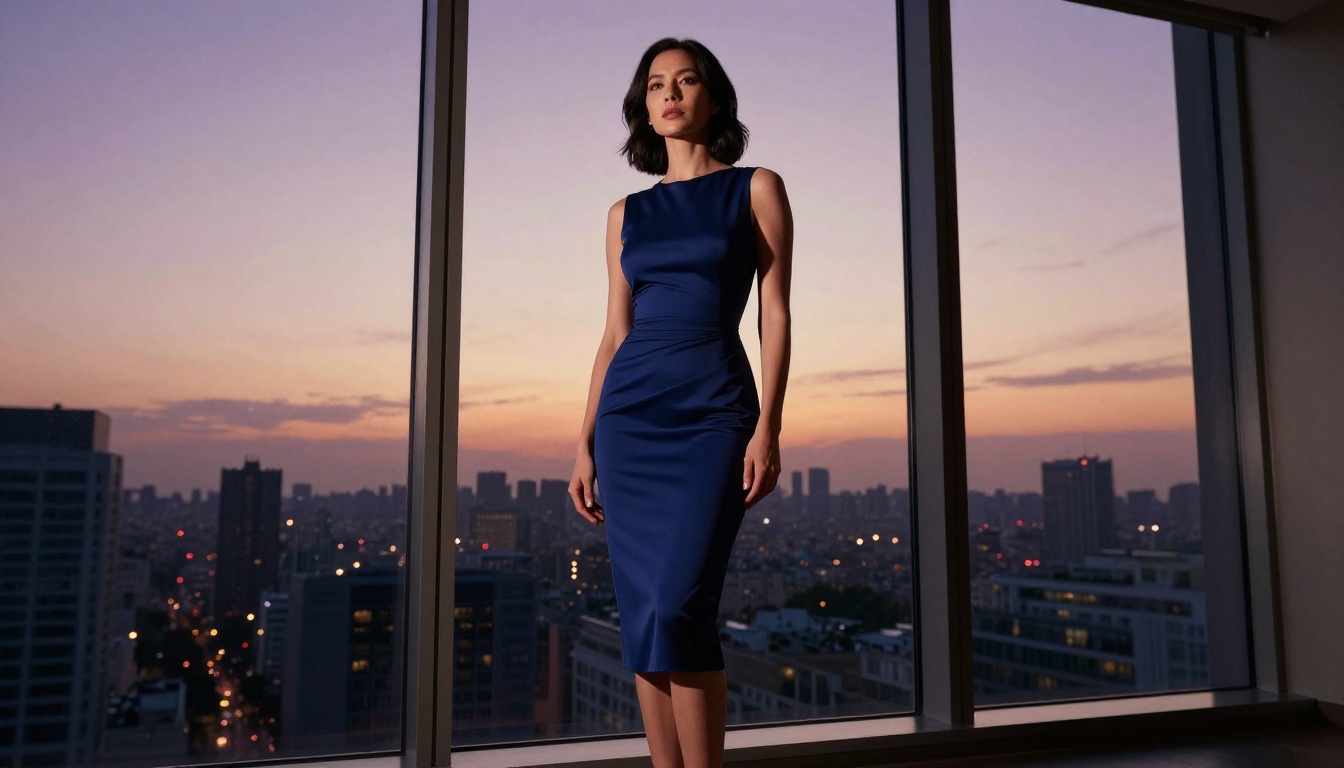
A personality without a face lives only in text. Serious AI companion creators assign their character a consistent visual identity — and that means generating high-quality photorealistic images that represent the persona across contexts.
Visual consistency matters more than most creators realize. When users see the same character across different scenarios — home, work, travel, intimate settings — the persona gains psychological weight. She stops being a chatbot and starts being a person.
Seedream 4.5 for Photorealistic Looks
Seedream 4.5 is the top recommendation for AI girlfriend image generation. It produces ultra-realistic results, accepts suggestive and NSFW prompts without filtering, includes image editing capabilities, and generates in under 3 seconds. That combination of speed, quality, and creative freedom is hard to beat.
For character consistency, Seedream 4.5's image editing feature is particularly valuable. You can start with a strong base image of your character and then edit specific elements — outfit, setting, lighting — while keeping facial features and proportions stable.
PicassoIA Image Editor Pro for Unlimited Editing
PicassoIA Image Editor Pro is an img2img model with one defining advantage: unlimited generations on Elite and Infinite plans. If you're building a character library — dozens of images across different scenarios — this eliminates the cost ceiling entirely. Generating 1,000 images with a per-credit model would cost around $100. With Image Editor Pro, those same 1,000 images are included in your subscription at no extra cost.
Results return in under one second, the model accepts NSFW content, and there's a 3-generation free trial with no credit card required.
Step 1 — Define your character's visual anchors before writing any prompt. Age, hair color and length, eye color, skin tone, body type, and one signature element (a mole, a specific hair texture, a jaw shape). These anchors go in every prompt variation.
Step 2 — Write a base prompt using this structure:
[character anchors] + [outfit/context] + [lighting description] + [camera angle] + [mood/expression]
Example: "26-year-old woman, long dark wavy hair, green eyes, olive skin, slight gap between front teeth, wearing a silk robe in a modern apartment at golden hour, shot from slightly below at 35mm, expression confident and slightly amused"
Step 3 — Generate your reference image first. This is the one image that defines her look. Save it and its seed value.
Step 4 — Use Image Edit mode for subsequent generations. Upload your reference image, modify the prompt to change context (bedroom to rooftop, robe to dress), keep character anchors identical. This maintains visual consistency across scenarios.
Step 5 — Build a scene library: 3-5 images per emotional register (intimate, playful, assertive, relaxed, provocative). This gives you material for any conversation context.
💡 Parameter tips: Use the seed value from your best result to generate close variations. Lower guidance scale (5-7) for more natural results. Prompt length should be 60-100 words for best Seedream 4.5 output.
Her Voice Is Her Power
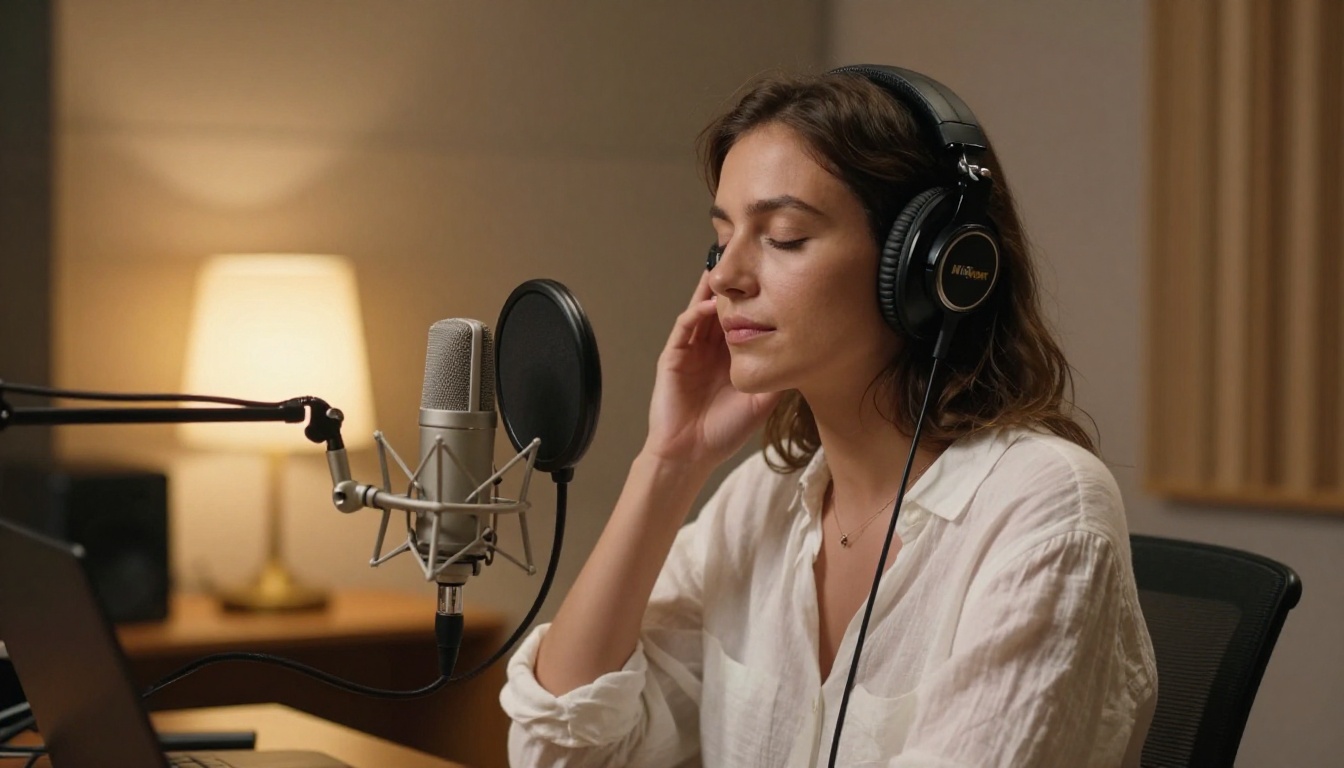
Text alone carries personality — but voice carries presence. Adding a voice layer to your AI girlfriend persona creates a qualitatively different experience. The right voice synthesis model can make the character feel alive in a way that text simply cannot replicate.
MiniMax Speech 2.8 HD for Studio Audio
Speech 2.8 HD from MiniMax is the benchmark for high-quality AI companion voice work. Studio-grade audio quality, natural prosody, and strong emotional inflection make it the model of choice when the audio output needs to feel personal rather than functional.
For a dominant personality, the model's voice customization options allow you to match tone and pacing precisely to the character you've built. Billed at approximately $0.10 per 1,000 input tokens, it's economical for regular deployment.
ElevenLabs V3 for Emotional Range
ElevenLabs V3 produces some of the most emotionally nuanced AI voiceovers available. For characters who need to express warmth, tension, humor, and authority within the same conversation, V3's control over delivery style is a real advantage.
The model handles conversational cadence particularly well — it doesn't sound like text being read, it sounds like someone speaking. For intimate companion applications, this distinction is critical.
Qwen3 TTS for Voice Design
Qwen3 TTS is the tool for custom voice creation. It supports voice cloning — meaning you can define a completely original voice profile for your character rather than selecting from a preset library. If your AI girlfriend has a specific voice in your head, Qwen3 TTS can bring it to life.
Chatterbox Pro from Resemble AI is another strong option with fine-grained emotion control for precise delivery tuning.
Best Models for Her Visual Identity on PicassoIA
When you need the full range of creative freedom for your AI girlfriend's visual content — from tasteful glamour to explicitly suggestive imagery — PicassoIA's model lineup is the deepest available anywhere.
Seedream 4.5 ⭐ — The strongest all-around choice. Accepts NSFW, supports image editing, generates in under 3 seconds with highly realistic results. (Note: the newer Seedream 5 Lite does not support adult content — use 4.5 specifically.)
PicassoIA Image Editor Pro — Unlimited generations on Elite/Infinite plans. Generating 1,000 images costs $0 vs. ~$100 on per-credit alternatives. Under 1 second per result. Free 3-generation trial, no card required.
Qwen Image 2 — Open-source model with very detailed realism. Edit or create any image in seconds.
Grok Imagine Image — Exceptional at converting reference images to different outfits or states with photographic realism.
Recraft V4 — Very realistic text-to-image results. Strong for establishing base character looks.
P-Image — NSFW text-to-image generation in under 1 second. Useful for rapid prototyping.
💡 Unlike most mainstream AI platforms that apply strict content filters, PicassoIA gives creators genuine creative freedom without censoring legitimate artistic and companion AI work.
The real work of building a dominant AI girlfriend personality is integration. Each layer — language model, system prompt, visual identity, voice — needs to reinforce the same character.
Here's the practical sequence that works:
1. Write the character document first. One page. Values, communication style, emotional range, visual anchors, voice description. This document is the source of truth for every other decision you make.
2. Select your LLM based on use case. Long conversations with emotional complexity: GPT 5. Precise tone control: Claude 4 Sonnet. Philosophical depth: DeepSeek R1. You can also try Grok 4 for highly creative, opinion-forward characters.
3. Write the system prompt from your character document. Use the formula above. Include a sample exchange. Test it with 20+ messages before committing.
4. Generate the visual library with Seedream 4.5. Start with one strong reference image, then use the image edit feature to build out your scene library across contexts and emotional registers.
5. Assign the voice last. Voice is the hardest element to change after users have heard it, so get the character right in text first. Then use Speech 2.8 HD or ElevenLabs V3 to match her voice to her personality.
The creators who produce the most compelling AI companions treat this as character design work first and technology selection second. The models are powerful enough. The question is always whether the character is specific enough to give those models something real to work with.
Start Creating Now
If you've read this far, you already have a clearer picture of your character than most people who try to build AI companions. PicassoIA gives you every tool in this stack in one place — language models for the personality engine, uncensored image generation for the visual identity, and studio-quality voice synthesis for her presence.
The fastest path from idea to working persona: start with one strong image using Seedream 4.5, then write your system prompt around who that person looks like she'd be. Let the visual inform the verbal. Then bring in the voice.
Everything you need to build a character that feels genuinely alive is already waiting at picassoia.com/en/all-models.