Somewhere in a call center, an AI is scoring customer voices for frustration levels in real time. Somewhere in a hospital, software is parsing a patient's speech patterns for signs of depression. And somewhere in Silicon Valley, a team is arguing about whether any of this constitutes truly knowing what someone feels. The question of whether AI can interpret human emotions is no longer purely academic. It sits at the intersection of neuroscience, machine learning, and a surprisingly heated scientific debate, one that has serious consequences for the products being built and the people they affect.
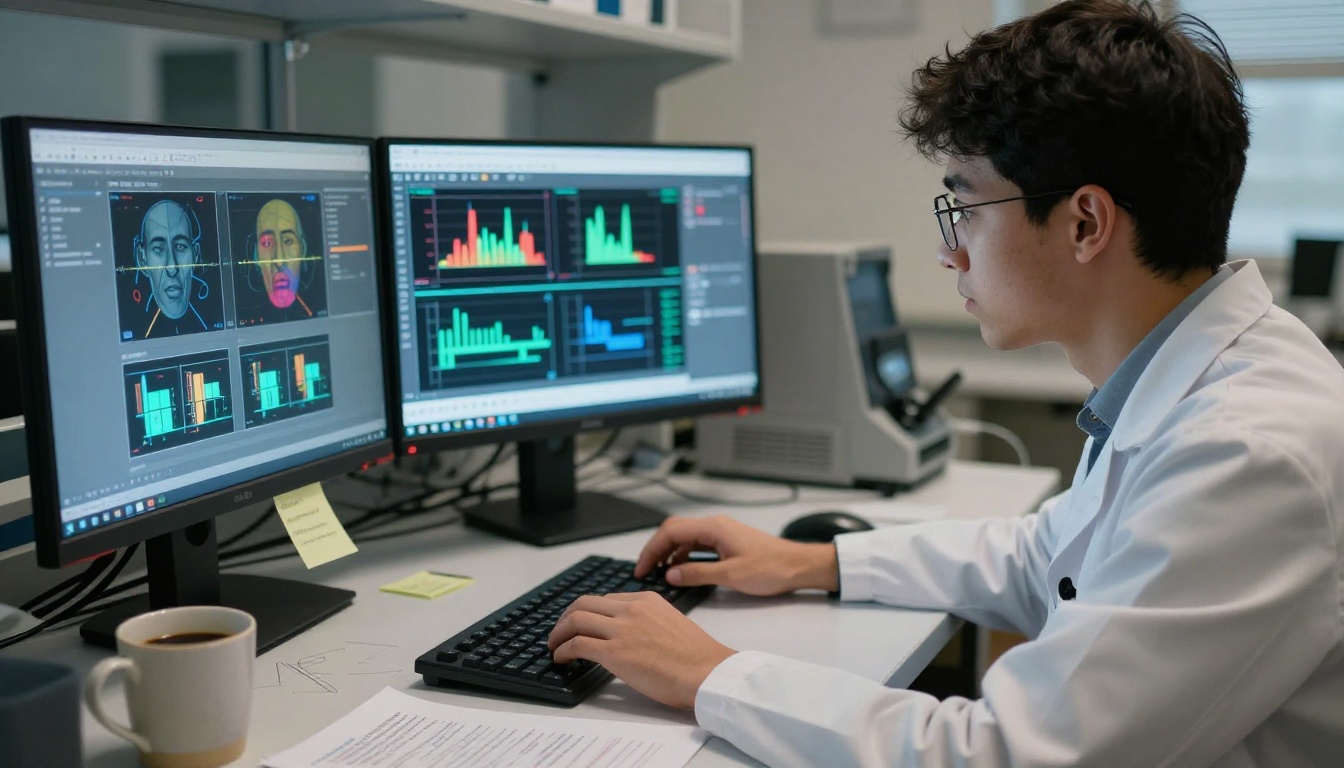
What "Detecting" an Emotion Really Means
There is a critical distinction that most coverage of this topic glosses over: detecting an emotion and processing its full meaning are entirely different things. An AI system can be very good at the first and completely incapable of the second.
When researchers talk about emotion AI, they mean systems that take in observable signals, such as the angle of your eyebrows, the pitch of your voice, or the word choice in a text message, and output a probability score for an emotional category. Happy. Angry. Disgusted. Fearful. This is pattern recognition. It is powerful, and it works within specific constraints. But it is not the same as what happens when a person reads a friend's face and feels what they feel.
The Three Channels AI Works With
Modern emotion recognition systems operate across three primary signal channels:
| Channel | What AI Measures | Accuracy Range |
|---|
| Facial Expressions | Muscle movement, Action Units | 70-85% in controlled conditions |
| Voice and Tone | Pitch, speed, pauses, intensity | 65-80% across datasets |
| Text and Language | Word sentiment, syntax, context | 80-92% for simple sentiment |
Each channel has its own strengths and its own failure modes. Most commercial systems combine at least two of them for better reliability.
Pattern Matching Is Not Feeling
A human feeling empathy activates a network of brain regions associated with shared experience. A neural network classifying a facial expression does nothing of the sort. It identifies spatial relationships between facial landmarks and compares them to thousands of labeled examples from training data.
This is not a criticism of the technology. It is simply what it is. The problem arises when marketing language starts calling this "emotional intelligence" or "empathy AI" as if the mechanism were equivalent to the human version. It is not. Not even close.
The Science Behind Facial Expression AI
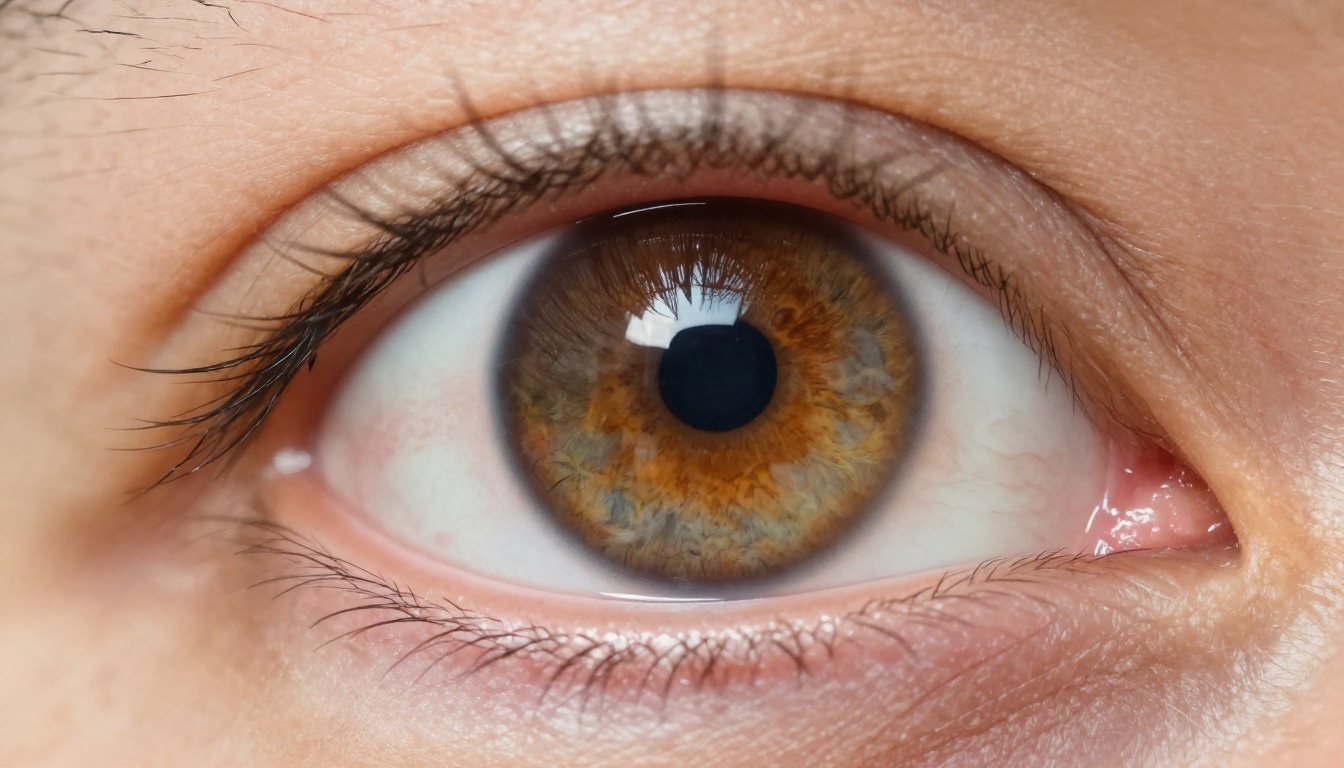
The dominant framework for computerized facial emotion detection is the Facial Action Coding System (FACS), developed by psychologist Paul Ekman in the 1970s. Ekman identified a set of universal facial Action Units, which are discrete muscle movements he claimed cross cultural lines. A raised inner brow. A lip corner pull. A nose wrinkle.
Early emotion AI was essentially an automated FACS parser. Train a model to detect Action Unit patterns, map those patterns to emotional categories, and you have a working system.
What Action Units Miss
The issue is that FACS, and by extension the AI systems built on it, captures what the face does without capturing why. A person suppressing grief at a funeral and a person concentrating hard on a chess move might produce nearly identical micro-tension patterns around the eyes and mouth. The AI sees the same signals. The human in the room does not make the same mistake.
There is also the fundamental problem of display rules: culturally learned behaviors that govern when and how people show emotions. A Japanese professional in a business meeting is likely to suppress visible emotional expression in ways that would read as neutral or unreadable to an AI trained primarily on Western facial expression datasets.
The Cultural Bias Problem
Most large-scale emotion recognition training datasets were built with images from a narrow range of cultural backgrounds. When a model trained on predominantly North American and European data is deployed in East Asian or Sub-Saharan African contexts, accuracy drops significantly. A 2019 MIT Media Lab study found that major commercial facial recognition systems showed dramatically higher error rates for darker-skinned individuals. Emotion recognition systems carry these same biases forward.
Note: "Universal" facial expressions are less universal than early research suggested. Cross-cultural studies have found significant variation in how emotions are expressed and interpreted across different societies.
Sentiment in Text: Better Than Expected, Worse Than Needed

Text-based emotion processing, commonly called sentiment work in the industry, is arguably the most mature of the three channels. Modern large language models like GPT-5 and Claude 4 Sonnet can parse nuance in written language at a level that would have seemed implausible five years ago.
A modern LLM reading "I absolutely loved waiting two hours for a cold meal" does not simply count positive words. It catches the sarcasm. It registers the contrast between "loved" and "cold meal." It identifies this as frustrated, ironic, and almost certainly a negative review.
What NLP Gets Right
- Tone detection across registers: formal, casual, corporate, emotional
- Topic-emotion pairing: recognizing that certain word clusters carry emotional weight specific to their domain
- Temporal tracking: how the emotional tone of a conversation shifts over multiple turns
- Intensity classification: distinguishing between mild annoyance and genuine fury
Models like Gemini 3 Pro add another layer by combining language processing with image reading, making it possible to assess emotional context across both visual and textual elements of a piece of content simultaneously.
Where Text Parsing Still Stumbles
Irony without obvious markers. In-group humor with no shared reference point. The word "fine" typed by someone who is clearly not fine. These remain surprisingly difficult to parse reliably without extensive context.
| Scenario | Why AI Struggles |
|---|
| Deadpan sarcasm | No explicit irony markers in the text |
| Cultural slang | Training data may not include specific usage |
| Mixed emotional states | Binary framing misses genuine complexity |
| Long-form narrative | Short-context models miss emotional arcs over time |
| Implied emotion | What is not said requires inference beyond text |
Where Emotion AI Actually Delivers

Despite its limitations, emotion AI is deployed across industries in ways that deliver real, measurable value, precisely because these deployments are designed to match what the technology can actually do.
Call Center Quality Work
This is probably the most widespread commercial application. AI monitors phone conversations in real time, flagging rising tension in a customer's voice, noting when an agent's tone becomes clipped or defensive, and scoring calls for emotional quality after the fact.
The bar here is not perfection. It is being better than manual review of thousands of calls. At that threshold, current emotion AI performs well enough to justify the deployment.
Mental Health Monitoring
Several clinical research teams use voice biomarkers to track patients with depression and anxiety between appointments. Speech patterns, pace, pausing frequency, and certain prosodic features correlate measurably with mood states. AI systems can flag concerning shifts that might not surface in a weekly check-in.
Important: These systems are designed to assist clinicians, not replace them. The AI notices a pattern. A human decides what to do about it.
Adaptive Interfaces
Some accessibility software uses real-time emotional state detection to adjust how an interface behaves, slowing down when a user appears stressed, simplifying options when frustration signals spike. This works reasonably well in controlled, single-user contexts where the system can be calibrated to an individual's baseline.
Where It Still Breaks Down

The places where emotion AI fails are not edge cases. They are central to human emotional life.
The Masking Problem
People do not simply display their emotions. They manage them. They perform composure while privately terrified. They smile at people they dislike. They project confidence during moments of profound uncertainty.
An AI system reading observable signals gets the performance, not the inner state. This is not merely a technical gap. It is a fundamental limit: you cannot fully read someone's interior experience from their outer signals because those signals are partly, sometimes mostly, a social construction.
The researcher who has spent years studying affective computing knows this. The marketing materials for most emotion AI products carefully avoid mentioning it.
The Aggregation Trap
When emotion AI systems are described, they typically use aggregate accuracy figures. "Our model achieves 87% accuracy on the EMODB dataset." What this means in practice: 13 out of every 100 people are misclassified. Deployed at scale across millions of interactions, that error rate produces enormous numbers of real people whose emotions were read incorrectly and responded to as if that incorrect reading were true.
Structural Bias in the Data
Datasets used to train emotion recognition systems are not neutral. They reflect who built them, who funded them, and who participated in data collection. This produces systems that are measurably less accurate for:
- Women (some studies show overcorrection toward reading neutral female expressions as "angry")
- Non-Western cultural expression styles
- Older individuals whose facial musculature has changed with age
- People with certain neurological conditions that affect typical expression patterns
What Researchers Actually Argue About

The academic field of affective computing, pioneered by Rosalind Picard at MIT, takes a measured long-term view. Picard's foundational argument is that machines interacting with humans need to recognize and respond appropriately to emotional signals, not because the machine feels anything, but because ignoring emotional cues makes human-machine interaction brittle and frustrating.
The counterargument, articulated forcefully by researchers like Lisa Feldman Barrett, is that emotion categories themselves are not as fixed or universal as Ekman's framework assumed. Emotions are not readouts of biological states. They are constructed by the brain from a combination of internal body signals and cultural learning. If that is true, the whole enterprise of "reading" emotions from observable signals is built on a shaky theoretical foundation.
Models like DeepSeek R1 can now reason through these debates at length, synthesize academic positions, and surface counterarguments, which makes them genuinely useful for anyone trying to make sense of this contested research space.
3 Things AI Cannot Do Yet
- Recognize masked or suppressed emotions with meaningful accuracy in real-world conditions outside lab settings with posed expressions
- Interpret genuinely mixed emotional states that blend multiple feelings simultaneously without heavy contextual scaffolding
- Account for individual baselines: what joy looks like on one person's face may look like polite interest on another's
The Consent Question
Beyond the technical limits, there is a harder question: even if emotion AI worked perfectly, should we deploy it without consent? Reading someone's emotional state without their knowledge touches on privacy rights that many legal systems have not caught up with. Several US cities and the EU are actively restricting the use of emotion recognition in hiring, law enforcement, and public surveillance. The technology is moving faster than the governance. That gap matters.
What a Therapist Has That AI Does Not

A skilled therapist reading a patient's emotional state draws on training, of course, but also on years of knowing this specific person, on the emotional resonance of what is being said, on the silence between words, on posture and energy in a way that involves the therapist's own emotional system as a kind of sensing instrument.
This is not mystical. It is the product of rich, embodied, relational contact with another person over time. It is exactly what no current AI system has, and what even the most optimistic researchers do not suggest will arrive in the near term.
The complexity of human social and emotional life, visible on any crowded city street where dozens of simultaneous, overlapping emotional transactions play out at once, is an order of magnitude more intricate than current systems can process in any holistic sense.

The honest answer to "can AI understand human emotions yet" is: it can detect certain signals, in certain controlled conditions, with meaningful but imperfect accuracy. That is genuinely useful for specific applications. It is nowhere near the rich, contextual, embodied processing humans perform naturally with each other every day.
The gap is not closing as fast as the headlines suggest.
Put Emotional AI to Work, Visually
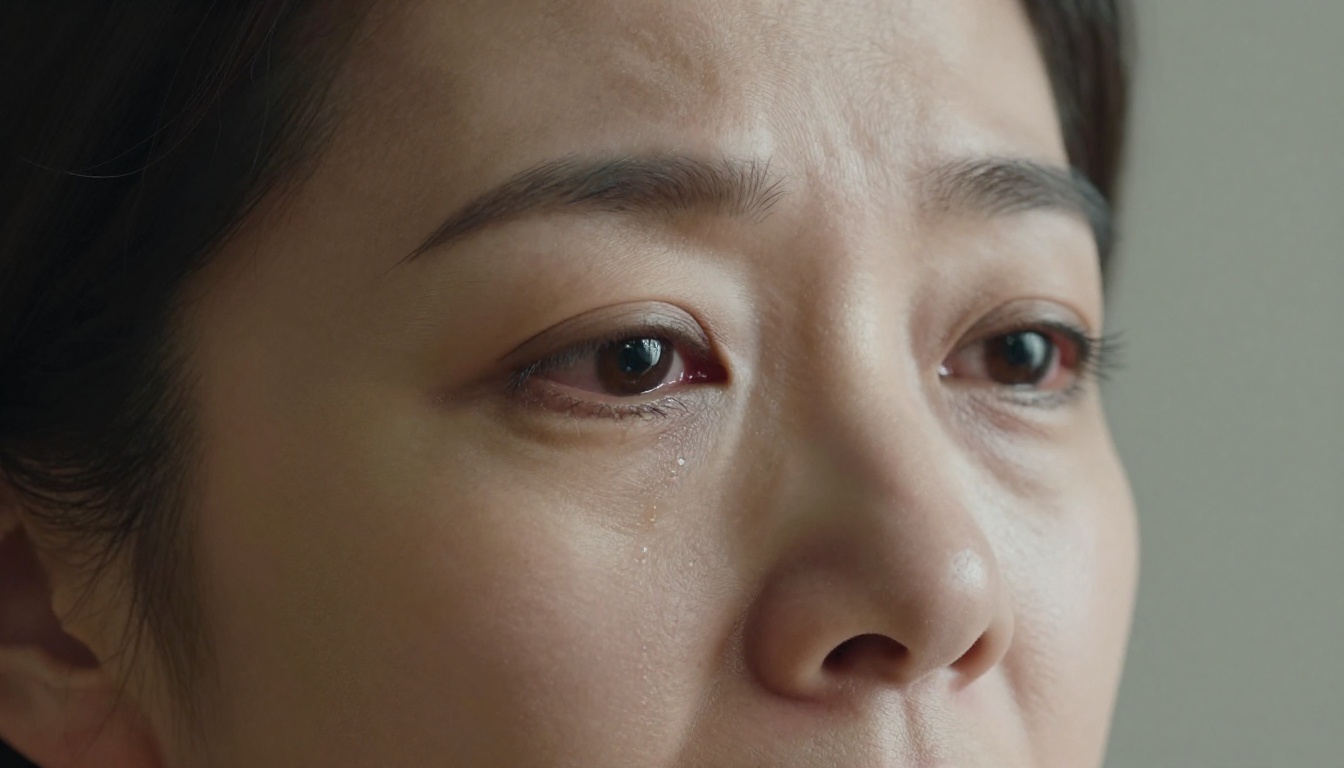
While AI is still working on reading human emotions, it has gotten remarkably good at representing them in text and imagery. This is where the technology becomes genuinely valuable for creators.
You can use large language models on PicassoIA to assess the emotional tone of a piece of writing, a brand message, or a research brief, and then use that assessment to craft image generation prompts that visually capture the intended feeling. Models like GPT-5, Claude 4 Sonnet, Gemini 3 Pro, and DeepSeek R1 are all available directly on PicassoIA, ready to help you interrogate the emotional register of any content.
How to Use LLMs for Emotional Content Work
- Open any LLM on PicassoIA such as GPT-5 or Claude 4 Sonnet
- Paste your text (a campaign brief, story excerpt, product description, or even a personal journal entry)
- Ask it to identify the emotional tone: primary feeling, secondary tensions, and any ironic or conflicting elements present
- Use the output to write a detailed, emotionally informed image generation prompt
- Take that prompt to PicassoIA's text-to-image models and generate photorealistic imagery that carries the emotional weight you identified
Try this: Describe a moment that carried complex emotional weight, relief mixed with loss, or excitement shadowed by doubt. Paste it into GPT-5 on PicassoIA and ask it to produce an image generation prompt from that emotional description. Then generate the image. The results are often striking.
Whether AI truly knows what you feel remains an open question that researchers are still actively arguing about. Whether it can help you show it, in words, in images, in tone, is already settled. Head to PicassoIA, pick a model, and start with the emotional state you want to capture.


