Most AI models can answer a question. Far fewer can actually run a research project. The difference lies in what happens when a task requires dozens of sequential decisions, memory of earlier steps, and the ability to self-correct before producing a final output. Claude Fable 5.1 for Multistep Research Automation sits in a category of its own precisely because it was built to operate across long, branching task chains without losing coherence. If you've been watching the language model space, this is the version that changes what "AI-assisted research" actually means in practice.

What Sets Claude Fable 5.1 Apart
There's a reason researchers and analysts are switching from single-prompt workflows to agent-based pipelines built around Claude Fable 5. The model was specifically optimized for tasks that require sustained attention across multiple phases, not just a single sophisticated response.
Reasoning Across Long Chains
Traditional language models excel at single-shot outputs: write a summary, answer a question, generate code. The moment you ask them to run a six-step research pipeline and maintain consistent logic throughout, they start drifting. Earlier decisions get forgotten. Contradictions creep in.
Claude Fable 5.1 handles this differently. Its architecture prioritizes chain-of-thought consistency, meaning the model tracks the logical thread through every sub-task it completes. If step 3 identifies a critical exception in the data, step 6 will still account for it, without being explicitly reminded. This is what makes it genuinely useful for research workflows rather than just writing assistance.
💡 The practical difference: A single-shot model gives you one answer per prompt. A multistep-capable model like Claude Fable 5.1 gives you a structured result that emerges from dozens of internal reasoning steps, with each step informing the next.
Memory That Doesn't Break Mid-Task
Long-context performance is the silent bottleneck in most AI research tools. You load a 200-page document, ask the model to cross-reference it against three others, and by page 80 the earlier material has effectively vanished from its working attention.
Claude Fable 5.1 extends this significantly. Its context retention is built for document-dense environments, letting it hold multiple sources in parallel and synthesize across all of them at once. For literature reviews, legal document review, or competitive intelligence reports that span hundreds of pages, this is not a minor improvement. It's the difference between a tool that works and one that doesn't.
How Multistep Research Pipelines Run
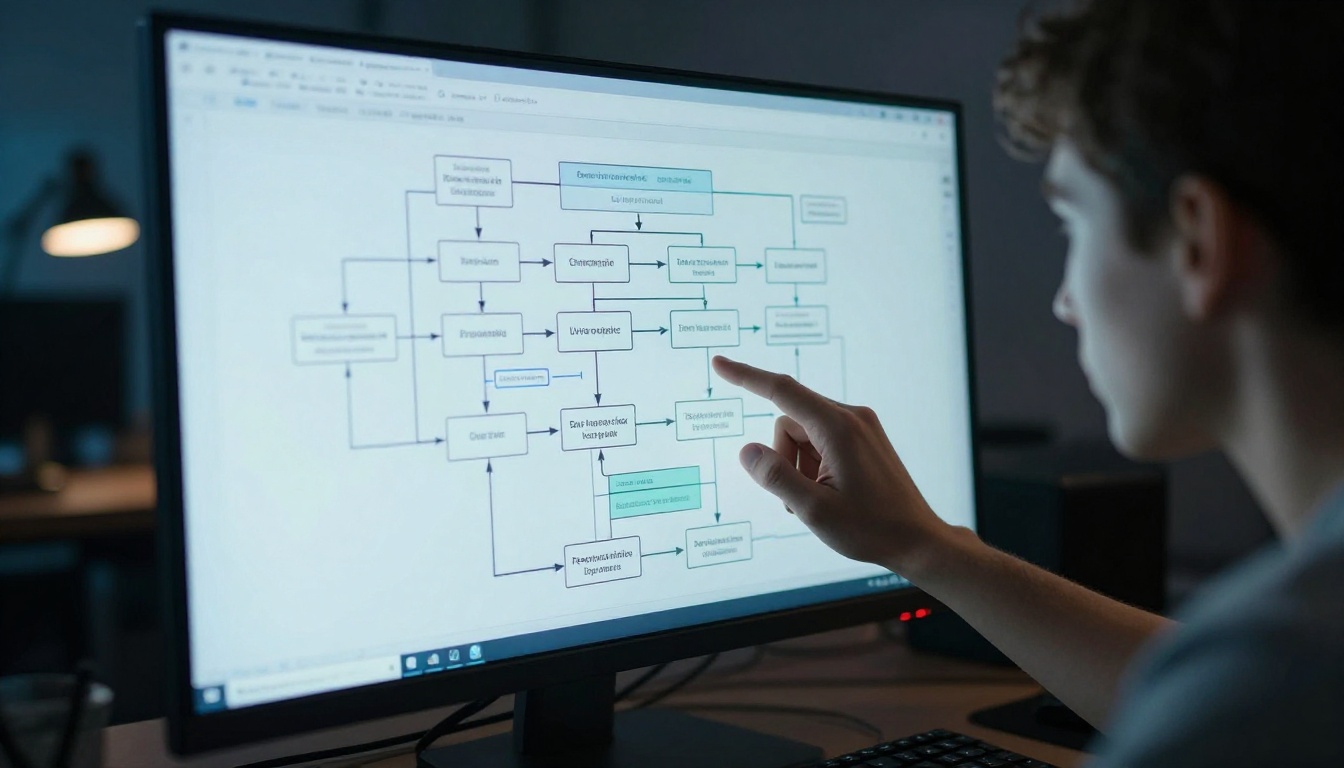
To see why Claude Fable 5.1 performs well here, it helps to look at what a research pipeline actually involves. Most non-trivial research tasks break down into three distinct phases, each of which has previously required separate tools or significant human intervention.
Phase 1: Data Collection at Scale
The first phase is sourcing. A researcher running a competitive intelligence project needs to pull data from a dozen different inputs: industry reports, news archives, regulatory filings, academic papers, forum discussions. Traditionally, this involves a human analyst spending days collecting and organizing raw material before any actual synthesis begins.
With Claude Fable 5.1 running as an agent, this phase can be fully automated. The model receives a set of sources, a target topic, and specific extraction criteria. It pulls structured information from each source, tags it by relevance category, and organizes it into a consistent schema before moving forward.
What this removes from the human workload:
- Manual triage of hundreds of documents
- Reformatting data from different source types
- Flagging gaps or contradictions in source material
- Building the initial information architecture
Phase 2: Cross-Referencing and Synthesis
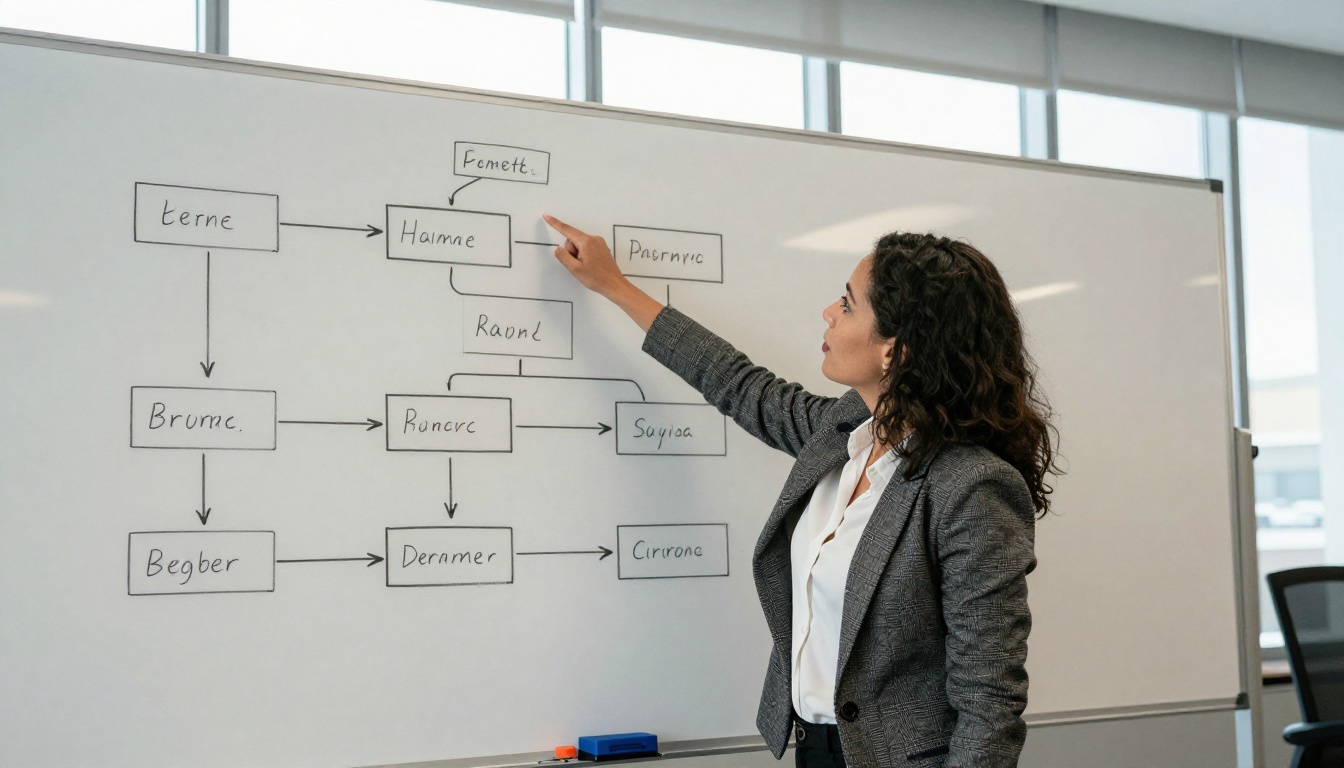
This is where most AI tools fail. Cross-referencing is not just about finding the same fact in two documents. It involves identifying when sources disagree, when one source's claim is undermined by a more recent one, and when data from one domain has implications for synthesis in another.
Claude Fable 5.1 handles this through hierarchical reasoning layers. It doesn't just match keywords. It builds a conceptual map of the information it has collected and identifies structural relationships between pieces of evidence. When two sources contradict each other, it surfaces the conflict rather than silently choosing one over the other, which is exactly what human reviewers do in rigorous research.
💡 Tip for better results: When configuring a research agent with Claude Fable 5.1, explicitly instruct it to flag contradictions and confidence levels. The model responds well to precision in its instructions, producing far more useful outputs when given clear criteria for uncertainty.
Phase 3: Structured Report Generation
The final phase is synthesis into a deliverable. This is where the model's writing capability becomes critical. Claude Fable 5.1 doesn't just dump collected information into a document. It organizes findings according to a logical structure, weights evidence by reliability and recency, and generates a report that reads like something written by a domain expert rather than an aggregation tool.
For many organizations, this phase alone justifies the switch. Going from raw, unstructured source material to a publication-ready report in a fraction of the normal time is a genuine operational change.

Claude Fable 5.1 vs the Competition
It's worth putting Claude Fable 5.1 in context. Several capable models are available for research-oriented tasks, each with a different set of tradeoffs.
The pattern is clear: for research tasks where depth of reasoning and context handling matter more than raw generation speed, Claude Fable 5.1 and Claude Opus 4.7 lead the field. For iterative, faster-paced workflows where speed is more critical, Claude Sonnet 5 or GPT 5 become attractive alternatives. And for cost-sensitive environments that still need solid reasoning, Deepseek R1 and Kimi K2 Instruct both punch above their weight.

Where It Actually Gets Used
Academic Literature Reviews
Literature reviews are among the most time-consuming tasks in academic research. A thorough review of a field might require reading and synthesizing 100 to 300 papers, identifying themes, contradictions, methodological gaps, and open questions. Doing this manually takes months.
With Claude Fable 5.1 running a structured pipeline, a team can:
- Feed abstracts and relevant sections from a large paper set
- Have the model categorize papers by theme and methodology
- Request cross-comparisons across specific variables
- Generate a structured synthesis document with citations organized by argument
The output still requires human review and editorial judgment, but the initial synthesis that would have taken weeks now takes hours. For PhD students, grant-funded research teams, or think tanks operating under deadline pressure, this is a significant shift in what's operationally possible.
Competitive Intelligence
Corporate strategy teams use competitive intelligence to track competitor movements, market shifts, regulatory changes, and technology adoption. The challenge is volume: relevant signals are scattered across earnings calls, patent filings, news coverage, product releases, and analyst reports.
Claude Fable 5.1 is well-suited to this because it can process heterogeneous input types and extract structured signals from all of them simultaneously. Rather than a team spending a week reading earnings transcripts and building a summary spreadsheet, a properly configured agent can produce a multi-dimensional competitive landscape report in a fraction of that time.
💡 High-value use case: Pair Claude Fable 5.1 with a web scraping tool and a structured briefing template. The model handles the reasoning and synthesis while the pipeline handles source acquisition automatically. Daily or weekly competitive briefs become near-zero-effort.

Legal Document Review
Legal teams deal with massive volumes of text that must be read with precision: contracts, regulatory filings, case law, compliance documentation. The stakes for errors are high, and the volume is relentless.
Claude Fable 5.1's combination of long-context retention and structured reasoning makes it effective for:
- Contract comparison: Identifying deviations between a draft contract and a standard template
- Regulatory gap review: Checking a company's internal policies against an updated regulatory framework
- Case law cross-referencing: Pulling relevant precedents from a large body of case documents
Legal teams use this for first-pass review. Licensed attorneys validate the outputs. But the time saved on initial review is substantial, particularly in high-volume environments like compliance departments or litigation support.
How to Use Claude Fable 5 on PicassoIA
PicassoIA makes Claude Fable 5 directly accessible without any API setup or infrastructure management. Here's how to run a real research automation workflow on the platform:
Step 1: Access the Model
Visit the Claude Fable 5 page on PicassoIA. You'll have direct access without needing a separate Anthropic API subscription.
Step 2: Define Your Research Objective
Write a clear task specification at the start of your session. Include:
- The specific research question or deliverable you need
- The sources or documents you'll be providing
- The output format you want (report, comparison table, structured list)
- Criteria for flagging uncertainty or contradictions
Step 3: Load Your Source Material
Paste or upload the documents, URLs, or text excerpts you want the model to work through. Be deliberate about what you include. Focused, relevant source material produces cleaner outputs than loading everything at once.
Step 4: Run the Pipeline in Stages
Rather than requesting the final report immediately, run the pipeline explicitly in stages:
- First: ask for source categorization and initial tagging
- Then: request cross-referencing and conflict identification
- Finally: ask for the structured synthesis report
This staged approach dramatically improves output quality compared to a single large prompt.
Step 5: Review and Iterate
Claude Fable 5.1 handles follow-up instructions well. If a section of the output needs more depth, or a specific angle wasn't covered, you can ask for targeted revisions without restarting the entire pipeline.
💡 Parameter tip: For literature synthesis, ask the model to assign confidence ratings to each finding. This surfaces weaker claims for human review and makes the final document far more defensible.

What to Watch Out For
No tool is without limitations, and knowing where Claude Fable 5.1 has weaknesses matters as much as knowing its strengths.
The Hallucination Problem
All large language models hallucinate to some degree. Claude Fable 5.1 is notably more reliable than earlier generation models, but it will still occasionally generate a plausible-sounding citation, statistic, or claim that isn't accurate.
How to reduce this risk:
- Always provide the source material. When the model works from documents you supply, hallucinations drop dramatically because it extracts rather than generates.
- Ask the model to cite specific passages, not just summarize. If it can't point to the original text, treat that as a signal to verify independently.
- Use a verification pass: after generating the synthesis, ask Claude Fable 5.1 to check its own claims against the source material and flag anything it cannot directly support.
Context Window Ceilings
Even with extended context handling, there are limits. When working with very large document sets:
- Break the review into batches and synthesize the batch outputs afterward
- Prioritize the most central documents for the first pass
- Ask the model to help you triage which documents are most relevant before loading the full set
Performance can also degrade somewhat at the very end of very long context windows. Critical reasoning tasks work best positioned in the middle of the context, not at the extreme tail end.

Why Research Teams Are Switching Now
The pattern across academic institutions, law firms, consulting agencies, and corporate strategy teams is consistent: once a team runs one serious research project through a Claude Fable 5.1 pipeline, the old process rarely returns.
The economics are hard to argue with. A two-week literature review condensed to two days. A competitive intelligence project that once required three analysts produced by one in half the time. Legal first-pass review that cuts associate hours on routine documents by 60 percent.
The more significant shift is qualitative. Automating the mechanical phases of research lets human analysts spend more time on the parts that actually require human judgment: interpreting ambiguous findings, identifying implications that cross domain boundaries, making the strategic calls that need contextual wisdom no model currently possesses.
Models like Claude 4.5 Sonnet and DeepSeek V3.1 are also gaining traction in similar workflows, particularly in environments where cost efficiency is a primary constraint. But for high-stakes research where output quality has direct consequences, Claude Fable 5 remains the benchmark others are measured against.
The shift from "AI as autocomplete" to "AI as a research collaborator" is already happening in organizations that are paying attention. The teams that build solid AI-assisted research workflows now will hold a real structural advantage over those still running entirely manual processes a year from now.

Start Your First Pipeline on PicassoIA
The best way to see what Claude Fable 5.1 delivers is to run it on a real task. PicassoIA gives you direct access to Claude Fable 5 alongside Claude Sonnet 5, Claude Opus 4.7, Claude 4.5 Sonnet, and dozens of other state-of-the-art models, all in one place with no infrastructure overhead.
Pick a research task you've been putting off, load your source material, and run the staged pipeline described above. Whether it's a literature review, a competitor intelligence project, a policy brief, or a legal contract review, the time savings become obvious within the first run. The platform removes every technical barrier, so the only thing between you and a working research pipeline is the first prompt.
Visit picassoia.com/en/all-models to see the full model library and start building research pipelines that match the scale and rigor of the work you're actually doing.


