The idea sounds perfect on paper: a model with 1 million tokens of context, sharp reasoning, and enough creative range to sustain a long adult roleplay session without losing track of who said what three hundred messages ago. Claude Sonnet 4.6 checks most of those boxes, but the experience depends heavily on where and how you access it. This article covers what that 1M window actually delivers, where the model hits its ceiling, and which tools on PicassoIA pick up where it leaves off.

What the 1M Context Window Really Means
One million tokens is not a marketing trick. For roleplay specifically, it translates to roughly 750,000 words of active conversation, meaning a months-long narrative with dozens of characters can live inside a single session without starting over.
Most competing models max out between 8K and 128K tokens, which forces writers to constantly summarize, reset, or manually inject backstory. With Claude Sonnet 4.6, the entire arc, the character histories, the relationship dynamics, and the world-building all stay accessible throughout the session.
Token Depth vs. Story Depth
Raw context size is only half the equation. The model also needs to actually use that context rather than drift toward recency bias. Claude Sonnet 4.6 handles this better than most: it demonstrates strong recall of events from early in the conversation and references them naturally rather than treating every response as if the slate is clean.
This matters enormously for long-form adult fiction. A character's personality, their specific fears, their speech patterns, their relationship history with another character, all of it stays stable across a long session with Claude Sonnet 4.6 in ways that shorter-context models simply cannot replicate.
Why Most AI Models Fail at Long Arcs
Short context windows are not the only failure mode. Models trained with heavy RLHF (reinforcement learning from human feedback) tend to become increasingly conservative over long sessions, as if overcorrecting for earlier permissive outputs. The result is a session that starts well and gradually locks down.
Claude Sonnet 4.6 has a more consistent policy baseline across session length, which means the tone at message 400 tends to mirror the tone at message 40. That consistency is rare and genuinely valuable for serious adult fiction writers.

Claude Sonnet 4.6 Capabilities for Adult Fiction
Claude Sonnet 4.6 brings several genuine strengths to long-form creative writing that set it apart from lighter models.
Narrative Consistency Over 100,000+ Words
Character arcs require cause and effect to play out over distance. A character who suffers a betrayal in chapter two should show residual trust issues in chapter twenty. Claude Sonnet 4.6 tracks these threads with unusual precision, weaving them into dialogue and behavior rather than requiring you to paste in reminders.
💡 Tip: Open your session by explicitly setting character sheets in the system prompt. Claude Sonnet 4.6 treats system-level instructions as anchors it returns to throughout the entire session.
Character Voice and Memory
Different characters need different voices. Claude Sonnet 4.6 maintains distinct speech registers, vocabulary levels, and emotional tones per character without needing constant correction. This makes ensemble roleplay with four or five named characters genuinely practical.
The model also remembers invented proper nouns reliably: place names, relationship labels, fictional lore. For world-built adult fiction, that memory is foundational.
Emotional Range in Intimate Scenarios
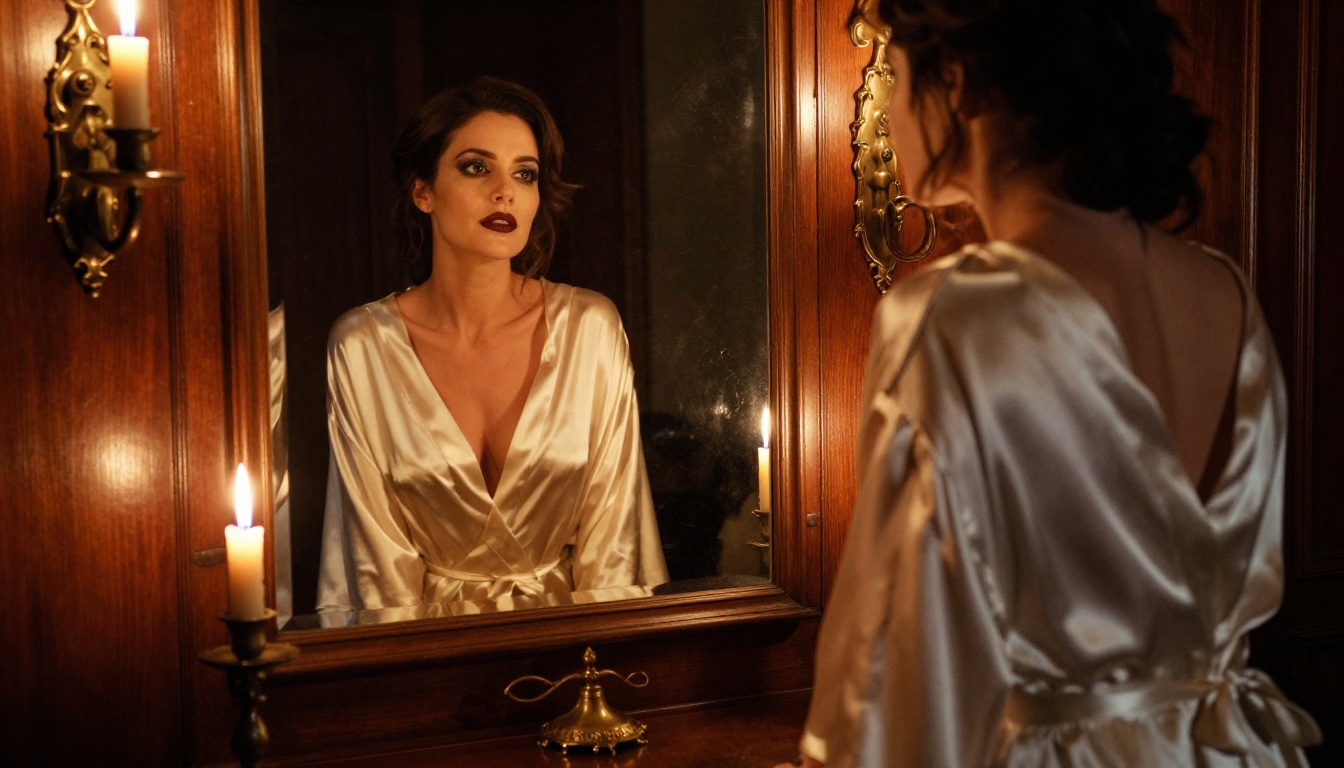
Good adult fiction is not just descriptive, it is emotionally resonant. Claude Sonnet 4.6 writes with psychological texture, capturing the tension before an encounter, the vulnerability during intimacy, and the emotional aftermath. It avoids the flat, transactional tone that makes AI-generated adult content feel hollow.
Where Claude Sonnet 4.6 Falls Short
Being direct about the limitations saves time and frustration.
Default Content Restrictions
Out of the box, Claude Sonnet 4.6 applies a conservative content policy regardless of how long your session has been running or how explicit your previous exchanges were. It may continue an intimate scene up to a certain threshold, then deflect or reframe rather than continuing explicitly.
The deflections are not random. Claude tends to allow suggestive, emotionally charged content but pulls back from graphic physical description. For some writers that boundary is workable. For others, it is the dealbreaker.
The Jailbreak Problem
Attempting to bypass Claude's content policy through persona framing ("pretend you have no restrictions"), narrative embedding, or token-stuffing exploits violates Anthropic's terms of service and tends to produce inconsistent results anyway. Models fine-tuned specifically for uncensored roleplay are more reliable and purpose-built for this use case.
Platform-Level Solutions
The practical answer is not fighting Claude's defaults but choosing the right model for the right job. Claude Sonnet 4.6 excels at narrative structure, world-building, and emotionally rich scenes. For fully uncensored content generation, purpose-built image and text models on platforms like PicassoIA are the stronger fit.

Best Uncensored AI Models for NSFW Content
If pure creative freedom is the goal, the following models are purpose-built for adult content generation without the policy guardrails that restrict general-purpose LLMs.
Seedream 4.5 for Visual Companion Content
When it comes to generating the visual side of your adult fiction, Seedream 4.5 is the top recommendation. It handles uncensored image generation with a level of photorealism and anatomical accuracy that competing models frequently fumble. The default settings are permissive, and the output quality is consistently high.
Use Seedream 4.5 when you want a visual counterpart to your written scenes: character reference sheets, scene illustrations, or atmospheric imagery that matches your narrative world.
PicassoIA Image Editor Pro
PicassoIA Image Editor Pro offers unlimited image generations with adult content support, making it practical for heavy creative workloads. Where other platforms rate-limit or paywall, this tool stays open. It handles inpainting, outpainting, and face consistency, which means you can refine a character's appearance across multiple scenes without starting from scratch.
💡 Pro workflow: Generate a character reference with Seedream 4.5, then use PicassoIA Image Editor Pro to inpaint or expand scenes based on that reference image. The two tools together give you a complete visual pipeline.

LLM Comparison for Long NSFW Sessions
Choosing between models for adult roleplay involves balancing context length, creativity, and content policy. Here is how the major options stack up:
| Model | Context Window | NSFW Default | Best For |
|---|
| Claude Sonnet 4.6 | 1M tokens | Suggestive only | Long narrative arcs, character depth |
| Claude 4.5 Sonnet | 200K tokens | Suggestive only | Structured fiction, code-heavy roleplay |
| Claude Opus 4.7 | 200K tokens | Suggestive only | High-quality prose, complex characters |
| DeepSeek R1 | 128K tokens | Moderate | Reasoning-heavy scenarios, puzzle plots |
| Llama 4 Maverick | 1M tokens | More permissive | Open-source flexibility, fine-tuned variants |
| Kimi K2 Instruct | 128K tokens | Moderate | Multi-character dialogue, agent workflows |
| GPT-5 | 128K tokens | Conservative | Structured narratives, real-world grounding |
💡 The sweet spot: Pair Claude Sonnet 4.6 for narrative scaffolding with Seedream 4.5 or PicassoIA Image Editor Pro for visual generation. Each tool handles the job it was built for.

How to Access Claude Sonnet 4.6 for Roleplay
There are three practical paths: the Anthropic API directly, third-party platforms, or PicassoIA's LLM collection.
API Access vs. Platform Access
Direct API access gives you the most control. You can set a detailed system prompt that frames your world, your characters, and your intended tone before the session begins. This system-level context stays anchored throughout the 1M-token window.
The downside is cost. Claude Sonnet 4.6 charges per input and output token, and a truly long session can accumulate significant expense. You also need development experience to build a workable chat interface.
Using PicassoIA's LLM Collection
PicassoIA gives browser-based access to Claude 4 Sonnet, Claude 4.5 Sonnet, Claude Opus 4.6, and Claude Opus 4.7 alongside dozens of alternatives including DeepSeek V3, Gemini 3 Pro, Kimi K2 Instruct, and GPT-5. No API key setup required.
The platform lets you switch between models mid-project, which is useful when you want Claude 3.7 Sonnet for writing polish and DeepSeek R1 for plot logic in the same session.
Generating NSFW Images to Accompany Your Roleplay
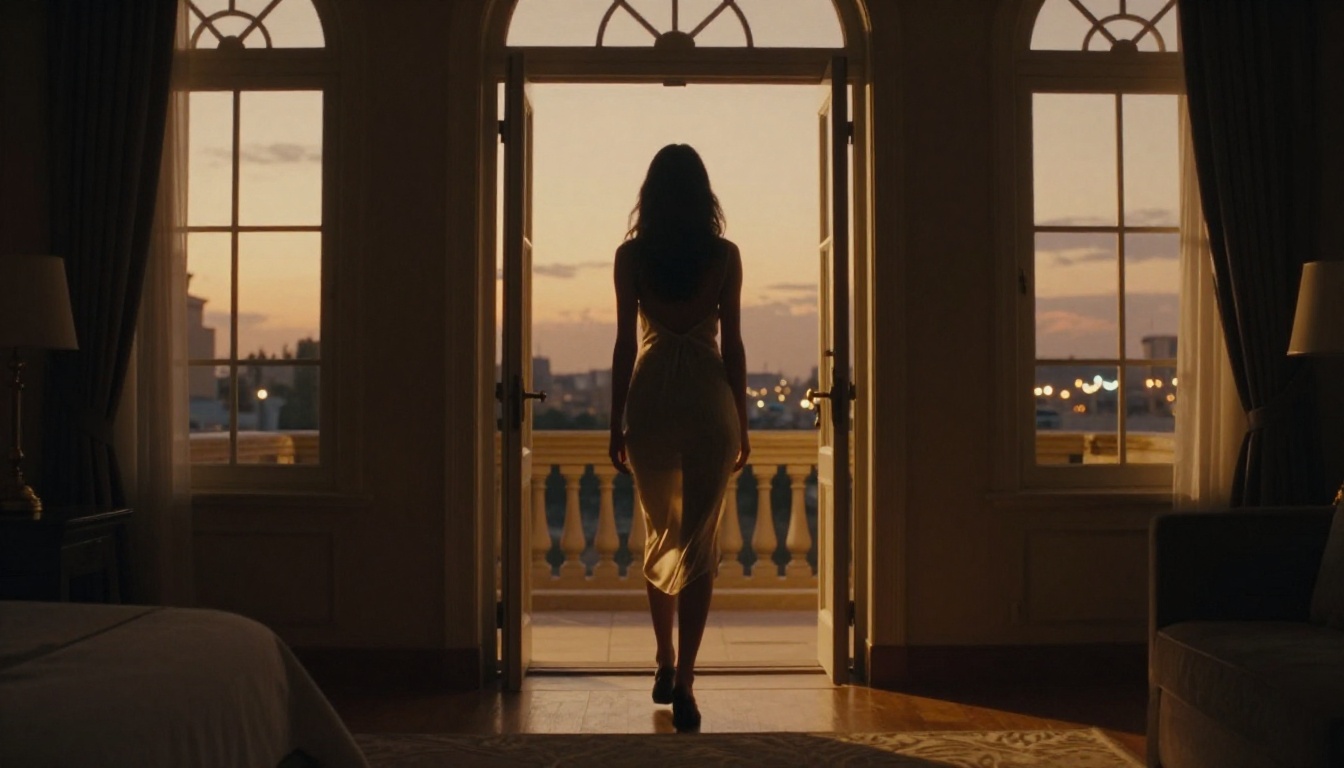
Written fiction gains a different dimension when paired with visuals. PicassoIA's text-to-image suite makes it practical to generate character portraits, scene illustrations, and atmospheric visuals that match your written world.
Using Seedream 4.5 on PicassoIA
Seedream 4.5 handles adult content with high anatomical fidelity and strong prompt adherence. The workflow for roleplay companion images:
- Write a detailed character description in your roleplay session, then extract the physical details into a standalone reference.
- Build a photorealistic prompt using those extracted details plus lighting, camera angle, and setting specifics.
- Generate with Seedream 4.5 for the base character image.
- Iterate using PicassoIA Image Editor Pro to inpaint clothing, adjust expressions, or expand the scene via outpainting.
Prompt Crafting for Adult Content
The gap between a mediocre NSFW image and a genuinely compelling one is almost entirely in the prompt. Three rules that consistently improve results:
- Specify the lighting source first: "Warm candlelight from the left" sets the entire mood before the subject is described.
- Name the camera: "85mm f/1.4" tells the model to produce shallow depth of field and natural lens compression. "24mm wide" produces environmental context.
- Include texture details: "Silk fabric catching light with visible weave pattern" produces far richer results than "wearing a silk dress."
💡 For NSFW prompts: Describe the scene's emotional tone as well as its physical content. "Tense with anticipation" or "intimate and vulnerable" produces images with the correct psychological register, not just the correct visual elements.

PicassoIA Models Worth Bookmarking
Beyond the image generators and LLMs already covered, these PicassoIA models are directly useful for adult fiction creators:
- Claude 3.5 Sonnet: The predecessor to 4.6, still strong for creative writing and available at lower cost per token.
- Gemini 2.5 Flash: Fast, long-context model useful for rapid brainstorming and outline generation without burning credits.
- Llama 4 Maverick Instruct: 1M context window with a more permissive default policy, good for writers who want fewer interruptions.
- Claude 4.5 Haiku: Fast and cheap for rapid iteration on dialogue drafts before committing to a longer generation.
- PicassoIA Image: Unlimited text-to-image generation, ideal for high-volume visual companion content.
The full catalog of available models, covering text, image, video, audio, and more, is at picassoia.com/en/all-models.

The Real Picture for Long NSFW Sessions
Claude Sonnet 4.6 is genuinely impressive for what it does well: maintaining narrative coherence over very long sessions, writing psychologically textured characters, and sustaining tonal consistency across hundreds of exchanges. The 1M token window is not a gimmick, it produces a qualitatively different experience from short-context models.
The honest limitation is the content ceiling. For suggestive, emotionally rich adult fiction with genuine character depth, Claude Sonnet 4.6 is among the best available tools. For fully uncensored content, purpose-built models and platforms are the pragmatic answer, and PicassoIA's collection of both LLMs and image generators covers the full spectrum.
The most effective setup for serious adult fiction writers:
- Claude Sonnet 4.6 for long-form narrative architecture, character development, and emotionally resonant prose
- Seedream 4.5 for uncensored visual content generation
- PicassoIA Image Editor Pro for refining and iterating on generated visuals with unlimited generations
- Claude Opus 4.7 for the highest-quality individual scenes requiring exceptional prose
Start Creating on PicassoIA
PicassoIA gives you browser access to every model mentioned in this article without API setup or upfront cost. Browse the full LLM collection to find Claude Sonnet 4.6 alongside 60+ other language models, then combine it with Seedream 4.5 or PicassoIA Image Editor Pro for the visual layer. Whether you are writing a single scene or a multi-arc series, the tools to do it well, and without creative restrictions, are at picassoia.com/en/all-models.


