The battle between free and premium AI has reached a turning point. DeepSeek V3.2, an open-source language model, has been making waves by delivering performance that rivals commercial alternatives. Meanwhile, GPT-5.2 from OpenAI represents the cutting edge of paid AI services. But can a free model truly compete with a premium offering?
This comparison cuts through the marketing hype to examine what each model actually delivers. We'll test them on real tasks, analyze their technical capabilities, and help you figure out which one makes sense for your workflow.
What Makes Each Model Different
DeepSeek V3.2 arrived as a surprise to many in the AI community. Built by Chinese AI research company DeepSeek, this model demonstrates what's possible when you focus on efficiency and open development. The architecture uses a mixture-of-experts approach, activating only relevant parts of the network for each task. This design choice allows it to process requests quickly while keeping computational costs low.
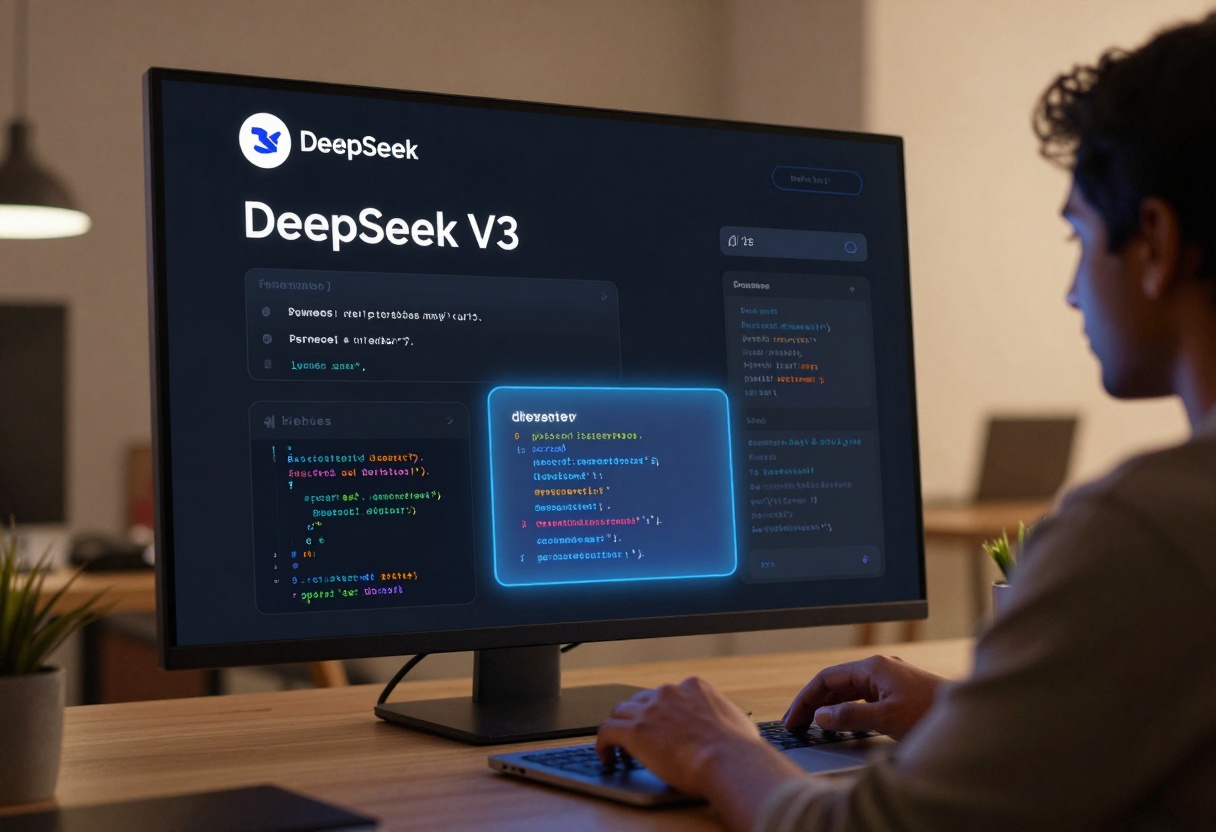
GPT-5.2 takes a different path. OpenAI built this model with maximum capability in mind, not just text generation. It handles images alongside text, adjusts its verbosity based on your needs, and can scale its reasoning effort for complex problems. The model uses proprietary training techniques that OpenAI keeps confidential, but the results speak to significant investment in both data and computational resources.
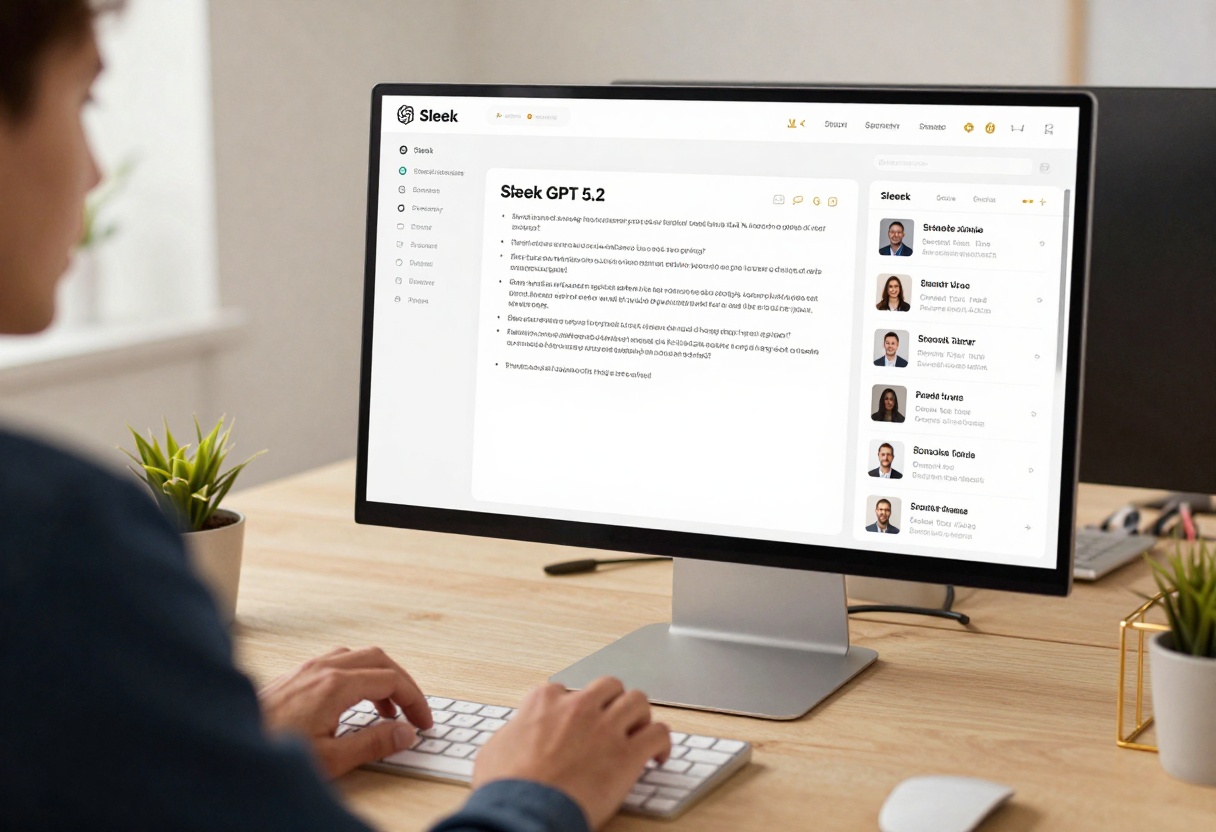
The fundamental difference lies in their development philosophies. DeepSeek embraced transparency, publishing technical papers and making weights available. GPT-5.2 remains a black box, with OpenAI sharing only what's necessary for users to interact with it effectively.
Testing AI models requires moving beyond synthetic benchmarks to real-world tasks. We ran both through several scenarios that professionals actually encounter.
For code generation, both models handled Python and JavaScript competently. DeepSeek V3.2 produced clean, functional code with helpful comments. GPT-5.2 generated similar quality but occasionally added more sophisticated error handling patterns without being asked. In practice, either model will serve developers well for routine programming tasks.
Content creation revealed more nuanced differences. DeepSeek V3.2 writes naturally but sometimes struggles with maintaining a consistent voice across longer pieces. Adjusting the temperature parameter helps, but finding the sweet spot takes experimentation. GPT-5.2's verbosity control proved more intuitive, letting you dial in exactly how detailed you want responses without tweaking multiple settings.
For technical writing and documentation, GPT-5.2 pulled ahead. Its ability to accept images means you can show it screenshots or diagrams and ask for explanations. DeepSeek V3.2, limited to text input, requires you to describe visual content verbally, which works but adds friction to the workflow.
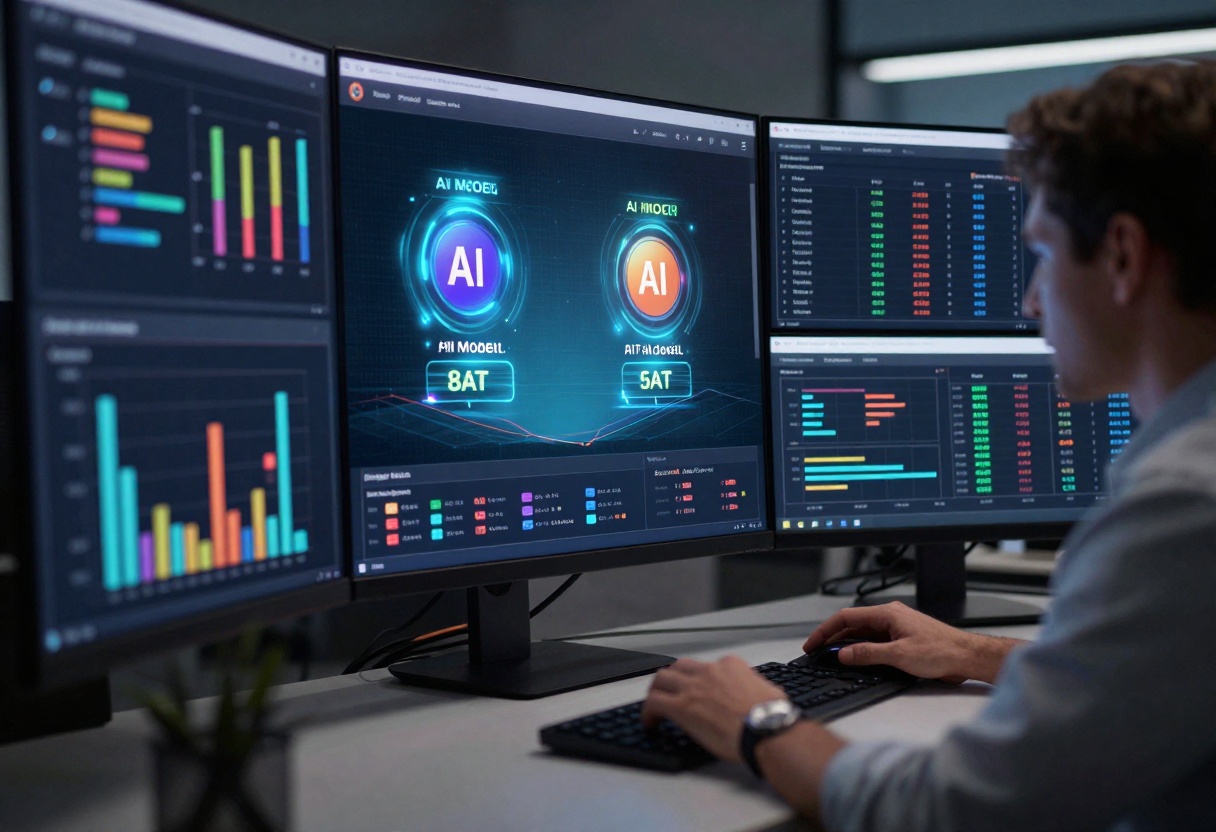
Response speed matters for interactive work. DeepSeek V3.2 consistently returned results faster, often within 2-3 seconds for typical queries. GPT-5.2 took slightly longer, particularly when using higher reasoning effort settings. The difference isn't dramatic but becomes noticeable during extended sessions.
The Open Source Advantage

DeepSeek V3.2's open-source nature provides flexibility that proprietary models can't match. Developers can run it locally, fine-tune it on specific datasets, and integrate it into products without worrying about API changes or pricing adjustments. Several teams have already built specialized variants for legal analysis, medical documentation, and financial modeling.
The model's permissive license means you own your implementation. No usage caps, no rate limits, no sudden policy changes that could disrupt your workflow. For businesses concerned about data privacy, local deployment solves the problem of sending sensitive information to external servers.
However, running DeepSeek V3.2 locally requires significant hardware. The full model needs multiple high-end GPUs, though quantized versions can run on more modest setups with some performance trade-offs. For individuals and small teams, cloud hosting through platforms like PicassoIA provides the benefits of open-source models without infrastructure headaches.
What Premium Buys You
GPT-5.2's premium positioning brings several advantages that justify its cost for certain users. The multimodal capabilities enable workflows that simply aren't possible with text-only models. Product designers can upload mockups and get detailed feedback. Researchers can share graphs and receive analysis. These features save time by eliminating the need to describe visual information verbally.
The reasoning effort scaling impresses for complex analytical tasks. Set it to high or extra-high, and the model will spend more time working through problems before responding. This approach produces noticeably better results for tasks like logical puzzles, mathematical proofs, and strategic planning. DeepSeek V3.2 lacks equivalent functionality.
OpenAI's infrastructure handles scaling automatically. Whether you send one request or a thousand, response quality remains consistent. The company's investment in reliability shows in uptime numbers that commercial applications require. DeepSeek V3.2, when self-hosted, puts reliability in your hands.
Breaking Down the Costs

Price structures for these models reflect their different origins. DeepSeek V3.2 costs nothing for the model itself. If you host locally, you pay only for hardware and electricity. Cloud hosting through PicassoIA or similar platforms charges based on usage, but rates typically run lower than proprietary alternatives.
GPT-5.2 pricing follows OpenAI's token-based model. You pay per input and output token, with rates varying by usage volume and features enabled. A typical business user might spend $50-200 monthly depending on volume. Heavy users or enterprise clients can reach thousands monthly.
The calculation gets more complex when you factor in opportunity costs. Setting up self-hosted DeepSeek V3.2 requires technical expertise and ongoing maintenance. Unless you already have the skills and infrastructure, the initial setup time might offset months of GPT-5.2 subscription fees. Cloud-hosted DeepSeek through platforms offers a middle ground, lower prices than GPT-5.2 but higher than self-hosting.
Real Applications and Use Cases
Different workflows favor different models. Let's examine specific scenarios where each excels.
Content creation and marketing work well on both platforms. DeepSeek V3.2 handles blog posts, social media content, and ad copy competently. GPT-5.2's verbosity control makes it slightly easier to get the right tone, but the difference won't make or break your content strategy. Budget-conscious creators will find DeepSeek V3.2 more than adequate.

Software development sees both models performing similarly for most tasks. Code generation, debugging assistance, and documentation writing work fine on either platform. GPT-5.2's image understanding helps when you need to work with UI mockups or architecture diagrams. DeepSeek V3.2's faster response times feel better during interactive coding sessions.
Business intelligence and analysis favor GPT-5.2's advanced reasoning capabilities. When you need deep analysis of complex data or strategic recommendations, the ability to scale reasoning effort produces noticeably better insights. DeepSeek V3.2 can handle basic analysis but struggles with multi-step reasoning chains.

Customer support automation works on both models, but implementation differs. DeepSeek V3.2's open-source nature lets you fine-tune responses to match your company's voice and policies. GPT-5.2 handles this through careful prompting and system messages, which works but lacks the precision of fine-tuning. For high-volume support operations, DeepSeek V3.2's cost structure proves more sustainable.
Technical documentation and research see mixed results. GPT-5.2's multimodal input streamlines workflows involving diagrams, screenshots, and charts. DeepSeek V3.2 requires more verbal description but compensates with faster processing of large text documents. Your choice depends on how much visual content you work with.
PicassoIA Access to Both Models
PicassoIA provides a unified platform for working with both DeepSeek V3.2 and GPT-5.2, eliminating the need to juggle multiple subscriptions or set up complex infrastructure. The platform handles all the technical details of model deployment, letting you focus on getting results.
The interface presents both models consistently, which simplifies testing and comparison. You can run the same prompt through each model and evaluate results side by side. This capability proves valuable when you're trying to determine which model fits your specific needs better.
For teams, PicassoIA's pricing structure offers flexibility. You can allocate budget based on actual usage rather than committing to a specific model upfront. Some tasks work better on GPT-5.2, others on DeepSeek V3.2. The platform lets you use each where it makes the most sense.
Getting Started with DeepSeek V3.2 on PicassoIA
Working with DeepSeek V3.2 through PicassoIA removes the complexity of self-hosting while maintaining the benefits of open-source AI. The platform provides immediate access to the full model with no setup required.
Navigate to the DeepSeek V3 model page on PicassoIA. The interface presents all available parameters with clear descriptions of what each controls.
Start with a basic prompt to get familiar with the model's style and capabilities. The prompt field accepts your input text, anything from a simple question to detailed instructions for content generation.
The temperature setting (default 0.6) controls randomness in outputs. Lower values like 0.3 produce more focused, deterministic responses. Higher values around 0.8-1.0 increase creativity and variation. Experiment with this setting to find what works for your use case.
Max tokens (default 1024) determines response length. Increase this for longer outputs, decrease it when you need concise answers. The model won't always use the full token limit, this sets a maximum rather than a target.
Top P (default 1) works alongside temperature to refine output quality. Values between 0.9 and 1.0 work well for most tasks. Lower values make the model more conservative in word choice.
For creative writing or brainstorming, try these settings:
- Temperature: 0.8
- Top P: 0.95
- Max Tokens: 2000
For technical or factual content, try:
- Temperature: 0.4
- Top P: 0.9
- Max Tokens: 1500
The presence penalty and frequency penalty settings (both default to 0) help control repetition. Increase these slightly (0.5-1.0) if you notice the model repeating phrases or ideas. Most users leave these at default.
Using GPT-5.2 on PicassoIA
GPT-5.2 through PicassoIA offers the same powerful capabilities as direct API access but with a more approachable interface. Visit the GPT-5.2 model page to start.
The model accepts input through either the prompt field or the messages array. For simple requests, use the prompt field. For conversations with context, use messages formatted as JSON: [{"role": "user", "content": "Your text here"}]
The verbosity setting (low, medium, or high) controls response length and detail without requiring specific token counts. This parameter makes GPT-5.2 easier to dial in for different contexts. Use low for quick answers, medium for balanced responses, and high for thorough explanations.
Reasoning effort represents GPT-5.2's standout feature. Options range from none to extra-high:
- None: Fast, straightforward responses
- Low: Standard processing (default)
- Medium: More thorough analysis
- High: Deep reasoning for complex problems
- Extra-high: Maximum cognitive effort
Higher reasoning effort increases processing time but produces better results for analytical tasks. Use lower settings for routine queries to save time and cost.
The system prompt field lets you establish the model's behavior and personality. Set guidelines for tone, format, expertise level, or any other aspect of how it should respond. This parameter remains active throughout your session.
For business writing, try:
- Verbosity: medium
- Reasoning effort: low
- System prompt: "You are a professional business writer. Be clear, concise, and persuasive."
For complex analysis, try:
- Verbosity: high
- Reasoning effort: high
- System prompt: "You are an expert analyst. Think through problems step by step and show your reasoning."
Image input accepts URLs to images you want the model to analyze. Upload your images to a hosting service and provide the URLs in an array format: ["https://example.com/image1.jpg"]
Max completion tokens sets the upper limit for response length. Increase this when using high reasoning effort to ensure the model has space to fully develop its analysis.
Making Your Decision
The choice between DeepSeek V3.2 and GPT-5.2 depends on your specific requirements rather than which model is objectively better. Both serve different needs effectively.
Choose DeepSeek V3.2 when you prioritize cost efficiency, want faster response times, need local deployment options, or require the flexibility to fine-tune the model for specialized tasks. The open-source nature provides control and transparency that proprietary models can't match. Students, independent developers, and small businesses often find DeepSeek V3.2 delivers exactly what they need without unnecessary costs.
Choose GPT-5.2 when your work involves multimodal tasks requiring image understanding, you need the advanced reasoning capabilities for complex analytical work, or you value the convenience of a fully managed service with enterprise-grade reliability. Businesses handling sensitive visual content, teams doing deep strategic analysis, and users who prefer not to manage technical details will find GPT-5.2's premium features worth the investment.
Many professionals use both models strategically. Route routine tasks to DeepSeek V3.2 for cost efficiency while reserving GPT-5.2 for specialized work that demands its unique capabilities. PicassoIA makes this hybrid approach practical by providing unified access to both models.
The AI landscape continues evolving rapidly. What works best today might change as models improve and new options emerge. Testing both models with your actual workflows remains the most reliable way to determine which fits your needs. PicassoIA's platform makes this experimentation straightforward, letting you compare performance directly without complicated setup processes.
Whatever your choice, both models represent significant advances in AI capabilities. DeepSeek V3.2 proves that open-source development can produce enterprise-quality results. GPT-5.2 demonstrates what's possible when a company invests heavily in pushing technological boundaries. The real winner is anyone who gets to use these powerful tools to augment their work.


