What Makes DeepSeek V3.2 Different
The release of DeepSeek V3.2 represents more than just another language model. With 671 billion parameters and a mixture-of-experts architecture, this model delivers sophisticated text generation that previously required premium subscriptions to closed-source systems.

What separates DeepSeek V3.2 from other open-source alternatives isn't just its size. The model architecture incorporates advanced techniques that optimize both inference speed and output quality. Users report response times comparable to commercial models, with context-aware reasoning that handles complex prompts across multiple domains.
The training process behind DeepSeek V3.2 utilized a massive multilingual dataset, giving it strong capabilities in both English and Chinese. This bilingual proficiency makes it particularly valuable for global applications where language flexibility matters.
Numbers tell a compelling story when comparing DeepSeek V3.2 to GPT-5. Across standard evaluation benchmarks, the gap between these models has narrowed significantly.
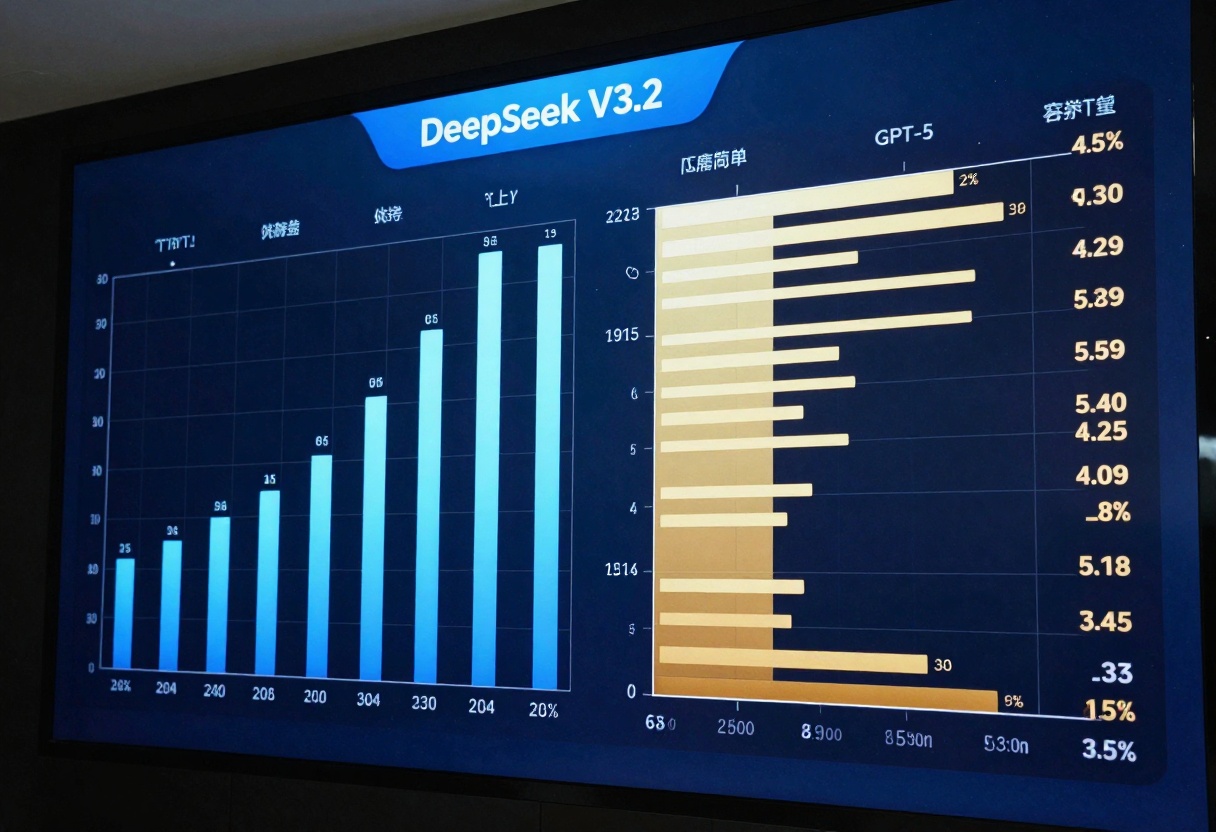
In reasoning tasks, DeepSeek V3.2 achieves scores within 5-8% of GPT-5 on most standardized tests. For code generation specifically, the performance difference becomes even smaller, with DeepSeek V3.2 sometimes matching or exceeding GPT-5 in specific programming languages.
Key Performance Areas
Testing across diverse use cases reveals where DeepSeek V3.2 truly shines:
- Mathematical reasoning shows consistent accuracy with multi-step problems
- Code completion and debugging performs reliably across Python, JavaScript, and other languages
- Long-context understanding maintains coherence across 32K token windows
- Creative writing produces varied, contextually appropriate content
- Technical documentation generates clear, structured explanations

The most impressive aspect might be consistency. While some open-source models produce excellent results occasionally, DeepSeek V3.2 maintains quality across repeated generations with the same prompt parameters.
The Economic Impact
Cost considerations create the most dramatic difference between these models. GPT-5 access requires API payments or subscription fees that add up quickly for high-volume use cases. DeepSeek V3.2's open-source nature eliminates these barriers entirely.
For startups and individual developers, this changes the equation fundamentally. Projects that would require thousands in monthly API costs can now run on self-hosted infrastructure or free cloud tiers. The democratization of advanced AI capabilities accelerates innovation by removing financial gatekeepers.
Businesses benefit from predictable costs and complete control over their AI infrastructure. No rate limits, no usage caps, no surprise bills when traffic spikes. The ability to fine-tune the model on proprietary data without sharing it with third parties adds another layer of value.
💡 Note: While hosting DeepSeek V3.2 requires computational resources, multiple providers now offer free inference endpoints, making true zero-cost access possible for many use cases.
Real-World Applications
Theory matters less than practical utility. DeepSeek V3.2 proves itself across diverse real-world scenarios where GPT-5 currently dominates.

Content Creation
Writers and marketers use DeepSeek V3.2 for:
- Blog post drafting with specific tone and style requirements
- Social media content optimized for different platforms
- Product descriptions that balance SEO with readability
- Email campaigns with personalized messaging at scale
The model understands nuanced instructions about brand voice, adapting its output style to match existing content. This flexibility makes it suitable for agencies managing multiple clients with distinct communication needs.
Development Workflows
Software teams integrate DeepSeek V3.2 into their daily operations:
- Code review with explanations of potential issues
- Documentation generation from existing codebases
- Test case creation covering edge cases automatically
- API design suggesting endpoints and data structures
- Bug investigation analyzing error logs and suggesting fixes
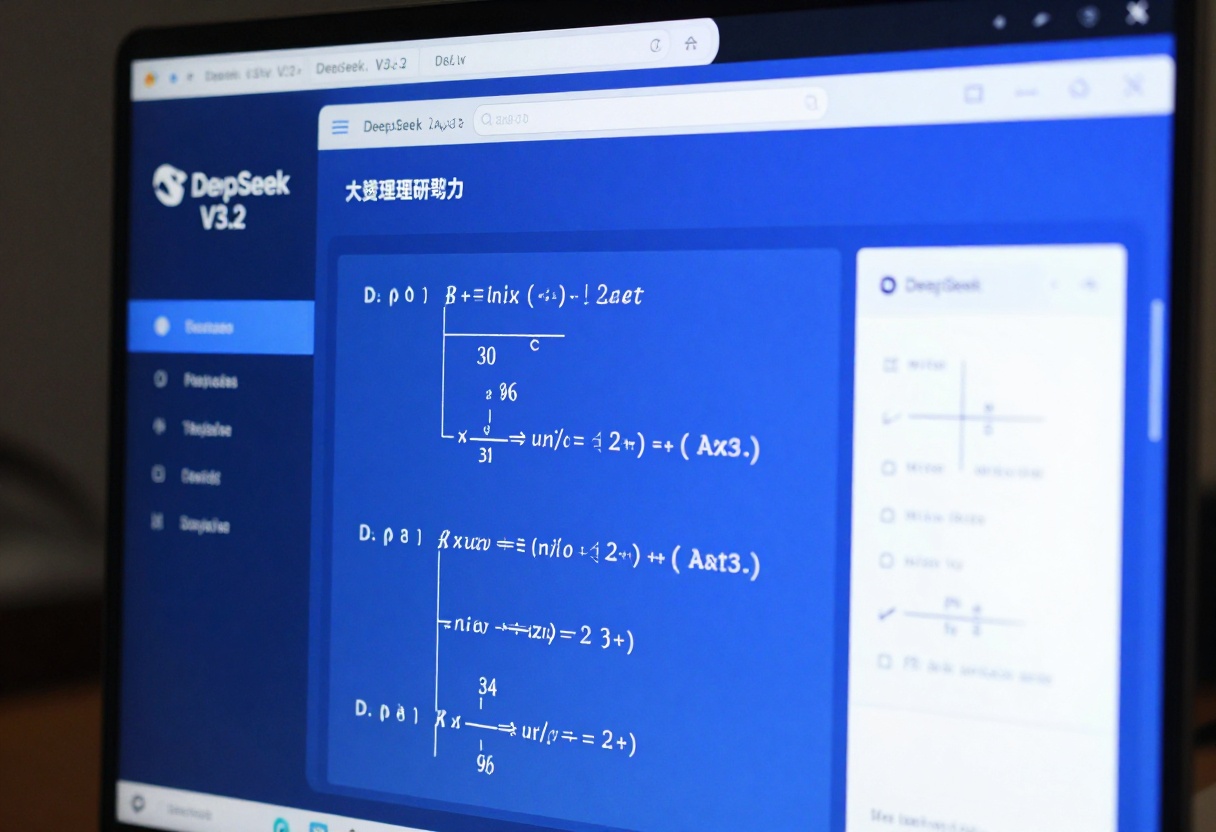
The model's code-aware context understands project structure and dependencies, making suggestions more relevant than generic AI assistants.
Educational Tools
Educators build applications leveraging DeepSeek V3.2's teaching abilities:
- Personalized tutoring that adapts to student comprehension levels
- Practice problem generation with varying difficulty
- Concept explanations using multiple approaches
- Language learning with conversational practice
- Research assistance for academic writing
Technical Capabilities Deep Dive
Understanding what DeepSeek V3.2 can actually do helps set appropriate expectations. The model handles most tasks expected from modern large language models, with some specific strengths worth highlighting.
Reasoning chains demonstrate clear logical progression through complex problems. When asked to explain its thinking, DeepSeek V3.2 breaks down analysis into verifiable steps rather than jumping to conclusions. This transparency helps users validate outputs and builds trust in the system.
Multimodal understanding remains limited compared to GPT-5. While DeepSeek V3.2 excels at text-only tasks, it doesn't process images or audio directly. Projects requiring visual analysis need separate models or preprocessing steps.
The context window extends to 32,768 tokens, allowing detailed conversations and long document analysis. This capacity handles most real-world scenarios without requiring document chunking or summarization preprocessing.
Parameter Configuration
Fine-tuning generation behavior gives users precise control:
| Parameter | Range | Impact |
|---|
| Temperature | 0.1 - 2.0 | Controls randomness and creativity |
| Top-p | 0.1 - 1.0 | Narrows or expands vocabulary choices |
| Max Tokens | 1 - 8192 | Sets output length limits |
| Presence Penalty | -2.0 - 2.0 | Reduces topic repetition |
| Frequency Penalty | -2.0 - 2.0 | Discourages word repetition |
These parameters let users dial in the exact output style their application requires, from highly deterministic technical writing to creative fiction with unexpected turns.
Limitations and Considerations
Honesty about weaknesses matters as much as celebrating strengths. DeepSeek V3.2 isn't a perfect replacement for GPT-5 in every scenario.
Training data cutoff means the model lacks knowledge of recent events. Applications requiring current information need supplementary data sources or retrieval-augmented generation architectures.
Hallucination rates, while improved from earlier models, still occur. Users should verify factual claims, especially for medical, legal, or financial content where accuracy is critical. The model generates plausible-sounding text that may not reflect reality.
Hardware requirements for self-hosting remain substantial. Running the full 671B parameter model requires high-end GPU infrastructure that most individuals can't access. Quantized versions offer a compromise between performance and accessibility.
The open-source license permits most uses but includes restrictions on competing model development. Organizations should review terms carefully before commercial deployment.
Getting Started with DeepSeek V3.2 on PicassoIA
PicassoIA provides straightforward access to DeepSeek V3.2 without infrastructure complexity. The platform handles model hosting, letting you focus on building applications rather than managing servers.
Using DeepSeek V3 on PicassoIA
Access DeepSeek V3 directly through the PicassoIA platform. The interface provides all the tools needed to generate high-quality text content.
Required Parameters
The only essential input is your prompt - the text instruction or question you want the model to process. Write clear, specific prompts for best results:
- Instead of "Write about AI", try "Write a 300-word explanation of transformer architectures for beginners"
- Rather than "Help with code", specify "Debug this Python function that sorts a list of dictionaries by date"
Optional Parameters for Fine-Tuning
Adjust these settings to control generation behavior:
Top P (default: 1.0) - Limits vocabulary to most probable words. Lower values (0.7-0.9) create more focused, predictable text. Higher values increase variety.
Max Tokens (default: 1024) - Sets the maximum length of generated output. Increase for longer documents, decrease for brief responses.
Temperature (default: 0.6) - Controls randomness. Lower values (0.1-0.4) produce consistent, deterministic results. Higher values (0.8-1.2) increase creativity and unpredictability.
Presence Penalty (default: 0) - Discourages repeating topics already mentioned. Positive values push the model toward new subjects.
Frequency Penalty (default: 0) - Reduces word repetition. Useful for preventing the model from overusing specific phrases.
Step-by-Step Process
- Navigate to the DeepSeek V3 model page on PicassoIA
- Enter your prompt in the text field, being as specific as possible about desired output
- Adjust optional parameters if you need to fine-tune the response style
- Click the generate button to start processing
- Review the generated text and download or copy the result
The generation typically completes within seconds, even for longer outputs. PicassoIA handles all the infrastructure complexity, from model loading to GPU allocation.
Best Practices
For optimal results with DeepSeek V3:
- Be specific in your prompts rather than vague or open-ended
- Provide context when asking follow-up questions or referencing previous information
- Experiment with temperature to find the right balance between consistency and creativity
- Use system prompts to set the model's role or perspective (e.g., "You are a technical documentation expert")
- Iterate on prompts if initial results don't match expectations, refining your instructions
The platform makes testing different approaches quick and cost-free, encouraging experimentation to find what works best for your specific use case.
What This Means for AI Development
The emergence of GPT-5-competitive free models reshapes assumptions about AI accessibility. Projects that seemed economically unfeasible become viable when inference costs drop to zero.
Startup ecosystems benefit from reduced barriers to entry. Founders can validate ideas and build minimum viable products without securing AI infrastructure funding. This accelerates experimentation and increases the diversity of applications being developed.
Academic research gains access to state-of-the-art capabilities previously available only to well-funded institutions. Researchers can run extensive experiments and ablation studies without budget constraints limiting scientific inquiry.
The open-source community can build on DeepSeek V3.2 as a foundation, creating specialized variants and improvements. This collaborative development cycle has historically produced innovation faster than closed ecosystems.
However, competition dynamics shift as free alternatives challenge commercial models. Companies building on GPT-5 face pressure to demonstrate clear value beyond raw performance metrics. Differentiation moves toward user experience, integration quality, and specialized domain expertise.
The Future of Free AI
DeepSeek V3.2 won't be the last high-performance open-source model. The trajectory suggests continuous improvement in freely available AI capabilities.
Several factors accelerate this trend:
- Training costs decline as techniques improve
- Hardware efficiency gains from specialized AI chips
- Open-source coordination produces faster iteration
- Academic and commercial interests align around accessibility
Organizations planning AI strategies should account for this shifting landscape. Dependence on proprietary models carries increasing risk as alternatives approach parity. Building flexible architectures that can swap model backends provides insurance against vendor lock-in.
The question isn't whether free models will match commercial ones, but how quickly the gap closes completely. Current evidence suggests months rather than years separate today's open-source capabilities from tomorrow's commercial releases.
Making the Right Choice
Choosing between DeepSeek V3.2 and GPT-5 depends on specific project requirements rather than abstract capability comparisons.
Choose DeepSeek V3.2 when:
- Budget constraints make commercial API costs prohibitive
- Data privacy requires self-hosted infrastructure
- Application needs justify model fine-tuning
- Open-source licensing aligns with project goals
- Development timeline allows infrastructure setup
Choose GPT-5 when:
- Bleeding-edge performance justifies premium pricing
- Managed infrastructure reduces development complexity
- Multimodal capabilities are essential
- Commercial support and SLAs matter
- Time-to-market outweighs cost considerations
Many projects benefit from hybrid approaches, using free models for development and testing while reserving commercial options for production features where performance differences matter most.
The democratization of AI through models like DeepSeek V3.2 fundamentally changes what's possible without significant capital investment. Whether you're building the next breakthrough application or just exploring what modern AI can do, access to GPT-5-level performance at zero cost opens doors that were closed just months ago.
PicassoIA makes accessing these powerful models straightforward, removing infrastructure complexity so you can focus on building rather than managing servers. Start experimenting with DeepSeek V3 today and see what you can create without the constraints of subscription fees and usage limits.


