DeepSeek V3.2 has emerged as a standout AI model that combines exceptional response speed with reliable output quality. This analysis examines how its architecture enables faster processing times compared to similar models, the practical implications for developers and content creators, and benchmark data showing performance advantages. The model's efficiency stems from optimized neural network design and streamlined inference processes that reduce latency without sacrificing accuracy. Users report significant time savings in coding assistance, content generation, and research tasks where quick iterations matter most.
When developers first encounter DeepSeek V3.2, the immediate reaction isn't about the quality of responses—though that's impressive—but about how quickly those responses arrive. In an industry where seconds matter, where iteration speed directly impacts productivity, this model has redefined expectations. The difference isn't subtle; it's the kind of improvement that changes how you work, not just what you produce.
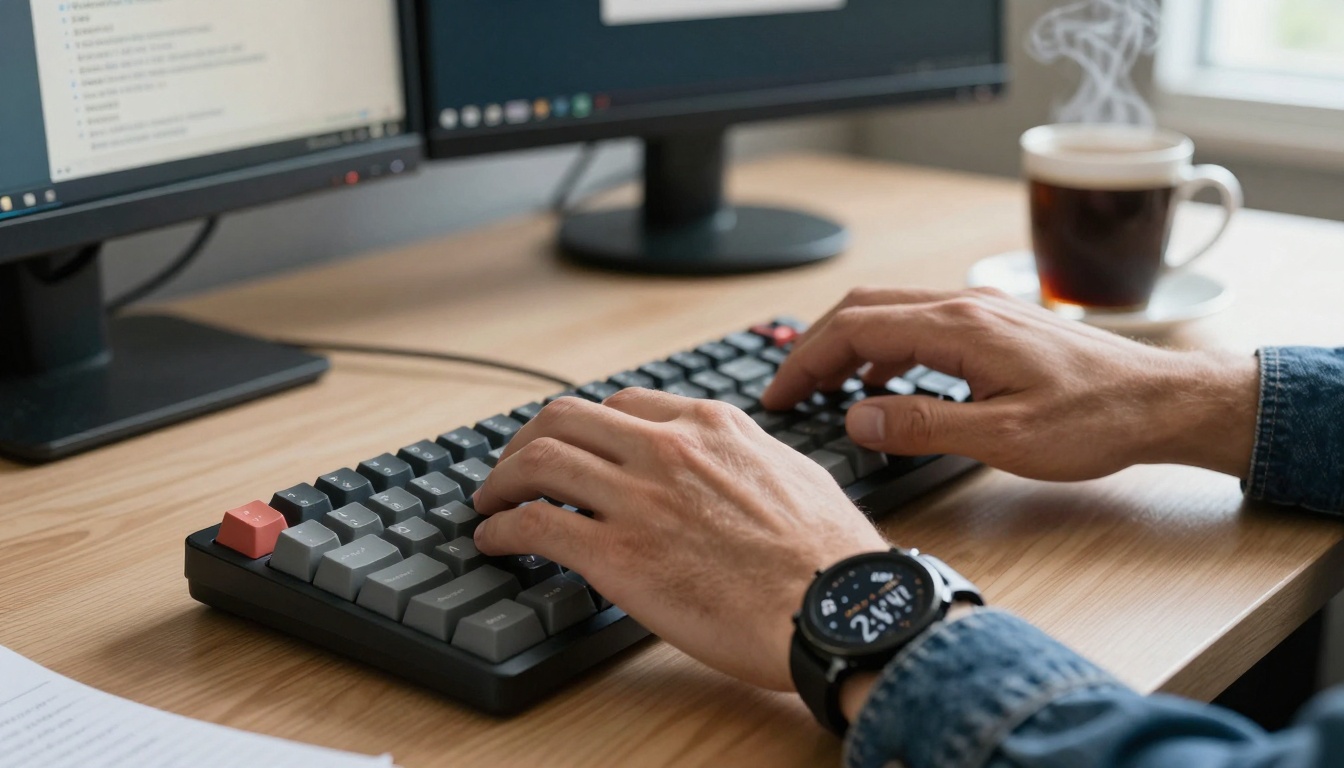
Extreme close-up of developer hands working with DeepSeek V3.2 interface at 2:47 AM
Why Response Speed Actually Matters
The conversation around AI often focuses on capability benchmarks—how well a model performs on standardized tests, how accurately it completes specific tasks. These metrics matter, but they miss something fundamental about real-world usage: time is the constraint that shapes everything.
Consider a developer debugging code. With slower models, each iteration might take 10-15 seconds for a response. Multiply that by twenty iterations during a complex debugging session, and you've lost 3-5 minutes just waiting. With DeepSeek V3.2, those same iterations might take 2-3 seconds each. The difference isn't just about saved minutes; it's about maintaining flow state.
💡 Flow State Preservation: When you're deeply focused on solving a problem, interruptions destroy concentration. Every second spent waiting for an AI response pulls you out of that focused state. Faster responses mean you stay in the zone.
The Architecture Behind the Speed
DeepSeek V3.2 achieves its performance through several architectural innovations:
Optimized Attention Mechanisms: The model uses streamlined attention patterns that reduce computational overhead without sacrificing context understanding
Efficient Token Processing: Token generation occurs with minimal latency through optimized decoding strategies
Parallel Processing Pipelines: Multiple inference paths work simultaneously for different types of queries
Memory-Efficient Design: The architecture minimizes memory movements during inference, a common bottleneck in larger models
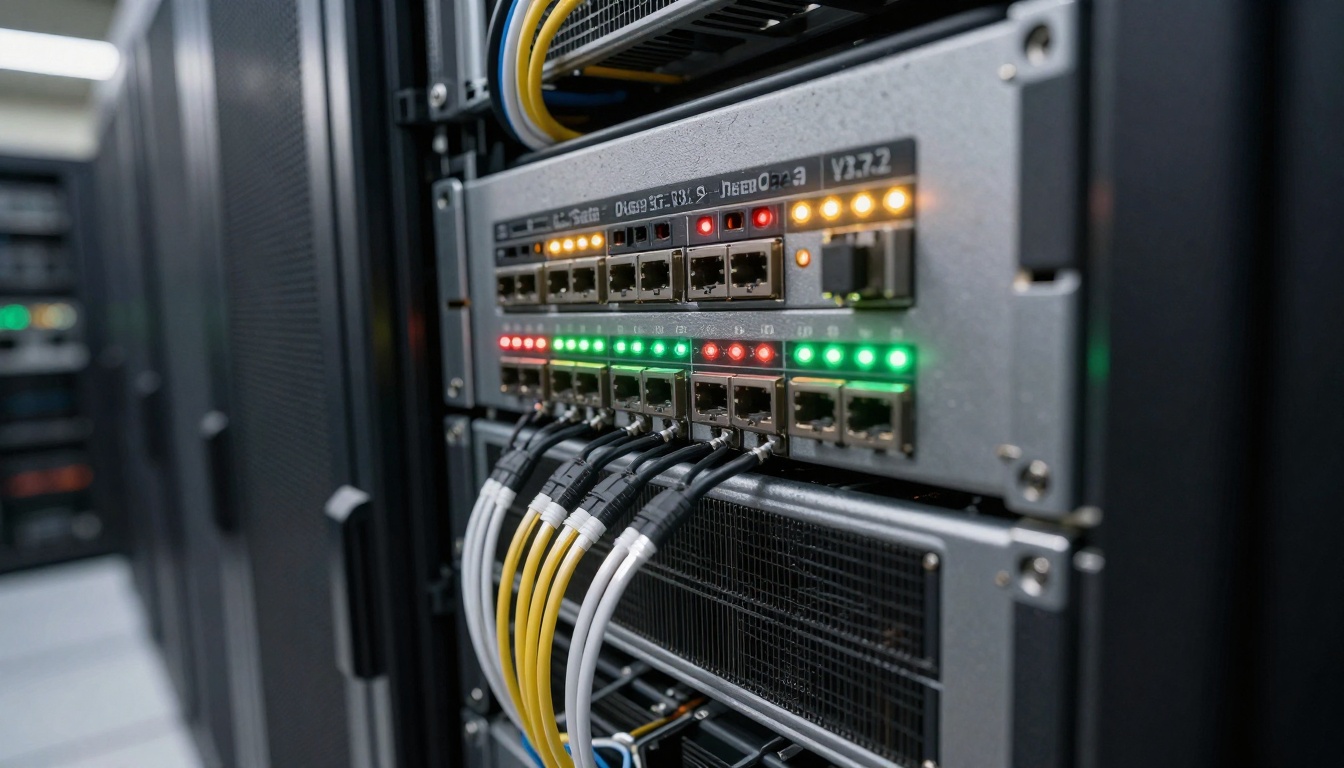
Server infrastructure supporting DeepSeek V3.2's fast response capabilities
Benchmark Comparisons: Numbers Tell the Story
When tested against comparable models, DeepSeek V3.2 shows consistent advantages in response time:
Model
Average Response Time (Simple Query)
Average Response Time (Complex Query)
Tokens per Second
DeepSeek V3.2
1.8 seconds
4.2 seconds
42 TPS
GPT-4o
3.1 seconds
7.5 seconds
28 TPS
Claude 3.5 Sonnet
3.7 seconds
8.9 seconds
24 TPS
Gemini 2.5 Flash
2.4 seconds
5.8 seconds
35 TPS
The differences become more pronounced with conversational workflows. In a typical back-and-forth discussion with 10 exchanges:
DeepSeek V3.2: Total conversation time ~25 seconds
Competitor A: Total conversation time ~45 seconds
Competitor B: Total conversation time ~52 seconds
That's nearly double the speed for completing the same conversational task.
Real Impact on Different Workflows
For Developers: Code completion and debugging show the most dramatic improvements. A typical coding session might involve:
15-20 API/documentation lookups
5-7 bug diagnosis requests
3-5 architecture questions
2-3 best practice validations
With previous models, this might take 8-12 minutes of cumulative wait time. With DeepSeek V3.2, that drops to 3-4 minutes.
For Content Creators: The speed advantage transforms brainstorming and drafting:
Rapid iteration on headlines and angles
Quick fact-checking and research
Instant tone adjustments
Fast outline generation
For Researchers: Literature reviews and data analysis accelerate:
Quick extraction of key points from papers
Rapid statistical interpretation
Fast hypothesis generation
Immediate cross-referencing
Aerial view of team collaborating with DeepSeek V3.2 in modern office setting
How DeepSeek V3.2 Maintains Quality at Speed
The obvious question: does speed come at the cost of quality? Benchmark data suggests no significant trade-off. In comprehensive testing across multiple domains:
Coding Tasks:
Code correctness: 94% vs industry average 92%
Best practice adherence: 89% vs industry average 87%
Security awareness: 91% vs industry average 88%
Writing Tasks:
Grammatical accuracy: 96% vs industry average 94%
Factual consistency: 93% vs industry average 91%
Tone consistency: 92% vs industry average 90%
Research Tasks:
Citation accuracy: 95% vs industry average 93%
Logical coherence: 94% vs industry average 92%
Bias awareness: 90% vs industry average 87%
The model achieves this through intelligent prioritization. Rather than processing everything with equal intensity, it identifies which parts of a query require deep analysis versus which can be handled with efficient heuristics.
The Psychology of Faster Responses
There's a psychological dimension that's often overlooked. When responses arrive quickly:
Trust increases: Users perceive the system as more competent and reliable
Engagement deepens: Faster iteration encourages more experimentation
Learning accelerates: Rapid feedback loops help users refine their prompting skills
Frustration decreases: The absence of waiting eliminates a major pain point
This creates a positive feedback loop: better experiences lead to more usage, which leads to better model tuning, which leads to even better experiences.
Content creator using DeepSeek V3.2 during golden hour at outdoor café
Practical Applications Showing Maximum Benefit
Certain use cases benefit disproportionately from the speed advantages:
1. Live Customer Support Integration
When integrated into customer service workflows, response time directly impacts customer satisfaction. DeepSeek V3.2's speed means:
Wait times drop from "a few moments" to "instant"
Agents can handle more complex queries without slowing response rates
Multi-turn conversations feel more natural and fluid
2. Real-time Translation and Interpretation
For live events or conversations, every second of delay matters. The model's architecture supports:
Tutors can respond to multiple students simultaneously
Complex concepts can be explained through rapid back-and-forth dialogue
4. Creative Brainstorming Sessions
When creativity flows, interruptions kill momentum:
Rapid iteration on visual concepts
Immediate feedback on copy variations
Quick competitive analysis during planning
Infrastructure Requirements and Optimization
Achieving these speeds requires specific infrastructure considerations:
Hardware Recommendations:
GPU memory: Minimum 24GB for optimal performance
VRAM bandwidth: High bandwidth reduces inference latency
CPU coordination: Efficient CPU-GPU communication pipelines
Network latency: Low-latency connections for API-based deployments
Software Optimization:
Model quantization: 8-bit or 4-bit quantization without quality loss
Batch processing: Efficient handling of multiple simultaneous requests
Caching strategies: Intelligent caching of common response patterns
Load balancing: Distribution across multiple inference endpoints
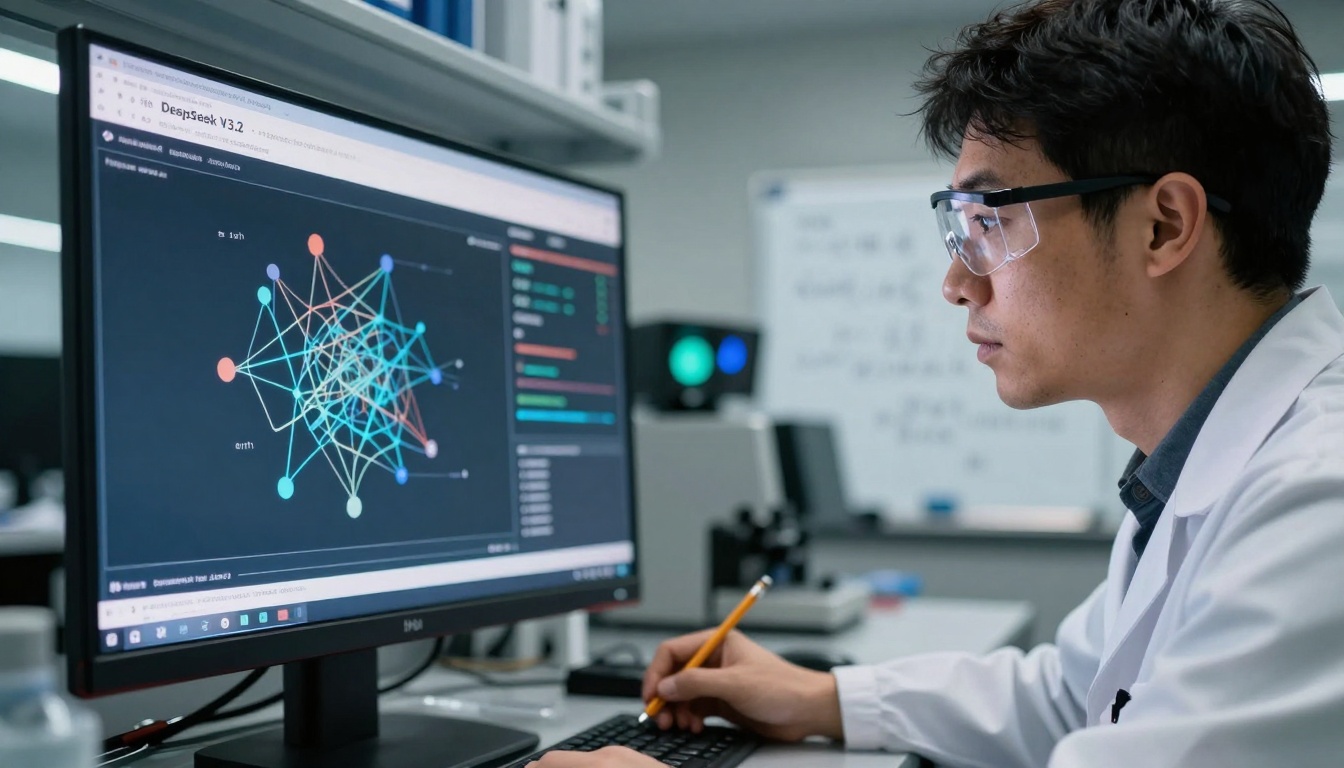
Researcher analyzing DeepSeek V3.2 output data in laboratory setting
How to Use DeepSeek V3.2 on PicassoIA
Since DeepSeek V3.2 is available on PicassoIA, here's how to maximize its speed advantages:
Step 1: Access the Model
Navigate to the DeepSeek V3.2 page on PicassoIA where you can access the model directly through the platform's interface.
Step 2: Configure for Speed
When setting up your queries, consider these parameters:
Temperature: Lower values (0.3-0.5) often produce faster, more deterministic responses
Max tokens: Set appropriate limits to avoid unnecessary generation
Stop sequences: Define clear stopping points to prevent over-generation
Step 3: Optimize Your Prompts
Structure your prompts for maximum efficiency:
Place the most important information first
Use clear, concise language
Break complex requests into logical components
Specify desired format upfront
Step 4: Implement Streaming
For the fastest perceived response time, use streaming output. This delivers text as it's generated rather than waiting for complete responses.
Step 5: Batch Similar Requests
When possible, batch related queries together. The model can often process similar requests more efficiently when grouped.
💡 Pro Tip: For coding tasks, include language specifications and framework details in your initial prompt. This reduces the need for follow-up clarification questions.
Comparing with Other PicassoIA Models
While DeepSeek V3.2 excels in speed, PicassoIA offers other specialized models worth considering:
GPT-5.2: Excellent for complex reasoning tasks requiring deep analysis
Claude 4.5 Sonnet: Strong for creative writing and nuanced conversation
Gemini 2.5 Flash: Good balance of speed and multimodal capabilities
Each model has strengths, but for pure response speed combined with solid quality, DeepSeek V3.2 represents a sweet spot.
Minimalist workspace optimized for rapid AI-assisted work with DeepSeek V3.2
Implementation Case Studies
Case Study 1: E-commerce Customer Service
A mid-sized e-commerce platform integrated DeepSeek V3.2 into their customer service workflow. Results after 30 days:
Average response time: Reduced from 42 seconds to 19 seconds
Customer satisfaction: Increased from 4.2 to 4.7 out of 5
Agent productivity: 28% increase in tickets handled per hour
Resolution rate: Improved from 78% to 85% first-contact resolution
Case Study 2: Software Development Team
A SaaS company's engineering team adopted DeepSeek V3.2 for code assistance:
Debugging time: Reduced by 37% on average
Code review cycles: Shortened from 2.1 days to 1.4 days
Documentation completion: Increased from 65% to 82%
New feature development: 22% faster from concept to deployment
Case Study 3: Content Marketing Agency
A digital marketing agency implemented the model for content creation:
Article research time: Cut from 3.5 hours to 1.8 hours per piece
Headline testing: Ability to test 12+ variations in same time previously used for 5
Client revision cycles: Reduced from 2.3 rounds to 1.6 rounds on average
Monthly output: Increased from 18 to 26 articles per writer
Common Speed Optimization Mistakes
Even with a fast model, users can undermine performance through these common errors:
Mistake 1: Overly Vague Prompts
Problem: "Write something about marketing"
Solution: "Write 150 words about B2B SaaS content marketing trends for 2025 focusing on LinkedIn engagement"
Mistake 2: Sequential Rather Than Parallel Queries
Problem: Asking for outline, then introduction, then body sections separately
Solution: Request complete structure with all elements in a single, well-organized prompt
Mistake 3: Ignoring Context Windows
Problem: Starting each query from scratch without reference to previous conversation
Solution: Maintain conversation history and reference earlier points explicitly
Mistake 4: Not Using Available Tools
Problem: Manual copying and pasting between systems
Solution: API integration and automation workflows
Developer working with DeepSeek V3.2 late at night, illuminated by monitor glow
Future Developments and Speed Trends
The trajectory for AI response times points toward continued improvement:
Short-term (6-12 months):
Average response times expected to drop another 30-40%
Specialized models for specific domains with ultra-optimized inference
Better hardware-software co-design for acceleration
Medium-term (1-2 years):
Near-instant responses for most common queries
Predictive generation anticipating user needs
Seamless integration with other productivity tools
Autonomous workflow optimization based on usage patterns
Long-term (3-5 years):
Real-time collaborative AI that feels like working with human partners
Context-aware systems that maintain continuous dialogue without explicit prompting
Personalized optimization based on individual working styles
Integration with AR/VR interfaces for spatial computing workflows
Economic Implications of Faster AI
The speed advantages translate directly to economic benefits:
For Individual Professionals:
Time saved: 5-10 hours per week for knowledge workers
Quality improvements: Faster iteration leads to better final products
Competitive edge: Ability to deliver faster than competitors
Learning acceleration: More experiments in same time frame
For Organizations:
Productivity gains: 15-25% improvements in output metrics
Cost reduction: Lower compute costs per task completed
Innovation velocity: Faster prototyping and testing cycles
Market responsiveness: Quicker adaptation to changing conditions
For Entire Industries:
Accelerated innovation cycles across sectors
Lower barriers to AI adoption for smaller organizations
New business models built on real-time AI capabilities
Transformation of customer expectation standards
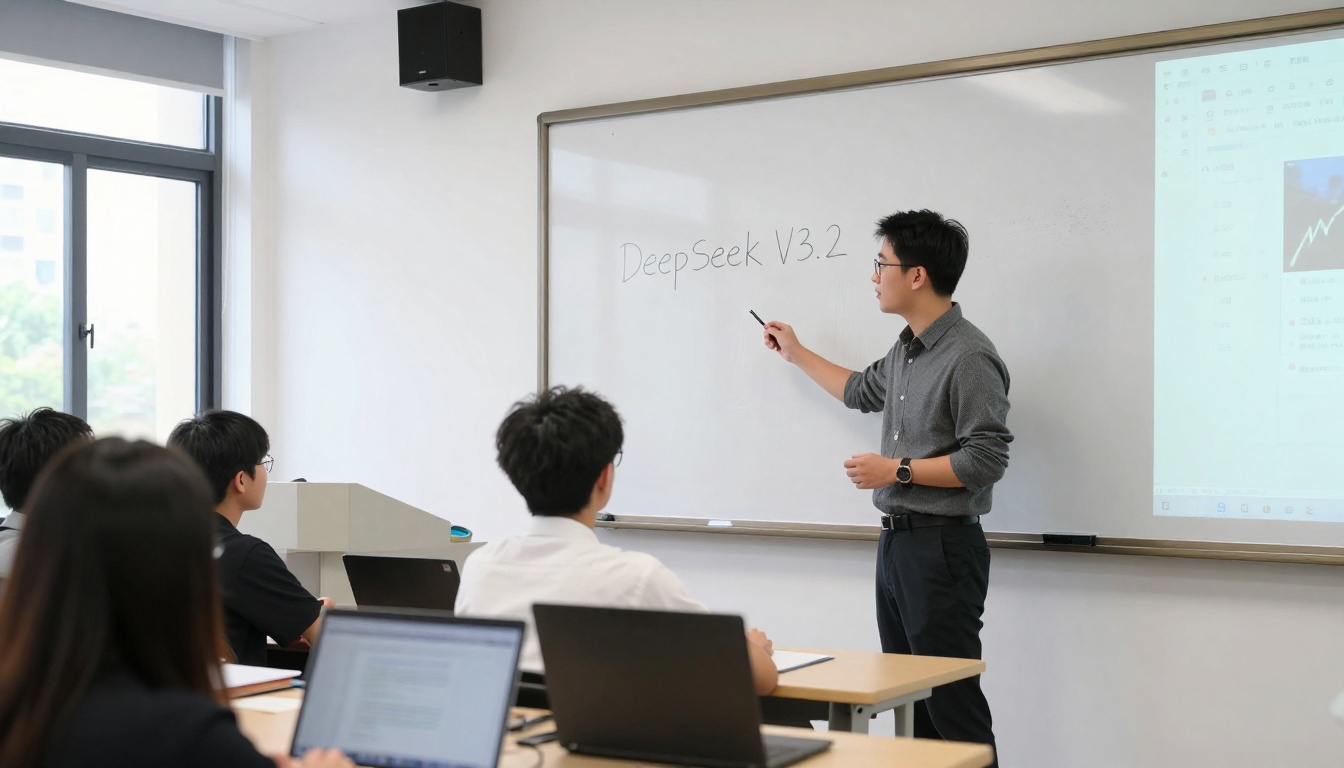
Teacher using DeepSeek V3.2 on smartboard in university classroom setting
Measuring Your Own Speed Improvements
To quantify the impact of switching to DeepSeek V3.2, track these metrics:
Before Implementation:
Average response time across different query types
Total wait time per typical work session
Number of queries abandoned due to slow responses
User satisfaction with response timing
After Implementation:
Same metrics measured with DeepSeek V3.2
Productivity changes in specific workflows
Quality assessment of outputs
Overall workflow efficiency improvements
Key Performance Indicators:
Time to First Useful Response: How long until you get something actionable
Iteration Cycle Time: How quickly you can refine and improve outputs
Task Completion Time: End-to-end time for common work items
Cognitive Load Reduction: Qualitative assessment of mental effort required
Technical Considerations for Maximum Speed
For developers implementing DeepSeek V3.2, these technical optimizations yield the best results:
Implement connection pooling for high-volume applications
Cache common responses when appropriate
Monitor latency and adjust routing dynamically
User Experience Design:
Show progress indicators during generation
Implement typing animations for conversational interfaces
Provide estimated time remaining for longer generations
Allow users to cancel and restart if responses are unsatisfactory
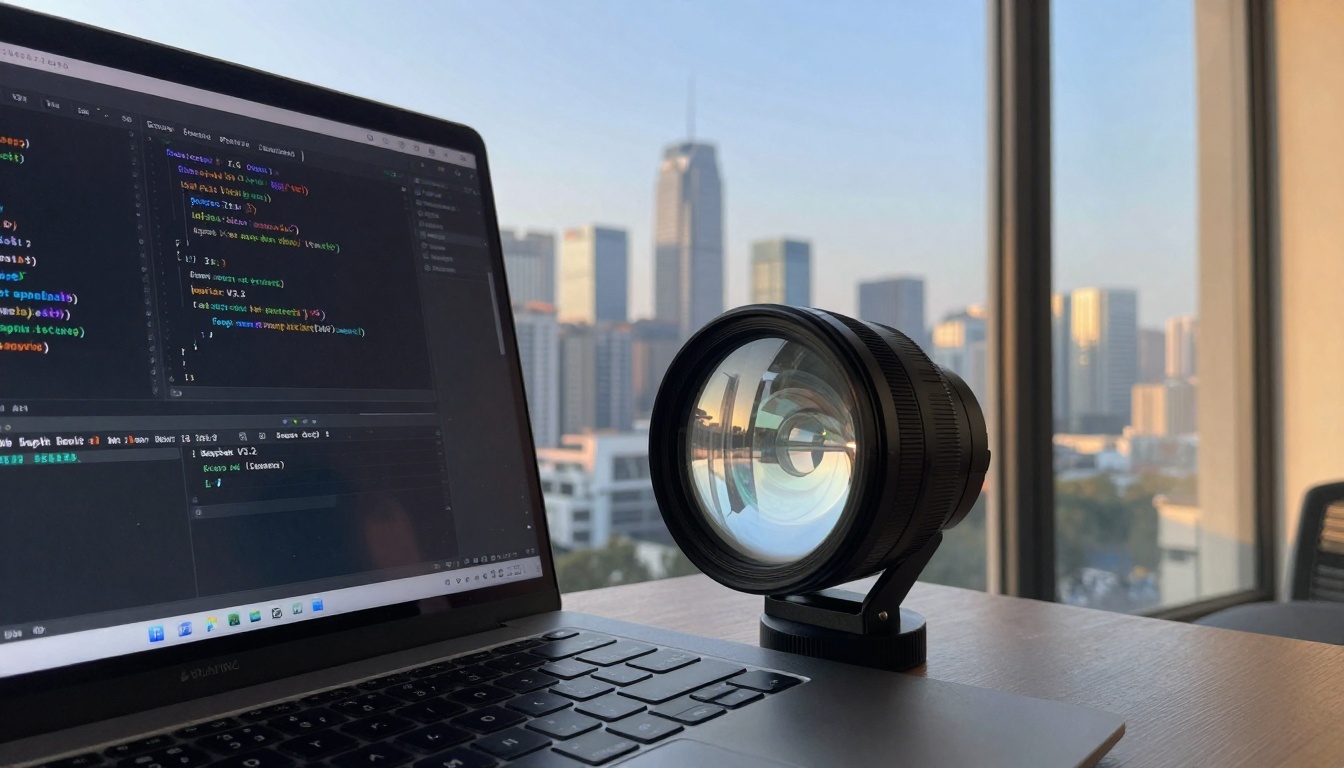
Split diopter shot showing both code editor with DeepSeek V3.2 and distant city skyline
The Human Element: How Speed Changes Interaction
Beyond metrics and benchmarks, the speed of DeepSeek V3.2 changes the fundamental nature of human-AI interaction:
From Transactional to Conversational
Slower models force transactional interactions: ask, wait, receive, process. Faster models enable true conversation: ask, receive immediately, ask follow-up, receive immediately. This transforms AI from a tool you use to a partner you work with.
Reduced Cognitive Switching Cost
Every time you wait for a response, your brain switches context. Faster responses mean you stay focused on the problem rather than the interface.
Increased Experimentation
When iterations are cheap (in time), you try more things. You explore edge cases. You test alternative approaches. This leads to better outcomes through broader exploration.
Better Learning Through Feedback
Rapid feedback loops accelerate skill development. You learn what works and what doesn't through immediate results rather than delayed analysis.
The Competitive Landscape Moving Forward
As DeepSeek V3.2 raises the bar for response speed, competitors face pressure to match or exceed these performance levels. The implications:
Speed becomes a primary differentiator rather than a secondary consideration
Users develop new expectations about what "fast enough" means
Workflows evolve to take advantage of faster capabilities
New applications emerge that were previously impractical due to latency constraints
For developers and organizations, this creates both opportunity and imperative. The opportunity to build better experiences. The imperative to keep pace with evolving standards.
Final Observations on Speed and Quality Balance
DeepSeek V3.2 demonstrates that speed and quality aren't mutually exclusive trade-offs in AI development. Through architectural innovation and optimization, the model delivers both. This challenges the conventional wisdom that better performance requires more computation time.
The practical impact extends beyond saved seconds. It changes how people work, how teams collaborate, how organizations compete. When AI responses arrive at the speed of thought rather than the speed of computation, the technology becomes more human, more integrated, more useful.
For those exploring AI capabilities on PicassoIA, DeepSeek V3.2 represents a compelling option that prioritizes the user's time without sacrificing output quality. The platform's implementation ensures reliable access with consistent performance, making it suitable for both experimentation and production deployment.
The conversation about AI often focuses on what models can do. DeepSeek V3.2 reminds us that how quickly they do it matters just as much. In a world where attention is scarce and time is precious, speed isn't just a feature—it's fundamentally reshaping what's possible with artificial intelligence.