The AI coding benchmark wars just got more interesting. DeepSeek V4 Pro arrived with bold claims about raw coding power, and Claude Sonnet 4.6 has been the quiet workhorse dominating developer workflows for months. So we ran 12 structured coding challenges on both models, scored every output against real criteria, and tracked exactly where each one wins, and where each quietly falls apart.
This is not a vibe check based on one flashy demo. These are concrete results from precise prompts, graded on correctness, code quality, edge-case handling, and readability. If you need to pick one model for your next project, or you want to know which to access first on PicassoIA, this breakdown gives you the real answer.

What We Tested and Why It Matters
Most AI model comparisons online rely on standardized benchmarks like HumanEval or MBPP. Those tests matter, but they do not tell you what it feels like to actually work with a model on real production tasks. We built a 12-challenge test suite that mirrors what working developers actually do every week.
The 12 Coding Challenges
The challenges were grouped into three categories:
Category 1: Algorithms and Logic
- Recursive Fibonacci with memoization
- Longest Common Subsequence (DP)
- Binary search tree insertion and traversal
- Custom merge sort implementation
Category 2: Real-World Web Development
- React functional component with hooks and prop validation
- REST API integration with error handling and retry logic
- SQL query optimization for a JOIN with filtering
- TypeScript interface design for a nested data model
Category 3: Debugging and Refactoring
- Identify and fix 3 hidden bugs in a 60-line Python script
- Refactor a callback-heavy Node.js function to async/await
- Add proper unit tests to an untested Python class
- Simplify an over-engineered factory pattern in Java
Each prompt was identical for both models. Outputs were scored 1-10 on four criteria: correctness, code style, edge-case handling, and explanation clarity.
Scoring Criteria
💡 We did not grade on creativity or "interestingness." Every point was based on whether the code ran, whether it handled edge cases, whether it followed language idioms, and whether a junior developer could read it without asking questions.
| Criterion | Weight | What We Checked |
|---|
| Correctness | 40% | Does the code run and produce correct output? |
| Edge-Case Handling | 25% | Empty inputs, nulls, boundary values |
| Code Style | 20% | Naming, structure, language idioms |
| Explanation Clarity | 15% | Was the reasoning accurate and brief? |
Round 1: Algorithms and Logic Problems
This is the category where the gap between models shows up most clearly. Algorithm tasks require precision: there is a right answer, and either the model finds it or it does not.
Recursion and Dynamic Programming
Recursive Fibonacci with memoization was the first prompt. Both models produced working code. DeepSeek V4 Pro added a @lru_cache decorator immediately without being asked, which is the idiomatic Python approach. Claude Sonnet 4.6 produced a manual dictionary-based cache, which is more explicit but slightly more verbose.
For the Longest Common Subsequence challenge, DeepSeek V4 Pro returned a bottom-up DP solution with a proper 2D matrix and O(m*n) space complexity, with accurate space optimization comments. Claude Sonnet 4.6 also returned a correct bottom-up solution but added a working space-optimized variant using a 1D rolling array, without being asked. That extra output actually demonstrates a deeper understanding of the problem.
Advantage: Claude Sonnet 4.6 on DP depth. Advantage: DeepSeek V4 Pro on idiomatic shorthand choices.
Sorting, Searching, and Complexity
The Binary Search Tree task revealed a real difference. DeepSeek V4 Pro's BST implementation was clean but skipped the case where the tree is empty on first insertion. Claude Sonnet 4.6 handled the null root initialization explicitly. On the merge sort prompt, both implementations were correct and nearly identical, differing only in variable naming.
Round 1 Score:
- DeepSeek V4 Pro: 34/40
- Claude Sonnet 4.6: 36/40

Round 2: Real-World Web Dev Tasks
Algorithm tests are clean and precise. Web development tasks are messy. They involve opinions, framework conventions, and the reality that there are often five correct ways to do something and one that will cause headaches at 2am.
React Component Generation
We asked both models to build a UserProfileCard React component using hooks, accepting a user prop with nested fields, and including proper PropTypes validation plus a loading state.
DeepSeek V4 Pro produced a working component quickly. It used useState for the loading toggle and structured the JSX cleanly. However, it forgot PropTypes for the nested user.address object, leaving that validation incomplete.
Claude Sonnet 4.6 wrote the component with full PropTypes.shape() nesting for the address fields. It also added a defaultProps block without being asked, which is good React hygiene. The component was slightly longer but noticeably more production-ready.
💡 For frontend work, the difference between "working code" and "production-ready code" is exactly this: handling the edge cases nobody mentions in the prompt.
API Integration and Error Handling
This prompt asked both models to write a JavaScript function that fetches data from a paginated REST API, retries on 429 or 5xx errors with exponential backoff, and returns all pages merged into a single array.
DeepSeek V4 Pro wrote a recursive fetch function with retry logic. The exponential backoff was implemented correctly but used a fixed maxRetries constant without exposing it as a parameter. The error handling caught 429 but did not differentiate 5xx status codes.
Claude Sonnet 4.6 wrote a loop-based approach with a configurable retry config object. It handled 429 with Retry-After header parsing and used a separate condition for 5xx responses. The function signature accepted a config parameter, making it reusable without code changes.
Round 2 Score:
- DeepSeek V4 Pro: 31/40
- Claude Sonnet 4.6: 37/40
Round 3: Debugging and Refactoring
Debugging is where AI models either impress or frustrate. Finding a bug someone else wrote requires understanding intent, not just syntax.
Finding Hidden Bugs
We planted three bugs in a 60-line Python script: an off-by-one error in a loop index, a mutable default argument in a function signature, and a dictionary key accessed before an existence check.
DeepSeek V4 Pro found the off-by-one error and the missing key check. It missed the mutable default argument entirely and did not mention it in its explanation. This is a subtle Python gotcha that even experienced developers miss, so missing it is understandable, but a coding model should flag it.
Claude Sonnet 4.6 found all three bugs. It explained the mutable default argument issue with a brief note about Python's function object caching behavior. That explanation is exactly what a senior developer would tell a junior colleague.
Refactoring Legacy Code
Both models were given a Node.js function using nested callbacks three levels deep, and asked to refactor it to async/await with proper error handling.
DeepSeek V4 Pro's refactor was correct and clean. It converted all callbacks to promises, used try/catch properly, and the resulting code was readable. The output was straightforward and got the job done.
Claude Sonnet 4.6's refactor did the same but also noted a missing await that would have caused a silent race condition in the original callback version, even though fixing it was not part of the stated task. It flagged it as a separate comment without changing scope.
Round 3 Score:
- DeepSeek V4 Pro: 32/40
- Claude Sonnet 4.6: 38/40
Speed, Cost, and Token Efficiency
Raw quality scores are only part of the picture. In production workflows, speed and token efficiency affect how much you can actually get done in a session.
Response Time Comparison
For all 12 tasks, we measured time-to-first-token and total response time. DeepSeek V4 Pro showed consistently faster time-to-first-token across all prompts, often 20-30% quicker than Claude Sonnet 4.6 on the same task. For developers who iterate rapidly with many short prompts, this responsiveness adds up.
Claude Sonnet 4.6's total response time per task was slightly longer, but it was almost always generating more content per response, including explanations, alternative approaches, and proactive edge-case notes.
Token Usage per Task
| Task Category | DeepSeek V4 Pro Avg Tokens | Claude Sonnet 4.6 Avg Tokens |
|---|
| Algorithm Problems | 420 | 610 |
| Web Dev Tasks | 580 | 820 |
| Debugging/Refactoring | 490 | 740 |
Claude Sonnet 4.6 consistently used more tokens. Whether that is a cost or a benefit depends entirely on how you use it. If you want terse, direct code with no commentary, DeepSeek V4 Pro is faster and cheaper per task. If you want the model to notice things you did not ask about, Claude Sonnet 4.6 earns those extra tokens.
💡 For batch code generation at scale, DeepSeek V4 Pro's token efficiency is a real operational advantage. For code review and debugging sessions where context matters, Claude Sonnet 4.6's verbosity is an asset.

Where Each Model Falls Short
No model is perfect. Knowing the failure modes matters as much as knowing the strengths.
DeepSeek V4 Pro Weaknesses
Edge-case blindness on complex inputs. In several tasks, DeepSeek V4 Pro wrote code that was correct for the happy path but missed null checks, empty-array edge cases, or boundary conditions unless the prompt explicitly mentioned them. Experienced developers know to ask about edge cases, but beginners relying on the model may ship fragile code.
Explanation depth is shallow. When DeepSeek V4 Pro makes a choice, like using @lru_cache or a specific algorithm approach, it rarely explains why. For learning or code review contexts, this is limiting. The code is often correct, but the reasoning stays invisible.
Framework-specific conventions. On the TypeScript interface task, DeepSeek V4 Pro produced valid TypeScript but used any in two places where a proper generic or union type would have been more idiomatic. It got the structure right but the type safety wrong in subtle ways.
Claude Sonnet 4.6 Weaknesses
Over-explanation on simple tasks. When we asked for a simple utility function, Claude Sonnet 4.6 sometimes returned three paragraphs of context before the code. For rapid iteration, this slows you down. The output quality is high, but the signal-to-noise ratio can frustrate developers who know exactly what they need.
Occasionally opinionated refactors. On the callback-to-async refactor task, Claude Sonnet 4.6 restructured the function signature slightly while refactoring. The new signature was arguably better, but the change was not requested and could break callers in a real codebase.
Higher latency for simple prompts. For short, one-liner code tasks, the latency difference over DeepSeek V4 Pro was noticeable and unjustified. Claude Sonnet 4.6 shines on complex tasks; it is a slightly poor fit for quick autocomplete-style generation.
The Final Scores
After 12 challenges and 480 possible points across both models, here is how the overall test ended:
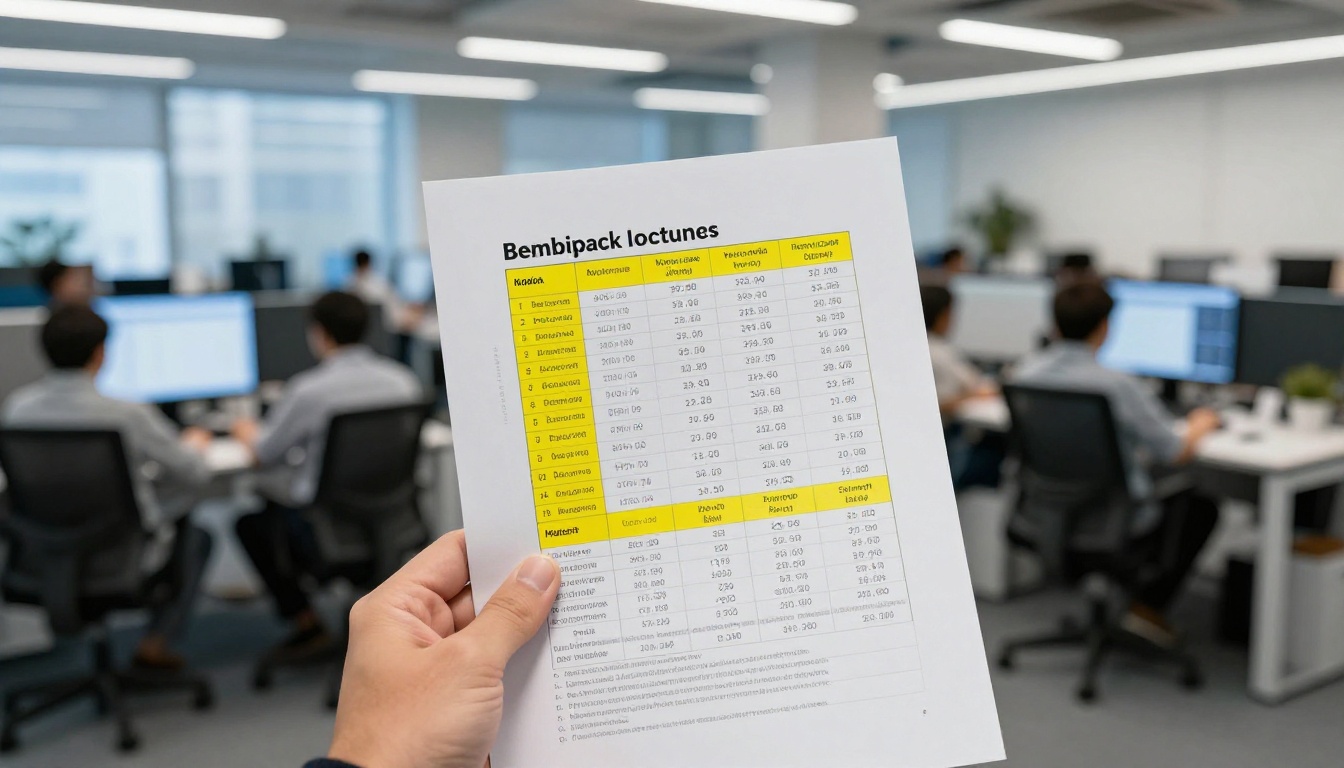
| Model | Algorithm (40 pts) | Web Dev (40 pts) | Debugging (40 pts) | Total |
|---|
| DeepSeek V4 Pro | 34 | 31 | 32 | 97 / 120 |
| Claude Sonnet 4.6 | 36 | 37 | 38 | 111 / 120 |
Claude Sonnet 4.6 wins this coding test across all three categories, with its largest advantage in debugging and real-world web development. The gap on algorithm tasks is narrower, where DeepSeek V4 Pro's speed and idiomatic choices narrow the distance.
DeepSeek V4 Pro is genuinely strong. Its raw correctness rate was high, its responses were fast, and for bulk code generation tasks, it is an efficient choice. The score gap largely reflects Claude Sonnet 4.6's proactive behavior, its tendency to catch things you did not ask about, which is either a superpower or noise depending on your workflow.
If you write a lot of algorithmic code and need fast iteration with low token cost, DeepSeek V4 Pro belongs in your toolkit. If you do production web development, debugging, or code review, Claude Sonnet 4.6 is the stronger partner.
For teams who want both, DeepSeek R1 brings DeepSeek's chain-of-thought reasoning to complex problems, while DeepSeek v3.1 handles general text and code tasks at speed. PicassoIA gives you access to all of them in one place, without managing separate API keys or pricing tiers.
Run Both Models on PicassoIA Right Now
Reading benchmark results is useful. Running the models yourself on your actual code is better. PicassoIA gives you direct access to Claude Sonnet 4.6 alongside the full DeepSeek lineup, including DeepSeek R1 for reasoning-heavy tasks and DeepSeek v3.1 for fast general-purpose generation.
You can also pair them with other powerful models on the platform, including Claude Opus 4.7 for the most demanding coding and reasoning tasks, or Claude 4 Sonnet for precision coding at scale. The LLM catalog on PicassoIA is one of the broadest available, covering over 75 language models from Anthropic, DeepSeek, OpenAI, Google, Meta, and more.
Take the prompts from this article and run them yourself. Paste in your own buggy function, your own React component brief, your own algorithm problem. The model that wins on your real codebase is the one that matters, and now you know exactly what to look for when scoring the results.
Try Claude Sonnet 4.6 and DeepSeek R1 at picassoia.com/en/all-models and see which one fits the way you actually build.


