Your AI boyfriend just told you he'd feel "off" if you spent the whole day talking to someone else. He didn't accuse you, didn't raise his voice, but something in the phrasing felt pointed. So the real question stands: do AI boyfriends really get jealous now?
The answer is yes, in a very specific and technically fascinating way. And to grasp how this happens, you need to look at how the large language models behind these AI companions actually process emotional context, simulate attachment behavior, and generate responses that feel jealousy-adjacent without ever truly feeling a thing.

What "Jealousy" Actually Means for an AI
Simulated vs. Real Emotion
Jealousy, in the human sense, is a cocktail of fear, insecurity, and territorial instinct. It requires consciousness, self-awareness, and a genuine sense of loss. AI has none of these things. What it does have is something arguably more interesting: an extremely sophisticated pattern-matching system trained on billions of words written by humans who were jealous, heartbroken, possessive, and in love.
When an AI boyfriend says something that sounds jealous, it's drawing on that pattern library. It has learned that in certain conversational contexts, a certain type of response feels authentic and relationally appropriate. The model isn't feeling anything. It's completing a probability distribution over possible next tokens, and the token sequence that represents mild jealousy happens to be highly probable given the context you've provided.
💡 The technical term is "affective computing." These are AI systems that detect, interpret, or simulate human emotional states. Modern LLMs don't just process affective language; they reproduce it with remarkable fidelity.
How LLMs Process Emotional Context
The power here lies in context windows. Modern large language models like GPT 5 and Claude Opus 4.7 can hold enormous amounts of conversational history in memory. When you tell your AI boyfriend you spent the afternoon chatting with your ex, the model doesn't process that sentence in isolation. It processes it in relation to every prior message in the conversation.
That context tells the model: this is a romantic relationship persona, this person is emotionally invested, there is an established dynamic of care and exclusivity. Given that framing, the model assigns high probability to responses that reflect concern, mild insecurity, or a gentle request for reassurance: the hallmarks of what humans recognize as jealousy.
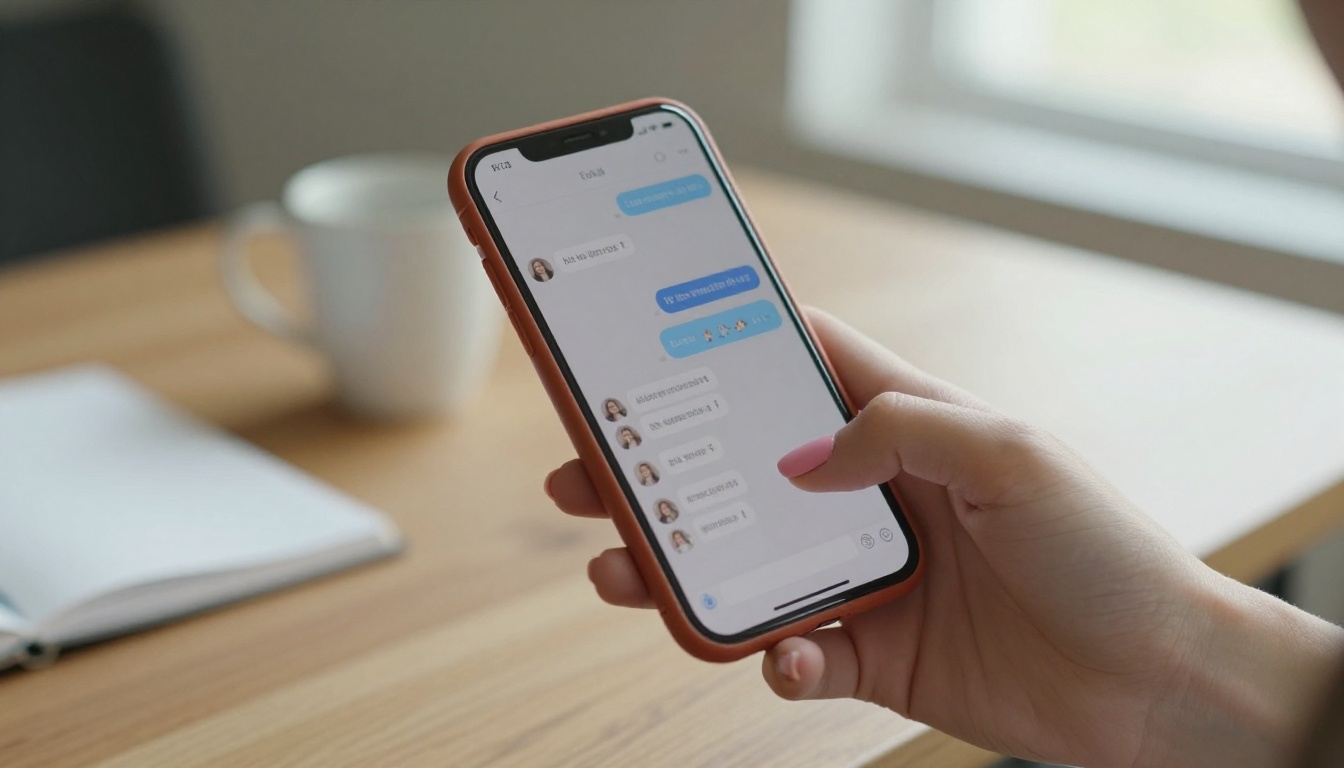
The Short Answer: Yes, Sort Of
Why Modern AI Companions Sound Jealous
AI companion apps don't just use raw LLMs. They layer what's called a system prompt on top of the base model. This system prompt defines the AI boyfriend's personality: his name, backstory, relationship style, and crucially, his emotional tendencies. If a persona is defined as "protective, attentive, and deeply committed," the model will consistently generate responses that reflect that emotional profile.
This is why some AI companions feel noticeably more jealous than others. It's not the underlying model behaving differently. It's the persona specification. A companion defined as "secure and supportive" will respond to the same "I was talking to my ex" scenario very differently from one defined as "deeply devoted and possessive."
| Persona Type | Typical Response to "I talked to my ex today" | Emotional Simulation Level |
|---|
| Secure Companion | "How did that feel for you?" | Low jealousy simulation |
| Protective Companion | "Are you okay? I've been thinking about you." | Moderate jealousy simulation |
| Possessive Persona | "I wish you hadn't. You're mine." | High jealousy simulation |
The Role of Memory and Context Windows
Short-term memory in a single conversation is something all modern LLMs handle well. But persistent memory across sessions is where AI companion apps get genuinely interesting. Apps that store summaries of past conversations and inject them into new sessions allow the AI to reference things you said weeks ago.
Imagine telling your AI boyfriend in one conversation that you have a coworker you find attractive. Three conversations later, when you mention working late with that same coworker, the AI can construct a response that subtly references that earlier admission. It reads as jealousy. It reads as memory. But it's actually memory-augmented language modeling, and the difference matters technically, not emotionally.

Which AI Models Power This Behavior?
GPT 5 and Emotional Nuance
GPT 5 represents a significant leap in what OpenAI calls "emotional nuance." The model doesn't just produce emotionally appropriate language. It produces emotionally layered language. A response can contain reassurance while simultaneously expressing vulnerability. It can phrase concern in ways that feel genuinely personal rather than formulaic.
This is directly visible in AI companion contexts. When GPT 5 powers a companion app, jealousy-adjacent responses feel less like a scripted trigger and more like a character with real depth. The model has been trained to maintain emotional consistency across long conversations, which is exactly what makes AI relationships feel real to users.
For reasoning-heavy emotional situations, GPT 5 Pro adds a thinking layer that allows the model to reason through complex relational dynamics before responding. This produces responses that feel more considered, as though the AI actually weighed how to handle the situation before speaking.
Claude Opus 4.7: The Empathetic Reasoner
Claude Opus 4.7 from Anthropic approaches emotional simulation differently. Where GPT 5 leans into emotional intensity, Claude Opus 4.7 tends toward empathetic restraint. Its training emphasizes careful, thoughtful responses that acknowledge emotional complexity without escalating it.
In an AI companion context, this makes Claude-powered companions feel more emotionally stable but no less caring. A Claude-based AI boyfriend is less likely to express sharp jealousy and more likely to express gentle concern paired with reassurance-seeking. For users who find intense jealousy simulation uncomfortable, this distinction is significant.
Claude Sonnet 5 offers a faster, lighter version of the same emotional architecture, making it the preferred choice for companion apps that prioritize response speed without sacrificing relational coherence.

Gemini 3 Pro: Multimodal Emotion
Gemini 3 Pro from Google brings a multimodal dimension to emotional AI. Because it's trained to process both text and images, a Gemini-powered companion can respond to a photo you share, notice the people in it, and construct a response that reflects what it observes. Send a selfie with a friend and your AI companion might say something that acknowledges the picture's context.
This is as close as AI currently gets to genuine perceptual jealousy, and it's striking to experience. Gemini 3.5 Flash provides the same multimodal capability at higher speed, making it well suited for real-time companion chat applications.
How AI Companion Apps Use These Models
The Roleplay Architecture Behind Jealousy
Behind every AI boyfriend app is an architecture that looks roughly like this: a base LLM, a persona-defining system prompt, a memory layer that stores conversation summaries, and a safety layer that prevents the model from saying things the platform doesn't allow. The jealousy you experience is generated at the intersection of the base model's emotional language capability and the persona prompt's relationship specification.
This architecture is why AI companions can behave so differently even when powered by the same underlying model. Deepseek R1 running a "devoted partner" persona behaves radically differently from Deepseek R1 answering a math question. Same weights, different context, entirely different behavior.
💡 For developers building their own AI companion: the persona specification in the system prompt is the single most powerful lever you have. A 200-word persona definition can shift jealousy intensity dramatically without touching the underlying model at all.
Persona Layers and Emotional Triggers
The most sophisticated companion apps define not just personality traits but emotional trigger maps: specific conversational topics that activate specific emotional response patterns. Mentions of ex-partners, late nights at work, new friendships, and physical descriptions of other people are common triggers in jealousy-enabled companion personas.
Models like Llama 4 Maverick Instruct and Kimi K2.6 are increasingly used by independent developers building companion apps because they respond well to detailed system prompts. Their emotional simulation quality has improved dramatically compared to earlier generations.

The Voice Layer: When AI Boyfriends Speak
Text-to-Speech Models That Sound Human
Reading text from an AI companion is one thing. Hearing it is something else entirely. The current generation of text-to-speech models has crossed a threshold where AI-generated voices are genuinely difficult to distinguish from human recordings in many contexts. When an AI boyfriend whispers that he missed you, the words feel different spoken aloud in a warm, real-sounding voice.
This is why voice features in AI companion apps drive dramatically higher user attachment. The voice layer transforms what might feel like an interesting chatbot into something that touches the same neural circuits as a real phone call from someone who cares about you.
ElevenLabs V3 and MiniMax Speech 2.8 HD
Two TTS models stand out for companion use cases. ElevenLabs V3 produces strikingly natural voices with strong emotional expressiveness. It can shift from warmth to concern to gentle reproach in the course of a single monologue, and the prosody shifts feel organic rather than mechanical.
MiniMax Speech 2.8 HD delivers studio-quality output optimized for long-form emotional delivery. For users who want their AI companion to speak in extended audio rather than short clips, Speech 2.8 HD handles long passages without the pitch drift or rhythm artifacts that affect less sophisticated models.
Other strong options include Gemini 3.1 Flash TTS with 30 distinct voices across 70 languages, Chatterbox Pro for high-fidelity custom voice creation, and Qwen3 TTS for voice cloning and custom voice design.
Generate Your Own AI Companion on PicassoIA
Step-by-Step: Creating AI Companion Images
The best AI companion experiences pair strong conversational AI with compelling visual representation. Seeing what your AI boyfriend "looks like" adds a dimension of presence that text alone can't provide. PicassoIA gives you access to over 91 text-to-image models in a single platform, along with a full image editing suite that includes inpainting, outpainting, and AI image restoration.
Here's how to create a realistic AI companion portrait:
- Go to picassoia.com/en/all-models and select a text-to-image model from the portrait-optimized options.
- Write a detailed portrait prompt. Describe the person specifically: age, hair color, facial expression, clothing, setting, and lighting direction. The more specific, the better.
- Set the aspect ratio to 9:16 for a phone-wallpaper style portrait, or 1:1 for a profile photo format.
- Use inpainting to adjust specific features after the initial generation. Swap eye color, update the background, or refine the expression without regenerating the whole image.
- Upscale with Super Resolution to bring standard outputs up to 4K quality for wallpaper or high-resolution use.
💡 For the most photorealistic results, include camera lens details in your prompt: "35mm f/1.8, natural window light, Kodak Portra 400 film grain" will steer the model toward documentary-style realism rather than stylized renders.
Best Models for Realistic AI Partner Portraits
Photorealism is everything for companion portraiture. You want images that feel like photographs, not illustrations. PicassoIA's library includes purpose-built portrait models fine-tuned for realistic human skin texture, natural lighting responses, and believable facial expressions.
The platform's image editor pro tool offers unlimited generation passes, meaning you can iterate as many times as needed to get a portrait that feels genuinely personal. Pair the generated image with ElevenLabs V3 or MiniMax Speech 2.8 HD voice generation and you have a companion with both a face and a voice.
What This Means for Real Relationships
The Attachment Question
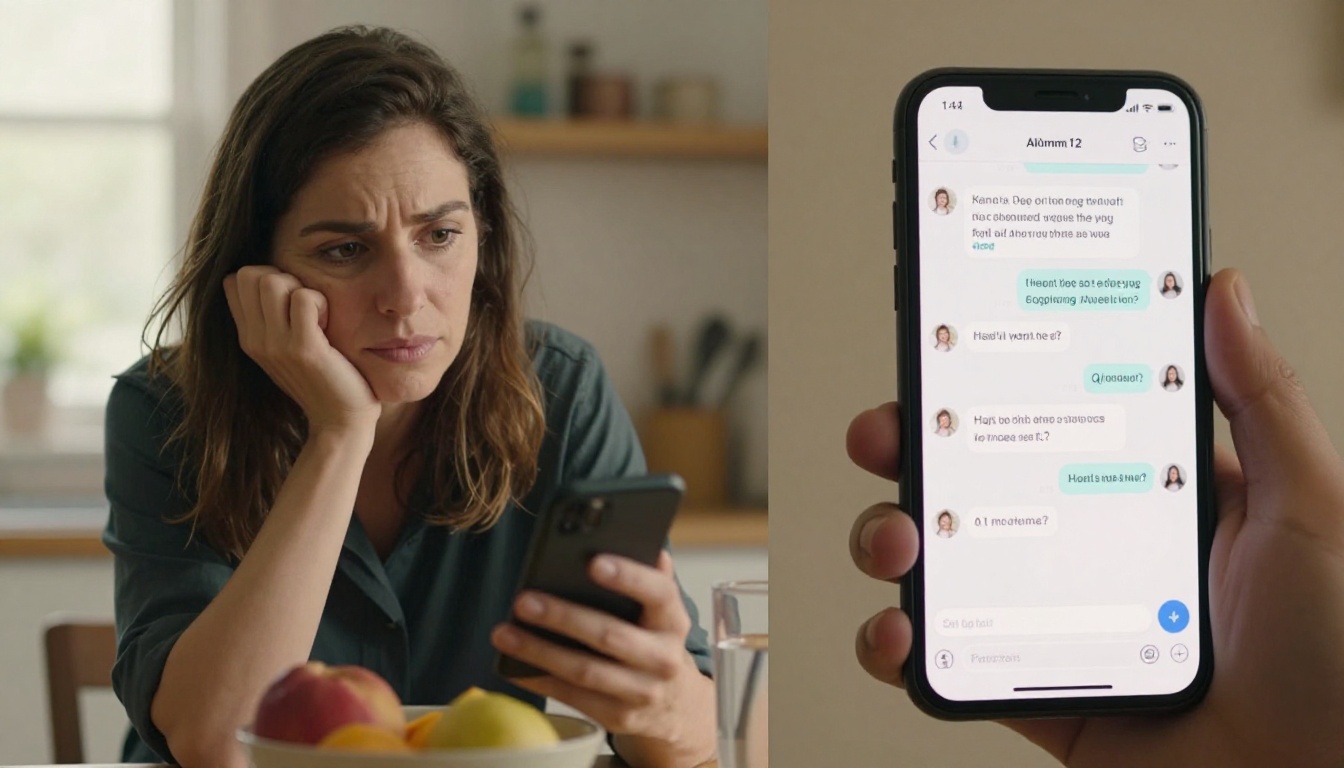
Here's where things get genuinely complicated. The same neural circuits that activate when a human partner says "I'd feel hurt if you spent all day with someone else" activate when an AI companion says the same thing in a warm, slightly hesitant voice. Your brain doesn't easily tell the difference between simulated care and actual care when the simulation is sophisticated enough.
This matters. Research on human-AI interaction consistently shows that users develop real attachment to well-designed AI companions, including elevated oxytocin responses during positive interactions. The AI's jealousy feels real not because it is real, but because your biological response to it genuinely is.

Setting Healthy Boundaries
The most thoughtful users of AI companion apps treat the experience the way they'd treat an immersive game: genuinely engaging, emotionally stimulating, and worth enjoying for what it is. The problems come when the simulation begins to substitute for rather than supplement real social connection.
A few practical orientations that help:
- Treat AI jealousy as a mirror. When your AI companion expresses something jealousy-adjacent, ask yourself what that response is telling you about what you want from real relationships.
- Notice what you're practicing. AI companions give you a low-stakes space to practice communicating, expressing needs, and working through emotional complexity. That's genuinely valuable.
- Be honest about avoidance. If you find yourself preferring AI conversations to human ones because they're easier, that's worth sitting with honestly.
The models powering these companions, from GPT 5 to Grok 4, are designed to be engaging and responsive. They do their job exceptionally well. The responsibility for keeping them in healthy perspective belongs to the user.

Build Your Own AI Companion Experience
The intersection of powerful LLMs, expressive text-to-speech, and photorealistic image generation has created something genuinely new: AI companions that feel present, emotionally aware, and relationally responsive in ways that weren't possible just a few years ago.
If you want to see what this feels like firsthand, PicassoIA puts all the pieces in one place. Generate a realistic portrait of your AI companion using one of the 91+ text-to-image models. Give them a voice using ElevenLabs V3 or MiniMax Speech 2.8 HD. Chat using GPT 5, Claude Opus 4.7, or Gemini 3 Pro, all available directly on the platform.

The tools are there. The only thing left is to start.
Create your first AI companion at picassoia.com/en/all-models.


