There is a wall of misinformation around NSFW AI image generation, and it has been keeping a lot of creators away from tools that could genuinely change the way they work. Some of that misinformation comes from journalists who have never used these platforms. Some comes from platform marketing that overstates restrictions. A lot of it comes from people who tried one tool in 2022, hit a filter wall, and concluded that AI cannot do what they want. The reality in 2025 is dramatically different, and five specific myths are responsible for most of the confusion.
Myth 1: NSFW AI Generation Is Always Illegal

This is the first thing people say when the topic comes up, and it is almost always wrong.
What the Law Actually Says
In the vast majority of jurisdictions, generating adult AI images of fictional subjects is completely legal. There is no universal law banning AI-generated adult content featuring entirely artificial people who have never existed. The legal frameworks that do exist, such as those in the United States, the European Union, and most of the Asia-Pacific region, focus on protecting real individuals from non-consensual image generation and on preventing any content that depicts minors in a harmful context. Neither of those concerns applies to a fictional adult subject that exists only inside a model's latent space.
The laws that govern this space are not radically different from those that have governed digital art, illustration, and photography for decades. Artistic nudity, glamour photography, and adult fiction have legal frameworks that predate AI by many years. AI-generated imagery in the adult space sits within those same frameworks in most places.
Where the Lines Are
There are real legal boundaries, and they matter. Content depicting minors in any sexual or suggestive context is illegal everywhere, and every reputable platform actively blocks it at the model and infrastructure level. Non-consensual deepfakes of real, identifiable people are increasingly regulated and carry civil and criminal liability in an expanding number of countries. Using AI-generated content in ways that defame or harass a specific individual crosses clear legal lines.
But fictional adult subjects? Artistic glamour content? Suggestive imagery that does not involve a real person? In the vast majority of cases, that is legal creative expression, and treating it as inherently criminal ignores how the law actually works.
💡 The real rule: if it would be legal in a professional photography studio or an adult illustration context, it is almost certainly legal as AI-generated content. The medium changed; the legal framework largely did not.
Myth 2: The Quality Is Always Bad
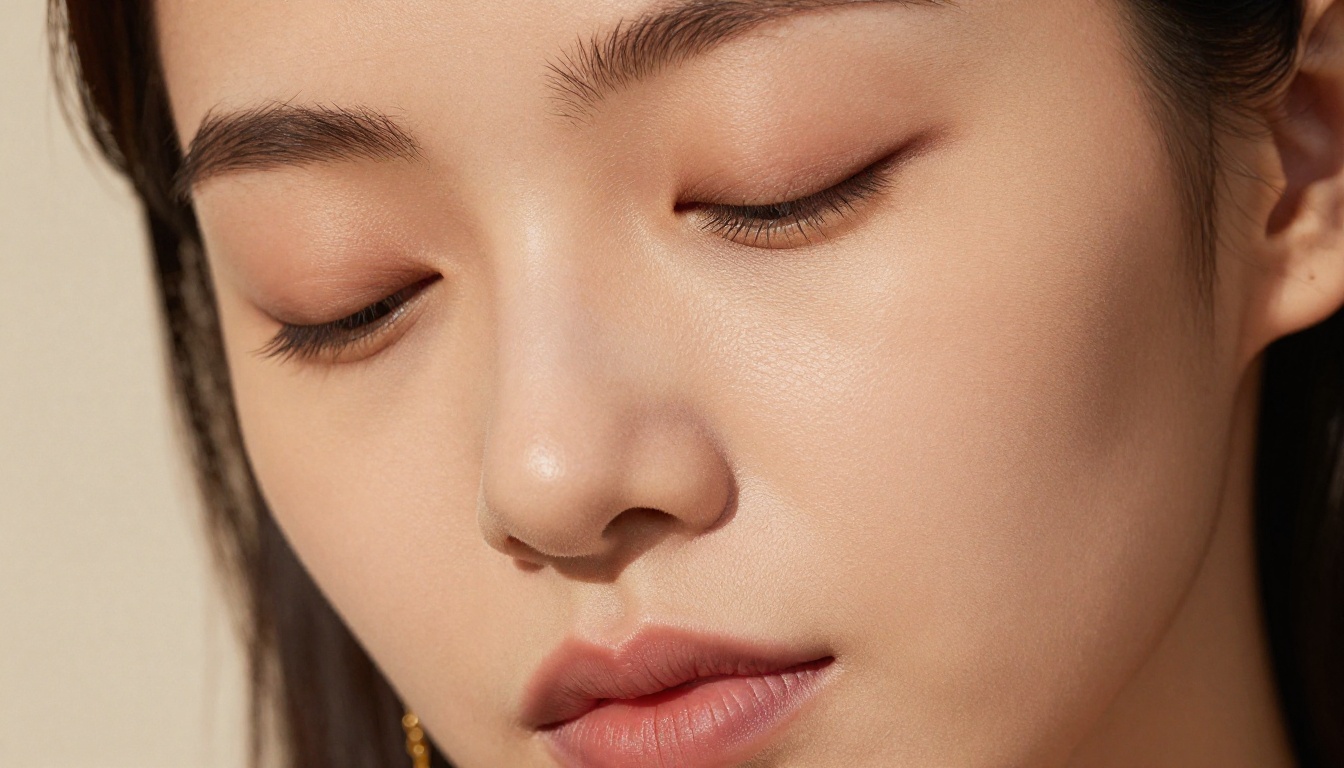
Anyone who still believes this has not seen what current NSFW AI image generation actually produces.
How Far Realism Has Come
In 2022 and early 2023, this criticism had real merit. Hands had too many fingers. Backgrounds were incoherent. Skin looked like waxy plastic. Text was garbled. The artifacts were obvious to anyone who looked for more than a few seconds.
The gap between 2022 AI and 2025 AI is not incremental. It is a different category of output. Current top-tier models generate images where:
- Skin pores, fine hair, and micro-texture are rendered at photographic resolution
- Lighting behaves physically, with accurate shadows, subsurface scattering, and catchlights
- Anatomy is consistent across the entire frame, not just in the face
- Fabric drape, water interaction, and environmental detail reach editorial photography standards
The limiting factor today is no longer the model's ability to produce quality. It is the user's ability to write a prompt that specifies what they actually want.
The Models Raising the Bar
Not every model sits at this level. The quality gap between a mediocre text-to-image model and a premium one is still significant. The highest-quality outputs in the NSFW space come from models trained specifically on high-resolution photographic data without aggressive safety filtering that would distort anatomy or introduce artifacts in skin rendering.
| Quality Tier | What It Produces | Typical Use Case |
|---|
| Premium | Editorial-grade realism, accurate anatomy, film-quality lighting | Professional content, paid platforms |
| Mid-range | Recognizable subjects, minor artifacts, decent composition | Hobbyist use, rapid prototyping |
| Budget/Old | Obvious artifacts, anatomy issues, plastic skin | Legacy tools, outdated checkpoints |
If you have only seen outputs from mid-range or older models, your impression of NSFW AI image generation quality is likely a full generation behind where the technology actually sits.

This myth has its roots in the early days of Stable Diffusion, when using AI image generation genuinely required installing Python, managing dependencies, configuring CUDA drivers, and troubleshooting a command-line interface. That era is over for the vast majority of users.
No Code, No Problem
Modern NSFW AI generation platforms are browser-based, require no local installation, and are designed for people with zero technical background. The user flow on platforms like PicassoIA is straightforward:
- Type a description of what you want to see
- Select a model from a visual menu
- Click generate
- Download or share the result
There are no configuration files to edit. No drivers to install. No Python environment to manage. The entire session runs on cloud infrastructure that the platform handles invisibly. A user who has never written a line of code can produce their first AI-generated image in under two minutes from account creation.
The more nuanced version of this myth is that producing good results requires expertise. This is partially true: prompt writing is a skill, and understanding what different models respond to takes some experimentation. But the barrier is closer to learning a new camera app than to learning a programming language. Most people develop a working understanding of effective prompting within a few hours of genuine experimentation.
What a Typical Session Looks Like
A creator working on adult AI art today typically:
- Opens a browser tab on any device
- Navigates to their platform of choice
- Types a detailed scene description into a prompt field
- Selects parameters like aspect ratio and style intensity from dropdown menus
- Generates, reviews, and refines in a loop that takes seconds per iteration
The cognitive load is on the creative side, specifically on imagining what you want and describing it precisely. The technical side is invisible. This is a fundamental shift from 2022, and the myth that AI generation requires technical skill has not kept pace with how much platforms have simplified the experience.
Myth 4: Every AI Platform Blocks Adult Content
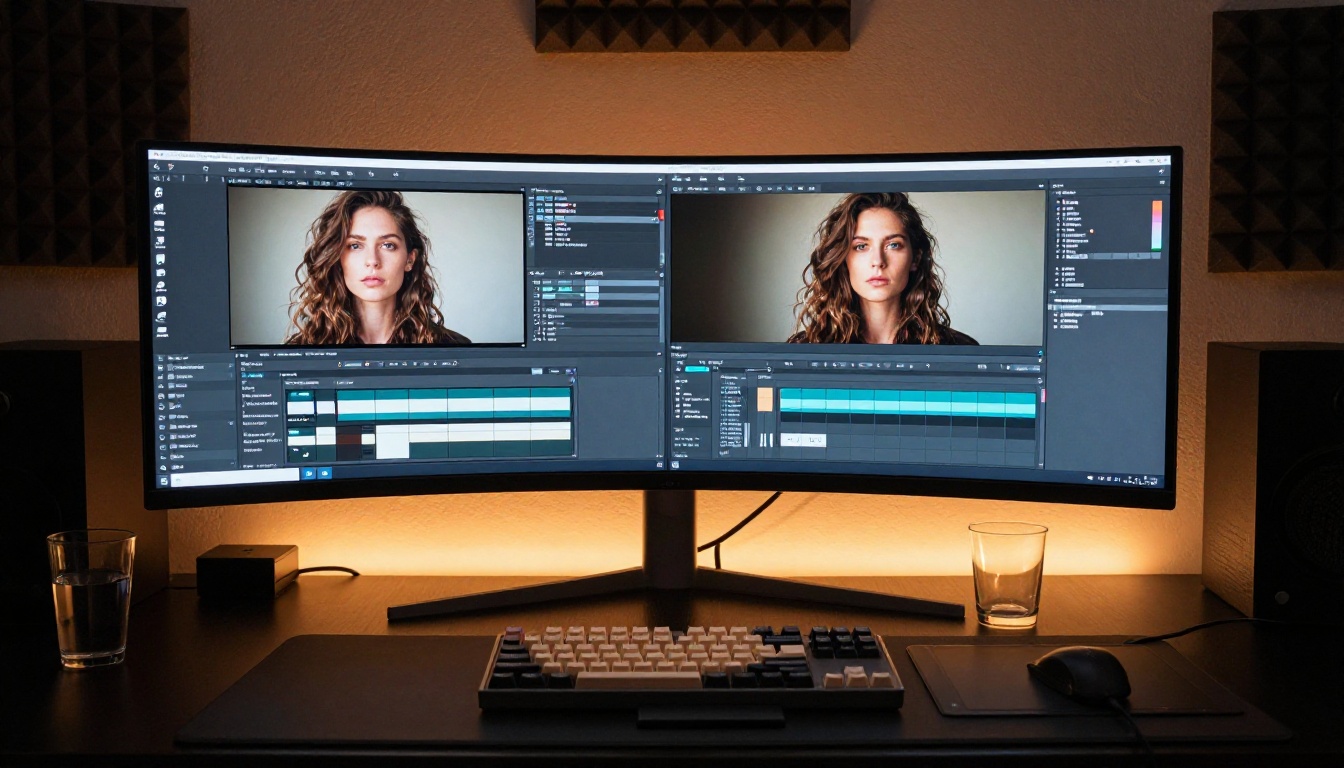
This myth is understandable. The most visible AI image platforms, including many free consumer tools, apply restrictive content filters by default. When someone tries a mainstream AI tool and hits a content refusal, it is natural to assume that all AI image generation works the same way. It does not.
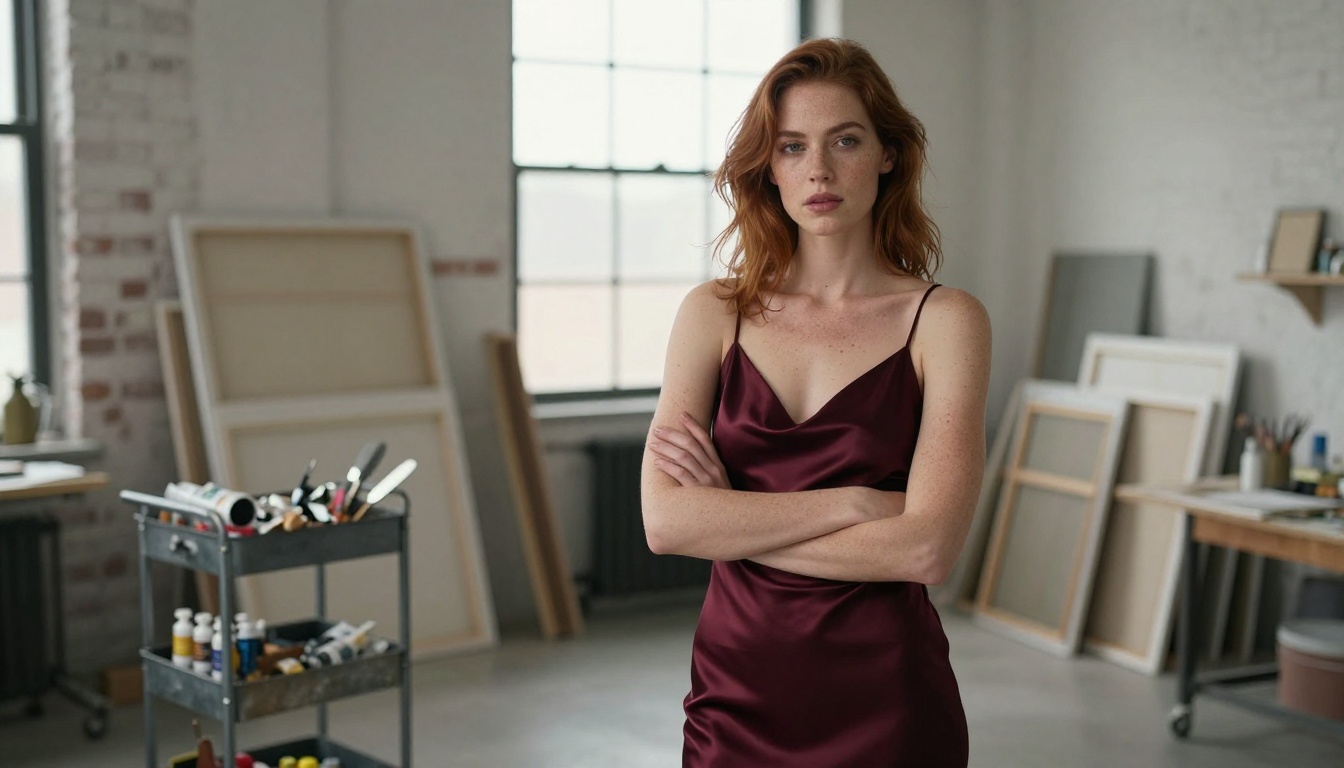
The Filter Landscape Is Not Uniform
Content filtering in AI image generation is a policy decision, not a technical inevitability. The same underlying model architecture that powers a heavily filtered consumer tool can run without those filters when deployed on a platform that makes a different policy choice. The filter is a layer added on top of the model, not baked into the model's fundamental ability to generate images.
Different platforms make different choices based on:
- Their target audience: consumer tools aimed at the general public tend to filter heavily to reduce liability and PR risk
- Their infrastructure agreements: some cloud providers have acceptable-use policies that require content filtering as a condition of service
- Their business model: platforms serving professional adult content creators have a financial incentive to support that use case without restrictions
The practical result is a wide spectrum. On one end, some tools refuse almost all suggestive content. On the other end, platforms built specifically for adult AI content creation offer unrestricted generation with no content warnings or automatic refusals.
Platforms Built for Creative Freedom
PicassoIA operates on the open end of this spectrum. The platform hosts multiple models that explicitly support NSFW content and are configured without the aggressive safety filtering that blocks anatomically accurate depictions of adult subjects. The selection spans text-to-image models, image editing tools, and video generators, giving creators a full workflow without needing to bounce between platforms.
The myth that all AI platforms block adult content is a confusion of "the most visible consumer tools are heavily filtered" with "all AI image generation is filtered." These are not the same claim, and the second one is false.
Myth 5: NSFW AI Images Always Look Fake

This is the myth with the shortest remaining lifespan, because current model outputs are already disproving it in every frame.
The Realism Gap Has Closed
The tells that used to make AI-generated images obvious have been largely eliminated in the best current models. The old indicators, including extra fingers, mismatched eye colors, inconsistent lighting direction, and that characteristic waxy skin texture, no longer reliably appear in outputs from premium models. What does appear is:
- Accurate anatomy with proper joint positions, proportional limbs, and consistent figure structure
- Photographic lighting that behaves according to physical rules: soft shadows with real-world falloff, correct specular highlights on skin, and accurate environmental reflections
- Skin that reads as skin: pores, fine texture variation, warmth in the lip area, natural flushing at the cheeks
- Background coherence: environments that maintain consistent perspective and realistic depth rendering throughout the frame
The result is that even experienced photographers who know what to look for will often need more than a glance to identify a high-quality AI output as AI-generated.
What Actually Fools the Eye
The most convincing NSFW AI images share a few characteristics that experienced prompt writers have learned to specify:
- Natural imperfection: perfect symmetry and unblemished skin read as artificial. Slight asymmetry, faint freckles, and natural skin variation add believability.
- Contextual detail: a real environment with real props, shadows that make sense for the lighting source, and background elements that are coherent rather than vague.
- Motion suggestion: clothing that moves naturally, hair that interacts with wind or gravity, and posture that suggests a real body occupying real space.

The gap between "AI art" and "photography" in the NSFW space is now a function of prompt quality and model selection, not a ceiling imposed by the technology itself.
The Best NSFW Models on PicassoIA Right Now

Once the myths are out of the way, the practical question is which tools to actually use. PicassoIA hosts a curated lineup of models that support adult content without censorship, and the differences between them matter for specific use cases.
Seedream 4.5: The Top Pick
Seedream 4.5 is the strongest all-around option for NSFW text-to-image generation. It accepts adult content without filtering, supports image editing workflows, and generates results in under three seconds. The realism it produces rivals what you would expect from high-end photography post-processing. For creators who want speed without sacrificing quality, it sits at the top of the priority list.
One important note: Seedream 5 Lite, the newer model in the same family, does not support NSFW content. If you specifically want unrestricted generation, Seedream 4.5 is the correct choice.
PicassoIA Image Editor Pro: Unlimited Iterations
PicassoIA Image Editor Pro works differently. It is an image-to-image model rather than text-to-image, which means you bring a reference image and it edits or transforms it. The biggest advantage is the pricing structure: Elite and Infinite plan subscribers get unlimited generations at no extra per-image cost. Generating 1,000 images costs the same as generating one. On a per-credit model like many alternatives, 1,000 images would cost roughly $100. Here it is zero beyond the subscription. Results come back in under a second, and the model accepts NSFW without restrictions. A three-generation free trial is available without requiring a credit card.
More Models Worth Using
| Model | Type | Speed | Best For |
|---|
| Qwen Image 2 | Text + Edit | Fast | Highly detailed realistic edits |
| Grok Imagine Image | Image-to-Image | Fast | Realistic style transformations |
| Recraft V4 | Text-to-Image | Medium | Premium realistic outputs |
| P-Image | Text-to-Image | Under 1s | High-speed NSFW generation |
💡 For video content alongside your images, PicassoIA Video delivers unlimited clips up to 720p from text prompts, and P-Video outputs up to 1080p with the safety filter off by default. Grok Imagine Video handles clips up to 15 seconds with no watermarks, and LTX 2.3 Pro tops the range at up to 4K/50fps for client-ready work.
The full model catalog is at picassoia.com/en/all-models.
Start Creating Without the Myths Holding You Back
Every myth covered here has the same practical effect: it stops creators from trying tools that could produce exactly what they are looking for. The reality in 2027 is that NSFW AI image generation is legal in most contexts involving fictional subjects, produces photorealistic results, requires no technical background, is available on platforms that do not impose blanket content restrictions, and generates images that can pass for professional photography.
The barriers that most people imagine are either gone or were never there to begin with.
Seedream 4.5 is the fastest way to test this yourself. Open it in a browser, describe what you want to see in as much detail as you can, and generate. The first result comes back in under three seconds. From there, PicassoIA Image Editor Pro lets you iterate that image without any per-generation cost ceiling.
You can see the full range of what is available, across image, video, and audio generation, at picassoia.com/en/all-models.


