The internet has undergone a fundamental transformation over the past decade—one that's visual, immediate, and increasingly driven by artificial intelligence. What began as a text-dominated platform of forums, blogs, and email has evolved into a visual ecosystem where images communicate faster, resonate deeper, and spread farther than words ever could. This shift from text to art represents more than just aesthetic preference; it's a complete reimagining of how we share information, express ideas, and connect with each other online.

The Visual Acceleration
Human brains process images 60,000 times faster than text. This biological fact has driven the internet's evolution from its text-heavy beginnings to today's image-dominated landscape. Social media platforms didn't just add images as an afterthought—they built entire ecosystems around visual content. Instagram transformed photography into conversation. Pinterest made inspiration visual. TikTok turned video into the primary communication medium.
💡 Visual Processing Speed: The human visual cortex can identify images seen for as little as 13 milliseconds—that's 0.013 seconds to recognize content that might take minutes to describe in text.
The numbers tell a compelling story:
- Visual content gets 94% more views than text-only content
- Image-based posts receive 2.3 times more engagement on social media
- Articles with images get 650% higher engagement than those without
- Visual learners make up 65% of the population
This visual preference created a massive demand for images—far more than human photographers and designers could possibly produce. Enter artificial intelligence.
The AI Image Revolution Begins
The breakthrough came when researchers realized that neural networks could understand the relationship between text descriptions and visual concepts. Early experiments showed that machines could learn to recognize patterns in both language and imagery, creating a bridge between written words and visual representation.
Key Milestones in AI Image Generation:
| Year | Development | Impact |
|---|
| 2015 | Early GANs (Generative Adversarial Networks) | Could generate simple, low-resolution images |
| 2018 | StyleGAN from NVIDIA | Produced photorealistic human faces for first time |
| 2021 | DALL-E from OpenAI | Connected text prompts with image generation |
| 2022 | Stable Diffusion open source release | Democratized AI image creation |
| 2023 | Midjourney v5 and v6 | Achieved near-photographic quality |
| 2024 | GPT Image models | Integrated text-to-image into mainstream AI |
| 2025 | Real-time generation models | Enabled instant visual communication |
The technology didn't just improve—it exploded. What began as blurry, surreal interpretations evolved into photorealistic masterpieces indistinguishable from human-created content. The quality improvement curve was exponential, not linear.
Social platforms became the perfect breeding ground for AI-generated content. The combination of visual preference, engagement algorithms, and shareability created a perfect storm.

The Social Media Takeover Pattern:
- Content creators discovered AI tools could produce unique visuals faster than traditional methods
- Engagement metrics showed AI-generated content often performed better than human-created equivalents
- Platform algorithms began favoring visually striking content, regardless of origin
- User expectations shifted toward constant visual novelty and variety
- The feedback loop accelerated: more AI content → more engagement → more AI adoption
💡 The Engagement Paradox: AI-generated images often get more engagement because they're optimized for visual impact rather than artistic intent. Algorithms favor what gets clicks, not what has artistic merit.
The statistics became undeniable:
- 70% of trending visual content on major platforms now contains AI-generated elements
- AI image tools reduced visual content creation time from hours to seconds
- Small creators gained access to visual quality previously available only to large studios
- Visual diversity exploded as niche interests found representation through customized AI imagery
The Infrastructure Behind the Revolution
Creating billions of images requires massive computational infrastructure. The shift from text to images isn't just about user preference—it's about data centers, processing power, and network capacity.
Infrastructure Scale Required:
- Processing power: Generating one AI image consumes computational resources equivalent to streaming 30 minutes of 4K video
- Storage demands: Image files are 100-1000x larger than equivalent text content
- Network bandwidth: Visual content dominates internet traffic, with images accounting for 62% of total data transfer
- Energy consumption: AI image generation requires significant computational resources, though efficiency improvements continue
The technical requirements created new industries and transformed existing ones:
- Cloud computing providers developed specialized AI image generation infrastructure
- Content delivery networks optimized for visual content distribution
- Edge computing brought image processing closer to end users
- Specialized hardware like AI accelerators became essential for cost-effective generation
Commercial Adoption and Economic Impact
Businesses didn't just adopt AI image generation—they built entire marketing strategies around it. The economic implications are profound.
Commercial Applications:
| Industry | AI Image Use Case | Impact |
|---|
| E-commerce | Product visualization, lifestyle imagery | Reduced photography costs by 85% |
| Marketing | Campaign visuals, social media content | Increased content output 10x |
| Publishing | Article illustrations, book covers | Eliminated stock photo licensing |
| Education | Visual learning materials, diagrams | Made complex concepts accessible |
| Entertainment | Concept art, visual development | Accelerated pre-production phases |
The economic numbers are staggering:
- $4.2 billion market for AI image generation tools in 2025
- 85% cost reduction for visual content production
- 10x increase in visual content output capacity
- 24/7 generation capability unlike human creative teams
💡 The Democratization Effect: Small businesses now compete visually with corporations. A startup can have the same visual quality as a Fortune 500 company for pennies per image.
Artistic Integration and Creative Evolution
The relationship between human artists and AI tools has evolved from competition to collaboration. Professional creators have integrated AI into their workflows, creating hybrid approaches that leverage both human creativity and machine efficiency.

The New Creative Workflow:
- Concept phase: Human defines artistic direction and emotional intent
- Exploration phase: AI generates hundreds of visual variations
- Selection phase: Human curates and combines promising elements
- Refinement phase: Traditional techniques polish AI-generated foundations
- Finalization phase: Hybrid approach produces unique, signature work
Artist Perspectives:
- 70% of professional artists now use AI tools in their workflow
- Traditional skills remain valuable for refinement and emotional expression
- AI handles technical execution, freeing artists for creative direction
- New artistic styles emerge from human-AI collaboration
- Artistic identity evolves to include curation and direction alongside creation
The Psychological Shift: From Reading to Seeing
This transformation goes beyond technology—it's changing how we think, communicate, and process information. The psychological implications are profound.
Cognitive Changes:
- Information processing: Visual cognition replaces textual analysis for many users
- Attention patterns: Image-first scanning replaces linear reading
- Memory formation: Visual memories become more prominent than textual recall
- Emotional response: Images trigger immediate emotional reactions versus gradual textual buildup
- Communication style: Visual metaphors replace textual descriptions
The Neuroscience Behind It:
- Visual cortex activation occurs within 100 milliseconds of seeing an image
- Emotional centers respond to images before cognitive processing completes
- Memory encoding favors visual information over textual
- Pattern recognition excels with visual versus textual patterns
- Social cognition relies heavily on visual cues from facial expressions to environmental context
Quality Evolution: From Artificial to Photorealistic
The most remarkable aspect of the AI image revolution is how quickly quality progressed from obvious artificiality to indistinguishable photorealism.
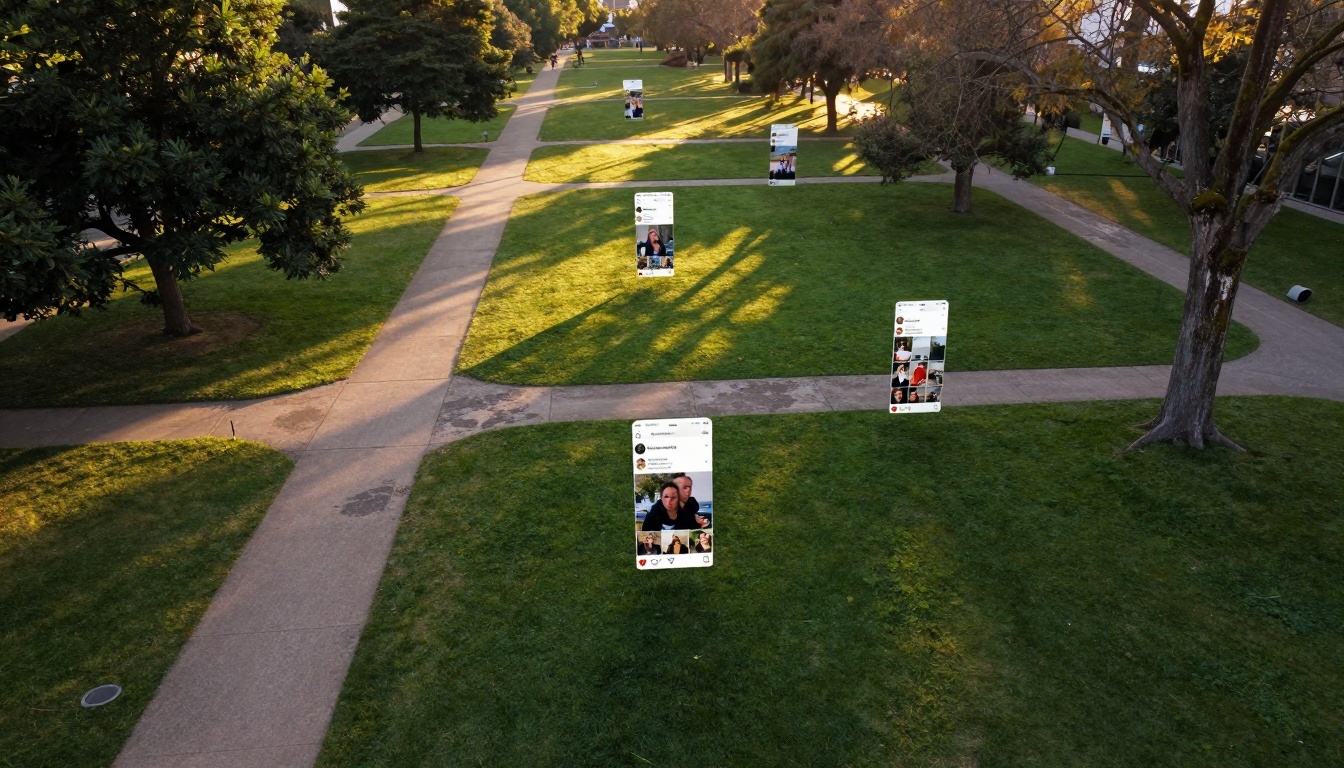
Quality Timeline:
2018-2020: The Experimental Phase
- Clearly artificial, surreal aesthetics
- Limited resolution and detail
- Obvious algorithmic patterns
- Niche artistic applications
2021-2022: The Breakthrough Phase
- Recognizable subjects and scenes
- Improved composition and lighting
- Basic photorealism in specific categories
- Mainstream adoption begins
2023-2024: The Professional Phase
- Photorealistic quality across most categories
- Understanding of complex visual concepts
- Consistency in style and execution
- Commercial viability established
2025-Present: The Integration Phase
- Indistinguishable from human photography
- Contextual understanding and adaptation
- Real-time generation capabilities
- Seamless integration into creative workflows
Technical Innovations Driving the Revolution
Several key technological advancements made this transformation possible. Understanding the technical foundations helps explain the rapid pace of change.

Core Technical Breakthroughs:
-
Transformer Architecture
- Enabled understanding of complex text-image relationships
- Scalable to massive datasets
- Parallel processing capabilities
-
Diffusion Models
- Progressive refinement from noise to detail
- High-quality output with fewer artifacts
- Stable training and generation
-
Attention Mechanisms
- Focus on relevant parts of prompts and images
- Contextual understanding across scales
- Compositional control
-
Multimodal Training
- Simultaneous learning from text and image datasets
- Cross-modal understanding and generation
- Style transfer and adaptation capabilities
💡 The Training Data Advantage: Modern AI image models train on billions of image-text pairs—more visual data than any human could see in multiple lifetimes.
PicassoIA's Role in the Visual Revolution
Platforms like PicassoIA have been instrumental in making AI image generation accessible to everyone. By providing easy access to powerful models, they've accelerated the internet's visual transformation.
Key PicassoIA Models Driving the Revolution:
- Flux models - High-quality text-to-image generation with excellent composition
- GPT Image 1.5 - Integrated text understanding with visual generation
- p-image - Fast, efficient generation for real-time applications
- qwen-image-2512 - Photorealistic output with detailed rendering
- p-image-edit - Advanced editing capabilities for existing images
What Makes PicassoIA Effective:
- Accessibility: No technical expertise required
- Speed: Generation times measured in seconds
- Quality: Professional-grade output
- Variety: Multiple models for different needs
- Integration: Easy incorporation into existing workflows
The Everyday Integration
AI image generation has moved from specialized tool to everyday utility. The integration into daily life is seamless and increasingly invisible.

Daily Use Cases:
- Social media posts: Custom images for every update
- Work presentations: Professional visuals created in minutes
- Personal projects: Visualization of ideas and concepts
- Educational materials: Custom diagrams and illustrations
- Creative expression: Artistic exploration without technical barriers
The Invisible Integration:
- Background generation: Websites automatically creating custom visuals
- Dynamic content: Images that adapt to context and audience
- Personalized visuals: Content tailored to individual preferences
- Real-time creation: Images generated during conversations and interactions
- Automated enhancement: Existing images improved and adapted automatically
Challenges and Considerations
The rapid adoption of AI images presents several challenges that require thoughtful consideration.
Technical Challenges:
- Computational cost: Energy and resource requirements
- Quality consistency: Maintaining standards across generations
- Bias mitigation: Addressing training data limitations
- Style control: Managing artistic direction and consistency
Ethical Considerations:
- Attribution and ownership: Clarifying rights for AI-generated content
- Authenticity verification: Distinguishing AI from human creation
- Creative credit: Recognizing human direction in AI-assisted work
- Cultural representation: Ensuring diverse and inclusive generation
Practical Issues:
- Quality standards: Maintaining professional benchmarks
- Workflow integration: Balancing automation with human oversight
- Skill development: Evolving creative competencies for AI collaboration
- Economic impact: Navigating job market transformations
The Future Trajectory
The transformation from text to images is ongoing, with several clear trajectories emerging.
Immediate Future (1-2 years):
- Real-time generation becoming standard
- 3D and video integration expanding visual capabilities
- Personalized style adaptation based on individual preferences
- Seamless workflow integration across creative tools
Medium Term (3-5 years):
- Multimodal integration combining images, video, audio, and text
- Interactive generation responding to real-time feedback
- Contextual understanding adapting to specific situations and audiences
- Collaborative creation involving multiple creators and AI systems
Long Term (5+ years):
- Ambient visual generation integrated into environment and devices
- Emotional and psychological adaptation responding to user state
- Predictive visualization anticipating needs before expression
- Cognitive partnership enhancing human visual thinking capabilities
Getting Started with AI Image Creation
The barrier to entry has never been lower. Anyone can begin creating AI-generated images today with minimal setup.
First Steps:
- Choose a platform like PicassoIA for easy access
- Start with simple prompts and observe results
- Experiment with different models to find your preferred style
- Learn prompt engineering techniques for better results
- Integrate into existing workflows gradually
Recommended Models for Beginners:
Prompt Engineering Basics:
- Be specific about subjects, actions, and environments
- Include visual details like lighting, composition, and style
- Reference artistic styles or photographic techniques
- Experiment with variations to discover what works
- Iterate and refine based on results
The Internet's Visual Future
The transformation from text to art represents more than technological progress—it's a fundamental shift in human communication. The internet began as a textual medium because that's what technology allowed. Today, it's becoming a visual medium because that's what human cognition prefers.
The implications extend beyond entertainment and social media. Education becomes more visual, making complex concepts accessible. Business communication becomes more engaging, conveying ideas instantly. Personal expression becomes more nuanced, capturing emotions and concepts that words struggle to convey.
This visual revolution isn't replacing human creativity—it's amplifying it. By handling technical execution, AI frees human creators for conceptual direction, emotional expression, and artistic vision. The partnership between human creativity and machine capability creates possibilities neither could achieve alone.
The internet's visual transformation continues accelerating. As AI image generation becomes faster, more accessible, and more integrated into daily tools, visual communication will become the default rather than the exception. The future internet will be one where ideas manifest visually as quickly as they form conceptually—where every thought has its visual counterpart, and every conversation includes its visual dimension.
This isn't just about better images. It's about better communication, deeper understanding, and richer expression. The shift from text to art represents the internet maturing into a medium that truly reflects how humans think, feel, and connect. The visual revolution has begun, and its full impact is only starting to emerge.


