Commercial image production has a legal landmine buried in it that most brands never see until it explodes. When you run an AI-generated visual in a paid ad campaign, on packaging, or in a product listing, you are making a legal claim: that you have the rights to use that image, including everything the model was trained on. Getty Generative AI and Adobe Firefly both position themselves as the safe answer to this problem. They are not the same solution. Knowing the difference can save a legal department months of work.

What Makes an AI Image "Commercially Safe"
"Commercially safe" is marketing language that describes a legal reality: the training data behind the model was licensed, and someone is willing to back that claim with indemnification. Both parts matter equally. A platform that trained on licensed data but offers no indemnification is not commercially safe. A platform that offers indemnification on questionable training data is making a hollow promise.
The Training Data Problem
Most open-source image models were trained on internet-scraped data. LAION-5B, the dataset behind Stable Diffusion, contained billions of images collected without explicit permission from photographers, illustrators, and stock libraries. Using output from these models in commercial contexts exposes you to copyright infringement claims, because the model may have memorized and reproduced protected content.
The commercially safe platforms argue that by training only on licensed, public domain, or internally owned content, they break that chain of risk. No unauthorized training data means no memorized copyrighted output. In theory. In practice, the strength of that claim depends heavily on how aggressively they trained and what indemnification they actually offer.
The three questions to ask any "commercially safe" AI platform:
- What specific datasets were used for training, and can you provide documentation?
- What is the dollar-denominated indemnification cap for my subscription tier?
- What use cases are explicitly excluded from coverage?
Indemnification: Who Bears the Risk

Indemnification means that if you get sued for using an image, the platform steps in to cover legal costs and damages up to a stated cap. Without it, "commercially safe" is just a positioning claim. With it, you have a contractual backstop that a legal department can actually rely on.
This is where Getty and Firefly diverge in meaningful ways. Getty offers dollar-denominated indemnification tied to subscription tiers. Adobe's coverage under Firefly is broader in scope but has different eligibility criteria. Neither covers everything. Both have carve-outs for certain uses, including political content, defamatory uses, and outputs that violate their content policies.
Important: Indemnification caps are not unlimited. Read the actual terms before using AI-generated imagery in high-stakes campaigns with significant media spend.
Getty Generative AI at a Glance
Getty Images launched its generative AI offering in 2023, built specifically to address the commercial licensing gap that every other major AI image tool had ignored. The positioning was deliberate: for brands and agencies that cannot afford legal exposure.

Built on a Licensed Archive
Getty's generative model was trained exclusively on content from its own archive: images contributed by photographers and videographers who have active licensing agreements with Getty. This means every piece of training data comes with documented chain of title. No scraping, no gray areas, no "we believe this is fair use."
The size of that archive matters. Getty controls one of the largest commercially licensed image libraries on the planet, with hundreds of millions of photographs covering decades of world events, editorial coverage, and professional creative work. Training on this corpus gives the model strong photorealistic output across a wide range of subjects.
What it does not give is stylistic range. Getty's aesthetic is tied to its archive, which skews toward editorial photography, professional portraiture, and commercial product work. If you want surreal composites, painterly styles, or heavy creative manipulation, Getty's tool is not built for that.
How Contributor Compensation Works
One of Getty's differentiating moves was building contributor compensation directly into the commercial model. Photographers whose work contributed to training receive a share of revenue generated by the generative tool. This created a defensible legal and ethical position that no other platform had at launch.
It also created buy-in from the professional photography community, which had been vocally hostile to AI image generation. Getty framed its model as a way to continue monetizing photographer work in the AI era rather than replacing it entirely. This matters for brand perception, especially for companies with public commitments to supporting creative professionals.
What Commercial Coverage Looks Like
Getty's indemnification covers subscribers who generate images for commercial use within the platform's content guidelines. Coverage amounts scale with subscription tier. Enterprise subscribers receive the highest indemnification caps, which puts the tool squarely in the bracket of large brands and agencies with significant campaign budgets.
The coverage explicitly includes:
- Print advertising: Magazines, billboards, packaging
- Digital advertising: Paid social, display, search
- Editorial use: News and media publications (with separate terms)
- Product packaging: Consumer goods labeling and design
What is excluded: content depicting real individuals in a defamatory context, political advertising in certain jurisdictions, and outputs that violate Getty's content policies.
Adobe Firefly's Architecture

Adobe Firefly launched in March 2023, initially as a beta integrated into Creative Cloud. Its commercial safety story is built on three foundations: training data provenance, content credentials, and ecosystem integration.
The Training Data Story
Firefly was trained on Adobe Stock content (licensed by Adobe), openly licensed content, and public domain works. Adobe has not trained Firefly on user-generated content from Creative Cloud applications, though this has been a point of ongoing community scrutiny and policy clarification.
Adobe Stock provides a massive, commercially licensed corpus. As one of the largest stock libraries globally, it gives Firefly access to a diverse range of photographic styles, illustration techniques, and creative treatments. This broader stylistic range is one of Firefly's competitive advantages over Getty's more focused aesthetic.
The public domain component includes historical images, artworks, and photographs where copyright has expired. This adds depth to certain categories but introduces more stylistic variability across the model's outputs.
Content Credentials and C2PA
Adobe's most technically interesting contribution to commercial AI safety is the Coalition for Content Provenance and Authenticity (C2PA) standard, commonly known as Content Credentials. Firefly-generated images are automatically tagged with cryptographic metadata that records:
- That the image was AI-generated
- Which model was used
- When it was created
- Any edits made after generation
This metadata survives most common file operations and can be verified through Adobe's Content Authenticity website. For brands with disclosure obligations around AI-generated content, this creates an auditable trail. For media buyers and publishers with AI content policies, it provides a verification mechanism that no other commercially safe platform currently offers at scale.
Note: Content Credentials can be stripped by resaving images in certain formats or through aggressive compression. The metadata is valuable but not tamper-proof in all scenarios.
Deep Creative Cloud Integration
Firefly does not exist as a standalone product in the way Getty's tool does. It is woven into Photoshop, Illustrator, Adobe Express, and Adobe Stock workflows. This integration is Firefly's most practical competitive advantage for teams already inside the Adobe ecosystem.
Generative Fill in Photoshop lets you extend backgrounds, remove objects, and fill selections with AI-generated content that matches the surrounding image. Generative Recolor in Illustrator applies Firefly to vector artwork. Adobe Express puts Firefly-powered image generation into a simplified interface aimed at marketers and social media managers without formal design training.
For teams already paying for Creative Cloud, Firefly is essentially included. The workflow integration reduces friction in a way that a separate Getty tool cannot match.

Licensing Terms Side by Side
| Feature | Getty Generative AI | Adobe Firefly |
|---|
| Training data source | Getty licensed archive | Adobe Stock + public domain |
| Indemnification | Yes, tiered by subscription | Yes, with eligibility criteria |
| Content credentials | No | Yes (C2PA standard) |
| Standalone tool | Yes | Primarily integrated into CC |
| Creative style range | Narrow (photorealistic focus) | Broad (photo to illustration) |
| Contributor compensation | Yes, revenue share | Limited (Adobe Stock contributors) |
| Enterprise pricing | Custom, high-tier | Adobe CC enterprise plans |
| Output watermarking | No (with active license) | Optional, C2PA metadata |
| API access | Yes | Yes |
| Free tier | No | Limited generative credits |
Where Getty Generative AI Has the Edge
Stock Photography at Its Core
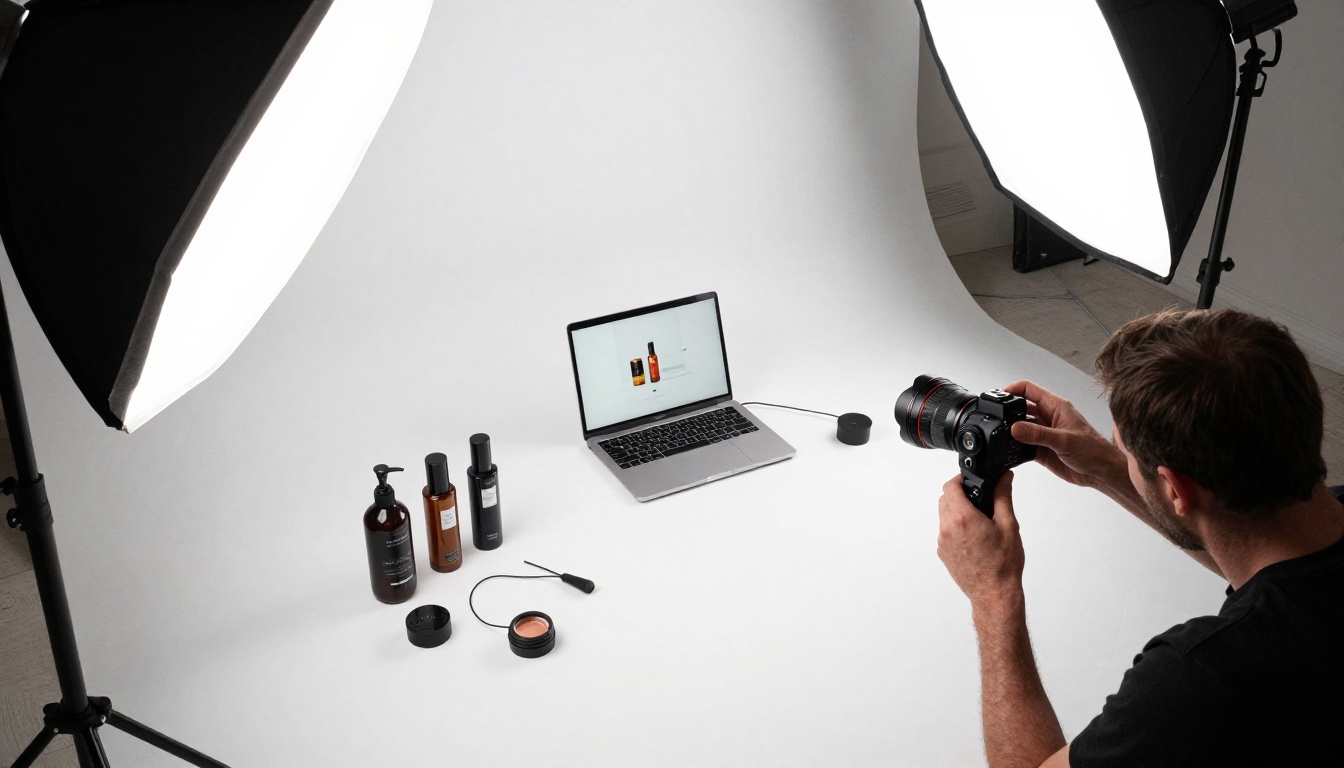
Getty's model reflects the aesthetic standards of professional stock photography: clean compositions, strong lighting, diverse subjects, and images optimized for commercial placement. If your brief requires images that look like they came from a premium stock library, Getty's output is naturally calibrated for that without the need for prompt engineering to get the right feeling.
This matters most in regulated industries. Pharmaceutical advertising, financial services marketing, and legal communications all have specific content requirements around how people are depicted. Getty's archive is deeply experienced in these categories. The generative output reflects that institutional knowledge in ways that a model trained on mixed-source data often cannot replicate reliably.
Stronger Indemnification for High-Stakes Campaigns
For campaigns with seven-figure media budgets, the question of indemnification is not theoretical. A single successful copyright claim can far exceed the cost of any content creation budget. Getty's explicit, dollar-denominated indemnification at enterprise tier gives risk-averse legal departments a number to put in the approval file.
This is not a creative argument. It is a procurement and risk management argument. And it often determines which tool a Fortune 500 legal team will approve for use in national campaigns.
Where Firefly Has the Edge

Creative Range and Style Variety
Firefly can generate photorealistic images, watercolor illustrations, vector-style graphics, and a wide range of artistic treatments. For creative teams that need stylistic variety across different campaign formats, this range is essential. A single tool that produces editorial-grade photography and brand illustration assets is genuinely useful across a full campaign.
The ability to switch from photorealism for a product hero shot to an illustrative style for a brand story piece, all within the same commercially safe AI tool, is something Getty cannot currently offer.
Workflow Speed for Creative Teams
Generative Fill alone changes the production economics of photo retouching. Instead of commissioning new photography every time a brief changes, art directors can extend a licensed image's background, swap out a product variant, or adjust a scene's environment without a reshoot.
This is commercially safe, fast, and happens inside Photoshop with no context switching. For agencies billing by the hour, this is a measurable efficiency gain across every project that involves photography.
Tip: Firefly's Generative Fill works best when you select a region that includes some surrounding context. The model uses that context to match light, texture, and perspective more accurately.
Who Should Use Which

The right choice depends on your organization's risk tolerance, creative needs, and existing toolstack. There is no universal answer, but there are clear patterns based on how different types of organizations approach content production.
For Marketing and Advertising Agencies
Agencies handling large enterprise accounts should evaluate both tools based on client legal requirements. Clients with strict IP policies may require Getty's explicit indemnification. Clients who prioritize creative output quality and production speed may favor Firefly's integrated workflow.
Many agencies will end up running both. Getty for the high-stakes campaign hero imagery with legal backstop. Firefly for the social assets, background extensions, and iterative creative work where volume matters more than maximum coverage. This dual-tool approach adds cost but provides flexibility across different client risk profiles.
For E-Commerce Brands
E-commerce brands live on product photography. Neither Getty nor Firefly is a product photography tool in the strict sense, but Firefly's Generative Fill has real applications in background replacement and lifestyle scene generation around existing product images.
For mid-market brands without dedicated photography studios, Firefly's ability to generate commercially safe lifestyle backgrounds for product compositions represents significant cost savings over studio rental and model fees. The commercially safe designation means those generated backgrounds can go straight into product listings without legal review on every asset.
For Freelance Creators
Individual freelancers and solo creators are unlikely to need the enterprise-tier indemnification that makes Getty compelling for large organizations. For this segment, Firefly's more accessible pricing through Creative Cloud and its broader creative range make it the practical choice.
The generative credits system in Firefly does impose usage limits, but for a freelancer producing a moderate volume of assets for clients, the allocation is workable. The Creative Cloud integration also means Firefly fits naturally into a workflow most professional freelancers already use daily.
Generating Commercial Images with PicassoIA
Beyond the Getty vs. Firefly binary, there is a third path worth considering for creatives who want model variety and production flexibility. PicassoIA gives you access to a wide range of AI image generation models, including Flux Redux Dev for creating high-quality image variations from a reference shot and GPT Image 2 for high-fidelity text-to-image generation with strong prompt adherence.
The platform brings together over 90 text-to-image models under one interface, giving you the stylistic range that Firefly offers with the model variety that neither Getty nor Adobe provides. You can generate photorealistic commercial photography with one model, switch to a more illustrative output with another, and run both through super-resolution upscaling to reach the file sizes that print production demands. No ecosystem lock-in, no single model's aesthetic defining every output.
A practical production workflow on PicassoIA:
-
Generate variations with Flux Redux Dev: Create scene options from a reference photograph. Useful for producing lifestyle variations without reshooting.
-
Use GPT Image 2 for campaigns requiring strong prompt adherence and photorealistic output, especially when text elements need to be rendered correctly within the image.
-
Upscale for print: Run outputs through PicassoIA's super-resolution models to hit 300 DPI at print dimensions for packaging and large-format advertising.
-
Refine with inpainting: Use the inpainting tools to correct specific regions without regenerating the full image, preserving what works and fixing what does not.
The platform's breadth means you are not locked into a single model's aesthetic or a single vendor's commercial terms. For creative professionals who want to work across multiple output styles while maintaining control over which models they use for which jobs, this variety changes what you can produce within a single production session.
Take a few minutes to experiment with these models on PicassoIA and see how much range you can get from different prompting approaches across the platform's image generation collection.


