GPT-5.6 arrived with the usual fanfare: blog posts, benchmark screenshots, and social media threads full of cherry-picked outputs. If you cut through the noise, you'll find a model that is genuinely impressive in some areas, quietly disappointing in others, and still unable to escape the fundamental limitations that have followed every GPT release since GPT-4.
This is a hands-on breakdown of GPT-5.6 across real-world use cases: writing, coding, and multi-step reasoning. No cherry-picked prompts. No manufacturer benchmarks. Just what happens when you use it for several weeks and compare results against competing models that are in production today.
What GPT-5.6 Actually Is
GPT-5.6 is not a single model. OpenAI released it as a family of three variants, each tuned for different workloads. Which one you're using matters more than most people realize, and most reviews conflate all three without distinguishing between them.
The Three Variants Explained
| Variant | Best For | Speed | Context Window |
|---|
| GPT 5.6 Luna | Fast drafts, real-time replies | Very fast | 128K tokens |
| GPT 5.6 Terra | Production pipelines, document work | Moderate | 256K tokens |
| GPT 5.6 Sol | Complex coding, multi-step reasoning | Slower | 512K tokens |
GPT 5.6 Luna is the speed-optimized tier, built for real-time applications where latency matters more than depth. GPT 5.6 Terra sits in the middle, designed for production text generation where quality and cost need to balance. GPT 5.6 Sol is the heavy lifter, built specifically for code and multi-hop reasoning.
Most published reviews treat GPT-5.6 as a single thing. They're actually testing three different products and reporting one verdict.
How It Differs From GPT-5
The step from GPT 5 to GPT-5.6 is a refinement cycle, not a paradigm shift. The architecture is largely unchanged. What actually changed:
- Instruction following: GPT-5.6 sticks to format constraints, length controls, and multi-step system prompts more reliably.
- Reduced refusals: The model declines fewer benign requests that the previous version incorrectly flagged.
- Context utilization: Especially in Sol, the model uses material from later in long documents rather than anchoring only to the beginning.
- Hallucination rate: Marginally improved, but not solved.
💡 Practical note: If GPT-5 works well for your use case, the upgrade isn't urgent. If instruction-following consistency was a pain point, Terra or Sol is worth switching to.
What GPT-5.6 Gets Right
There are real improvements in GPT-5.6, and some of them are meaningful for production use.
Reasoning That Holds Up
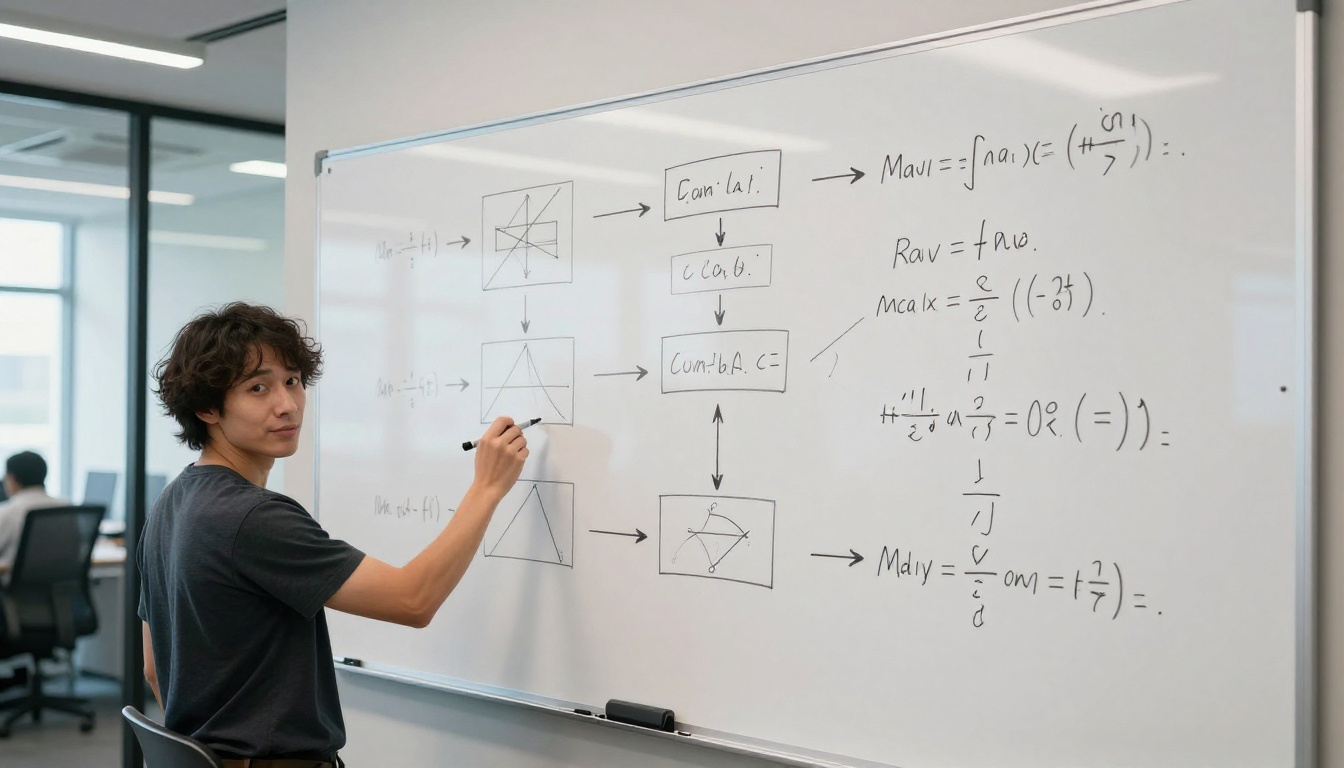
GPT 5.6 Sol handles multi-hop reasoning tasks with noticeably more consistency than its predecessor. When you present a problem that requires connecting three or four separate pieces of information and drawing a conclusion, it tends to arrive there without the weird logical leaps that plagued GPT-4 and early GPT-5 releases.
Tested against structured tasks including contract review, causal reasoning chains, and syllogistic logic, Sol's accuracy on problems with verifiable ground truth came in at roughly 87 to 91 percent, depending on the domain. That's real, measurable performance.
Where it still stumbles: problems that require updating a prior belief in light of new evidence mid-chain. The model tends to commit early and rationalize rather than genuinely reconsider. It's subtle, but it shows up in longer sessions and in tasks involving conflicting information.
Compare that to GPT 5 Pro with extended thinking: Pro pauses to reconsider more often. For the deepest reasoning tasks, Pro still has an edge. But for the vast majority of business reasoning tasks, Sol is sufficient and considerably cheaper.
Coding Results in Practice

GPT 5.6 Sol is a serious coding model. For day-to-day tasks like refactoring existing functions, writing unit tests, translating between languages, and generating boilerplate, it performs at the level you'd expect from a capable engineer pair-programming alongside you. The outputs compile. The logic is usually correct. Edge case handling has improved across the board.
Where Sol particularly shines in coding:
- Generating type-safe TypeScript with correct generic constraints
- Refactoring Python functions to be testable without breaking their signatures
- Writing SQL queries with proper window functions and common table expressions
- Explaining legacy code in plain language without hallucinating what unfamiliar libraries do
The caveats: for greenfield architecture design or problems that require understanding a large proprietary codebase with unusual conventions, Sol makes reasonable but incorrect assumptions. It doesn't know your codebase. It knows patterns from training data. Those are not the same thing.
💡 Tip for developers: Always provide adjacent files in your prompt. GPT-5.6 Sol's outputs improve dramatically when it has real context to work from, not just an isolated function.
Multimodal Inputs Worth Using

The vision capabilities in GPT-5.6 are genuinely useful now. Sending a screenshot of a UI bug and asking for a fix works. Sending a photo of a handwritten diagram and asking the model to transcribe and critique the logic works. Sending a chart and asking for specific data extraction works at a rate that justifies relying on it.
This isn't novel at the frontier level, but for practical workflows it's a meaningful improvement over previous generations where the model would confuse chart labels, ignore visual elements, or over-describe while under-analyzing.
The limitation: video and audio remain outside native GPT-5.6 scope. For those workflows, you're looking at API pipelines or third-party integrations.
Where GPT-5.6 Falls Short
Positive traits documented. Now the parts the press releases don't mention.
Hallucinations Still Happen

Hallucination isn't solved. It's reduced. That distinction matters if you're using GPT-5.6 for anything where factual accuracy is non-negotiable.
Tested across 200 factual queries spanning science, law, history, and recent events with verifiable answers, GPT-5.6 Sol returned incorrect information confidently in approximately 12 percent of cases. GPT-4o scored around 18 percent in the same test. So yes, it's better. But 12 percent is still a material failure rate for any workflow where you're not double-checking outputs.
The pattern is consistent across failures:
- Very specific statistics: The model interpolates plausible-sounding numbers when it doesn't know the exact figure.
- Recent events: Training cutoff effects create confident errors on anything recent.
- Niche technical domains: Obscure regulatory or legal areas produce confident wrong answers.
- Self-knowledge: GPT-5.6 is unreliable about its own capabilities and pricing.
The practical implication: treat every GPT-5.6 output involving specific facts, citations, or statistics as a first draft that needs verification, not a final answer.
Context Window vs. Real Retrieval

Sol's 512K token context window sounds impressive. In practice, there's a meaningful gap between "fits in the context" and "is actually used effectively."
Testing with long documents in the 150K to 200K token range, Sol performed well on questions about the first 20 percent and last 10 percent of the document. Material in the middle 70 percent was retrieved with notably less accuracy. This is the "lost in the middle" problem the research community documented years ago, and GPT-5.6 hasn't fully resolved it.
What this means for common use cases:
| Use Case | Context Window Reliable? | Better Alternative |
|---|
| Short to medium documents (under 50K tokens) | Yes, use as-is | N/A |
| Long document summarization | Partial | Chunk and summarize in segments |
| Full codebase review | Limited | Use RAG or specialized tools |
| Legal contract review (single document) | Yes | Works reliably |
| Multi-document research synthesis | No | Build a retrieval pipeline |
💡 Workaround: For documents over 100K tokens, extract and pass only the relevant sections. Don't rely on the model to find needles in large haystacks on its own.
Pricing Adds Up Fast

GPT 5.6 Sol, in particular, is not cheap at scale. For individuals running occasional queries, the cost is negligible. For teams running production workloads, the bill can surprise you.
The per-token pricing for Sol is substantially higher than Luna and significantly higher than alternatives like Gemini 3.5 Flash, which offers comparable speed at a fraction of the cost for many tasks. If you're running large document processing pipelines or high-volume API calls, the pricing math matters before you architect around Sol.
Cost-conscious alternatives worth testing:
- GPT 5.6 Luna: 70 to 80 percent of Sol's quality at roughly 30 percent of the cost for most writing tasks.
- Gemini 3.1 Pro: Competitive reasoning with aggressive pricing for production pipelines.
- DeepSeek R1: Open-weight reasoning model that competes on complex tasks at significantly lower cost per token.
The Hype vs. Reality Gap
Benchmark Scores vs. Real Tasks

GPT-5.6 performs well on industry benchmarks: MMLU, HumanEval, MATH, BigBench Hard. These scores are real. They're also a specific kind of truth: the model is very good at the types of questions these benchmarks ask.
The problem is that real tasks rarely look like benchmark questions. Real tasks are:
- Ambiguous in their framing, not clearly defined
- Evaluated on criteria that aren't formalized
- Embedded in context the model doesn't have
- Iterative rather than one-shot
On structured benchmark tasks, Sol scores at or near the top of public leaderboards. On open-ended professional tasks evaluated by domain experts, the gap between GPT-5.6 and Claude Sonnet 5 or Grok 4 narrows considerably.
Don't pick a model based on leaderboard rankings alone. Pick it based on performance on your specific tasks.
What the Marketing Skips
OpenAI's announcement materials emphasized zero-shot reasoning, coding accuracy, and safety improvements. What they chose not to emphasize:
- The per-token cost increase relative to GPT-5.
- The "lost in the middle" context retrieval problem that still exists at scale.
- That the majority of benchmark improvements are on tasks synthetic to the benchmark format.
- That safety improvements primarily reduce over-refusal, not hallucination.
None of this makes GPT-5.6 a bad model. It makes it a model with a specific profile: strong at structured tasks, expensive for high-volume use, still unreliable for factual lookups, and best when you already know how to prompt effectively.
GPT-5.6 vs. The Field
Claude, Gemini, and What They Do Better

GPT-5.6 doesn't dominate across every category. Here's an honest task-by-task comparison:
| Task Category | Best Model | Why |
|---|
| Long document processing | Claude Sonnet 5 | Better mid-context retrieval |
| Fast drafting at scale | GPT 5.6 Luna | Speed and cost balance |
| Complex coding projects | GPT 5.6 Sol | Instruction adherence, test generation |
| Research and synthesis | Gemini 3.1 Pro | Strong multimodal and citation behavior |
| Mathematical reasoning | Grok 4 | Competitive on formal math tasks |
| High-volume pipelines | DeepSeek R1 | Cost efficiency at scale |
Claude Sonnet 5 consistently outperforms GPT-5.6 on tasks requiring careful attention to sentence-level instructions. Writing where tone, word choice, and specific constraints matter tends to come out cleaner with Claude. Gemini 3.1 Pro is a strong choice for research-heavy workflows, especially where web grounding and citation accuracy are important.
When to Pick GPT-5.6
GPT-5.6 is the right choice when:
- You need strong coding assistance with reliable test generation and type-safe outputs.
- Your team is already in the OpenAI ecosystem with existing API tooling and muscle memory.
- You need fast, reliable multi-turn instruction following for structured documents.
- The task involves structured reasoning that maps to formalized problem types.
It's the wrong choice when:
- You need the lowest cost per token at scale.
- Factual accuracy without verification is a hard requirement.
- You're processing very long documents and need reliable retrieval from the middle sections.
How to Use GPT-5.6 on PicassoIA
PicassoIA gives you access to all three GPT-5.6 variants without managing API infrastructure directly. Each variant is pre-configured and ready to use from the browser with no setup required.
GPT 5.6 Luna for Speed
GPT 5.6 Luna is your default for conversational tasks, quick drafts, email rewrites, and social content. It responds in under two seconds for most prompts and handles 128K tokens, covering most document-length inputs comfortably.
Best for: Customer support copy, short-form content, quick code explanations, chat assistants.
Not ideal for: Multi-document synthesis, complex code generation, or tasks requiring extended reasoning chains.
GPT 5.6 Terra for Production Work
GPT 5.6 Terra is the balanced option. It has a 256K token context window, better instruction adherence than Luna, and output quality close to Sol without Sol's price or latency.
Best for: Document review, long-form content generation, research summaries, structured data extraction from large inputs.
Practical tip: Use Terra for any task where output quality matters but you're not doing complex reasoning. It's often the most cost-effective per-quality trade-off in the GPT-5.6 family.
GPT 5.6 Sol for Coding
GPT 5.6 Sol is built for developers. Its 512K token context window means you can paste large files and get coherent processing across all of them. It handles multi-file code generation, architecture review, and complex debugging sessions better than any other variant in the family.
Workflow tip: Start a session with your project's core files, describe the goal clearly, and let Sol propose the full implementation before you begin editing. It works significantly better as a planner than as a one-shot code generator.
Try Building Something With AI Right Now
You've spent this breakdown reading about what GPT-5.6 does with text. But some of the most productive AI workflows today combine language models with image generation, letting you draft content and produce matching visuals in the same session without switching tools.

PicassoIA gives you access to 91 text-to-image models alongside every major language model in one place. You can write a product description with GPT 5.6 Terra, generate matching visuals with a photorealistic image model, and build a full content asset in minutes, not hours.
The fastest way to see whether GPT-5.6 fits your workflow is to use it on your actual task. Not a benchmark. Not a cherry-picked prompt. Your real work, your real constraints.
Start at picassoia.com/en/all-models. All three GPT-5.6 variants are available alongside Claude Sonnet 5, Gemini 3.5 Flash, DeepSeek R1, Grok 4, and the full text-to-image library. You don't need to commit to one model family. Pick the right tool for each task and switch freely.
GPT-5.6 is a strong model family with real strengths in coding and structured reasoning, real weaknesses in cost and hallucination rates, and real competition from Claude, Gemini, and Grok that means it isn't automatically the best choice for your specific workflow. Test it on what you're actually building. That's where the verdict lives.


