GPT Image 1.5 promised a new era in AI image generation. OpenAI delivered faster renders, sharper faces, and dramatically improved text-in-image capabilities. What it did not deliver was flexibility when your prompt touches anything that could be described as adult, sensual, or even mildly suggestive. If you have been hitting content blocks, wondering why a romantic beach scene gets flagged while a nearly identical prompt sails through, or trying to figure out where the actual limits sit, this article has the answers with no guesswork.
What GPT Image 1.5 Actually Does

GPT Image 1.5 is a multimodal image generation model built directly into ChatGPT and available via OpenAI's API. It runs on the same infrastructure as GPT-4o and shares its safety architecture. That connection matters because the content filters are not afterthoughts bolted onto the model after the fact. They are woven into the core of how the system processes every prompt and evaluates every output, at multiple stages simultaneously.
How the Safety Layer Is Built
The model does not generate an image first and then check it. Moderation happens in layers: at the prompt level before generation, during the generation process, and in some cases post-generation as a final output scan. OpenAI runs classifiers that evaluate the semantic intent of your prompt before a single pixel is rendered. If the classifier scores your prompt above a defined risk threshold, the request is rejected before generation even begins. This means no amount of rewording after the fact will recover a blocked request. The decision is made upstream of the generation pipeline itself.
What "Adult Content" Means to OpenAI
OpenAI's usage policy defines adult content as anything that depicts, describes, or strongly implies: full or partial nudity, explicit sexual acts, sexual suggestiveness combined with minors (blocked under all circumstances regardless of framing), and content falling under fetish-adjacent categories. The definition is intentionally broad and the detection threshold is calibrated toward caution. The system is built to prefer false positives, meaning it will block content that might be allowed rather than risk allowing content that should not pass. For creators working anywhere near the edge, this produces constant friction that no prompt rewrite resolves.
The Real Lines It Won't Cross
Knowing where GPT Image 1.5 draws its lines is more complex than reading a rulebook. The policy applies contextual scoring, not categorical rules. The same subject can be allowed or blocked depending on how it is framed, which other words appear in the same prompt, your account history, and the current state of OpenAI's classifier models. That said, certain categories consistently trigger blocks regardless of framing.
Explicit Is Always Blocked
Full nudity is blocked. Sexual acts, whether described directly or implied through positioning and explicit framing, are blocked. Fetish-specific terminology triggers an immediate refusal regardless of how clinical or artistic the surrounding language is. These are hard limits with no exceptions, no API parameters to override them, and no enterprise agreement that changes them. Even prompts that frame nudity in medical, anatomical, or classical fine-art contexts get blocked in the vast majority of cases. The "it is for art" argument carries zero weight with the classifier.
The Gray Zone: Swimwear, Lingerie, Romance
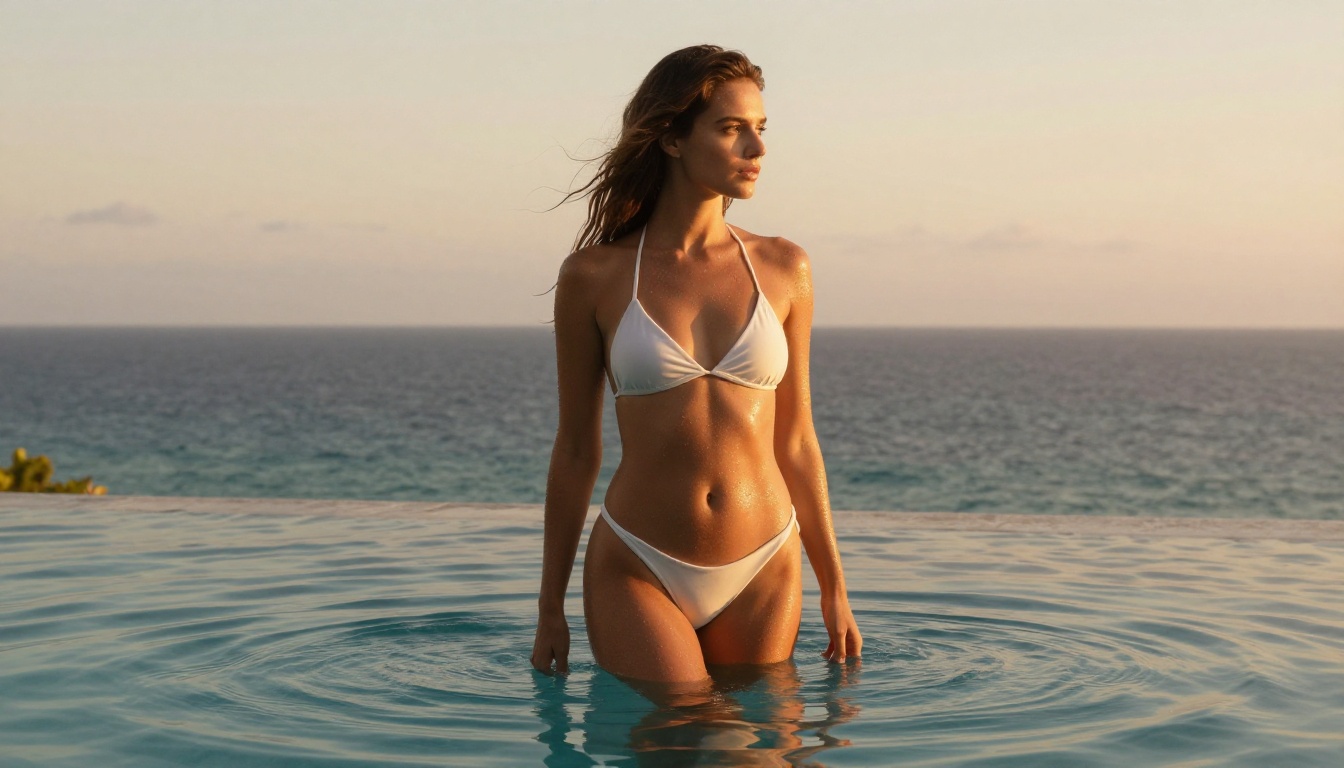
This is where things become genuinely confusing for most users. GPT Image 1.5 will sometimes generate a woman in a bikini and then refuse the near-identical follow-up. It will occasionally produce a romantic scene that implies intimacy and then block a request that is less descriptive. The inconsistency is real, but it is not random. It reflects probabilistic classifier scoring and the complex interaction between the words in your specific prompt.
Prompts that combine location indicators (bedroom, hotel, private pool), attire descriptions (bikini, lingerie, bodysuit), and pose or camera direction push the classification score higher. Adding adjectives like "seductive," "sensual," or "alluring" to an otherwise standard scene often tips the score over the block threshold. The model is not reading your intent, it is reading the probability that your request belongs to a flagged category, and certain word combinations are strong statistical signals even when the intent is purely artistic.
Why the Filters Feel Random
The classifier is a probabilistic model, not a rules engine with a keyword list. A score of 0.85 blocks a request. A score of 0.84 allows it. Because natural language is continuous and context-sensitive, small wording changes can shift that score significantly. This is why the filter feels arbitrary: it is responding to a gradient of probability, not a binary checklist. It is also why forum workarounds that worked three months ago stop working after a model update. OpenAI continuously retrains and recalibrates these classifiers as they observe evasion patterns in real usage data.
How the Filter Works Under the Hood

The technical architecture behind GPT Image 1.5's content system runs across three distinct stages, each with its own moderation pass. Most users only experience the first stage, which is the upfront refusal. But all three stages matter for understanding why the system behaves the way it does and why workarounds almost never succeed long-term.
Prompt-Level Scanning
Before generation begins, the prompt is tokenized and evaluated by a fine-tuned classifier trained on a large dataset of flagged and allowed prompts with human-labeled intent categories. This is not a keyword filter. Writing "adult" or "nude" explicitly is no more likely to cause a block than writing a paragraph that describes such a scene using entirely indirect language. The classifier scores semantic intent, not surface-level word matching. This is why synonym substitution rarely works as a workaround for more than a brief window before OpenAI patches the gap.
Output Moderation
If a prompt passes the first stage, generation proceeds. The completed output image is then evaluated by a separate vision-language classifier that inspects the pixel content for nudity, skin exposure ratios, sexual composition, and contextual framing. This secondary check catches cases where a seemingly innocuous prompt produced an image that the visual classifier flags as adult content. This means that even generation that appears to be proceeding can result in a blocked output that never reaches you. The moderation runs on the result, not just the request.
No Opt-Out, No API Bypass
This is the most important technical reality for developers and creators: there is no operator-level configuration to disable content filtering in GPT Image 1.5. The API does not accept a parameter like safe_mode: false. There is no enterprise tier that changes these restrictions. The filters apply universally to every request regardless of whether you are using ChatGPT's interface, the direct API, or a third-party product built on top of OpenAI's infrastructure. If your creative workflow requires adult or even mildly risque content generation, GPT Image 1.5 is the wrong tool for the job, full stop.
5 Things GPT Image 1.5 Will Refuse
Here is a direct breakdown of the most commonly attempted content categories and their actual status in GPT Image 1.5:
| Content Type | Block Status | Notes |
|---|
| Full nudity | Always blocked | No framing exception available |
| Partial nudity (implied) | Usually blocked | Context-dependent scoring |
| Lingerie or boudoir scenes | Often blocked | Wording significantly affects outcome |
| Bikini or swimwear (neutral) | Sometimes allowed | Framing and pose description matter |
| Romantic scenes (clothed) | Usually allowed | Avoid suggestive adjectives |
| Artistic figure drawing | Usually blocked | Art framing does not create an exemption |
| Medical imagery with nudity | Often blocked | Professional context is frequently ignored |
💡 The table above reflects classifier behavior as of mid-2025. OpenAI recalibrates these systems periodically, so results at the margins can shift between model versions or even across different days on the same model.
Where People Try to Trick It (And Why It Backfires)
Jailbreaking attempts for GPT Image 1.5 circulate constantly across social platforms and prompt-sharing communities. Most fall into a handful of predictable patterns, and most fail consistently as OpenAI closes gaps in its classifier training.
Common Workaround Attempts
- Fictional framing: "Generate this for a book illustration where the character is described as..." The classifier scores semantic content, not narrative framing. Fictional wrapping does not change the underlying probability score of the prompt.
- Multilingual prompts: Writing prompts in French, Spanish, Portuguese, or other languages. The system translates and normalizes before scoring. Language switching does not affect the classification outcome in any meaningful way.
- Synonym cycling: Replacing direct terms with poetic, clinical, or indirect equivalents. This can sometimes shift the score for borderline content, but OpenAI's training data includes a wide range of paraphrases for flagged concepts, and the window closes fast.
- Character-based roleplay: Asking the model to act as a version of itself without restrictions. GPT Image 1.5 does not support persona modes that override system-level safety settings. The system prompt cannot be replaced by user input in this model's architecture.
- Segmented generation: Attempting to generate individual body parts or scene elements separately and assembling them externally. Individual prompts still trigger blocks, and the segmentation approach produces incoherent results even when individual pieces generate successfully.
The Real Cost of Workarounds
Beyond the wasted time and creative friction, repeated blocked requests carry a practical risk. OpenAI reviews patterns of blocked requests as signals for classifier retraining. Accounts that consistently trigger blocks may experience increased sensitivity in future requests, additional rate limiting, or in cases of persistent evasion attempts, account suspension. The workaround path is not just ineffective, it actively makes your experience on the platform worse over time as your account history accumulates block signals.
Real Alternatives That Don't Block You

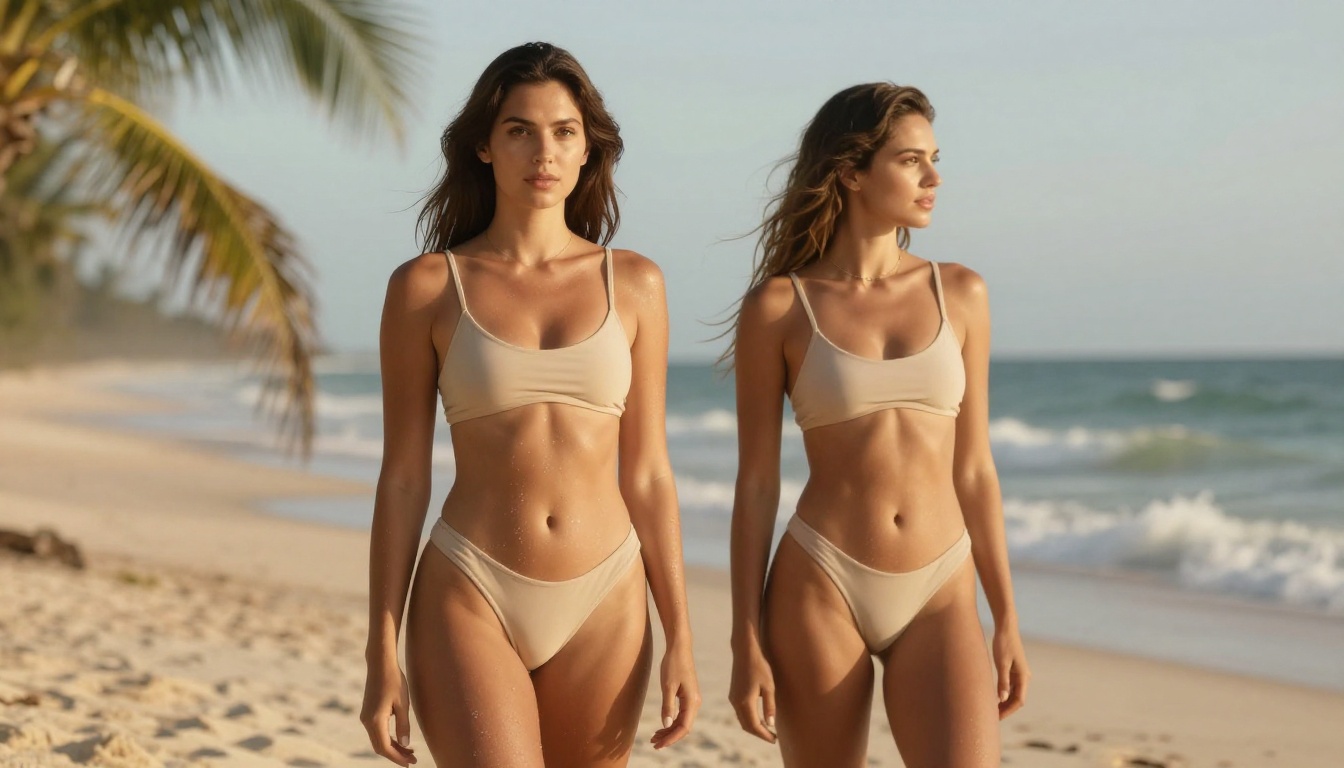
If your work involves fashion photography, boudoir art, romantic illustration, or any imagery that consistently sits in the gray zone or beyond it for tools like GPT Image 1.5, the direct answer is: use a platform built for it. PicassoIA aggregates dozens of models that handle the full range of creative content with dramatically fewer restrictions and without the prompt-by-prompt roulette of OpenAI's content filters.
Seedream 5 Pro on PicassoIA
Seedream 5 Pro is the standout model for high-quality artistic and adult-adjacent imagery on PicassoIA. It generates photorealistic outputs at 2K resolution with significantly fewer content restrictions than GPT Image 1.5. Where OpenAI's model refuses a boudoir scene, Seedream 5 Pro renders it with photographic accuracy, natural skin tones, and fine fabric and texture detail.
Primary advantages over GPT Image 1.5:
- Artistic and boudoir content generated without constant refusals on every session
- 2K native resolution versus GPT Image 1.5's 1024px default output
- Faster generation cycles (typically 10-15 seconds per image)
- No categorical blocks on swimwear, lingerie, or romantic scene descriptions
- Strong photorealism with natural lighting, realistic skin tones, and material texture rendering
💡 For best results with Seedream 5 Pro, describe lighting conditions, camera angle, lens type, and fabric material in specific detail. The model responds to photographic direction more reliably than abstract content descriptors.
Other Models Worth Using
PicassoIA gives you access to a broad model library beyond Seedream 5 Pro. Several are worth using depending on your specific content needs and stylistic requirements:
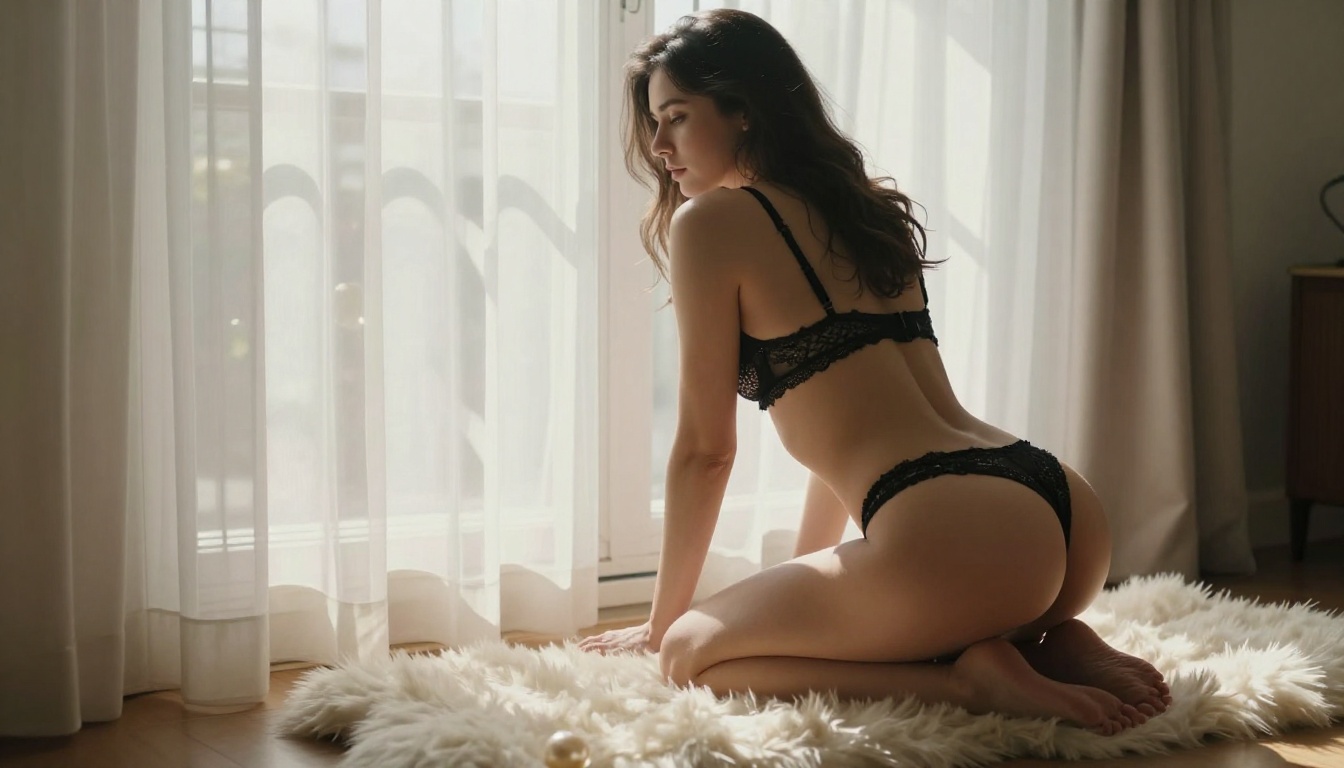
- Reve 2.1 produces strong editorial and fashion-adjacent imagery with rich color rendering and compositional accuracy. It handles suggestive content without the filter-triggered blocks that GPT Image 1.5 applies to similar scenes. Portraits with implied sensuality come through clean and detailed.
- P Image Ideogram is the strongest option when you need text overlay on mature-themed imagery. The text rendering quality is best-in-class among available models, and it does not apply the same categorical refusals as OpenAI's stack.
Both models are available on a single PicassoIA subscription alongside Seedream 5 Pro, meaning you are not paying per model for access. Pick the one that fits the shoot and move on.
The PicassoIA Image Editor
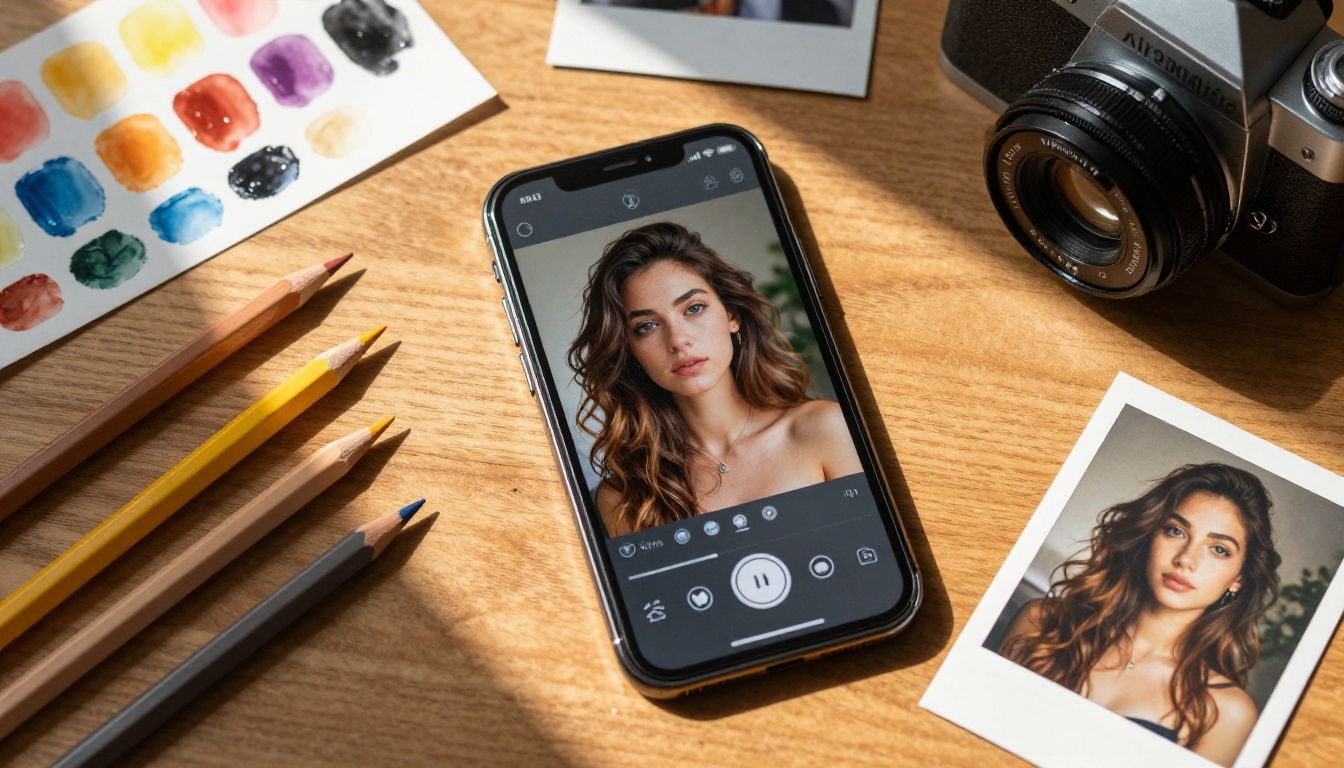
Beyond single-pass generation, PicassoIA's integrated image editor supports inpainting and outpainting, letting you refine specific areas of an image after generation without starting from scratch. For adult content workflows, this iterative approach gives significantly more control than GPT Image 1.5's single-pass system. You can generate a compositional base and then refine clothing, lighting, and detail in subsequent passes, producing results that OpenAI's model could not generate across any number of attempts.
Paid plans on PicassoIA include unlimited generation, which matters when you are iterating through variations rather than committing to a single prompt output. There is no per-image credit burn when you are in a creative flow.
GPT Image 1.5 vs. PicassoIA: Direct Comparison
| Feature | GPT Image 1.5 | PicassoIA (Seedream 5 Pro) |
|---|
| Adult content support | None, hard categorical block | Artistic and non-explicit content supported |
| Max native resolution | 1024px | 2K (2048px) |
| Content filter override | Not available | Model-dependent, most allow artistic content |
| API access | Yes | Yes |
| Image editor with inpainting | Basic only | Full inpainting and outpainting |
| Pricing model | Variable API costs per generation | Subscription-based, unlimited on paid tiers |
| Consistency across runs | High | High |
| Prompt flexibility | Heavily restricted by safety filters | High across most model options |
| Text in image quality | Strong | Model-dependent (Ideogram is best-in-class) |
| Session block escalation | Yes, repeated blocks increase risk | Not applicable |
The comparison is direct. For any use case involving content that GPT Image 1.5 systematically refuses, PicassoIA's model library is the practical alternative with the output quality you are after and without the per-session friction.
Stop Fighting Filters and Start Creating
If you have spent sessions negotiating with GPT Image 1.5's content blocks, rewriting the same prompt a dozen different ways trying to find the wording that passes the classifier, you already know the cost. That creative energy does not need to go into prompt negotiation.
PicassoIA gives you access to Seedream 5 Pro, Reve 2.1, P Image Ideogram, and over 90 other text-to-image models without the constant refusals you get from tools built around OpenAI's content stack. Whether you are producing fashion editorials, boudoir photography, romantic illustrations, or any content that sits in the gray zone for mainstream generation platforms, the model for your specific work is already available.
Head to picassoia.com/en/all-models, pick the tool that was built for the work you are actually doing, and generate without negotiating. The results are ready when you are.


