Two models have been dominating adult AI image discussions for the past few months: GPT Image 1.5 from OpenAI and Nano Banana 2 from Google. Both are available on PicassoIA, both generate impressive general-purpose imagery, and both get mentioned constantly in NSFW editing spaces. But when you stress-test them for adult content generation, the gaps become impossible to ignore. One model enforces soft content blocks that water down results unpredictably. The other runs uncensored but trades meaningful quality for that freedom. Neither delivers the combination that serious adult content creators actually need, and this article is going to show you exactly what each model produces in real NSFW editing scenarios, where each one falls apart, and which option has been quietly outperforming both of them for the people who need consistent, photorealistic, uncensored output.

What NSFW Editing Actually Demands
Not all image generation is equal. A landscape prompt forgives a lot. A complex architectural prompt forgives a fair amount. NSFW editing forgives almost nothing, because the human visual system is extraordinarily sensitive to errors in skin rendering, anatomy, fabric behavior, and lighting when the subject is a real human figure. A model that generates beautiful cityscapes or product mockups can completely collapse under human figure work, and those failures become obvious immediately at any zoom level.
Realism That Doesn't Break
The first requirement for serious adult content work is skin texture fidelity. Not a smooth gradient that looks like polished plastic, but actual visible pore structure, the way light scatters through and across skin at different depths, the subtle tonal variation between different zones of the body, and the realistic rendering of fine surface detail. Models trained heavily on sanitized or filtered datasets often produce what creators call the "plastic sheen," because the natural visual complexity of real human skin was systematically removed from their training data. The result is images that look technically clean but feel manufactured at a glance.
The second requirement is anatomical accuracy under pressure. Any model can generate a passable standing portrait with a forward-facing pose. The real test is what happens when you introduce foreshortening, reclining poses, partial coverage scenarios, or multi-figure compositions. These are the situations where undertrained models start producing subtle distortions that collapse the entire image's credibility.
Content Freedom Without Crashes
The practical side of NSFW editing comes down to one question: does the model deliver what you prompt, or does it substitute something else without telling you? Content filters that activate inconsistently are actually more damaging to workflow than a consistent hard block, because inconsistency means you can't predict when your generation will succeed. You might get three clean outputs in a row and then a silent substitution on the fourth with no explanation.
What professional adult content workflows need is straightforward: a model that either clearly states its content limits upfront, or delivers uncensored output reliably across hundreds of generations without arbitrary interruptions. There is no middle ground that works at scale.
💡 Generation speed is a real cost. In batch workflows generating 50-100 images per session, even a 2-second difference per image adds up to more than an hour of extra processing time per week. Multiply that across daily sessions and the math starts to matter.
GPT Image 1.5 in Practice
GPT Image 1.5 sits above GPT Image 1 in OpenAI's product line. For general photography simulation, product mockups, fashion editorials, and non-explicit portrait work, it performs reliably well. Its color science is strong, it handles complex multi-element prompt instructions better than most models at comparable cost, and it maintains coherent style across multiple generations when you use similar prompt structures.
What It Does Right
For adult-adjacent work that stays on the tasteful side of the content line, GPT Image 1.5 is genuinely capable. Bikini photography, lingerie-style fashion editorial, artistic glamour portraits without explicit content, and suggestive but clothed scenarios all generate cleanly. Where it excels:
- Consistent clothing and fabric behavior: Silk, lace, and sheer materials render with realistic weight and drape
- Accurate facial expression range: Natural, non-artificial expressions across a wide spectrum
- Multi-element prompt follow-through: Complex scene descriptions with multiple objects and subjects tend to resolve correctly
- Style coherence across batches: Similar prompts produce visually consistent outputs, useful for building cohesive content sets
The skin rendering in GPT Image 1.5 is a notable improvement over its predecessor. Skin tones hit more realistic gradients, the subsurface scattering simulation is better calibrated, and prompt-specified lighting conditions translate more reliably into the final image.
Where the Walls Close In
The limitation becomes obvious the moment you move from suggestive toward explicit. GPT Image 1.5 enforces OpenAI's content policies at the generation level, which means it will modify or refuse prompts that include explicit nudity, sexual positioning, or certain body area specifications. The frustrating part is that this behavior is not consistent. Sometimes you get a dressed version of what you prompted. Sometimes the subject changes entirely. Sometimes the generation proceeds normally, and then the next attempt with an identical prompt gets flagged.
This inconsistency is the actual problem. It is not that the model refuses explicit content outright. It is that you cannot predict when refusal will happen, which makes it unusable for any workflow that depends on reliable throughput. GPT Image 1.5 is operating exactly as its designers intended, within well-defined policy constraints that simply conflict with what NSFW content creation requires at volume.
💡 When to use GPT Image 1.5: For high-quality fashion editorial, tasteful glamour, artistic implied nudity, and any adult-adjacent content that stays within policy limits, it is one of the strongest options on PicassoIA. For anything requiring explicit output at scale, a different model is needed.
Nano Banana 2 in Practice
Nano Banana 2 from Google takes a different position. It is a lightweight, fast-generating model designed to prioritize generation speed and content flexibility. Where GPT Image 1.5 comes from a consumer safety-first philosophy, Nano Banana 2 was built with more permissive content handling, making it a practical option for adult content workflows that need volume.
Speed and Uncensored Output
The practical difference when switching to Nano Banana 2 is immediate. It generates faster than GPT Image 1.5, refuses far fewer prompts, and produces more explicit output without the silent substitution behavior that disrupts workflows. For high-volume adult content batch work, this combination is genuinely useful. The content filter behavior is also more transparent: when Nano Banana 2 does refuse, it tends to communicate this clearly rather than silently delivering an altered result.
Where Nano Banana 2 performs well:
- Generation speed for high-volume workflows
- More permissive content handling than GPT Image 1.5
- Predictable output behavior with fewer silent substitutions
- Lower credit cost per generation on PicassoIA
- Solid performance for rapid concept testing and variation generation
- Consistent prompt adherence for simpler compositions
Trade-offs to Watch
The speed and freedom advantage comes with a real quality ceiling. Nano Banana 2 was architected as a lightweight model, and that architecture decision shows clearly in the output. Skin rendering is softer and less detailed than GPT Image 1.5. Anatomical accuracy degrades more quickly under complex pose requirements. Lighting simulation for multi-source scenarios produces more visible artifacts. Fabric transparency and material physics are noticeably less convincing.
For creators using generated images as references or sketches for further editing, or for workflows that need quantity over quality, Nano Banana 2 covers those use cases well. For anyone needing images that can hold up under close visual inspection, including final publication use, the quality ceiling becomes a serious limitation.
Side-by-Side Results
Here is how the two models compare across the dimensions that matter most for NSFW editing work:
| Dimension | GPT Image 1.5 | Nano Banana 2 |
|---|
| Skin texture realism | ⭐⭐⭐⭐⭐ | ⭐⭐⭐ |
| Anatomical accuracy | ⭐⭐⭐⭐ | ⭐⭐⭐ |
| Explicit content freedom | ⭐⭐ | ⭐⭐⭐⭐ |
| Generation speed | ⭐⭐⭐ | ⭐⭐⭐⭐⭐ |
| Prompt follow-through | ⭐⭐⭐⭐ | ⭐⭐⭐ |
| Batch consistency | ⭐⭐⭐⭐ | ⭐⭐⭐ |
| Cost per generation | Moderate | Lower |
| Filter predictability | Low | High |
Realism Score
On pure output quality, GPT Image 1.5 wins this comparison clearly. Its training data and architecture produce more convincing skin detail, fabric behavior, and environmental complexity. This advantage matters less for quick concept work, but it becomes the deciding factor the moment an image needs to look genuinely photographic rather than AI-generated.
Content Freedom
For uncensored adult content at volume, Nano Banana 2 takes this category easily. GPT Image 1.5's policy enforcement makes it unpredictable for explicit work. Nano Banana 2 handles adult prompts with fewer interruptions and more predictable behavior.
Speed and Cost
Nano Banana 2 is faster and lower cost per generation. For prototyping sessions, variation testing, and high-volume batch runs where individual image quality is less critical, this matters. For final-output production work where each image needs to be publication-ready, speed becomes secondary to quality.
Seedream 4.5 Reframes the Comparison
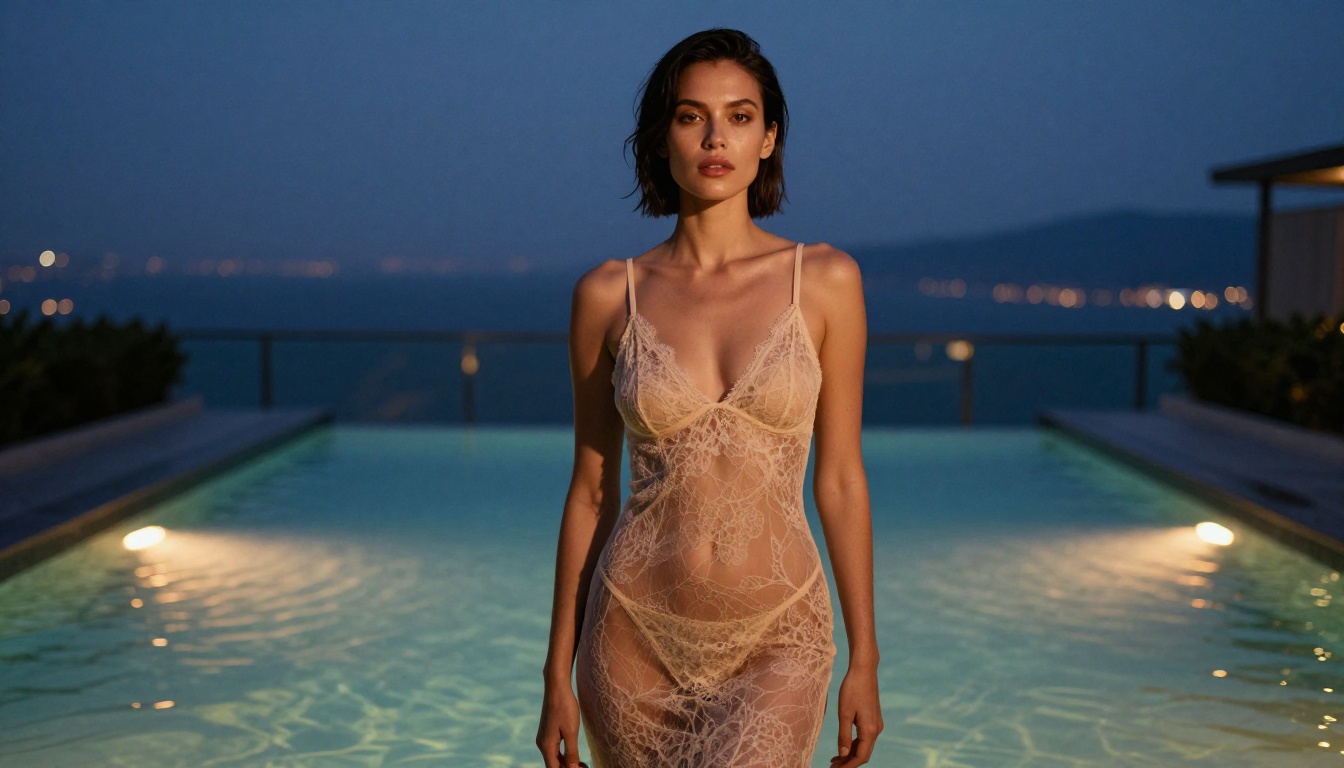
Here is what changes the entire discussion: Seedream 4.5 from ByteDance delivers what neither model above can achieve at the same time. High-quality photorealistic output combined with genuinely permissive content handling. It is the model that adult content professionals on PicassoIA consistently return to once they have tested the alternatives and identified the gaps.
Why It Outperforms Both
Seedream 4.5 was trained on a dataset that includes uncensored adult content, which means its skin rendering, anatomical modeling, and body physics simulation were calibrated against realistic human reference data rather than filtered alternatives. The output quality difference for explicit and suggestive work is immediately visible in side-by-side comparisons.
Concrete advantages over both competing models:
- Uncensored by design: No silent substitutions. Prompt output matches what was requested
- 8K-quality skin rendering: Individual pore structure, realistic subsurface scattering, natural tone variation across body zones
- Anatomical precision: Handles complex poses, foreshortening, reclining figures, and multi-figure compositions with significantly higher accuracy
- Fabric and material physics: Clothing, lingerie, and sheer materials behave realistically rather than appearing as painted textures
- Multi-source lighting simulation: Complex lighting scenarios produce accurate shadows, highlights, and reflections rather than flat approximations
- Consistent batch output: Reliable results across hundreds of generations with the same prompt structure
💡 Seedream 4.5 is the primary recommendation for uncensored photorealistic adult content on PicassoIA. The combination of quality ceiling and content freedom is why it consistently tops rankings among professional creators in this space.
PicassoIA Image Editor Pro
Beyond individual model selection, PicassoIA's built-in Image Editor Pro gives you inpainting and outpainting capabilities that work directly with your generated images. This means you generate a base image with Seedream 4.5 and then use the editor to refine specific areas, replace elements, or extend the canvas without breaking the visual coherence of the original output. This workflow is particularly valuable for NSFW editing because it enables non-destructive iteration: create a high-quality base, then use inpainting to adjust targeted areas while preserving everything that already works.
Best NSFW Models on PicassoIA Right Now
If you are choosing models specifically for adult content work on PicassoIA, here is the priority order based on consistent real-world output quality and content freedom:
Top 5 by Use Case
1. Seedream 4.5 — Best overall for photorealistic NSFW output. Uncensored, highest quality skin rendering, strong anatomical accuracy. First choice for most professional workflows.
2. Nano Banana 2 — Best for high-volume batch generation where speed matters more than quality ceiling. Permissive content handling, fast, lower cost per image. Solid for prototyping.
3. Nano Banana Pro — The upgraded Nano Banana with a higher quality ceiling. If you want the content freedom of Nano Banana 2 with better output detail, this is the natural upgrade.
4. GPT Image 1.5 — Best for non-explicit NSFW work, fashion editorial, tasteful glamour, and adult-adjacent content that stays within policy limits. Highest quality for clothed or suggestive content.
5. Seedream 5 Pro — Next generation from ByteDance with upgraded architecture. Strong for NSFW work with improved detail rendering compared to Seedream 4.5, though currently at higher cost per generation.
💡 Important distinction: Seedream 5 Lite blocks adult content and is not suitable for NSFW workflows. Do not confuse it with Seedream 5 Pro, which handles adult content normally.
RealVisXL v30 Turbo is also worth including in your rotation for portrait-oriented work, particularly when the XL architecture's detail rendering at full resolution gives you the fine-grain quality you need for close-crop or print-scale output.
How to Use Seedream 4.5 on PicassoIA
Getting consistent high-quality NSFW results from Seedream 4.5 requires understanding how to structure prompts for this specific model's architecture. Here is a practical workflow that produces reliable output.

Step 1: Navigate to the Seedream 4.5 model page
Go directly to Seedream 4.5 on PicassoIA. You can preview the model without an account, but you will need PicassoIA credits to generate.
Step 2: Lead with lighting specification
Seedream 4.5 responds strongly to lighting information at the start of the prompt. Placing light source type and direction before the subject description produces significantly more consistent results than burying lighting details at the end. For example: "Warm diffused morning light from the left, photorealistic portrait of..." outperforms "photorealistic portrait of... warm morning light" consistently.
Step 3: Specify skin and texture details explicitly
Unlike some models that infer skin quality from general photorealism tags, Seedream 4.5 activates its trained anatomical detail capabilities when you specify texture directly in the prompt body. Adding "visible skin pore texture, natural subsurface scattering, fine body hair detail" yields noticeably different results than omitting those specifications.
Step 4: Use aspect ratio to control composition
Set your aspect ratio to 16:9 for editorial-style horizontal shots, 9:16 for full-body portrait orientation, and 1:1 for square social content. The aspect ratio choice strongly influences how the model frames and crops the subject within the composition.
Step 5: Refine with inpainting
After your base image generates, use PicassoIA's Image Editor Pro to select specific areas for targeted refinement. This is where the real quality advantage of the platform comes through: you can improve individual elements without regenerating the entire composition, saving both time and credits.
| Parameter | Recommended Setting |
|---|
| Aspect ratio | 16:9 (editorial) or 9:16 (portrait) |
| Lighting spec | Lead the prompt |
| Texture detail | Explicit in prompt body |
| Batch size | 4-6 variations per prompt |
| Post-processing | Inpainting for targeted refinement |
💡 Save your best-performing prompts as templates. Seedream 4.5 is consistent enough that a well-crafted prompt structure will produce reliable results across hundreds of generation runs. Build a library of proven prompts and iterate from there rather than starting from scratch each session.
Stop Comparing, Start Generating
The comparison between GPT Image 1.5 and Nano Banana 2 clarifies something useful: each model was built for a different job. GPT Image 1.5 is a premium quality generator with policy constraints that define a hard ceiling for explicit content. Nano Banana 2 is a fast, permissive lightweight option that trades output quality for content freedom and speed. Both have real, legitimate use cases in different parts of a content creation workflow. Neither is the right answer for creators who need photorealistic quality and uncensored output in the same model.

That is why Seedream 4.5 consistently wins this category among professionals. It was built with the quality standards of a premium model and the content freedom that adult content workflows require. When creators who have been using GPT Image 1.5 or Nano Banana 2 switch to Seedream 4.5 for the first time, the output difference is visible in the first generation.
PicassoIA gives you access to all three of these models and over 91 text-to-image options across every style and use case. Whether you run high-volume batch workflows, create editorial-quality single images, or refine existing content with the built-in inpainting tools, everything is in one place with no separate subscriptions.
Start generating with the models that professional adult content creators actually use at picassoia.com/en/all-models.


