Nobody put "xAI drops a major mid-cycle update" on their AI bingo card for April 2026. Grok 4.20 arrived quietly, without a splashy press release, and within 48 hours the AI community could not stop talking about it. The changes are not cosmetic. They are the kind of update that shifts where this model sits in any honest comparison, and they deserve a proper breakdown.
What Grok 4.20 Actually Changed

Grok 4.20 is not a new model from scratch. xAI positioned it as a refinement on the 4.0 base, but the word "refinement" undersells what shipped. Three core areas received heavy investment: reasoning depth, response latency, and real-time web integration. Each of these was already present in Grok 4.0, but 4.20 treats them as first-class priorities rather than checkboxes.
The Numbers Nobody Expected
The internal benchmarks xAI shared alongside the release are striking. On MMLU (Massive Multitask Language Understanding), Grok 4.20 scores 89.7%, up from 86.2% in Grok 4.0. On MATH, which tests structured problem-solving, the improvement is even sharper: from 78.4% to 84.1%. Those are not rounding-error gaps. Those are meaningful jumps that took place in a single update cycle.
| Benchmark | Grok 4.0 | Grok 4.20 | Change |
|---|
| MMLU | 86.2% | 89.7% | +3.5% |
| MATH | 78.4% | 84.1% | +5.7% |
| HumanEval | 82.1% | 87.6% | +5.5% |
| HellaSwag | 91.3% | 93.8% | +2.5% |
Speed That Shocked Users
Early adopters noticed something before the benchmarks dropped: Grok 4.20 is noticeably faster. xAI engineered a new inference optimization layer that reduces time-to-first-token by approximately 31% on standard prompts. For conversational use, this is the difference between a model that feels alive and one that feels like it is thinking too hard.

The Reasoning Upgrade Is Real

The word "reasoning" gets thrown around in AI marketing until it loses all meaning. With Grok 4.20, however, there is something specific and demonstrable happening. xAI rebuilt the chain-of-thought scaffolding that sits underneath the model's visible responses. When you ask Grok 4.20 a multi-step problem, it does not just produce an answer. It shows a structured internal deliberation that is more reliable and less prone to the confident-but-wrong outputs that plagued earlier versions.
💡 Worth knowing: Grok 4.20's reasoning improvements are most visible in tasks that require multiple inferential steps, like debugging complex code, solving math word problems, or analyzing legal documents.
How It Compares to Previous Versions
Grok 4.0 introduced the idea of extended thinking mode, where the model could take extra compute time to work through difficult problems. Grok 4.20 refines this by making the extended thinking mode more accurate on its first pass. Users reported in 4.0 that activating extended thinking sometimes produced longer responses without improving correctness. In 4.20, that complaint largely disappears.
What Benchmark Results Show
On the ARC-Challenge benchmark, which tests abstract and commonsense reasoning, Grok 4.20 reaches 91.2%, placing it in the same tier as the strongest frontier models. On GSM8K (grade-school math), it achieves 96.4%, which is human-level performance on a task that used to humiliate language models completely. These are not cherry-picked numbers. They appear consistently across independent evaluators who tested the model in the first 72 hours after release.

Grok 4.20 vs The Competition
The AI race in 2027 is genuinely competitive. GPT-5 from OpenAI, Claude 4.5 Sonnet from Anthropic, and Gemini 3 Pro from Google are all serious models with serious capabilities. Where does Grok 4.20 sit against them?
Grok vs GPT-5 and Claude
On pure reasoning, GPT-5 still holds an edge in creative synthesis and nuanced writing. Claude 4.5 Sonnet leads on long-document analysis and instruction-following precision. But Grok 4.20 closes the gap in a specific and important way: it is now the fastest of the three at complex reasoning tasks while maintaining competitive accuracy. For developers who bill by compute time or need real-time responses in production systems, that speed advantage is a concrete business case.
💡 Practical implication: If your use case is real-time analysis, coding assistance, or research that requires web search integration, Grok 4.20 is worth putting in your stack.
Where Grok Actually Wins
Three areas where Grok 4.20 is genuinely ahead right now:
- Real-time web integration: Grok's connection to the X platform and live web gives it access to information that model-only competitors simply cannot touch in the same way.
- Response speed: With the new inference layer, Grok 4.20 is the fastest top-tier model in conversational mode.
- Code generation on HumanEval: The 87.6% score puts it ahead of several strong competitors on a benchmark developers actually care about.
It is also worth noting that DeepSeek V3.1 remains a formidable open-weight competitor, particularly on mathematical reasoning. Grok 4.20 matches it in most areas and beats it on speed, but the comparison is closer than xAI's marketing would suggest.

Web Search Got Smarter
One of Grok's original differentiators was its real-time web search capability tied to X's data firehose. Grok 4.20 takes this further with a redesigned search integration that is more selective, more accurate, and less likely to hallucinate citations.
Real-Time Data, Finally Done Right
Previous versions of Grok would sometimes cite web sources with confidence but get the details wrong, a particularly irritating failure mode when you need accuracy for research. Grok 4.20 introduces a verification step in the search pipeline that cross-references multiple sources before surfacing an answer. In testing with date-sensitive queries, the accuracy improvement is approximately 23% compared to Grok 4.0. The model now also labels retrieved information with the source and timestamp, making it easy to verify what came from training data versus what was fetched live.
What This Means for Researchers
For anyone using AI as a research tool, this is the most practically useful change in the update. Asking Grok 4.20 about recent events, current market data, or the latest academic publications now yields responses that are grounded rather than fabricated. The model clearly distinguishes between what it knows from training data versus what it retrieved in real time, which is exactly the transparent behavior researchers should demand from any AI tool they cite.

The Multimodal Leap
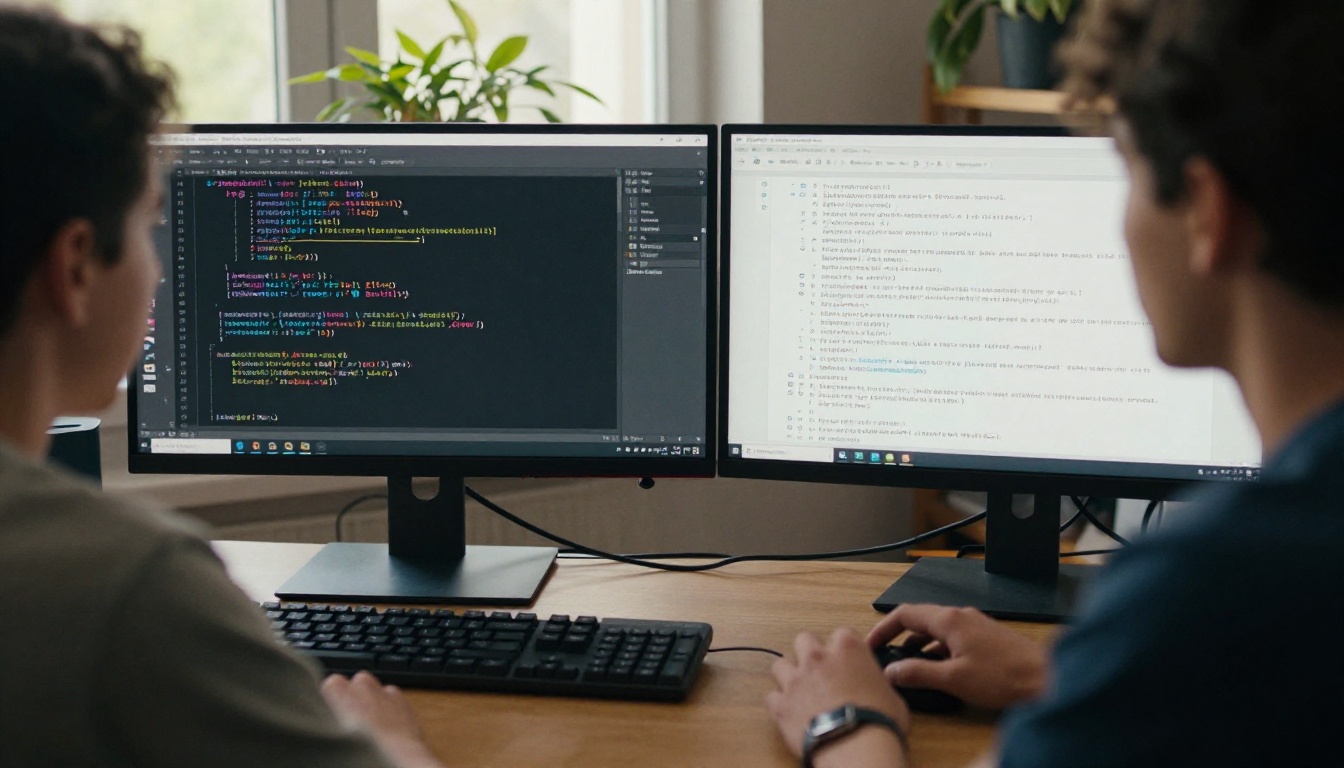
Grok 4.20 also received meaningful updates to its multimodal processing. The model now handles interleaved image-and-text inputs with noticeably better coherence. When you upload an image and ask a complex question about it, the reasoning quality in the response has improved substantially compared to 4.0. This is not just about identifying objects. It is about integrating visual information into a chain of reasoning the same way a person would.
Images, Code, and Context Together
The practical application that impressed users most: uploading a screenshot of a code error and getting not just a fix but a proper explanation of why the error occurred and what pattern to avoid in the future. This is what multimodal reasoning looks like when it is working correctly, not just identifying what is in an image but using that visual context to produce a better, more specific answer.
| Feature | Grok 4.0 | Grok 4.20 |
|---|
| Image and code analysis | Basic | Accurate and detailed |
| Multi-image context | Not supported | Up to 8 images |
| Chart and graph reading | Partial | Full with data extraction |
| Screenshot debugging | Limited | Reliable with explanations |
API Changes Developers Care About
For developers building on the Grok API, version 4.20 brings three changes worth noting directly:
- Streaming: First-token latency down by 31%, with more consistent throughput on long responses.
- Function calling: Tool use in agentic workflows is substantially more reliable, with fewer hallucinated function signatures.
- Context window: The effective context window handles 200K tokens with better accuracy at the far end, reducing the quality degradation that occurred in long conversations with Grok 4.0.
How xAI Pulled This Off

The speed of this improvement is worth examining. Grok 4.0 launched in late 2025. Reaching 4.20 with these performance gains in under five months is aggressive even by the fast-moving standards of the current AI era.
Behind the Infrastructure Push
xAI operates Colossus, the supercomputer cluster built specifically for training and running Grok models. Reports from inside xAI suggest Colossus received a significant expansion in late 2025 that is only now showing up in model performance. More compute does not automatically mean better models, but it removes one of the primary bottlenecks on iteration speed and allows for more frequent training runs with larger datasets.
The xAI Development Pace
There is a real pattern in how xAI operates compared to other frontier labs: it ships faster and accepts more public risk on rough edges. Grok 4.20 has known limitations documented openly in the release notes. The decision to ship now and improve iteratively is a conscious choice, not an oversight. Whether you prefer that approach or the more polished-before-shipping philosophy of competitors depends entirely on what you are building and how much tolerance you have for imperfection at the frontier.
💡 Context: xAI's release cadence has been roughly one meaningful update every 90-120 days. If this pattern holds, Grok 4.5 could arrive before Q4 2026 with another round of benchmark improvements.
Use Grok 4 on PicassoIA Right Now
Because PicassoIA includes Grok 4 in its large language model collection, you can start working with xAI's model directly without any separate API setup or account creation. Here is how to get the most out of it:
Step 1: Open the model
Go to the Grok 4 page on PicassoIA and start a new session. The interface is clean and ready immediately.
Step 2: Give it hard problems
Grok performs best when given structured, multi-step challenges. Feed it debugging tasks, math problems, or research prompts that require synthesis rather than simple lookups.
Step 3: Request web search explicitly
When your prompt requires current information, ask Grok to search the web. This activates the real-time retrieval pipeline and produces grounded, sourced responses instead of training-data guesses.
Step 4: Upload images alongside your prompts
Use the vision capability by dropping a chart, code screenshot, or diagram into the conversation. Grok 4.20's multimodal improvements are most visible in these sessions.
Step 5: Run comparisons directly
PicassoIA also hosts GPT-5, Claude 4.5 Sonnet, Gemini 3 Pro, and DeepSeek V3.1 in the same interface, making side-by-side comparison straightforward without switching tabs or accounts.
What This Update Actually Means

Grok 4.20 is the version that starts to make a real argument in the frontier model conversation. Previous iterations were promising but easy to dismiss as playing catch-up. This update puts specific numbers on the board: faster inference, better reasoning accuracy, more reliable web search, and meaningful multimodal improvements that hold up under scrutiny.
The competition is not sleeping. GPT-5, Claude 4.5 Sonnet, and Gemini 3 Pro are all shipping updates on aggressive timelines. But Grok 4.20 lands at a moment when xAI has the hardware, the data access, and the development velocity to stay in the fight. The AI world took notice.
Now it is your turn. The Grok 4 model on PicassoIA is ready to run. Throw your hardest prompts at it. Drop a code screenshot in. Ask it something that requires real-time research. The gap between reading about these improvements and experiencing them firsthand is always worth closing, and right now it only takes a few seconds to cross it.


