This article provides actionable techniques for leveraging Grok 4 AI chat to overcome creative blocks and generate fresh content ideas efficiently. From prompt engineering to workflow integration, discover how to transform AI conversations into a steady stream of publishable content across blogs, social media, and marketing campaigns. Learn specific prompt structures for different content types, refinement processes to elevate raw ideas, and systematic approaches to scale your content production while maintaining quality and originality.
You open your chat interface, staring at the blank cursor. The content calendar shows empty slots for next week, social media needs fresh posts, and your blog hasn't been updated in days. This familiar creative paralysis hits every content creator at some point. What if you could transform that empty screen into a flood of publishable ideas in minutes?
Caption: Optimized workspace for AI-assisted content creation
Why Grok 4 Changes Content Creation
Traditional brainstorming sessions often produce limited results. You circle around the same concepts, recycling old ideas with minor tweaks. Grok 4, available on PicassoIA, introduces a different approach to idea generation.
The model's reasoning capabilities allow it to understand context deeply, recognize patterns humans might miss, and generate genuinely novel combinations. Unlike earlier AI tools that simply rephrase existing content, Grok 4 can synthesize information from multiple domains to create something new.
💡 Quick Insight: Grok 4's strength lies in its ability to connect disparate concepts. Ask it to combine your niche topic with unrelated fields for unexpected inspiration.
Setting Up Your AI Content Workflow
Before diving into prompts, establish an efficient system. The wrong workflow turns AI from an asset into a time sink.
Caption: Direct interaction with AI chat interface for content ideation
Essential Tools Configuration
Dedicated Content Channel: Create a separate chat thread exclusively for content brainstorming. This keeps conversations focused and searchable.
Template Library: Build a collection of proven prompt templates you can adapt quickly. Store these in a note-taking app for instant access.
Output Formatting: Configure Grok 4 to deliver ideas in your preferred format—bullet points, tables, or structured outlines.
Workspace Psychology
Your physical and digital environment affects AI collaboration quality. Minimize distractions, ensure comfortable seating, and maintain a clutter-free digital workspace. The AI reflects your focus level—scattered thinking produces scattered results.
Prompt Engineering for Maximum Output
The difference between mediocre and exceptional AI-generated content lies in prompt construction. These techniques extract Grok 4's full potential.
The 5-Part Prompt Structure
Every effective content generation prompt should contain these elements:
Context Statement: "I'm a [your role] creating content about [your topic] for [your audience]."
Specific Request: "Generate 10 blog post ideas that address [specific problem]."
Format Requirements: "Present as a table with columns for title, angle, and target keyword."
Quality Filters: "Focus on practical solutions rather than theoretical concepts."
Creativity Level: "Include 2 unconventional ideas that might surprise my audience."
Caption: Organized content calendar with AI-generated scheduling
Advanced Prompt Techniques
Comparative Analysis Prompts
"Compare content approaches between [Industry A] and [Industry B]. Extract 5 transferable strategies for my [your industry] content."
Audience Persona Prompts
"Create detailed profiles for 3 audience segments in my niche. For each, suggest 3 content types they would find most valuable."
Content Gap Analysis
"Analyze the top 10 articles about [topic]. Identify 5 content gaps where no comprehensive coverage exists. Suggest angles for each gap."
Content Type Specialization
Different content formats require tailored approaches. Grok 4 adapts to each medium's unique requirements.
Blog Content Generation
Long-form Article Ideas
"Generate 7 long-form blog post concepts about [topic]. Each should support 2,000+ words with multiple sub-sections. Include:
- Primary research angles
- Interview potential subjects
- Data visualization opportunities
- Controversial viewpoints worth exploring"
Listicle Variations
"Create 5 listicle concepts about [topic] with unusual numbers (not 5, 10, or 15). Explain why each number choice creates better engagement."
Social Media Content
Caption: Social media content grid planning with AI assistance
Platform-Specific Strategies
Platform
Grok 4 Prompt Approach
Output Format
LinkedIn
Professional tone, case study focus
Carousel concepts, article snippets
Instagram
Visual-first thinking, storytelling
Reel concepts, caption styles
Twitter/X
Concise insights, thread potential
Thread outlines, hot take angles
TikTok
Trend-aware, educational hooks
Script concepts, trending audio ideas
Hashtag Strategy Generation
"Analyze current trending topics around [niche]. Suggest 15 hashtag combinations with predicted engagement levels. Include:
- Broad reach tags
- Niche community tags
- Branded tag possibilities
- Controversy-aware tags to avoid"
Video Content Planning
Script Outline Generation
"Develop 3 video script outlines about [topic] for [platform]. Each should include:
- Hook (first 5 seconds)
- Problem statement
- Solution demonstration
- Call-to-action
- Suggested visuals
- Estimated length"
YouTube SEO Optimization
"Generate 5 YouTube video concepts about [topic] with SEO-optimized elements:
- Search-friendly titles
- Description templates
- Tag clusters
- Thumbnail concept descriptions
- Chapter markers"
Overcoming Creative Blocks
Even with AI assistance, creative stagnation happens. These Grok 4 techniques restart your idea engine.
Caption: Visualizing thought processes during AI-assisted brainstorming
The "Forced Connection" Method
When ideas feel repetitive, force unusual combinations:
"Connect [your topic] with [unrelated field like marine biology, medieval history, or quantum physics]. Generate 7 content ideas from this intersection."
Reverse Engineering Success
"Analyze 3 highly successful pieces of content about [topic]. Reverse engineer their success factors. Suggest 5 new ideas using those same factors with different angles."
Audience Pain Point Expansion
"List 15 minor frustrations your audience experiences with [topic]. Transform each into a content opportunity with suggested formats."
Quality Control and Refinement
AI-generated ideas need human refinement. This collaborative process elevates raw concepts into publishable content.
Caption: Collaborative editing process between human and AI
The 3-Stage Refinement Process
Quantity Phase: Generate 20-30 raw ideas using broad prompts. Don't filter yet.
Quality Phase: Use Grok 4 to evaluate and rank ideas based on:
Originality score
Audience relevance
Production feasibility
SEO potential
Emotional impact
Hybrid Phase: Select top 5-7 ideas for human-AI collaborative development.
Idea Validation Checklist
Before committing to production, verify each idea against these criteria:
Uniqueness: Does this offer something not already saturated online?
Depth: Can this sustain 800+ words or 3+ minutes of content?
Practicality: Can you create this with available resources?
Timeliness: Is this relevant to current conversations?
Shareability: Would your audience actually share this?
Scaling Content Production
Once you master individual idea generation, scale to systematic content creation.
Caption: Scalable AI content generation system visualization
Content Calendar Automation
Monthly Planning Prompt
"Generate a complete content calendar for [month] about [topic]. Include:
- 4 blog posts with titles and brief outlines
- 16 social media posts (4 per week)
- 2 newsletter editions
- 1 video concept
- Seasonal/event-related content hooks
- Cross-promotion opportunities"
Thematic Content Series
"Develop 3 interconnected content series about [topic]. Each should have:
- Series title and theme
- 5 installment concepts
- Progression arc
- Call-to-action sequence
- Suggested distribution schedule"
Repurposing Workflow
Maximize each idea's value through systematic repurposing:
Primary Content → Blog post (1,500 words)
First Repurposing →
5 social media snippets
Newsletter summary
LinkedIn article
Second Repurposing →
Video script outline
Podcast episode outline
Infographic data points
Third Repurposing →
Quote graphics
Thread explanations
Community discussion prompts
Integrating with Other PicassoIA Tools
Grok 4 doesn't work in isolation. Combine it with other PicassoIA models for complete content creation.
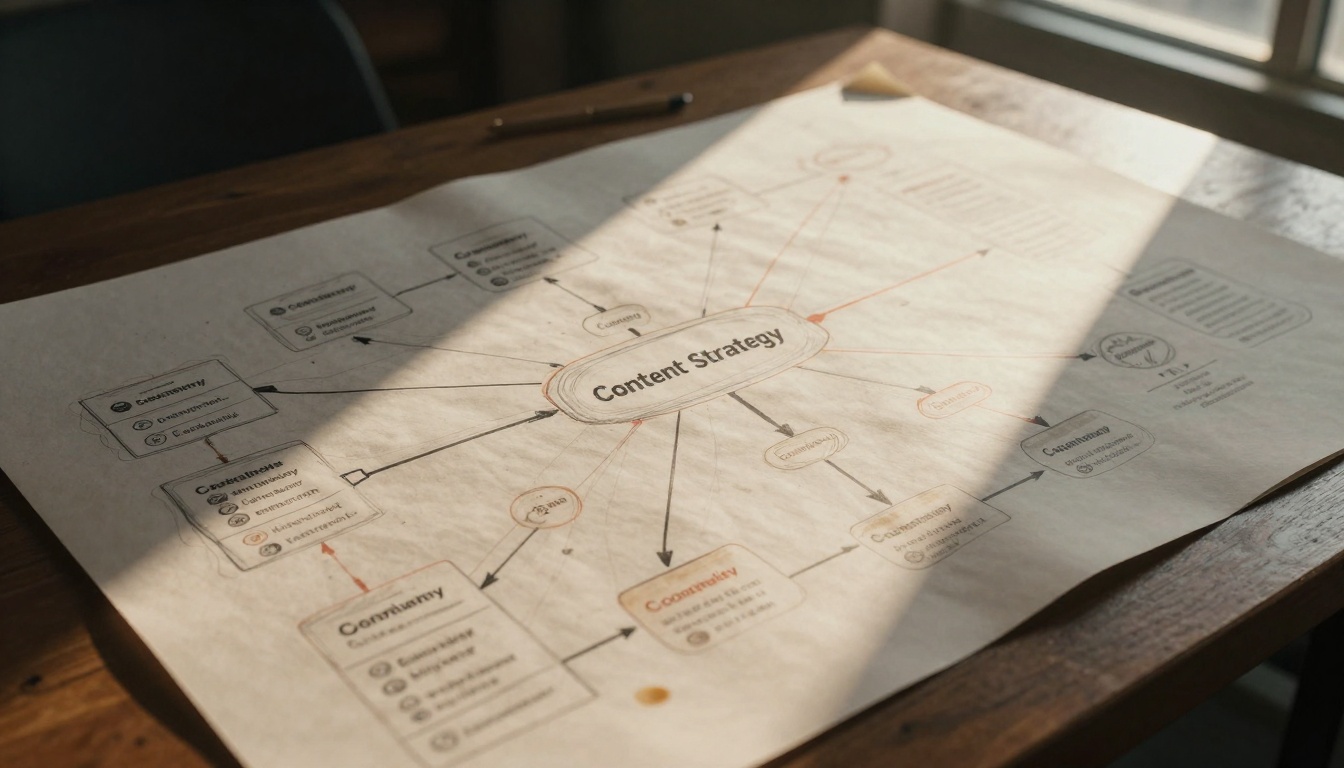
Caption: Strategic mind mapping for comprehensive content planning
Visual Content Synergy
After generating written content with Grok 4, use GPT Image 1.5 or Flux 2 Pro for accompanying visuals.
Workflow Integration Example:
Grok 4 generates blog post about "AI Ethics in Content Creation"
Use generated descriptions to create header images with image generators
Create social media visuals using consistent aesthetic
Develop video concepts for platform-specific content
Content creation shouldn't end with publication. Use AI to analyze performance and refine your approach.
Caption: Performance analytics dashboard for content optimization
Post-Publication Analysis
"Based on these performance metrics [insert metrics], analyze what worked and why. Suggest 5 content ideas that build on successful elements while addressing underperforming aspects."
A/B Testing Content Ideas
"Generate 3 variations of this successful content concept [insert concept]. Each variation should test a different hypothesis about what made the original successful."
Common Pitfalls and Solutions
Even with advanced AI, content creators face consistent challenges. These solutions address frequent pain points.
Problem: Idea Quantity Over Quality
Solution: Implement the 3-stage refinement process mentioned earlier. Generate broadly, then filter ruthlessly.
Problem: AI "Echo Chamber" Effect
Solution: Regularly introduce external stimuli. Feed Grok 4 articles from unrelated industries, academic papers, or cultural commentary to break pattern recognition.
Problem: Inconsistent Brand Voice
Solution: Create a brand voice document. Feed excerpts to Grok 4 with the instruction: "Analyze this writing style. Apply it to all future content suggestions."
Problem: Over-Reliance on AI
Solution: Designate "human-only" brainstorming sessions weekly. Use these to generate seed ideas that AI then expands.
Future-Proofing Your Content Strategy
AI capabilities evolve rapidly. These practices ensure your workflow remains effective as technology advances.
Continuous Learning Loop
Weekly: Test one new prompt technique
Monthly: Evaluate AI performance metrics
Quarterly: Research new AI features and integration options
Annually: Complete workflow audit and redesign
Skill Development Priorities
While AI handles idea generation, human skills become more valuable in these areas:
Strategic Curation: Selecting and sequencing AI-generated ideas
Authentic Voice: Maintaining genuine connection despite AI assistance
Ethical Oversight: Ensuring content accuracy and responsibility
Cross-Platform Adaptation: Tailoring content for different audience behaviors
Getting Started Today
Begin with a 15-minute session. Open your Grok 4 interface and use this starter prompt:
"I create [content type] about [topic] for [audience]. Generate 10 specific content ideas that would perform well next month. Include one surprising angle that might challenge audience assumptions."
Track which ideas resonate, refine your prompts based on results, and gradually expand your AI collaboration. The most successful content creators aren't those who replace themselves with AI, but those who learn to direct it effectively.
Your next content idea is waiting in that conversation. The blank screen transforms from intimidating emptiness to infinite possibility when you approach it with the right tools and techniques. What will you create first?