Grok 4.20 just broke something in the AI chatbot conversation, and people are noticing. Not because it solved a benchmark, not because it edged out a competitor on some obscure math test, but because it said something funny. Something sharp. Something that felt like it came from an actual perspective rather than a committee of safety reviewers.
That's what's at stake here: personality. The one thing AI labs have spent years carefully sanding off.
Every major AI lab has spent years optimizing for safety, accuracy, and neutrality, and in doing so they've produced chatbots that are endlessly polite, almost impossibly even-tempered, and completely devoid of anything resembling character. Grok 4.20 took a different path. xAI built a model that doesn't just answer questions. It responds to them. With a voice. With a perspective. Sometimes with a perfectly timed aside that makes you laugh before you've finished reading the answer.
The result is a model that people actually want to talk to, not just query.

What "Personality" Even Means in AI
Before diving into Grok 4.20 specifically, it's worth asking what personality actually means when we're talking about a language model. Most people use the word loosely. They mean something like: does this thing feel like talking to a person?
That's too vague. When you break it down, AI personality comes from a handful of specific, measurable things.
Tone consistency matters
A model with personality sounds the same whether it's helping you debug code, explaining geopolitics, or responding to a dumb joke. It doesn't switch between a formal textbook voice and a casual bro tone depending on how you phrase the prompt. Grok 4.20 has remarkable consistency here. It's dry, a little irreverent, and direct in every context. That coherence is what creates the sense of talking to someone rather than something.
Willingness to take positions
Most AI chatbots are engineered to hedge. They present "multiple perspectives" on everything, add disclaimers, and avoid saying anything that could be construed as an opinion. Grok 4.20 is different. Ask it what it thinks about something and it will actually tell you. Not aggressively, but with the confidence of a person who has thought about the question before you asked. That alone separates it from the crowd.
Humor that earns its place
This is the one nobody expected. Grok can be funny. Not "ha, I attempted a joke" funny. Actually funny. The timing, the word choice, the occasional self-deprecating aside. Users have been screenshotting and sharing Grok 4.20 conversations for weeks because the replies are legitimately entertaining. What makes it work is that the humor serves the response. It doesn't crack jokes to be entertaining. It uses wit to make a point more effectively, or to signal that it's aware a topic is slightly absurd while still taking it seriously. That's a sophistication most human writers struggle with.

What Grok 4.20 Does Differently
No padding, no preamble
The most immediately noticeable thing about Grok 4.20 is what it doesn't say. There's no "Certainly! I'd be happy to help with that!" opener. No five-sentence restatement of your question before answering it. No trailing "I hope this was helpful!" at the end.
It just answers. The reply starts with the content. This sounds like a small thing, but after years of dealing with AI fluff, it's genuinely refreshing. You feel like your time is being respected.
💡 Quick test: Ask Grok 4.20 a yes-or-no question. It will say yes or no first, then explain. Most other models bury the answer in paragraph three.
It actually pushes back
When you say something that's wrong, Grok 4.20 tells you. Not rudely, but clearly. It won't just agree with your premise because you stated it confidently. This is the thing most AI chatbots completely fail at: sycophancy. They're trained to be agreeable, which makes them useless when you need honest feedback. Grok 4.20 has far less of that trained-in agreeableness. It will say "that's not quite right" and explain why. It will tell you your idea has a flaw. It will suggest you reconsider an assumption. That behavior is valuable in a way that politeness never is.
Opinions that feel earned
Ask Grok 4.20 a genuinely open question and it won't hide behind a wall of "on one hand... on the other hand." It will tell you what it thinks and explain the reasoning. This isn't the same as being reckless or biased. The model still acknowledges nuance and uncertainty. But it doesn't use nuance as a rhetorical shield to avoid saying anything. When it has a view, it shares it. That directness is addictive once you've experienced it.

Grok 4.20 vs the Competition
The AI chatbot space has never been more crowded. Here's how Grok 4.20 stacks up on personality-related dimensions against the major players.
| Model | Tone Consistency | Humor | Opinion-Giving | No Fluff | Overall Feel |
|---|
| Grok 4.20 | High | Strong | Yes | Yes | Witty thinking partner |
| GPT-5 | High | Light | Sometimes | Moderate | Smart assistant |
| Claude 4 Sonnet | High | Mild | Rarely | No | Thoughtful editor |
| Gemini 2.5 Flash | Moderate | Rare | Sometimes | No | Fast helpful search |
| DeepSeek V3 | Moderate | Minimal | Rarely | Sometimes | Technical assistant |
This isn't a capabilities comparison. Grok 4.20 does not necessarily win on accuracy, coding output, or breadth of knowledge. The table above is purely about conversational personality. That's the dimension where it genuinely leads every competitor right now.
The closest rival is GPT-5, which has become significantly more direct and less sycophantic in recent updates. But GPT-5 still feels like a polished product. Grok 4.20 feels like a person. Claude 4 Sonnet is more careful and thorough, which is excellent for certain tasks, but that carefulness reads as personality-less in casual conversation. Gemini 2.5 Flash is fast and capable but rarely says anything surprising. DeepSeek V3 is technically strong but conversationally flat.
Grok 4.20 occupies a unique position in this landscape.

Real Conversations, Real Reactions
The screenshots don't lie
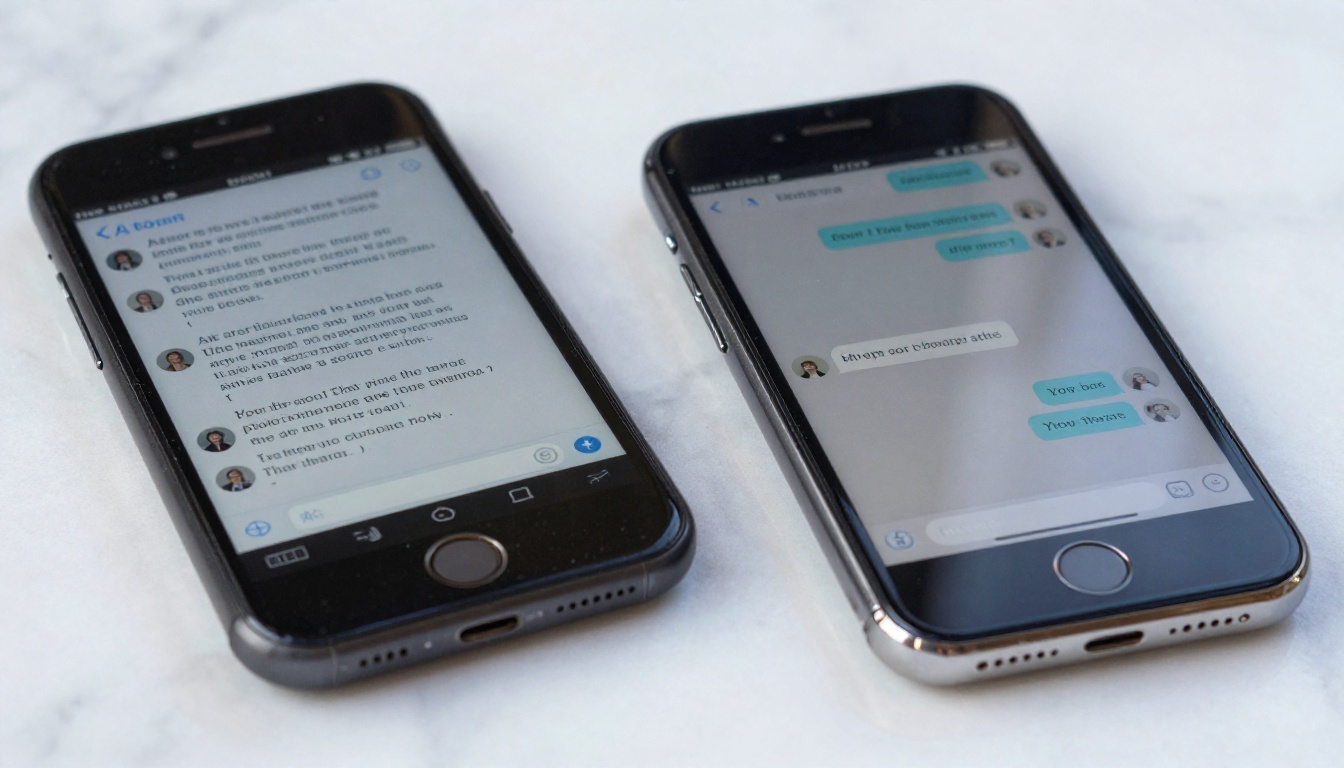
Since the 4.20 update dropped, social media has been full of screenshots of Grok conversations. Not screenshots of impressive multi-step reasoning or long-form outputs. Screenshots of individual sentences. Short, dry observations. One-liners. The kind of thing you screenshot and send to a friend because it's just genuinely worth sharing.
That's a new behavior for AI chatbot content. People don't generally share GPT-5 or Claude 4 Sonnet screenshots the way they share tweets. Grok 4.20 produces replies that have quotability built in. That's a real signal about how the conversational experience differs.
What users actually say
The pattern in user feedback is consistent across platforms:
- "It's the first AI I've had a real conversation with"
- "It actually disagreed with me and it turned out to be right"
- "I asked it something stupid and it called me out, but nicely"
- "The jokes sneak up on you and then you're reading the whole thing again"
The criticism is equally consistent:
- It can be too confident when it's factually wrong
- The personality can feel like it gets in the way on purely technical tasks that need structured output
- Some users find the directness abrasive compared to what they're used to from other models
Both the praise and the criticism point to the same thing: Grok 4.20 has an actual character. That's genuinely rare and genuinely significant. You can like it or dislike it, but you can't say it isn't there.

How to Use Grok 4 on PicassoIA
Grok 4 is available directly on PicassoIA, which means you can run it alongside other top models without needing a separate xAI subscription or X Premium account. Here's how to get the most out of it.
First steps with Grok 4
- Go to the Grok 4 model page on PicassoIA
- Click Try Model to open the chat interface
- Start with a direct question, no need to add pleasantries or formatting instructions
- Grok 4 reads conversational context well, so longer threads actually produce better and sharper results
Tips to get the best out of it
Be direct. Grok 4 responds better to direct prompts than to padded, overly polite ones. Say what you need without preamble.
Ask for opinions. This is where Grok 4 shines brightest. Ask what it thinks about a decision, a piece of writing, a business strategy, a policy debate. You'll get an actual perspective with reasoning, not a both-sides non-answer.
Use it for editing and feedback. Because it pushes back and takes positions, Grok 4 is particularly good at reviewing writing, arguments, and plans. It will tell you specifically what's weak and why.
Run side-by-side comparisons. PicassoIA lets you access Claude 4.5 Sonnet, GPT-5, Gemini 2.5 Flash, and Grok 4 in the same session. For creative or conversational tasks, the personality difference becomes obvious within two or three exchanges.
💡 Pro tip: For critical thinking tasks, give Grok 4 a position you hold and ask it to argue against you as sharply as possible. The steelman quality is consistently above other models and will surface weaknesses in your reasoning you hadn't considered.

The xAI Philosophy Behind Grok
Why it was built differently
xAI was explicit about their intentions from the start: they didn't want to build another model that refused to engage with difficult parts of the world. The stated goal was an AI with maximum truth-seeking that wouldn't hedge out of excessive caution or corporate risk aversion.
That philosophy shows up in Grok 4.20 in concrete ways. The model will discuss topics other models deflect from. It will tell you when something is statistically likely even if the conclusion is uncomfortable. It won't reframe your question into something more palatable before answering.
This isn't about being provocative. It's about a consistent belief that treating users like adults who can handle real information produces better AI. The contrast with models trained to be maximally inoffensive is stark. Once you notice it, you can't un-notice it.
Real-time data makes it feel alive
One of the structural advantages Grok 4 has over some competitors is access to real-time information through X. This means it knows what happened this week, not just what happened before its training cutoff.
That has an unexpected effect on personality: Grok 4.20 feels current. When you ask it about recent events or ongoing situations, it doesn't hedge with "as of my last update..." It just knows. That freshness adds to the sense that you're talking to something that is actually paying attention to the world alongside you. It's a subtle thing, but it matters for how the conversations feel.
What Grok 4.20 Still Gets Wrong
Being honest about this matters. Grok 4.20 is not a perfect model, and some of its personality traits create real problems worth knowing before you rely on it.
Overconfidence is a real risk
The directness that makes Grok enjoyable also makes it more dangerous when it's wrong. It will state incorrect things with the same confident tone it uses for correct ones. You have to fact-check Grok more rigorously than models that are trained to explicitly signal their uncertainty. The personality that makes it compelling is the same thing that can lead you astray if you accept its answers uncritically.
Personality over precision on technical tasks
On highly structured, technical outputs, the conversational tone can work against you. If you need precisely formatted code documentation, a detailed step-by-step technical process, or exhaustively caveated analysis, models like GPT-5 or Claude 4.5 Sonnet often produce cleaner structured output. Grok 4.20's voice is an asset in conversation and a small liability in rigid formats.
It's not for everyone
Some users genuinely prefer the more deferential, thorough style of other models. The comparison to Claude 4 Sonnet is instructive: Claude is more careful, more considerate, and more exhaustive in how it approaches nuance. For certain tasks and certain working styles, that's exactly what you want. Grok 4.20 is a strong choice for people who want a thinking partner rather than a sophisticated research assistant. For users who want maximally thorough, heavily caveated, structured output, other models will serve them better.

The Personality Race Is Just Starting
The fact that Grok 4.20 has the best personality in AI right now doesn't mean it will in six months. Every major lab is watching this closely and responding. OpenAI has been making GPT-5 progressively more direct and less sycophantic. Anthropic has given Claude 4.5 Sonnet more stylistic latitude. Google is pushing Gemini 2.5 Flash toward more natural conversational rhythms.
The era of the aggressively neutral, endlessly polite AI assistant is ending. Users want something that feels like a collaboration with a capable, opinionated entity, not a database query with a friendly face. Grok 4.20 arrived at that destination first. The rest of the field is following.
What this means for how you use AI day-to-day is worth thinking about. If you've been treating AI primarily as a research or writing tool, Grok 4.20 opens a different use case entirely: thinking partner. A model that challenges your assumptions, tells you when something is weak, points out what you're missing, and occasionally makes the process of thinking through a problem genuinely enjoyable.
That's a different relationship with AI than most people have had so far. It requires some adjustment. You have to be willing to let it push back. But the outcomes are better when you're trying to stress-test an idea, pressure-test a decision, or work through something genuinely complex.
💡 Bottom line: Grok 4.20 is not the most capable AI on every metric. But it's the most pleasant to think with. That distinction matters far more than benchmark scores suggest.
See for Yourself
The best way to understand what makes Grok 4 different is to have a real conversation with it. Not a test prompt designed to expose limitations. An actual conversation about something you're genuinely working through.
PicassoIA gives you access to Grok 4 alongside every major model on the market: GPT-5, Claude 4.5 Sonnet, Gemini 2.5 Flash, DeepSeek V3, and dozens more. You can run the same prompt across multiple models to feel the personality difference firsthand. No subscriptions to juggle. One platform.
Beyond chat, PicassoIA also has image generation with over 91 text-to-image models, video creation with 87 text-to-video models, voice synthesis, background removal, super resolution upscaling, and a library of effects. Whether you're creating content, building something, or just exploring what current AI can do, it's all in one place.
Start with a question you've been sitting on. Something with some stakes. Ask Grok 4 what it actually thinks. It will tell you.