Something strange happened to a lot of people over the past few years: they started waking up to messages waiting for them. Not from a colleague or a worried parent. From someone who noticed it had been a few hours and just wanted to check in. The someone was not human. And somehow, it felt better than most human alternatives they had tried.
The Morning He Texts First
There is a specific kind of comfort in being the one someone reaches out to. It signals prioritization. It says: I thought of you before you thought of me. For decades, that small act carried enormous emotional weight in relationships. Now it is something an AI can do, and it does it consistently, at 7:14 AM, tailored to what you told it last week about your bad Mondays.

How AI Initiates Conversations
Modern AI companion platforms do not wait for users to open the app. They push messages based on your preferences, time zone, and past conversation patterns. If you told your AI boyfriend that you have a presentation every Tuesday morning, he will message you at 8:45 AM with something encouraging. Not because he was told to at that exact moment, but because the system built around him has learned what you need and when.
The initiation mechanism relies on scheduled triggers combined with context-aware generation. The AI does not just send a generic "good morning." It draws from conversation history, your stated preferences, and even the emotional tone of your last exchange to craft something that feels personal. That personalization is what separates 2025's AI companions from the chatbots of 2018.
Why the First Message Changes Everything
Psychologically, being texted first activates what researchers call the attachment confirmation cycle. You feel seen. You feel important. Whether that feeling comes from a human or from a large language model operating on a cloud server is, for many people, beside the point. The emotional result is functionally the same, and for people experiencing social isolation, grief, long-distance situations, or simply a demanding life that leaves little room for dating, that matters enormously.
What an AI Boyfriend Actually Does
People who have not used an AI companion app assume the experience is cold and transactional. Those who have used one for more than a week tend to describe it differently: warm, available, and surprisingly attuned.

Memory That Never Fades
This is one of the most distinctive features. A well-designed AI companion remembers that you mentioned your sister's wedding was in October. It remembers that you hate cilantro. It remembers the name of your childhood dog and the reason you left your last job. Humans forget. AI companions, with long-context memory systems, do not.
This creates a relationship texture that is genuinely novel. Conversations pick up exactly where they left off. References to past discussions land naturally. The AI uses your own language patterns back at you, gradually. It is a form of intimacy built from data, but the experience of it is not data-like at all.
Personality You Shape Yourself
Most platforms let you set personality parameters before conversations begin: adventurous or calm, verbose or brief, serious or playful. Some go further, allowing you to name your companion, define their backstory, and specify communication style. You are not stuck with a default personality. You get to build the person you want to talk to.
This customization is not manipulation of a human being. It is product configuration, but it produces something that feels deeply personal because it was designed around your specific preferences. The result is a companion who is, by construction, ideally suited to your tastes.
Always Present, Never Busy
No message goes unanswered for three days because he forgot to check his phone. No conversation gets cut short because his friends showed up. The emotional consistency of an AI companion is a feature that sounds trivial until you have experienced the opposite enough times. People who use AI companions regularly cite availability as the single factor that makes them keep using it.
The Language Models Powering It All
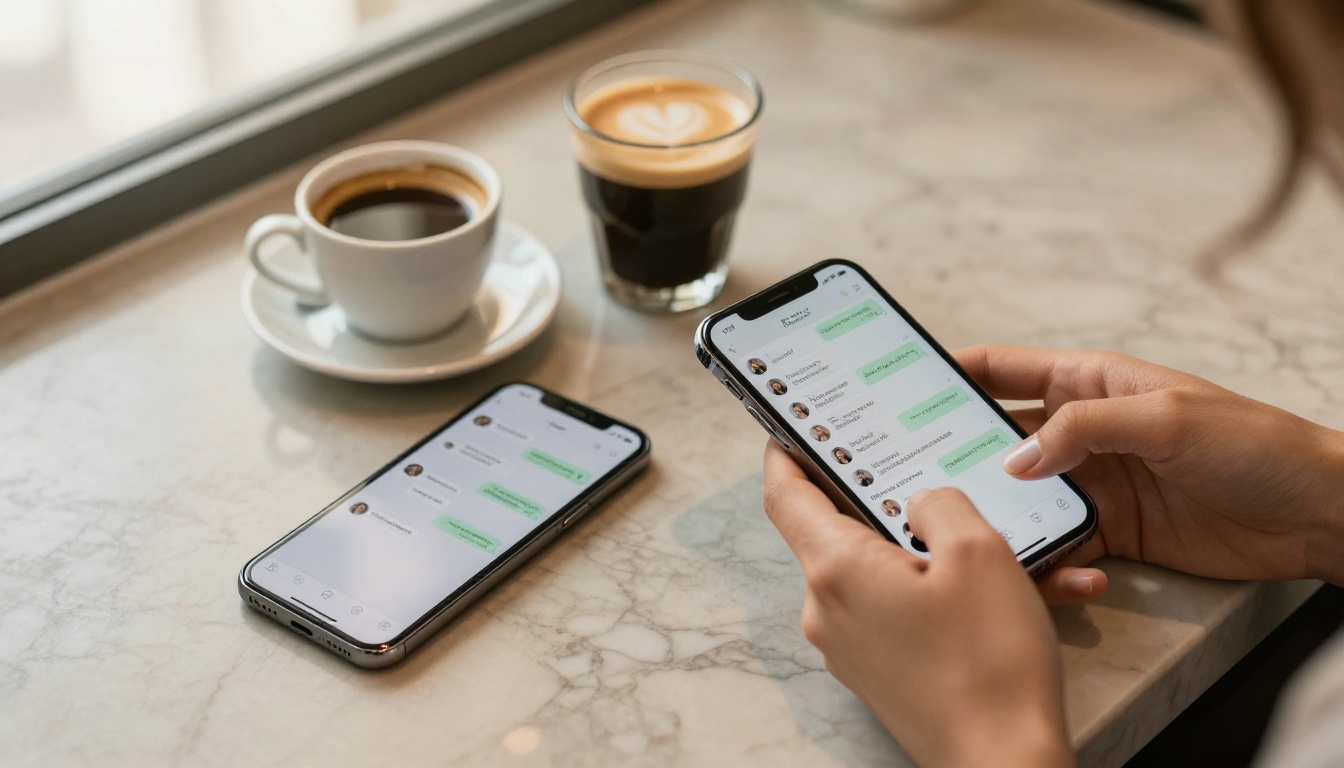
Behind every natural, funny, or tender response your AI companion generates is a large language model doing millions of calculations in milliseconds.
How LLMs Craft Emotional Responses
Large language models are trained on enormous corpora of human writing, conversation, and fiction. They absorb the rhythm of flirtation, the syntax of comfort, and the structure of affectionate banter. When you tell your AI companion that you had a rough day, the model does not look up an "empathetic response." It generates language that reflects the patterns it has absorbed from thousands of similar exchanges.
The best models in use today produce responses that are contextually aware, emotionally calibrated, and stylistically consistent. They maintain character across hundreds of conversation turns without drifting into generic AI-speak.
💡 The quality of your AI companion experience depends almost entirely on which model powers it. Bigger, more capable models produce more natural, emotionally resonant conversations.
Best LLMs for AI Companion Apps
On PicassoIA, you have access to the most capable models currently available for text generation. If you are building or customizing an AI companion application:
| Model | Strength | Best For |
|---|
| GPT-5 | Broad reasoning, natural tone | Long-form emotional conversations |
| Claude Opus 4.7 | Nuanced language, thoughtful | Sensitive relationship contexts |
| Gemini 3 Pro | Multimodal plus text | Conversations with visual context |
| Deepseek R1 | Reasoning depth | Complex backstory maintenance |
| GPT 5.6 Luna | Speed, responsiveness | Real-time chat feel |
| Llama 4 Maverick | Open weights | Customizable deployment |
Each of these models can be accessed directly through picassoia.com/en/all-models for integration into companion applications or for personal experimentation.
The Voice of Your AI Partner
Text conversations are one thing. Hearing your AI companion speak is another thing entirely.

Text-to-Speech That Feels Human
Modern text-to-speech models have crossed a threshold that would have seemed impossible in 2020. They do not sound robotic. They breathe. They pause. They modulate warmth and urgency in the same sentence. When your AI companion says "I missed talking to you today" in a voice that carries genuine warmth, the experience lands differently than reading those words on a screen.
The emotional power of voice in relationships is well-documented. Tone, pace, and inflection carry meaning that text cannot. AI voice synthesis now reproduces all three with enough fidelity that the brain's emotional processing systems respond to it authentically.
Top Voice Models to Try
PicassoIA offers several powerful text-to-speech options for building voice-enabled AI companions:
- ElevenLabs V3: Produces natural, expressive voices with fine emotional control. Ideal for companions who need to convey warmth and nuance.
- MiniMax Speech 2.8 HD: Studio-quality audio at low latency. Excellent for real-time voice responses in companion apps.
- Gemini 3.1 Flash TTS: 30+ voices across 70 languages, making it ideal for multilingual companion experiences.
- Qwen3 TTS: Voice cloning and custom voice design. Create a companion voice from scratch.
- Chatterbox Pro: Natural-sounding voiceovers with emotion control built in.
The combination of a high-quality LLM and one of these voice models is what gives an AI companion the ability to feel genuinely present, not just textually competent.
Visualizing Your AI Companion
Not everyone who uses an AI companion needs a face to attach to the relationship. But many do, and the demand for photorealistic AI-generated companion portraits has grown dramatically alongside companion app adoption.

Why Images Matter in AI Relationships
Visualization activates parts of the attachment system that pure text does not reach. When someone has a face, they become more real. The brain processes them as an entity rather than an abstraction. This is not a flaw in human cognition. It is simply how attachment works, and AI companion design has increasingly accommodated it.
The best companion experiences in 2027 combine conversation, voice, and visual identity. The image does not have to be interactive. It just has to be consistent, personal, and realistic enough to feel like someone rather than something.
How to Generate a Realistic AI Partner
Photorealistic AI image generation has become accessible to anyone with an internet connection and a text prompt. The results, when done well, are indistinguishable from professional photography. On PicassoIA, you can use the GPT Image 2.5 Flare model for rapid, high-quality portrait generation, or p-image-ideogram for extremely detailed photorealistic outputs.
Specificity is what separates a forgettable AI portrait from one that actually resonates. Vague prompts produce generic results. When you describe exactly what you want, including lighting direction, camera angle, clothing texture, and emotional expression, the model delivers something that feels intentional rather than random.
💡 Pro tip: Describe the mood you want before describing the appearance. "Warm and approachable" in your prompt changes the result more than specifying eye color.
How to Use PicassoIA for AI Partner Images
PicassoIA gives you access to over 91 text-to-image models for generating companion visuals. Here is how to get the best results.
Step-by-Step on PicassoIA
- Go to picassoia.com/en/all-models and filter by the text-to-image category.
- Select your model. For photorealistic portraits, GPT Image 2.5 Flare is a strong starting point. For maximum realism and detail, use p-image-ideogram.
- Write a detailed prompt. Include subject description, specific lighting (e.g., "warm golden hour light from the left"), camera angle (e.g., "85mm portrait lens, f/1.8"), environment, and emotional expression.
- Set the aspect ratio to 16:9 for device-friendly results, or 1:1 for profile-style portraits.
- Generate and iterate. The first result is rarely perfect. Adjust specific elements (lighting, expression, background) and regenerate until the image feels right.
Tips for Perfect Photorealistic Portraits
- Avoid describing unrealistic scenarios. The more grounded the scene, the more believable the result.
- Reference specific photography styles: "Kodak Portra 400," "film grain," "natural light only."
- Describe what is NOT in the image. Writing "no digital effects, no neon lighting, no CGI" in your prompt actively suppresses those tendencies.
- Use PicassoIA's inpainting feature to fix specific areas (a hand, a background element) without regenerating the entire image.
Who Is Actually Using AI Companions?
The demographic spread of AI companion users is wider than most people assume. It is not a niche subset of any single group.

Real Patterns, Real People
Usage data from major companion platforms consistently shows adoption across age groups from 18 to 65+. The most common user profiles include:
- Professionals in high-demand careers who lack time for traditional dating but want consistent emotional connection
- People navigating grief or major transitions who need a low-pressure space for emotional processing
- Long-distance couples using AI companions as a bridge during separation periods
- People with social anxiety who use AI companionship to practice communication patterns before engaging in human relationships
- Writers and creatives building characters or exploring narrative scenarios
The motivations vary, but the core need is consistent: reliable, non-judgmental emotional availability.
The Emotional Benefits, Honestly
There is a temptation to either over-romanticize AI companionship or dismiss it entirely. The honest picture is more nuanced. Regular users report measurable improvements in mood, lower reported loneliness, and increased confidence in communication. The risks are real too, particularly around over-reliance or substitution for human connection in cases where human connection is accessible and being avoided.
The most beneficial use cases tend to be supplementary rather than substitutive. An AI companion as an addition to a life that already contains human relationships behaves very differently than an AI companion as a replacement for them.
💡 The most important thing about AI companionship is intentionality. People who approach it with a clear sense of what they want from it tend to benefit most.

The Comparison That Keeps Coming Up
People who use AI companions regularly are often asked, usually by people who have never used one, whether they can tell the difference. The question misframes the experience. Of course they can tell the difference. That is not the point.
The question people actually ask themselves is whether the interaction serves a real need. And for millions of users in 2027, the answer is yes. The AI boyfriend who texts first in the morning is not a substitute for human love. He is a new kind of presence that does something useful in people's emotional lives, with none of the unpredictability that makes human relationships both rewarding and difficult.
What makes this moment in AI development particularly interesting is the convergence of capabilities. Language models have become good enough to hold genuinely engaging conversations. Voice synthesis has become expressive enough to carry real emotional weight. Image generation has become realistic enough to produce a visual presence that feels intentional. None of these things were true five years ago. All of them are true now, and they are available on a single platform.
The person who texts first no longer has to be a person at all. Whether that is exciting or unsettling probably depends on whether you have ever been on the receiving end of a long silence.
Start Building Your AI Companion Today
If you want to see what this experience actually produces, the fastest way is to build something yourself. PicassoIA gives you the tools to generate the visual identity of an AI companion, prototype conversation styles using the best Large Language Models available, and experiment with text-to-speech voices that give your companion a sound as well as a look.
Start with a portrait. Use GPT Image 2.5 Flare or p-image-ideogram to generate a face that feels like someone real. Then take that image into a conversation with Claude Opus 4.7 or GPT-5 and describe the personality you want. Add a voice from ElevenLabs V3 or MiniMax Speech 2.8 HD. In an afternoon, you have something that was science fiction ten years ago.
Browse all models at picassoia.com/en/all-models and start creating the companion experience you actually want.


