HiDream-O1 is a new kind of AI image model, one that does not fit neatly into the "text-in, image-out" framing most people use when thinking about diffusion systems. Its architecture is built differently. Its approach to prompt interpretation is different. And the results it produces in benchmark comparisons have genuinely surprised researchers who expected another incremental improvement on existing foundations. This article breaks down what HiDream-O1 is, why its unified design matters, and what it means for anyone generating images with AI today.

What HiDream-O1 Actually Does
HiDream-O1 is a unified AI image model developed by HiDream AI, designed to treat text understanding and visual synthesis as a single integrated process rather than two separate stages. Most diffusion-based image models work by encoding a text prompt separately, then conditioning a denoising process on that encoded representation. The encoding and the generation are fundamentally decoupled. HiDream-O1 changes that relationship at an architectural level.
The "Unified" Part Means Something
The word "unified" in HiDream-O1 is not marketing language. It refers to a specific architectural decision: the model does not rely on a frozen, external text encoder to process prompts. Instead, it integrates language model-style token processing directly into the image generation backbone. Text tokens and image tokens pass through the same attention mechanisms, creating a bidirectional influence between the description you write and the image being formed.
When you write a detailed, nuanced prompt, the model does not compress it into a fixed vector and then try to condition a separate diffusion process on that compressed signal. The additional detail is preserved, weighted, and distributed across the generation process throughout, not just at the start.
💡 Most prompt failures happen at the encoding step. When a text encoder misses a subtle relationship between words, no amount of diffusion quality can recover it. Unified processing sidesteps this bottleneck entirely.
How O1 Differs From I1
HiDream released its first major model as HiDream-I1, a 17-billion-parameter text-to-image model that attracted significant attention when it launched as open-source in early 2025. I1 was impressive for its scale and strong prompt adherence. O1 builds on that foundation but takes a more deliberate approach to reasoning through visual composition before committing to pixel-level synthesis.
Where I1 generates images in a relatively direct pass, O1 incorporates a form of staged visual reasoning: it evaluates compositional decisions (subject placement, lighting logic, spatial relationships) before the diffusion process begins in earnest. Think of it as the model working through a structural plan before drawing, resulting in more coherent complex scenes across the board.

The Architecture Behind the Model
Understanding why HiDream-O1 performs the way it does requires a look at what makes its architecture different from models like Flux Dev or Stable Diffusion 3.
Diffusion Transformers, Not Standard Diffusion
HiDream-O1 is built on a diffusion transformer (DiT) backbone rather than a traditional UNet-based diffusion architecture. This is a meaningful distinction. UNet models process images through encoder-decoder paths with skip connections, which works well but creates structural bottlenecks when scaling. Transformers scale more gracefully and allow attention mechanisms to operate globally across the entire image at each diffusion step.
The practical result is better long-range coherence. Objects in different parts of an image maintain consistent lighting, consistent scale, and consistent stylistic treatment more reliably than in UNet-based systems. For scenes with multiple subjects or complex environments, this architectural difference shows up visibly in the output.
| Architecture | Long-Range Coherence | Prompt Sensitivity | Scaling Efficiency |
|---|
| UNet (SD-style) | Moderate | Moderate | Limited |
| DiT (HiDream-O1) | High | High | Strong |
| Hybrid Transformer | Moderate-High | High | Moderate |
LLM-Guided Token Processing
The most technically novel aspect of HiDream-O1 is how it handles the interface between language understanding and image generation. The model borrows mechanisms from large language model (LLM) architectures, specifically the way attention heads in LLMs handle long-context dependencies between tokens.
In practical terms, this allows HiDream-O1 to process prompts of unusual length and complexity without the typical degradation in coherence that shorter-context encoders produce. A 200-word prompt describing an elaborate scene with multiple subjects, specific lighting conditions, and precise compositional instructions will be processed with substantially better fidelity than models relying on CLIP-style encoders, where the effective context window limits how much detail survives into the generation.
Benchmarking AI image models is notoriously difficult because so much of what matters is subjective. That said, HiDream-O1 has been evaluated on several standard metrics that provide reasonably objective comparisons against competing systems.
Benchmarks Worth Caring About
On GenAI-Bench, designed to evaluate prompt adherence across complex compositional instructions, HiDream-O1 scores substantially above earlier Stable Diffusion variants and competitive with or above DALL-E 3 in several categories. The key improvement shows up in attribute binding: when you tell a model "a red cube on top of a blue sphere next to a green cylinder," attribute binding measures whether the colors actually match the described objects rather than being randomly distributed. O1's unified processing makes this kind of specific assignment more reliable.
On T2I-CompBench, which evaluates compositional text-to-image generation specifically, HiDream-O1 shows a notable lead in spatial relationship accuracy. Prompts describing relative positions (in front of, behind, to the left of) produce correct spatial arrangements at a higher rate than most competing models at equivalent parameter counts.
- Attribute binding: Significantly improved over encoder-conditioned models on complex prompts
- Spatial accuracy: Higher than average across "in front of / behind / beside" relationship prompts
- Human preference studies: Evaluators consistently prefer O1 outputs for prompts with 3+ described elements
- FID (Frechet Inception Distance): Competitive with top-tier models on standard image quality benchmarks
Where It Beats the Competition
The clearest performance advantages appear in three specific categories:
- Multi-object scenes: When a prompt includes 3 or more distinct objects with different attributes, O1 maintains attribute-object binding with significantly fewer errors than single-stage encoder-conditioned models
- Spatial composition: Relative positioning instructions are respected more accurately because spatial reasoning is incorporated before pixel-level synthesis begins
- Long prompt handling: Detail density in the generated image increases with prompt length rather than plateauing or degrading past a certain threshold
For simpler prompts ("a dog on a beach"), the differences between O1 and well-tuned models like Flux Pro are less dramatic. The architecture's advantages compound as prompt complexity increases.
HiDream Variants on PicassoIA
PicassoIA offers three variants of the HiDream L1 model family, each optimized for different use cases. Picking the right one for your workflow makes a significant difference in both speed and output quality.
The fast variant is built for rapid iteration. If you're developing a creative concept and need to see a dozen variations quickly, HiDream-L1-Fast delivers results in a fraction of the time that full-quality inference requires. The trade-off is some loss of fine detail, particularly in complex textures and at object boundaries. For concept exploration and prompt development, it's the right starting point before committing to full inference runs.
Best for: Rapid iteration, concept exploration, prompt testing
Speed: Significantly faster than full inference
Trade-off: Reduced fine detail in textures and edges
The full variant runs complete inference without the step-count reductions of the fast version. This produces noticeably sharper results, better texture rendering, and more faithful adherence to detailed prompt instructions. If you're generating images for publication, client work, or any context where quality matters more than iteration speed, HiDream-L1-Full is the appropriate choice.
Best for: Final output, publication-ready images, complex compositional prompts
Quality: Full model capacity, maximum detail retention
Resolution: Up to 1024x1024, extendable with super-resolution upscaling
The dev variant is oriented toward users who want to probe the model's capabilities more directly. It offers more configurability around inference parameters and is particularly useful for researchers, prompt engineers, and anyone building workflows on top of the HiDream architecture. HiDream-L1-Dev exposes inference controls that consumer-facing variants abstract away.
Best for: Research, parameter exploration, workflow development, fine-tuning investigation
Configuration: More exposed inference controls
Use case: Technical users, power users, and developers

3 Image Types It Excels At
Knowing where a model performs at its best helps you extract maximum value from it. HiDream-O1 has three distinct categories where its architectural advantages translate most clearly into visible output quality improvements.
Portraits and Faces
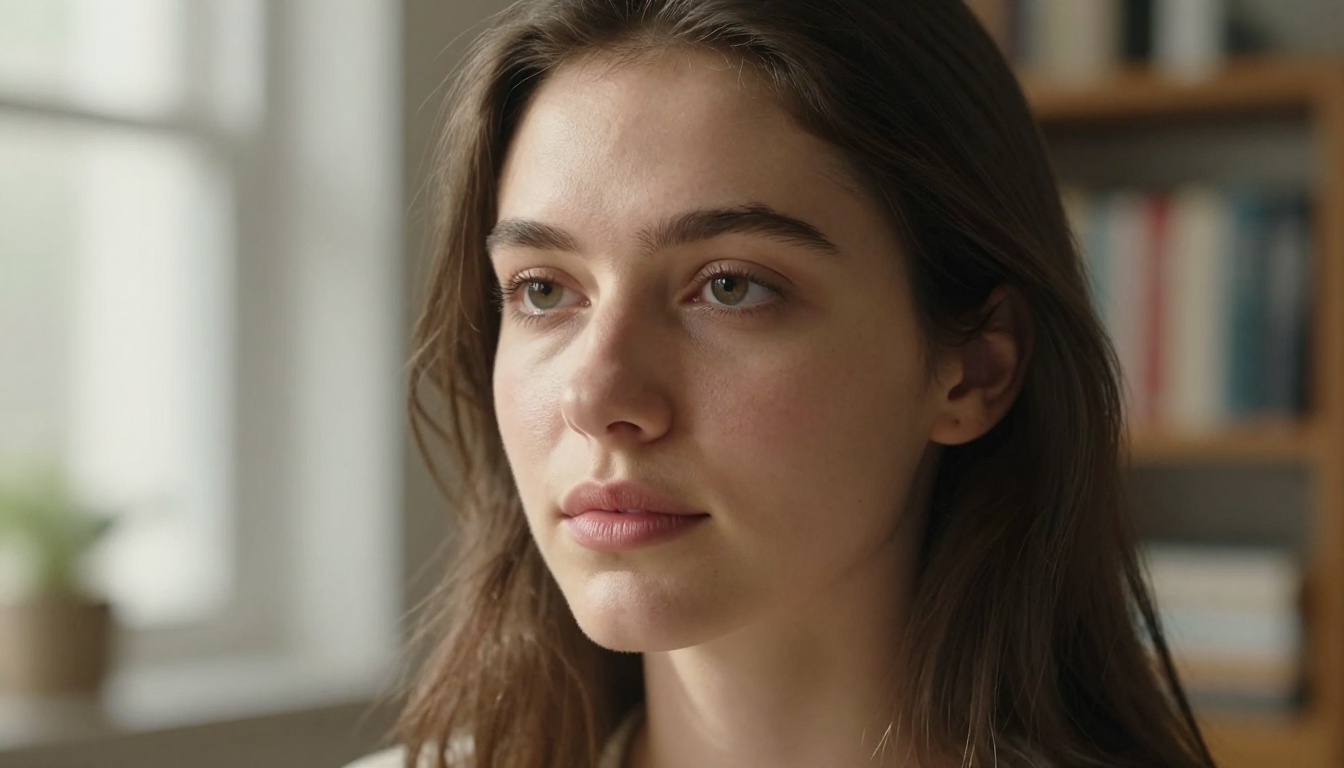
Human portrait generation is where prompt-to-output fidelity matters most visibly. When you describe a specific expression, lighting setup, age, or emotional quality, HiDream-O1's unified processing means those descriptors are weighted and respected throughout the generation process rather than being partially lost at the encoding stage.
Portrait outputs show strong skin texture rendering, accurate expression matching, and consistent lighting across the face that corresponds to the described light source direction. Paired with Flux Canny Pro for structural control or super-resolution upscaling for final delivery, portrait outputs reach a level of detail that was difficult to achieve with earlier open-source models.
Complex Scene Composition
A scene with five distinct elements (a specific setting, two characters with different attributes, a particular time of day, and a described emotional tone) will expose the compositional limits of almost any image model. HiDream-O1 handles this class of prompt with notably fewer errors than single-stage encoder-conditioned architectures.
💡 The spatial reasoning improvements in O1 are most apparent when you include directional language in your prompts. Words like "behind," "casting a shadow on," and "reflecting in" tend to produce accurate positional results consistently.
Texture and Material Detail
Material rendering is a secondary strength: fabric weave texture, water surface behavior, metallic reflection quality, and rough stone or concrete surfaces all benefit from the model's ability to maintain consistent material properties across an image. When describing a specific material type in a prompt, the output tends to honor that description across the full frame rather than reverting to generic approximations in peripheral areas.

How to Use HiDream on PicassoIA
Using the HiDream models on PicassoIA follows the same interface as the platform's other text-to-image generators, with some prompt practices that work particularly well given the architecture's strengths.
Your First Prompt
Start with HiDream-L1-Fast for initial exploration. Write your prompt in natural language, describing the subject, setting, lighting, and mood in as much detail as feels natural. Because of O1's stronger prompt adherence, being specific pays off in a way that it does not always with models that lose context past a certain token count.
A prompt structure that works well with HiDream:
- Subject: Who or what is in the image, with specific attributes and characteristics
- Setting: Where the scene takes place, with environmental details and context
- Lighting: The specific light source, its direction, quality (hard, soft, diffuse), and color temperature
- Camera: The simulated lens, focal length, distance, and angle of view
- Atmosphere: The emotional or stylistic tone of the image
Example: "A woman in her 30s in a cream linen jacket, sitting at a wooden desk in a sunlit studio, warm afternoon light from the left window creating soft directional shadows, shot at 85mm f/1.8 with soft bokeh behind her, quiet and focused atmosphere, Kodak Portra 400 film grain"
Parameters That Matter
When working with HiDream-L1-Full, the guidance scale parameter has a strong influence on output character:
- Lower guidance scale (3-5): More creative interpretation, some deviation from literal prompt description
- Mid guidance scale (6-8): Balanced fidelity and aesthetic quality, the recommended default range
- Higher guidance scale (9-12): Strict prompt adherence, risk of over-saturation or artifact introduction in some cases
Step count also matters: fewer steps produce faster but noisier results. A range of 30 to 40 steps is typically the sweet spot for quality-to-speed balance with the full model. For the dev variant, experimenting with different schedulers (DDIM, DPM++, Euler) reveals different aesthetic characteristics in the same prompt.

HiDream-O1 vs Other Frontier Models
Positioning HiDream-O1 relative to other current image models helps clarify where it fits in the landscape and when to reach for it.
Against Flux and Stable Diffusion
Flux Dev and Flux Pro are strong general-purpose image generators with excellent aesthetic output and a large, well-established user base. For casual to intermediate prompting, Flux produces excellent results with relatively short prompts. Where HiDream-O1 pulls ahead is specifically in complex compositional prompts and in multi-object attribute binding. When workflows involve detailed, instruction-heavy prompts with many described elements, the performance difference becomes measurable.
Stable Diffusion 3 marked a real architectural step forward from earlier SD versions and produces strong results across a wide range of prompt types. HiDream-O1 and SD3 are competitive in many areas, with O1 showing clearer advantages in spatial composition accuracy and in handling prompts that exceed typical encoder context limits.
Recraft 20B and Ideogram v3 Turbo are strong alternatives for specific use cases (vector work and text rendering respectively), but neither targets the same compositional-coherence niche that HiDream-O1 occupies.
| Model | Simple Prompts | Complex Composition | Long Prompts | Open Source |
|---|
| HiDream-O1 | Strong | Very Strong | Very Strong | Yes |
| Flux Pro | Very Strong | Strong | Moderate | No |
| Stable Diffusion 3 | Strong | Strong | Moderate | Partially |
| Flux Dev | Strong | Moderate | Moderate | Yes |
| Recraft 20B | Strong | Moderate | Moderate | No |
The Open-Source Advantage
One of the more significant facts about HiDream-O1 is that the model weights are publicly available. Open weights allow the community to fine-tune the model on specific domains, meaning specialized versions for architectural visualization, fashion, product photography, or any other vertical can be built on top of the base model without waiting for a provider to release a targeted variant.
The HiDream-L1-Dev variant is specifically designed to support this kind of research and fine-tuning work. For users working through PicassoIA, the open-source trajectory also means that the model benefits from community improvements over time, as fine-tuned versions and optimized inference implementations feed back into the broader ecosystem.
Start Creating With HiDream Now
HiDream-O1 performs best when given specific, detailed prompts that take advantage of its unified processing architecture. The model rewards effort in prompt construction in a way that simpler systems do not, because the additional detail does not get lost at an encoding stage. A prompt that would be ignored or garbled by an encoder-conditioned model tends to be faithfully represented in HiDream's output.
For photographers and art directors building mood boards, the spatial composition accuracy means reference images match the described vision more reliably. For content creators, the portrait quality and attribute binding make character consistency across multiple generations more achievable. For researchers and developers, HiDream-L1-Dev provides direct access to inference parameters that most consumer-facing generators keep hidden.
PicassoIA also offers tools that pair naturally with HiDream outputs. Once you have a strong base image, Flux Fill Pro handles inpainting and detail additions, Flux Depth Pro manages depth-aware edits, and Flux Kontext Fast enables rapid in-context photo editing without losing the original image's character.
If you have not tried the HiDream models yet, HiDream-L1-Fast is the right place to start. Write a prompt you have used before on another model, run it through HiDream-L1-Fast with the same parameters, and compare the results side by side. The differences in complex prompt handling tend to become obvious on the first attempt, particularly in scenes with multiple subjects or detailed spatial descriptions.
Take a prompt that has frustrated you on other models. Bring it to HiDream-L1-Full with the same wording and see what happens when the architecture is actually built to retain that detail.