If you've spent any time working with AI image or video generators, you already know the frustration. You create a perfect character. The face, the hair, the vibe, exactly what you wanted. Then you try to generate that same character in a different scene and it looks like a completely different person. That problem is exactly what Higgsfield Soul ID was designed to solve.
What Higgsfield Soul ID Actually Does
Soul ID is Higgsfield AI's answer to the character consistency problem. It creates a persistent digital identity for a character, which can then be used across multiple generated images and video clips without losing the core visual attributes that make that character recognizable.
The concept is straightforward on the surface: upload a reference image of a person (real or AI-generated), and Soul ID extracts a mathematical representation of their identity. From that point forward, when you generate new content, the system uses that identity embedding to keep the face, proportions, and general look consistent regardless of what changes around it.
The Character Consistency Problem

AI generators are stateless by default. Every generation is a fresh inference from a text prompt, and unless you include very specific technical constraints, the model has no memory of what your character looked like last time. You can describe "a woman with auburn hair and blue eyes" a hundred times and get a hundred different women.
This limitation creates real problems for:
- Storytellers who need the same protagonist throughout a visual narrative
- Brand creators who want a consistent mascot or spokesperson character
- Content series where character recognition builds audience loyalty
- Social media creators who want a signature AI persona across posts
Soul ID addresses this at the model level rather than relying on prompt engineering tricks, which is what makes it notable.
How Soul ID Extracts Identity
The technical process works roughly like this:
- A reference image is passed through a dedicated identity encoder
- The encoder produces a high-dimensional identity vector, essentially a numerical fingerprint of the face
- That vector is injected into the generation pipeline's cross-attention layers
- During inference, the attention mechanism constantly pulls the output toward the stored identity
This is different from just running image-to-image with high denoise strength, which tends to copy the entire composition rather than just the identity. Soul ID specifically isolates facial structure, proportions, and characteristic features while leaving room for pose, lighting, expression, and background to vary freely.
How the Identity Embedding Works

The identity embedding concept is not unique to Higgsfield. It draws on years of research in face recognition, IP-Adapter architectures, and subject-consistent diffusion. What Soul ID contributes is a polished, production-ready implementation designed for consumer creators rather than researchers.
Reference Image Processing
When you feed a reference image into Soul ID, the system:
- Detects and crops the face region automatically
- Normalizes the face pose to a canonical frontal position
- Runs the encoder to produce the identity latent vector
- Stores the vector tied to a named Soul ID profile
That last point matters for workflow. Soul ID is not a one-shot operation. You create named profiles that persist in your account, and you can reuse them indefinitely. Create "Emma" once, and Emma is available for every future generation.
Latent Space and Identity Injection
How it works: The identity vector lives in the same high-dimensional latent space that the diffusion model uses during generation. By injecting it through cross-attention, the model treats "this character's face" as a conditional signal alongside your text prompt.
The result is that your text prompt controls the scene, the pose, the outfit, and the mood. The Soul ID controls who is in the scene. These two signals operate somewhat independently, which is why you can write "Emma hiking in the mountains at dawn" and get a recognizably Emma figure in a completely novel setting.
Frame-by-Frame Consistency in Video
For Higgsfield's video generation, Soul ID extends to temporal consistency. Each frame receives the same identity injection, preventing the drift that would otherwise cause a character's appearance to shift as a video sequence progresses. This is substantially harder to achieve in video than in single images because video models must balance identity fidelity with motion naturalness.
Real Use Cases for Soul ID

Social Media Series
The most common use case by far. Creators who build an audience around a specific AI persona need that persona to look recognizably consistent from post to post. Without consistency, the character reads as generic AI output. With it, the character can build recognition and even emotional connection with an audience.
Soul ID makes this sustainable. Instead of spending twenty minutes on prompt engineering and iteration to approximate last week's character look, you call the stored profile and the consistency is handled automatically.
Short Film and Visual Storytelling
Narrative visual content lives or dies on character continuity. The viewer needs to follow a protagonist across scenes, locations, and emotional arcs. Soul ID enables this at a practical level for solo creators who otherwise couldn't produce a visually coherent short film using generative AI.
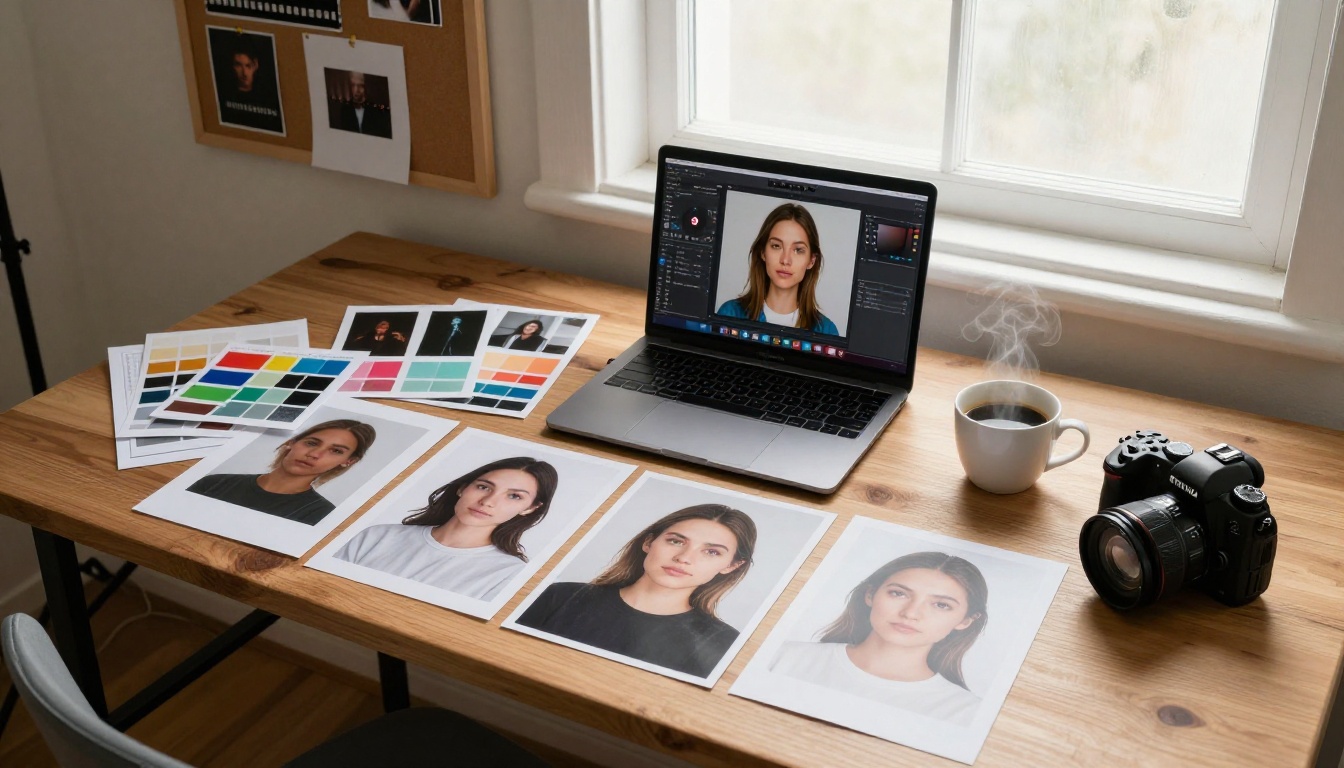
The storytelling application extends to:
- Webcomics generated with consistent characters across panels
- Children's book illustrations where the same child protagonist appears in every spread
- Product demonstrations featuring a consistent brand ambassador
- YouTube thumbnails with a recurring character that viewers recognize instantly
Brand Mascots and Spokespersons
Companies building AI-generated marketing content need consistency for brand recognition. A mascot that looks different in every advertisement is not a mascot. Soul ID gives marketing teams a way to lock in a character's visual identity and use it reliably across campaigns without going through a full production pipeline each time.
Limitations You Should Know

Soul ID is genuinely impressive, but it has constraints worth knowing before you commit your workflow to it.
When Soul ID Breaks Down
| Scenario | What Happens | Severity |
|---|
| Extreme pose changes (profile view, head tilted 90°) | Facial features drift noticeably | Moderate |
| Very different lighting (harsh side-lit) | Identity fidelity decreases | Minor |
| Non-photorealistic styles | Identity injection competes with style guidance | Moderate |
| Low-quality reference images | Encoder produces a noisy embedding | Major |
| Children or unusual facial structures | Less training data, less reliable output | Moderate |
The system performs best with high-quality, well-lit, frontal or near-frontal reference images. The better your input, the tighter the identity lock.
Platform Restrictions
Higgsfield's Soul ID is locked inside the Higgsfield ecosystem. You cannot export the identity vector and use it in another tool. Your character profiles live in Higgsfield's infrastructure, which creates some dependency concerns if your workflow needs flexibility across platforms.
Additionally, Higgsfield operates on a credits model that can get expensive for high-volume content production. If you're generating hundreds of images per month, the cost per generation adds up fast.
Character Consistency on PicassoIA
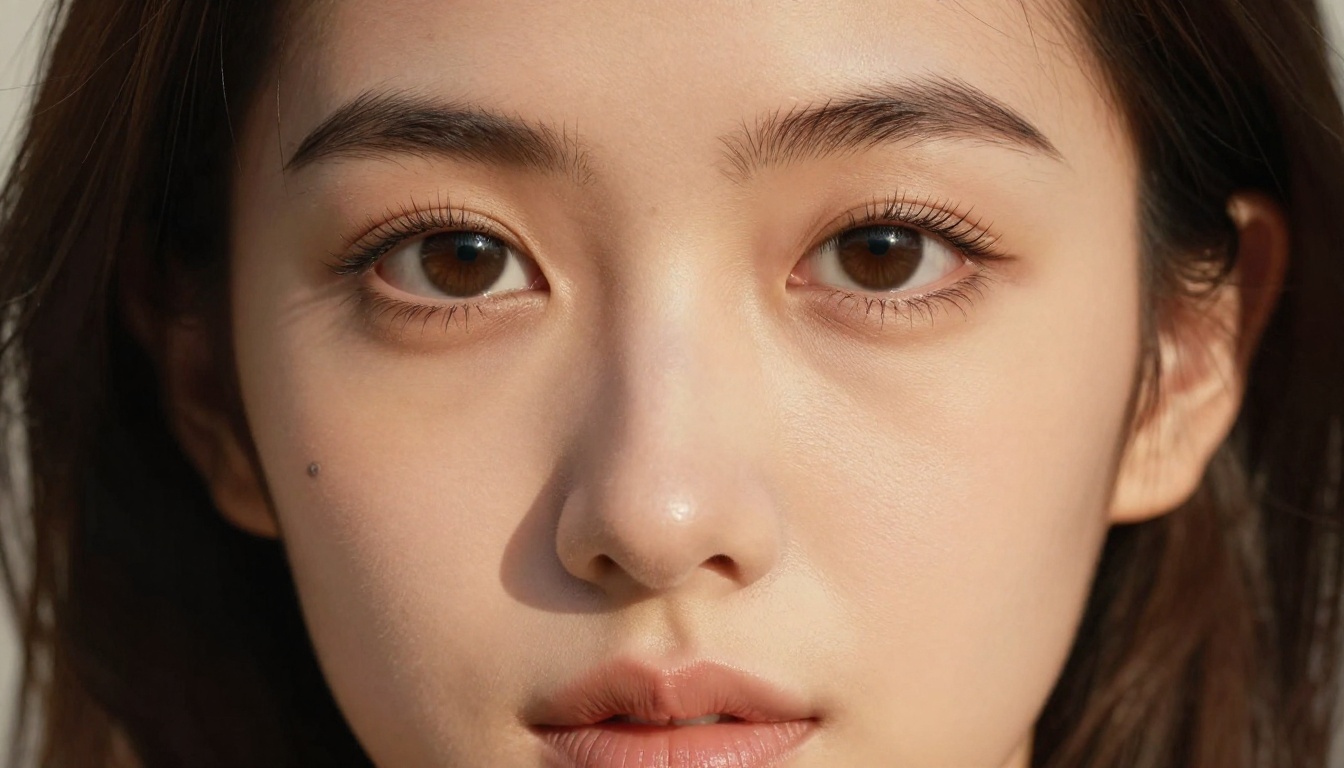
PicassoIA offers multiple approaches to character consistency that don't lock you into a single platform's ecosystem. The strategy here is different: rather than a single proprietary "Soul ID" system, PicassoIA gives you access to a broad set of models and methods that you can combine for consistent, reliable results.
FLUX Models for Identity-Stable Generation
The FLUX 1.1 Pro and FLUX 1.1 Pro Ultra models show unusually strong prompt adherence for facial consistency. When you describe a specific character with detailed physical attributes, FLUX tends to honor those attributes more reliably than older architectures.
FLUX Dev and FLUX Pro are particularly effective when you:
- Write detailed, specific character descriptions (hair color, eye color, facial structure, skin tone)
- Use a seed value to anchor the generation's random starting point
- Keep the core character description consistent across prompts while varying only scene elements
Tip: Fix your character's seed in FLUX and reuse the same detailed physical description across prompts. The combination of seed anchoring and FLUX's strong prompt following produces noticeably more consistent results than most other models on the market.
RealVisXL for Photorealistic Characters
RealVisXL v3 Turbo excels at photorealistic portrait generation. For creators who need a character that reads as a real person rather than an AI rendering, RealVisXL delivers natural skin texture, realistic lighting interaction, and authentic facial proportions across generations.
ControlNet for Structural Consistency
The SDXL Multi-ControlNet LoRA provides structure-level control that complements identity-level control. By using a reference pose or depth map from an existing character image, you can maintain not just the face but the general body proportions and spatial relationship across generations.
SDXL with the ControlNet pipeline is a powerful combination for creators who need their character in specific poses while keeping the visual identity intact.
How to Get Consistent Characters Without Soul ID

Here is a practical workflow for character consistency on PicassoIA without needing a proprietary identity system:
Step 1: Create your canonical reference
Start with FLUX 1.1 Pro or Realistic Vision v5.1. Generate your character in a neutral pose, neutral background, soft even lighting. Write down every physical attribute in detail immediately after.
Step 2: Build your character description string
Write a reusable character description that you'll paste into every prompt. For example:
"30-year-old woman, straight black hair cut at shoulder length, light amber eyes, defined jawline, small upturned nose, light brown skin, small scar above left eyebrow"
That string becomes the identity anchor. It's portable, platform-agnostic, and you own it completely.
Step 3: Fix the seed (optional but powerful)
When using FLUX Schnell or FLUX Dev, set a seed that produces a strong match for your character description. Record that seed. Reusing it with the same description keeps results in a much tighter visual range.
Step 4: Control structure with ControlNet
For scenes that require specific poses, take your canonical reference image and run it through SDXL Multi-ControlNet LoRA as a pose reference. The model will adopt the pose while following your character description for the face and body details.
Step 5: Upscale and refine
Use PicassoIA's super-resolution tools to sharpen your final outputs and correct any minor drift in facial features through targeted inpainting on specific areas.
Soul ID vs Other Approaches

| Feature | Higgsfield Soul ID | PicassoIA (FLUX + ControlNet) | Prompt Engineering Only |
|---|
| Setup time | Fast (upload reference, done) | Medium (requires workflow setup) | Minimal |
| Consistency score | Very high | High | Low to moderate |
| Platform lock-in | High | None | None |
| Cost | Credits per generation | Credits per generation | Same |
| Video support | Yes (native) | Via separate video models | Limited |
| Style flexibility | Good | Excellent | Full |
| Export and portability | No | Yes | Yes |
| Model variety | Limited to Higgsfield | 90+ models | Depends on platform |
The honest comparison: Soul ID is more turnkey for its specific purpose. But PicassoIA's approach gives you more control, more model options, and no lock-in. For creators who want to own their workflow, the PicassoIA approach wins on flexibility. For creators who want the fastest path to character consistency in video, Soul ID's native video integration is currently ahead.
Try It and See the Difference
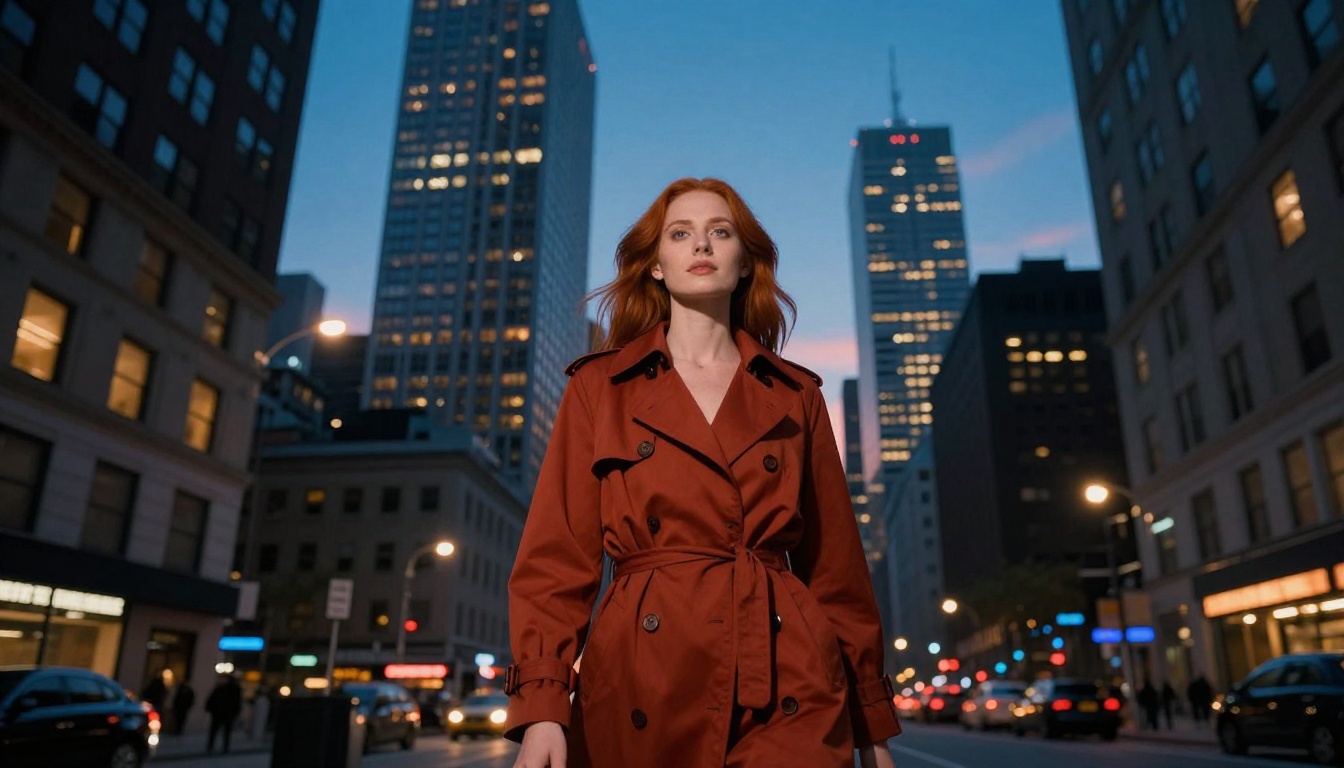
Character consistency has been one of the hardest problems in AI content creation, and watching dedicated tools emerge to tackle it is genuinely exciting for creators of all kinds. Soul ID is one strong answer. But the multi-model approach available on PicassoIA is another, one that trades some convenience for substantial freedom.
If you want to see what consistent character generation looks like in practice, try starting with FLUX 1.1 Pro on PicassoIA. Write a detailed character description, fix a seed that gives you a strong result, and then vary only the scene elements across your next five prompts. The consistency you get from that simple workflow might surprise you.
From there, bringing in SDXL Multi-ControlNet LoRA for pose control and RealVisXL v3 Turbo for photorealism gives you a full character consistency pipeline. No proprietary system required, no platform dependency, and access to over 90 text-to-image models whenever you want to experiment with a different visual direction for your character.


