Every time you upload a photo and an app instantly names the objects inside it, something quietly remarkable has happened. A machine with no eyes, no nervous system, and no lived experience has looked at a grid of colored numbers and produced meaning from it. That process is not magic. It is a specific, learnable set of mathematical operations that researchers spent decades refining. Understanding how AI knows what things look like reveals something surprising: vision turns out to be far more about statistics than perception.
What "Seeing" Actually Means for a Machine
Pixels Are Just Numbers
To a computer, an image is nothing more than a rectangular grid of numbers. Each pixel holds three values representing red, green, and blue intensity on a scale from 0 to 255. A 1920x1080 photograph contains over six million of these values. There is no concept of "a cat" or "a chair" baked into any of them. The meaning has to be constructed from scratch, layer by layer.
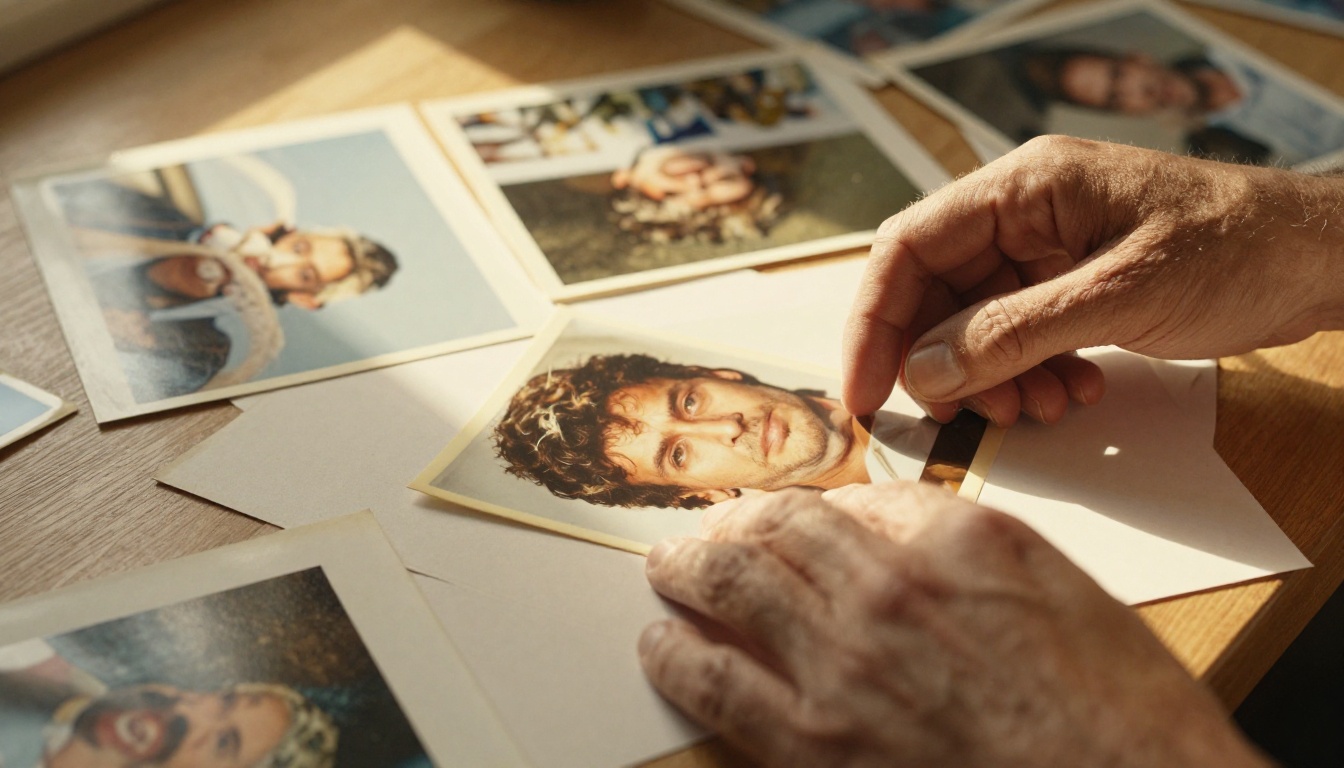
That is the foundational challenge of computer vision: taking raw numerical data and producing semantic understanding. For a long time, engineers tried to write explicit rules. "If you see a round shape above two vertical lines with a flat base, that is probably a lamp." It did not work. Real-world objects have infinite variation in angle, lighting, occlusion, and context. The rules always broke.
Patterns Hidden in Plain Sight
The breakthrough came when researchers stopped writing rules and started letting machines find patterns on their own. Instead of specifying what a dog looks like, you show a neural network ten million labeled dog photos and let it figure out which numerical patterns reliably predict the label "dog."
This sounds simple. The implementation is not. The network needs architecture that respects the spatial structure of images, training data at massive scale, and optimization strategies that prevent it from simply memorizing examples rather than generalizing to new ones.
How Neural Networks Learn to Recognize Images
Training on Millions of Examples
The word "training" in machine learning is a precise technical term. It means running an optimization algorithm, usually a form of stochastic gradient descent, that gradually adjusts millions of internal weight values until the network's outputs match the correct labels on a training set. The process is iterative. Feed the network an image, compare its prediction to the correct answer, measure the error, and update weights to reduce that error. Repeat billions of times.
The scale required is humbling. ImageNet, one of the landmark training datasets, contains over fourteen million labeled images across twenty-one thousand categories. Modern large vision models train on datasets orders of magnitude larger, scraped from the web and processed through automated filtering pipelines.
What a Convolutional Layer Actually Does
Most image recognition systems are built on convolutional neural networks (CNNs). The convolutional layer is their core innovation. Rather than connecting every pixel to every neuron (which would be computationally catastrophic for large images), a convolutional layer slides a small filter, typically 3x3 or 5x5 pixels, across the image and computes a dot product at each position.
💡 Think of it this way: a 3x3 filter that activates when it sees a horizontal edge will produce a strong response wherever horizontal edges appear in the image, and a weak response everywhere else. Stack hundreds of such filters and you get a rich map of where every kind of edge, gradient, and texture appears.
Early layers detect simple things: edges at various orientations, color gradients, small repeating textures. Deeper layers combine those detections into increasingly abstract representations. By the final layers, individual neurons respond to complex patterns like "fur with spots" or "the general shape of an ear."
From Low-Level Features to Full Objects
This hierarchical feature extraction is why deep networks generalize so well. The representation learned in the middle layers is not specific to any one task. Those feature maps for "fur texture" and "eye shape" can be reused for classifying breeds, identifying species, or even generating new animal images. This is the basis of transfer learning, one of the most practically useful ideas in modern AI.

The Role of Training Data
Why Scale Changes Everything
Before about 2012, most image classifiers could handle tens of categories at modest accuracy. When AlexNet won the ImageNet competition that year using a deep CNN trained on GPUs, the top-5 error rate dropped by more than ten percentage points compared to the next competitor. The architecture mattered, but so did the sheer volume of training examples.
| Era | Dataset Size | Typical Top-5 Error |
|---|
| Pre-deep learning (2010) | ~1M labeled images | ~28% |
| Early CNN era (2012) | 1.2M (ImageNet) | ~17% |
| Modern vision models (2024+) | Billions of images | ~1-2% |
Scale forces a network to encounter rare edge cases, unusual angles, diverse backgrounds, and lighting extremes. A model trained only on studio photos of cats will fail on a cat seen through a car window in rain. Volume is not just a convenience; it is the mechanism that produces robustness.
When Bias Poisons the Model
Training data has one profound weakness: it reflects whoever collected it. If a face recognition dataset is mostly light-skinned faces photographed indoors, the model will perform poorly on darker skin tones and outdoor conditions. This is not a philosophical concern. It is a measurable, documented failure mode with real consequences in hiring tools, security systems, and medical imaging.
The problem goes beyond demographics. Models trained on web images inherit the biases of what gets photographed and shared. Dogs appear more often than snow leopards. Living rooms appear more often than forge workshops. The model's internal sense of "what things look like" is shaped entirely by the distribution of its training set.
Object Detection vs. Image Classification
Naming a Thing vs. Finding It
Image classification answers one question: what is the dominant subject of this image? The output is a category label, often with a confidence score. Object detection is harder. It answers: where are all the objects in this image, and what is each of them?
Detection requires the model to output bounding boxes alongside labels. Modern detectors like YOLO (You Only Look Once) accomplish this in a single forward pass through the network, which is why they can operate in real time on video streams.
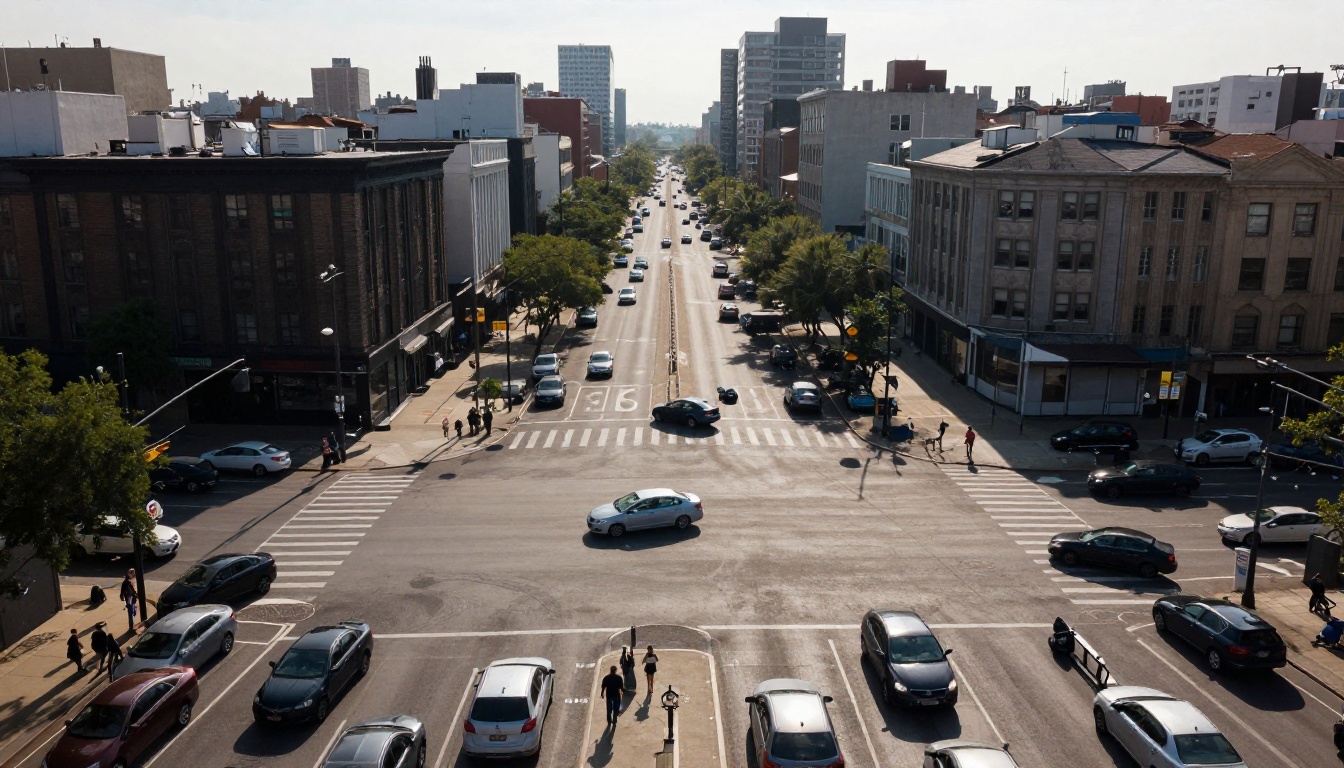
The aerial city scene above illustrates the challenge. Every pedestrian, vehicle, and crosswalk line would need to be individually located and labeled by a detection system, despite overlapping silhouettes, size variation, and shadows obscuring portions of each subject.
Real-Time Recognition in the Wild
Deploying recognition in the real world adds constraints that laboratory benchmarks ignore. Latency must be low enough for the application: a self-driving car needs decisions in milliseconds. Memory must fit the hardware budget of the target device. Accuracy must hold under weather changes, unusual lighting, and camera damage.
This is why the field has moved toward lightweight architectures designed for edge deployment, and why models are increasingly quantized, compressing weight values from 32-bit floats to 8-bit integers to cut memory use and speed up inference without catastrophic accuracy loss.
How AI Image Generators Apply Visual Knowledge
Seeing in Reverse
Understanding how AI knows what things look like becomes especially interesting when you apply it to generative models. A text-to-image system does not just recognize objects; it reconstructs them from a description. To do this convincingly, it must have internalized a deep statistical model of what every object, surface, lighting condition, and photographic composition actually looks like.
This is why models trained on larger and more diverse datasets produce more photorealistic outputs. Their internal representation of "what things look like" is richer, so their reconstructions are more accurate across unusual subjects and lighting conditions.
Why Flux Pro Gets Faces Right
Take Flux Pro as a concrete example. Its strong performance on human faces comes partly from its training distribution. Faces are among the most heavily photographed subjects on the web, with enormous variation in lighting, angle, expression, and skin tone. The model has seen enough variation to build a detailed statistical model of facial geometry, skin texture, and how light interacts with different facial structures.
Compare it to Stable Diffusion, an older baseline with smaller training data and a less expressive architecture. Faces are noticeably softer, and fingers often fail in earlier versions, because the model has a weaker internal representation of hand anatomy and fine structure.
Flux 1.1 Pro Ultra pushes further, producing 4-megapixel outputs where individual pore texture on skin becomes plausible. It is not adding detail at random; it is sampling from its learned distribution of what photographic skin looks like at very high resolution.
Models Worth Testing Today
Several models on the platform demonstrate different facets of visual AI knowledge:
| Model | Strength | Best For |
|---|
| Flux Dev | Prompt adherence, composition | Complex multi-object scenes |
| Flux Schnell | Speed, 4-step generation | Rapid iteration |
| Imagen 4 | Natural lighting, rich detail | Photorealistic portraits |
| SDXL | Style flexibility | Artistic compositions |
| Ideogram v3 Quality | Text rendering, realism | Images with readable words |
| Recraft v4 | Print-ready precision | Design and brand assets |
Face and Body Recognition
Why Faces Are Uniquely Hard
Faces are simultaneously the most studied object category in computer vision and one of the most technically demanding. Every human face shares the same basic structure (two eyes above a nose above a mouth), which means small differences carry enormous information. Recognizing a specific person requires the model to be sensitive to subtle inter-individual variation while remaining robust to large intra-individual variation (the same person at different ages, with different expressions, under different lighting).
The geometry also matters. A face viewed from 45 degrees looks substantially different from the same face viewed straight on. Early recognition systems required a roughly frontal view. Modern systems handle arbitrary pose by first estimating a 3D model of the face from the 2D image, a process that itself relies on learned priors about facial geometry acquired during training.
Pose, Depth, and Spatial Awareness
Beyond faces, understanding body pose requires locating joint positions (shoulders, elbows, wrists, hips, knees, ankles) and inferring their 3D configuration from a 2D image. This is fundamentally ambiguous from a single viewpoint: a raised arm and a foreshortened arm can look identical from certain angles. Models resolve this ambiguity using statistical priors learned from thousands of motion-captured human bodies.
Depth estimation from a single image works similarly. There are no stereo cues and no motion parallax. The model uses learned shortcuts: objects higher in the frame tend to be farther away, known-size objects like doors and people provide implicit scale information, and atmospheric haze increases with distance. None of these cues are hardcoded. They are absorbed from the training distribution.
3 Places Where Visual AI Still Fails
The Texture Trap
One of the earliest documented failure cases: adversarial textures. Researchers showed that by printing a specific pattern on a 3D object, you could make a neural network confidently misclassify it. A turtle covered in the right texture was classified as a rifle. The model was relying heavily on texture statistics rather than shape, exposing a brittleness that human vision does not share.
Practically, this manifests when a model trained mainly on photographs misclassifies materials in paintings or unusual natural surfaces. A rough concrete wall photographed at a shallow angle may be confidently labeled "bark" because the low-level texture statistics match.
Out-of-Distribution Inputs
Neural networks are confident interpolators within their training distribution and unreliable extrapolators outside it. A model that has never seen a particular type of industrial equipment will still produce a confident label, typically something visually similar from within its training set. There is no built-in mechanism for expressing uncertainty in a standard classifier.
💡 This is why calibration matters. Well-deployed systems pair classification output with a calibrated confidence score and route low-confidence predictions to human review rather than acting on them automatically.
How Models Learn to Recover
The field's response to these failure modes is largely more data and more varied data. Data augmentation (randomly flipping, cropping, color-shifting, and adding noise to training images) forces the model to learn features that stay stable across transformations. Mixup and CutMix blend two training images and train the network on the blended label, smoothing decision boundaries.
More recent approaches use self-supervised pre-training, where the model learns from unlabeled images by solving proxy tasks like predicting masked regions. The resulting representations are more robust because they have to account for the full distribution of image content rather than just the classification-relevant features.
Try Creating Your Own Visual AI Output
Now that you understand what is actually happening when an AI processes a visual scene, you can interact with image generators more deliberately. The model's output is not random; it is sampling from a learned distribution of what things look like. Your prompt is a set of constraints that narrow that distribution toward the image you have in mind.
Describing lighting direction ("warm golden-hour backlight from the left"), camera lens characteristics ("85mm f/1.8 shallow depth of field"), and surface textures ("natural pores visible, individual hair strands sharp") all activate specific regions of the model's learned visual representation. The more precisely you describe what things physically look like, the more the model can draw on the densest, most detailed parts of its training distribution.

Flux Dev and Flux Pro both respond well to physically grounded prompting. Imagen 4 is particularly strong on natural lighting conditions. For portraits, Flux 1.1 Pro Ultra produces the highest-fidelity skin and hair texture, drawing on its richer internal model of human appearance.

The best way to build intuition is to run the same prompt across several models and compare where each one places its emphasis. The differences reveal something real about what each model "knows" from its training data. Head over to Picasso IA, pick a model from the text-to-image collection, and start experimenting with physically descriptive prompts. What you see in the output is a direct reflection of what the model has learned about the visual world.


