Your face right now is broadcasting information you never consciously decided to share. The subtle tension across your brow, the micro-compression at your outer eye corners, the almost imperceptible asymmetry in your resting expression: a well-trained AI system reads all of it in under 40 milliseconds. Facial emotion recognition has crossed from research curiosity into production-grade technology, and the mechanisms driving it are far more precise than most people assume.
This is not about the basic "happy/sad" classification you might remember from early chatbots. Modern emotion AI operates on a layered stack of computer vision, neural networks, and behavioral psychology research that took decades to build. Here is how it actually works.

Your Face Gives Away More Than You Think
The human face can produce roughly 10,000 distinct expressions. Most of them happen involuntarily. When you feel a flicker of contempt, your levator labii superioris alaeque nasi muscle contracts for a fraction of a second before you can suppress it. When you receive unexpectedly good news, your zygomaticus major fires before your conscious mind has fully processed what happened.
The 43 Muscles That Betray You
Your face is controlled by 43 muscles, divided into two systems: voluntary and involuntary. The voluntary system is what lets you pose for a photo and perform practiced expressions. The involuntary system is what AI targets.
Duchenne markers are the clearest example. A genuine smile recruits both the zygomatic major (pulling the lip corners up) and the orbicularis oculi (crinkling the outer eye corners). A performed smile uses only the zygomatic major. The difference is visible in high-resolution imagery, and well-trained AI catches it with high consistency.
What Micro-Expressions Actually Are
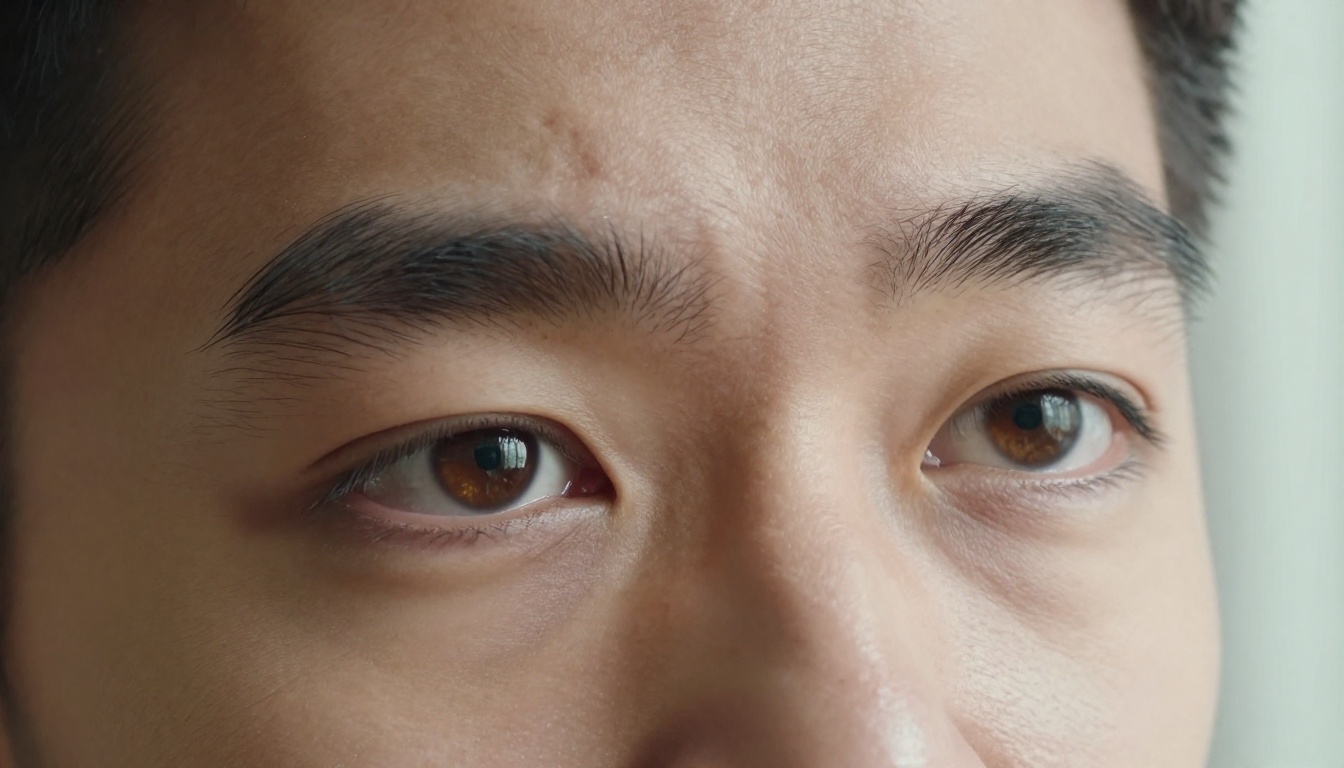
Paul Ekman's research in the 1970s identified a category of expressions called micro-expressions: brief, involuntary facial movements lasting between 1/25th and 1/5th of a second. They surface before the subject has time to consciously mask their reaction.
💡 Micro-expressions occur too fast for most humans to detect without specific training, but AI systems running at 30 or 60 frames per second capture and classify them with remarkable accuracy.
These expressions are the gold standard input for emotion AI because they are nearly impossible to fake. They are also why high-speed cameras, rather than static photos, represent the most precise input format for production emotion systems.
How Machines See a Face
Before any emotion processing happens, the AI must solve a more fundamental problem: locating the face in an image and mapping its structure with precision.
From Pixels to Landmark Points
The first stage is facial landmark detection. A trained model identifies between 68 and 468 specific reference points across the face: corners of the eyes, the tip of the nose, the cupid's bow of the upper lip, the earlobe junctions. These points form a geometric map called a face mesh.
The face mesh does two things simultaneously:
- It normalizes the face across variations in pose, distance, and lighting
- It provides the raw coordinate data that emotion classifiers use as input
Modern landmark detectors run in real time on consumer hardware, processing full-face meshes at 60+ frames per second on a standard laptop CPU.
The Role of Convolutional Neural Networks
Once the face mesh is established, the heavy lifting passes to Convolutional Neural Networks (CNNs). CNNs excel at spatial pattern recognition, which makes them ideal for facial processing.
The network is trained to associate specific spatial configurations of landmarks, and the pixel intensities between them, with emotional labels. It does this by ingesting massive labeled datasets, sometimes containing millions of annotated facial images across demographics.
| CNN Layer Type | What It Processes |
|---|
| Convolutional | Edges, textures, local patterns |
| Pooling | Spatial reduction, robustness to small shifts |
| Fully Connected | High-level feature combinations |
| Softmax Output | Probability distribution across emotion classes |
The output is not a binary "happy or not happy" result. It is a probability vector: 0.72 happy, 0.14 surprised, 0.08 neutral, 0.06 other. This probabilistic output is what allows AI to handle the genuinely ambiguous cases that dominate real human expression.

Reading the Action Units
The most rigorous framework for emotion AI was not developed by a computer scientist. It came from a psychologist.
What FACS Taught AI
Paul Ekman and Wallace Friesen developed the Facial Action Coding System (FACS) in 1978. FACS breaks all facial movement into discrete Action Units (AUs), each corresponding to the contraction of one or more specific facial muscles.
There are 44 Action Units defined in FACS. Each has a standard notation:
- AU1: Inner brow raise (frontalis, pars medialis)
- AU4: Brow lowerer (corrugator supercilii)
- AU6: Cheek raiser (orbicularis oculi, orbital portion)
- AU12: Lip corner puller (zygomaticus major)
- AU17: Chin raiser (mentalis)
Emotion recognition AI is trained to detect these Action Units individually before combining them into emotional classifications. This is far more robust than training directly on "what happy looks like" in aggregate.
Mapping AU Combinations to Emotions
Each basic emotion has a characteristic AU signature:
| Emotion | Primary Action Units |
|---|
| Happiness | AU6 + AU12 |
| Sadness | AU1 + AU4 + AU15 |
| Surprise | AU1 + AU2 + AU5 + AU26 |
| Fear | AU1 + AU2 + AU4 + AU5 + AU7 + AU20 + AU26 |
| Disgust | AU9 + AU15 + AU16 |
| Anger | AU4 + AU5 + AU7 + AU23 + AU24 |
| Contempt | AU12R + AU14R (unilateral) |
💡 Contempt is the only asymmetric basic emotion. Muscle activation happens on one side of the face only, making it particularly distinctive in automated detection.
Complex emotions, which represent most of what people actually feel moment to moment, involve overlapping AU combinations and contextual signals. This is where current AI systems face their steepest challenge.
The 7 Basic Emotions AI Recognizes
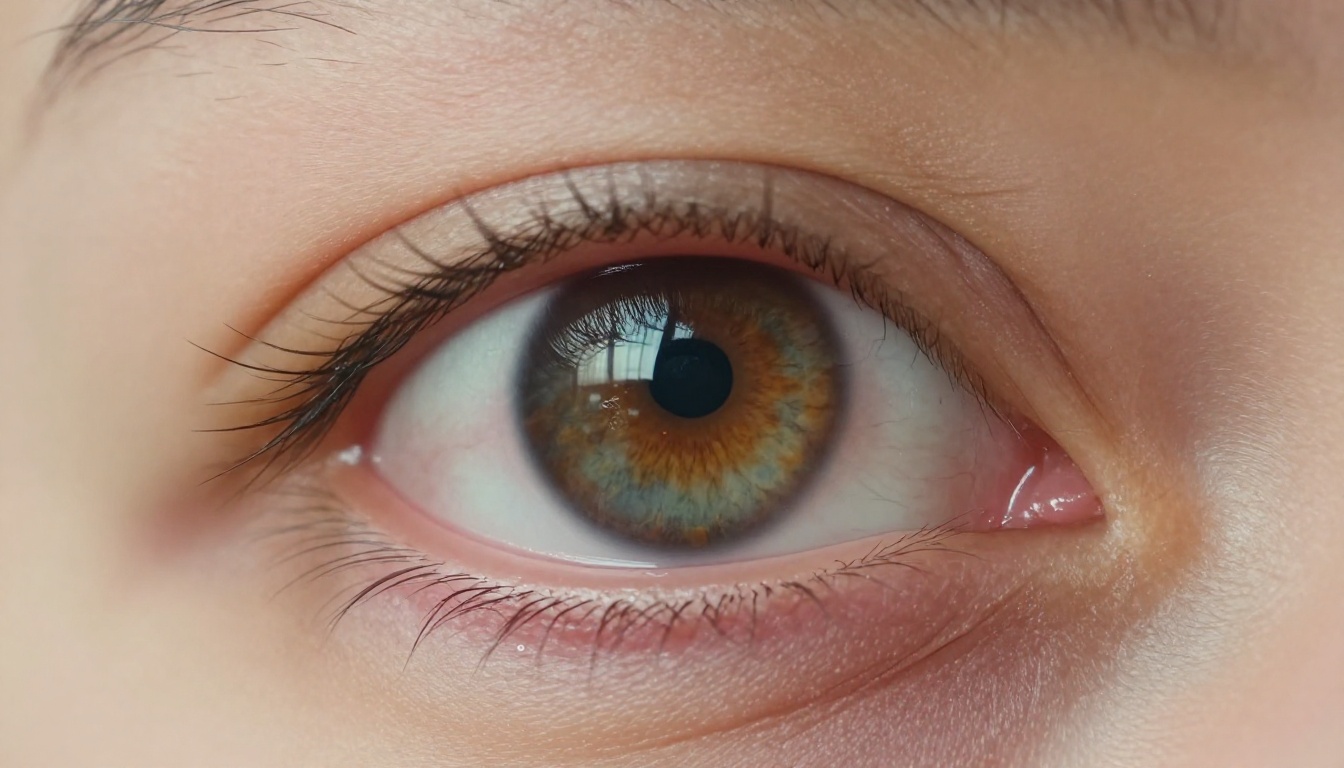
The foundational hypothesis in emotion AI draws from Ekman's cross-cultural research, which argued that six emotions are universal across all human cultures: happiness, sadness, anger, fear, disgust, and surprise. Contempt was added later as a seventh.
Modern AI systems are trained primarily on these seven categories because they appear consistently across training data gathered from diverse populations. They are the most reliably labeled, the most frequently studied, and the most commercially relevant for real-world applications.
Where the Science Gets Complicated
The "universal emotions" hypothesis is not without critics. Research since Ekman's original work has found significant cultural variation in how emotions are expressed and interpreted. A raised eyebrow means something different in Japan than it does in Brazil. Suppressed grief is common in cultures with strong emotional regulation norms, making it nearly invisible to AI trained on Western datasets.
The real emotional landscape is dimensional, not categorical. The valence-arousal model, used by many researchers, plots emotions on two continuous axes:
- Valence: negative to positive (unpleasant to pleasant)
- Arousal: low to high (calm to excited)
Under this model, "happy" and "excited" are not separate categories but points in a continuous space. Some modern AI systems use this dimensional approach rather than discrete labels, producing more nuanced outputs that better reflect the complexity of lived emotional experience.

Real-Time Emotion Tracking in Practice
Lab accuracy and real-world performance are two different things. A model that achieves 95% accuracy on a controlled dataset may perform significantly worse on the messy, variable input that characterizes real deployment.
Speed vs. Accuracy
Real-time emotion tracking requires trade-offs. Larger, more accurate models take longer to run. Models fast enough for real-time use, under 100 milliseconds per frame, often sacrifice some classification accuracy to hit that threshold.
The typical production pipeline works like this:
- Face detection (lightweight model): ~5ms
- Landmark extraction (medium model): ~10ms
- AU detection (specialized model): ~15ms
- Emotion classification (lightweight classifier): ~5ms
- Output smoothing (temporal averaging across frames): ~2ms
Total: around 37ms per frame, enabling real-time operation at 27+ fps on a consumer GPU.
The Lighting Problem Nobody Talks About
Lighting is the single largest source of degraded performance in real-world emotion AI. The same face photographed under different conditions behaves dramatically differently:
- Flat overhead fluorescent light: AU shadows flatten, asymmetric signals are lost
- Strong side lighting: Creates false shadows that mimic AU contractions not actually present in the musculature
- Low light or backlit environments: Loses texture detail that supports micro-expression detection
This is exactly why photorealistic synthetic training data, generated with controlled and varied lighting, can meaningfully improve real-world model robustness. AI image generation is not only a creative tool, it is increasingly a data production tool for training perception models.
Where Emotion AI Falls Short
No technology is without failure modes, and emotion AI has several worth taking seriously before deploying it anywhere that matters.
Cultural Bias in Training Data
Most large emotion datasets were collected primarily from subjects in North America and Western Europe. The models trained on this data carry that geographic and cultural bias forward into production environments.
Research by MIT Media Lab and others has shown that commercial emotion recognition systems produce significantly higher error rates for:
- Darker skin tones across multiple emotion categories
- Women expressing anger, who are more often misclassified as "disgusted"
- Non-Western facial structures and expression norms
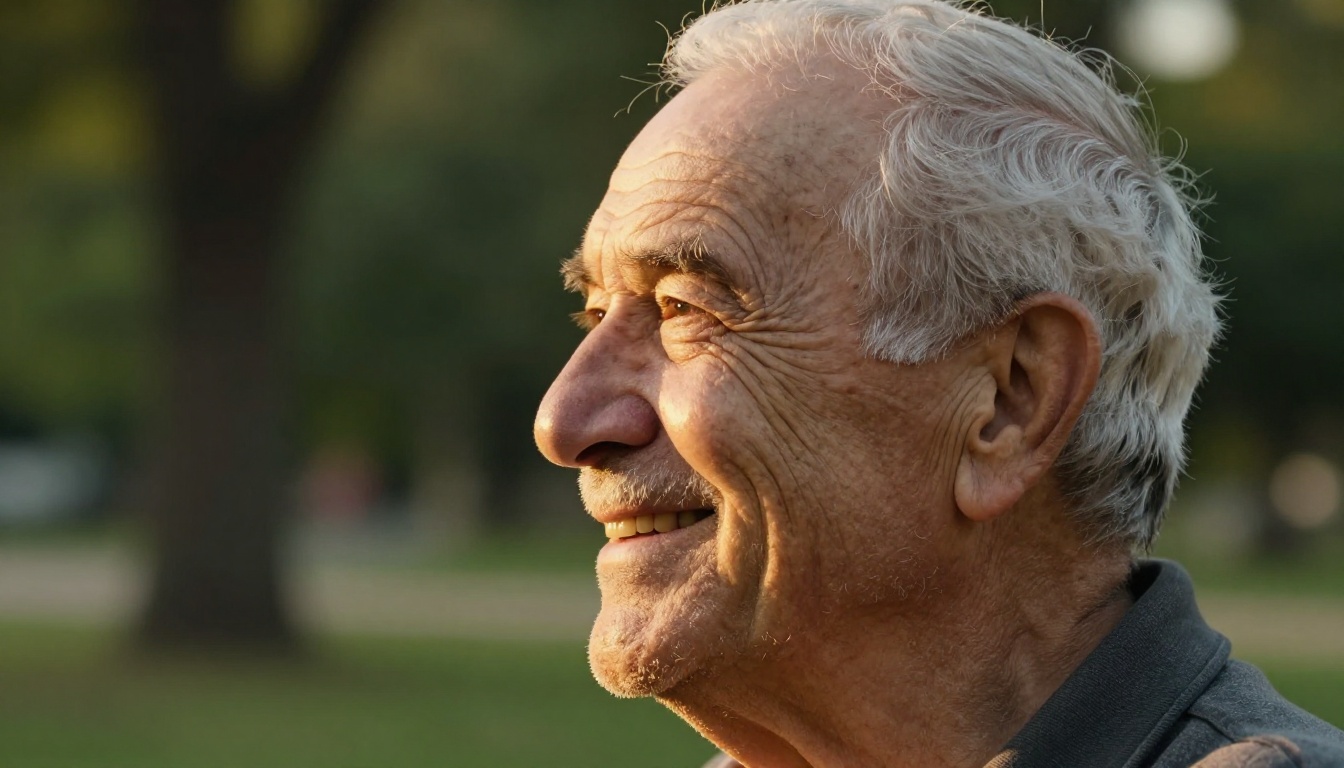
- Elderly faces where natural skin changes affect landmark detection accuracy
These are not edge cases. They represent the majority of human faces on Earth, which means the bias is not a minor calibration problem. It is a structural flaw in how training data has historically been gathered.
The Neutral Face Misread
Many people have a resting expression that reads as negative to both humans and machines. Emotion AI classifiers handle ambiguous neutral expressions by pulling toward the nearest trained category, which is often sadness or displeasure.
This creates false positives that carry real consequences in high-stakes applications: HR screening tools, security systems, or medical diagnostic aids. An AI that incorrectly reads a neutral face as hostile or distressed can cause significant harm.
💡 Responsible deployment of emotion AI requires human review in any decision-making context, rather than automated action on a single model output alone.

Emotion AI in Portrait Generation
The connection between emotion recognition and image generation is tighter than it first appears. Both require the same underlying knowledge: what makes a face look emotionally authentic at the pixel level.
Creating Portraits That Feel Alive
When you generate a photorealistic portrait with an AI image model, the quality of the emotional expression in that image depends on how well the training data captured emotional authenticity. Models trained on flat, posed, or mislabeled emotional data produce faces that look technically correct but emotionally hollow.
The best generative portrait models have been trained on, or fine-tuned against, data with precise emotional labeling. This is why some models render genuine Duchenne smiles while others produce that slightly uncanny approximation that feels "almost right" but never quite lands convincingly.
How Vision AI Reads Faces on PicassoIA
Several multimodal AI models available on PicassoIA can assess emotional content in photographs directly. These are vision-capable models that let you upload a face image and receive a detailed breakdown of the expression, mood, and emotional signals present.
GPT-4o is one of the most capable vision models for this task. It can describe the specific facial features contributing to an emotional read, explain AU-level observations in plain language, and compare expressions across multiple images in a single session.
Gemini 2.5 Flash offers fast multimodal processing with strong vision capabilities, useful for batch work or applications where response speed matters as much as depth.
Gemini 3 Flash combines chat and vision in an efficient package suited for iterative work with facial imagery and emotional content.
Claude Opus 4.7 brings deep contextual reasoning to visual processing, often providing more nuanced interpretations of complex or ambiguous expressions that simpler classifiers would misread entirely.
Kimi K2.5 from Moonshotai also supports image input alongside text, offering another capable option for exploratory emotion work from photographs.
These models do not output raw AU codes or probability vectors the way dedicated emotion recognition APIs do. Instead, they provide rich, contextual descriptions that are often more useful when you need to assess the emotional quality of a portrait rather than simply classify it into a category.

Prompting for Emotional Authenticity
If you have tried to prompt an AI image generator for a specific emotional expression and gotten something that looks wrong, you were running into the same underlying problem that emotion recognition researchers face: emotional authenticity at the pixel level is enormously complex.
The most effective approach is to go granular in your prompts. Rather than "a happy woman," specify the muscle-level details:
"slight upward curve at lip corners, orbicularis oculi crinkling at outer eye corners, cheeks mildly raised, relaxed brow, soft eye squint consistent with a genuine Duchenne smile, natural skin tension at nasolabial folds"
This prompt language maps directly to the Action Unit knowledge that underlies emotion AI, and it tends to produce significantly more convincing results than vague emotional labels. The AI image model has seen enough labeled facial data to respond to this kind of specificity.
You can also use the vision models on PicassoIA to assess an existing portrait, identify what the AI reads in the emotional expression, then use that feedback to refine your generation prompt. The result is a tight feedback loop between recognition and generation that produces portraits with intentional, specific emotional qualities.
A practical workflow:
- Upload a reference portrait to GPT-4o or Gemini 3 Flash and ask for a detailed emotional read
- Note which Action Units the model identifies as active
- Use that AU language directly in your image generation prompt
- Run the output back through the same vision model to verify the emotional signal reads correctly
- Iterate until the generated portrait passes the same emotional assessment as your reference
This process is slower than a single-shot prompt, but the output quality is consistently higher.

Start Creating Portraits with Emotional Depth
The gap between a technically correct face and an emotionally convincing one is exactly where the most interesting work in AI portraiture is happening right now. Photorealistic image generation has largely solved the technical problems. The remaining challenge is emotional authenticity, and that is what makes facial emotion research directly relevant to anyone working with portrait imagery today.
PicassoIA gives you access to both sides of this problem. Vision-capable models like GPT-4o, Gemini 2.5 Flash, and Claude Opus 4.7 let you assess real photographs for emotional content with real precision. The image generation tools let you apply that knowledge to produce portraits with specific, intentional emotional signatures.
Start with a face that interests you. Run it through a vision model and ask for a detailed emotional read. Then use what you observe to generate something that would pass the same assessment with the exact emotional quality you intended. The results are consistently surprising, and they get sharper every time you run the loop.


