Processing a 200-page legal contract, a 500-page research report, or an entire software codebase in a single pass is not something most AI models can promise without cutting corners somewhere. DeepSeek V5 changes that equation in a meaningful way. Built on architectural decisions specifically aimed at long-context coherence, it processes documents across hundreds of thousands of tokens while maintaining accuracy at positions far from the start of the input. This piece breaks down exactly how that works, where V5 performs best, and how to put it to work on real documents today using the models available on PicassoIA.
What Makes Long-Document Processing Hard
Most people's first instinct is to assume that "bigger context window" just means the model reads more text. The reality is far more complicated. Reading more text does not automatically mean retaining information about all of it. Two specific problems make long-document processing technically brutal at scale.

The Quadratic Attention Problem
Standard self-attention computes relationships between every token and every other token in the sequence. For a document of 1,000 tokens, that is 1,000,000 operations. For a 128,000-token document, that jumps to over 16 billion operations. The compute cost grows quadratically with sequence length, meaning every doubling of context length quadruples the resources required.
This is why models that naively extend context windows become prohibitively slow and expensive. A model claiming "1 million token context" without architectural changes to address this problem is either running on prohibitively expensive hardware or trading accuracy for throughput in ways that show up clearly in practice.
💡 Practical implication: A model processing a 100K-token document with naive full attention costs roughly 10,000 times more compute than one processing a 1K-token document. The math does not scale without serious architectural solutions.
Why Most Models Break Past 32K Tokens
Beyond compute cost, there is an information degradation problem. Standard positional encodings were designed for shorter sequences. When you force them to encode position 95,000 in a 100K context, the positional signal becomes unreliable. The model effectively loses track of where information appeared in the document.
The result is the "lost-in-the-middle" phenomenon: models answer questions about the beginning and end of a document accurately, but perform poorly on information buried in the middle. This is a fundamental failure mode, not an edge case. Research on standard transformer models found accuracy drops of 30-50% on questions targeting the middle sections of long documents, rendering them unreliable for professional document workflows.
DeepSeek V5's Architecture for Long Contexts
DeepSeek V5 addresses both problems through three architectural pillars: Multi-Head Latent Attention (MLA), Mixture of Experts (MoE), and extended RoPE positional encoding. Together, they make long-context coherence economically viable rather than just theoretically possible.

Multi-Head Latent Attention (MLA)
MLA is the most significant architectural departure from standard transformers. Instead of caching the full key-value (KV) pairs for every attention head across the entire sequence, MLA compresses the KV cache into a low-rank latent representation.
What this means in practice:
- KV cache memory drops by 5-13x compared to standard multi-head attention
- Models hold longer sequences in GPU memory without offloading to slower storage
- Inference speed on long documents improves significantly because the bottleneck shifts from memory bandwidth to compute throughput
MLA achieves this by projecting the KV pairs into a smaller latent space and reconstructing them on demand. The quality loss from this compression is minimal at the scale DeepSeek V5 operates, but the memory savings are enormous and directly translate to longer context at the same hardware cost.
Mixture of Experts Inside
DeepSeek V5 uses a Mixture of Experts (MoE) architecture where only a fraction of total parameters activates for any given token. For a model with 671 billion total parameters, roughly 37 billion activate per forward pass.
Why does this matter for long documents? Two reasons:
- Per-token compute stays constant regardless of which position in the document you are processing. The 100,000th token costs the same to process as the 100th.
- Specialist routing means different expert groups develop stronger accuracy on different types of content, including legal language, scientific prose, and code, without requiring separate specialized models.
RoPE Extended Position Encoding
Rotary Position Encoding (RoPE) encodes positional information by rotating query and key vectors in a way that is distance-relative rather than absolute. DeepSeek V5 extends RoPE with YaRN (Yet another RoPE extensioN) interpolation, which scales the base frequency of the positional encoding to remain stable at sequence lengths far beyond what the model was originally trained on.
In practical terms: a token at position 120,000 receives a stable, meaningful positional signal rather than an extrapolated one that collapses at long range. This directly addresses the lost-in-the-middle degradation that affects other models without these encoding modifications.
The 128K Window in Practice
DeepSeek V5's context window of 128,000 tokens is large enough to hold substantial real-world documents without chunking. But what does 128K tokens actually represent?
What Actually Fits Inside
| Document Type | Approximate Token Count | Fits in 128K? |
|---|
| Average novel (80,000 words) | ~107,000 tokens | Yes |
| Full US tax code section | ~15,000 tokens | Yes (multiple) |
| Typical merger agreement (150 pages) | ~85,000 tokens | Yes |
| 50-paper academic literature review | ~60,000 tokens | Yes |
| Medium codebase (50k lines Python) | ~120,000 tokens | Marginal |
| Full PhD dissertation | ~95,000 tokens | Yes |
The 128K limit covers most professional use cases without requiring document chunking, and that matters enormously. Chunking destroys cross-document context. A model that reads a contract in three separate chunks cannot draw connections between clause 3 on page 2 and clause 47 on page 89. DeepSeek V5 can, because it holds the entire document in active context simultaneously.

Needle-in-a-Haystack Results
The standard benchmark for long-context accuracy is the Needle-in-a-Haystack (NIAH) test: hiding a specific fact deep inside a large document, then asking the model to retrieve it. DeepSeek V5 scores above 95% on NIAH tasks at full 128K context, outperforming earlier versions of competing models that show notable degradation past 64K tokens.
More critically, it maintains consistent accuracy across positions. Information at position 70,000 is retrieved as accurately as information at position 5,000, which directly contradicts the lost-in-the-middle behavior common in models without MLA and extended RoPE.
How Attention Stays Sharp Over Distance
Beyond the architectural pillars, two runtime-level mechanisms keep attention quality high across long sequences.
Sparse Attention Patterns
Not all tokens need to attend to all other tokens with equal weight. DeepSeek V5 uses learned sparse attention patterns that allow the model to focus attention on contextually relevant tokens and skip over irrelevant ones, without explicit rules about which tokens those are.
Think of it this way: when reading a legal contract, you do not re-read the full definitions section every time you encounter a defined term. You build an internal reference and pull from it when needed. Sparse attention mimics this behavior, reducing effective computation substantially while preserving the accuracy that full attention would provide for the tokens that matter.
KV Cache Compression Per Layer
MLA's KV cache compression is applied per-layer, not globally. Each attention layer compresses its own KV cache independently, which means compression does not create a single point of information loss. Errors stay localized and do not compound across layers the way they would in a single bottleneck compression scheme.
💡 For technical readers: The KV cache for a standard GPT-4-class model at 128K context requires roughly 16GB of VRAM per batch item. MLA reduces this to approximately 1.5-3GB per batch item, making 128K inference viable on standard A100 hardware rather than requiring H100 clusters.
V5 vs Other Long-Context Models
How does DeepSeek V5 stack up against other strong long-context LLMs available today?

The open-source nature of DeepSeek v3 and its successors is a meaningful differentiator. Running these models through platforms like PicassoIA means no data leaves your infrastructure, which matters for legal, medical, and financial document workflows where data residency requirements are strict.
3 Real-World Use Cases That Work
Reviewing Full Contracts
Long-context LLMs have changed how legal teams handle contract work. A standard M&A merger agreement runs 80-150 pages. Previous workflows required junior associates to read every page manually or divide the document into sections reviewed by different people, introducing coordination overhead and missing cross-references that only become visible when reading the document whole.
With DeepSeek V5, the full contract goes in as a single prompt. You ask it to:
- Identify all indemnification clauses and summarize their scope
- Flag any representations that conflict with earlier definitions
- Extract all deadline dates and obligations in chronological order
- Note unusual provisions that deviate from standard boilerplate language
The model handles all of this in a single pass because it holds the entire document in active context simultaneously, something no chunked approach can replicate faithfully.
Scientific Paper Synthesis
Research synthesis is time-consuming. Reading 30 papers on a single topic to produce a literature review can take weeks. DeepSeek V5's long context allows you to load multiple papers simultaneously and ask synthesis questions that require cross-paper reasoning.

Loading 5-8 papers on the same topic (combined under 128K tokens) and asking:
- "Which papers agree on the mechanism? Which disagree, and what are their specific objections?"
- "What experimental methods appear across all papers, and where do sample sizes diverge significantly?"
- "What research gaps appear in this collection that no paper has addressed directly?"
This kind of cross-document reasoning is where long-context models genuinely earn their place. Querying each paper separately and asking the model to synthesize results is fundamentally weaker because the model can only reason about what fits in a single context window at a time.
Full Codebase Reviews
Static checkers catch syntax errors. They do not catch architectural problems, poorly named abstractions, or business logic that contradicts stated requirements. DeepSeek V5 can receive an entire medium-sized codebase (under 120K tokens for typical Python projects) and answer questions like:
- "Where does this codebase deviate from the REST API specification in the README?"
- "Identify all functions that mutate shared state without acquiring a lock"
- "What happens to unhandled exceptions in the payment processing pipeline?"
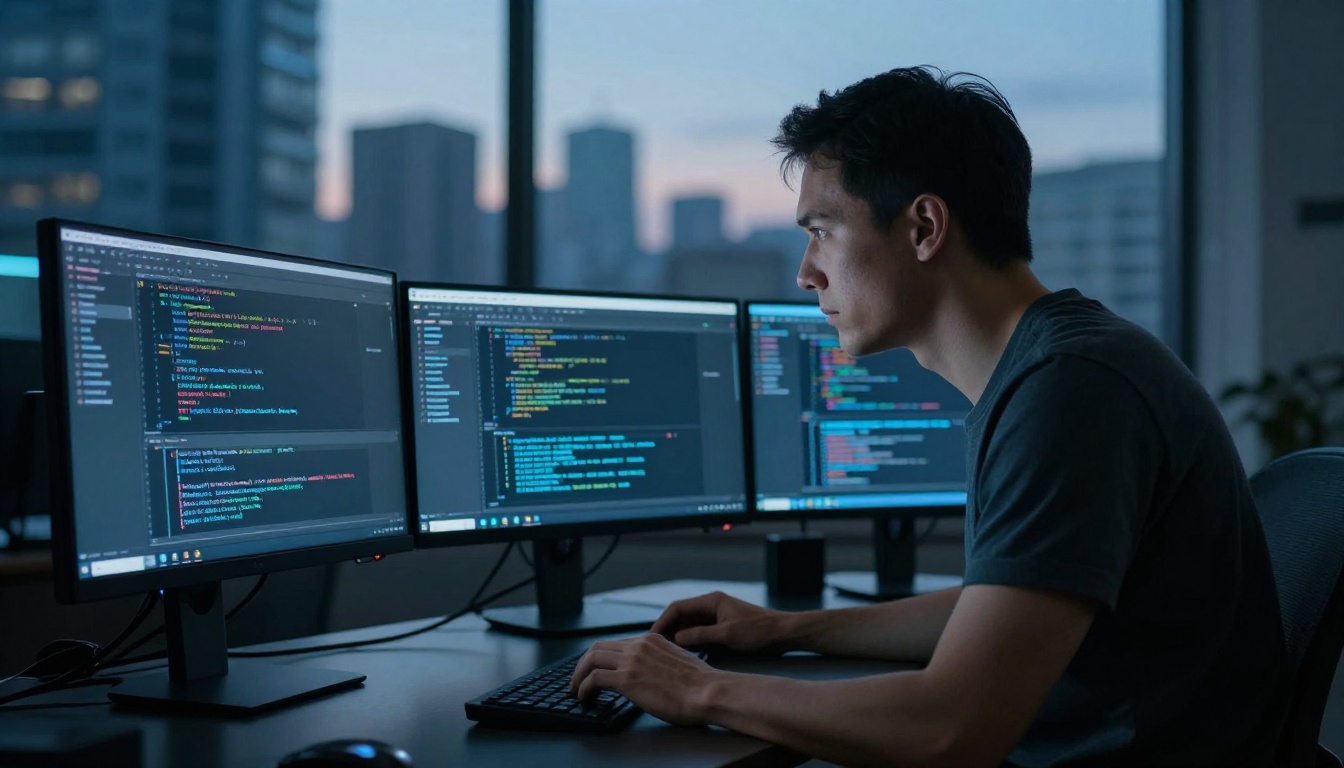
These are questions that require holding the entire codebase in mind simultaneously. You cannot answer them reliably by reading one file at a time.
DeepSeek V5 and Audio Transcripts
One of the less obvious but highly practical applications of long-context LLMs is working with transcribed audio. A 2-hour meeting recording, once transcribed, produces a document of roughly 25,000-40,000 tokens. A full-day conference (8 hours of content) produces 100,000-150,000 tokens of transcript.
Transcribing Audio Then Processing It
The workflow is straightforward:
- Use a speech-to-text model to convert recorded audio into a transcript (PicassoIA offers speech-to-text models at picassoia.com/en/all-models)
- Feed the raw transcript into DeepSeek V5 with a structured prompt
- Ask for summaries, action items, speaker breakdowns, or thematic breakdown by topic
This workflow eliminates the need for a human to listen to recordings and manually produce meeting notes, saving hours per week for teams that rely on recorded calls, interviews, or lectures.
Meeting Recording Workflows
For teams running 4-6 hours of meetings daily, the full transcript exceeds 60,000 tokens, well within DeepSeek V5's context window. A prompt structured as:
"This is the transcript of today's all-hands meeting. For each decision made, identify: the decision, who made it, what alternatives were considered, and any action items assigned. Format as a structured table."
...produces output that would otherwise take a human note-taker 90 minutes to compile from a 3-hour meeting recording.
💡 Workflow tip: Transcripts from automated speech recognition often include filler words, false starts, and repetitions. A preprocessing step that compresses transcripts by removing "um", "uh", and repeated fragments reduces token count by 15-25%, fitting longer recordings into the same context window.
Using DeepSeek on PicassoIA
PicassoIA hosts several powerful long-context models from the DeepSeek family, accessible without infrastructure setup or API credential management.

Which Model to Pick
DeepSeek v3.1 is the strongest all-purpose option for document work. Its MLA architecture handles long contexts efficiently and produces structured, well-organized output that is easy to post-process.
DeepSeek R1 is better suited for tasks that require visible reasoning chains, like comparing conflicting clauses in a contract or tracing a bug through multiple files in a codebase. It shows its reasoning explicitly, which is valuable when you need to audit the model's logic rather than just accept its output.
Prompting for Long Documents
Prompting long-context models is different from prompting standard models. A few patterns that consistently produce better output:
Put the document before the question. The model attends better to instructions that follow the document rather than precede it. Structure as: [Full Document Text] followed by [Your Question] rather than the reverse.
Specify the output format explicitly. Asking for a table, numbered list, or JSON structure forces the model to organize its retrieval before outputting. Unstructured requests produce less organized retrieval from long contexts.
Anchor questions to specific sections. Instead of "summarize the contract", try "summarize sections 3 through 7, focusing on payment terms and delivery obligations." Narrower prompts produce higher-quality outputs even when the model has access to the full document.
Ask for confidence markers. Including "if you are not certain about a specific detail, indicate that" in your prompt significantly reduces hallucination rates on long-document tasks.
Where the Limits Show Up
Lost-in-the-Middle (Still Present, Just Reduced)
MLA and extended RoPE substantially reduce the lost-in-the-middle problem, but do not eliminate it entirely. Benchmarks show a measurable accuracy drop for questions targeting tokens between positions 40,000-80,000 in a 128K context, even for DeepSeek V5. The drop is roughly 8-12% compared to questions at the start or end of the document, versus 30-50% for models without these architectural improvements.
For the most critical document sections, place them at the beginning or end of your prompt when possible. If you have a 60K-token contract and the most important clause is on page 45, copy that clause to the end of the prompt in addition to its original position. This simple adjustment measurably improves retrieval accuracy for that clause.
Latency at Scale
Inference at 128K tokens is slower than inference at 8K tokens, even with MLA compression. On standard cloud hardware:
- 8K token prompt: 3-8 seconds to first token
- 64K token prompt: 15-30 seconds to first token
- 128K token prompt: 40-90 seconds to first token
This is acceptable for batch workflows but may feel slow for interactive applications. Long-context processing works best as an asynchronous background process where latency is less visible to the user, returning results via notification rather than requiring the user to wait at a screen.
Put It to Work Right Now
The bottleneck in most document-heavy workflows is not the reading. It is the distillation: turning 150 pages of dense legal language into 10 actionable points, or turning 20 academic papers into a coherent synthesis that nobody on the team has time to write manually. That is exactly what DeepSeek V5's long-context architecture was built for.

PicassoIA gives you immediate access to DeepSeek v3, DeepSeek v3.1, and DeepSeek R1 without any infrastructure setup. Paste in a contract, a research paper, a meeting transcript, or a codebase section. Ask a specific, structured question. See what a long-context model that was actually designed for long contexts can do.
Whether you are a lawyer cutting contract review time significantly, a researcher synthesizing 20 papers in one session, or a developer auditing an unfamiliar codebase before your first commit, the workflow is the same: drop the full document in, ask the right question, and let the architecture handle the rest. Visit picassoia.com/en/all-models to start processing your own long documents today.


