The first time you type a prompt into an AI image generator and something photorealistic appears in seconds, it is easy to forget that the model doing the work was not always that capable. It started as a blank slate, billions of random numbers, and it was shaped into something useful through a process that took months, thousands of GPUs, and petabytes of data. That process is called training, and for open source AI models, it is a process that anyone can, in principle, replicate, inspect, or extend.
This article breaks down exactly how open source AI models are trained, from collecting raw data to running the final weights through community hands.
What "Training" Actually Means
The Model Starts From Scratch
Before training begins, a neural network is nothing more than a large collection of numerical parameters called weights. At initialization, these weights are typically random. The network has no knowledge of what a cat looks like, what grammar means, or how to predict the next pixel in an image. All of that comes from exposure to data.
Training is the process of adjusting these weights over millions of iterations until the model reliably produces useful outputs. Think of it as learning through repetition, except instead of a human brain, the "learner" is a mathematical function with billions of adjustable knobs.
Data Is Everything
The most important ingredient in training is not the architecture or the hardware. It is the data. A model is only as good as what it was shown. If the dataset is biased, incomplete, or low quality, those flaws get baked directly into the model's behavior.
For image generation models like Flux Dev or Stable Diffusion, training data consists of hundreds of millions of image-text pairs: a photo of a sunset paired with the caption "golden hour over the ocean," and so on. The model learns to associate visual content with language by seeing enough of these pairs.

Where the Data Comes From
Web Crawls and Licensed Datasets
The majority of training data for large open source AI models comes from web crawls. Projects like Common Crawl scrape billions of web pages and make that data available for research and commercial use. For image models specifically, datasets like LAION-5B compiled image-text pairs from across the internet, providing the raw material for training models at scale.
Alongside public web crawls, organizations increasingly use licensed datasets from stock photo libraries, scientific publications, and curated repositories. This matters more than ever as the legal landscape around training data continues to shift.
Note: Not all data found on the internet is legally available for training. Open source models vary significantly in how transparent they are about data provenance, and that transparency gap is growing as legal challenges mount.
Quality Beats Volume
Bigger datasets do not automatically produce better models. Researchers at Stability AI and Black Forest Labs (the team behind Flux Schnell and Flux Pro) have consistently found that filtering low-quality images, removing duplicates, and balancing representation across subjects produces dramatically better outputs than simply adding more data.
Data curation is its own discipline. Teams of annotators and automated filtering pipelines invest significant effort ensuring that what enters the training loop is actually worth training on.
The Training Loop, Step by Step
Forward Pass, Predictions, and Loss
Once the data is ready, training runs in a continuous loop. In each iteration, the model receives a batch of training examples and produces predictions. For an image generation model, this might mean: given a noisy version of an image and a text prompt, predict what the original clean image looked like.
The gap between the model's prediction and the correct answer is measured by a loss function. The loss is a single number: lower means the model did better, higher means it did worse. Early in training, the loss is high because the weights are still essentially random. The entire goal of training is to drive that number down, consistently, over millions of iterations.
Backpropagation in Plain Language
Once the loss is calculated, the model needs to figure out which weights contributed to the error and by how much. This is done through backpropagation, an algorithm that works backward through the network's layers, computing the gradient of the loss with respect to each weight.
A gradient is a direction and a magnitude: it tells you whether increasing or decreasing a particular weight will raise or lower the loss. With hundreds of billions of weights in a modern model, computing all of those gradients simultaneously requires substantial mathematical machinery, but the underlying logic is straightforward.
How Gradient Descent Works
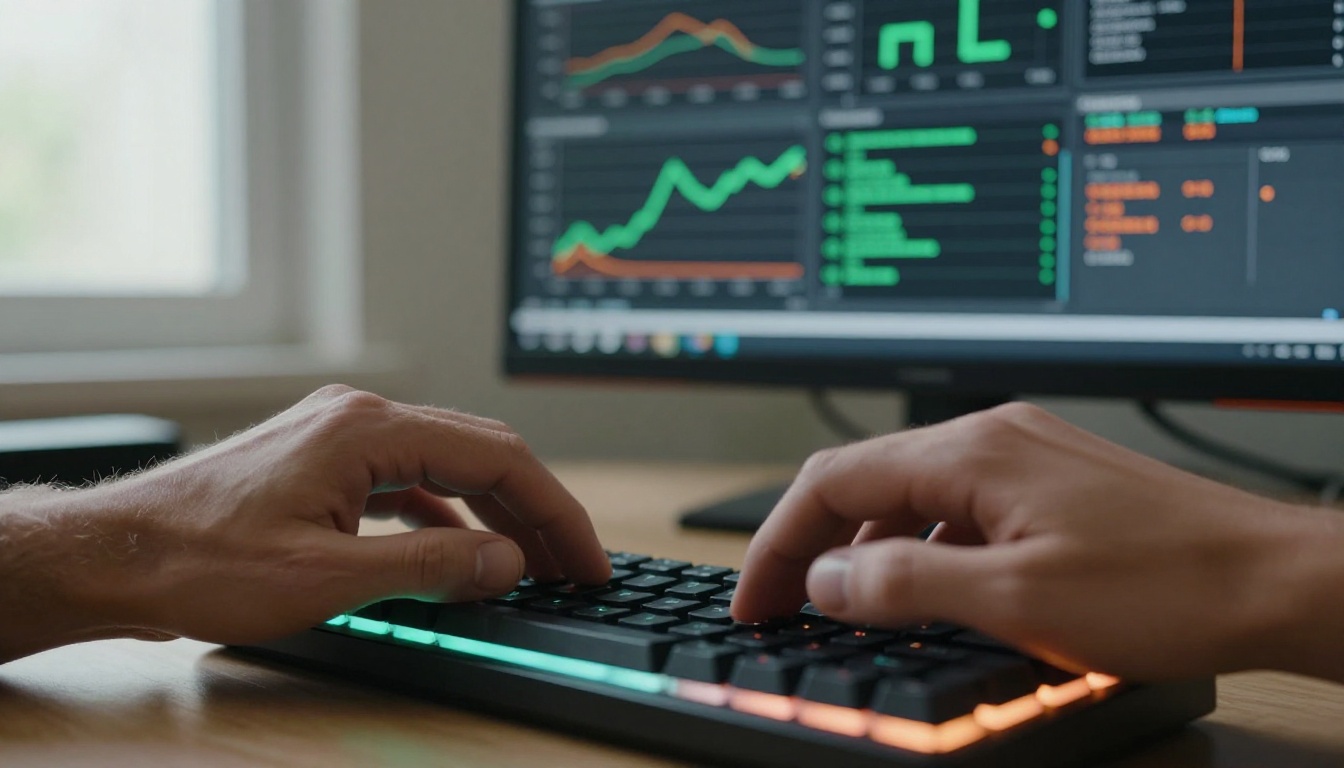
After backpropagation calculates the gradients, gradient descent uses them to update the weights. The concept is direct: move each weight slightly in the direction that reduces the loss.
The size of each step is controlled by a learning rate. Too large and the model overshoots, bouncing around without ever settling. Too small and training takes forever.
A helpful analogy: imagine the loss as a physical landscape with mountains and valleys. The model's current weights place it at some point on that terrain. Gradient descent is the process of repeatedly taking small steps downhill toward the lowest valley.

This loop, forward pass, calculate loss, backpropagate gradients, update weights, repeats billions of times across a training run. Each pass through a batch of data is called a step; a full pass through the entire dataset is an epoch.
| Term | What It Means |
|---|
| Loss function | Measures the error between prediction and reality |
| Backpropagation | Calculates which weights caused the error |
| Gradient descent | Updates weights to reduce the error |
| Learning rate | Controls how large each weight update is |
| Epoch | One complete pass through the training dataset |
What Makes a Model "Open Source"
Open Weights vs. Fully Open Source
This distinction matters more than most people realize. A model with open weights makes its trained parameters publicly downloadable. You can run it locally, fine-tune it, and build applications on top of it. Models like SDXL and Stable Diffusion 3.5 Large fall into this category.
A fully open source model also releases the training code, the dataset, and documentation covering the full pipeline. Far fewer models clear this higher bar.
Worth knowing: "Open source" in AI is not always the same as open source in software. Many popular AI models that people call open source only share the weights, not the full recipe used to create them.
Why It Matters for Creators
Open weights matter enormously for practitioners. They allow running inference without API costs, operating the model on your own hardware, and modifying the weights for specific use cases. They also allow the community to audit the model for biases, build safety tools, and release improved versions.
Models like Flux 1.1 Pro Ultra and Imagen 4 represent different philosophies on this spectrum, with some prioritizing accessibility through open weights while others remain proprietary for quality or safety reasons.

Fine-Tuning After Pre-Training
LoRA and Adapters
Pre-training produces a general-purpose model, but it is rarely the final step. Fine-tuning adapts a pre-trained model to perform better on a specific domain or style. The problem is that fully fine-tuning a billion-parameter model is expensive and slow.
LoRA (Low-Rank Adaptation) solves this by freezing the original model weights and inserting small trainable matrices into specific layers. Instead of retraining everything, you train only the LoRA adapter weights, which are a tiny fraction of the total parameter count. The result is a model that behaves differently in targeted ways while retaining all of its base knowledge.
This is exactly how Flux Dev LoRA works on PicassoIA. The base Flux Dev model stays fixed while a small set of learned weights steers the output toward specific visual styles, characters, or subjects. Anyone with modest hardware can train a LoRA on a few hundred images and produce a model that reliably generates a specific aesthetic.
RLHF and Alignment
For language models and increasingly for image generators, Reinforcement Learning from Human Feedback (RLHF) is used after pre-training to make outputs more aligned with what people actually want. The process involves human raters scoring model outputs, training a separate reward model on those scores, and then using reinforcement learning to nudge the main model toward higher-rated behavior.
RLHF is what separates a raw pre-trained model that can produce anything from one that reliably produces useful, safe, and high-quality outputs. It is computationally expensive and requires careful design, but its effect on perceived output quality is substantial.
The Hardware Required
GPU Clusters at Scale
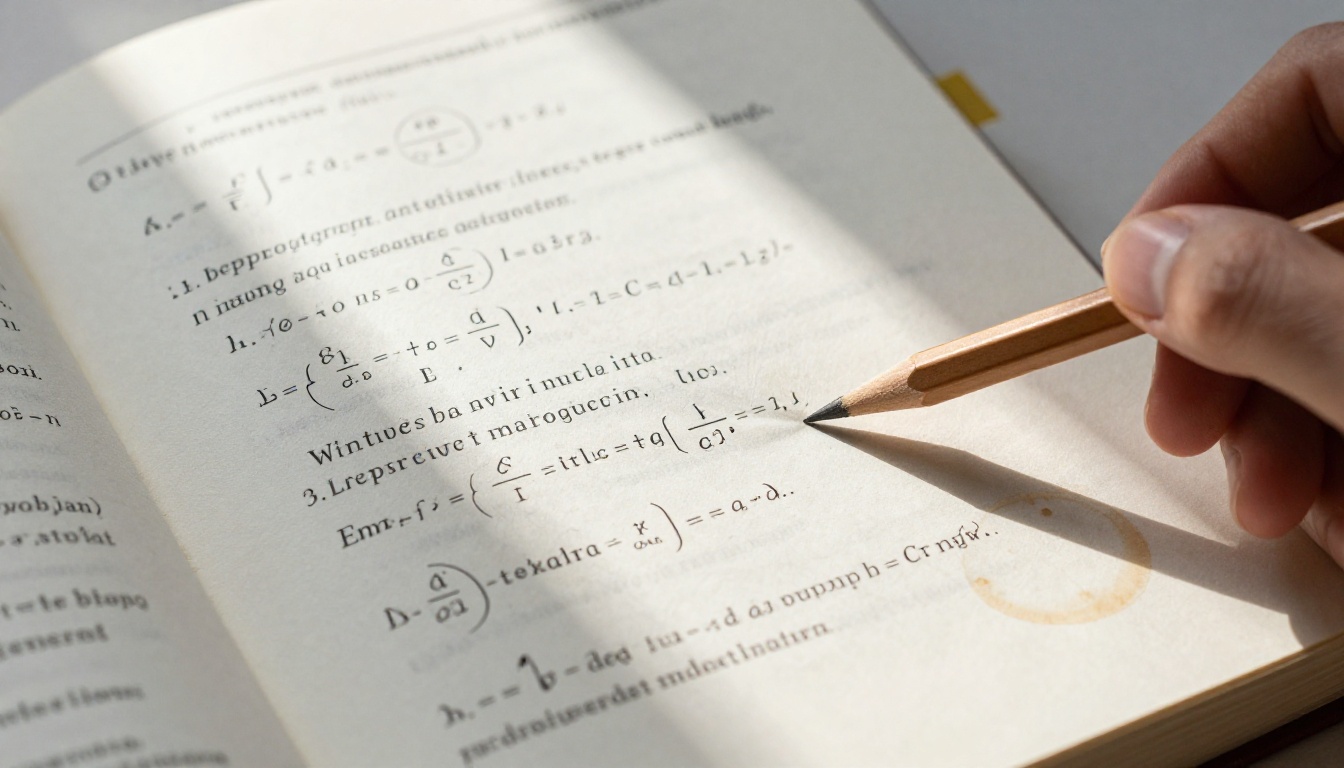
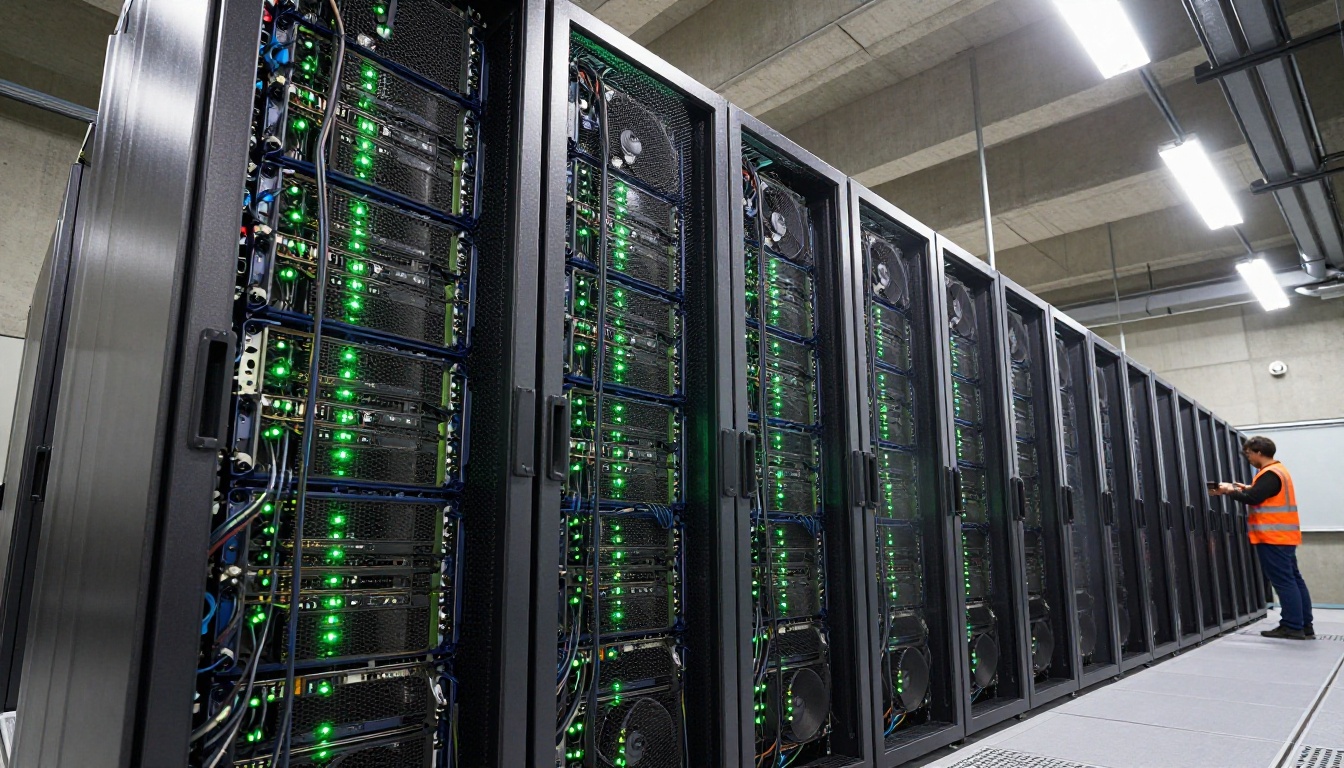
Training a large AI model requires a coordinated cluster of hundreds or thousands of GPUs running in parallel for weeks or months. Modern training runs for frontier models use NVIDIA H100 clusters interconnected with high-bandwidth NVLink and InfiniBand networking to distribute computation across thousands of chips simultaneously.
The reason parallelism is necessary is direct: a single forward-backward pass through a large model produces more floating-point operations than any single GPU can complete in a reasonable timeframe. Distributing the work across many GPUs, each processing a slice of the data or a segment of the model, is the only practical approach at scale.
Why Training Costs Millions
A single NVIDIA H100 GPU costs upward of $25,000, and a competitive training run might use thousands of them for months. On top of hardware costs, there is electricity (large training runs consume megawatts), cooling infrastructure, cloud compute fees, and the labor of research teams.
This is why only a handful of organizations can train truly large foundation models from scratch. The open source community typically builds on top of these foundation models through fine-tuning and adaptation, which is orders of magnitude cheaper and still produces remarkable results.
| Training Approach | Approximate Cost | Who Does It |
|---|
| Pre-training from scratch | $1M to $100M+ | Large research labs, well-funded startups |
| Full fine-tuning | $10K to $500K | Mid-size research teams |
| LoRA fine-tuning | $50 to $5,000 | Individual researchers, small teams |
| Running inference | Cents per request | Anyone |
Open Models That Power AI Art Today
Flux, Stable Diffusion, and More
The models powering modern AI image generation are almost all descended from the open source tradition. Stable Diffusion demonstrated in 2022 that a high-quality image generation model could be trained and released openly, triggering an explosion of community innovation. Thousands of fine-tunes, LoRAs, and derivative models followed within months.
Flux Dev and Flux Pro from Black Forest Labs represent the next step: a transformer-based architecture trained at larger scale with significantly improved text understanding and photorealism. The training approach draws on the same principles described throughout this article, applied with more data, more compute, and architectural refinements that improved coherence and prompt adherence.
SDXL expanded on the original Stable Diffusion by scaling both the model and the training dataset, producing noticeably higher-resolution, more detailed outputs. Stable Diffusion 3.5 Large went further still, adopting a multimodal diffusion transformer architecture that produces sharper compositions and better semantic alignment.
Each of these models went through the same fundamental process: dataset curation, pre-training with loss minimization via gradient descent, and then fine-tuning to align outputs with human preferences.
Try Them on PicassoIA Right Now

All of the models discussed here are available to run directly on PicassoIA. No local setup, no hardware requirements, no need to manage weight files or Python environments. You can experiment with:
- Flux Dev: The open-weight flagship from Black Forest Labs, ideal for detailed photorealistic generation.
- Flux Schnell: The distilled, faster version built for rapid iteration and prototyping.
- Flux Dev LoRA: Flux Dev with custom LoRA adapters for style-specific generation.
- SDXL: Still one of the most versatile open source image models available.
- Stable Diffusion 3.5 Large: The latest architecture from Stability AI with multimodal transformer improvements.
- Flux 1.1 Pro: Commercial-grade output from the Flux family with refined photorealism.
- Imagen 4: Google's latest text-to-image model with exceptional detail and color rendering.
Using Trained Models Right Now
The gap between "how training works" and "what you can actually create" is smaller than it seems. When you write a prompt into a text-to-image interface, the weights being queried are the direct product of everything described above: months of data curation, billions of gradient updates, and careful alignment work. The quality you see in the output reflects decisions made at every stage of that pipeline.
For most creators, the relevant insight is not how to train a model from scratch but how to work with the adaptation layers that sit on top of pre-trained weights. LoRA fine-tunes let you steer a powerful base model toward a specific face, art style, or visual concept using a few hundred training images and modest hardware. That is the part of open source AI training that is genuinely accessible to individuals today, right now, without a research budget.
Worth trying: If you want to see how different training approaches affect output quality, put the same prompt through Flux Schnell, Flux Dev, and SDXL side by side on PicassoIA. The differences in photorealism, prompt adherence, and composition directly reflect the training choices made for each model.
Every time you generate an image, you are the final node in a pipeline that started with petabytes of data, billions of parameter updates, and collaborative effort from researchers who chose to share their work openly. The models on PicassoIA are the output of that work, ready to use without touching a single line of training code.
Start with Flux Dev or Stable Diffusion 3.5 Large and see what millions of training iterations can produce from a single sentence.


