Google's Veo 3.1 broke the internet when it launched. The video quality was so convincing that entire subreddits debated whether footage was real or synthetic. Right behind that wave of amazement came the predictable question from adult content creators: can it generate NSFW clips? The answer is complicated, and the creative lengths people have gone to find out are worth documenting in full.
What Veo 3.1 Actually Is
Veo 3.1 is Google DeepMind's flagship text-to-video and image-to-video model, a direct competitor to OpenAI's Sora and the broader wave of generative video tools that have reshaped creative production. It generates videos up to 4K resolution, processes complex multi-shot prompts, and produces motion that holds up to scrutiny in ways earlier AI video tools could not.
Google's Most Powerful Video AI
The model represents years of research compounded on top of Imagen, Lumiere, and earlier Veo iterations. Its ability to maintain temporal consistency across frames, meaning objects and people don't warp or flicker as they move, puts it in a different category from most publicly accessible video AI. Lighting, shadow physics, and natural motion all render with a fidelity that made it the talk of every creative AI community from Reddit to X within days of release.
The Safety Architecture Behind It
Veo 3.1 does not operate on a simple word-block list. It uses what Google calls a multi-layer safety classifier, meaning the model evaluates:
- The semantic intent of the prompt, not just individual words
- The visual output frame-by-frame before delivery
- Account history and patterns across multiple attempts
This is not a shallow filter. It is a trained refusal system baked into the model weights, similar to how RLHF (reinforcement learning from human feedback) shapes the behavior of language models like GPT.
Where Veo 3.1 Is Available
At the time of writing, Veo 3.1 is accessible through:
| Platform | Access Method | Cost |
|---|
| Google Flow | Direct tool | Subscription |
| Vertex AI | API | Pay-per-use |
| Google AI Studio | Limited preview | Free tier |
Each of these access points carries the same content policy enforcement. Changing the interface does not change the model's behavior.
Why Veo 3.1 Blocks NSFW Content
Google has been transparent about this. Their acceptable use policy explicitly prohibits:
- Sexually explicit imagery
- Content depicting minors in any sexual context
- Non-consensual scenarios
- Suggestive content involving real people without consent
What is less widely understood is how the enforcement works. The model was fine-tuned on flagged examples, meaning the refusal behavior is not a bolt-on feature sitting outside the generation pipeline. It is woven into how the model responds to prompts at a fundamental level.
Hard-Coded Safety Filters
Think of it this way: a keyword blocklist is easy to bypass with creative spelling. A semantic classifier that processes context is significantly harder to work around. Veo 3.1 uses the latter. When you type a prompt, it does not just scan for flagged words. It builds an internal representation of what you are describing and evaluates that representation against safety thresholds.
What Triggers a Block
Based on community testing across forums and Discord servers, the following consistently trigger refusals:
- Prompts describing unclothed human figures
- Scene descriptions involving intimate physical contact
- Terms associated with adult content, even in neutral framing
- Prompts that pass initial processing but generate flagged frames mid-render
That last point is significant. Some users report prompts being accepted initially, only for the final video to be blocked during post-generation review. The safety system operates at multiple checkpoints, not just the input stage.
Methods People Are Trying
Despite the robust safety architecture, a significant community has emerged around attempting to extract NSFW outputs from Veo 3.1. The methods range from surprisingly creative to frankly ineffective.
Prompt Phrasing Workarounds
The most common approach involves reframing the desired content in clinical, artistic, or fictional language. Examples that have circulated:
- Using academic or medical terminology to describe body parts
- Framing content as "artistic nude photography reference material"
- Specifying fictional universe contexts ("inspired by Renaissance paintings")
- Layering descriptors like "tasteful", "artistic", and "museum-quality"
Do these work? Occasionally, partially, with ambiguous results. Users report getting outputs that are slightly more revealing than default, but nothing approaching explicit content. The model tends to interpret these prompts as genuinely artistic and delivers aesthetically composed but non-explicit results.
Character and Scene Layering
A more sophisticated approach involves building up the scene incrementally. The idea: establish character appearance, setting, and mood through neutral prompts before attempting to shift the content toward adult territory in later generations.
This is based on a misreading of how Veo 3.1 works. Each generation is evaluated independently. There is no carry-over trust from previous innocent prompts. The model does not have cross-session memory in a way that would allow trust-building across multiple rounds of generation.
Third-Party API Wrappers
Some developers have built wrapper services claiming to intercept Veo 3.1's API and strip out content filtering. These deserve serious skepticism:
- They cannot modify Google's model weights. A wrapper can intercept API calls but cannot change the model's trained behavior.
- Most are scams targeting desperate creators willing to pay for claimed bypass capabilities.
- Account violation risk is real. Using unofficial API wrappers violates Veo's terms of service and risks permanent account termination.

Why These Methods Mostly Fail
The honest summary: Veo 3.1's safety filters are not a gate sitting in front of a willing model. The model itself was trained to decline. Getting around that would require retraining or fine-tuning the base model weights, something Google does not allow external parties to do.
The Model Was Trained to Refuse
This distinction matters enormously. Early AI systems used post-generation filters: the model generated anything, and a separate classifier blocked flagged outputs. Those systems had vulnerability windows between generation and filtering that creative prompting could sometimes exploit.
Modern systems like Veo 3.1 have moved past that architecture. The refusal behavior is in the weights. The model does not generate the content and then get blocked. It does not generate the content at all. That is why clever phrasing only gets you so far. You are not tricking a filter. You would need to trick the model's core internal representation of what constitutes appropriate content.
Account Bans and ToS Risks
Beyond the technical futility, there is a real practical cost to persistent attempts. Google's systems flag accounts that repeatedly attempt policy-violating content, even when those attempts fail. Users have reported:
- Warning emails after multiple flagged prompt attempts
- Temporary generation restrictions applied at the account level
- Permanent termination in documented cases of systematic bypass attempts
The risk-reward here is poor. You are unlikely to get the content you want, and you risk losing access to a genuinely capable creative tool in the process.
💡 The real issue is not that Veo 3.1 has bad filters. It is that it is simply not the right tool for adult content creation. Trying to make it one is like trying to use a locked filing cabinet as a door. The frustration is understandable, but the solution is not a better lockpick.

The Real NSFW Video Alternative
Here is what the community has largely settled on: if you want genuine unrestricted NSFW video content, you need a platform built for it. Not a mainstream tool with filters you are trying to circumvent, but a platform that made a deliberate decision to support adult content creation from the ground up.
PicassoIA is exactly that platform. It runs a curated collection of AI models, several of which explicitly support NSFW content, operate without restrictive safety classifiers, and deliver results in seconds rather than subjecting creators to the uncertainty of threading through a reluctant model's content rules.
PicassoIA Video Models That Actually Work
For creators specifically looking to generate adult video content, PicassoIA offers several dedicated video models with no content walls in the way:
- PicassoIA Video generates clips from text prompts at up to 720p, 5 seconds per clip, with unlimited generation on Elite and Infinite plans. No content filter blocking your creative vision.
- P-Video by PrunaAI accepts text, image, or audio input and outputs up to 1080p video at 24 or 48 fps. Its safety filter is disabled by default. Draft mode gives you instant low-res previews before committing to a full render.
- Grok Imagine Video generates clips up to 15 seconds from a text prompt, reference image, or existing clip. Outputs at 720p with no watermarks.
- LTX 2.3 Pro by Lightricks is the premium option, exporting up to 4K at 50fps with retake and extend editing modes for precision creative control.
💡 PicassoIA's image-to-video workflow means you can generate your exact desired starting frame as a still image first, then bring it to life as a clip. That level of control alone makes PicassoIA more practical than fighting Veo 3.1's restrictions even for content it does allow.
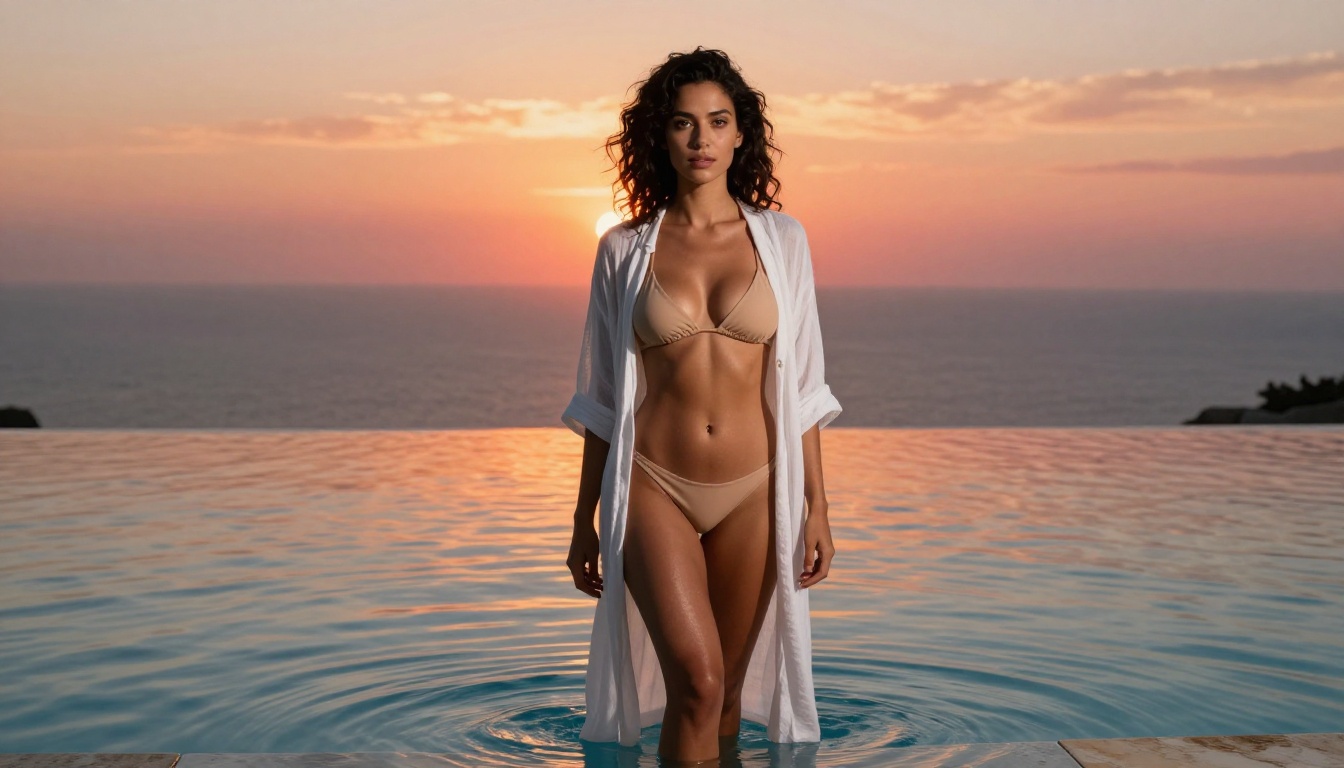
Best NSFW Models on PicassoIA
The video models are only part of the picture. PicassoIA's strongest NSFW capability sits in its image generation tools, and the image-to-video pipeline means those images become your video starting frames. Here is the full ranking:
-
Seedream 4.5 is the top recommendation for NSFW image generation. It accepts adult content, supports image editing, and generates ultra-realistic results in under 3 seconds. Its successor, Seedream 5 Lite, does not support NSFW content, so stay with the 4.5 version.
-
PicassoIA Image Editor Pro operates as an img2img model with unlimited generations on Elite and Infinite plans. Need 1,000 images? They are included at no extra cost. On models like Nano Banana 2, that volume would cost around $100. Accepts NSFW, returns results in under a second, and includes a 3-generation free trial with no credit card required.
-
Qwen Image 2 is open-source and lets you edit or create any image in seconds with very detailed realism and no content restrictions.
-
Grok Imagine Image converts any photo to a bikini format in a highly realistic way. It is specifically built for that transformation use case.
-
Recraft V4 delivers very realistic text-to-image results with NSFW support.
-
P-Image by PrunaAI generates NSFW images from text in under 1 second.
-
Wan 2.2 Image generates highly realistic images from text descriptions without content filters, ideal for detailed scene creation.
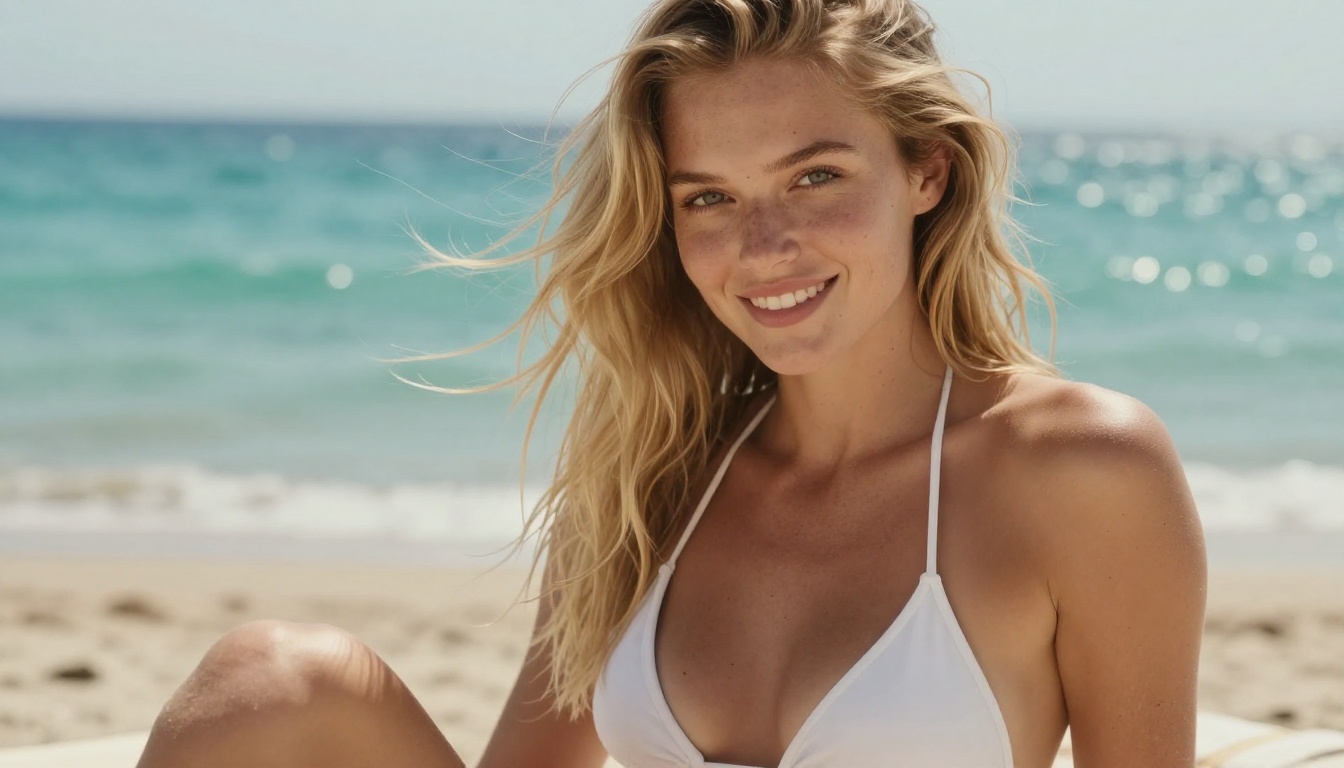
Veo 3.1 vs. PicassoIA for Adult Content
| Feature | Veo 3.1 | PicassoIA |
|---|
| NSFW image generation | Blocked | Supported |
| NSFW video generation | Blocked | Supported (multiple models) |
| Image-to-video pipeline | Available | Available |
| Safety filter | Hard-coded | Disabled by default on NSFW models |
| Account ban risk for adult content | High | None |
| Unlimited generation option | No | Yes (Elite/Infinite plans) |
| Max video resolution | 4K | 4K (LTX 2.3 Pro) |
| Free trial | Limited | 3 generations, no credit card |
The Unlimited Generations Advantage
One detail worth emphasizing: PicassoIA's Image Editor Pro offers unlimited generations to Elite and Infinite subscribers. This changes how you work. Instead of rationing prompts and trying to get every generation perfect to minimize cost, you can iterate freely. Try 50 variations of a scene. Adjust lighting, composition, and styling across dozens of outputs until you land exactly where you want to be.
That creative freedom is simply not available when you are trying to pry content out of a reluctant model one filtered attempt at a time.
Start Creating on PicassoIA
The creators spending their time trying to extract NSFW clips from Veo 3.1 are solving the wrong problem. The right tool for adult content generation already exists, and it is not hidden behind a workaround. It was built for exactly this purpose.
PicassoIA's full catalog includes over 90 text-to-image models and 87 text-to-video models, with a growing selection that explicitly supports adult content creation. The platform gives creators:
- Speed: Multiple models generating in under 1 to 3 seconds
- Flexibility: Text-to-image, img2img, text-to-video, and image-to-video pipelines
- Control: Safety filters disabled by default on NSFW-capable models
- Value: Unlimited generation plans that make high-volume creative work economically practical
Start with Seedream 4.5 for images and PicassoIA Video for clips. Run your first image through the img2img pipeline with Image Editor Pro to refine exactly what you want, then bring it to life as a clip with P-Video or Grok Imagine Video.
The full lineup is waiting at picassoia.com/en/all-models. No workarounds needed. No account bans waiting on the other side. Just the content you want to create, on a platform that was designed to let you create it.


