How to Prompt Grok 4 Correctly: Practical Methods That Work
This guide provides concrete methods for interacting with Grok 4 effectively. You'll learn how to structure prompts for different use cases, set appropriate context, define clear roles, specify output formats, and iterate based on results. The focus is on practical techniques that deliver reliable, high-quality responses from Grok 4 across research, coding, content creation, and analytical tasks.
When people ask how to interact with AI language models, they're often looking for a straightforward answer. With Grok 4 from xAI, the approach matters more than you might expect. This isn't about typing questions and hoping for good answers—it's about creating a structured conversation that guides the model toward useful outputs. The difference between a vague request and a precisely crafted prompt can mean getting generic information versus receiving actionable, detailed insights tailored to your specific needs.
Why Grok 4 Needs Specific Prompt Approaches
Grok 4 operates differently from other language models. Developed by xAI, it has particular strengths in reasoning, technical analysis, and handling complex multi-step problems. However, these capabilities require clear direction. When you provide ambiguous prompts, Grok 4 might default to general responses rather than leveraging its specialized abilities.
The model performs best when you:
Define the context explicitly
Specify the thinking process it should follow
Break complex tasks into logical steps
Request specific output formats
Without these elements, you're essentially asking the model to guess what you want. Grok 4 can handle that guessing process reasonably well, but you'll miss out on its full potential for detailed, structured, and highly relevant responses.
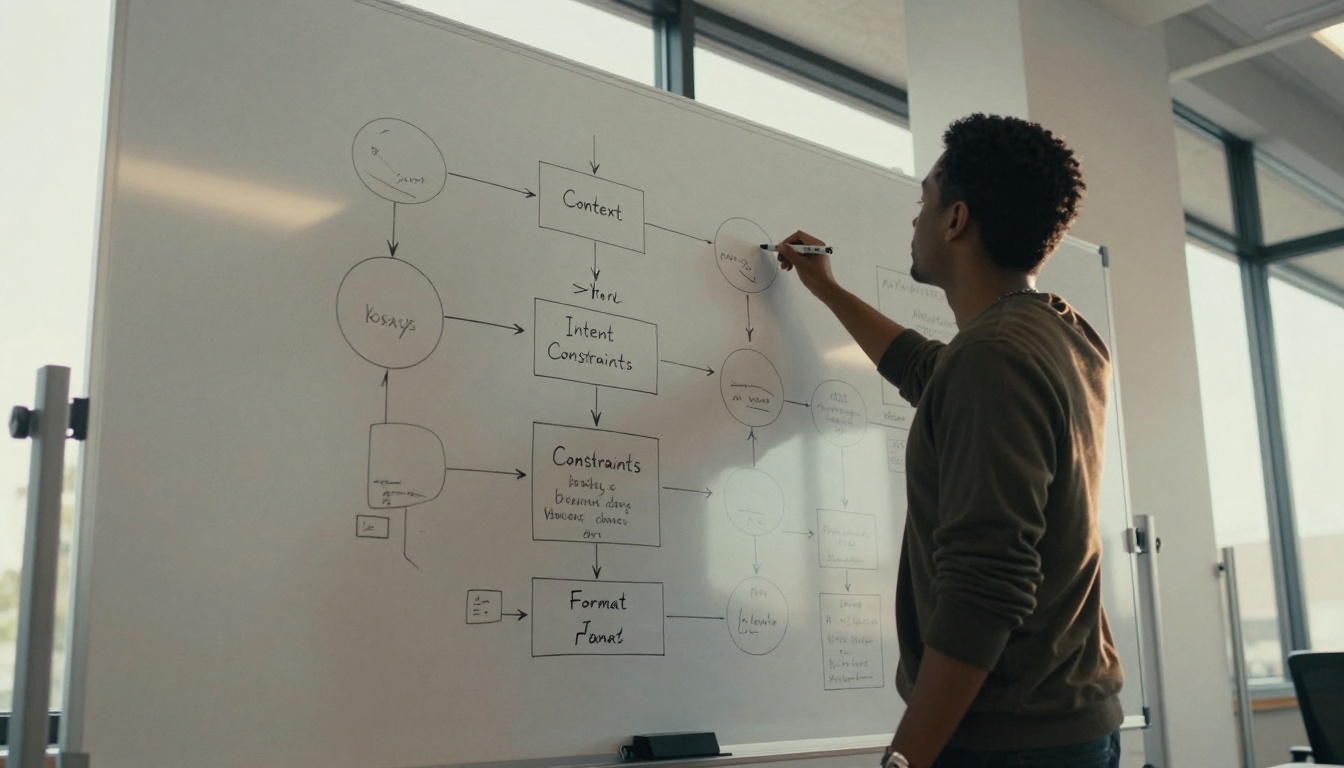
The Core Prompt Structure: Four Essential Components
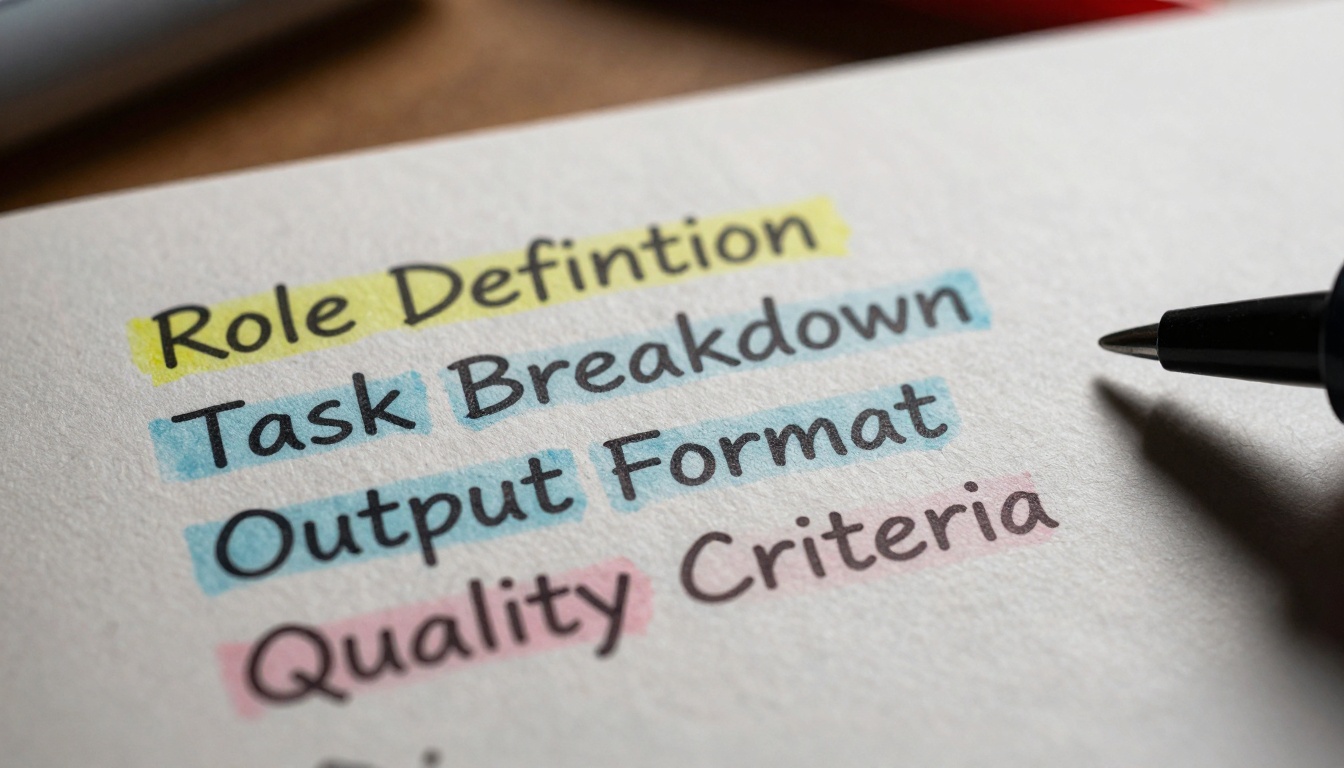
Every effective Grok 4 prompt should include these four elements:
Context: What background information does Grok 4 need?
Role: What perspective should the model adopt?
Task: What specific work needs to be done?
Format: How should results be presented?
💡 Key Insight: Grok 4 responds better to structured prompts than to conversational questions. Think of it as providing a brief rather than having a chat.
Let's examine each component with practical examples:
Context Component
Context tells Grok 4 what it's working with. This includes:
Domain knowledge: "This is about machine learning model deployment..."
Audience information: "The readers are technical managers with CS backgrounds..."
Constraints: "We have limited computational resources..."
Previous attempts: "I've tried these approaches without success..."
Bad example: "Explain neural networks"
Good example: "Explain neural networks to a software engineer who understands basic programming but has no machine learning experience. Focus on practical implementation considerations rather than mathematical theory."
Role Definition
Telling Grok 4 what role to adopt changes how it approaches problems:
Role
When to Use
Example Prompt Start
Technical Expert
Coding, engineering problems
"As a senior software architect with 15 years experience..."
Research Analyst
Data analysis, market research
"As a data scientist specializing in healthcare analytics..."
Content Strategist
Marketing, content creation
"As a content director for a tech startup targeting developers..."
Educational Guide
Tutorials, explanations
"As a university professor teaching computer science..."
Effect: When you specify "As a cybersecurity consultant specializing in financial systems," Grok 4 will frame its responses with that expertise in mind, using appropriate terminology and considering relevant constraints.
Task Breakdown
Complex tasks need decomposition:
Instead of: "Create a complete web application"
Use:
"Design the database schema for user authentication"
"Write the API endpoints for user registration and login"
"Create the frontend React components for the login interface"
"Implement security measures for password storage"
Output Formatting
Specify exactly how you want information presented:
Bullet points for quick summaries
Numbered lists for sequential instructions
Tables for comparisons
Code blocks with language specification
Structured JSON for data output
Markdown for documentation
Example: "Present the results as a table with columns: Approach, Pros, Cons, Implementation Difficulty (1-5), Estimated Time."
Setting Context: What Grok 4 Needs to Know First
Context establishment is the most frequently overlooked aspect of prompting. Grok 4 doesn't know what you know unless you tell it. Consider these context elements:
Technical Context:
I'm working with Python 3.11, have access to TensorFlow 2.15, and need to deploy on AWS Lambda with 512MB memory. The data is time-series sensor readings collected hourly.
Project Context:
This is for a startup building an AI-powered customer support tool. We have 5 developers, our stack is React/Node.js/PostgreSQL, and we need to integrate with existing CRM systems.
Learning Context:
I'm learning about blockchain technology. I understand basic cryptography but haven't worked with distributed systems before. Explain concepts with analogies to familiar web technologies.
Role Definition: Telling Grok 4 How to Think
Role definition isn't just about expertise—it's about perspective. Different roles approach problems differently:
Technical Consultant Role:
As a cloud infrastructure consultant with expertise in cost optimization, analyze this AWS architecture and suggest specific changes to reduce monthly costs by 30% while maintaining performance.
Educational Role:
As a patient teacher explaining complex topics to beginners, describe how machine learning algorithms work using everyday analogies. Avoid technical jargon unless you define it clearly.
Creative Role:
As a creative director for a technology brand targeting Gen Z, suggest marketing campaign ideas for our new AI tool that makes video editing accessible to beginners.
The role you assign changes:
Vocabulary choice (technical vs. accessible)
Detail level (comprehensive vs. summarized)
Problem-solving approach (analytical vs. creative)
Output structure (formal report vs. casual suggestions)
Task Breakdown: Splitting Complex Requests
Large tasks overwhelm language models. Grok 4 handles complexity better when you break it down:
Before (Overwhelming):
Design and implement a complete e-commerce platform with user authentication, product catalog, shopping cart, payment processing, order management, and admin dashboard.
After (Manageable):
Step 1: Design the database schema for users, products, orders, and payments
Step 2: Create the user authentication API endpoints
Step 3: Implement the product catalog search and filtering system
Step 4: Build the shopping cart functionality
Step 5: Integrate payment processing with Stripe
Step 6: Develop the order management workflow
Step 7: Create the admin dashboard interface
Breakdown Techniques:
Sequential decomposition: Tasks that must happen in order
Parallel decomposition: Independent tasks that can be handled separately
Hierarchical breakdown: Major categories with sub-tasks
Progressive refinement: Start broad, then add detail in follow-up prompts
Output Formatting: Getting Results You Can Use
Format specification saves time on post-processing. Grok 4 can structure output in numerous ways:
For Analysis Results:
Present your analysis in this format:
1. Key Findings: [3-5 bullet points]
2. Data Supporting Findings: [table with metrics]
3. Recommendations: [numbered actionable steps]
4. Risks and Considerations: [brief paragraph]
For Code Generation:
Provide complete Python code with:
2. Function definitions with type hints
3. Comprehensive docstrings
4. Error handling
5. Example usage at the bottom
For Comparison Tasks:
Create a comparison table with these columns:
- Feature
- Implementation A Approach
- Implementation B Approach
- Pros of Each
- Cons of Each
- Recommended Choice (with reasoning)
Common Mistakes and How to Avoid Them
Mistake 1: Assuming Context
Problem: "Fix this code" without providing the code or error messages
Solution: Always include relevant context: "Here's my Python function that's returning None when it should return a list. The error occurs when..."
Mistake 2: Vague Role Assignment
Problem: "Help me with marketing"
Solution: "As a digital marketing specialist focusing on B2B SaaS products, suggest three campaign strategies for..."
Mistake 3: Overly Broad Tasks
Problem: "Create a business plan"
Solution: "Start by outlining the executive summary section of a business plan for..."
Mistake 4: Missing Format Specifications
Problem: "List the advantages"
Solution: "List the top 5 advantages as bullet points, with a one-sentence explanation for each"
Mistake 5: No Iteration Strategy
Problem: One-shot complex requests
Solution: Start with a proof of concept, then refine: "First, sketch the basic architecture. Then, we'll add details in subsequent prompts."
Advanced Techniques: Chain-of-Thought and Iterative Refinement
Chain-of-Thought Prompting:
Instead of asking for answers directly, request the thinking process:
Don't just give me the answer. Show your reasoning step by step:
1. What is the core problem?
2. What are the possible approaches?
3. What criteria should we use to evaluate options?
4. Which approach meets those criteria best?
5. What are the implementation details?
Iterative Refinement:
First pass: Provide a high-level overview of React state management approaches.
Second pass: Based on that overview, dive deeper into the Redux approach.
Third pass: Now provide a concrete implementation example.
Fourth pass: Suggest optimizations for the implementation.
Practical Examples Across Different Domains
Software Development Example:
Context: I'm building a REST API with FastAPI for a todo application. Database is PostgreSQL.
Role: Act as a senior backend engineer who specializes in API design and database optimization.
Task: Design the complete database schema with relationships, then create the CRUD endpoints with proper error handling and validation.
Format: Provide SQL for the schema and Python code for the endpoints. Include comments about performance considerations.
Content Creation Example:
Context: Our company sells project management software to small businesses.
Role: You're a content marketing strategist with experience in B2B SaaS.
Task: Create a blog post outline about "5 Ways to Improve Team Productivity" targeting team leaders in companies of 10-50 employees.
Format: Provide headline options, introduction paragraph, 5 section headings with 2-3 bullet points each for content ideas, and a call-to-action suggestion.
Research Analysis Example:
Context: I'm analyzing survey data about remote work preferences. Sample size: 1,000 tech workers.
Role: Act as a data analyst specializing in workplace studies.
Task: Identify the top 3 patterns in the data and suggest actionable recommendations for companies.
Format: Present findings as: 1) Key patterns with supporting statistics, 2) Visual representation suggestions, 3) Three specific recommendations with implementation steps.
Testing and Validating Your Prompts
Not all prompts work equally well. Develop a testing approach:
Test Criteria:
Completeness: Does the response address all requested elements?
Relevance: Is the information appropriate for the specified context?
Actionability: Can you use the output directly?
Efficiency: Did you get the needed information without excessive content?
Accuracy: Are technical details correct?
Prompt Iteration Process:
Initial prompt → Review output → Identify gaps → Refine prompt → Test again
Common Refinements:
Add more specific constraints
Clarify the role definition
Break tasks into smaller steps
Specify output format more precisely
Provide examples of desired output
How to Use Grok 4 on PicassoIA Platform
PicassoIA provides direct access to Grok 4 alongside other advanced AI models. The platform offers several advantages for working with Grok 4:
1. Start with the structured prompt template
2. Submit to Grok 4
3. Review the output quality
4. If needed, refine and resubmit
5. Compare with outputs from other models available on PicassoIA
6. Save effective prompt patterns for future use
Technical problem-solving with multiple constraints
Research synthesis from disparate information sources
Code generation with specific architecture requirements
Strategic planning that benefits from systematic thinking
Getting Started Today:
The most effective approach is to begin with a specific, well-defined task. Rather than exploring Grok 4's capabilities abstractly, pick a concrete problem from your work or projects. Apply the structured prompting methods outlined here, starting with context setting and role definition. Use the PicassoIA platform to access Grok 4 directly, taking advantage of the conversation history and comparison features. Remember that effective prompting is an iterative process—your first attempts might need refinement, but each iteration teaches you more about how to communicate with the model effectively.