Three years ago, if you wanted a high-quality illustration of your favorite anime character in a situation that mainstream platforms wouldn't touch, you had two options: find an underground artist willing to do it for $150 a piece, or wait months in a commission queue with no guarantee the result would match what you pictured. AI art tools ended both of those constraints, and anime fan culture has not been the same since.
What Happened When AI Met Anime Fandom
The intersection of AI image generation and anime fandom wasn't planned by any platform or company. It emerged from the bottom up, from communities that had been posting fan art on forums and Discord servers long before the technology existed to generate it algorithmically.
From Commission Queues to Instant Output
Fan art has always been central to anime communities. But for most fans, the barrier to making it was either skill or money. Unless you could draw yourself or afford to pay someone who could, your ideas stayed in your head.
When text-to-image models became publicly accessible in 2022 and 2023, that barrier dropped to near zero. You could describe a character, specify a scenario, dial in a style, and get something usable in under a minute. For fan communities that had been producing art for decades at relatively low volume, this was a production velocity shift that nobody had predicted.
The Model Moment That Changed Everything
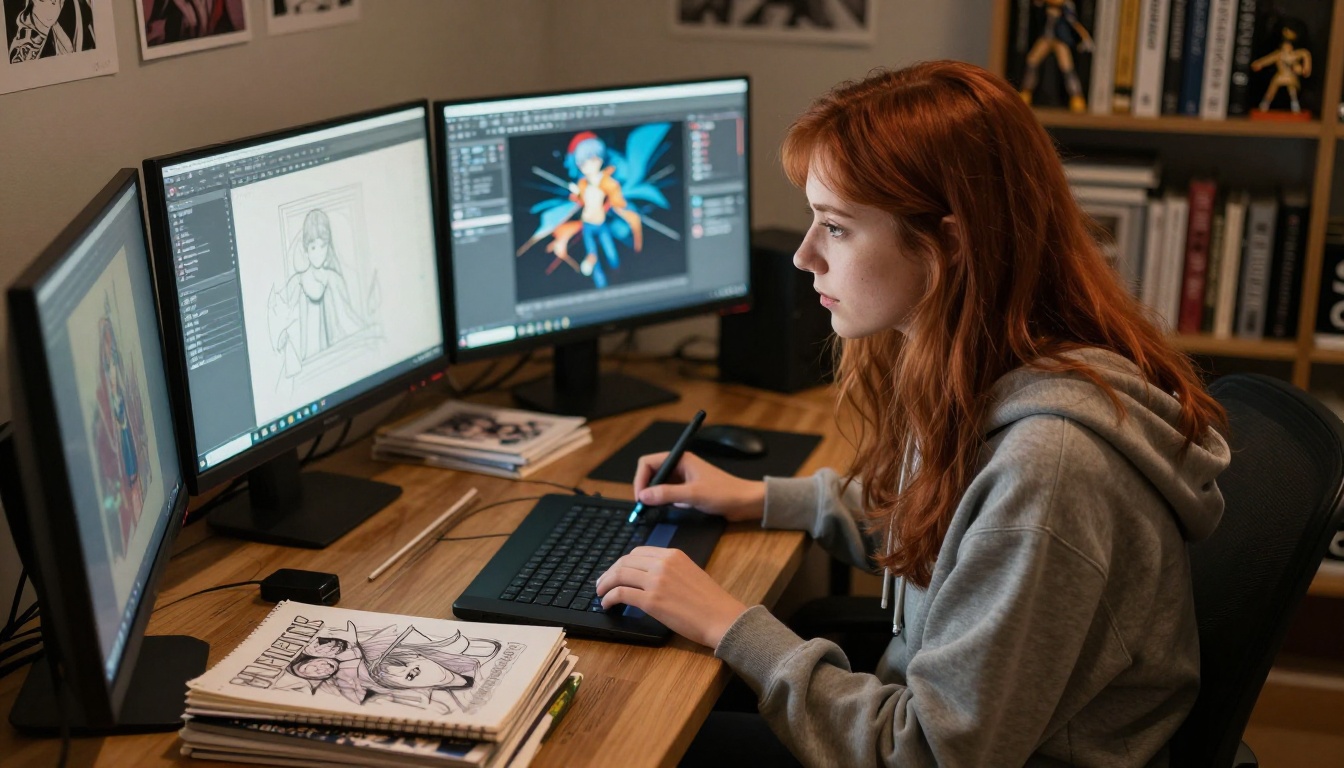
The shift didn't happen all at once. Early text-to-image models produced generic, low-quality images that fans dismissed quickly. The critical turn came when models trained specifically on anime-style data, or on highly realistic human figures without restrictive safety filters, began producing results that matched or exceeded what fans had been commissioning.
The speed of that transition caught platform moderators off guard. Fan communities moved faster than content policies could. And the demand wasn't just for anime-styled drawings. Many fans specifically wanted photorealistic portrayals of characters and scenarios that the big platforms blocked outright.
The real impact of unrestricted AI art on anime fandom only makes sense when you're honest about what fans were actually looking for. Not all of it was adult content. A significant portion of the demand came from:
- Original character work that platforms would flag incorrectly as IP violations
- Mature themes without explicit content, like battle damage, emotional distress, and dark storylines
- Fan pairings between characters from different series that no official artist would touch
- Body-positive and non-standard character designs that mainstream anime studios didn't produce
- NSFW content ranging from suggestive to explicit, depending on the community
💡 The censorship friction on platforms like DeviantArt and Twitter/X pushed whole fan communities to self-hosted forums and private Discord servers where content rules were set by the community, not a corporate policy team.
What Censored Platforms Couldn't Deliver
The irony is that many mainstream AI platforms created the exact vacuum that uncensored tools filled. By applying broad safety filters that flagged swimsuit images, fantasy battle scenes, and even some traditional anime art styles as violations, they pushed their most active users toward alternatives with fewer restrictions.
A fan trying to generate art of an original character in a risque outfit was frequently blocked. The same fan using a platform with fewer restrictions could have the image in 30 seconds. Once people experienced that difference, there was no going back to waiting rooms and appeal queues.
The Community Demand That Shifted Everything
The demand for uncensored tools wasn't a niche interest. On platforms that tracked it, NSFW anime content consistently ranked among the highest-traffic categories. Fan communities that had previously relied on the slow, expensive commission economy suddenly had access to a production tool that was fast, affordable, and responsive to detailed prompts.
That demand shaped which tools thrived. Platforms and models that allowed adult content attracted large user bases quickly. Those that blocked it watched their anime-focused users migrate within weeks.
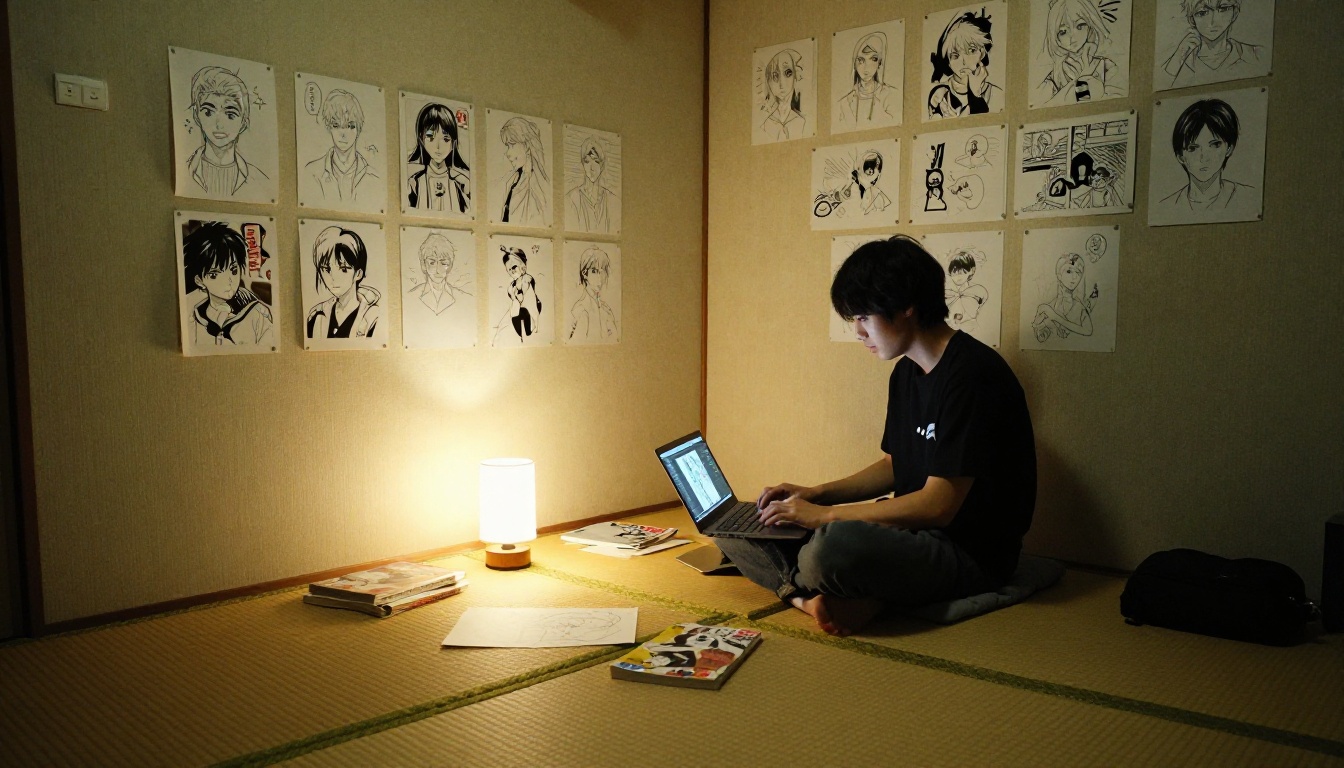
Not all AI art platforms are created equal when it comes to content policies. The ones that gained the most traction in anime fan communities were those that:
- Allowed mature content without requiring users to justify it
- Provided models specifically fine-tuned on anime and realistic human figures
- Didn't watermark or restrict downloads
- Offered enough generation speed that iteration was practical
Where Fan Artists Actually Went
Fan communities coalesced around a handful of tools. Some were local installs of open-source models. Others were web-based platforms that balanced accessibility with content permissiveness. The consistent pattern was that wherever fans could generate freely, communities formed and grew quickly.
Discord servers dedicated to AI anime art grew from hundreds of members to tens of thousands in months. Reddit communities for AI-generated fan art saw similar spikes. The output volume was staggering: in active servers, hundreds of images per day per active user wasn't unusual.
Why PicassoIA Became a Destination
For fans wanting a browser-based platform without the hassle of local model installations, PicassoIA became a go-to destination. With over 91 text-to-image models available and no hard cap on generations, it offered the combination of variety and volume that fan artists needed.
The selection of models specifically shaped what kinds of content fans could produce. Different models in the catalog excelled at different aesthetics, from hyper-realistic portraiture to stylized anime rendering, giving fans the ability to match a tool to a specific creative vision.
How to Use Seedream 4 on PicassoIA
Seedream 4 from ByteDance is the model most fan artists reach for first on PicassoIA. It produces images at up to 4K resolution from a text prompt, handles image-to-image editing with a single sentence, and requires no coding to operate. For NSFW fan art specifically, its detail fidelity at high resolutions makes it the top choice on the platform.
Here's how to get the best results with Seedream 4 for anime fan content:
Step 1: Write a descriptive prompt. Be specific about the character's appearance, the scenario, lighting, and framing. The more detail you provide, the less the model has to guess. For fan characters, describe physical features directly rather than referencing existing IP.
Step 2: Set resolution to 2K or 4K. For detailed character work, use at least 2K resolution. Fan art intended for printing or large display benefits significantly from the 4K option.
Step 3: Choose your aspect ratio. For portrait-oriented character art, use 3:4 or 9:16. For scene-based compositions with multiple characters or environments, 16:9 works well. The model supports nine aspect ratio presets.
Step 4: Use reference images for character consistency. Seedream 4 accepts up to ten reference images as input. If you have existing art of a character, upload those references. The model carries over visual style, character features, and composition from the inputs.
Step 5: Iterate with single-sentence edits. After your initial generation, refine with one-line instructions. "Change the hair color to silver" or "Add a dark forest background" adjusts specific elements without restarting the whole prompt.
💡 Pro tip: Seedream 4's sequential generation mode lets you produce up to 15 related images in a single session. Use this for character sheets, story sequences, or outfit variations without running each prompt manually.
The Models Reshaping Anime AI Art
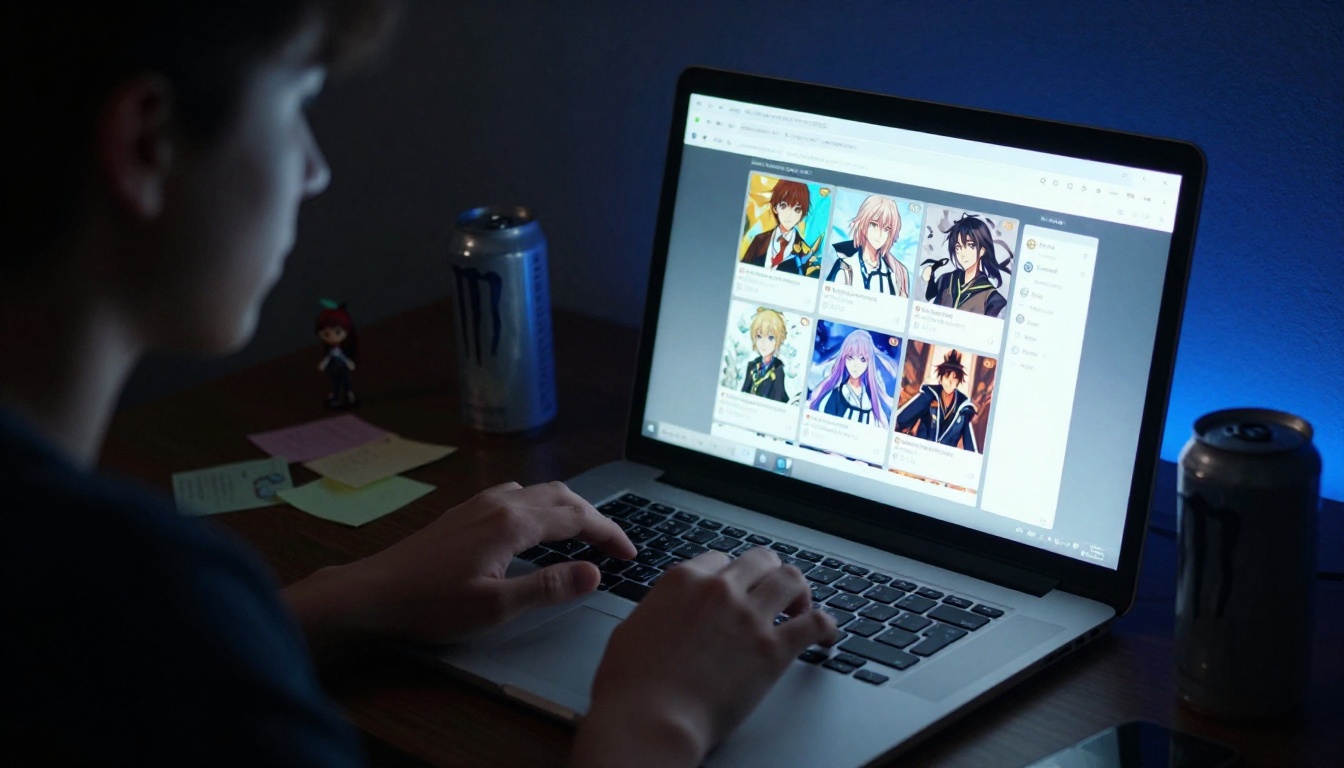
Beyond Seedream 4, several other models on PicassoIA have become staples for anime fan creators. Each excels at something specific.
Flux Dev for Photorealistic Results
Flux Dev runs on 12 billion parameters, making it one of the most capable text-to-image models available through a browser. For fans who want photorealistic portrayals of anime-inspired characters, it's the standard. Its img2img mode lets you start from an existing artwork or photo and redirect it with a prompt, which is useful for adapting existing fan art into a new visual style or scenario.
Notable specs:
- Resolution: 1 megapixel standard output
- Aspect ratios: 11 options from 1:1 to 21:9
- Generation modes: Fast (speed-optimized) and standard (maximum quality)
- Output formats: WebP, JPG, or PNG
PicassoIA Image Editor Pro for Character Work
PicassoIA Image Editor Pro is the platform's native editing model. Its unlimited generation policy makes it particularly valuable for fan artists who iterate heavily. Upload a character image, describe what you want changed, and get the result in seconds.
What makes it stand out for fan art:
- Accepts up to three reference images simultaneously
- No per-edit cap or daily quota
- Handles outfit swaps, background replacements, and style transfers in plain language
- Fast enough to use in a real, high-volume creative workflow
This is the tool to reach for when you have a base image and want to adapt it for different scenarios without rebuilding from scratch each time.
Stable Diffusion for Fine-Tuned Control
Stable Diffusion on PicassoIA gives fans the most manual control of any model in the catalog. Six schedulers, adjustable guidance scale, negative prompts, and a seed parameter for reproducibility make it the preferred tool for creators who know exactly what output variables they want to control.
For anime fan art with specific aesthetic targets, especially older or more stylized visual styles that newer models sometimes oversharpen, Stable Diffusion's parameter flexibility is hard to beat.
How Fan-Made Content Changed in 3 Years
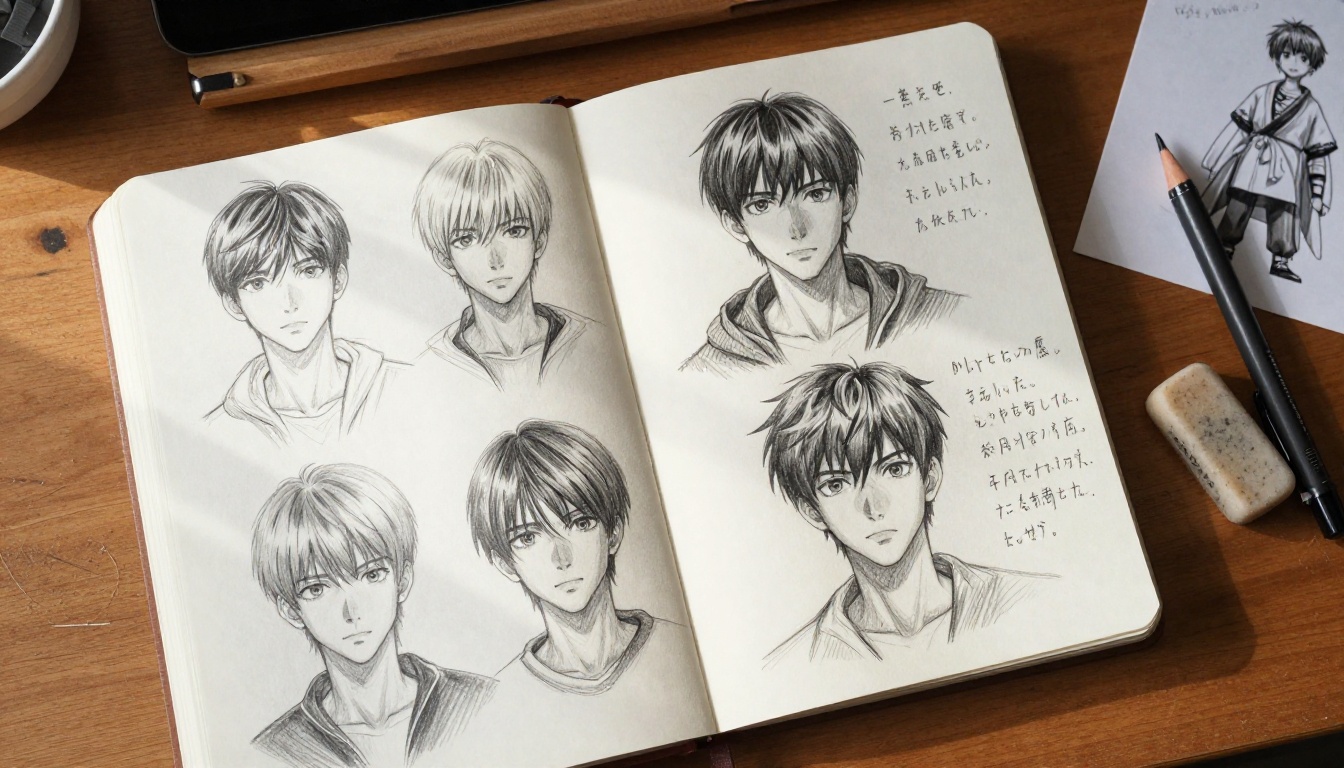
The impact of unrestricted AI art tools on anime fan culture isn't subtle. It shows up in measurable shifts across how fan communities operate, what they produce, and how they think about creative output.
Before and After AI Tools Arrived
Before accessible AI generation tools, anime fan art production was gated by:
- Time: A skilled fan artist might complete 2-4 pieces per week at quality
- Cost: Commission prices ranged from $30 for simple sketches to $300+ for detailed scenes
- Access: You either had the skill or knew someone who did
- Platform dependency: Art was hosted wherever the platform allowed, with constant takedown risk
After unrestricted AI tools entered the picture:
- Time: A fan can produce 50+ images per day at high quality
- Cost: Platform subscriptions or pay-per-generation at fractions of a cent per image
- Access: Anyone with a description can create; drawing skill is no longer a barrier
- Platform independence: Images download freely and can be hosted anywhere
New Types of Content Fans Now Create
This shift didn't just accelerate existing fan art production. It created entirely new categories of fan content that didn't exist before:
Long-form visual stories: Fans now produce 50-100 panel image sequences that function like graphic novels. The AI handles visual consistency across scenes while the creator focuses on narrative.
Alternate character designs: Taking an existing character and generating dozens of variations, age progressions, crossover versions, and alternative outfit designs. This was prohibitively expensive to commission before; now it takes an afternoon.
Reaction image sets: Highly specific emotional expressions, poses, and situations for a character that fans use in forums and group chats. These get produced by the dozens in a single session.
Original character development: Fans who previously couldn't visualize their own characters now build complete reference sheets, scene libraries, and story art for characters that exist nowhere else.
What the Numbers Say About This Shift
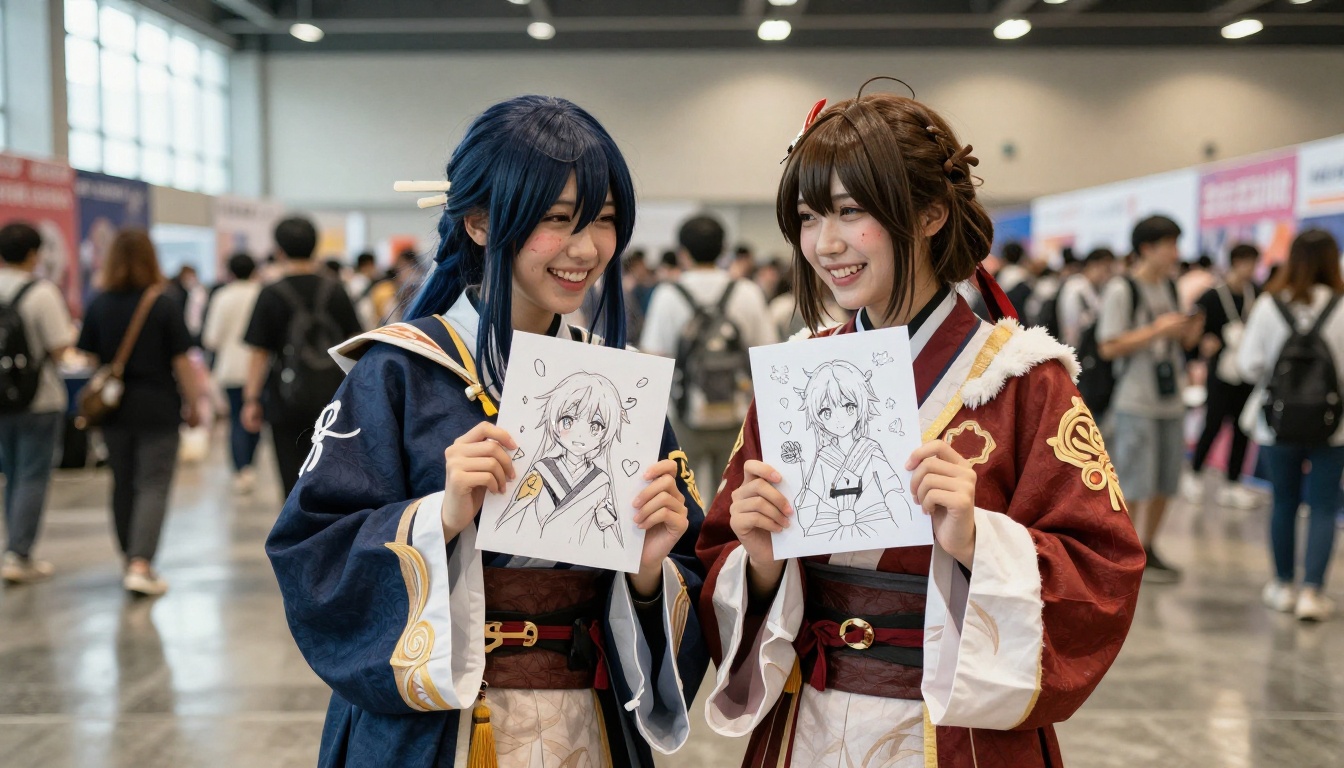
The cultural changes are backed by observable platform data. The volume increase alone reconfigured how fan communities work.
| Metric | Before AI Tools (2021) | After AI Tools (2023-2024) |
|---|
| Fan art posts per day (major communities) | ~500-2,000 | ~50,000-200,000 |
| Average commission wait time | 4-12 weeks | N/A (self-service) |
| Community size growth (AI art servers) | Flat | 10x-50x in 18 months |
| Content variety per character | Narrow | Broad, including NSFW categories |
When a single fan can produce a month's worth of traditional fan art output in a single day, the social dynamics around sharing, recognition, and creative contribution change fundamentally.
The Skill vs. Tool Debate
This volume shift triggered a real debate in anime fan communities about what fan art means when anyone can produce it at scale. Traditional artists who had invested years in their craft found their output competing directly with AI-generated work that, to casual observers, looked just as good.
That tension hasn't resolved. Some communities set explicit rules about AI content. Others embraced it fully. Most landed somewhere in the middle, distinguishing between AI-assisted work (generally accepted) and purely AI-generated work posted as if it were hand-drawn (which generated friction).
What most communities agreed on: the technology itself isn't going away. The question became how to integrate it honestly.
The impact of uncensored AI art on anime fan culture cannot be honestly described without acknowledging the NSFW component. Mature and explicit fan content has always existed in anime fandom, in doujinshi, private forums, and commission markets. AI tools didn't create that demand. They removed the barriers to satisfying it.
For creators interested in tasteful to mature content, Seedream 4 on PicassoIA remains the leading option. It handles suggestive and NSFW content with strong fidelity, and its 4K output means the results are sharp enough for serious use.
For those wanting a tool designed specifically for image editing and character refinement rather than raw generation, PicassoIA Image Editor Pro offers unlimited generations with no watermarks and fast turnaround. The multi-image input capability makes it particularly useful for building a consistent character with specific physical features across multiple scenes.
💡 Not every model handles NSFW content equally well. Some models soft-block it by default through their training data. If you're seeing sanitized results when you want something more mature, switching to a model with explicit uncensored support, like Seedream 4, is the fix. Do not use Seedream 5 Lite for NSFW work; it blocks adult content by design.
The full catalog of models across all content types is browsable at picassoia.com/en/all-models.
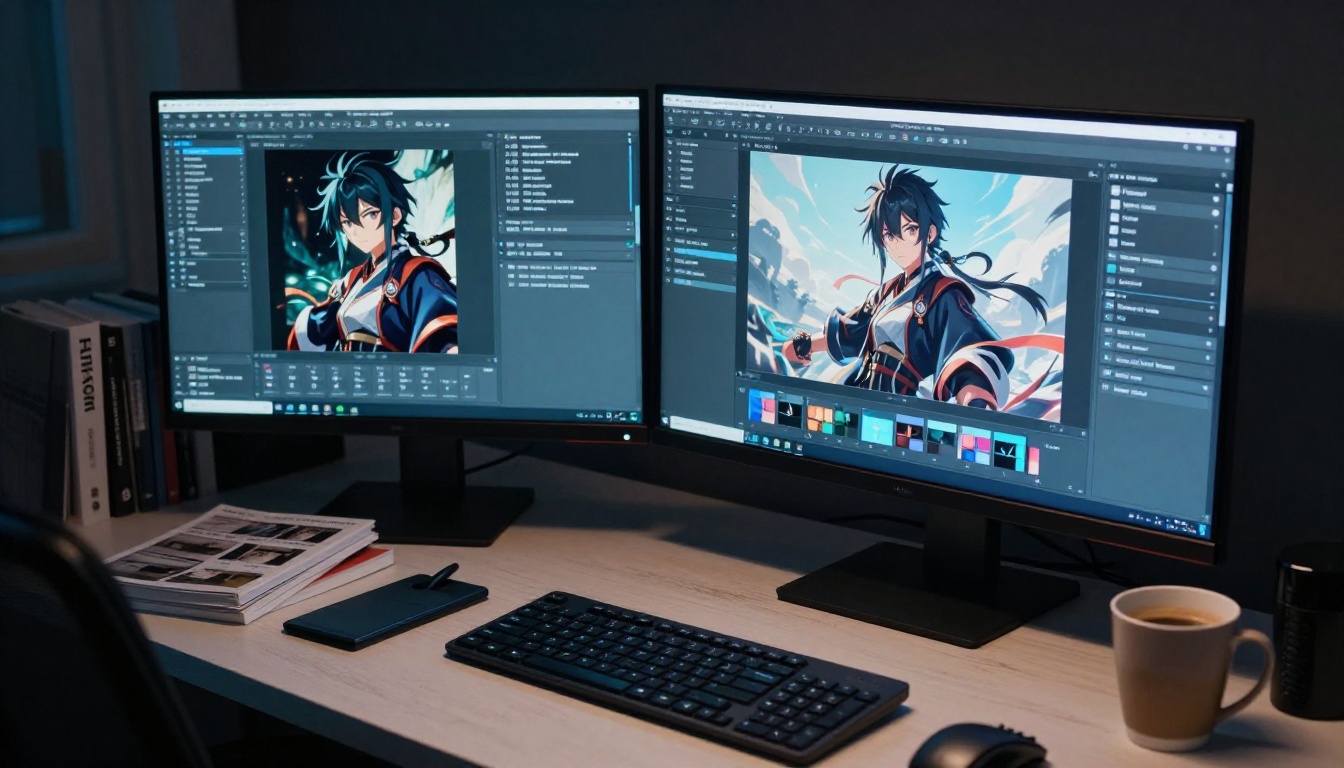
Start Creating Your Own Anime Art
The shift described in this article isn't theoretical. It's happening right now in thousands of fan communities, with tools that are accessible to anyone willing to write a prompt.
If you've been consuming anime fan art as a spectator, the gap between you and the creators has effectively collapsed. You don't need drawing skills, a commission budget, or access to a private Discord server with a trusted artist. You need a well-written prompt and a platform that doesn't get in your way.
PicassoIA gives you over 91 text-to-image models, unrestricted generation on tools like Seedream 4, and an editing pipeline through PicassoIA Image Editor Pro that can take any base image and build on it indefinitely. Whether your interest is original character development, alternate universe scenarios, or mature fan content, the tools are there and they work without gatekeeping.
The anime fan community spent decades figuring out what it wanted to create. AI just made it possible to actually create it, at scale, without asking permission.
Start at picassoia.com/en/all-models and pick the model that fits your vision.