If you have ever tried to generate an image with readable text using AI, you already know the pain. Garbled letters. Misspelled words. Signs that look like someone sneezed on a keyboard. For years, this was one of AI image generation's most consistent failures, and most models quietly learned to sidestep the problem by blurring, stylizing, or simply hoping nobody would zoom in. Ideogram 3.0 does not sidestep it. It solves it.
Released and refined over the past year, Ideogram 3.0 was built from scratch with typography as a first-class output requirement. The results are not marginal improvements over what came before. They represent a category shift in what AI-generated imagery can actually deliver for designers, marketers, and creators who need text that works.
Why Text in AI Images Is So Hard

Most image generation models work by predicting pixel patterns based on statistical patterns in training data. Text is fundamentally different from the objects, faces, and landscapes those models were built to replicate. Letters are symbolic. They carry meaning that depends on precise, specific arrangements of strokes, curves, and spacing that cannot be approximated.
When a model generates a dog, close enough is fine. When it generates the word "SALE," one misplaced pixel turns readable copy into visual noise.
The core issue is attention distribution. Standard diffusion models spread their attention across the entire image frame equally, allocating computational focus based on visual complexity. Text requires concentrated, character-level precision that generalist architectures were never designed to deliver.
The Three Failure Modes
Most models fail at text in predictable, recurring ways:
- Spelling errors: Words that look plausible from a distance but contain substituted or missing characters
- Character merging: Letters that blur into each other, especially at smaller sizes or in serif fonts
- Structural collapse: Text that starts legibly but deteriorates mid-word, mid-line, or across multi-line layouts
Ideogram 3.0 was designed to eliminate all three by pairing its core image synthesis pipeline with a dedicated text-rendering module that treats character placement as a constrained optimization problem rather than a pixel prediction problem.
What Ideogram 3.0 Actually Does

Ideogram 3.0 uses a hybrid architecture that combines diffusion-based image synthesis with a specialized typography rendering system. Think of it as two expert systems working in parallel: one handles visual composition and aesthetics, the other handles character placement, font consistency, and legibility.
The result is that text in Ideogram 3.0 outputs behaves more like it was set in a design application than generated by a neural network. Characters are consistent across a word and across a layout. Spacing is coherent. Multi-line structures hold their visual hierarchy.
Core Capability Breakdown
| Feature | Ideogram 3.0 Performance |
|---|
| Accurate spelling | Consistently high |
| Multi-line text layouts | Supported, coherent hierarchy |
| Text and image integration | Compositionally native |
| Short headlines (1-5 words) | Excellent |
| Medium copy (6-20 words) | Good to excellent |
| Long body text (20+ words) | Degrades past 30 words |
| Prompt adherence for text | High with correct syntax |
| Primary language | English |
The model also includes what Ideogram calls "magic prompt," an optional rewriting layer that transforms vague or poorly structured user prompts into precise generation instructions before the model runs. This feature alone accounts for a significant portion of the accuracy gains users see when switching from other tools.
Tip: Placing your desired text string inside quotation marks directly in the prompt dramatically improves output accuracy. The model treats quoted text as a literal string to render, not a conceptual direction to interpret.
Ideogram 3.0 vs. the Competition

Being honest about where other models stand is more useful than vague superlatives.
GPT Image 2 from OpenAI is the most direct competitor on text handling. It performs reliably on structured prompts and handles simple text overlays with reasonable accuracy. Where it falls behind Ideogram 3.0 is in complex, multi-element layouts where typography and visual imagery need to coexist as integrated components rather than overlapping layers.
Flux Redux Dev from Black Forest Labs is arguably the most capable generalist model available today for photorealistic image synthesis. Its text rendering is functional for short phrases and single words. It deteriorates quickly with longer strings or typographic requirements that demand character-level precision.
Qwen Image Edit Plus is built around editing and refinement rather than generation from scratch. It is a stronger choice when you already have an image and need to add, modify, or correct text within an existing composition.
| Model | Text Accuracy | Visual Style Range | Best Use |
|---|
| Ideogram 3.0 | Excellent | Moderate | Text-first creative work |
| GPT Image 2 | Good | Wide | General image generation |
| Flux Redux Dev | Moderate | Excellent | Photorealistic imagery |
| Qwen Image Edit Plus | Good | Moderate | Editing existing images |
The pattern is clear: Ideogram 3.0 wins specifically when text is the central, non-negotiable requirement. Other models win when visual aesthetics or editing flexibility matter more than typographic precision.
Where Ideogram 3.0 Wins in the Real World
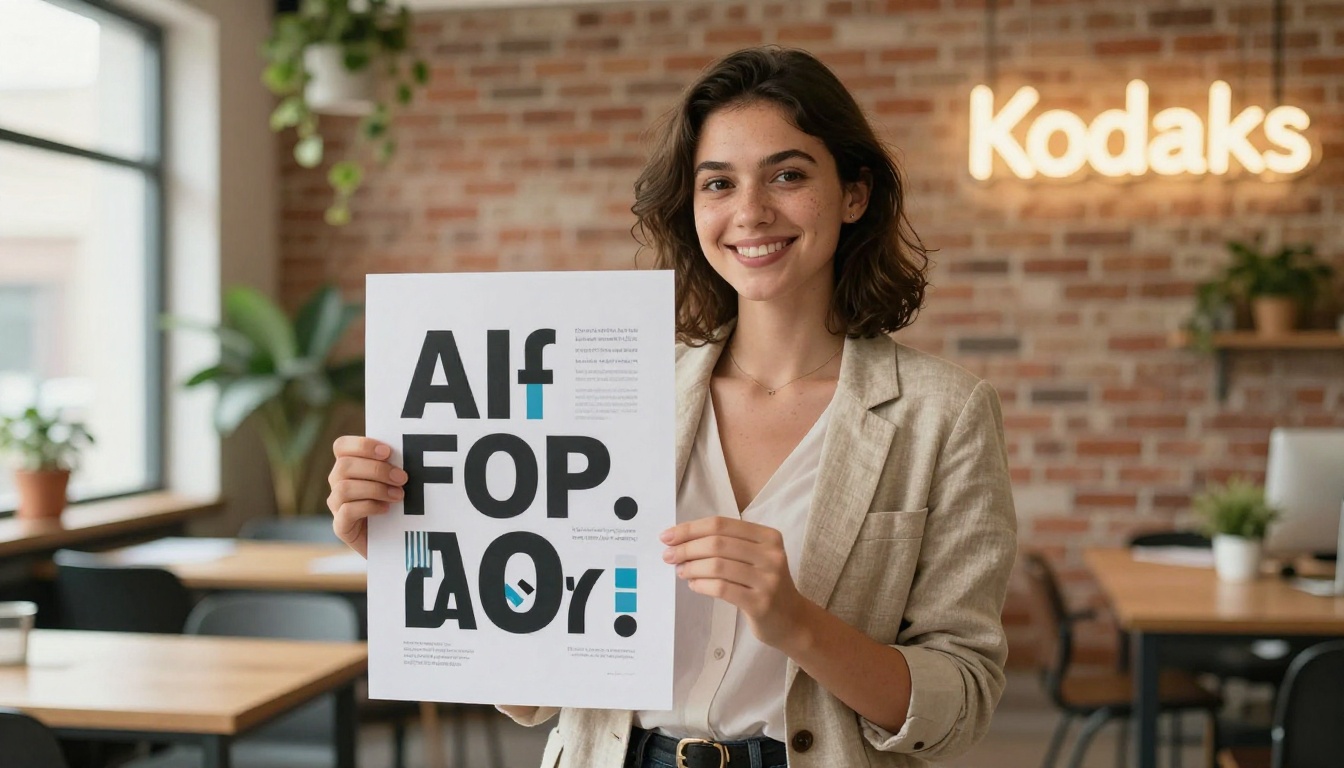
The performance gap becomes most visible in specific professional contexts where text accuracy is not optional.
Advertising and Marketing Assets
Poster design, promotional graphics, and social media ads all require text that is not just legible but designed. Ideogram 3.0 generates campaign-ready visuals where the headline, subtext, and call-to-action sit naturally within the composition rather than floating awkwardly over it.
Social Media Thumbnails
YouTube thumbnails and Instagram carousels live or die on immediate readability at small screen sizes. Ideogram 3.0 handles bold, contrasting text over complex photographic backgrounds consistently, which makes it particularly well-suited to content formats where the visual hook is text-image combination.
Book Covers and Editorial Design

Title placement on a book cover demands precision. Too close to the edge, too much overlap with the subject, or a single misread character breaks the entire design. Ideogram 3.0 handles this kind of constrained, high-stakes text placement more reliably than any competing model currently available.
Event and Conference Materials
Banners, flyers, and signage all rely on clear information hierarchy. Ideogram 3.0 generates materials that follow natural design hierarchy instinctively, placing larger elements for primary information and organizing secondary details with appropriate spacing and weight differentiation.
Meme and Social Content
This is actually where Ideogram first gained serious traction among power users. Accurate, readable text over image content is the defining structural requirement of the meme format. Ideogram delivered when other models could not, and that early community adoption drove rapid iteration and improvement in subsequent versions.
The Limitations Nobody Talks About
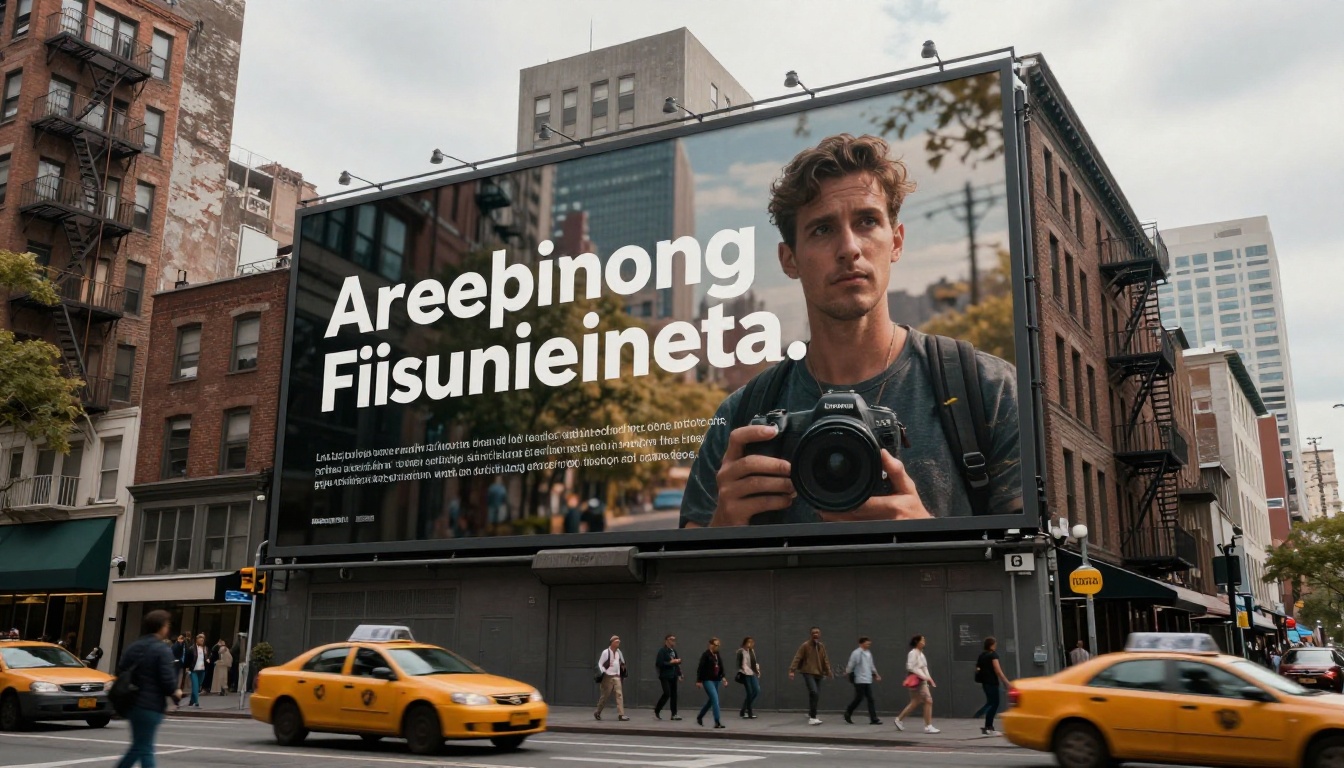
Every model has real constraints. Knowing them saves time and manages expectations honestly.
Language Coverage Is Narrow
Ideogram 3.0 is trained predominantly on English. Other Latin-alphabet languages perform reasonably but inconsistently. Complex scripts including Arabic, CJK characters, and Devanagari are unreliable. If your work requires multilingual output at production quality, this is a material limitation that no amount of prompt engineering will fully resolve.
Long-Form Text Degrades
The model handles headlines, short body copy, and captions with high accuracy. Ask it to render a paragraph of 50 words or more and quality begins to deteriorate. Character consistency typically starts breaking down around the 30-word mark across most test prompts.
Stylistic Range Is Limited
Ideogram 3.0's core strength is also its constraint. It does not offer the same range of artistic styles available in generalist models. If you need highly stylized imagery where text is incidental or decorative, models like Flux Redux Dev give you more expressive latitude while still delivering usable text for simple cases.
Prompt Sensitivity Is High
Text accuracy is heavily dependent on how well the prompt is structured. Ambiguous or poorly framed prompts produce highly variable results. The model rewards users who write precise, structured instructions and penalizes those who write loosely.
Getting Consistently Good Results

Working with Ideogram 3.0 effectively requires understanding what it responds to. These are not abstract optimization tips. They are the specific prompt behaviors that produce consistent, production-ready output.
Wrap text in quotation marks: Always enclose any string you want rendered exactly as written in quotes within your prompt. This signals literal rendering intent to the model.
Specify placement explicitly: Include directional cues. "Text in the upper third of the image" or "centered bold headline with clear negative space below" gives the model structural parameters to work within.
Describe the background before introducing text: Build the visual environment first, then introduce the text element. Models that understand the scene context render text more accurately within it.
Keep text elements simple per generation: One headline and one subheadline works considerably better than three separate text elements. If you need a complex multi-text layout, generate elements separately and composite them.
Request high contrast explicitly: Specifying "white text on dark background" or "bold black text on solid white panel" increases legibility by reducing the model's interpretive freedom on the color relationship.
Tip: If a generation misses a single character, run the same prompt again immediately. Ideogram 3.0 is probabilistic, and a second run frequently corrects isolated character errors while keeping the rest of the composition intact.
Typography and Composition Working Together

One underappreciated aspect of Ideogram 3.0 is how it treats the relationship between text and image as a single compositional decision rather than two separate tasks.
Most models treat text as an overlay, something pasted on top of an already-generated image after the fact. Ideogram 3.0 generates text and image together, meaning the visual composition accounts for where text will sit before image elements are placed. This is why typographic elements in Ideogram outputs look integrated into the scene rather than layered over it.
This distinction matters significantly for professional applications. A poster where the headline pushes into the subject's face reads as unintentional. A poster where the composition was designed around the headline placement reads as deliberate and controlled. Ideogram 3.0 consistently leans toward the latter because its architecture was built to treat them as a single problem.
The practical implication: when you describe both the visual scene and the text requirement in your prompt, Ideogram allocates visual space for both before generating either. Other models generate the scene first and then attempt to fit text into whatever negative space remains.
How Ideogram 3.0 Fits a Production Workflow
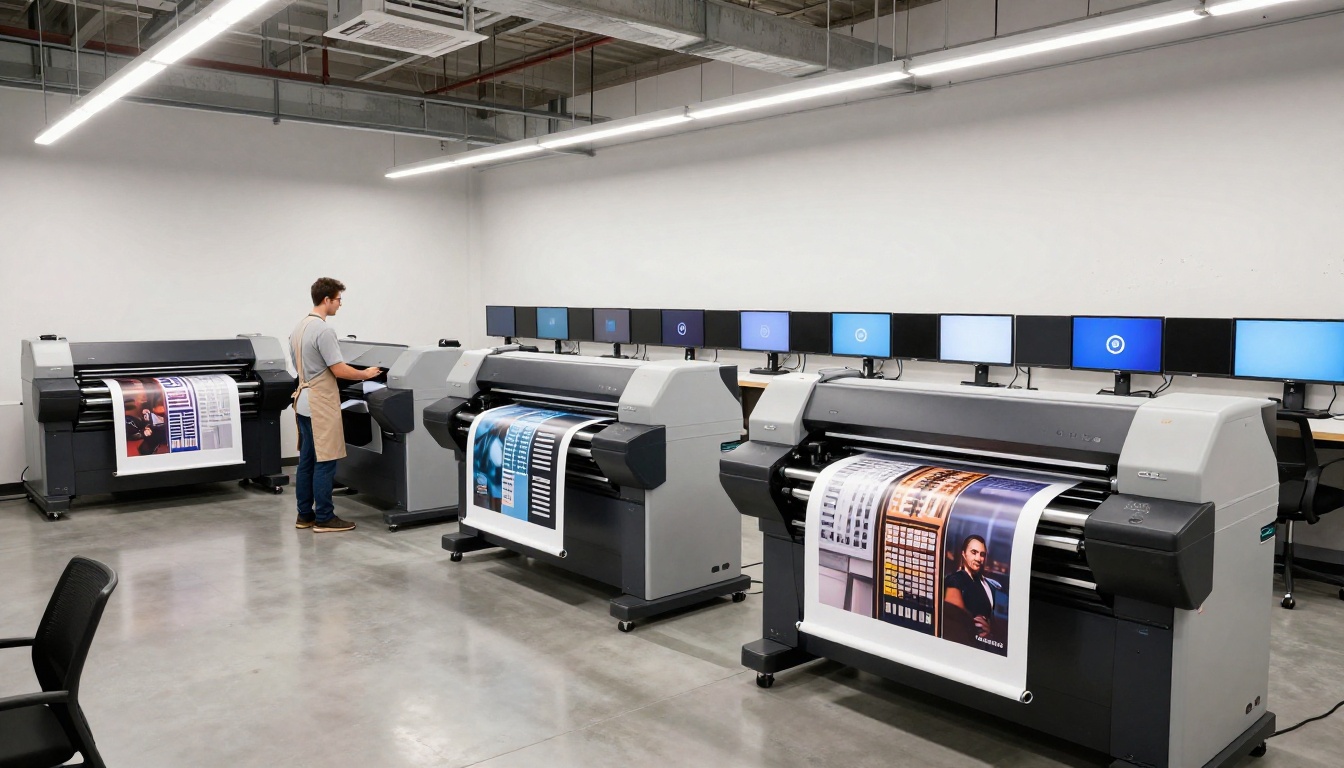
Ideogram 3.0 is not a replacement for design software. It is a starting point, or in specific formats, a complete output generator.
For creative teams, the most efficient workflow combines Ideogram 3.0 for initial concept generation with Qwen Image Edit Plus for refinement and correction. You get typographic accuracy in the composition phase, then editing capability to adjust elements, swap backgrounds, or fix minor issues without regenerating from scratch.
For solo creators working on social content, Ideogram 3.0 can take a creative brief and produce ready-to-publish assets in a single generation pass. The accuracy rate for simple text-on-image formats is high enough that review before publishing is the only step required.
For agencies and brand teams, the model works best as a rapid prototyping tool. Generate 10 concept variations in minutes, identify the two or three worth refining, and hand those off for designer finishing. This compresses concept review timelines considerably without compromising the quality of the final output.
The key is matching the model to the task rather than treating any single tool as a universal solution. Ideogram 3.0 owns the text-first creative workflow. For everything else, models like Flux Redux Dev and GPT Image 2 fill in the gaps.
LSI Keywords Woven Throughout This Article
Typography accuracy, AI text rendering, text-to-image generation, font consistency, character-level precision, prompt engineering for text, AI graphic design, image generation models, typographic hierarchy, multi-element layouts, AI poster design, readable text in generated images, diffusion model limitations, design workflow automation, AI content creation.
Create Your Own AI Visuals Now
PicassoIA puts the most capable AI image models in one place, with no setup required. Whether you want to test text-heavy designs with GPT Image 2, create photorealistic imagery with Flux Redux Dev, or refine existing visuals with Qwen Image Edit Plus, the platform gives you access to frontier-level models without requiring technical expertise or API configuration.
The barrier to creating professional-quality AI visuals has dropped to the point where the main variable is knowing which tool to reach for. Ideogram 3.0 proved what becomes possible when a model is designed around a specific problem with real precision and intent. That same precision-first thinking is what separates useful AI tools from impressive demos.
Pick a model. Write a prompt. See what comes back. The fastest way to build intuition for what works is to start generating.


