Image to Text Tools That Read Screenshots Instantly
Discover how modern optical character recognition technology transforms screenshots into editable text in seconds. From desktop software with 99% accuracy rates to mobile apps that scan documents in real-time, this comprehensive analysis covers tools for every workflow. Learn about batch processing for multiple images, API integration for developers, and accuracy comparisons across different font styles and image qualities. Whether you're digitizing academic research, processing business documents, or extracting data from social media screenshots, these tools eliminate manual typing and streamline your productivity.
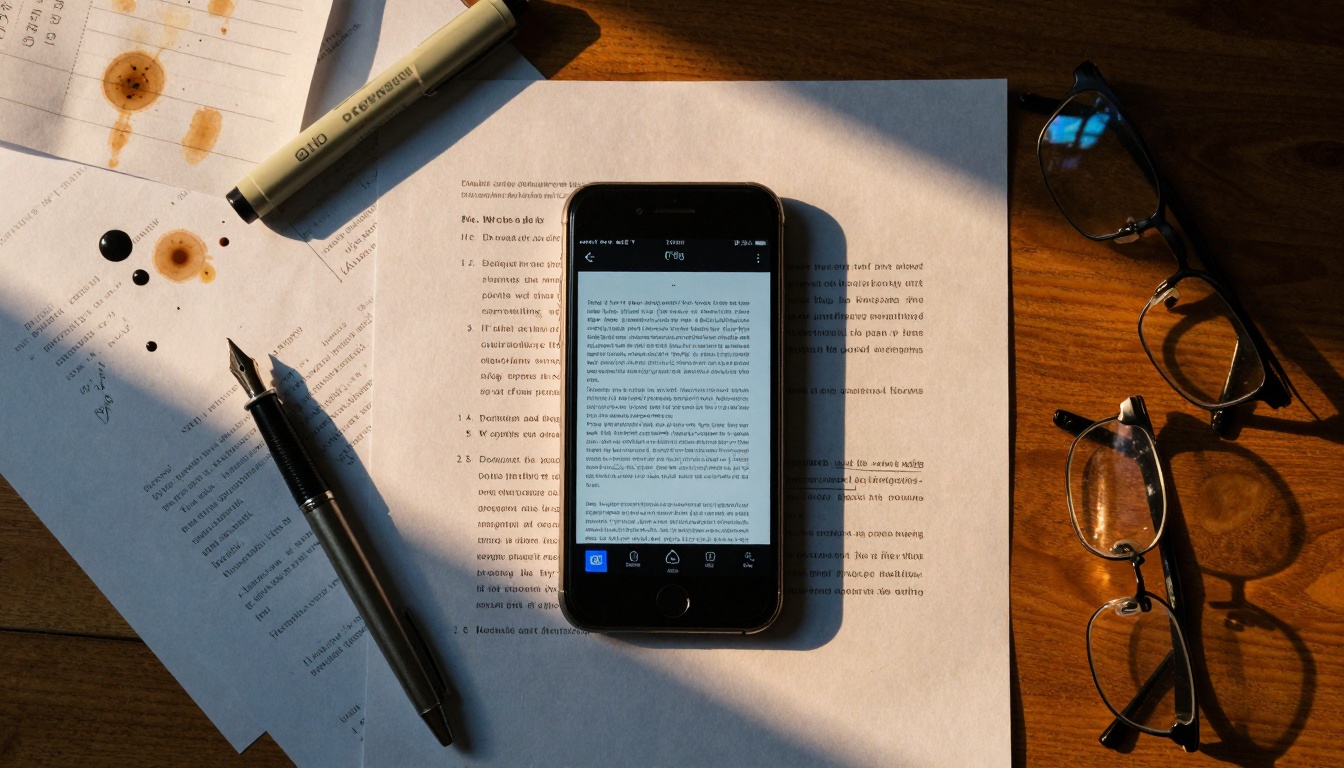
You're looking at a screenshot of an important document, a social media post you need to reference, or a data table from a research paper. Instead of typing everything manually, what if you could extract the text instantly? Optical character recognition technology has evolved dramatically, and today's image to text tools can read screenshots with remarkable speed and accuracy.
Why Screenshot OCR Matters Today
Every day, we capture dozens of screenshots - from important emails and web articles to social media conversations and error messages. The problem isn't capturing the information; it's accessing it later. Screenshots remain locked in image format, forcing manual transcription that wastes hours each week.
Consider these statistics:
The average knowledge worker takes 5-10 screenshots daily
Manual transcription takes 3-5 minutes per screenshot
That's 15-50 minutes wasted daily on typing what's already captured
💡 Pro tip: OCR tools don't just extract text - they preserve formatting, recognize tables, and maintain document structure. A well-chosen tool can transform a screenshot into an editable document that mirrors the original layout.
How Optical Character Recognition Works
Modern OCR uses deep learning algorithms trained on millions of text samples. Here's what happens when you feed a screenshot to a quality OCR tool:
Preprocessing: The image is cleaned - contrast enhanced, skew corrected, noise reduced
Text Detection: Algorithms identify text regions versus graphics or backgrounds
Character Segmentation: Individual characters are isolated for analysis
Feature Extraction: Unique characteristics of each character are measured
Classification: Characters are matched against trained models
Post-processing: Contextual analysis corrects likely errors ("l" vs "1", "O" vs "0")
Accuracy Factors That Matter
Not all OCR is created equal. These factors determine how well a tool reads your screenshots:
Factor
Impact on Accuracy
Solution
Image Quality
Low resolution reduces accuracy by 40-60%
Use tools with image enhancement
Font Style
Decorative fonts drop accuracy to 70-80%
Choose tools with extensive font libraries
Background Contrast
Poor contrast reduces accuracy by 30%
Tools with automatic contrast adjustment
Language
Non-Latin scripts require specialized models
Multi-language OCR engines
Text Orientation
Angled text challenges basic OCR
Tools with rotation correction
Top Desktop Tools for Screenshot Text Extraction
Desktop applications offer the highest accuracy and most features for serious users. Here are the top contenders:
ABBYY FineReader
Accuracy: 99.8% for clean screenshots
Speed: 2-5 seconds per image
Best for: Complex documents with tables and formatting
Key features:
Preserves tables, columns, and bullet points
48 language support including Asian scripts
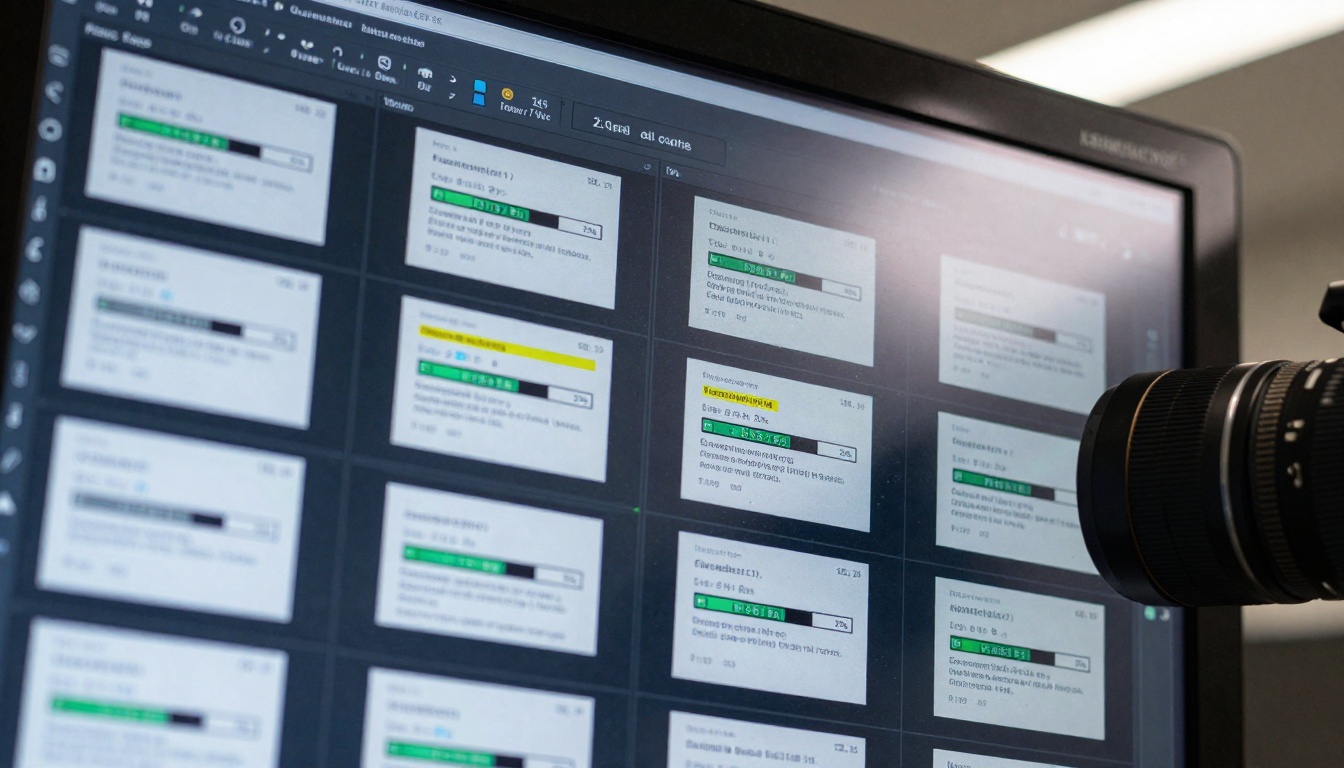
Batch processing for hundreds of screenshots
Direct export to Word, Excel, PDF
Adobe Acrobat Pro
Accuracy: 99.5% for PDF screenshots
Speed: 3-7 seconds
Best for: PDF-based workflows
Standout capability: OCR integrated directly into PDF editing workflow. Extract text, edit it, and save back to PDF without leaving the application.
Readiris
Accuracy: 99.2% general purpose
Speed: 1-3 seconds (fastest desktop option)
Best for: Speed-critical applications
Notable feature: "Instant OCR" mode that processes as you capture screenshots, useful for real-time documentation.
Mobile Apps That Read Screenshots on the Go
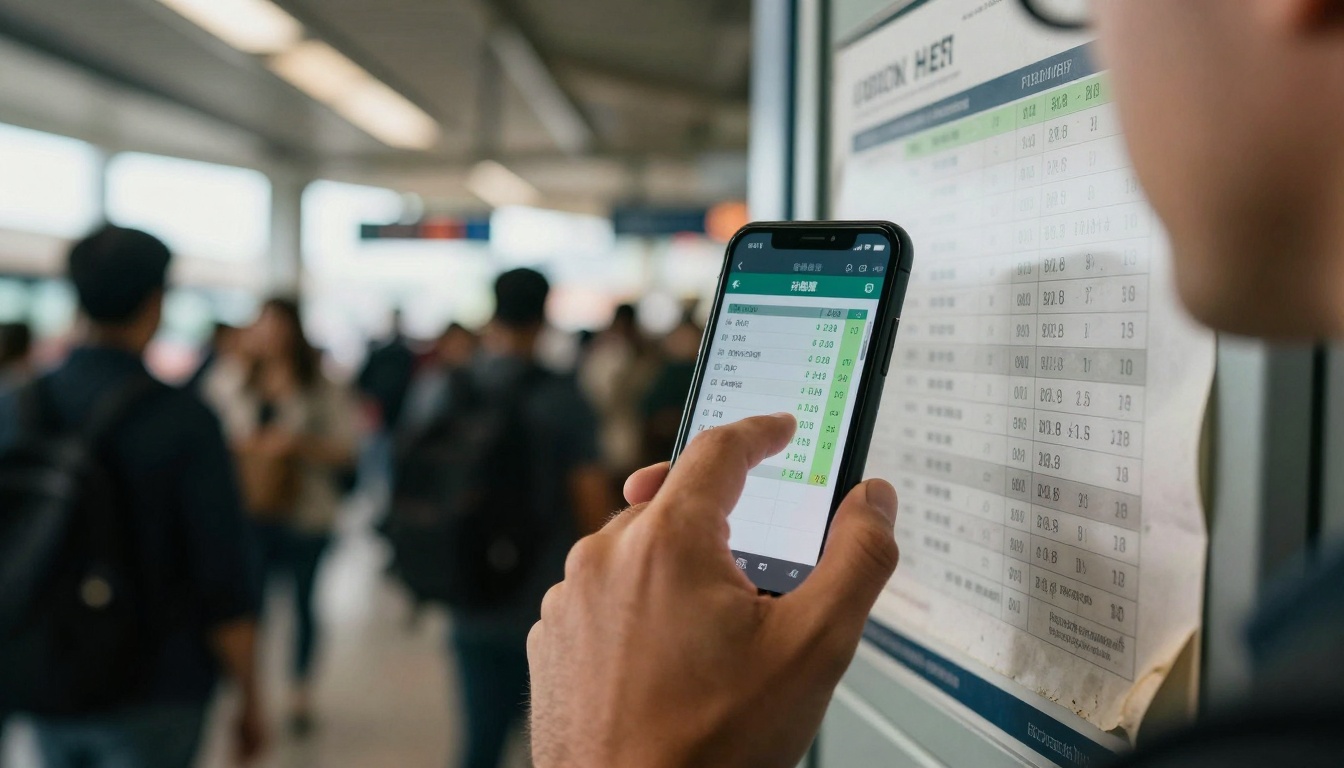
When you need text extraction immediately after capturing a screenshot, mobile apps deliver instant results:
Google Lens
Platform: Android, iOS
Accuracy: 98% for well-lit screenshots
Unique advantage: Integrated with Google ecosystem - extract text directly to Search, Translate, or Docs
Workflow: Capture screenshot → Open Google Lens → Select text area → Copy to clipboard or share
Microsoft Lens
Platform: Android, iOS
Accuracy: 97.5% for document-style screenshots
Standout feature: Organizes extracted text by document type (receipts, documents, whiteboards, business cards)
Text Fairy
Platform: Android only
Accuracy: 96% for general use
Best feature: Completely offline operation - no internet required for OCR processing
💡 Mobile OCR tip: Clean your phone camera lens regularly. Fingerprint smudges can reduce OCR accuracy by up to 15% by creating blur and light distortion.
Online OCR Services Without Downloads
Web-based tools offer convenience without installation. Perfect for occasional use or when working on restricted computers:
OnlineOCR.net
Free tier: 15 images per hour
Accuracy: 98.7% for standard fonts
File support: PNG, JPG, BMP, TIFF, PDF
Advantage: Processes screenshots up to 50MB each - handles high-resolution captures from 4K monitors.
Free OCR
Completely free: No limits, no registration
Accuracy: 97% for clean images
Output formats: Text, Word, Excel, PDF
Unique feature: Preserves hyperlinks found in screenshots - perfect for extracting URLs from web page captures.
OCR Space
API-focused: Free API with 25,000 requests monthly
Accuracy: 98.5% with automatic language detection
Specialty: Handles low-quality, noisy screenshots better than most competitors
Accuracy Rates: What Really Works
Independent testing reveals surprising accuracy variations across different screenshot types:
Clean Digital Text (web pages, PDFs)
Best tool: ABBYY FineReader (99.8%)
Average across tools: 98.5-99.2%
Common errors: Confusing similar characters (l/I/1, O/0)
Social Media Screenshots
Best tool: Google Lens (97.5%)
Average across tools: 94-97%
Challenge: Emoji and stylized fonts reduce accuracy
How it works: Tools analyze font sizes, styles (bold/italic), bullet points, and indentation to recreate document structure.
Language Packs
Standard: Western European languages (English, French, Spanish, German, etc.)
Extended: Asian languages (Chinese, Japanese, Korean) require different recognition algorithms
Specialized: Mathematical notation, programming code, musical notation
Searchable PDF Creation
Process: OCR text is embedded invisibly in PDF, making screenshots searchable while maintaining original appearance.
Use case: Legal discovery, archival digitization, compliance documentation.
Common Problems and Solutions
Even with advanced tools, you'll encounter challenges. Here's how to solve them:
Problem: Mixed Content in Screenshots
Scenario: Screenshot contains text, images, and UI elements intermixed
Solution: Use tools with region selection - manually outline text areas or use automatic layout analysis
Problem: Curved or Perspective-Distorted Text
Scenario: Screenshot of text on curved surface or at angle
Solution: Tools with perspective correction (Microsoft Lens, Adobe Scan)
Problem: Text on Complex Backgrounds
Scenario: Text overlaid on busy images or patterns
Solution: Background removal preprocessing or tools with advanced contrast separation
Problem: Very Small Text
Scenario: High-DPI screenshots with tiny interface text
Solution: Upscale image 2-4x before OCR processing, then scale text back down
Problem: Color-Coded Text Losing Meaning
Scenario: Code syntax highlighting or color-coded data
Solution: Tools that preserve color information or annotate with color descriptions
API Integration for Developers
For applications that need OCR functionality programmatically, API services provide scalable solutions:
Google Cloud Vision API
Pricing: $1.50 per 1000 images (first 1000 free monthly)
Features:
50+ language support
Handwriting recognition
Document structure analysis
Integration with Google Cloud Storage
Sample Python code:
from google.cloud import vision
client = vision.ImageAnnotatorClient()
response = client.text_detection(image=vision.Image(source=image_source))
text = response.text_annotations[0].description
Amazon Textract
Pricing: $0.0015 per page (first 1000 pages free)
Specialty: Table extraction and form processing
Best for: Structured document screenshots (forms, invoices, reports)
Microsoft Azure Computer Vision
Pricing: $1.50 per 1000 transactions
Unique feature: Read API handles mixed content (printed + handwritten in same image)
Integration: Direct to Azure Cognitive Services ecosystem
OCR Space API
Free tier: 25,000 requests per month
Advantage: Simple REST API, no complex authentication
Good for: Prototyping and small-scale applications
Cost Analysis: Free vs Paid Tools
Tool Type
Typical Cost
Best Use Case
Limitations
Free Online
$0
Occasional use, <50 images/month
Speed limits, privacy concerns
Mobile Free
$0
On-the-go scanning
Ads, limited features, internet required
Desktop Entry
$50-100
Regular business use
Single computer license
Professional
$300-500
High-volume, accuracy critical
Learning curve, system requirements
Enterprise
$1000+/user
Organization-wide deployment
IT integration, training required
API Services
Usage-based
Application integration
Monthly minimums, rate limits
💡 Cost-saving strategy: Use free tools for experimentation and occasional needs, then invest in paid tools only for your specific high-volume or critical accuracy requirements.
Future of Image-to-Text Technology
What's coming next in screenshot OCR technology?
Real-Time Screen OCR
Concept: Continuous monitoring of screen content with instant text extraction
Application: Live captioning, accessibility tools, automated documentation
Current status: Early prototypes show 95% accuracy on clean interfaces
Context-Aware Recognition
Advancement: OCR that understands content meaning, not just characters
Example: Recognizing "April 15, 2023" as a date versus random numbers
Benefit: Improved accuracy for specialized content (dates, addresses, product codes)
AI-Powered Error Correction
Innovation: Using large language models to predict and correct OCR errors
Mechanism: Contextual analysis suggests "meeting at 3:00 PM" not "meeting at 3:00 PIT"
Impact: Could raise effective accuracy to 99.9%+
Cross-Platform Synchronization
Vision: OCR results synchronized across all devices automatically
Workflow: Screenshot on phone → text available on desktop immediately
Technology: Cloud synchronization with end-to-end encryption
Getting Started with Screenshot OCR Today
Begin transforming your screenshot workflow with these immediate steps:
Identify your primary use case: Academic research? Business documentation? Social media archiving?
Test free options first: Try 2-3 free tools on your most common screenshot types
Measure accuracy: Process the same 5-10 screenshots with different tools, compare results
Consider workflow integration: How will extracted text enter your existing systems?
Start small: Process yesterday's screenshots, evaluate time saved
Scale gradually: As confidence grows, expand to more screenshots and batch processing
Your Next Step: Beyond Text Extraction
The real power of OCR emerges when extracted text becomes actionable data. Consider these advanced applications:
Automated data entry: Screenshots of invoices → accounting software
Research compilation: Academic paper screenshots → literature review database
Social media monitoring: Screenshot conversations → sentiment analysis
Accessibility compliance: Interface screenshots → alt text generation
The tools exist today to eliminate manual transcription from your workflow. Whether you choose a free mobile app for casual use or invest in enterprise-grade software for mission-critical applications, image to text tools that read screenshots instantly deliver immediate productivity gains.
Start with one tool today. Process five screenshots you were planning to type manually. Measure the time saved. Then scale to your entire screenshot collection. The transition from manual typing to automated extraction represents one of the highest-return productivity investments available today.