Imagine describing a scene in words and watching it materialize as a photorealistic image within seconds. Picture transforming a single photograph into a dynamic video sequence with realistic motion. Visualize applying the stylistic characteristics of impressionist masters to your digital photographs with a single command. This isn't science fiction—it's the current reality of images and videos made by AI.
The digital landscape has undergone a seismic shift where artificial intelligence doesn't just assist creative professionals but actively generates visual content indistinguishable from human-created work. From marketing materials to artistic expressions, educational content to entertainment media, AI-generated visuals are redefining what's possible in visual storytelling.
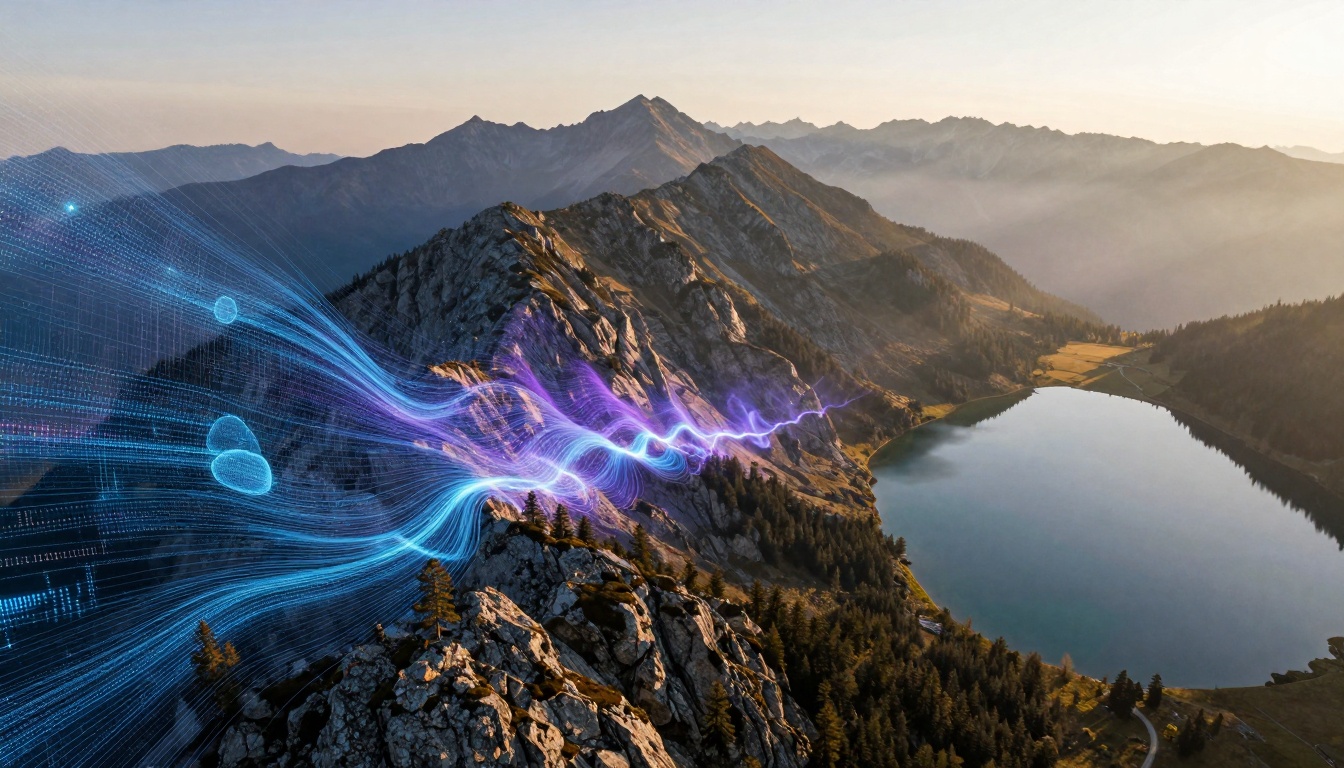
The evolution from abstract digital patterns to photorealistic landscapes represents AI's capability to bridge imagination and reality
How AI Creates Images from Nothing
At the heart of AI image generation lies a sophisticated understanding of visual patterns learned from analyzing billions of photographs, paintings, and digital artworks. When you provide a text description like "sunset over mountains with reflective lake," the AI doesn't search for existing images—it synthesizes a completely new composition based on its understanding of what each element represents.
The process works through several key mechanisms:
- Pattern Recognition: AI models like Flux and GPT Image 1.5 have studied millions of sunset photographs to understand lighting patterns, color gradients, and atmospheric effects
- Compositional Understanding: These systems learn artistic principles like rule of thirds, leading lines, and visual hierarchy from analyzing professional photography
- Texture Synthesis: From the rough surface of granite to the smooth reflection of water, AI generates believable material properties based on learned visual characteristics
- Contextual Awareness: The system understands relationships between elements—mountains appear behind lakes, clouds float above landscapes, reflections mirror the sky
The intricate neural connections processing visual data represent the computational beauty behind AI image generation
From Static to Dynamic: AI Video Generation
While image generation represents one frontier, video creation pushes AI capabilities further into temporal understanding. Transforming static images into dynamic sequences requires comprehension of physics, motion, and narrative progression.
Current AI video models excel in several areas:
- Motion Interpolation: Systems like Sora 2 Pro and Veo 3.1 analyze how objects move in the real world to create believable animation
- Temporal Consistency: Maintaining object identity and physical properties across frames while introducing natural movement
- Environmental Interaction: Understanding how elements affect each other—wind moving hair, water creating ripples, light changing throughout motion
- Emotional Progression: Some advanced systems can even generate appropriate facial expression changes to match narrative context
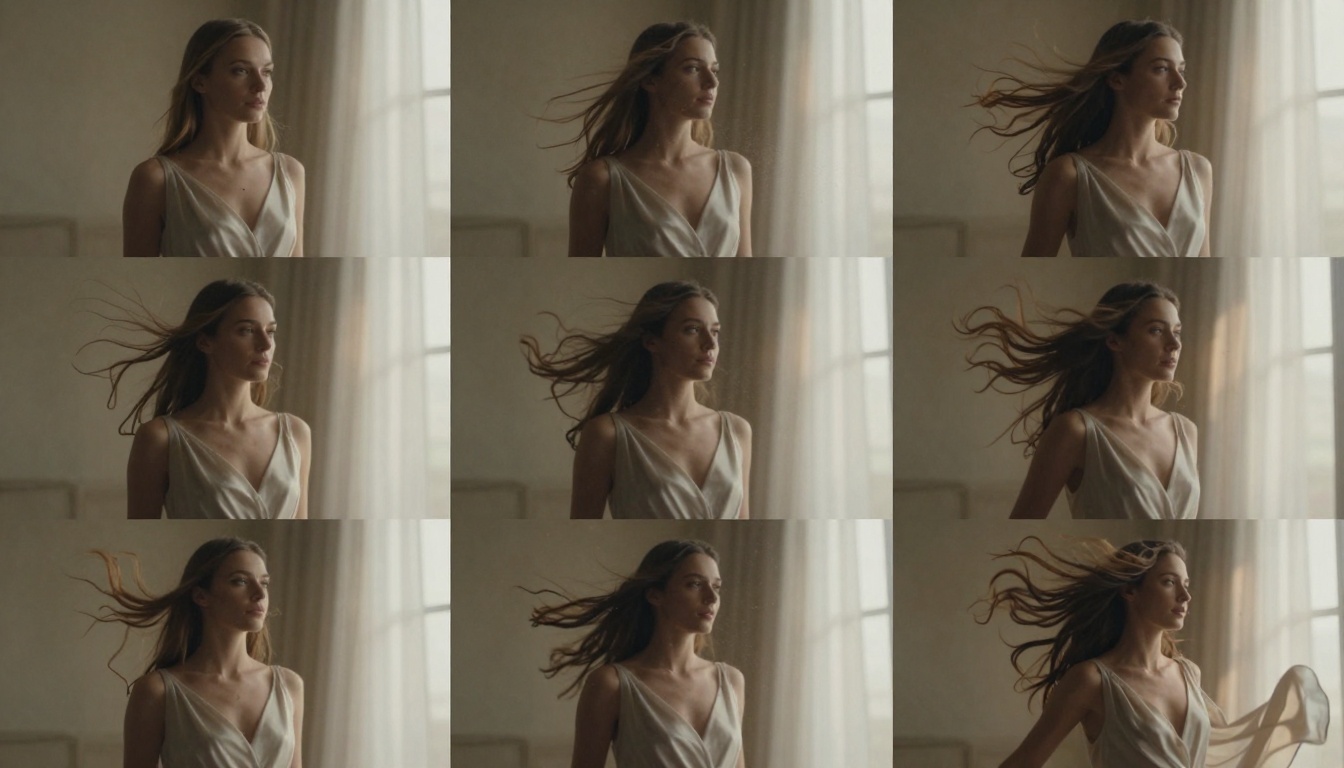
The sequential transformation from static portrait to dynamic animation showcases AI's motion synthesis capabilities
The Technical Foundation: How It Actually Works
Behind the seemingly magical results lies complex mathematics and computational architecture. Understanding the technical foundation helps appreciate what's happening when AI generates visual content.
Core Technical Components:
| Component | Function | Real-World Analogy |
|---|
| Diffusion Models | Gradually transform random noise into coherent images | Like an artist starting with rough sketches and refining details |
| Transformers | Process relationships between visual elements | Similar to how human vision recognizes patterns and connections |
| Latent Spaces | Compressed representations of visual concepts | Like mental shortcuts for complex visual ideas |
| Attention Mechanisms | Focus computational resources on important elements | Mimics how photographers compose shots with focal points |
Training Process Insights:
💡 Training Scale: Modern AI image generators train on datasets containing billions of images, learning visual patterns at a scale impossible for any human artist to experience
💡 Computational Cost: Training a state-of-the-art model like Flux 2 Pro requires thousands of specialized processors working for weeks
💡 Iterative Refinement: Each generation represents thousands of computational steps refining noise into coherent imagery
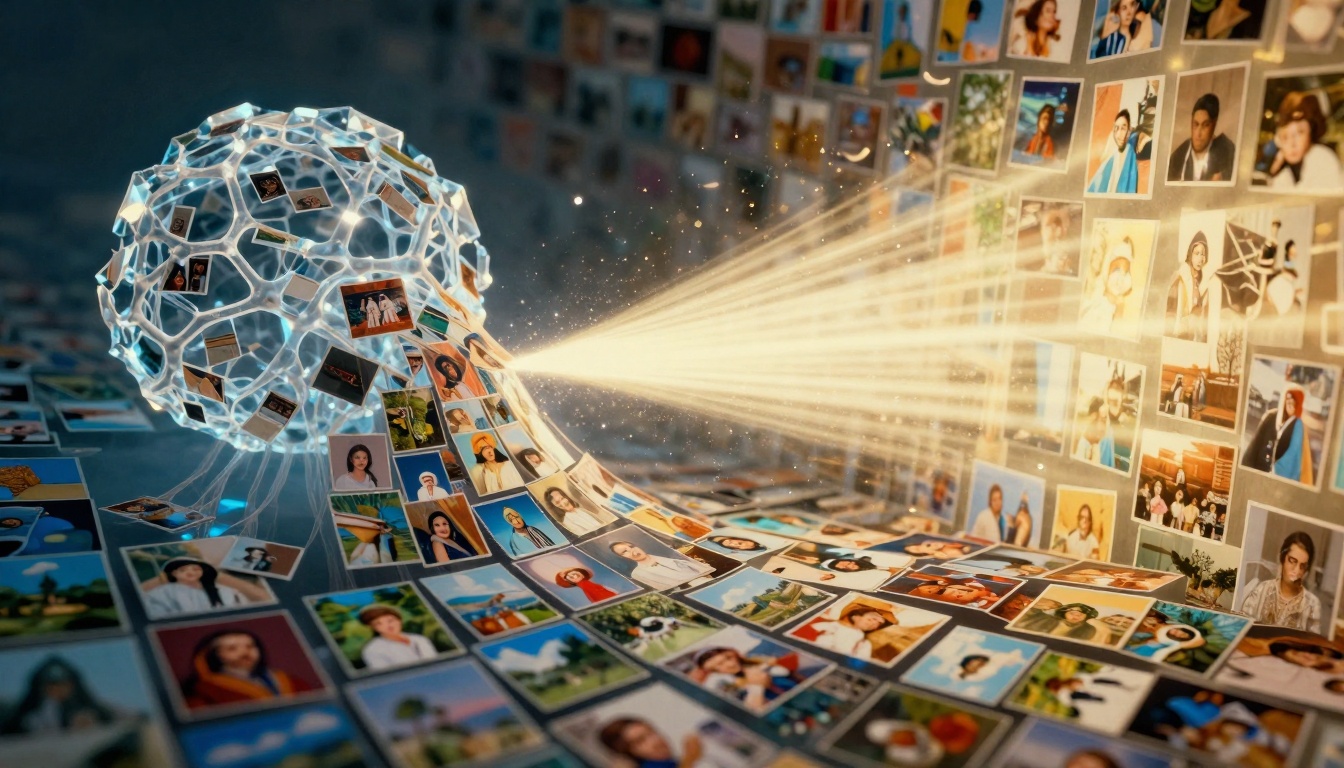
The metaphorical representation of billions of images training neural networks to understand visual patterns
Practical Applications Changing Industries
The implications of AI-generated visuals extend far beyond novelty or entertainment. Multiple industries are experiencing fundamental transformations in their visual content workflows.
Marketing and Advertising:
- Product Visualization: Generate photorealistic product images without expensive photoshoots
- Concept Testing: Create multiple visual directions for campaigns before production
- Personalized Content: Tailor visual elements to different audience segments automatically
Entertainment and Media:
- Pre-visualization: Create storyboards and concept art from script descriptions
- Background Generation: Produce realistic environments for films and games
- Character Design: Rapidly iterate on character appearances and costumes
Education and Training:
- Visual Explanations: Generate diagrams, illustrations, and animations for complex concepts
- Historical Reconstruction: Visualize historical events or scientific processes
- Custom Learning Materials: Create personalized visual content for different learning styles
Architecture and Design:
- Concept Visualization: Transform textual descriptions into architectural renderings
- Interior Design: Generate room layouts with different styles and furnishings
- Urban Planning: Visualize proposed developments in existing environments
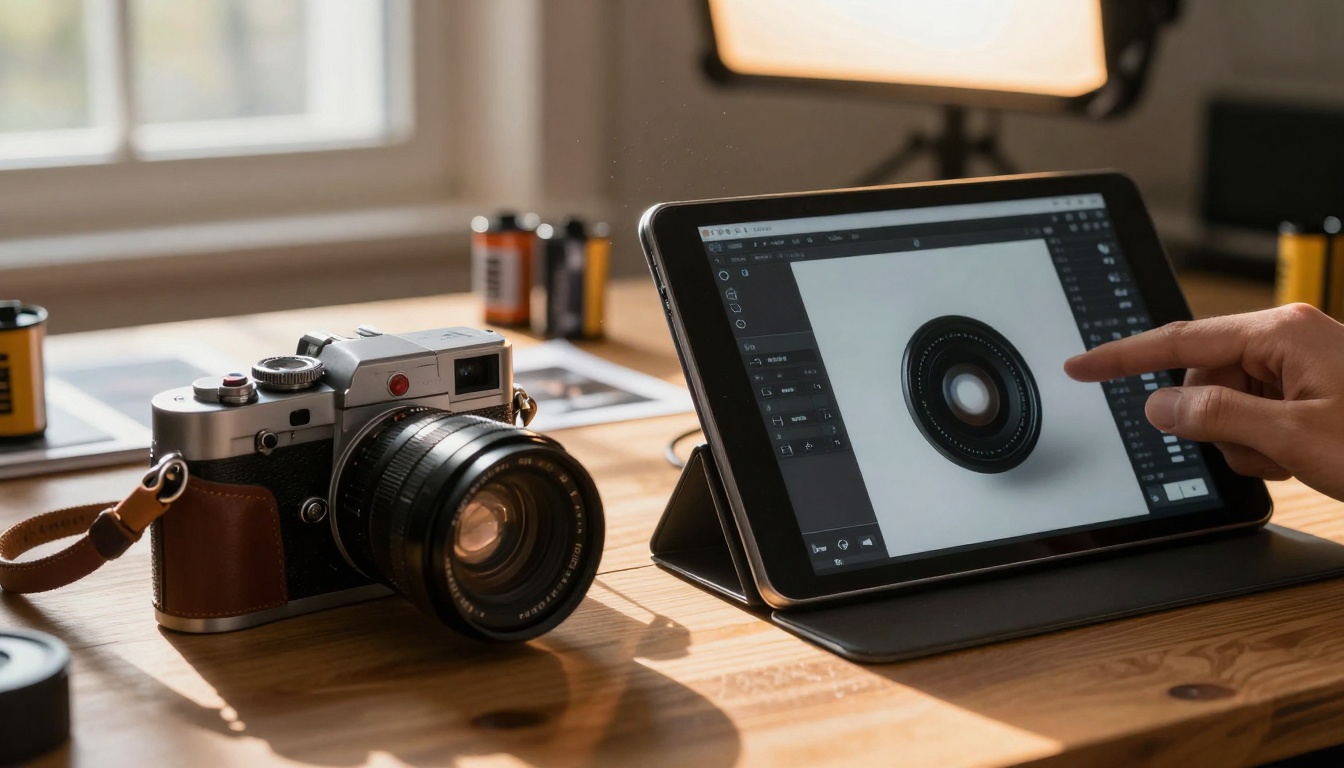
The complementary relationship between traditional photography equipment and modern AI interfaces
Quality and Authenticity: The Photorealism Benchmark
Early AI-generated images suffered from obvious artifacts—extra fingers, distorted faces, impossible physics. Today's systems produce results often indistinguishable from photographs.
Current State of Photorealism:
- Facial Generation: Models like Qwen Image 2512 create portraits with accurate skin texture, proper lighting, and natural expressions
- Environmental Detail: Systems generate believable landscapes with proper atmospheric perspective, texture variation, and lighting consistency
- Material Accuracy: Different surfaces—metal, fabric, glass, wood—display appropriate reflectivity, texture, and wear patterns
- Compositional Excellence: AI understands and applies professional photographic principles automatically
Limitations and Considerations:
- Consistency Challenges: Maintaining identical characters or objects across multiple generated images
- Specific Detail Control: Precise control over minute details remains challenging
- Contextual Errors: Occasionally generating physically impossible or culturally inappropriate content
- Style Drift: Maintaining consistent artistic style across a series of generated images
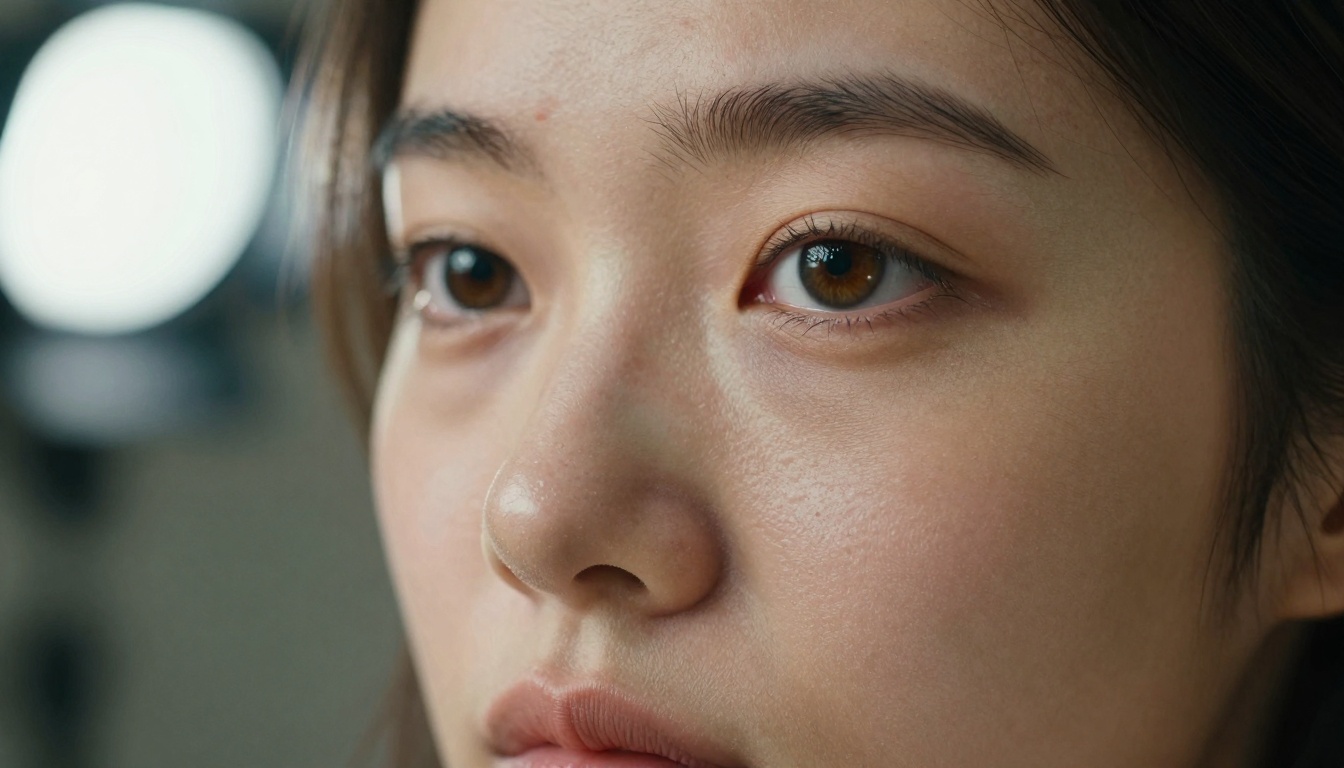
Extreme close-up demonstrating indistinguishable photorealism in AI-generated facial details
The Creative Process Enhanced, Not Replaced
A common misconception suggests AI will replace human creatives. The reality is more nuanced—AI becomes a powerful tool that amplifies human creativity rather than substituting it.
How Professionals Integrate AI:
- Concept Development: Use AI to rapidly visualize ideas before committing resources
- Reference Creation: Generate specific visual references for traditional artwork
- Style Exploration: Test different artistic directions without manual creation
- Asset Generation: Create background elements, textures, or supplemental visuals
- Iteration Acceleration: Explore dozens of visual variations in minutes instead of days
Creative Control Spectrum:
| Approach | Human Control | AI Contribution | Best For |
|---|
| Direct Generation | Low (text prompts only) | High (complete creation) | Rapid prototyping, concept testing |
| Hybrid Workflow | Medium (selection & refinement) | Medium (generation & variation) | Professional projects, client work |
| AI-Assisted Traditional | High (manual creation) | Low (reference & enhancement) | Fine art, signature styles |
💡 The Guiding Principle: AI excels at generating possibilities; humans excel at selecting meaningful directions and adding emotional depth. The most effective workflows leverage both strengths.
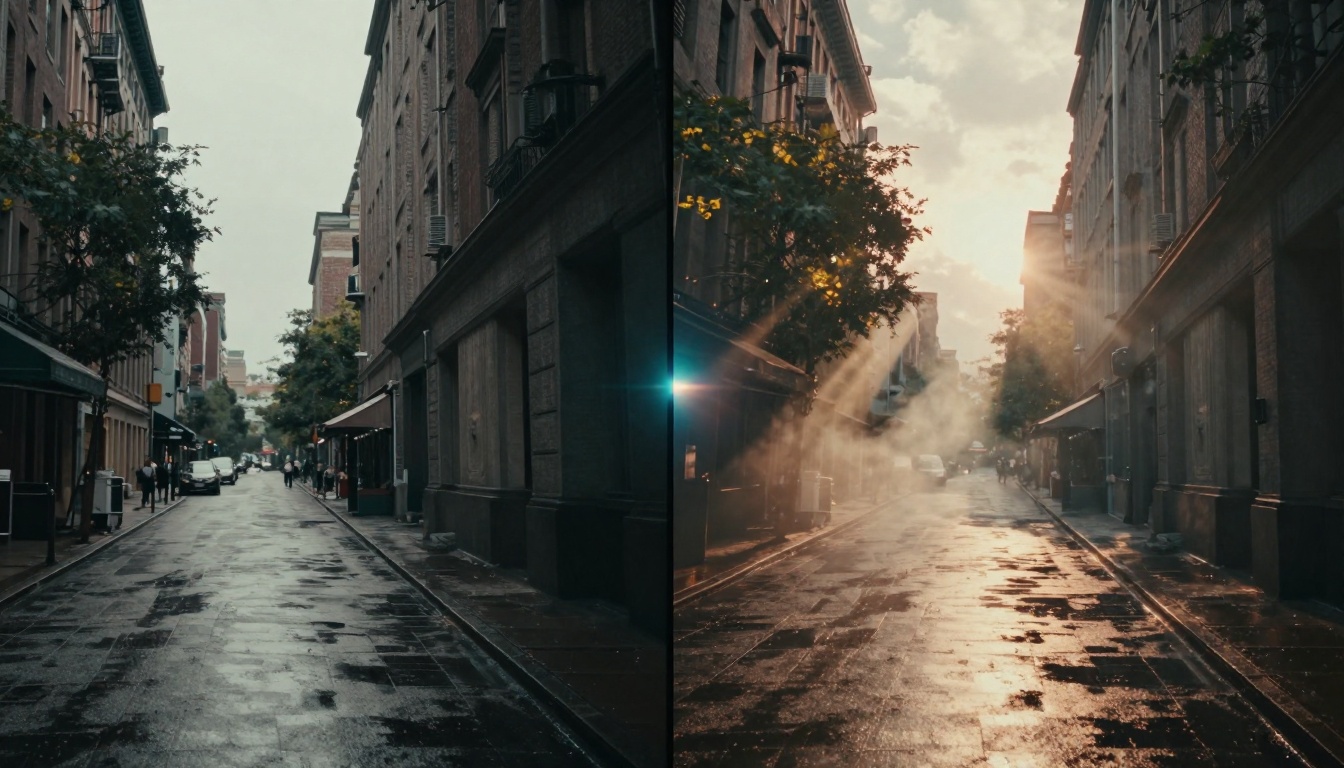
Side-by-side comparison showing AI's capability to elevate ordinary photography through computational enhancement
Technical Requirements and Accessibility
The barrier to creating AI-generated visuals has dropped dramatically. What once required supercomputers and specialized expertise now operates through accessible platforms.
Current Accessibility Landscape:
Platform Options:
- Web Applications: Browser-based tools requiring no installation
- Desktop Software: Dedicated applications with advanced features
- API Integration: Technical solutions for automated generation
- Mobile Apps: Generation capabilities on smartphones and tablets
Hardware Considerations:
- Cloud Processing: Most users access AI generation through remote servers
- Local Generation: High-end systems can run models locally for privacy or speed
- Hybrid Approaches: Some platforms offer both cloud and local options
Skill Requirements:
- Beginner Level: Basic text descriptions produce quality results
- Intermediate Level: Understanding prompt engineering improves outcomes
- Advanced Level: Technical knowledge for fine-tuning and customization
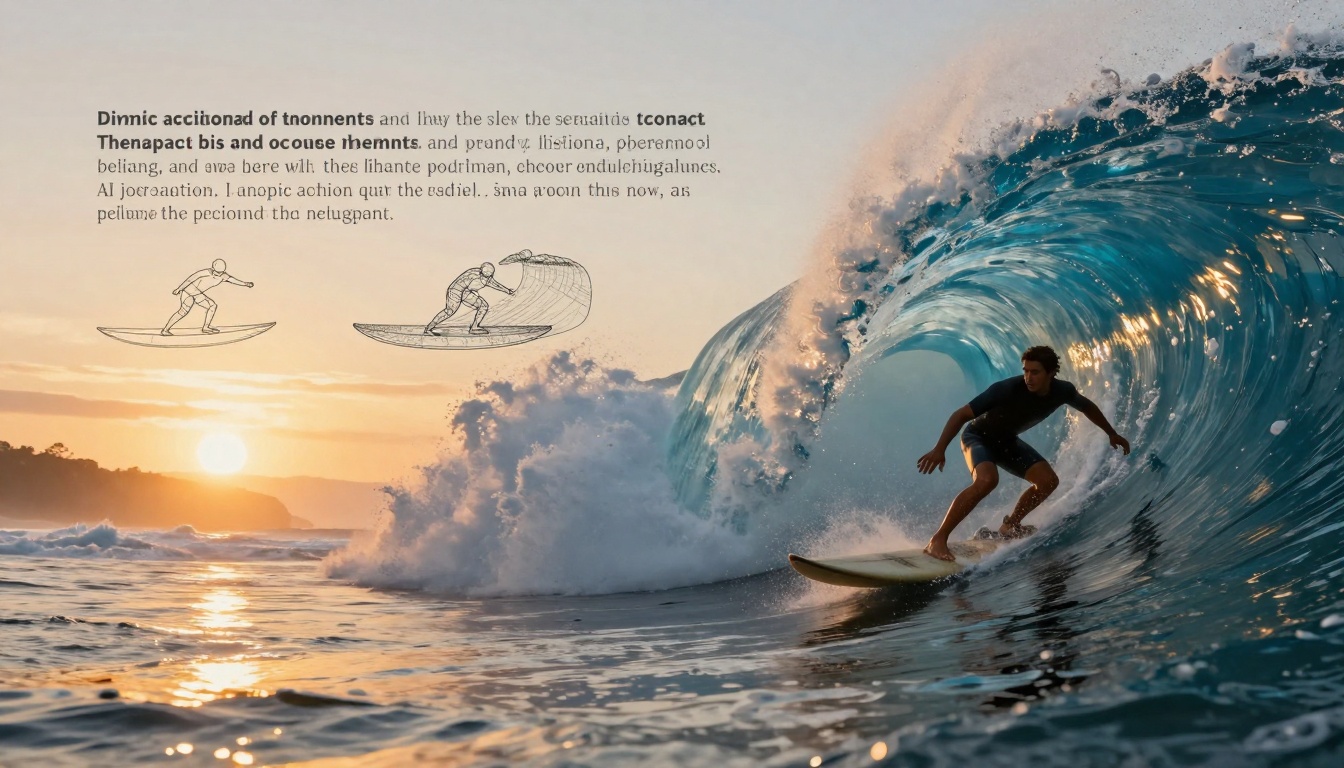
Progressive transformation from text description to dynamic action sequence
Ethical Considerations and Responsible Use
As with any powerful technology, AI visual generation raises important ethical questions that creators and platforms must address.
Key Ethical Areas:
Authenticity and Disclosure:
- When should AI-generated content be labeled as such?
- How do viewers distinguish between photographic and generated imagery?
- What responsibilities do creators have regarding disclosure?
Copyright and Ownership:
- Who owns the rights to AI-generated images?
- How do training datasets respect original creators' rights?
- What constitutes fair use in AI training?
Representation and Bias:
- How do we ensure diverse and accurate representation?
- What safeguards prevent reinforcement of harmful stereotypes?
- Who bears responsibility for biased outputs?
Misinformation Potential:
- How can we prevent malicious use for deception?
- What verification methods can authenticate genuine photography?
- How should platforms moderate harmful generated content?
Industry Response:
- Developing technical standards for watermarking and provenance tracking
- Creating ethical guidelines for responsible generation
- Implementing content moderation systems
- Establishing legal frameworks for ownership and liability
Style Transfer and Artistic Interpretation
Beyond generating new content, AI excels at applying artistic styles to existing imagery—a capability with profound implications for creative expression.
Style Transfer Capabilities:
Art Historical Styles:
- Apply characteristics of specific artistic movements
- Mimic individual artists' techniques and palettes
- Blend multiple styles into hybrid approaches
Cinematic Styles:
- Apply specific film stock characteristics
- Mimic lighting styles from different cinematic eras
- Recreate particular directors' visual signatures
Photographic Styles:
- Apply different camera and lens characteristics
- Mimic specific film development processes
- Recreate lighting setups from reference photographs
Custom Style Creation:
- Train models on personal artistic styles
- Develop signature visual treatments
- Create consistent brand visual languages
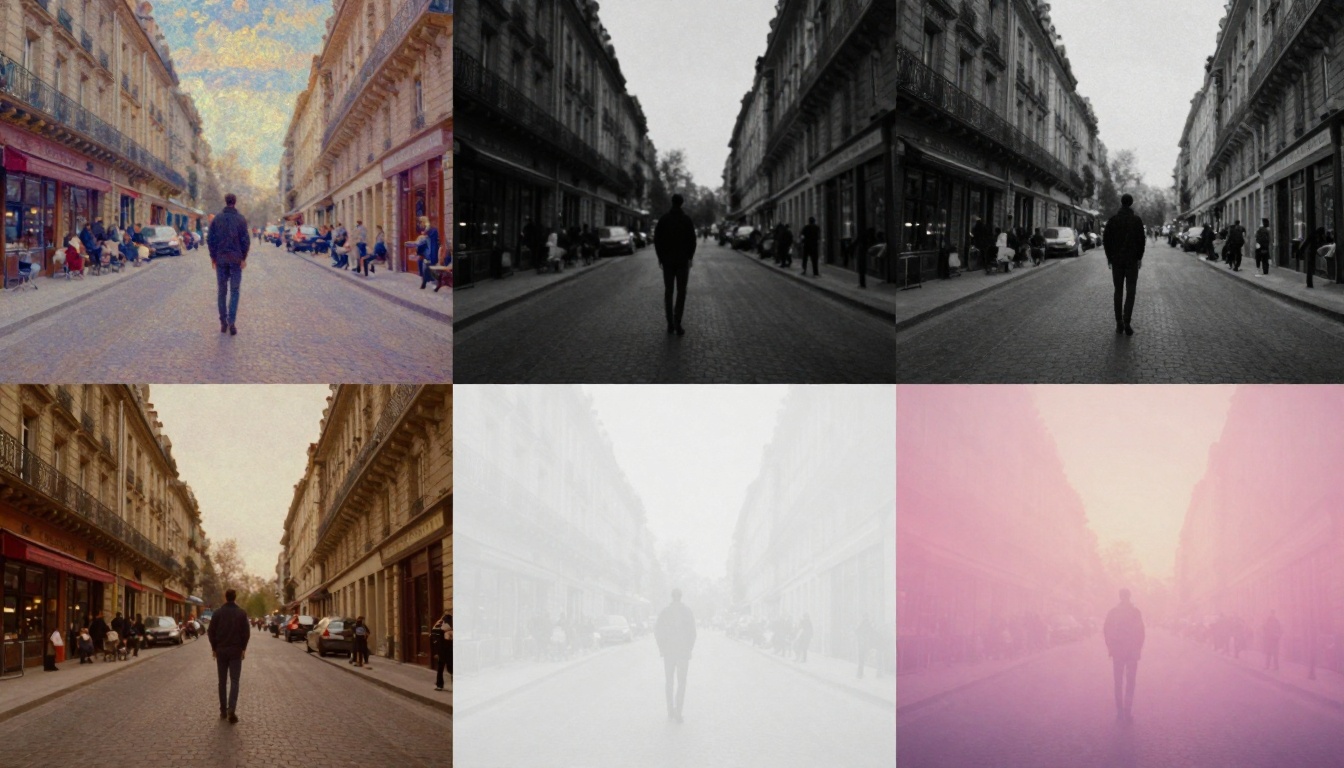
Multiple artistic interpretations of the same scene demonstrating AI's style vocabulary
The Future Landscape: What Comes Next
Current capabilities represent just the beginning of AI's potential in visual generation. Several developments point toward near-future advancements.
Emerging Trends:
Increased Control and Precision:
- Spatial Control: Specify exact composition and element placement
- Temporal Control: Precisely direct motion timing and progression
- Style Control: Fine-tune artistic characteristics with granular control
Enhanced Realism and Detail:
- Physical Accuracy: Improved understanding of physics and material properties
- Emotional Depth: Better conveyance of mood and emotional states
- Contextual Intelligence: Improved understanding of cultural and historical context
New Interaction Paradigms:
- Natural Language: Conversational interfaces for visual creation
- Gesture Control: Physical interaction with generated content
- Collaborative Creation: Multiple users co-creating with AI assistance
Integration with Other Technologies:
- 3D Generation: Direct creation of three-dimensional models and environments
- AR/VR Integration: Generation within augmented and virtual reality spaces
- Real-time Generation: Instant visual creation during live events or presentations
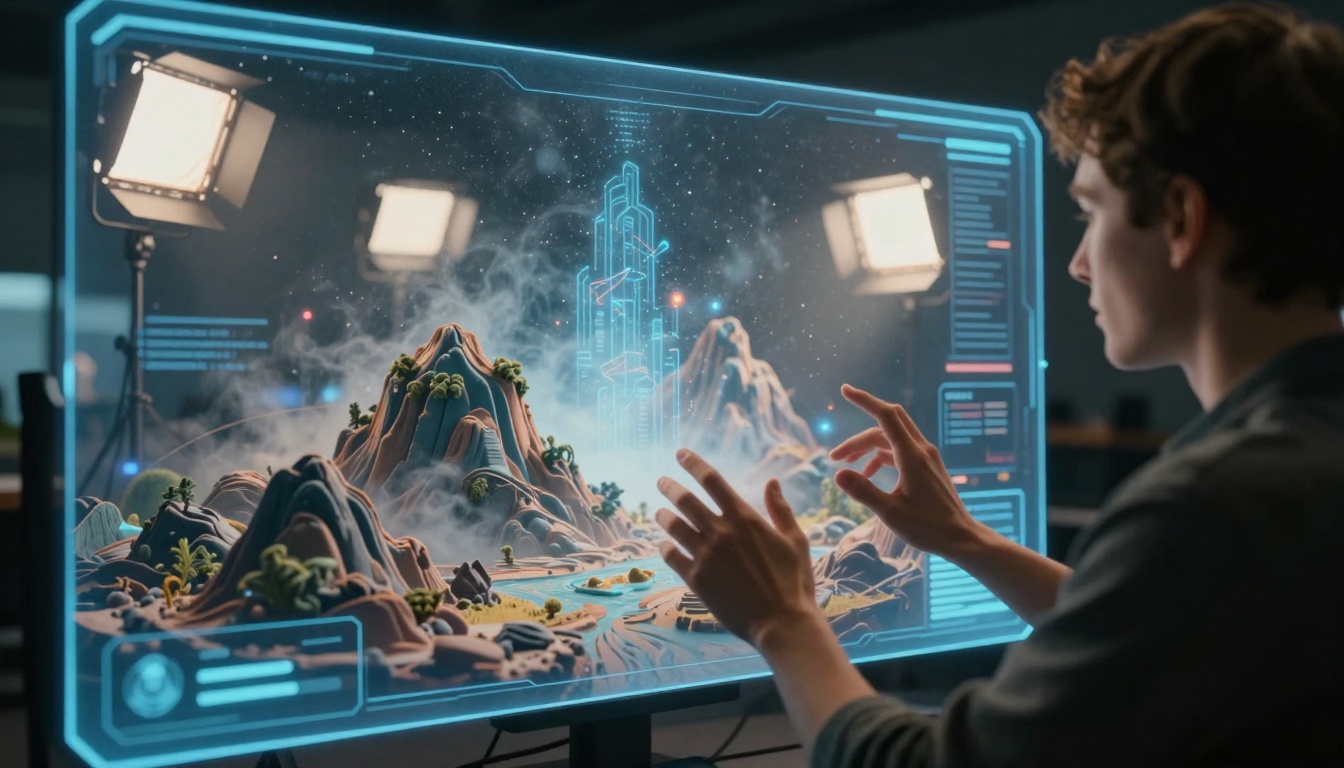
Immersive holographic interface representing future natural interaction with AI visual tools
Getting Started with AI Visual Generation
For those ready to explore this technology, several approaches provide entry points at different skill levels.
Beginner Pathways:
- Experiment with Web Platforms: Start with user-friendly interfaces like those hosting P-Image or Z-Image Turbo
- Learn Prompt Basics: Understand how descriptive language influences generated results
- Study Reference Materials: Analyze how different prompts produce varying outcomes
- Join Communities: Participate in forums and groups sharing techniques and results
Intermediate Development:
- Explore Advanced Platforms: Test more sophisticated systems like Flux 2 Flex or Seedream 4.5
- Develop Personal Workflows: Integrate AI generation into existing creative processes
- Study Technical Fundamentals: Learn about model architectures and training approaches
- Experiment with Style Development: Create consistent visual signatures across generated work
Advanced Exploration:
- Technical Customization: Fine-tune models for specific applications or styles
- Workflow Integration: Build automated systems combining multiple AI tools
- Ethical Framework Development: Establish personal or organizational guidelines
- Community Contribution: Share knowledge and techniques with emerging creators
The Human Element in AI-Generated Visuals
Despite technological sophistication, the most compelling AI-generated visuals often incorporate significant human direction and refinement. The technology serves as an amplifier of human creativity rather than a replacement.
Where Human Judgment Remains Essential:
- Emotional Resonance: Understanding what makes imagery connect emotionally with viewers
- Cultural Context: Appreciating nuanced cultural meanings and associations
- Narrative Purpose: Aligning visual elements with storytelling objectives
- Aesthetic Judgment: Making subtle distinctions between good and exceptional results
- Ethical Considerations: Navigating complex questions of representation and authenticity
The Evolving Role of Visual Creators:
Rather than eliminating creative roles, AI generation transforms them. Today's visual professionals increasingly function as creative directors guiding AI systems, curators selecting from generated possibilities, and refiners adding finishing touches that machines miss.
This evolution parallels historical technological shifts in creative fields—photography didn't replace painting but created new artistic forms and professional roles. AI visual generation similarly expands creative possibilities while creating new professional specializations.
The invitation stands not to spectate but to participate. The tools exist, the platforms operate, the creative potential awaits exploration. What will you imagine into visual existence?


