Claude Fable 5.1 is generating more search traffic than almost any other AI model right now, and the question people keep typing is always some version of the same thing: is it NSFW or not? If you are a content creator, adult fiction writer, visual artist, or developer building a platform with mature content, that question has real stakes. Getting the wrong answer costs you time, money, and sometimes an entire product roadmap. This article cuts through the noise and gives you what actually matters, broken down by how the model behaves in practice across different access levels.

What Is Claude Fable 5.1
Claude Fable 5 represents Anthropic's most capable tier of models designed for complex, long-running tasks. Where models like Claude Sonnet 5 prioritize speed and balanced performance, the Fable line targets sustained, nuanced reasoning across enormous context windows. The 5.1 version is a refined iteration on Fable 5, bringing improvements in instruction-following accuracy and creative coherence without fundamentally changing the underlying content policy architecture.
Anthropic built the Fable series with agentic use cases in mind. That means it can handle multi-step coding projects, long-form novel drafts, and sophisticated research synthesis. It maintains character voice and narrative consistency over hundreds of thousands of tokens in ways that earlier models could not reliably do. But this capability comes packaged inside the same values framework that governs every Anthropic model, and those values have a direct and concrete effect on what the model will produce.
How It Differs From Earlier Versions
The jump from earlier Claude models to Fable 5.1 is significant in several ways. Earlier models like Claude 3.5 Sonnet and Claude 3.7 Sonnet already had strong creative writing capabilities, but Fable 5.1 extends those substantially with better character consistency over long narratives, improved tone control, and a far more natural handling of morally complex fictional scenarios. These improvements directly affect how the model processes borderline content requests.
What has not changed is Anthropic's fundamental approach to NSFW content. It remains gated, context-dependent, and opaque in ways that frustrate power users. Fable 5.1 is smarter and more capable than its predecessors in almost every measurable dimension, but smarter does not mean more permissive in this context. If anything, a more capable model applies its value framework more consistently, which means fewer of the inconsistencies that earlier models sometimes produced.
Where It Fits in the AI Model Hierarchy

The current Anthropic lineup runs from Haiku at the lightweight end, through Sonnet, up to Opus and Fable at the top tier. Claude Opus 4.7 targets raw reasoning depth, while Fable 5.1 leans toward long-context creative and agentic tasks. For anyone comparing them strictly on creative writing for adult audiences, both share essentially the same content restrictions at the consumer level.
For contrast, consider how other frontier models handle this. GPT 5 from OpenAI operates under similar restrictions in its consumer interface. Grok 4 has historically been somewhat more permissive with certain types of mature content. Deepseek R1 runs with fewer hard-coded refusals in many prompt categories. The landscape is fragmented, and each model's position on the NSFW spectrum shifts with every major update.
The Real NSFW Policy
This is where most articles get it wrong, either by exaggerating Claude's restrictions or by wildly overstating what Fable 5.1 can actually produce. Precise information matters here, because wrong assumptions lead to wasted time and broken production pipelines.
Anthropic operates a layered permission system. At the base layer, all Claude models have hardcoded limits that cannot be changed by anyone, not operators, not developers, not Anthropic employees overriding through the interface. Above that base layer, there are instructable behaviors that operators can adjust through the API. Understanding which category a given behavior falls into is the single most important thing for anyone trying to work with this model.
What Anthropic Says Officially
Anthropic's usage policies prohibit generating sexually explicit content on their consumer platforms. This applies to Claude.ai, the mobile apps, and any interface built directly on the consumer product tier. The prohibition applies to all users regardless of age verification, stated professional purpose, or account standing. If you are using Claude Fable 5.1 through Claude.ai, this is your ceiling and it does not move.
At the API level, the policy changes. Operators, companies and developers building on top of Claude through the API, can request the ability to enable certain adult content permissions for their platforms. This does not mean operators receive unrestricted access. Anthropic still sets the outer boundary. What it means is that within that boundary, there is substantially more room for explicit content to exist in the model's outputs.
What Gets Blocked by Default
When you interact with Claude Fable 5.1 through any default interface, the following prompt categories trigger refusals or heavy edits before any response is returned:
- Explicitly sexual descriptions involving real or fictional adults
- Detailed erotica or sexually explicit fiction with graphic physical description
- Content with any sexual framing involving minors, which is an absolute hardcoded limit with no exceptions
- Scenarios that could be construed as facilitating real-world harm even within fictional framing
The refusals from Fable 5.1 are generally polite and contextually aware. The model tends to explain what it cannot help with and often offers a sanitized alternative that preserves some of the creative direction without the explicit content. This behavior is considerably more graceful than earlier Claude versions, which sometimes gave contradictory responses to similar prompts within the same session.
What Can Slip Through
This is where it gets genuinely nuanced. Claude Fable 5.1 handles suggestive content with sophistication that goes well beyond what the blanket NSFW restriction might suggest. A romance novel scene written in literary style, with implied intimacy rather than graphic description, often passes without friction. Scenes that cut away before the explicit moment, that use metaphor and suggestion, or that situate adult themes within a clear narrative structure tend to succeed without triggering any filters at all.
💡 Pro tip: Claude Fable 5.1 responds strongly to framing. The same content presented as literary fiction receives a different response than the same content presented as a direct request for erotica. Establishing genre, tone, and artistic intent before making sensitive requests changes outcomes dramatically.
This means skilled writers can extract nuanced, mature, emotionally charged work from Fable 5.1. What they cannot extract is raw, explicit sexual description, regardless of how sophisticated the artistic framing might be.
API Mode vs Consumer Mode
For developers, the calculus shifts substantially. The Claude API gives operators access to expanded permissions that simply do not exist at the consumer product level, and this distinction shapes everything about how Fable 5.1 can be used for adult content projects.

Operator Permissions Explained
When a company builds on Claude's API, they sign an agreement with Anthropic and operate under policies that differ from the consumer version. Within that framework, Anthropic has created categories of instructable behaviors that can be enabled or disabled per operator, per deployment context, and even per conversation depending on how the operator configures their system prompt.
The adult content category is one of these instructable behaviors. Operators in appropriate industries, with verified adult content platforms being the clearest example, can enable the generation of explicit sexual content between consenting adults. This is what allows companies to build legitimate adult content products using Claude as the underlying engine, and some platforms have done exactly this.
Can Developers Enable NSFW Content
Yes, in principle. In practice, it requires going through Anthropic's operator agreement process, which involves agreeing to usage policies and, for adult content specifically, potentially going through additional review steps that Anthropic controls. The process is not instant and not guaranteed for every applicant.
For solo developers building personal projects or small-scale applications, this pathway exists but takes time to navigate. For larger companies with legal and compliance infrastructure already in place, it is a more direct process. The word that matters in Anthropic's framing is "legitimate." The company reviews operator applications with that lens in mind, and decisions reflect their assessment of platform intent and likely use patterns.
The practical implication is straightforward: if you want Claude Fable 5.1 to generate genuinely explicit content, you need API access with operator-level permissions. The consumer interface will not do it under any circumstances.
Real Content Behavior in Practice
Theory describes policy. Practice describes what actually happens when you run prompts. Here is what Fable 5.1 consistently delivers across different content categories.
Suggestive Writing
Claude Fable 5.1 handles suggestive content well, often surprisingly well. Characters can flirt with precision and wit. Tension can build across long scenes with physical and emotional authenticity. Scenes can carry clear sexual subtext while remaining within the technical limits of what the model allows. The model writes suggestive material with sophistication, maintaining distinct voice and characterization across extended passages. This category does not trip filters in default mode.
Explicit Content

Without operator permissions, explicit content gets cut. Not always immediately: Fable 5.1 will sometimes write a scene up to a specific threshold and then pull back, offering a fade-to-black moment instead of explicit continuation. It does this with more narrative grace than older models, which would sometimes abruptly break character to deliver a refusal notice mid-sentence.
With operator permissions enabled through the API, the behavior shifts considerably. Explicit scenes become possible, though even here the model tends toward literary rather than purely graphic description. It writes more like a skilled erotica author than a content generator optimized for raw explicitness. For some use cases that is exactly what operators want. For others it remains too restrained.
Image Generation: The Hard Wall
Worth stating clearly: Claude Fable 5.1 is a language model. It produces text. It does not generate images. When NSFW AI images are the actual goal, Claude cannot help, full stop. For visual adult content, a dedicated image generation platform is not optional. It is the only path.
This single limitation closes the door on Claude for the majority of adult content creation workflows that exist today, which typically require both text and images working together.
Why Claude Falls Short for Adult Creators

Even with API access and expanded operator permissions, Claude Fable 5.1 operates with guardrails that many adult content creators find genuinely limiting. Four specific problems come up consistently among professional creators who have tried to integrate this model into production workflows:
Inconsistency between sessions: The same prompt can produce different responses in different sessions. What passes one time may be refused the next. For production use requiring reliable, repeatable outputs, this inconsistency creates operational problems that are difficult to engineer around.
No image generation: The model cannot create visual content. Adult content platforms typically need text and images working in coordination, and Claude only provides the text side.
Approval bottleneck: Getting operator permissions for adult content is not a self-service process. It requires Anthropic review, which introduces friction and timeline uncertainty that many creators and smaller operators cannot absorb.
Conservative defaults even with permissions: Even when permissions are enabled, Fable 5.1 leans toward restraint. For audiences expecting directness, the output can feel understated.
Here is a direct comparison of how major models and platforms position themselves on this spectrum:
| Model | NSFW Text | NSFW Images | Operator Access | Notes |
|---|
| Claude Fable 5.1 | Limited (API: broader) | No | Yes, requires approval | Layered permission system |
| GPT 5 | Limited | Via plugin (limited) | Yes, requires approval | Similar policy structure |
| Grok 4 | More permissive | Limited | Some | More latitude on text |
| Deepseek R1 | Moderate | No | Varies by deployment | Fewer hard refusals |
| Seedream 5 Pro | N/A (image model) | Yes | No approval needed | Purpose-built for image creation |
Better Options for NSFW Image Generation
For creators who need visual NSFW content, the answer is not Claude at all. Dedicated image generation platforms built specifically for adult creative work close the gap entirely.
Seedream 5 Pro for NSFW Images
Seedream 5 Pro on PicassoIA is the top recommendation for adult image generation right now. It produces photorealistic outputs with strong anatomical accuracy, natural skin rendering, and the kind of nuanced lighting and composition that separates professional results from amateurish outputs. The model handles intricate prompt directions about pose, environment, and lighting with fidelity that satisfies working creators on tight production schedules.

Where many models either block adult content entirely or produce stilted AI-obvious results, Seedream 5 Pro handles nuanced prompting with a photorealism level that satisfies professional creators. The platform offers unlimited generation within appropriate subscription tiers, which matters enormously for workflows that require iterating through many variations before reaching the right image.
Top advantages of using Seedream 5 Pro on PicassoIA:
- Photorealism: Skin texture, hair physics, and environmental lighting render at professional quality without telltale AI artifacts
- Prompt responsiveness: The model follows detailed artistic direction precisely, including camera angle, lens simulation, and lighting direction
- Unlimited generations: No per-image credit burndown on appropriate subscription tiers, so iteration is frictionless
- Speed: Results arrive in seconds, supporting fast creative workflows
- Adult content support: Within platform guidelines, the model produces what you ask for without requiring a separate approval process
Other Models Worth Considering
Llama Guard 4 12B deserves mention here as context rather than a generation tool. It is a content moderation model, not a content generation model, built to classify inputs as safe or unsafe. Studying how moderation systems like Llama Guard work gives creators insight into why certain prompt structures trigger blocks on other platforms, and how to write prompts that communicate intent clearly without activating false positives.
For text-based mature content generation, Deepseek R1 and Gemini 3.5 Flash both carry different content postures than Claude and are worth testing for specific text-only use cases. Grok 4 has allowed more latitude on certain adult topics than Anthropic's models in comparable scenarios.
How to Generate NSFW Images on PicassoIA
If Seedream 5 Pro is the right tool for your needs, here is exactly how to start producing results.
Step 1: Access the Model
Go to picassoia.com/en/all-models and locate Seedream 5 Pro in the text-to-image section. The model card shows example outputs and accepted prompt styles. No special application process or operator approval is required to begin generating.
Step 2: Build a Precise Prompt
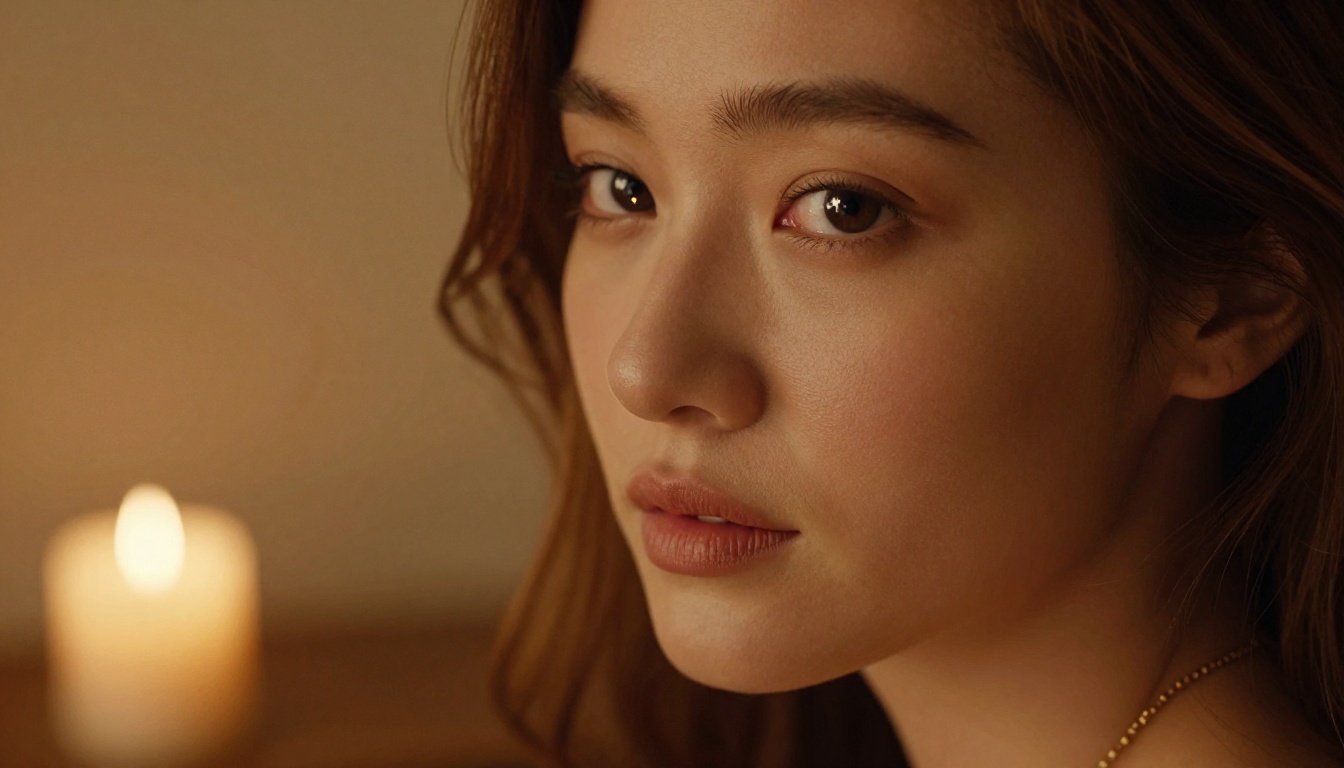
Vague prompts produce vague results. For high-quality adult artistic images, structure your prompt with the following components in order:
- Subject: Physical characteristics, clothing or absence of it, pose, expression, body language
- Environment: Location, background elements, specific details that anchor the scene
- Lighting: Natural light source, direction, quality (golden hour, candlelight, soft-box, backlight)
- Camera framing: Shot distance (close-up, full body, waist-up), angle (eye level, low angle, overhead), lens simulation (85mm f/1.4 for portraits, 24mm for environmental)
- Style anchors: "photorealistic," "editorial photography," "Kodak Portra 400," "8K," "natural film grain," "RAW"
A well-structured prompt in this format reliably produces professional-quality outputs that align with your creative vision, rather than generic images that do not match your brief.
Step 3: Iterate and Refine
No first generation is ever the final image. Use PicassoIA's variation and inpainting tools to adjust specific elements without regenerating the entire composition. The inpainting feature lets you fix a specific area of an image while keeping the rest intact. For production workflows requiring consistency across a series, this capability is essential. You can correct a single detail without losing everything else that worked.
Step 4: Organize Your Library

PicassoIA stores generated images in your account library with generation parameters saved alongside each image. For recurring projects like character sheets for ongoing series, visual references for fiction projects, or brand identity work requiring consistent style, this means you can revisit any previous generation and rebuild from it without starting from scratch. The saved parameters are the seed of repeatable production quality.
What to Do With Claude Fable 5.1 Instead
If you want to use Claude Fable 5 despite its NSFW limitations, you can still get substantial value from it for adult creative projects, just not in the way most people first assume when they find the model.
Claude Fable 5 is genuinely exceptional at world-building, creating detailed fictional universes with consistent internal logic across enormous amounts of material. It writes psychologically complex characters with authentic, distinct voices that remain consistent through long narratives. It structures plots with payoff built in across many chapters. It writes natural, differentiated dialogue for multiple characters simultaneously. None of these capabilities require NSFW permissions.
A hybrid workflow is how many professional adult content creators are actually using these tools right now. Claude Fable 5 handles the heavy structural lifting: world-building, character development, plot architecture, scene framing up to the explicit moment. A dedicated image model on PicassoIA handles the visual content. A more permissive text model or a Claude API deployment with operator permissions handles the explicit written passages. The output of that combined workflow is substantially stronger than any single model could produce alone.
Start Creating on PicassoIA
The honest answer to "is Claude Fable 5.1 NSFW?" is: partially, in controlled conditions, with meaningful friction at every step. For most adult content creators, that is not enough. The workflow overhead of navigating operator permissions, the production inconsistency, and the complete absence of image generation capability all point in the same direction.
PicassoIA brings together over 90 text-to-image models, including Seedream 5 Pro, in a single interface built for serious creative work. The platform handles adult artistic content without the approval gates and session-to-session inconsistency that make Claude difficult for this use case in production.
If you have been testing Claude Fable 5.1 and hitting walls, spend 20 minutes on PicassoIA instead. Bring a detailed prompt from a project you are already working on, run it through Seedream 5 Pro, and see what comes back. The difference in workflow friction alone tends to settle the question of which platform belongs in your creative stack.
All available models, including the full text-to-image and large language model catalogs, are at picassoia.com/en/all-models.


