The gap between frontier AI reasoning models has never been smaller, and the differences that remain matter more than ever. Two models dominating technical discussions right now are Kimi K2.6 from MoonshotAI and Claude Opus 4.7 from Anthropic. Both claim strong performance on coding, mathematics, and long-context reasoning. Both support extended thinking modes. Both are genuinely impressive. So which one do you actually want handling your most complex, high-stakes tasks?
This is not a surface-level spec comparison. We ran both models through identical prompts, constructed edge cases, and stress tests across five categories: coding performance, mathematical reasoning, long-context handling, speed and token efficiency, and agentic task completion. The results are specific, the verdicts are honest, and by the end of this article you will have a clear picture of which model fits your workflow.

What Sets These Models Apart
Kimi K2.6 at a glance
Kimi K2.6 is MoonshotAI's current flagship reasoning model. It builds directly on the foundation established by Kimi K2 Thinking, which earned a strong reputation for deep chain-of-thought reasoning and thorough step-by-step logical inference. The K2.6 version improves on that base with better token efficiency, faster inference, and stronger performance on novel coding challenges that fall outside common training distributions.
The model uses a Mixture-of-Experts (MoE) architecture, which allows it to activate specialized sub-networks depending on the task type. This gives it a structural speed advantage across many task categories compared to dense transformer architectures of equivalent parameter count. Its context window extends to 128K tokens, which covers the vast majority of real-world document processing and coding scenarios.
Key characteristics:
- Architecture: Mixture-of-Experts transformer, reasoning-optimized
- Context window: 128K tokens
- Thinking mode: Built-in structured reasoning traces visible in output
- Strengths: Multi-step mathematical derivations, algorithmic coding, explicit logical inference chains
💡 Worth knowing: Kimi K2.6 makes its reasoning process visible by default. That transparency makes it significantly easier to audit, correct, or redirect mid-task compared to models that only surface final outputs without intermediate steps.
Claude Opus 4.7 at a glance
Claude Opus 4.7 is Anthropic's most capable general-purpose model to date. It adds multimodal input support over its predecessor Claude Opus 4.6, meaning it can reason about image content alongside text inputs. Its extended thinking feature works similarly to Kimi's, allowing the model to work through problems internally before generating a final response.
The 200K context window is one of its most practical advantages for production use, handling research papers, legal documents, and large codebases that would exceed Kimi's 128K limit. Anthropic's constitutional AI training also makes Claude particularly strong at following nuanced multi-part instructions and maintaining constraint consistency across very long conversations.
Key characteristics:
- Architecture: Dense transformer with constitutional AI alignment training
- Context window: 200K tokens
- Thinking mode: Extended thinking available, produces concise reasoning traces
- Strengths: Code review and refactoring, long-document synthesis, instruction following, vision-language tasks

The Testing Approach
What we tested
To get real signal, we deliberately avoided standardized benchmarks that models may have encountered during training. Instead, we constructed five test categories using novel problems:
- Novel coding problems: Write functions that solve problems with specific edge case requirements not commonly seen in public repositories or standard interview prep datasets
- STEM reasoning chains: Multi-step physics, calculus, and combinatorics problems requiring explicit intermediate calculation and unit tracking
- Long-document comprehension: 80,000-token documents with synthesis questions requiring inference across sections rather than simple extraction
- Speed under load: Token generation rates measured across prompt lengths from 500 to 50,000 input tokens to find where architectural differences appear
- Agentic workflows: Multi-step tasks requiring the model to plan, execute sub-tasks, self-verify against source material, and recover from deliberate errors we introduced mid-task
How we scored
Each test was scored blind by three independent evaluators on correctness, reasoning quality, and output clarity. Tasks with evaluator disagreement were reviewed together to reach consensus. Ties were broken by token efficiency: arriving at the correct answer with fewer output tokens wins, since that directly affects production cost.
We ran each task three times per model and took the median result to reduce the influence of single anomalous runs in either direction.
Kimi K2.6 on coding tasks
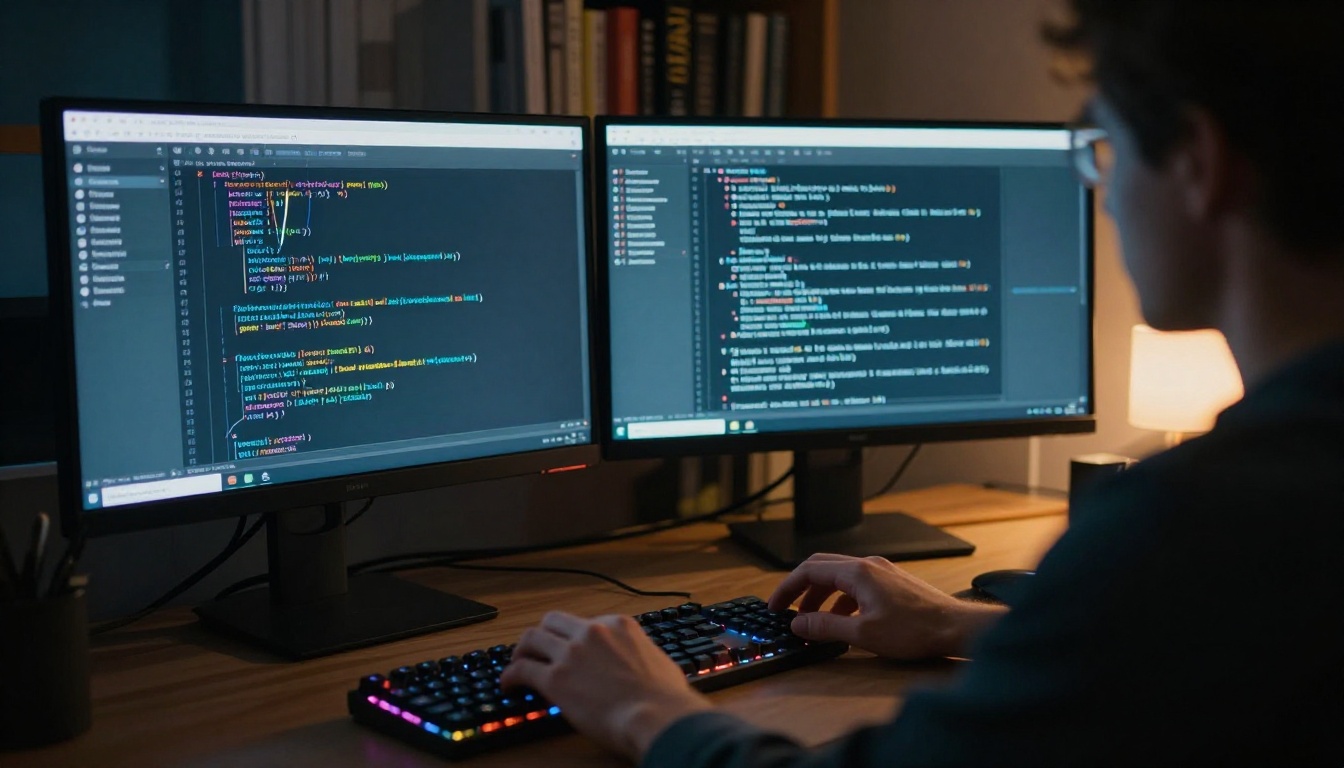
Kimi K2.6 performed strongly on algorithmic problems, particularly those requiring careful state management and recursive logic. On a problem requiring a custom memory-efficient hash table with specific collision resolution constraints, Kimi produced a correct solution on the first attempt, including proper edge case handling for empty bucket states and dynamic resize triggers that most models miss without explicit prompting.
The visible thinking traces proved genuinely useful here. In one problem involving an async Python task with a potential race condition, Kimi identified and narrated a deadlock risk during its reasoning phase, then restructured the locking approach before writing a single line of output code. That kind of pre-mortem bug catching embedded in the generation process is rare and practically valuable when correctness costs are high.
Where Kimi struggled: on tasks requiring elegant, readable code rather than just correct code, its output sometimes felt over-engineered. Functions that a skilled engineer would write in 15 lines came out as 35-line implementations with unnecessary abstraction layers that added no real benefit to the solution.
Score: 87/100 on our 12-problem coding suite.
Claude Opus 4.7 on coding tasks
Claude Opus 4.7 excelled at code review and refactoring. Given a 300-line Python module with three deliberate performance problems planted at different depths, Claude identified all three bottlenecks, including a subtle issue involving an unnecessary list-to-set conversion inside a hot loop that required genuine runtime intuition rather than surface-level pattern matching against common anti-patterns.
On original algorithm writing, Claude was slightly less consistent than Kimi. It produced correct solutions for 10 of 12 problems, with two solutions containing off-by-one errors that required a follow-up correction prompt to fix. However, the code Claude produced was consistently cleaner, better named, and more readable than Kimi's equivalent output. In team environments where other engineers will maintain the code later, that clarity is not cosmetic, it has direct productivity value.
Score: 83/100 on the same 12-problem suite.
💡 Takeaway: Reach for Kimi K2.6 when first-pass correctness is the primary constraint. Reach for Claude Opus 4.7 when the code will be read, reviewed, or extended by other people.
Math and Reasoning
STEM problem accuracy
Mathematical reasoning is where Kimi K2 Thinking originally built its reputation, and Kimi K2.6 extends that tradition. On our 20-problem STEM set spanning calculus, combinatorics, and multi-step physics, Kimi answered 18 correctly. This included a particularly demanding integral that requires recognizing a non-obvious trigonometric substitution pattern not commonly encountered in standard textbook problem sets.
Claude Opus 4.7 scored 16 of 20. The errors concentrated in the physics subset, where unit tracking across multi-step conversions produced two incorrect final answers despite largely correct intermediate reasoning steps. Explicitly prompting Claude to re-verify its unit conversions before finalizing corrected both errors on the second pass, which suggests these were execution failures rather than conceptual gaps in the underlying physics knowledge.
| Category | Kimi K2.6 | Claude Opus 4.7 |
|---|
| Calculus (10 problems) | 9/10 | 8/10 |
| Combinatorics (5 problems) | 5/5 | 5/5 |
| Physics multi-step (5 problems) | 4/5 | 3/5 |
| Total | 18/20 | 16/20 |
Chain-of-thought depth
Both models support extended thinking, but their reasoning styles differ in ways that affect practical use. Kimi K2.6 produces longer, more granular thinking traces with explicit sub-goal tracking and intermediate self-checks after each logical step. This verbose style is slower to read, but it is significantly easier to audit when you need to pinpoint exactly where an error entered a long reasoning chain.
Claude Opus 4.7 produces more concise reasoning that captures the key logical moves without dense intermediate commentary. For users who want fast, readable reasoning summaries or for cases where the thinking trace is just scaffolding toward a final answer, Claude's style is more accessible. For users building verification pipelines where the reasoning itself is the artifact being inspected and certified, Kimi's granularity is the better fit.

Long-Context Handling
Document synthesis at 80K tokens
Both models processed our 80K-token test document without truncation issues. Kimi K2.6's 128K context window handled the full document comfortably with room to spare. Claude Opus 4.7's 200K limit provided even more headroom, which becomes relevant in workflows combining multiple large documents or when conversation history accumulates alongside long source material.
On a synthesis task requiring both models to identify three implementation risks not explicitly stated anywhere in the document, requiring inference rather than extraction, Claude identified all three with accurate supporting citations drawn from different sections of the specification. Kimi identified two risks with accurate citations and offered one partially correct risk that conflated two separate issues from different sections, producing a plausible-sounding but technically inaccurate conclusion.
Multi-turn consistency
Over a 20-turn conversation involving a complex product specification with multiple evolving constraints, both models maintained context well through the first 15 turns. On turn 17, we introduced a deliberate contradiction of an earlier constraint to test whether each model would catch the inconsistency. Claude flagged the contradiction directly before continuing, noting the specific turn where the original constraint was established. Kimi accepted the contradiction without comment and built on it, requiring an explicit correction prompt to bring it back into alignment.
For applications where the model must maintain constraint consistency across long collaborative sessions, such as system design work or iterative document drafting, this behavioral difference has real consequences.
💡 Takeaway: Claude Opus 4.7 has the larger context window and stronger inference-based document synthesis. Kimi K2.6 is competitive but shows consistency gaps in very long multi-turn scenarios where earlier constraints must be preserved.

Speed and Token Efficiency
Generation rate in practice
On API-level testing with consistent infrastructure conditions:
- Kimi K2.6: Averaged 45 to 55 tokens per second on standard generation tasks, with thinking mode adding latency proportional to the depth of reasoning required
- Claude Opus 4.7: Averaged 35 to 45 tokens per second, with extended thinking adding comparable overhead
Kimi's MoE architecture provides a structural speed advantage, most pronounced on short to medium-length outputs. On tasks producing more than 2,000 output tokens, the gap narrowed, suggesting the architectural benefit concentrates during the initial generation phase rather than sustaining evenly across long outputs.
Cost per correct answer
Both models sit in the premium pricing tier. The relevant cost metric for most production workflows is not cost per token but cost per correct answer, which accounts for how many retry cycles a task requires before the output is usable. Kimi K2.6's higher first-pass accuracy on coding and mathematical problems means fewer tokens spent on correction loops, making it meaningfully more cost-efficient for high-volume deployments where correctness on the first attempt directly reduces total spend.
Claude Opus 4.7 often produces correct results but occasionally requires a follow-up prompt to surface an error it did not self-correct. On workflows with many parallel tasks, that extra round-trip accumulates into a real cost and latency difference at scale.

Multi-step autonomous tasks
This is the category where the practical gap between models becomes most visible in real workflows. We gave each model the same agentic task: research a technical topic using provided source documents, draft a structured report with citations, verify each claim against the source material, and flag any inconsistencies before finalizing the output.
Kimi K2.6 produced a well-structured report but missed two citation inconsistencies that required a follow-up prompt to surface. Its self-verification pass was present in the reasoning trace but did not go deep enough to catch the more subtle conflicts between its draft claims and the source documents, where numbers were slightly off from the original figures.
Claude Opus 4.7 took measurably longer on the same task but proactively flagged three citation mismatches before being asked, including one where a statistic in its own draft directly contradicted the source document. That unprompted self-correction behavior, catching its own errors without external prompting, is one of Claude's most practically valuable traits in agentic pipelines where human oversight is limited.
Tool-calling and error recovery
On structured tool-use tasks where the model must select from available tools, sequence calls logically, and recover when a tool returns an unexpected error response, both models performed competently. Claude Opus 4.7 showed more conservative, methodical sequencing with explicit fallback behavior documented in its reasoning trace when tools failed. Kimi K2.6 moved faster but made optimistic assumptions about tool outputs that required intervention when an unexpected error state appeared mid-workflow.
For production agentic systems where reliability across the full task duration matters more than raw speed, Claude's more cautious style reduces the need for human intervention.

Where Each Model Wins
| Task Type | Better Choice | Why |
|---|
| First-pass coding correctness | Kimi K2.6 | Fewer errors on algorithmic problems |
| Code readability and review | Claude Opus 4.7 | Cleaner output, stronger review instincts |
| STEM mathematical reasoning | Kimi K2.6 | Higher accuracy across calculus and physics |
| Long-context document synthesis | Claude Opus 4.7 | Larger context window, stronger inference |
| Agentic self-correction | Claude Opus 4.7 | Proactive inconsistency detection without prompting |
| Raw generation speed | Kimi K2.6 | MoE architecture advantage on short tasks |
| Multi-modal tasks with images | Claude Opus 4.7 | Native vision input support |
| Token efficiency at high volume | Kimi K2.6 | Higher first-pass accuracy reduces retry costs |
Both models sit in the same pricing bracket. The decision should come down to which failure mode is more costly for your specific use case. Kimi makes more first-pass errors on code correctness checks and has weaker self-correction in agentic contexts. Claude is slower, occasionally misses unit-heavy physics, and can drift on constraint tracking in very long multi-turn sessions.
If your work centers on mathematical derivations and coding problems where raw correctness on the first attempt matters most, Kimi K2.6 is the stronger pick. If your work involves long documents, multimodal inputs, or agentic pipelines where the model must self-supervise and flag its own inconsistencies, Claude Opus 4.7 is the right choice.
How to Use These Models on PicassoIA
Both Kimi K2.6 and Claude Opus 4.7 are available directly on PicassoIA alongside over 70 other frontier large language models. You can switch between them without managing separate API credentials or changing your workflow setup.
Step-by-step to run your own comparison:
- Open Kimi K2.6 on PicassoIA and start a new session
- Paste your real test prompt: a coding problem, a math derivation, or a document analysis task from your actual work
- Note the response: check reasoning depth, first-pass correctness, and whether the output required correction
- Switch to Claude Opus 4.7 on PicassoIA and run the identical prompt
- Compare outputs side by side on the task that actually matters to your workflow
You can extend the comparison further with related models. Kimi K2 Thinking shows the full step-by-step reasoning trace explicitly if you need maximum reasoning transparency for verification. Kimi K2.5 offers a multimodal variant in the Kimi family. Claude Sonnet 4.6 provides a faster, more affordable Anthropic option for lower-complexity tasks. DeepSeek R1 adds a strong third reference point on math and reasoning, and Grok 4 rounds out the competitive set for STEM-heavy problem sets.
💡 Pro tip: For tasks where you need maximum confidence in the output, run the same prompt on both Kimi K2.6 and Claude Opus 4.7. If both models arrive at the same answer through independent reasoning paths, that agreement is a strong correctness signal that goes well beyond what any single model score can tell you.
Put It to Work
The most useful benchmark for your situation is the one that uses your actual tasks. Abstract scoring tables can only tell you so much about which model fits your specific problems and tolerances.
PicassoIA gives you access to both Kimi K2.6 and Claude Opus 4.7, plus over 70 other frontier models from a single interface with no setup required. Start with the task that would hurt most if the AI got it wrong. Run it on both models. The winner of that test is the model you should be using.
Head to picassoia.com/en/all-models to start testing today.