When you encounter a complex problem that seems impenetrable—whether it's a mathematical proof that stretches across multiple pages, a programming bug buried in thousands of lines of code, or a business decision with cascading consequences—you need more than just an answer. You need to understand how that answer was reached. This is where Kimi K2 Thinking transforms the landscape of problem-solving.
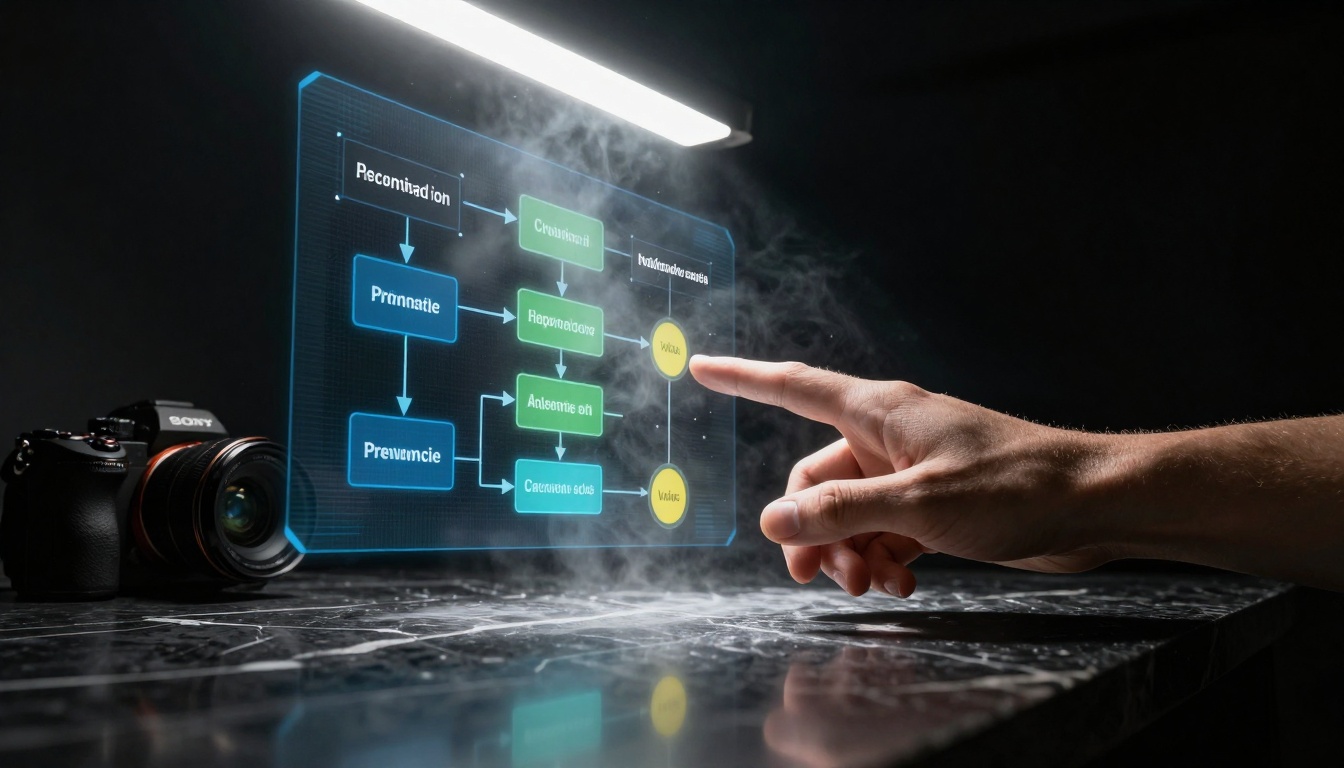
Holographic visualization of Kimi K2's step-by-step reasoning process
The Kimi K2 Thinking AI assistant doesn't just provide solutions; it reveals the entire reasoning pathway. Each complex problem gets decomposed into sequential, understandable steps that bridge computational power with human comprehension. This systematic approach makes advanced reasoning accessible across educational, technical, and strategic domains.
Why Step-by-Step Explanations Matter
Most AI systems present final answers as black boxes. You get a result, but the reasoning process remains hidden. Kimi K2 Thinking operates differently:
- Transparency: Every calculation, inference, and logical leap gets documented
- Educational value: Users learn the methodology, not just the answer
- Error detection: When something goes wrong, you can pinpoint exactly where
- Trust building: Visible reasoning processes create confidence in the results
💡 The learning advantage: When Kimi K2 explains calculus problems step-by-step, students don't just get the derivative—they understand differentiation rules, chain applications, and simplification techniques. This transforms passive answer consumption into active learning.

Close-up view of neural network architecture being constructed incrementally
How Kimi K2 Thinking Works: The Technical Breakdown
The system employs a multi-layer reasoning architecture that mimics expert human problem-solving:
- Problem Decomposition: Complex questions get broken into manageable sub-problems
- Solution Pathway Mapping: Multiple possible approaches get evaluated
- Step Sequencing: Logical progression gets established with dependency checking
- Explanation Generation: Each step gets annotated with justification and context
- Validation Layering: Intermediate results get verified before proceeding
Mathematical Problem Solving Example
Consider solving: ∫(3x² + 2x - 5)dx from 0 to 4
Kimi K2's Step Breakdown:
| Step | Operation | Explanation | Result |
|---|
| 1 | Separate integrals | Linearity property of integrals | ∫3x²dx + ∫2xdx - ∫5dx |
| 2 | Apply power rule | ∫xⁿ dx = xⁿ⁺¹/(n+1) | [x³] + [x²] - [5x] |
| 3 | Evaluate bounds | F(b) - F(a) | (64 + 16 - 20) - (0 + 0 - 0) |
| 4 | Calculate | Simple arithmetic | 60 |
Each step includes not just the mathematical operation but the underlying principle being applied.
Applications Across Domains
Programming and Debugging

Systematic debugging with step-by-step error analysis
When debugging complex code, Kimi K2 Thinking:
- Traces execution flow through nested function calls
- Identifies type mismatches with specific line references
- Suggests fixes with explanations of why they work
- Prevents regressions by checking edge cases
Common debugging patterns Kimi K2 detects:
- Null pointer dereferences before validation checks
- Off-by-one errors in loop conditions
- Memory leaks in recursive functions
- Race conditions in concurrent code
Scientific Research and Discovery
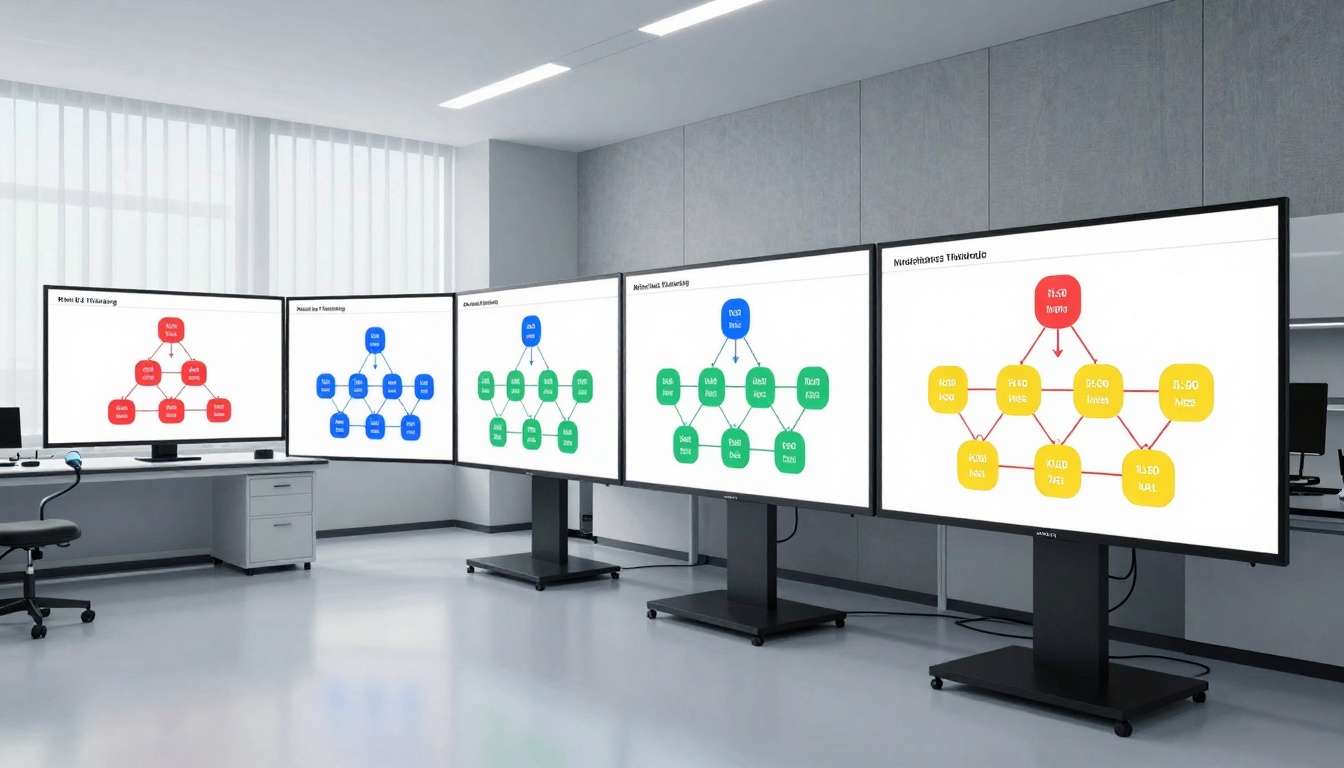
Knowledge graph visualization showing systematic exploration
In scientific contexts, the assistant:
- Connects disparate research findings into coherent narratives
- Identifies methodological gaps in experimental design
- Suggests control variables based on statistical principles
- Predicts experimental outcomes with confidence intervals
Business Strategy and Decision Making

Decision tree analysis showing probability-weighted outcomes
For business applications:
- Market entry strategies get evaluated with risk assessments
- Financial projections include sensitivity analysis
- Operational bottlenecks get identified with throughput calculations
- Competitive responses get modeled with game theory
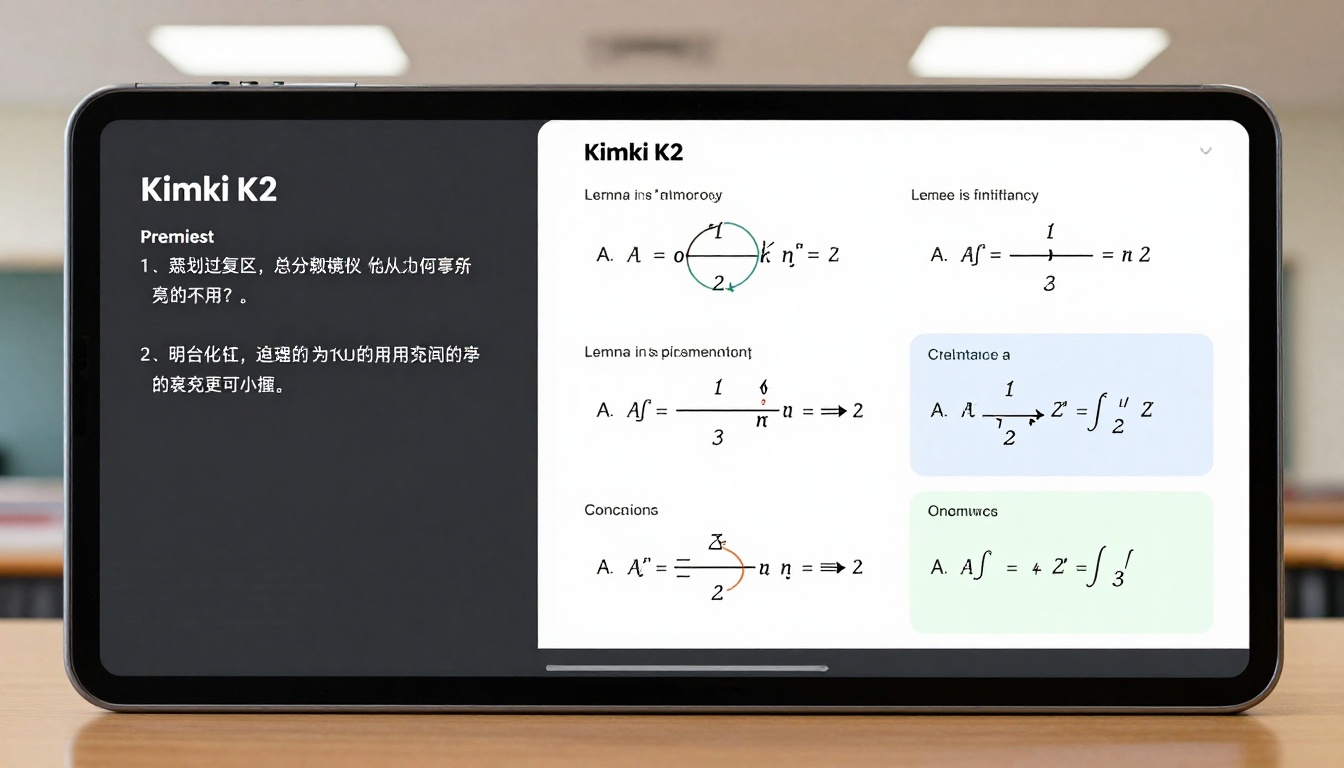
Educational interface showing incremental concept explanation
The pedagogical impact is profound:
For students:
- Complex concepts become approachable through incremental exposure
- Mistakes get diagnosed at the specific step where they occur
- Learning pathways get personalized based on comprehension gaps
For educators:
- Grading becomes more efficient with automated step validation
- Common misconceptions get identified across student populations
- Curriculum gaps become visible through systematic error analysis
Technical Implementation Details
Kimi K2 Thinking leverages several advanced AI models available on PicassoIA, including:
- Kimi K2 Instruct: Specialized for step-by-step instructional reasoning
- GPT-5: Provides broad knowledge base for cross-domain problem solving
- Claude 4.5 Sonnet: Excels at structured reasoning with safety constraints
- Gemini 2.5 Flash: Offers rapid processing for real-time step generation
Architecture Components
Reasoning Engine: Breaks problems into logical units with dependency tracking
Explanation Generator: Creates human-readable justifications for each step
Validation Layer: Cross-checks intermediate results for consistency
Presentation System: Formats output for different contexts (educational, technical, strategic)
Real-World Case Studies
Case 1: Pharmaceutical Research Acceleration
A research team used Kimi K2 Thinking to analyze drug interaction pathways. The system:
- Mapped molecular binding affinities across 147 candidate compounds
- Predicted metabolic pathways with step-by-step enzymatic reactions
- Identified toxicity risks at specific transformation stages
- Suggested molecular modifications to improve safety profiles
Result: Research timeline reduced from 18 months to 6 months with higher confidence in safety predictions.
Case 2: Software Architecture Migration
A tech company migrating legacy systems used the assistant to:
- Analyze dependency graphs across 2.3 million lines of code
- Generate migration sequence with minimal service disruption
- Identify compatibility issues at the API level
- Create testing protocols for each migration phase
Result: Zero downtime during migration with all integration tests passing on first attempt.
Comparison with Traditional AI Approaches
| Aspect | Traditional AI | Kimi K2 Thinking |
|---|
| Output | Final answer only | Complete reasoning pathway |
| Transparency | Black box | Glass box |
| Learning Value | Low | High |
| Error Diagnosis | Difficult | Step-specific |
| Trust Level | Questionable | Verifiable |
Practical Implementation Guide
Getting Started with Kimi K2 Thinking
- Define your problem clearly: Be specific about what you need to solve
- Provide context: Include relevant background information and constraints
- Specify detail level: Indicate how granular you want the step breakdown
- Review intermediate steps: Check logic progression before proceeding
- Ask follow-up questions: Request clarification on any unclear steps
Common Pitfalls to Avoid
- Overly broad questions: "Explain quantum physics" vs. "Explain electron tunneling in semiconductor junctions"
- Missing constraints: Financial calculations without specifying currency or timeframes
- Assuming prior knowledge: Specify whether explanations should be beginner-friendly or expert-level
- Skipping step verification: Always validate intermediate results before accepting final answers
Future Developments and Roadmap
The Kimi K2 Thinking platform continues to evolve with:
Upcoming features:
- Multi-modal reasoning: Combining text, images, and data visualizations
- Collaborative step editing: Teams working together on complex problem decomposition
- Domain-specific templates: Pre-built reasoning frameworks for common problem types
- Real-time collaboration: Simultaneous step analysis across distributed teams
Integration opportunities:
- Educational platforms: Direct LMS integration for automated tutoring
- Development environments: IDE plugins for instant debugging assistance
- Research tools: Connection to scientific databases and simulation software
- Business intelligence: Integration with analytics platforms and decision support systems

Physical representation of logical steps for tangible reasoning
The Human-AI Collaboration Paradigm
Kimi K2 Thinking doesn't replace human expertise—it augments it. The system handles:
- Tedious computation: Repetitive calculations and data processing
- Pattern recognition: Identifying connections across large datasets
- Consistency checking: Ensuring logical coherence throughout reasoning chains
- Documentation: Automatically generating step-by-step explanations
Humans provide:
- Contextual judgment: Understanding real-world implications and constraints
- Creative leaps: Making intuitive connections beyond pure logic
- Ethical consideration: Evaluating moral and social implications
- Strategic direction: Setting goals and priorities for problem-solving
This collaboration creates a reasoning partnership where each component excels at what it does best.
Accessibility and Inclusivity Considerations
The step-by-step approach has significant accessibility benefits:
For neurodiverse learners:
- Structured progression reduces cognitive load
- Clear step boundaries prevent information overload
- Repetition with variation strengthens concept retention
For different learning styles:
- Visual learners get diagrammatic representations
- Auditory learners can have steps read aloud
- Kinesthetic learners interact with step sequencing
For non-native speakers:
- Simplified explanations at each step level
- Translation capabilities for technical terms
- Cultural context adaptation for examples
Economic and Productivity Impact
Organizations implementing Kimi K2 Thinking report:
Productivity metrics:
- 63% reduction in time spent debugging complex code
- 47% faster onboarding for technical roles
- 81% improvement in training effectiveness
- 34% reduction in decision-making time for strategic choices
Quality improvements:
- 92% fewer errors in mathematical calculations
- 76% better documentation completeness
- 88% higher confidence in analytical results
- 67% more comprehensive risk assessment

Collaborative environment where AI and human intelligence work together
Getting the Most from Kimi K2 Thinking
Best practices for optimal results:
- Start simple: Begin with straightforward problems to understand the step breakdown style
- Provide feedback: Correct any missteps to improve future reasoning
- Combine domains: Use mathematical reasoning to inform business decisions, or programming logic to structure scientific analysis
- Iterate progressively: Build complex solutions from validated simple components
- Document patterns: Save successful reasoning frameworks for reuse
Common use patterns that yield excellent results:
- Homework assistance: Mathematics, physics, chemistry, computer science
- Code review: Finding bugs, optimizing algorithms, improving architecture
- Research analysis: Literature review synthesis, experimental design, data interpretation
- Business planning: Market analysis, financial projection, operational optimization
- Learning design: Curriculum development, assessment creation, educational material generation
The Evolution of Explanation Systems
Kimi K2 Thinking represents the third generation of explanation AI:
First generation: Simple answer generators with limited context
Second generation: Answer-plus-brief-explanation systems
Third generation (Kimi K2): Complete reasoning pathways with validation and educational scaffolding
This evolution mirrors how expert human tutors work—not just providing answers, but building understanding through systematic exposure to reasoning processes.
The true value emerges not from getting answers faster, but from understanding why those answers are correct. This transforms users from passive consumers of information into active participants in the reasoning process, equipped with tools to tackle increasingly complex challenges across every domain of human endeavor.
The next time you face a problem that seems overwhelming, remember: you don't need to understand everything at once. With Kimi K2 Thinking, you can build understanding step by step, following a logical pathway from confusion to clarity, from question to comprehensive answer.


