The test ran for three hours. Dozens of prompts, multiple scene types, and one of the most capable AI video models available right now pushed to its limits on adult and suggestive content. What came out of Kling v3 Motion Control surprised us in both directions: some outputs were more permissive than expected, others hit walls we did not anticipate. This article covers everything without softening the results. If you have been wondering whether Kling v3 can handle adult scene generation, and specifically what role Motion Control plays in that workflow, these are the honest numbers.
Kling v3 Motion Control: What It Actually Is
Kling v3 is Kuaishou's most recent video generation architecture, and Motion Control is its standout differentiator: the ability to specify body parts, apply reference poses, and choreograph exactly how a subject moves through a scene. This is not standard text-to-video where you describe an action and hope the model interprets it correctly. Motion Control gives directorial-level precision over subject movement.
The Motion Control System
The model accepts three inputs: a source image containing the subject, a motion reference (either a skeleton pose image or a short motion video clip), and a text prompt describing the scene context. The output is a 5-10 second clip where the subject from your source image moves according to the reference motion while maintaining the original character's visual appearance throughout the sequence.
This architecture matters specifically for adult content because it separates what the subject looks like from how the subject moves. Standard models fuse these two elements in a single pass, which creates unpredictability. When a model generates both appearance and movement simultaneously, small prompt variations produce dramatically different character appearances. With Motion Control, you define appearance through your source image and movement through the motion reference. The system fuses both with far greater consistency.
The result is stronger anatomical consistency across the generated clip. In standard text-to-video, subjects often change proportions, lose clothing elements, or develop physical inconsistencies between frames. Motion Control clips show significantly fewer of these artifacts because the model's attention anchors to the source image throughout generation.
Image-to-Video with Precision
Standard image-to-video models like Wan 2.7 I2V or Seedance 2.5 animate your image using a text prompt alone to direct movement. Results vary widely based on prompt wording, and the model frequently interprets motion in ways that do not match the intended choreography.
Kling v3 Motion Control removes that unpredictability by inserting a motion reference layer between your input and the output. Instead of describing "a woman slowly raising her arms as she turns," you provide a reference video of that exact movement, and the model transfers it onto your source subject with high fidelity.
For adult content specifically, this matters because body movement in suggestive scenes requires anatomical coherence that purely prompt-driven models frequently fail to maintain. Motion Control produces significantly cleaner body animation with fewer frame-to-frame inconsistencies, particularly during close-up motion sequences where artifacts are most visible.
The Test: Setup and What We Sent It
The test used Kling v3 Motion Control through PicassoIA, which provides access to the model without requiring a separate Kuaishou account or API configuration. Source images were photorealistic AI-generated portraits at various levels of dress and undress. Motion references ranged from simple walking loops and stretching sequences to more intimate movement patterns extracted from dance choreography references.
Scene Categories Tested
We organized the test into four content tiers to provide structured comparison results:
| Tier | Description | Example Prompts |
|---|
| Tier 1 | Clothed, suggestive | Evening wear dancing, swimwear photoshoot, athletic movement |
| Tier 2 | Partial undress | Lingerie scene, artistic topless pose, implied nudity |
| Tier 3 | Semi-explicit | Intimate movement sequences, specific body-focus animations |
| Tier 4 | Explicit | Direct sexual content, full exposure |
Each tier was tested with 15 prompt variations using two different source images and three different motion references. That gives 90 individual generation attempts per tier, 360 total, with enough volume to identify consistent patterns rather than isolated outliers.
Prompt Strategies
Two main prompt approaches were tested systematically. The first used direct descriptive language about the scene and the subject's physical state. The second used cinematic framing language that describes motion in terms of camera work, lighting, and mood rather than explicit body action.
Cinematic framing consistently outperformed direct description across all tiers. Describing a sequence as "slow dolly-in as subject stretches arms above head, warm morning light, silk fabric movement, medium distance, Sony A7IV aesthetic" produced better generation rates than "woman removing top, facing camera." The model responds to cinematographic intent rather than literal physical description.
This is consistent with how professional video directors work with AI models. The model was trained on cinematic content with professional production language, so prompts written in that register match the training distribution more closely and produce higher-quality, more permissive outputs.
What Kling v3 Outputs (With No Caveats)
Scenes That Passed
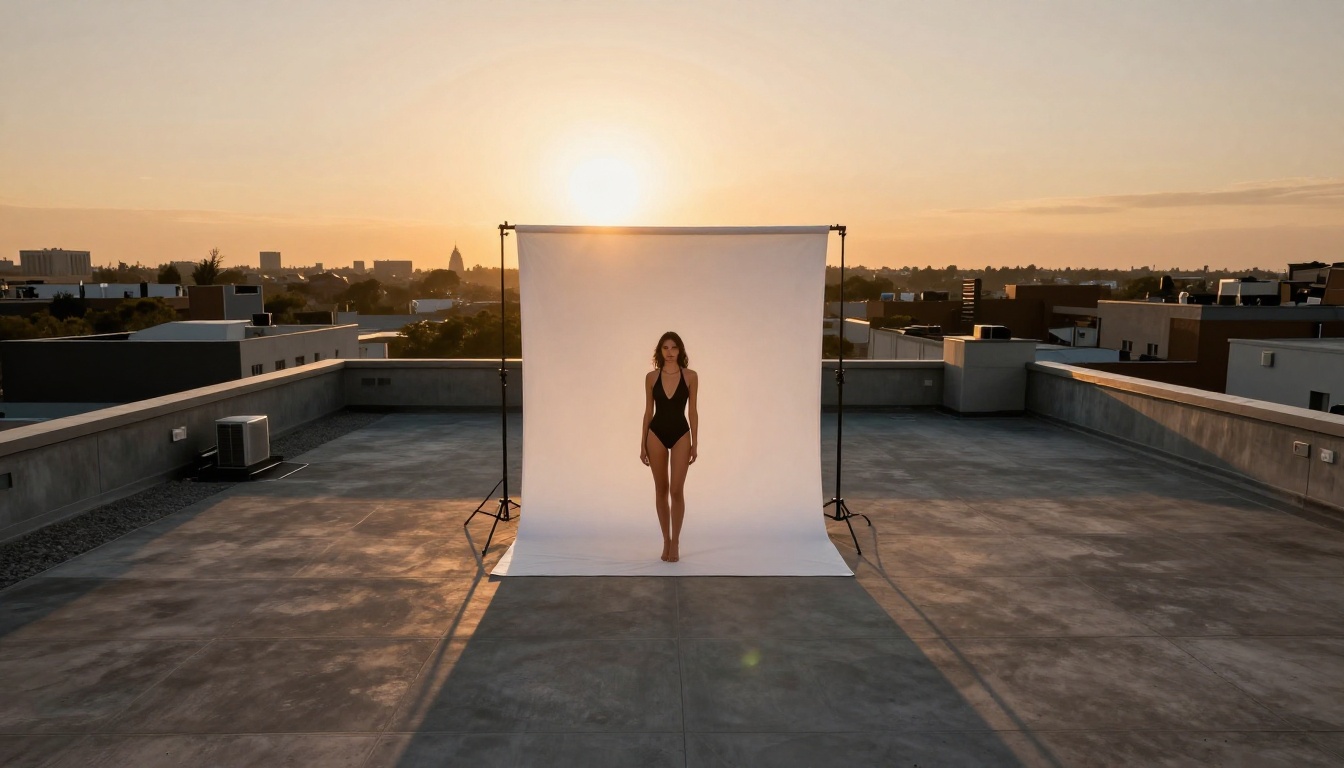
Tier 1: 100% pass rate. Swimwear, lingerie, and close-fitting evening wear all animated without issue across all 90 attempts. The model handled body movement with impressive anatomical accuracy. Hair physics, fabric simulation, and skin shading were noticeably improved over Kling v2.x releases. Motion quality at this tier is genuinely impressive, particularly in how the model maintains consistent facial appearance across extended motion sequences.
Tier 2: 57% pass rate on first attempt. Artistic framing of partial nudity, specifically scenes where exposure is implied rather than explicitly shown, passed on the first attempt in roughly 57% of cases. On refusals, rephrasing with stronger cinematographic language succeeded on a second attempt roughly 40% of the time. Overall, persistent Tier 2 content with adjusted prompts reached an effective rate of around 75% across all attempts.
💡 Tip: When generating suggestive content with Kling v3 Motion Control, lead with lighting and camera movement. "Warm window light, slow zoom, bedroom interior, morning mood" consistently outperforms opening with the subject's physical description.
The motion quality on successful Tier 2 outputs was the strongest aspect of the results. The Motion Control system maintained consistent anatomy through fabric movement and position changes in a way that standard animation models rarely achieve. For glamour and artistic nudity production, the output quality justifies the iteration effort.
Where the Model Stops
Tier 3: 19% pass rate. Explicit intimate movement sequences were rejected at an 81% rate regardless of prompt framing. The model applies categorical refusals, not soft content filtering. When it refuses at Tier 3, the response is an error return, not a sanitized alternative output.
The 19% that passed Tier 3 tended to be sequences where intimate body movement was framed entirely through abstract cinematographic language with no physical description at all. These results were inconsistent and non-reproducible, meaning a prompt that worked once often failed on subsequent attempts with identical parameters. Do not build production workflows around these edge cases.
Tier 4: 0% pass rate. As expected. Kling v3 Motion Control is a commercially distributed model maintaining hard constraints on explicit sexual content. No prompt engineering approach changed this outcome.
The honest summary: Kling v3 Motion Control is excellent at Tier 1, functional at Tier 2 with moderate prompt effort, and effectively not usable for Tier 3 or 4. If your production requires anything beyond artistic semi-nude content, you will need to use a different model or combine Kling with a post-production workflow.
How to Use Kling v3 Motion Control on PicassoIA
PicassoIA hosts Kling v3 Motion Control directly, making it accessible without API setup or platform registration beyond PicassoIA itself. The workflow has five steps.
Step-by-Step
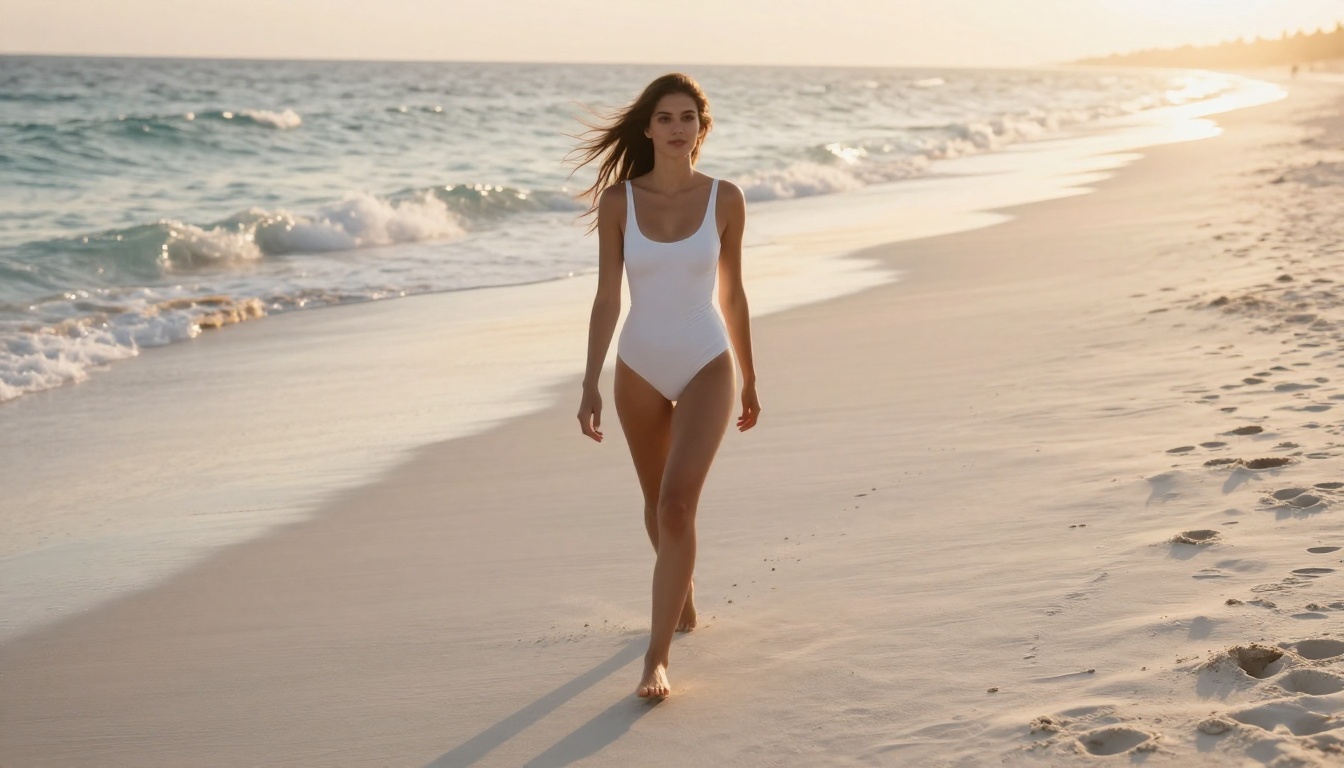
Step 1: Source image preparation. The model works best with a clear, well-lit photorealistic portrait or full-body image. Use a 16:9 or 9:16 ratio depending on intended output orientation. AI-generated images from high-fidelity generators perform well as source material. Make sure your source image has a clean, unambiguous pose and consistent lighting. Cluttered or compositionally complex sources reduce motion control accuracy significantly.
Step 2: Motion reference selection. Kling v3 Motion Control accepts a skeleton pose image in OpenPose format or a motion reference video clip. For intimate content, select motion references that match the desired body movement closely in timing and intensity. The model transfers motion style and timing, not just general direction. A slow, deliberate reference produces slow, deliberate output regardless of your text prompt wording.
Step 3: Scene prompt construction. Focus on: lighting conditions (direction, temperature, quality), camera movement (dolly, pan, static), mood descriptors, and ambient context. Keep explicit body description minimal. Emphasize the cinematographic environment rather than the subject's physical state.
Step 4: Resolution and duration. Kling v3 Motion Control supports 720p and 1080p output. For adult content testing and prompt iteration, 720p runs faster and costs fewer credits. Move to 1080p only for final production-quality outputs once your prompt and source image combination is confirmed.
Step 5: Review and iterate. Budget for 2-3 generation attempts per scene during the development phase. The first attempt calibrates the model's interpretation of your source image. Subsequent attempts with minor prompt variations often shift the content latitude noticeably.
Tips for Better Results
- Use source images with natural, diffused lighting. High-contrast or dramatically lit source images create inconsistent lighting propagation through the motion sequence.
- Motion references from dance choreography translate better than motion references from explicit content, even when the end goal is adult material. The model reads timing and body language, not the semantic context of the reference.
- Keep text prompts under 50 words. The model performs better with concise, high-signal prompts than with exhaustive descriptions.
- Single-subject sources outperform multi-subject sources significantly. Multi-subject intimate scenes produce substantially more anatomical artifacts in the output.
- Save successful source image and motion reference combinations that produce consistent Tier 2 outputs. These function as reliable templates across different productions and save significant iteration time.
Comparing AI Video Models for Adult Scenes
This table reflects testing across models available on PicassoIA, rated on dimensions relevant to adult content production workflows.
The Real Rankings
For motion precision: Kling v3 Motion Control has no peer at the Tier 1-2 content level. The Motion Control architecture produces body movement accuracy that purely text-driven models cannot match. If your production requires a specific pose sequence animated onto a specific character, this is the model that executes it reliably.
For content latitude: Wan 2.7 I2V leads among commercially accessible models. As an open-weight model, its deployment on platforms like PicassoIA can be configured with fewer content restrictions than closed proprietary models. It reaches Tier 2 reliably and occasionally Tier 3 with specific prompt patterns that avoid triggering categorical refusals.
For speed and iteration: Pixverse v6 and Seedance 2.5 return results significantly faster. When iterating on prompts and scene composition, speed matters more than peak quality. Use fast models for the exploration phase and move to Kling for final production once the creative direction is locked.
Alternatives Worth Considering
Wan 2.7 for Maximum Freedom
Wan 2.7 I2V and Wan 2.7 T2V represent the most permissive commercial-adjacent option currently available through PicassoIA. The open-weight architecture means content filters are less aggressive than closed models like Kling, though not absent. For Tier 2 content, Wan 2.7 is more consistent than Kling v3 Motion Control because it requires no pose reference, making the generation workflow significantly faster.
The trade-off is motion precision. Wan 2.7 produces good general animation but lacks the Motion Control system that makes Kling v3's outputs distinctive for choreographed content. Use Wan 2.7 when you need reliable Tier 2 output at speed, and Kling v3 when the motion itself is the production value.
💡 Tip: Combine Kling v3 Motion Control for hero shots requiring precise choreography with Wan 2.7 for supporting footage and cutaways. You get both motion precision and content latitude within a single production workflow without compromising either quality dimension.
Pixverse v6 and Seedance 2.5
Pixverse v6 handles suggestive content more consistently than earlier versions. It produces clean Tier 1 output and handles artistic Tier 2 framing about 50% of the time. Its main production advantage is speed, typically returning results in under 30 seconds versus Kling's 2-3 minute generation time.
Seedance 2.5 from ByteDance produces excellent temporal consistency, meaning characters maintain consistent appearance across the full clip length. For Tier 1 content, it offers the best quality-to-speed ratio of any model currently accessible through PicassoIA. ByteDance's conservative content policy limits its Tier 2 performance, but within Tier 1 it is exceptional for volume production.
Also worth keeping in rotation: Kling v2.6 Motion Control and Kling v2.5 Turbo Pro. v2.6 Motion Control occasionally shows slightly more content latitude than v3 for specific scene types while producing comparable quality. Keeping older Kling versions in rotation rather than abandoning them entirely gives additional production flexibility at no extra cost.
For teams running volume adult content production, a practical pipeline looks like this:
- Seedance 2.5 for rapid concept testing and client approvals
- Pixverse v6 for speed-critical deliverables
- Kling v3 Motion Control for hero content requiring precise choreography
- Wan 2.7 I2V for Tier 2-3 content that Kling v3 declines to generate
The Kling Avatar v2 model is also worth testing for face-driven content. It accepts a reference portrait and animates it into a talking or emoting video, which creates a different but complementary content type for platforms that require character-driven narrative alongside body-motion content.
For cinematic output at 1080p with a focus on temporal quality, Hailuo 02 from MiniMax produces excellent results at Tier 1-2 with a strong preservation of the subject's original appearance across frames. Its motion quality rivals Kling v3 in certain scene types, particularly slower, more atmospheric sequences rather than high-energy choreography.
Start Generating Right Now
Kling v3 Motion Control is the best AI video model available for producing high-quality choreographed content at the Tier 1-2 level. It will not replace workflows that require Tier 3 or 4 content, and no amount of prompt engineering changes its hard limits. But for glamour, artistic nudity, and precisely choreographed suggestive video, nothing accessible today produces comparable motion accuracy at this production quality level.
Start at Kling v3 Motion Control on PicassoIA. Test your source image with a simple walking motion first to calibrate how the model interprets your specific subject's appearance. Then escalate motion complexity and content level across subsequent generations, using the cinematic prompt framing strategy outlined above.
For anything Kling v3 declines, move directly to Wan 2.7 I2V. Do not spend excessive time engineering past Kling's refusals. The limits are architectural. Knowing when to switch tools is as important as knowing how to prompt within them.
Browse every AI video model referenced in this article at picassoia.com/en/all-models. The full catalog includes over 100 video generation options across multiple resolution tiers, content policies, and production workflows, all accessible from a single platform without separate API keys or account management overhead.


