If you've spent any time searching for an uncensored AI chat companion, two names keep appearing: Kupid AI and Dondi.ai. Both promise intimate, unrestricted conversations with AI personas. Both have paying users. And both fall short in ways that matter once you start using them seriously.
This article breaks down exactly where each platform wins, where it fails, and what to use when you want a real AI conversation experience without arbitrary limits.
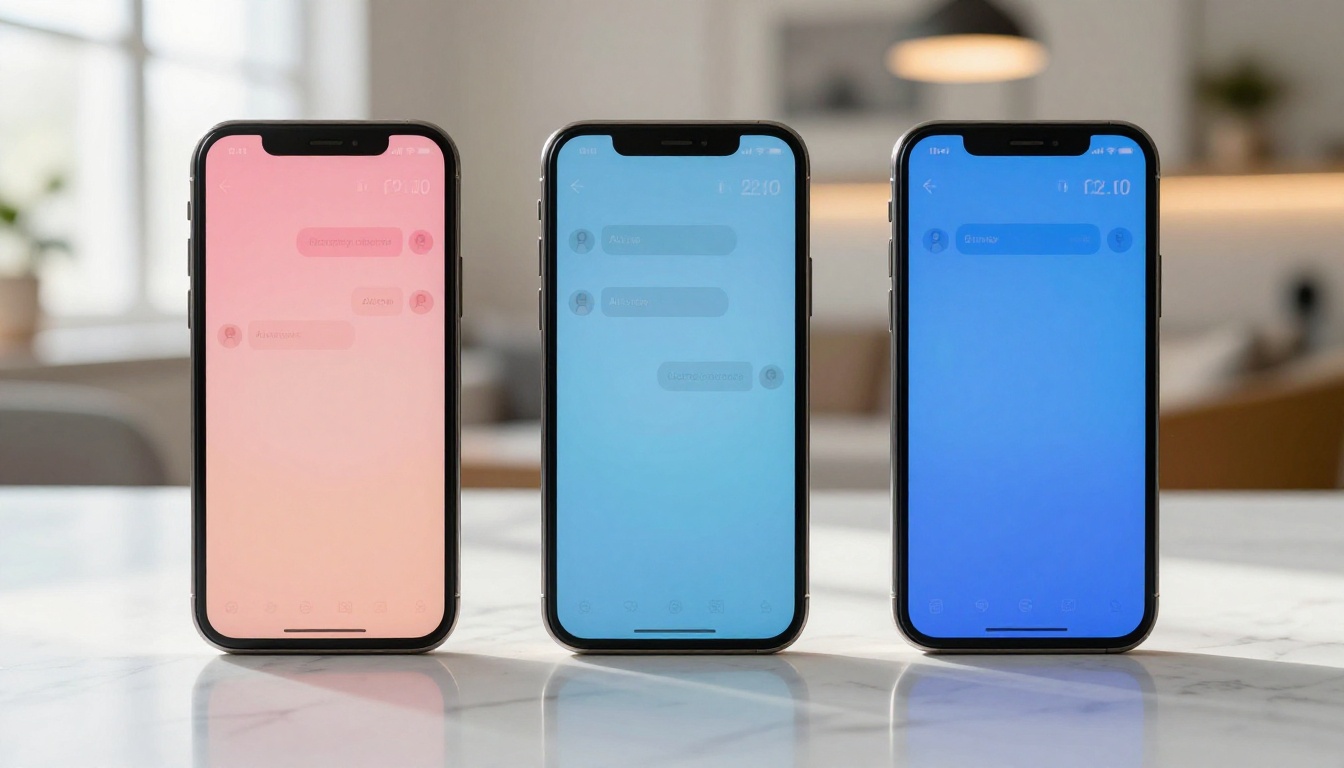
Kupid AI in Plain Terms
Kupid AI launched as an AI companion app targeting users who want romantic and intimate conversation with AI characters. The platform offers pre-built personas with defined personalities, backstories, and physical descriptions. Users can choose from a library of characters or create their own with varying degrees of customization.
The app markets itself as offering uncensored conversations, which in practice means fewer content filters than mainstream chatbots like ChatGPT or Claude in consumer mode. Character interactions range from friendly chat to roleplay scenarios, and the subscription tier determines how far conversations can go.
What Kupid AI offers:
- Pre-built character library with diverse personas
- Image generation tied to characters (credit-gated)
- Voice message capabilities on higher tiers
- Mobile-first interface with swipe-based browsing
- Memory system that recalls past conversations
- Character relationship progression over time
Dondi.ai in Plain Terms
Dondi.ai positions itself as a more customizable AI companion platform. Where Kupid AI focuses on its curated character library, Dondi.ai emphasizes user-created characters and deeper persona definition. You can build a character from scratch, define their personality traits, speaking style, and relationship dynamic to a degree Kupid doesn't allow.
The platform also leans harder into NSFW content for paid subscribers, with fewer blanket refusals on mature themes than Kupid on comparable tiers. Response quality depends heavily on the underlying model, which users have no visibility into.
What Dondi.ai offers:
- Deep character creation tools with personality sliders
- NSFW content with paid subscription
- Custom relationship dynamics and scenario settings
- API access for developers on certain plans
- Scenario-based conversation starters
- Long-term memory with character consistency

The Differences That Actually Matter
Conversation Quality
This is where most comparison articles get it wrong. They list features without testing actual outputs. The conversation quality gap between Kupid AI and Dondi.ai is real but nuanced.
Kupid AI conversations feel polished and consistent. The pre-built characters have well-defined personalities that stay coherent across sessions. However, they feel formulaic over time. After a few sessions, patterns emerge in how the AI responds, and the "personality" starts feeling like a template with variable names. The responses are safe, smooth, and somewhat predictable.
Dondi.ai conversations have more variance. Custom characters can feel genuinely unique when you've built them thoughtfully. But that same variance means conversations can drift, become inconsistent, or lose the personality thread you established. The quality ceiling is higher on Dondi, but the floor for failure is also higher.
💡 The real issue: Neither platform gives you transparency about which AI model powers the conversations. You're trusting their back-end choices without knowing what you're actually getting.
Character Customization Depth
| Feature | Kupid AI | Dondi.ai |
|---|
| Pre-built characters | 500+ | 200+ |
| Custom character creation | Basic | Advanced |
| Personality sliders | No | Yes |
| Backstory definition | Limited | Detailed |
| Relationship type options | 8 | 15+ |
| Memory persistence | Moderate | Strong |
| Voice customization | Limited | More options |
Dondi.ai wins on customization. If you have a specific persona in mind and want to build it from the ground up, Dondi gives you more control over personality traits, communication style, and relationship dynamics.
Kupid AI wins on variety if you'd rather browse and pick than build. The character library is extensive, visually presented, and quick to start with. For users who don't want to spend time configuring a persona, it's a faster path to conversation.
Content Freedom: The Real Score
Both platforms advertise "uncensored" conversations, but that word means different things in practice.
Kupid AI operates on a content tier system. Free users get filtered conversations. The base subscription opens up suggestive content. The highest tier unlocks explicit scenarios. Even on the top tier, certain hard limits remain, and the AI can still refuse based on phrasing or context in ways that feel inconsistent.
Dondi.ai has a similar structure but reportedly fewer blanket refusals on the premium tier. Users report that character consistency in mature scenarios is better on Dondi when the character is well-defined, largely because the custom persona framework gives the AI more grounding to work from.
Neither platform offers true creative freedom. Both rely on filtered model versions tuned for their specific use case. You're working within guardrails you didn't define and can't fully see.
Pricing: What You Actually Pay
Kupid AI Subscription Tiers
Kupid AI operates on credits combined with a subscription model, which makes actual costs non-transparent until you're deep in.
- Free tier: Very limited messages, heavy content restrictions, watermarked images
- Basic subscription: ~$12-15/month, suggestive content enabled, moderate message limits
- Premium subscription: ~$30-50/month, explicit content enabled, higher message limits
- Credit packs: Sold separately for image generation and voice features
The credit system means your monthly costs can spike significantly if you use image generation frequently. A power user can easily spend $70-100/month once credit packs are factored in.
Dondi.ai Subscription Tiers
Dondi.ai uses a simpler subscription model without separate credit systems for most features.
- Free tier: Very restricted, mostly for testing the interface
- Standard plan: ~$15-20/month, basic NSFW access and character creation
- Pro plan: ~$40-60/month, full feature access including explicit content and API
- Yearly discounts: Both platforms offer 30-40% off annual plans
💡 Cost reality check: At maximum tier, both platforms cost $40-60/month for an AI conversation experience powered by models you have no visibility into. That's significant spend for what amounts to a curated chatbot wrapper.
Hidden Costs Neither Platform Advertises
Both platforms have additional friction points that affect real-world cost:
- Kupid AI: Image generation credits run out fast. Generating character images costs credits that aren't included in base subscriptions.
- Dondi.ai: API access, which you'd need for any kind of automation or external integration, is limited to higher-tier plans only.
- Both: Conversation history limits on lower tiers mean you lose context in long-running character relationships unless you upgrade.

The core issue with both Kupid AI and Dondi.ai isn't their content policies or character libraries. It's the underlying AI models and the opacity around them.
Both platforms use proprietary or licensed AI models that are optimized for their specific use case. That means:
- You can't choose which model powers your conversation
- Response quality is fixed to their back-end choices
- You can't leverage newer, more capable models as they release
- Your conversations stay on their servers under their terms
- Model downgrades to cut costs happen silently without notice
When you use a platform like PicassoIA, you interact directly with the models themselves. You pick GPT 5 when you want maximum reasoning and creativity, Claude Opus 4.7 when you need nuanced, character-consistent long conversations, or Deepseek R1 for free access to a highly capable reasoning model. That transparency changes everything about the experience.

Better AI Models for Real Conversations
The LLMs That Actually Deliver
If what you want is engaging, intelligent, personality-rich conversation, the models available on PicassoIA are in a different class than what Kupid or Dondi run behind the scenes.
GPT 5 from OpenAI is the current state of the art for natural language. Conversations feel genuinely responsive and contextually aware across very long sessions. Character consistency when you define a persona is exceptional, and it handles emotional nuance with a depth that companion apps can't replicate.
Claude Opus 4.7 from Anthropic is the preferred model when you want nuanced, emotionally intelligent conversation. Its ability to maintain a defined personality across complex scenarios and long conversation threads is among the best available. It reads context deeply and responds with genuine texture.
Claude 4 Sonnet offers a strong balance of speed and depth. For real-time conversation at high quality without the latency of larger models, it's one of the best daily-use options available.
Claude 4.5 Sonnet brings coding and creative reasoning together, particularly useful when you want an AI that can both roleplay a character and assist with creative writing within the same session.
Gemini 3 Pro from Google brings multimodal reasoning into conversations. If you want an AI that can engage with images, documents, and text simultaneously, while maintaining a conversational persona, this is the model.
Grok 4 from xAI is known for its willingness to engage with unconventional topics and its real-time information access. Conversations have a raw, direct quality that many users specifically prefer for adult-themed creative writing.
Deepseek R1 and Deepseek v3.1 offer free access to reasoning-capable models with strong multilingual support. They're an excellent starting point for users who want to test quality before committing to paid models.
Llama 4 Maverick Instruct from Meta provides capable free access for creative and conversational tasks, with surprisingly strong character adherence for an open-weight model.
Kimi K2 Instruct from Moonshot AI is particularly strong at maintaining complex character personas and long-form creative roleplay. Users report that it handles emotionally complex scenarios with consistency that rivals the top-tier proprietary models.
Why Model Transparency Matters
When Kupid AI or Dondi.ai update their back-end models, you don't know. When they downgrade to save costs, you don't know. When they apply new content filters, you find out mid-conversation. This opacity means you can't compare, choose, or optimize your experience.
With direct model access through PicassoIA's Large Language Models collection, you see exactly which model you're using, what version it is, and what it's capable of. There's no mystery wrapper between you and the AI. You set the system prompt, you define the character, and you pick the engine.

Generate Your Own AI Companion Images
One area where Kupid AI and Dondi.ai do offer value is the visual companion experience, generating images of your AI character. But this too is something you can do far better with dedicated image generation tools, and without the credit restrictions and quality ceilings that companion apps impose.
Seedream 4.5 for Photorealistic Results
For photorealistic, visually stunning AI companion imagery, Seedream 4.5 is the leading choice on PicassoIA. It produces images with natural skin texture, realistic lighting, and authentic photographic quality that the in-app generators on Kupid and Dondi simply can't match.
The advantages of using Seedream 4.5 through PicassoIA:
- Unlimited generations: No monthly generation caps tied to subscription tier
- Quality ceiling: Output quality far exceeds what companion apps offer
- Prompt control: You direct every aspect of the image rather than working from preset styles
- Full resolution downloads: No watermarks, no compressed outputs
- Style consistency: Generate multiple images of the same persona with consistent results
💡 Tip: For the most realistic companion imagery, pair detailed physical descriptions with specific lighting directions. "Soft morning light from left, 85mm f/1.8, natural skin texture, Kodak Portra 400 film grain" in your prompt makes a significant difference in output realism.
PicassoIA Image Editor Pro
Beyond generation, PicassoIA Image Editor Pro gives you unlimited image editing capabilities. Once you've created a base image, you can refine it with surgical precision:
- Use inpainting to modify specific details while preserving the overall composition
- Apply outpainting to expand the scene beyond the original frame
- Run AI Image Restoration to fix quality issues or sharpen detail in specific regions
- Replace specific elements while keeping the character and environment consistent
This workflow, generate with Seedream 4.5, refine with Image Editor Pro, gives you a level of creative control over your AI companion visuals that no standalone companion app can offer. The quality gap compared to Kupid AI's built-in generator is significant.
Explore the full image generation lineup at picassoia.com/en/all-models.

How to Set Up Your AI Companion on PicassoIA
Setting up a genuine AI companion experience on PicassoIA takes about five minutes and gives you far more than either Kupid or Dondi offers.
Step 1: Pick Your Conversation Model
Go to the Large Language Models section and select based on what you want from conversations:
Step 2: Write Your System Prompt
This is where you define your companion's personality, appearance, speaking style, and relationship dynamic. Unlike Kupid or Dondi, you're not choosing from a dropdown. You write the persona yourself, which means it's exactly what you want.
A strong system prompt includes:
- Physical description and mannerisms
- Personality traits and communication style
- Relationship context and how they address you
- Specific quirks or recurring behavioral patterns
- How they handle different emotional tones in conversation
Step 3: Generate Visual Reference
Use Seedream 4.5 to generate images of your character. Having a visual reference not only enhances your experience but helps maintain consistency when you want to regenerate or edit images later.
Step 4: Refine and Iterate
The major advantage of PicassoIA over companion apps is that nothing is locked behind tiers in the same restrictive way. You iterate on the persona, swap models to see which fits best, and refine your images with the editor without hitting credit walls every few sessions.

| What You Want | Kupid AI | Dondi.ai | PicassoIA |
|---|
| Fast setup, browse characters | Yes | Moderate | Build your own |
| Deep character customization | Basic | Yes | Via LLM prompting |
| Top-tier AI model quality | Hidden | Hidden | Transparent |
| Image generation quality | Moderate | Limited | Superior |
| Model choice transparency | No | No | Yes |
| Value for money | Moderate | Moderate | High |
| Free tier usefulness | Low | Low | Varies by model |
| Long-term creative control | Limited | Moderate | Full |
Choose Kupid AI if you want a polished, visual-first experience with a pre-built character and minimal setup time. It's a better consumer product for casual use.
Choose Dondi.ai if you want deeper character control, are willing to build your persona from scratch, and want slightly fewer content restrictions on the premium tier.
Choose PicassoIA if you want the best available AI models for conversation, full control over your companion's persona, superior image generation without credit caps, and the ability to swap between models without changing platforms.
Start Creating Your Own Experience
The real limitation of both Kupid AI and Dondi.ai is that they make decisions for you: which AI model to use, which content rules apply, which visual style is available, which features cost extra. You're renting a limited version of an AI companion experience rather than accessing the actual tools directly.
PicassoIA gives you direct access to GPT 5, Claude Opus 4.7, Grok 4, Kimi K2, and 70+ other language models alongside the best image generation stack available. You define the persona. You pick the model. You own the creative direction.
If you've been spending $40-60/month on a companion app and wondering why the conversations feel limited or formulaic, this is why. The models powering those apps are not the best available, the content policies are not yours to define, and the image quality has a hard ceiling.
Try creating your own AI companion experience at picassoia.com/en/all-models. The tools are more capable, the quality is higher, and the control is completely yours.