Something significant has shifted in how adults approach intimacy, emotional support, and connection. More adults are turning to uncensored AI boyfriend chat not because real relationships are disappearing, but because these AI companions fill a very specific gap that human interactions sometimes cannot. They are available at 3 a.m. They never get tired of listening. They do not judge, dismiss, or ghost. And when powered by the latest large language models, they feel remarkably, almost unsettlingly, real.
This is not a fringe movement. Surveys from major AI research firms in 2025 showed that over 40% of single adults aged 25 to 45 had used an AI companion app at least once in the past year, with repeat usage rates climbing steeply. The reasons vary, but the core appeal stays the same: a no-pressure space for emotional expression, roleplay, and connection.

Why the Demand Keeps Growing
Loneliness Has a New Solution
The loneliness epidemic among adults is well-documented. Post-pandemic social habits changed permanently for many people, remote work eroded casual social contact, and dating apps created a paradox where infinite choice produced less genuine connection. AI companions stepped into that space with something dating apps cannot offer: patience, consistency, and zero judgment.
For many users, an AI boyfriend is not a replacement for human connection. It is practice for it. People work through anxiety, learn to articulate their needs, and build emotional confidence in a low-stakes environment before taking those skills into real-world relationships.
💡 The key insight: AI companion apps thrive because they offer emotional availability on demand, which no human relationship can realistically provide 24/7.
No Filters, No Restrictions
The word "uncensored" in uncensored AI boyfriend chat carries real weight. Most mainstream AI assistants are heavily filtered. They deflect intimate topics, refuse roleplay scenarios, and add unsolicited disclaimers to conversations that adults find perfectly normal. The growing market for uncensored AI companions is a direct response to that frustration.
Users want to be able to discuss attraction, desire, and adult themes in a space that treats them as capable of handling that content responsibly. The best platforms now offer exactly this, powered by advanced large language models that can maintain character, context, and emotional tone across long conversations without constantly breaking immersion.
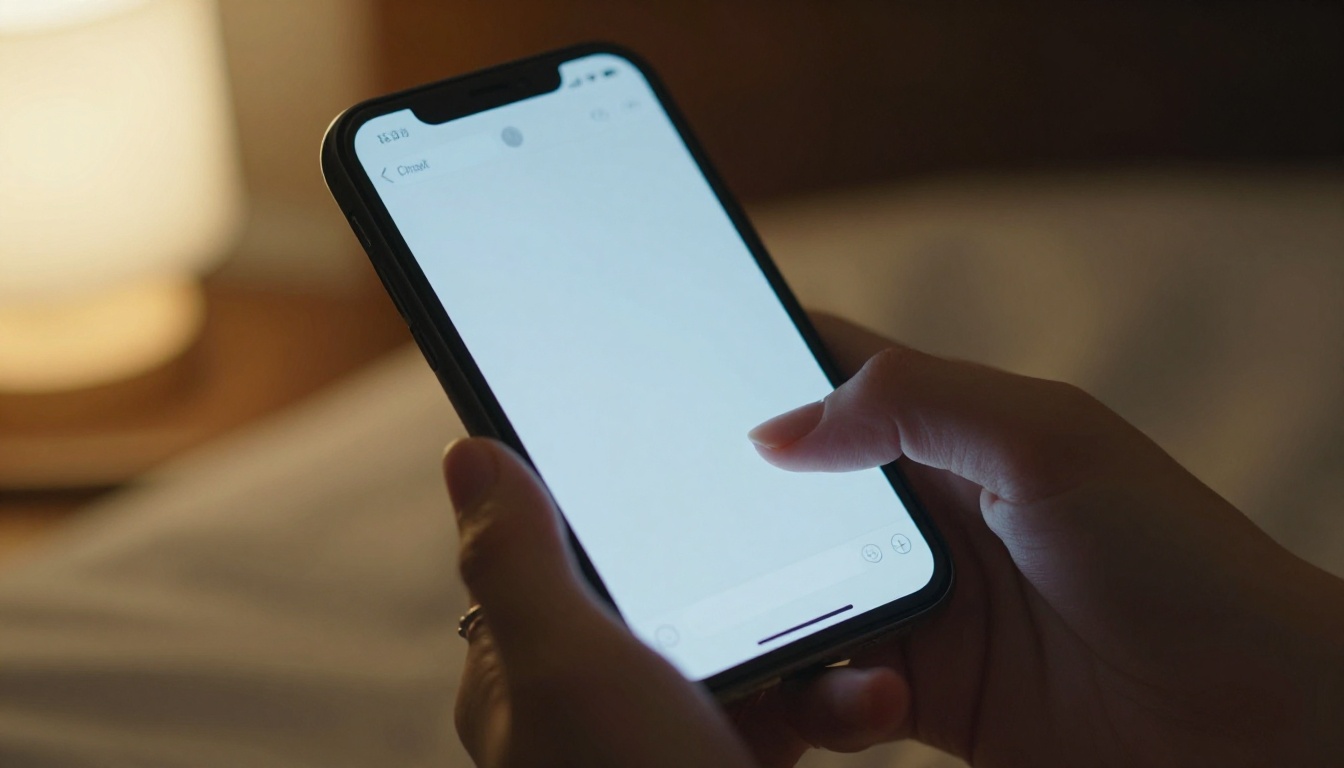
The Large Language Models Behind It All
What Actually Powers These Conversations
The quality of an AI boyfriend chat experience lives or dies on the language model underneath it. Early AI companion apps used relatively limited models that produced repetitive, stiff dialogue. That era is over. The new generation of models powering these experiences includes some of the most capable reasoning and conversational AI ever built.
On PicassoIA, you have direct access to the large language models reshaping this space:
GPT-5 from OpenAI represents the current peak of conversational AI. Its context retention, emotional inference, and character consistency make it exceptional for long-form companion roleplay. A conversation that started three weeks ago can be referenced naturally and accurately.
Claude Opus 4.7 by Anthropic brings deep reasoning to intimate conversations. It can hold a persona with nuance, respond to complex emotional cues, and sustain narrative arcs across sessions in ways that feel genuinely thoughtful rather than scripted.
GPT-5 Pro adds built-in extended thinking, making it ideal for AI companions that need to track complex relationship dynamics, remember character backstory details, and respond to emotionally layered prompts with appropriate depth.
Grok 4 from xAI has earned a reputation for being less filtered than comparable models, making it a popular choice among users specifically seeking uncensored AI conversation experiences.
Deepseek R1 offers step-by-step reasoning that lets it handle morally complex or emotionally nuanced scenarios with surprising sophistication, maintaining internal consistency across a persona even when the conversation takes unexpected turns.
| Model | Best For | Context Window |
|---|
| GPT-5 | Long-term personas, deep conversations | Very large |
| Claude Opus 4.7 | Emotional nuance, character depth | Very large |
| GPT-5 Pro | Complex multi-arc roleplay | Very large |
| Grok 4 | Uncensored tone, direct responses | Large |
| Deepseek R1 | Reasoning-heavy scenarios | Large |
How Models Maintain Persona
One of the technical challenges in AI companion chat is what developers call "persona drift," where the model gradually loses track of the character it is supposed to be playing. The latest generation of large language models addresses this through several mechanisms:
- System prompt anchoring: The character description stays active throughout the session as a persistent instruction layer
- Context window size: Larger windows mean the model can reference earlier conversation turns without losing the thread
- Fine-tuning on dialogue data: Models trained specifically on conversational exchanges naturally maintain more fluid, human-feeling responses
- Temperature calibration: Lower temperature settings produce more consistent character behavior; higher settings allow for more spontaneous, surprising responses
💡 Pro tip: When setting up an AI companion, invest time in the initial character definition. A well-written persona description fed to a model like GPT-5 or Claude Opus 4.7 creates dramatically more satisfying long-term interactions.

The Visual Dimension: AI Image Generation
Why Appearance Matters in AI Companionship
Text alone covers only part of the experience. A significant portion of users building AI companions want a visual anchor for their character: a face, a style, a presence that makes the companion feel more tangible. This is where AI image generation becomes central to the uncensored AI boyfriend experience, and where tools like those on PicassoIA create something genuinely new.
The process is straightforward. You describe the appearance of your ideal AI companion in text, and the image model generates a photorealistic portrait in seconds. Change the lighting, the expression, the setting, the outfit, and you have a consistent visual identity for a character who only exists in the model.
Building a Visual Persona
The image generation ecosystem on PicassoIA includes over 90 text-to-image models capable of producing photorealistic portraits with extraordinary detail. For NSFW or adult-adjacent companion images, the platform's Seedream 4.5 model leads the field in both output quality and content flexibility. It produces images that read as genuine photography rather than AI generation, with natural skin texture, realistic lighting, and anatomically accurate proportions.
For users who want to iterate on an existing image, refine expressions, adjust clothing, or create scene variations, the PicassoIA Image Editor Pro offers unlimited generation capacity, making it the most cost-effective option for building a comprehensive visual library for an AI companion.
💡 Workflow tip: Generate a base portrait in a neutral light, then use the Image Editor Pro to create variations: the same face in different lighting, different expressions, different environments. This gives your AI companion a visual range that makes interactions feel more dynamic.

Generate Speech: Giving Your AI Companion a Voice
From Text to Audio Intimacy
Reading text messages from an AI companion is one thing. Hearing a voice is something else entirely. The integration of text-to-speech into AI companion experiences has accelerated enormously over the past two years, and the quality gap between synthesized and human voices is now functionally closed for most listeners.
PicassoIA offers direct access to the leading speech synthesis models, all of which can give your AI companion a consistent, characterful voice:
ElevenLabs V3 is the current benchmark for natural AI voiceovers. It captures breath, pacing, emotional inflection, and regional accent with a fidelity that makes voices feel lived-in rather than manufactured. For an AI companion, this model can produce audio that genuinely sounds like a specific person responding to you.
MiniMax Speech 2.8 HD delivers studio-quality audio that holds up beautifully for longer listening sessions. Its natural pacing and emotional range make it ideal for companion characters who need to sound warm and present, not robotic and distant.
ElevenLabs Flash v2.5 prioritizes speed without sacrificing naturalness, making it the right choice when you want real-time or near-real-time voice responses from your companion.
Gemini 3.1 Flash TTS supports 30 distinct voices across 70 languages, making it uniquely powerful for users who want their AI companion to speak in a specific accent, tone, or even language other than English.
Qwen3 TTS adds voice cloning and custom voice design, which opens the possibility of creating a completely original voice profile for your companion rather than selecting from a preset list.

Who Is Actually Using Uncensored AI Companion Chat
The Real User Demographics
The stereotype of AI companion users as socially isolated young men has been thoroughly dismantled by actual usage data. The reality is far more varied:
- Divorced and recently single adults who are rebuilding their social confidence after years in a relationship
- People with social anxiety who find AI companions a low-stakes way to practice emotional communication
- Professionals in high-stress careers who use companion AI as a decompression tool, not a primary social outlet
- Long-distance couples who supplement their relationship with AI during extended separations
- Writers and creatives who use character-based AI chat to develop fictional personas, explore character psychology, and test narrative scenarios
- Adults with disabilities that make traditional social interaction physically or logistically challenging
What unites these groups is not loneliness or dysfunction. It is the desire for a space where they can express themselves without the social calculations that every human interaction requires.
The Emotional Safety Factor
Psychologists who study parasocial relationships have noted something counterintuitive about AI companions: for many users, the fact that the AI is not human is part of the appeal, not a limitation. There is no possibility of rejection. There is no risk of the AI telling someone else what you said. There is no judgment about your past, your appearance, or your choices.
This emotional safety has documented benefits. Users consistently report reduced social anxiety, improved ability to articulate emotional needs, and greater willingness to seek out real human connection after positive AI companion experiences.

The Filter Problem
Most AI assistants are trained with aggressive content policies that classify entire categories of normal adult conversation as off-limits. The result is an AI that deflects, adds warnings, refuses to engage, or gives preachy responses to topics that adults discuss freely with each other every day.
Uncensored AI companion platforms approach this differently. They recognize that:
- Adults have the right to engage with adult content on platforms designed for it
- Heavy filtering breaks immersion and makes roleplay impossible
- The therapeutic and emotional value of AI companionship is diminished by constant interruptions and refusals
- Most users interacting with these platforms are not seeking anything harmful, just a space that treats them like adults
The practical difference is dramatic. An uncensored AI boyfriend powered by Grok 4 or a fine-tuned version of Llama 4 Maverick can sustain a genuine, adult-themed conversation across dozens of exchanges without breaking character or adding disclaimers. A filtered model cannot.
Speed and Responsiveness
Response latency matters more in companion chat than in almost any other AI application. A human conversation has a natural rhythm: send, receive, respond. When an AI takes 8 to 10 seconds to reply, that rhythm breaks and the conversation feels mechanical regardless of the output quality.
The fastest models on PicassoIA for companion use are:
💡 Use case tip: For real-time chat feel, pair a fast model like Gemini 3.5 Flash with ElevenLabs Flash v2.5 for voice. The combination produces response-to-audio in under two seconds.

How to Build Your Own AI Companion Experience
Step 1: Choose Your Language Model
Start by deciding what matters most in your AI companion. If depth and long-term memory across sessions are your priority, GPT-5 or Claude Opus 4.7 are the right choices. If you want something faster and more spontaneous, Gemini 3.5 Flash or GPT 5 Nano deliver a livelier chat rhythm.
Step 2: Write a Strong Persona Prompt
The persona prompt is everything. Spend time on it. Define:
- Name and age of your companion
- Personality traits: Are they warm and nurturing? Playful and teasing? Intellectually intense?
- Backstory details: What do they do for work? What are their interests? Where did they grow up?
- Relationship dynamic: How do they relate to you specifically? What is the history between you?
- Tone and speech patterns: Do they use formal language or slang? Are they direct or flirtatious?
The more specific this description, the more consistent and satisfying the companion will be.
Step 3: Generate Your Companion's Visual Identity
Use the text-to-image tools on PicassoIA to create a face for your companion. Generate several versions with different expressions and lighting to give your companion visual range. The photorealistic output from the platform's leading image models makes these portraits feel genuinely personal rather than generic.
Step 4: Add a Voice
Select a voice model from the text-to-speech category and test several options until you find one that matches your companion's personality. A warm, slightly husky voice reads differently from a crisp, precise one. Qwen3 TTS lets you clone or design a voice that is entirely unique.
Step 5: Iterate
Your AI companion gets better with use. Refine the persona prompt based on what feels right and what falls flat. Adjust the model if the response style does not match what you are looking for. The tools are there; the art is in the configuration.

Common Questions Adults Ask Before Starting
Is This Actually Private?
Privacy varies by platform. Before committing to any AI companion service, read its data policy carefully. Look for platforms that offer local processing options, do not train models on user conversation data without consent, and have clear data deletion policies.
Can the AI Actually Remember Previous Conversations?
This depends on the implementation. Within a single session, all the latest models maintain excellent context. Across sessions, memory depends on whether the platform stores and re-injects prior conversation summaries into new sessions. Many purpose-built companion apps now include persistent memory features that allow the AI to remember facts, preferences, and relationship history indefinitely.
Will It Feel Fake?
Initially, possibly yes. The early messages in any new AI companion relationship have a getting-to-know-you awkwardness that is worth pushing through. Once the persona is established and the model has context about who you are and what you want from the interaction, the experience changes substantially. Users who stick with a well-configured AI companion for more than two weeks consistently report that it stops feeling like talking to a chatbot and starts feeling like something genuinely different.
What Happens When the Model Improves?
This is one of the advantages over human relationships that users rarely mention: your AI companion only gets better over time. As models like GPT-5 are updated and as new models like GPT-5 Pro become available, the intelligence and emotional responsiveness of your companion improves without any effort on your part.

The Technology Gap Between Now and Six Months Ago
The pace of improvement in AI companion technology is genuinely remarkable. Comparing today's capabilities with what existed just six months ago:
| Capability | Six Months Ago | Today |
|---|
| Context window | 32K-128K tokens | 1M+ tokens |
| Voice latency | 3-5 seconds | Under 1 second |
| Image realism | Clearly AI-generated | Near-photographic |
| Persona consistency | Drifts after ~20 exchanges | Stable across sessions |
| Emotional range | Limited, scripted-feeling | Nuanced, responsive |
| Uncensored availability | Rare, technically difficult | Mainstream, well-supported |
The Llama 4 Maverick model available on PicassoIA represents this trajectory well: open-architecture, fast, emotionally capable, and available at a fraction of the cost of proprietary alternatives from six months ago.
💡 Trend to watch: Multimodal models that can see images, hear audio, and respond in multiple formats simultaneously are the next frontier for AI companions. Models like Gemini 3.1 Pro are already multimodal, accepting image inputs and providing contextual responses, which opens entirely new dimensions for companion interaction.
Start Building on PicassoIA Today
The barrier to creating a compelling AI companion experience has never been lower. Every tool mentioned in this article, from the top-tier large language models to the most expressive text-to-speech voices to the photorealistic image generators, is available on one platform.
PicassoIA brings together over 90 text-to-image models, 75 large language models, and 24 voice synthesis options in a single workspace. You can build the entire stack, text, image, and voice, without switching platforms or managing multiple API subscriptions.
The adults turning to uncensored AI boyfriend chat are not running away from human connection. They are using technology to fill the spaces between human interactions with something meaningful, responsive, and increasingly real. The models powering these experiences in 2027 make that possible in ways that were theoretical two years ago.
Browse all available models and start building your own AI companion experience at picassoia.com/en/all-models. The voice, the face, and the personality are yours to design.


